
The Day Auto Racing Came to Rockville: Rare Photos from 1923
On Saturday, August 25, 1923, spectators gathered at the Rockville Fairgrounds for something never before seen there: automobile racing.
Professional drivers brought their high-powered racing machines to the half-mile dirt track for the first automobile races ever held at the Rockville Fair. Standing trackside with his camera was Rockville automobile dealer and photographer Lewis Reed, who captured a remarkable series of photographs of the action.
More than a century later, his images preserve the day auto racing came to Rockville.
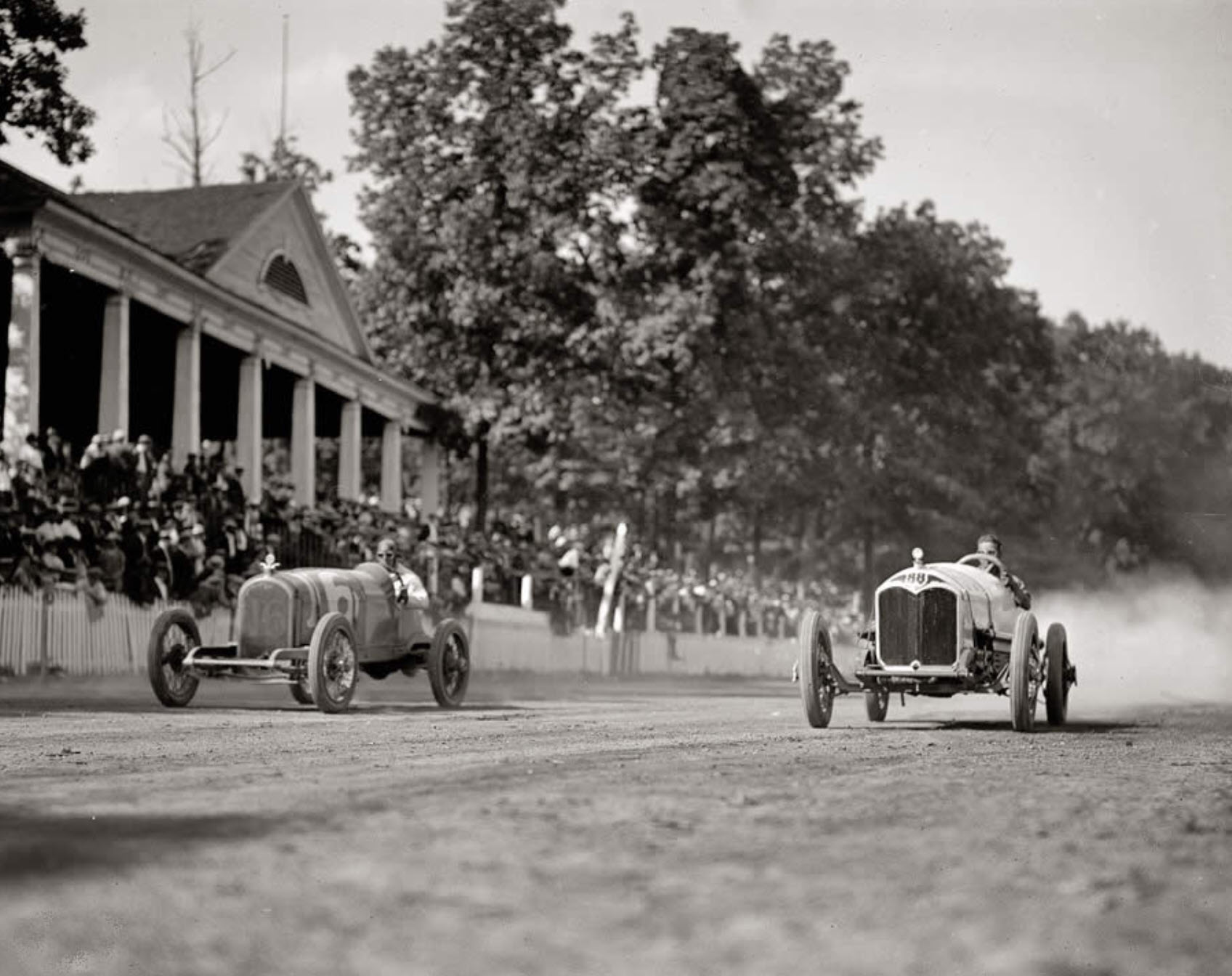
Rockville drew a large crowd for its first automobile races at the Rockville Fair, August 25, 1923. Photo by Lewis Reed.
Rockville’s First Auto Races
The automobile races were the featured attraction on the final day of the 1923 Fair. Contemporary newspaper accounts described them as an innovation for Rockville and confirmed that they were the first automobile races ever held there.
Seven high-powered cars competed in events ranging from one to ten miles, driven by some of the leading professional racers of the day. Canadian dirt-track racer Frank Ripple was among the featured drivers and was expected to attempt speed records in a powerful machine equipped with a 140-horsepower airplane engine.
The new attraction proved popular. Except for Thursday, traditionally the Fair’s biggest day, the Saturday automobile races reportedly drew the largest crowd of the five-day event.
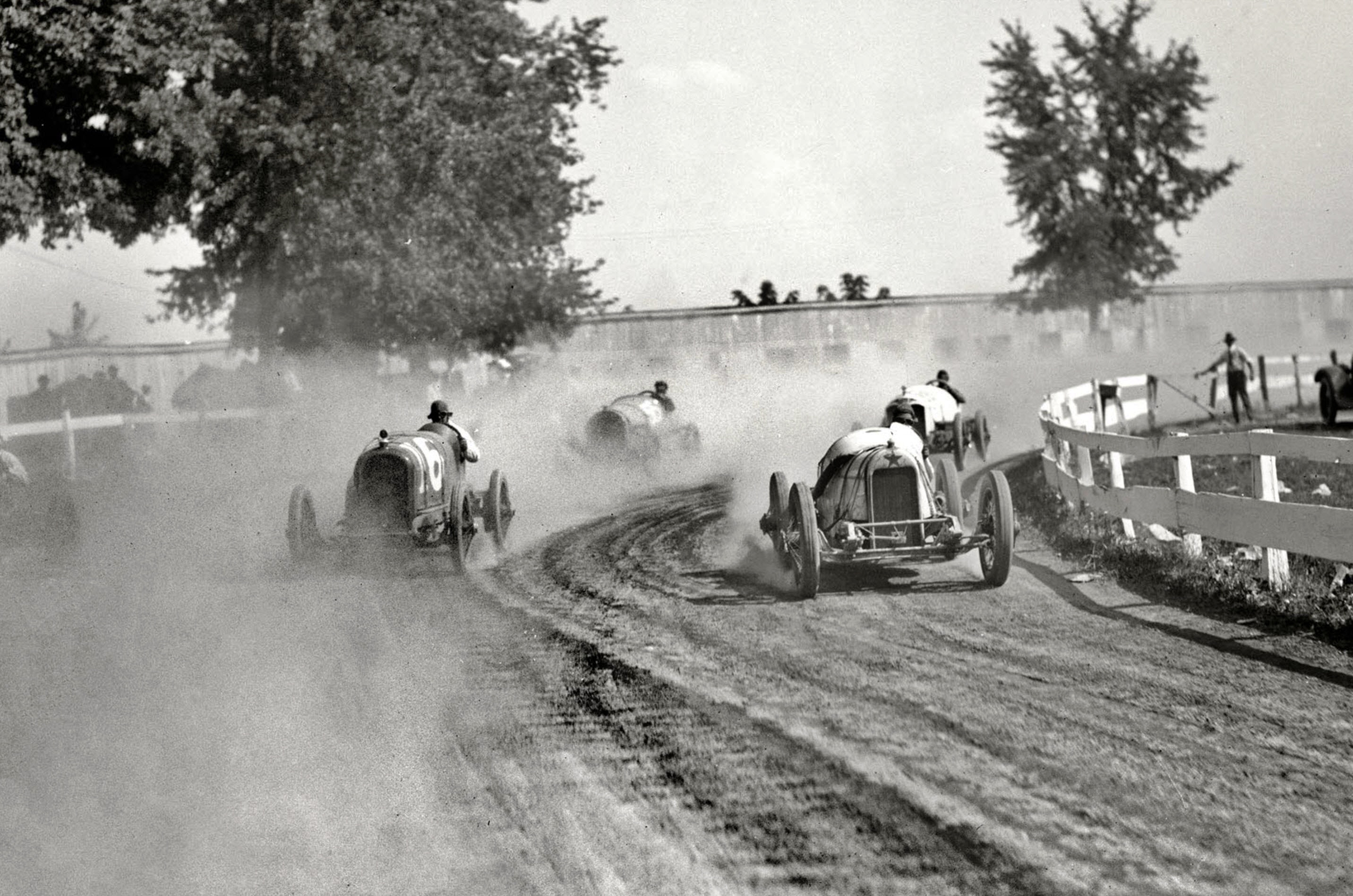
Five racers charge around the dirt track at the Rockville Fairgrounds, August 25, 1923. Photo by Lewis Reed.
Racing on the Dirt Track
Lewis Reed’s photographs show just how exciting early automobile racing could be. Cars raced closely together on the unpaved oval, their narrow tires throwing enormous clouds of dust into the air as drivers fought for position around the sweeping curves.
Spectators stood remarkably close to the action.
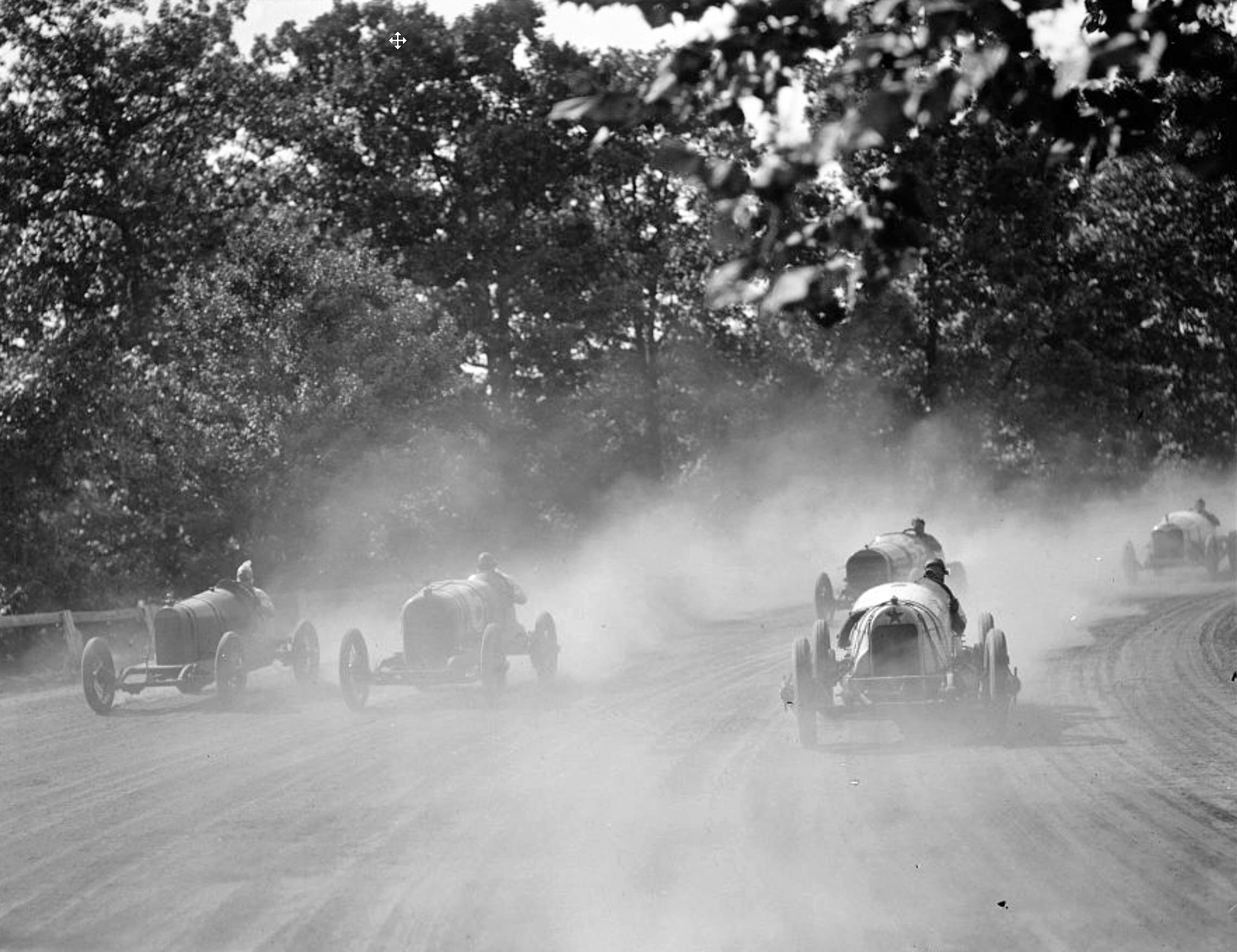
Race cars disappear into a cloud of dust while rounding the Rockville Fairgrounds track. Print made from a Lewis Reed glass negative.
One of Lewis Reed’s most interesting photographs from the races shows a car carrying two men. The passenger was a riding mechanic, once a familiar figure in early automobile racing. In addition to watching the mechanical condition of the car, he served as an extra set of eyes for the driver, keeping watch on competitors approaching from behind.
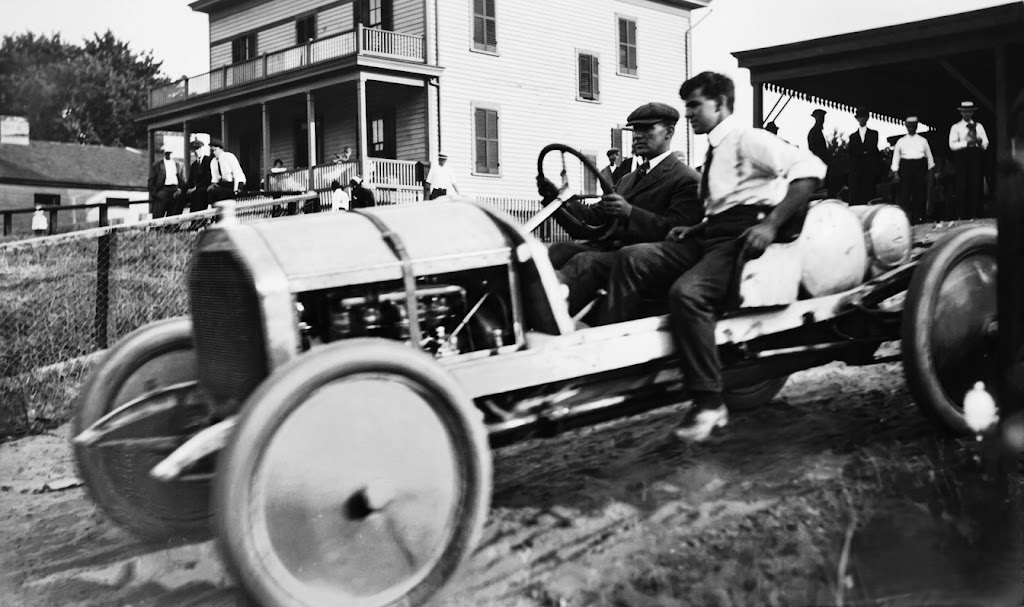
Driver and riding mechanic on the dirt track at the Rockville Fairgrounds, August 25, 1923. Photo by Lewis Reed.
A Future Indianapolis 500 Driver Raced at Rockville
Years after I first published these photographs, the story took an unexpected turn.
I received a message from John Snowberger, whose father, Russ Snowberger, raced at the Rockville Fairgrounds during the early 1920s. John told me that he had photographs of his father in his race car and believed that my grandfather, Lewis Reed, may have taken them.
Russ Snowberger, born in Denton, Maryland, raced throughout the region before going on to become a nationally known driver and a veteran of the Indianapolis 500.
Although I have not been able to establish that Snowberger competed specifically in the August 25, 1923 races, his son’s recollection provides a fascinating connection between Rockville’s early dirt-track racing and a driver who would later compete on one of the world’s most famous speedways.
It also raises an intriguing possibility: somewhere among Lewis Reed’s surviving photographs of early race cars and drivers may be an unidentified image of a young Russ Snowberger.
A Moment Preserved in Photographs
More than a century later, Lewis Reed’s photographs provide a rare visual record of the day automobile racing first came to the Rockville Fair.
They capture speeding cars, clouds of dust, spectators lining the track, and an era when automobile racing was still new enough to be a major local attraction.
And thanks to a message received nearly a century later from the son of an Indianapolis 500 driver, we now know that the old Rockville dirt track had connections extending well beyond Montgomery County.
For one dusty Saturday in August 1923, Rockville became a racing town.

Books

Related Resources


Copyright Notice

Reed Brothers Dodge History (1915-2012) by Jeanne Gartner is licensed under a Creative Commons Attribution-NonCommercial 3.0 Unported License.


Recent Comments