
Remembering My Mother on Her Birthday
Every year when September 24 arrives, my thoughts turn to my mother, Mary Jane (Reed) Gartner. This year, rather than simply remembering her birthday, I find myself thinking about something that has become increasingly meaningful to me: how much of the history I have spent years preserving grew out of the many conversations we shared and the memories she passed along to me.
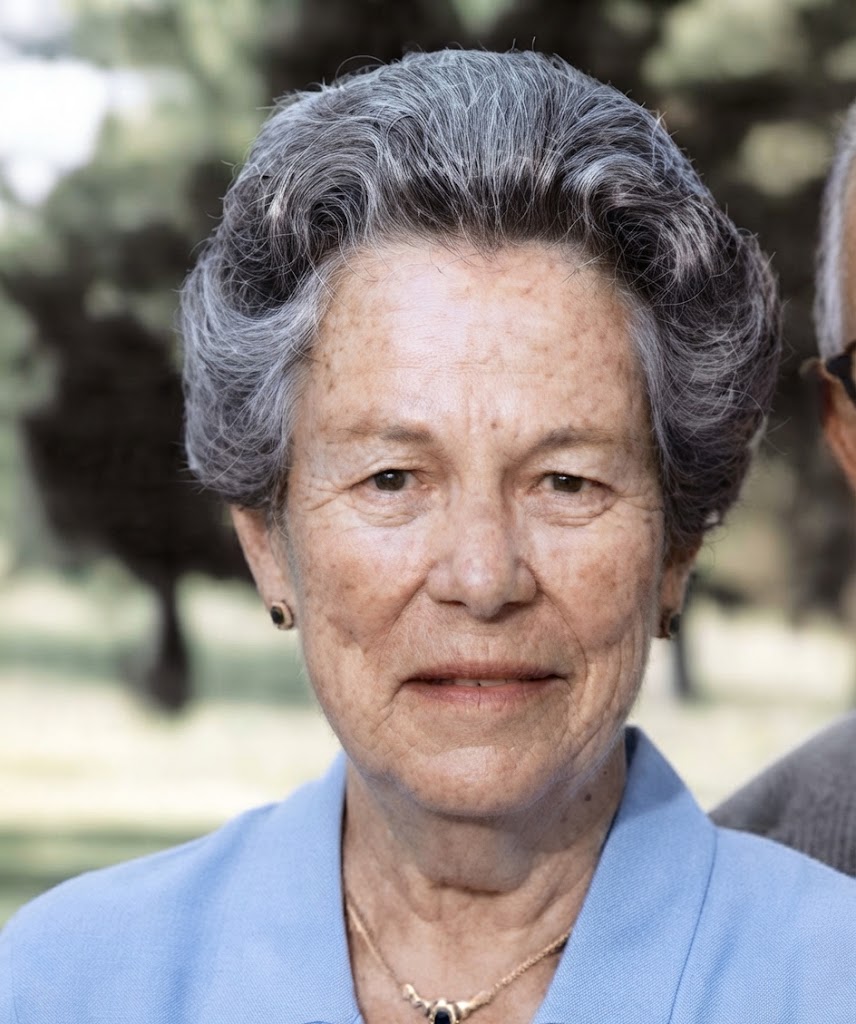
Mary Jane (Reed) Gartner (1922–2019).
My mother was the daughter of Lewis Reed, founder of Reed Brothers Dodge, and she grew up surrounded by a family business that became part of Rockville history. Long before I understood how valuable her memories would become, she was my connection to an earlier generation of the Reed family. During countless afternoon visits, we would sit together and go through boxes and albums filled with old photographs. Many had no names, dates, or locations written on them. I would hold up a photograph and ask, “Who is this?” or “Where was this taken?”
More often than not, she knew.
A face that meant nothing to me would bring back a name. A house, automobile, storefront, or familiar stretch of road would trigger a story. Sometimes one photograph led to another memory, and before long I was hearing about people and places that otherwise might have disappeared from our family history.
At the time, I don’t think either of us realized just how important those afternoons would become.
Years later, as I began researching and writing the history of Reed Brothers Dodge and organizing my grandfather’s enormous photographic collection, I repeatedly returned to the information my mother had shared with me. Her memories helped put names to faces, places to photographs, and stories into context. They became part of the foundation for this blog, my books, and the historical exhibits that followed.
In many ways, she became one of my most important historical sources.
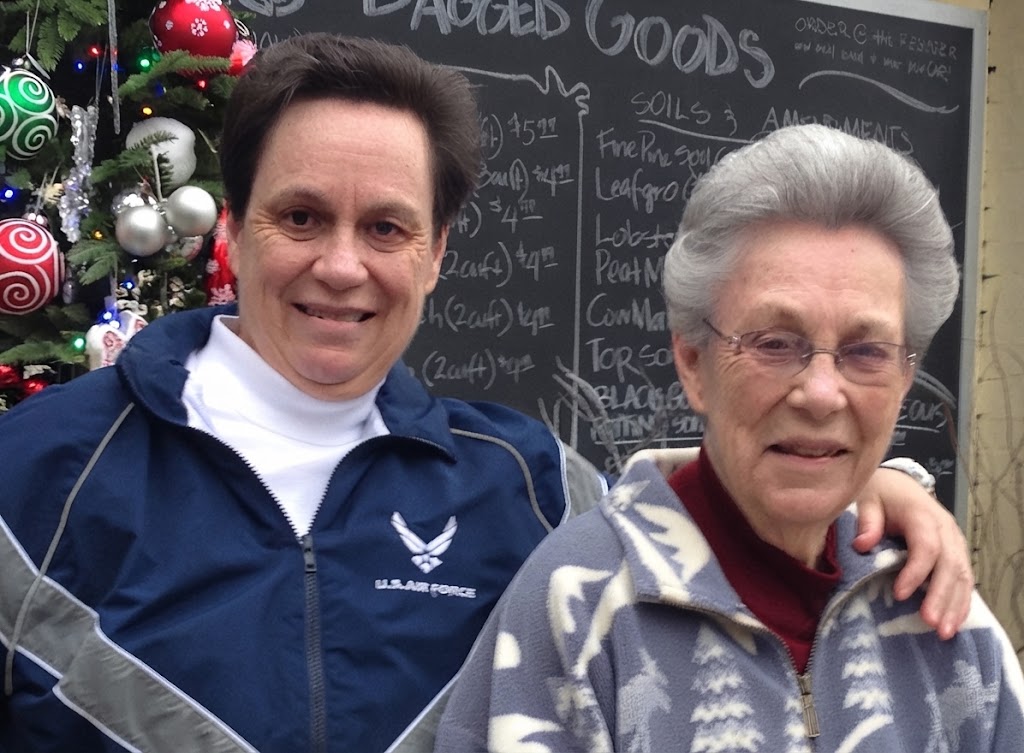
A special Christmas memory with my mother, Mary Jane (Reed) Gartner, in 2004.
But what I inherited from my mother went far beyond family history.
She taught me to approach life with determination and curiosity. One of her favorite sayings was, “Anything worth doing is worth doing well.” She also refused to accept the word “can’t”. If there was a problem, her instinct was to look for a way around it rather than a reason to give up.
That philosophy stayed with me throughout my life.
Perhaps that is also why she never allowed age to dictate what she could learn. At 90, she joined Facebook. She learned to Skype and text, used an iPhone and a Windows PC, and approached new technology with the same curiosity she brought to so many other things. Instead of saying something was too complicated or that she was too old to learn it, she simply learned it.
She was also my greatest supporter.
One memory I especially treasure is seeing her in the audience at Glenview Mansion in 2016 when I received the Arthur M. Wagman Award for Historic Preservation Communication from Peerless Rockville. I was being recognized for documenting and sharing Rockville history, but so much of that work had been made possible by the woman sitting in the audience.
When I saw the pride on her face, I knew the moment belonged to both of us.
My mother died on September 10, 2019, just two weeks before her 97th birthday. Yet in a very real sense, she remains present in the work I continue to do. Every time I identify another photograph, uncover another piece of family history, or share another story from the Reed Brothers Dodge archives, I am building upon something she helped preserve.
Historical preservation is often thought of in terms of photographs, documents, newspapers, and artifacts. But some of our most valuable history lives only in people’s memories. If we are fortunate enough to ask the questions while those people are still with us, their memories can become part of the permanent record.
I was fortunate.
I asked the questions.
And my mother told me the stories.
Today, on what would have been her 104th birthday, I remember my mom not only as Lewis Reed’s daughter or as part of the Reed Brothers Dodge story, but as my mother, my greatest supporter, and the person who helped me understand that preserving history often begins with simply sitting down, listening, and remembering.
Happy Heavenly Birthday, Mom.
The stories you shared with me are still being told.
Three Cars, Three Nights at the Rockville VFD Carnival
For generations of Rockville residents, summer once meant carnival time. Each year, the Rockville Volunteer Fire Department Carnival transformed its grounds along Rockville Pike into a gathering place filled with rides, games, music, food, and crowds of families and friends.
But in August 1956, the excitement reached another level.
During the final three nights of that year’s carnival, three brand-new automobiles were given away, one each night.
And one of them came from Reed Brothers Dodge.
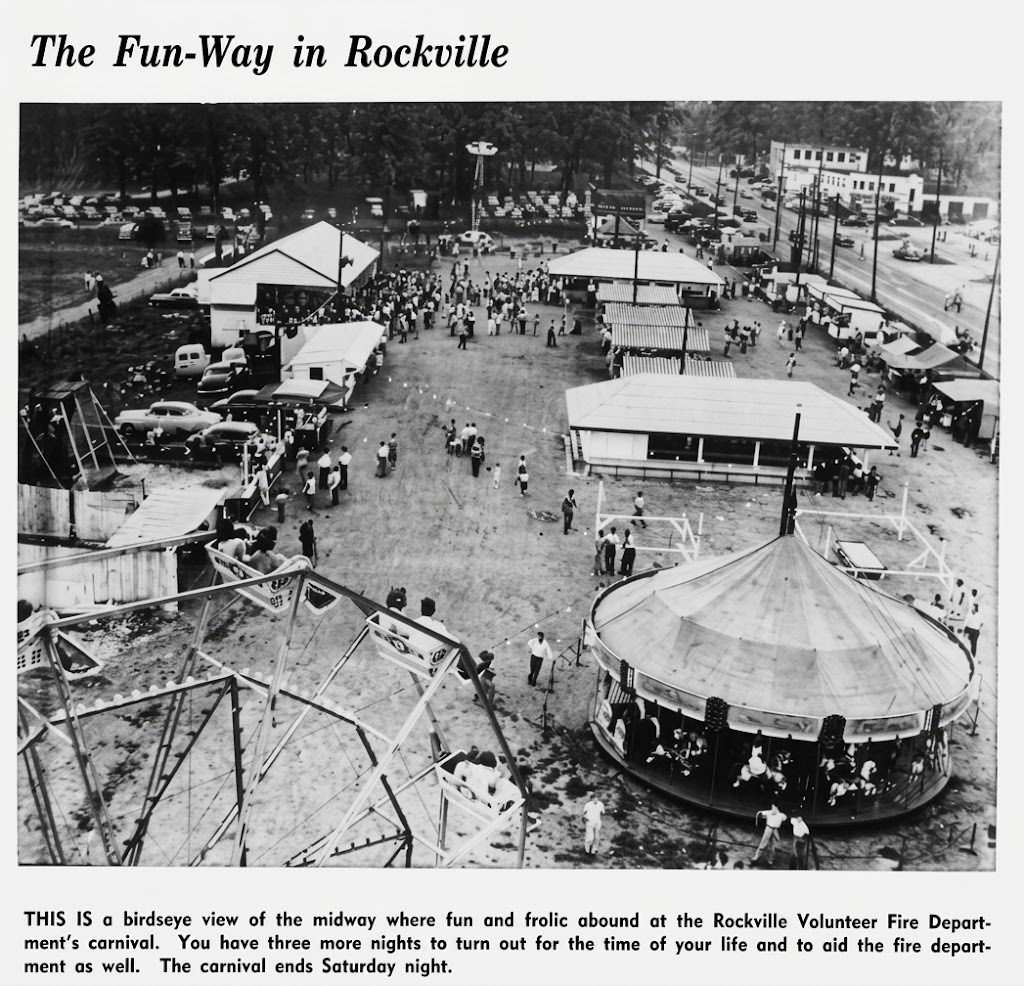
The Rockville Volunteer Fire Department Carnival midway along Rockville Pike was a familiar summer gathering place for generations of local residents.
The Rockville Volunteer Fire Department had been holding its annual carnival since 1932. What began as a fundraiser grew into a Rockville tradition, eventually occupying approximately ten acres along Rockville Pike, directly across the highway from Reed Brothers Dodge.
Unlike a traveling carnival, much of the Rockville operation was permanent. Fire department members constructed and maintained the familiar red-and-white buildings on the grounds, along with a large dance pavilion built in 1947. For most of the year the property stood quiet. When carnival week arrived, the lights came on and the grounds were transformed.
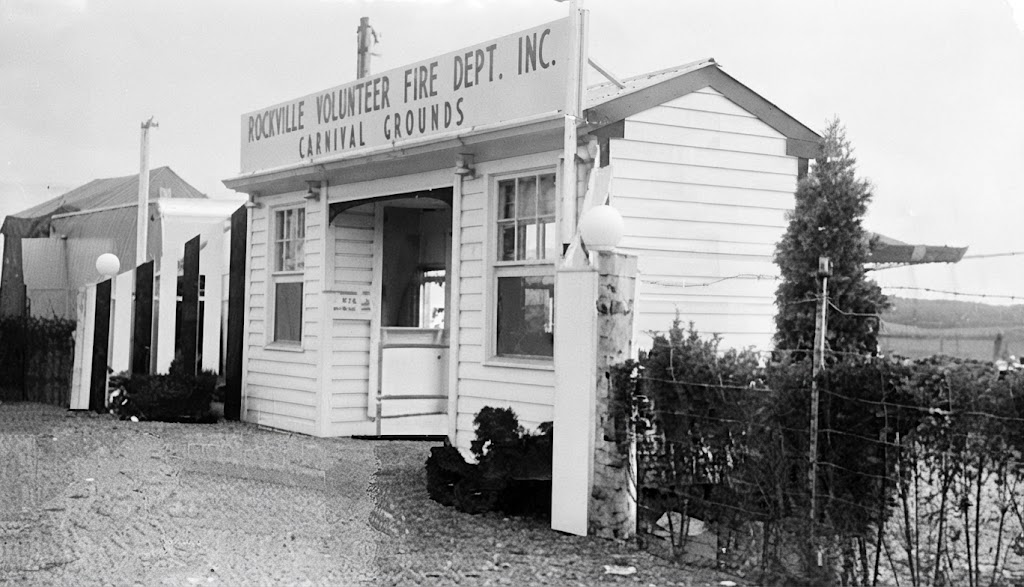
Carnival entrance from the Pike, c. 1950. Photo credit: RVFD Photo Archives.
Reed Brothers was more than simply a neighbor across the Pike. The Reed family’s connection with the Rockville Volunteer Fire Department dated to the department’s organization in 1921. Edgar Reed and his brother Philip were among its original members, establishing a relationship between the Reed family and the fire department that continued for decades.
By then, Lewis Reed and Edgar Reed were operating Reed Brothers Dodge just across the road. The dealership had been selling Dodge automobiles in Rockville since 1915, and the two institutions would become familiar landmarks along Rockville Pike as the town grew around them.

Closer view of the carnival grounds reveals Reed Brothers Dodge directly across Rockville Pike. The dealership and carnival were longtime neighbors, while the Reed family’s connection with the Rockville Volunteer Fire Department dated to its organization in 1921.
By the 1950s, the automobile giveaway had become one of the most anticipated traditions of the Rockville VFD Carnival. A brand-new car was a spectacular grand prize, and local automobile dealers helped keep the tradition going over the years.
Few carnivals, however, could have matched what happened in 1956.
On August 16, the Montgomery County Sentinel announced the carnival’s final three nights with a headline certain to attract attention:
“Three Cars Given Away At Rockville Carnival.”
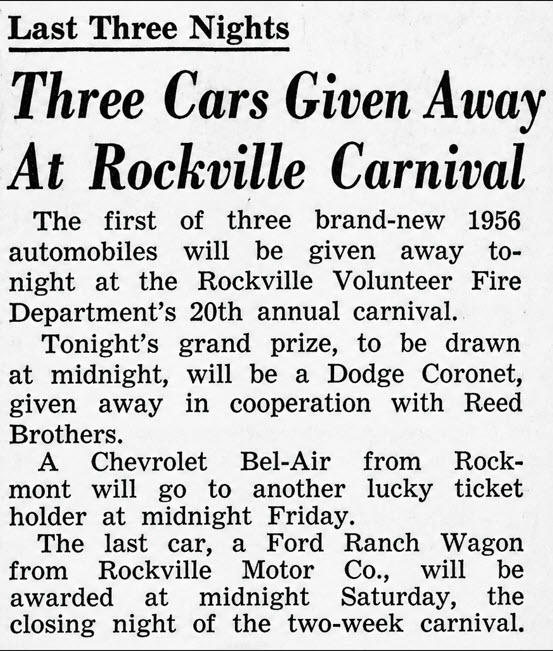
The Montgomery County Sentinel reported on August 16, 1956, that three new automobiles would be given away during the carnival’s final three nights.
Montgomery County was expanding rapidly, new neighborhoods were appearing, and the family automobile was becoming an essential part of everyday life.
A new car wasn’t simply another carnival prize. It was the grand prize.
For Reed Brothers, participating in the automobile giveaway was a natural extension of its longstanding connection to the fire department and the community. By 1956, the dealership had been selling Dodge automobiles in Rockville for more than forty years, and its buildings, signs, and rows of new cars were a familiar sight directly across the Pike from the carnival grounds.
The three automobiles were not the only attractions. The 1956 carnival offered rides, games, dancing, live entertainment, food, and prizes ranging from cooking utensils to stuffed bears. Admission was just 20 cents for adults, while children were admitted free.
Behind all the festivities was an important purpose. The Sentinel described the carnival as the culmination of a year’s work by members of the fire department and its principal source of financial support. At the time, the department received no tax money for its services.
Every admission, meal, game, and prize ticket helped support the firefighters who served the community.
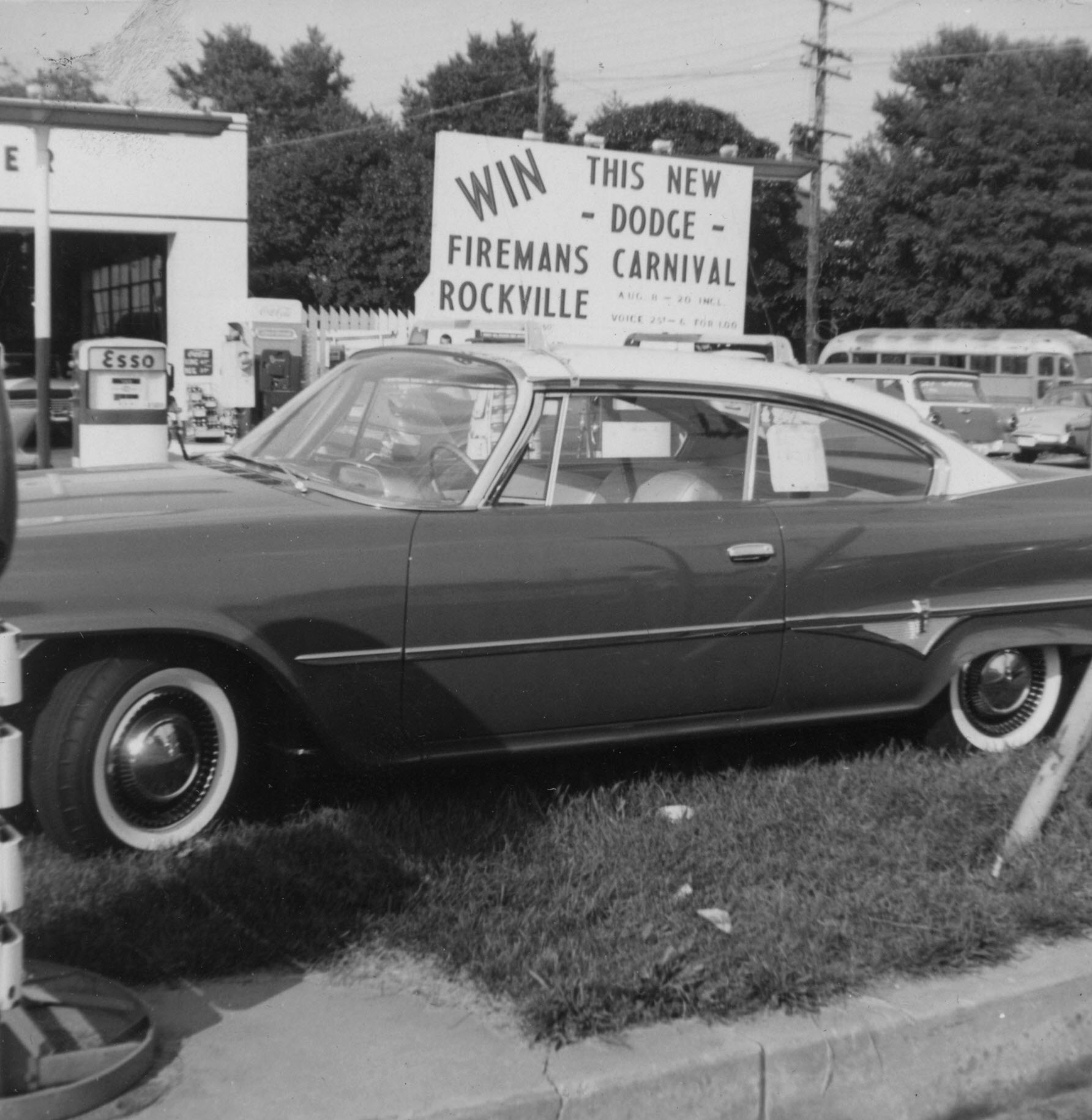
A new Dodge offered as a grand prize at a later Rockville VFD Carnival. Automobile giveaways were a popular carnival tradition for many years. Photo credit: RVFD Photo Archives.
New automobiles would continue to be among the carnival’s most exciting prizes in the years that followed.
The Rockville VFD Carnival eventually disappeared as the community and the demands upon the fire department changed. Reed Brothers Dodge remained across the Pike for decades longer.
Today, photographs and newspaper accounts preserve a glimpse of an earlier Rockville, when the annual firemen’s carnival brought the community together and buying a carnival ticket might result in considerably more than a stuffed bear.
You might just drive home in a brand-new Dodge.
Sources:
Montgomery County Sentinel, August 16, 1956
Rockville Volunteer Fire Department historical archives
Reed Brothers Dodge History archives
The Day Auto Racing Came to Rockville: Rare Photos from 1923
On Saturday, August 25, 1923, spectators gathered at the Rockville Fairgrounds for something never before seen there: automobile racing.
Professional drivers brought their high-powered racing machines to the half-mile dirt track for the first automobile races ever held at the Rockville Fair. Standing trackside with his camera was Rockville automobile dealer and photographer Lewis Reed, who captured a remarkable series of photographs of the action.
More than a century later, his images preserve the day auto racing came to Rockville.
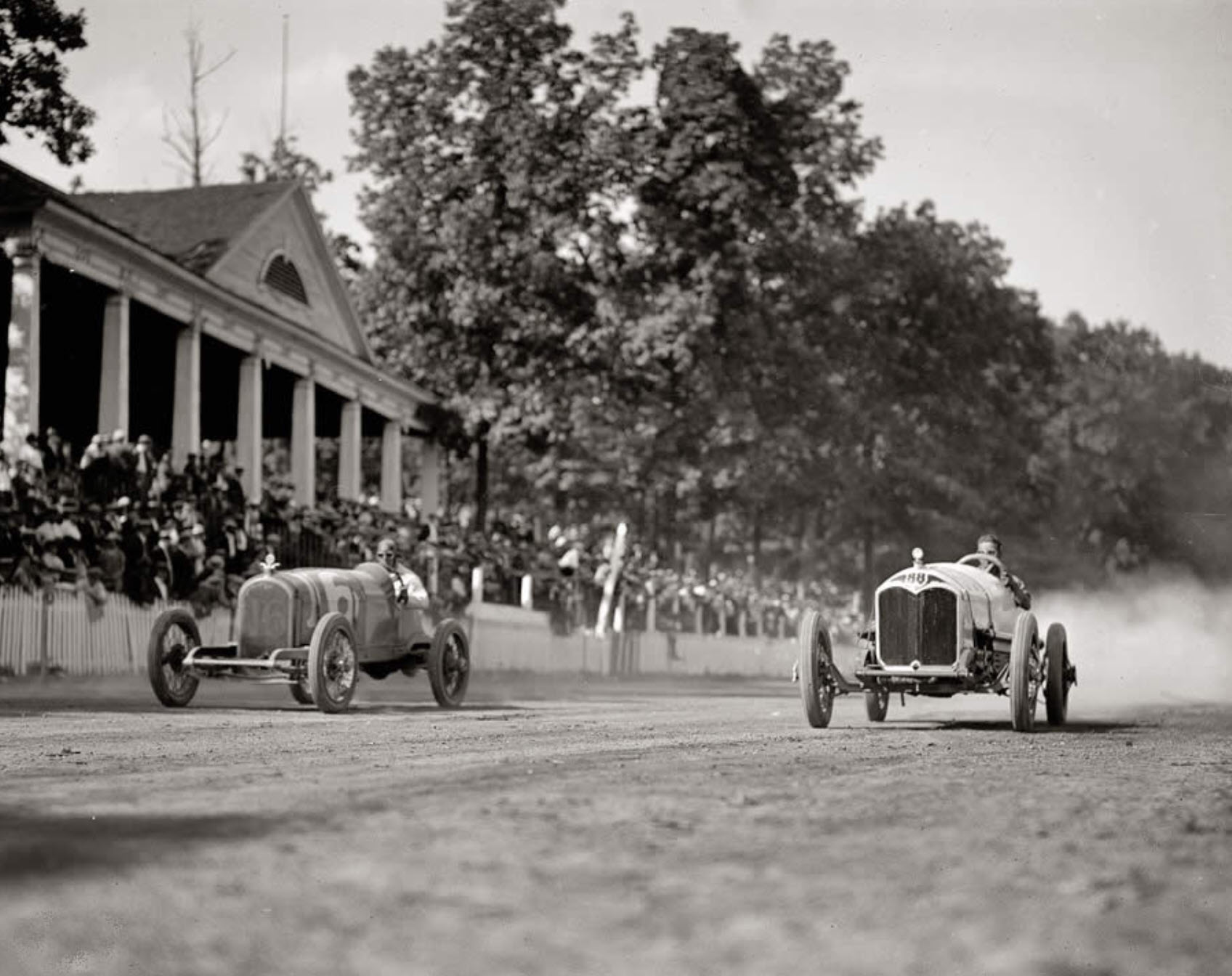
Rockville drew a large crowd for its first automobile races at the Rockville Fair, August 25, 1923. Photo by Lewis Reed.
Rockville’s First Auto Races
The automobile races were the featured attraction on the final day of the 1923 Fair. Contemporary newspaper accounts described them as an innovation for Rockville and confirmed that they were the first automobile races ever held there.
Seven high-powered cars competed in events ranging from one to ten miles, driven by some of the leading professional racers of the day. Canadian dirt-track racer Frank Ripple was among the featured drivers and was expected to attempt speed records in a powerful machine equipped with a 140-horsepower airplane engine.
The new attraction proved popular. Except for Thursday, traditionally the Fair’s biggest day, the Saturday automobile races reportedly drew the largest crowd of the five-day event.
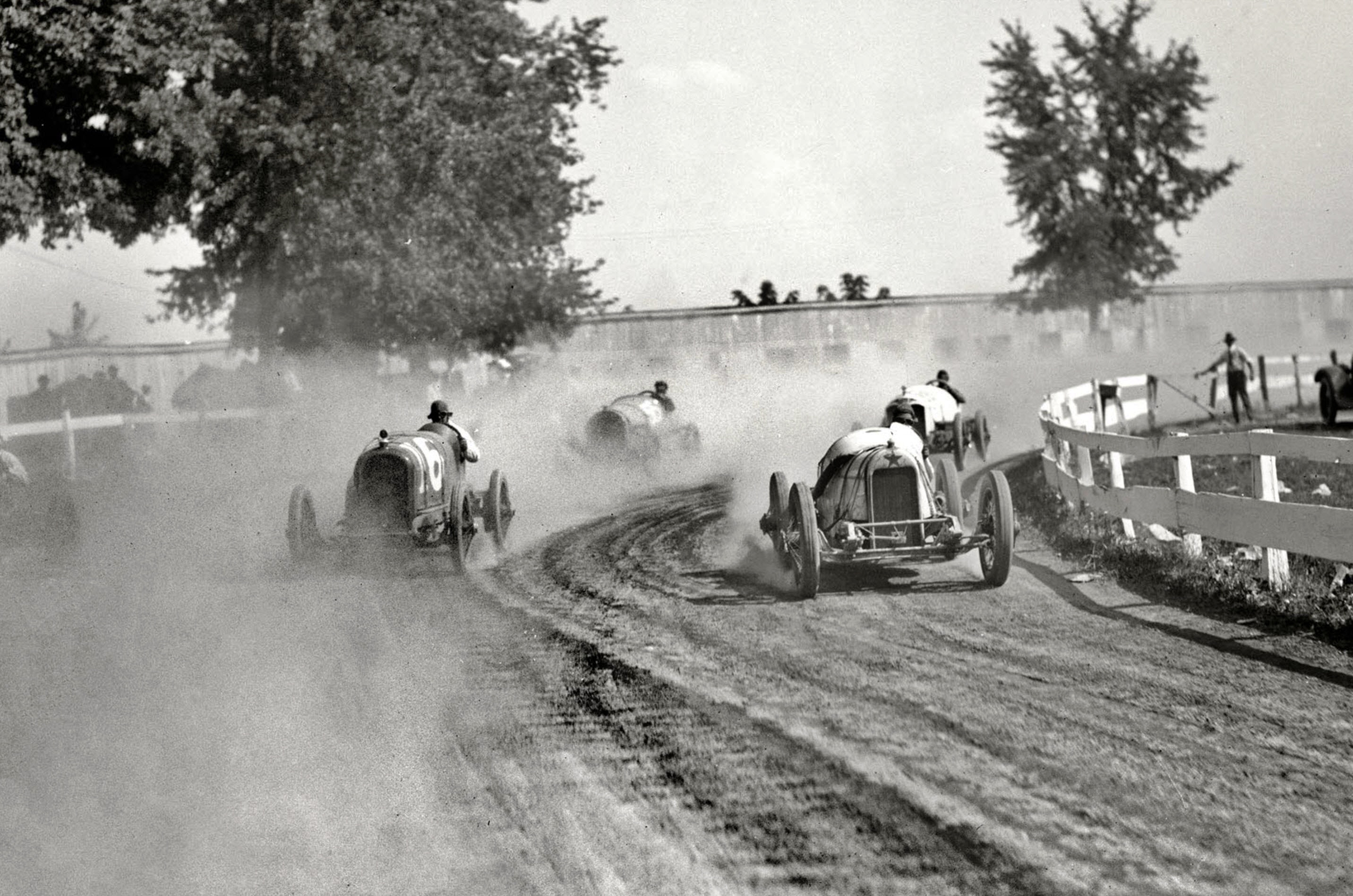
Five racers charge around the dirt track at the Rockville Fairgrounds, August 25, 1923. Photo by Lewis Reed.
Racing on the Dirt Track
Lewis Reed’s photographs show just how exciting early automobile racing could be. Cars raced closely together on the unpaved oval, their narrow tires throwing enormous clouds of dust into the air as drivers fought for position around the sweeping curves.
Spectators stood remarkably close to the action.
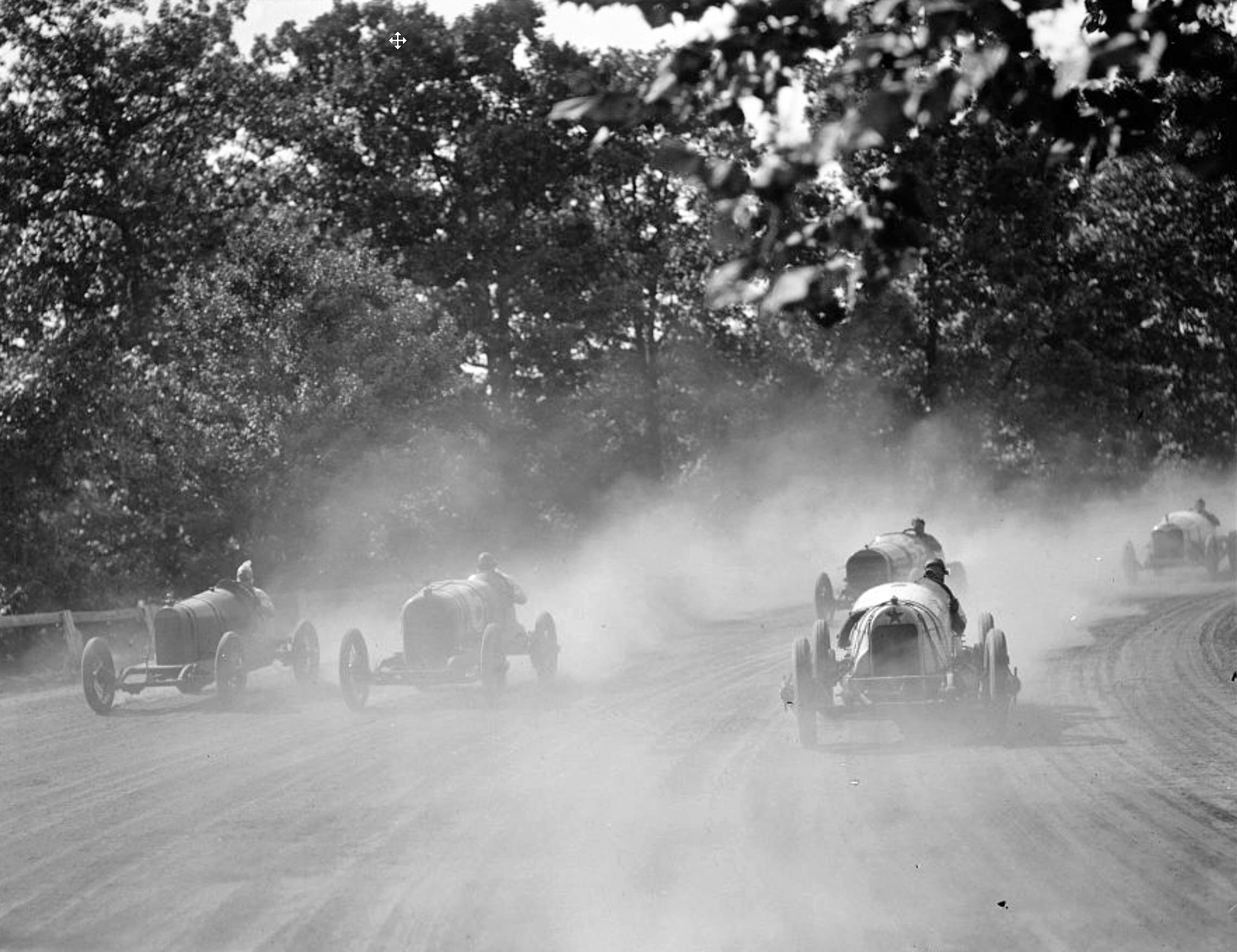
Race cars disappear into a cloud of dust while rounding the Rockville Fairgrounds track. Print made from a Lewis Reed glass negative.
One of Lewis Reed’s most interesting photographs from the races shows a car carrying two men. The passenger was a riding mechanic, once a familiar figure in early automobile racing. In addition to watching the mechanical condition of the car, he served as an extra set of eyes for the driver, keeping watch on competitors approaching from behind.
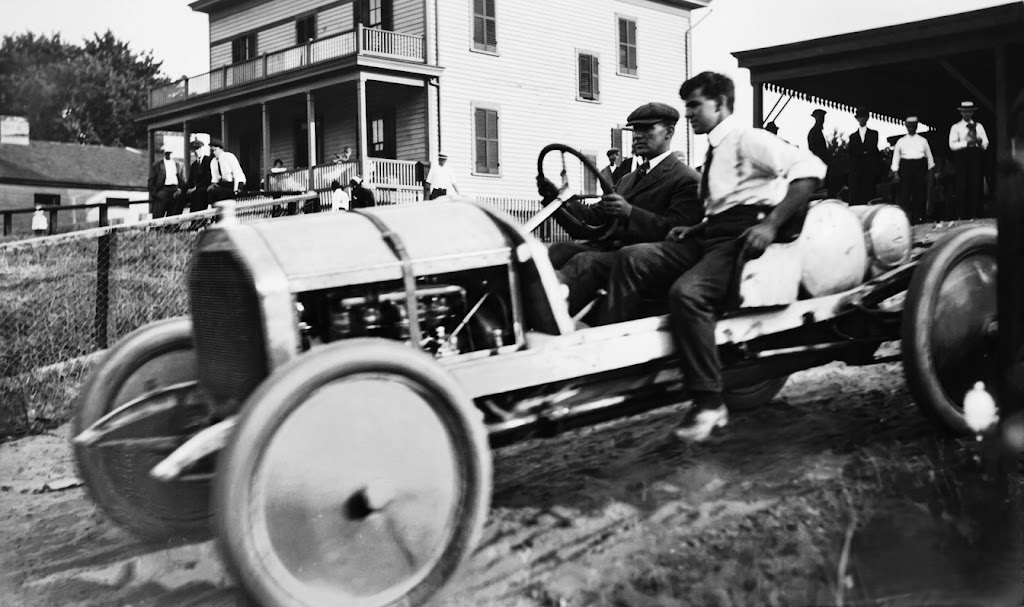
Driver and riding mechanic on the dirt track at the Rockville Fairgrounds, August 25, 1923. Photo by Lewis Reed.
A Future Indianapolis 500 Driver Raced at Rockville
Years after I first published these photographs, the story took an unexpected turn.
I received a message from John Snowberger, whose father, Russ Snowberger, raced at the Rockville Fairgrounds during the early 1920s. John told me that he had photographs of his father in his race car and believed that my grandfather, Lewis Reed, may have taken them.
Russ Snowberger, born in Denton, Maryland, raced throughout the region before going on to become a nationally known driver and a veteran of the Indianapolis 500.
Although I have not been able to establish that Snowberger competed specifically in the August 25, 1923 races, his son’s recollection provides a fascinating connection between Rockville’s early dirt-track racing and a driver who would later compete on one of the world’s most famous speedways.
It also raises an intriguing possibility: somewhere among Lewis Reed’s surviving photographs of early race cars and drivers may be an unidentified image of a young Russ Snowberger.
A Moment Preserved in Photographs
More than a century later, Lewis Reed’s photographs provide a rare visual record of the day automobile racing first came to the Rockville Fair.
They capture speeding cars, clouds of dust, spectators lining the track, and an era when automobile racing was still new enough to be a major local attraction.
And thanks to a message received nearly a century later from the son of an Indianapolis 500 driver, we now know that the old Rockville dirt track had connections extending well beyond Montgomery County.
For one dusty Saturday in August 1923, Rockville became a racing town.
From Rockville to Gaithersburg: The Montgomery County Fair Through the Lens of Lewis Reed
Special Feature for Montgomery County Agricultural Fair Week
August 14–22, 2026
A look back at the fair’s early years through the lens of Lewis Reed.
Every August, hundreds of thousands of visitors flock to the Montgomery County Agricultural Fair to enjoy livestock exhibitions, agricultural displays, carnival rides, competitions, concerts, and family traditions that have endured for generations. While today’s fairgrounds in Gaithersburg are familiar to many, the fair itself began long before the current site existed.
Organized in 1846 by the Montgomery County Agricultural Society, the annual fair was established to promote agriculture, encourage innovation, and strengthen the county’s farming community. For decades, it brought together farmers, merchants, craftsmen, and families from across Montgomery County to exchange ideas, exhibit their finest livestock and crops, and celebrate the region’s agricultural heritage.
By the time Lewis Reed began photographing Montgomery County around the turn of the twentieth century, the fair had become one of the county’s largest and most anticipated annual events. Carrying his camera throughout the fairgrounds, Reed documented not only the exhibits and attractions but also the people who made the fair an enduring community tradition.
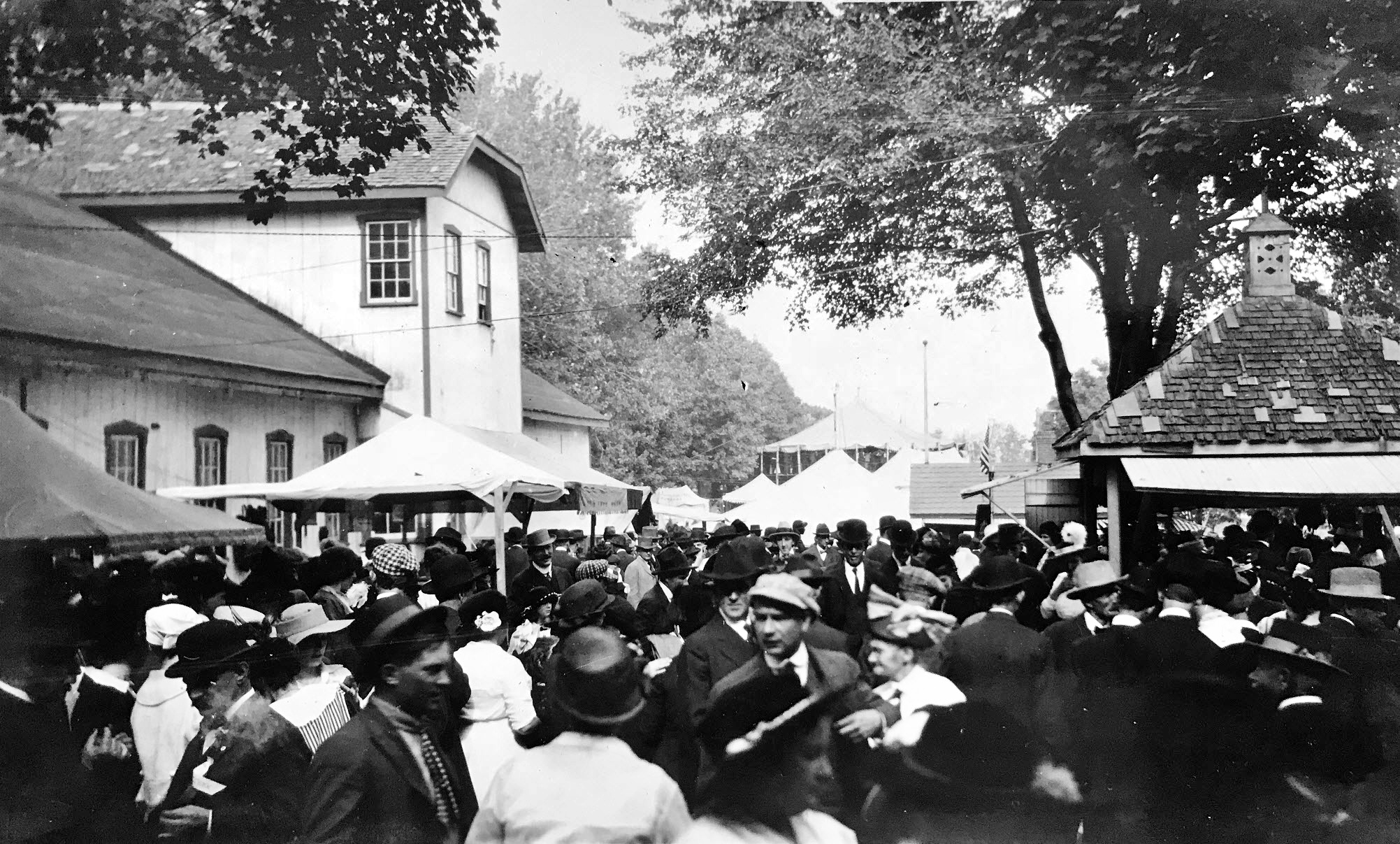
Fairgoers stroll along the midway in their Sunday best, ca. 1910. Broad-brimmed hats, long flowing dresses, and tailored suits reflected the fashion of the era, when dressing for the county fair was as much a social occasion as the event itself.
Reed’s photographs reveal a fair that was both educational and entertaining. Agriculture remained its foundation, but visitors also came to enjoy the excitement of the midway, where amusement rides, games, and food vendors transformed the fairgrounds into a festive gathering place for young and old alike.
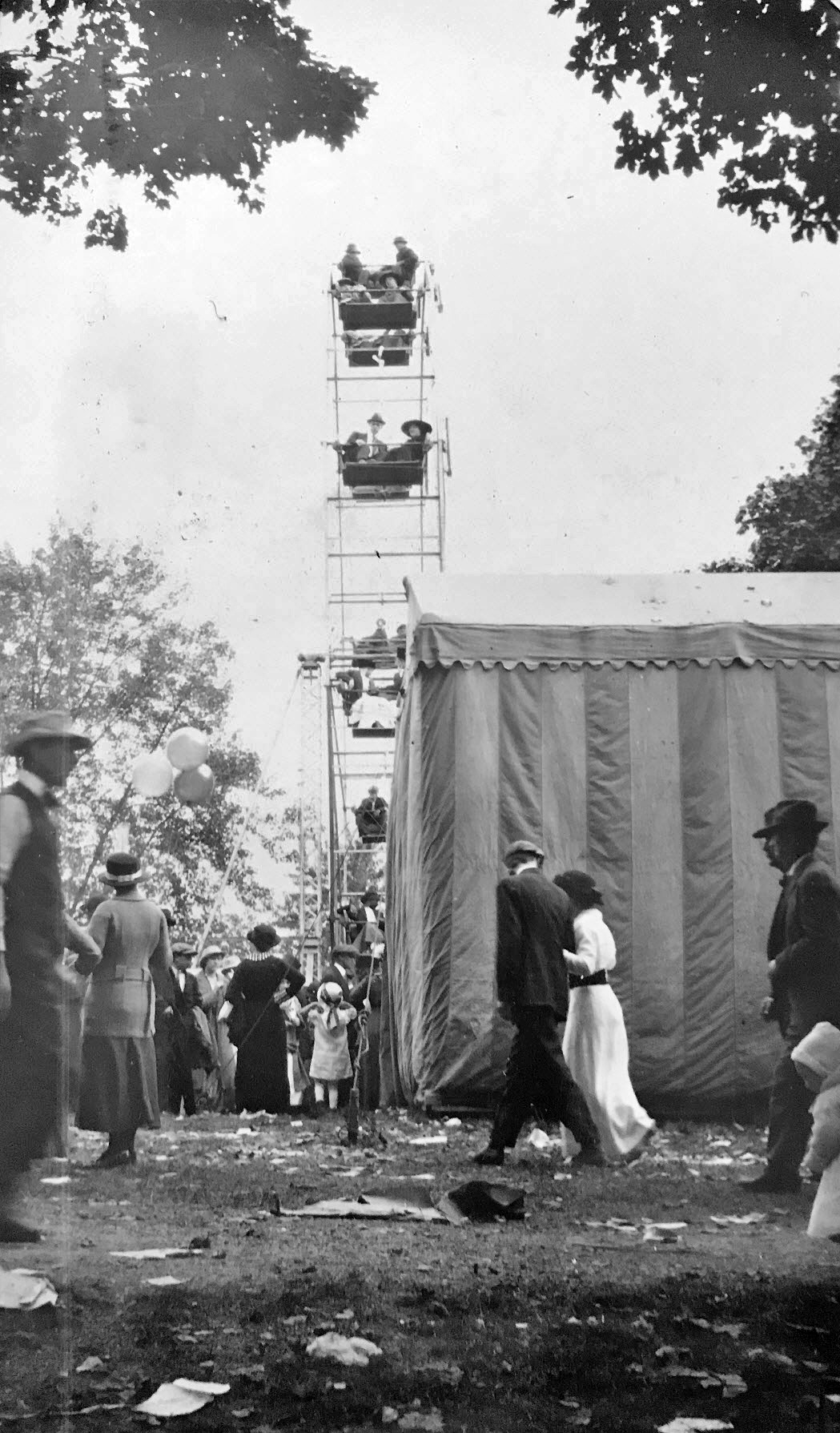
Ferris Wheel at the Montgomery County Fair, Rockville, ca. 1910. One of the fair’s most popular attractions towered above the fairgrounds, symbolizing how the annual exhibition combined agricultural traditions with modern entertainment.
Behind the excitement of the midway was the fair’s original purpose. Exhibition halls displayed the county’s finest produce, flowers, baked goods, preserves, and handcrafted items, while nearby barns housed prize-winning livestock representing the best of Montgomery County’s farms. Manufacturers exhibited the latest farm machinery and equipment, giving visitors an opportunity to see how new technology was steadily transforming rural life.
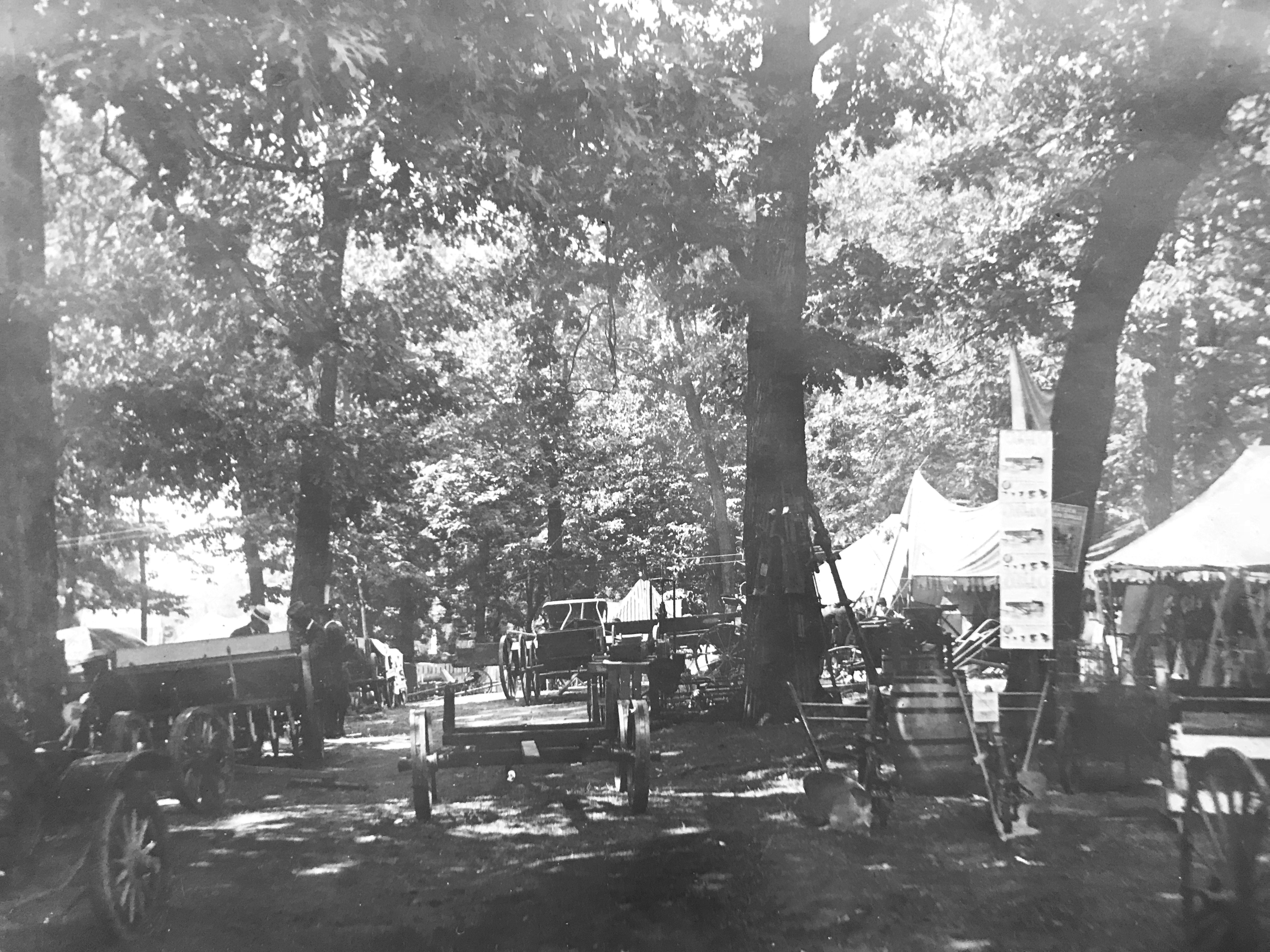
Agriculture remained the heart of the fair. Manufacturers displayed the latest farm machinery, giving local farmers an opportunity to compare new equipment and modern farming methods.
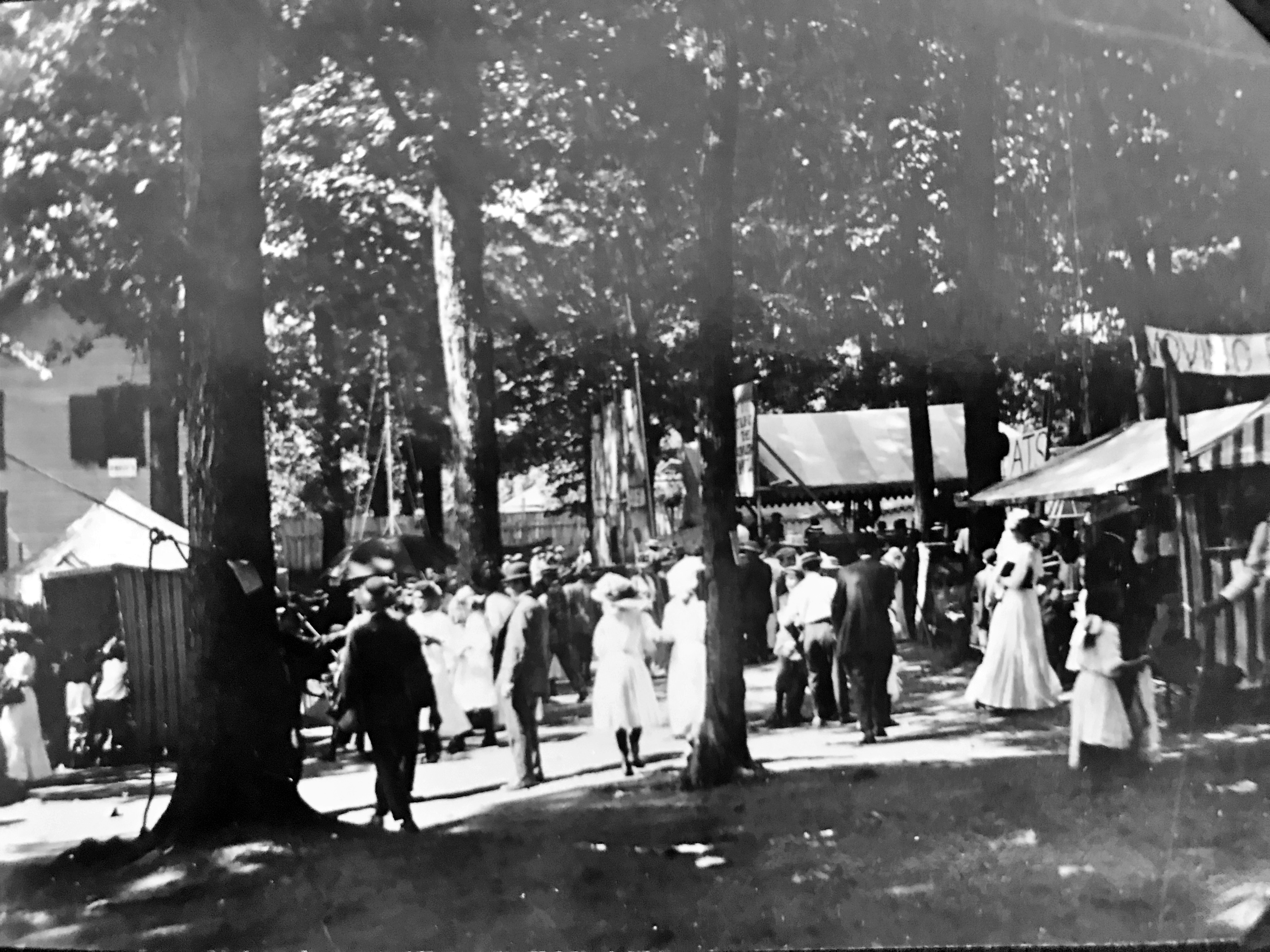
Visitors explored displays celebrating Montgomery County’s agricultural achievements, local craftsmanship, and community pride.
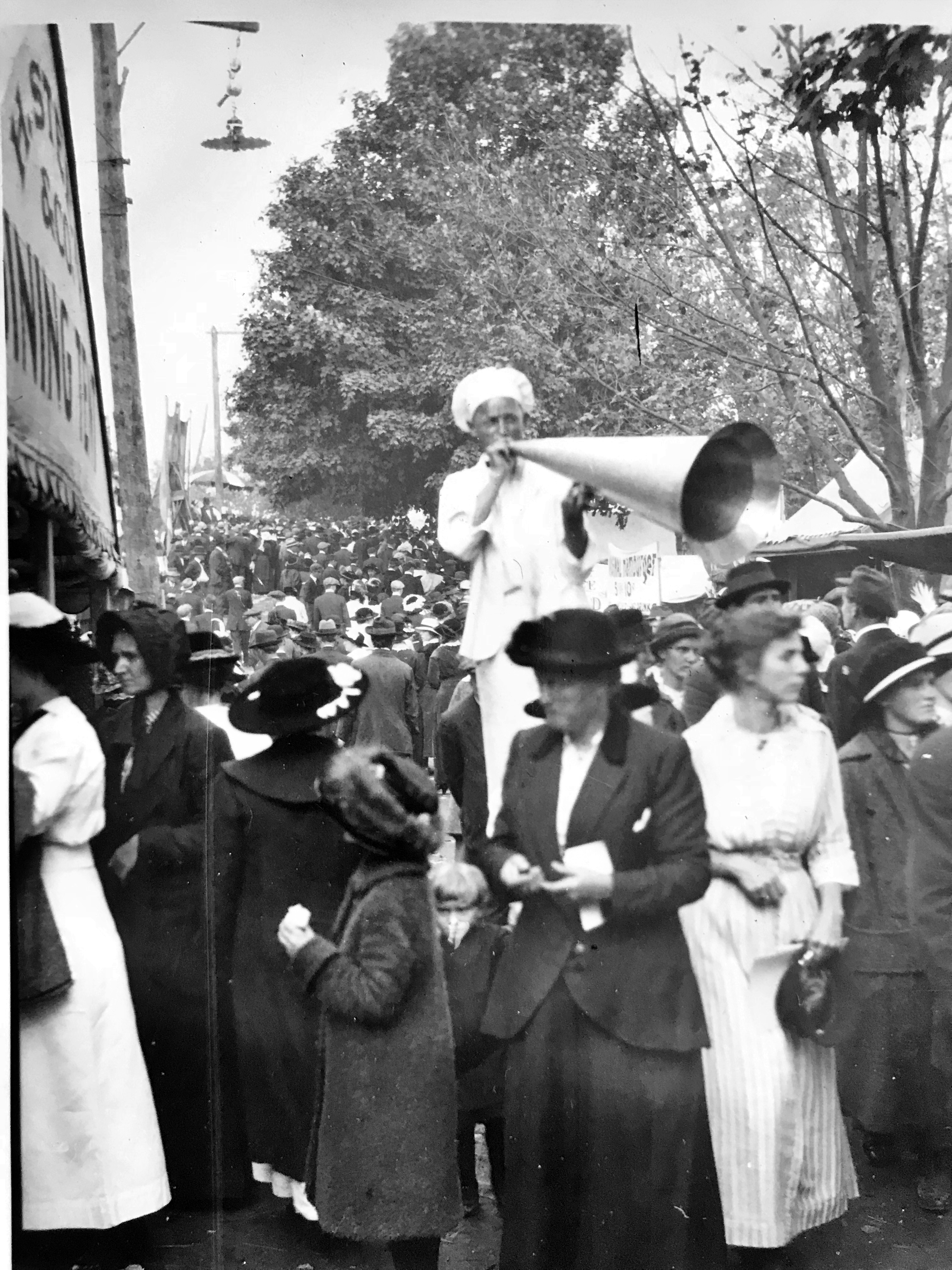
An exhibitor captures the attention of fairgoers.
One of Lewis Reed’s most compelling photographs captures hundreds of automobiles parked throughout the fairgrounds. As a lifelong automobile enthusiast and future founder of Reed Brothers Dodge, Reed recognized that the motorcar was transforming Montgomery County. His photograph preserves that moment when the automobile had become an integral part of daily life and community gatherings.
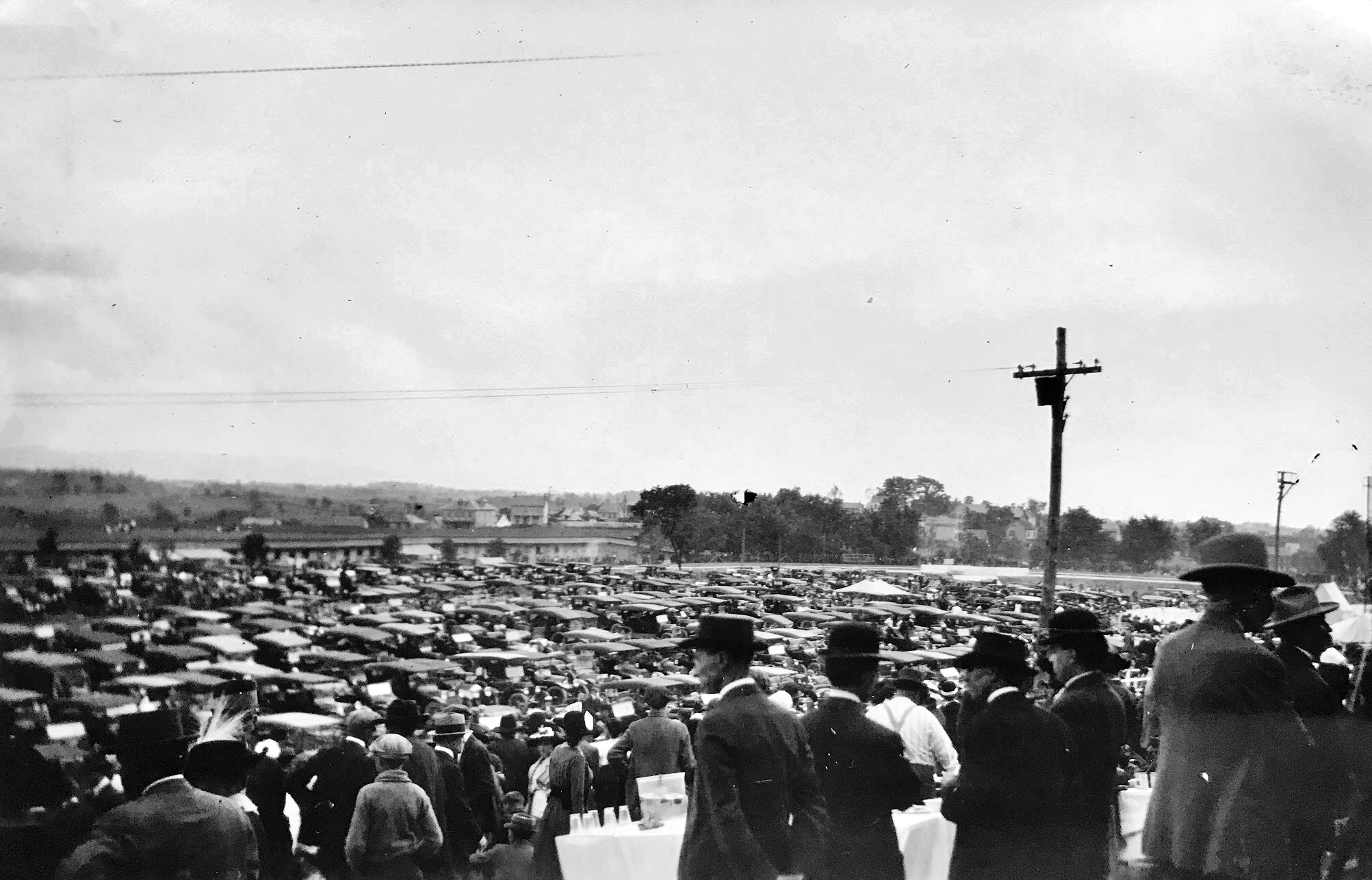
Hundreds of cars in the parking lot.
The grandstand and one-third-mile dirt race track were among the fair’s most popular attractions. Horse racing remained a favorite event, while bicycle races, motorcycle exhibitions, and eventually automobile competitions reflected America’s growing fascination with speed and mechanical innovation. Reed’s photographs preserve these moments at a time when transportation itself was rapidly changing.
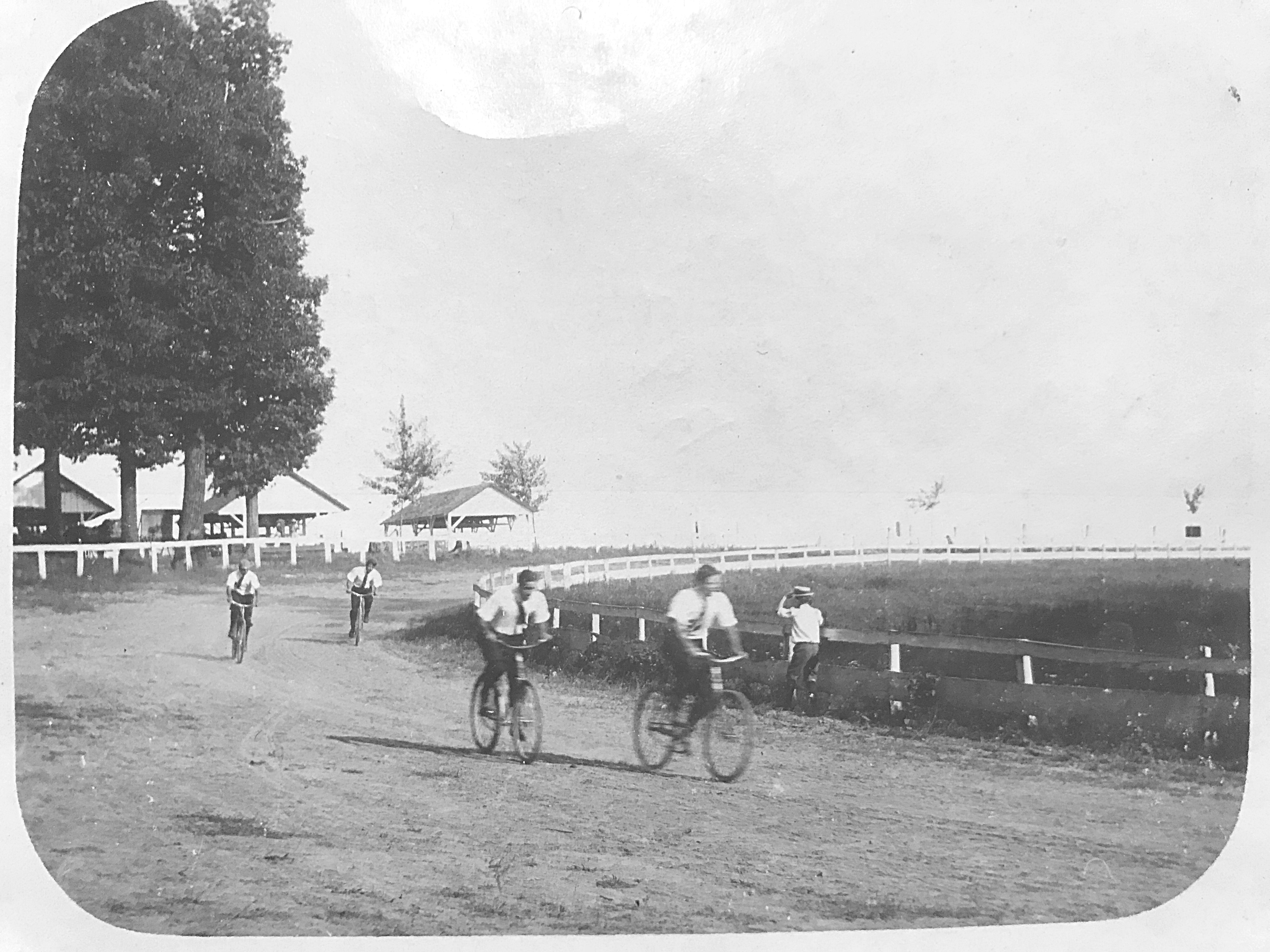
Bicycle races became very popular throughout the country and were a novel event at the Rockville Fairgrounds as early as 1915. The track was a half-mile dirt racing oval with wide, sweeping curves and a grandstand for spectators, which made for clear views. Notice the riders are in shirts and ties.
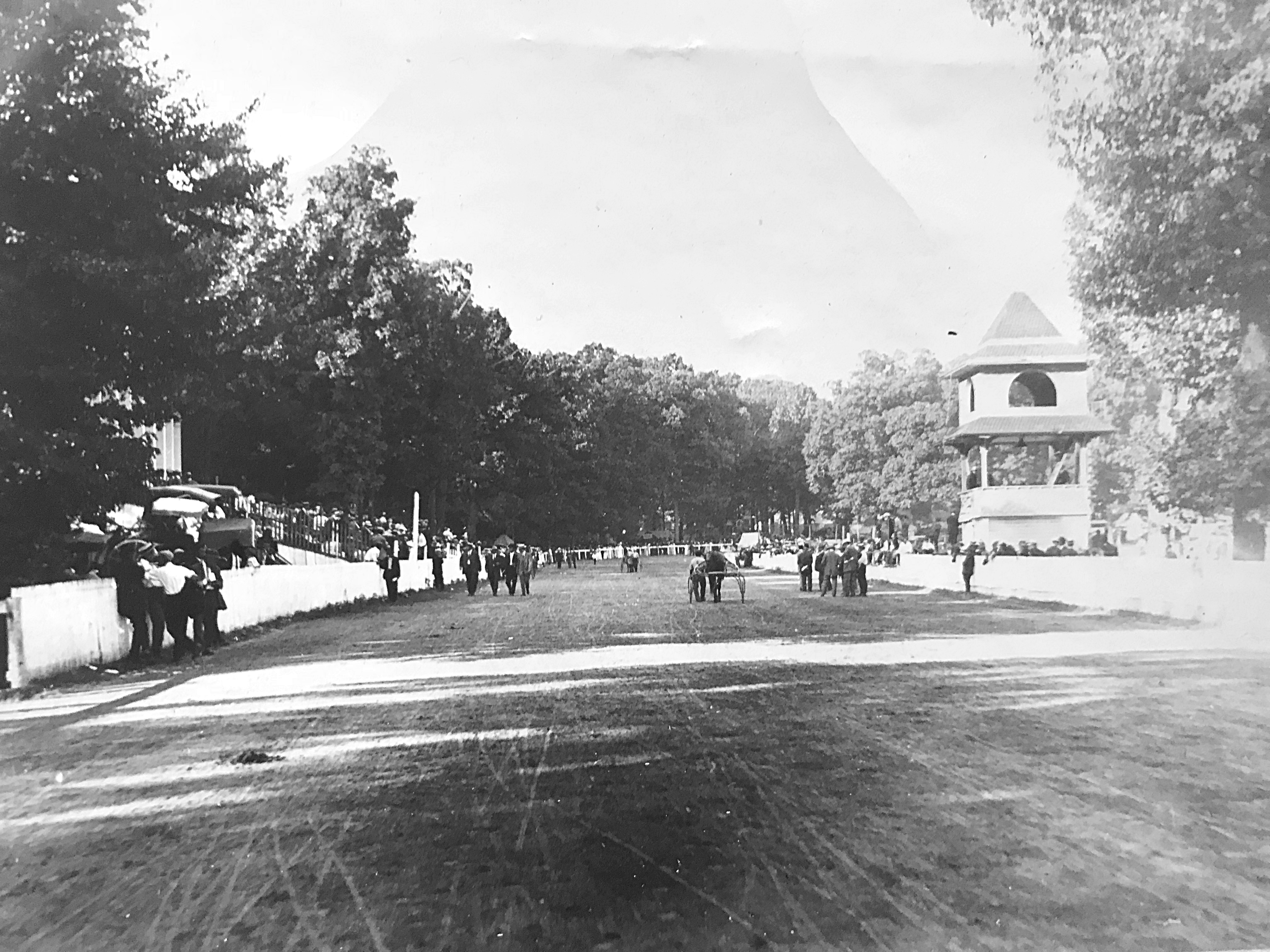
Harness racing was one of the main attractions at the race track before the introduction of the automobile and the subsequent popularity of racing cars.
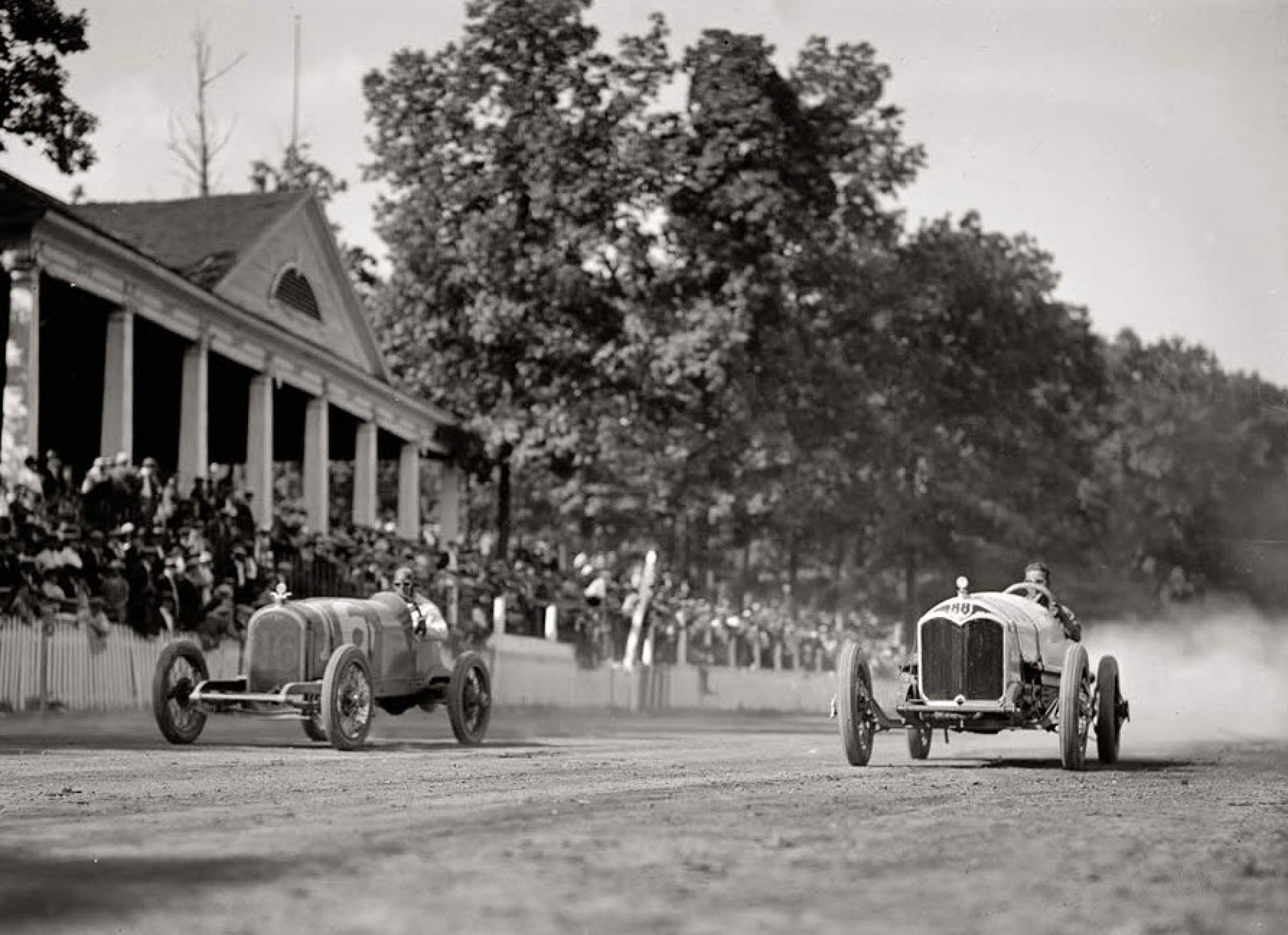
Spectators pack the grandstand for the automobile races at the Rockville Fair, August 25, 1923. Racing events drew visitors from across the region and showcased the excitement of the new motor age.
The Rockville fairgrounds continued to host the Montgomery County Fair until 1932, when financial hardships brought on by the Great Depression forced the Agricultural Society to sell the property. The site would later become the home of Richard Montgomery High School. In 1949, hundreds of volunteers joined together to establish the Montgomery County Agricultural Center in Gaithersburg, where the fair continues today.
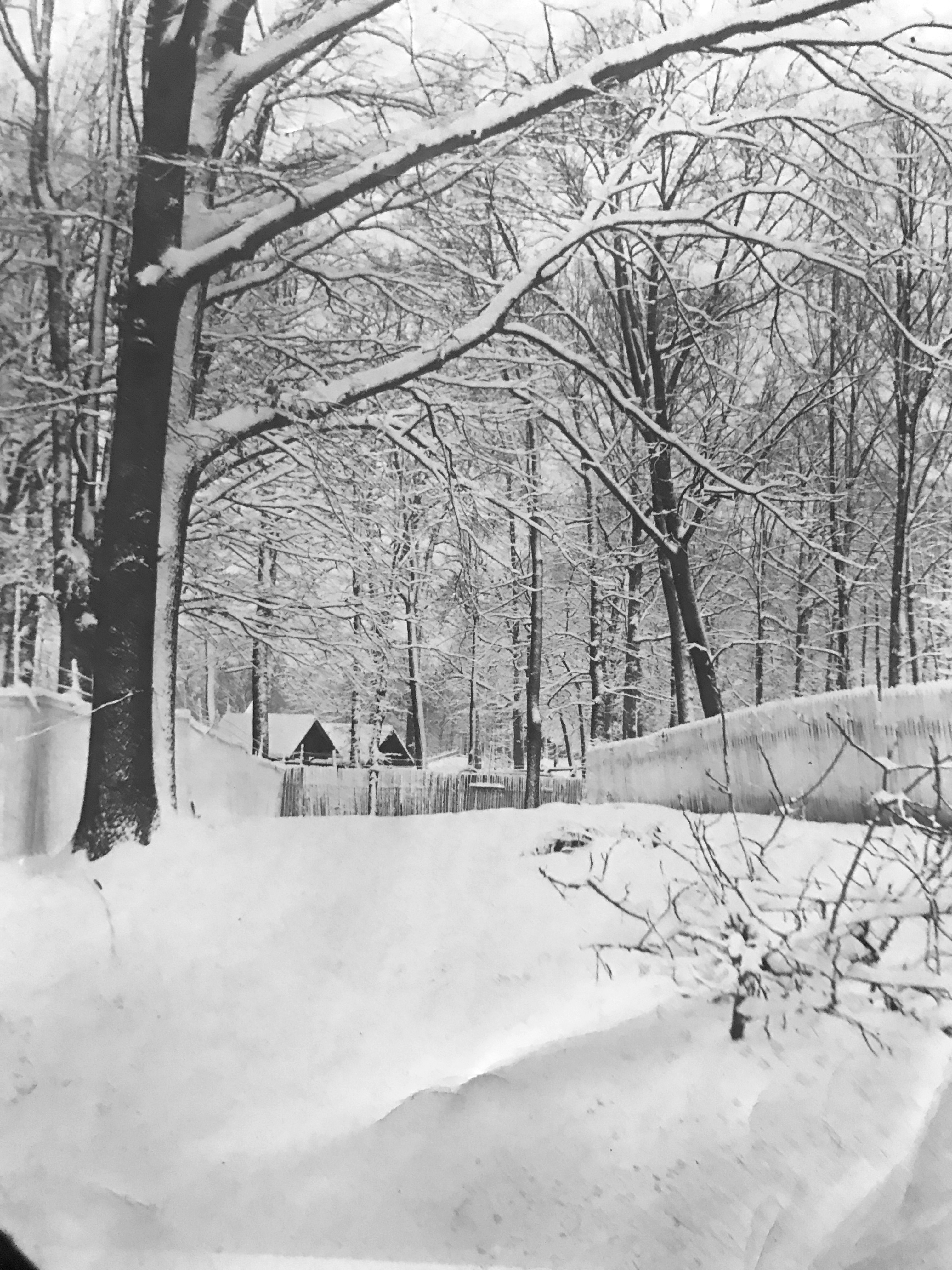
Winter at the Rockville Fairgrounds, 1910. Lewis Reed’s photograph captures a rare, tranquil view of the fairgrounds between seasons, preserving a landscape that would eventually disappear from Montgomery County.
Much has changed since Lewis Reed walked the fairgrounds with his camera. The original race track has disappeared, the Rockville fairgrounds exist only in photographs, and Montgomery County has grown from a rural farming community into one of Maryland’s most populous counties. Yet the fair’s mission has remained remarkably consistent: celebrating agriculture, education, community, and innovation.
As visitors gather for this year’s Montgomery County Agricultural Fair, Lewis Reed’s photographs offer a rare opportunity to look back at the fair’s early years and experience a tradition that has united generations of Montgomery County residents for nearly 180 years.
Two New Books Featuring Lewis Reed’s Historic Montgomery County Photographs
More than 125 years ago, a young boy named Lewis Reed picked up a camera and began photographing the world around him. What started as a youthful fascination with photography grew into one of the most important visual records of Montgomery County’s history.
From the late 1890s through the mid-twentieth century, Lewis Reed documented a county in transition. His photographs preserve everyday life during an era when dirt roads gradually gave way to paved highways, horse-drawn wagons shared the road with the first automobiles, and small rural communities evolved into the suburban landscape we know today. Today, the Lewis Reed Photograph Collection contains more than 2,500 photographs and continues to serve as an invaluable resource for historians, educators, museums, and local preservation projects.
For a little more than a decade, I have been privileged to preserve, research, and share this remarkable collection through books, online exhibits, presentations, historical markers, and hundreds of articles published here on Reed Brothers Dodge History. It has been my goal to ensure that Lewis Reed’s photographs remain accessible to everyone interested in Montgomery County’s rich heritage.
I am pleased to announce the completion of two new softcover companion books inspired by the Montgomery History online exhibits that celebrate Lewis Reed’s photographic legacy and introduce these remarkable images to an even wider audience.
Montgomery County: Through the Lens of Lewis Reed
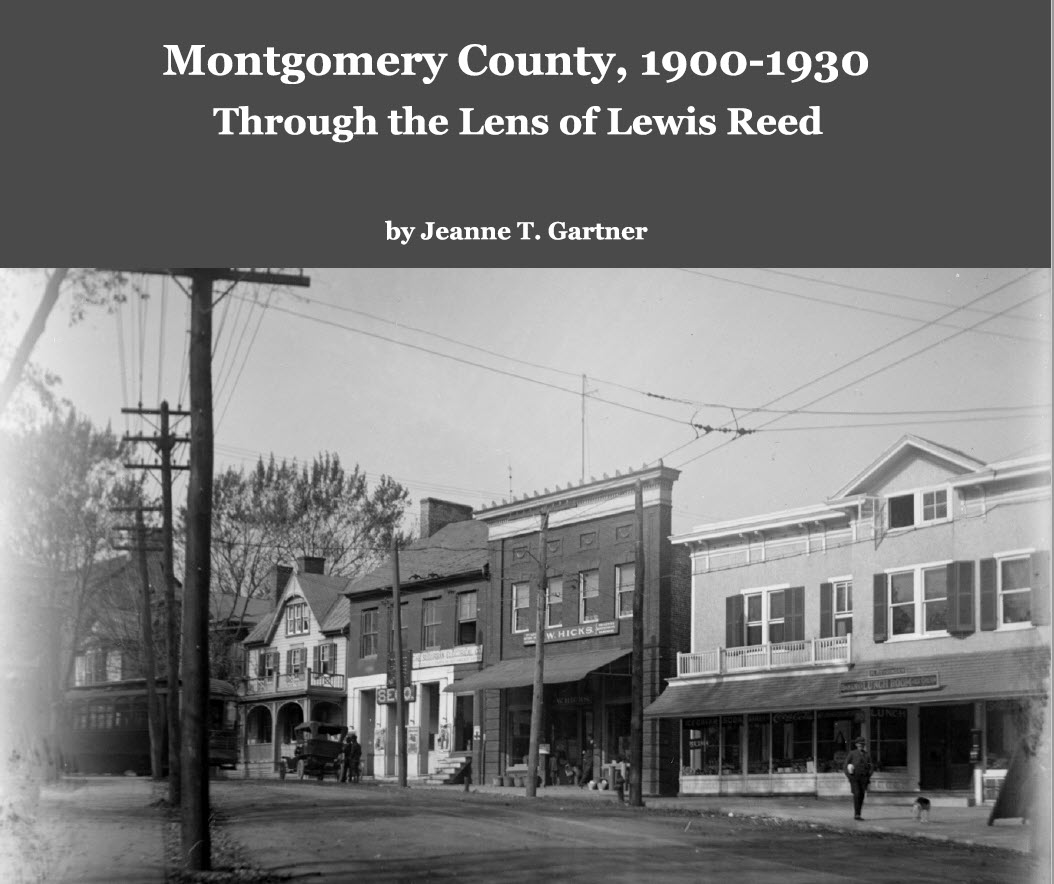
Created as a companion volume to Montgomery History’s online exhibit of the same name, this compact book presents a carefully selected collection of Lewis Reed’s finest photographs. Inspired by the online exhibit, it preserves a remarkable visual record of a Montgomery County that has largely disappeared.
Taken during the first decades of the twentieth century, these photographs capture a county undergoing profound change while demonstrating Lewis Reed’s remarkable gift for documenting history as it unfolded. Today, they stand among the most significant visual records of Montgomery County’s early history.
Montgomery County: Then and Now – Photography of Lewis Reed and Barry Gartner
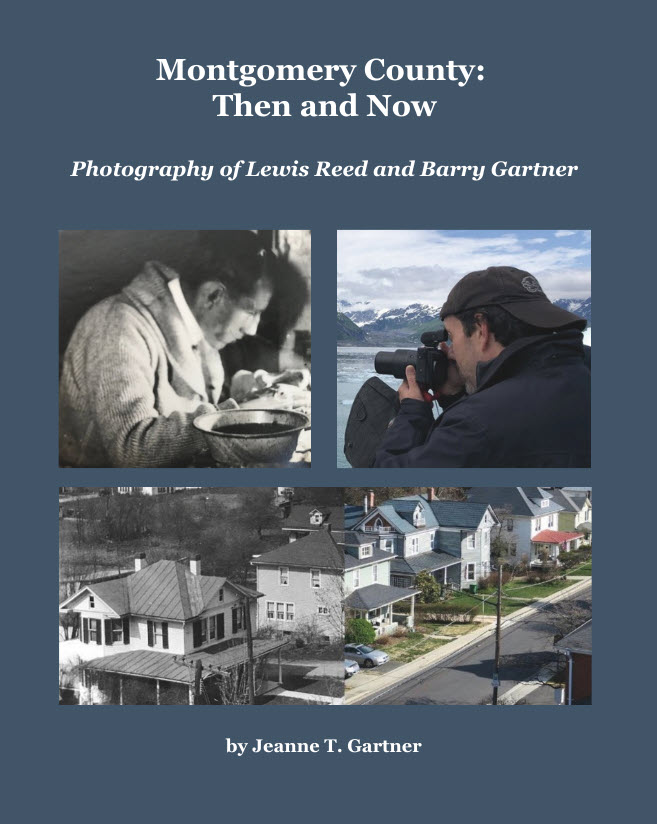
Also created as a companion volume to Montgomery History’s online exhibit of the same name, this full-color book pairs Lewis Reed’s historic photographs with modern images recreated from the same locations by his grandson, Barry Gartner. Together, the photographic pairs reveal more than a century of change while preserving a visual connection between Montgomery County’s past and present.
The result is a unique comparison of familiar landscapes, demonstrating how photography can bridge generations and deepen our understanding of the communities that continue to evolve.
Now Available
I’m excited to share that Montgomery County: Then and Now – Photography of Lewis Reed and Barry Gartner is now available to preview or purchase through Blurb’s print-on-demand bookstore.
Readers can browse the entire book online before ordering, making it easy to explore this unique photographic journey through Montgomery County’s past and present.
Preview or order your copy here:
Montgomery County: Then and Now – Photography of Lewis Reed and Barry Gartner
The companion volume, Montgomery County: Through the Lens of Lewis Reed, will also be available soon.
Continuing the Legacy
Every publication built around the Lewis Reed Photograph Collection helps preserve a remarkable visual record of Montgomery County’s history. More than historic images, these photographs connect us with the people, places, and landscapes that shaped our communities and remind us how much can be learned from a single photograph.
Thank you to everyone who has encouraged and supported this work over the years. Your interest in Lewis Reed’s photography has helped ensure that this extraordinary collection continues to educate, inspire, and preserve Montgomery County’s history for future generations.
To explore these and my other publications, please visit the Featured Publications page here on Reed Brothers Dodge History.
Books

Related Resources


Copyright Notice

Reed Brothers Dodge History (1915-2012) by Jeanne Gartner is licensed under a Creative Commons Attribution-NonCommercial 3.0 Unported License.


Recent Comments