
The Day Auto Racing Came to Rockville: Rare Photos from 1923
On Saturday, August 25, 1923, spectators gathered at the Rockville Fairgrounds for something never before seen there: automobile racing.
Professional drivers brought their high-powered racing machines to the half-mile dirt track for the first automobile races ever held at the Rockville Fair. Standing trackside with his camera was Rockville automobile dealer and photographer Lewis Reed, who captured a remarkable series of photographs of the action.
More than a century later, his images preserve the day auto racing came to Rockville.
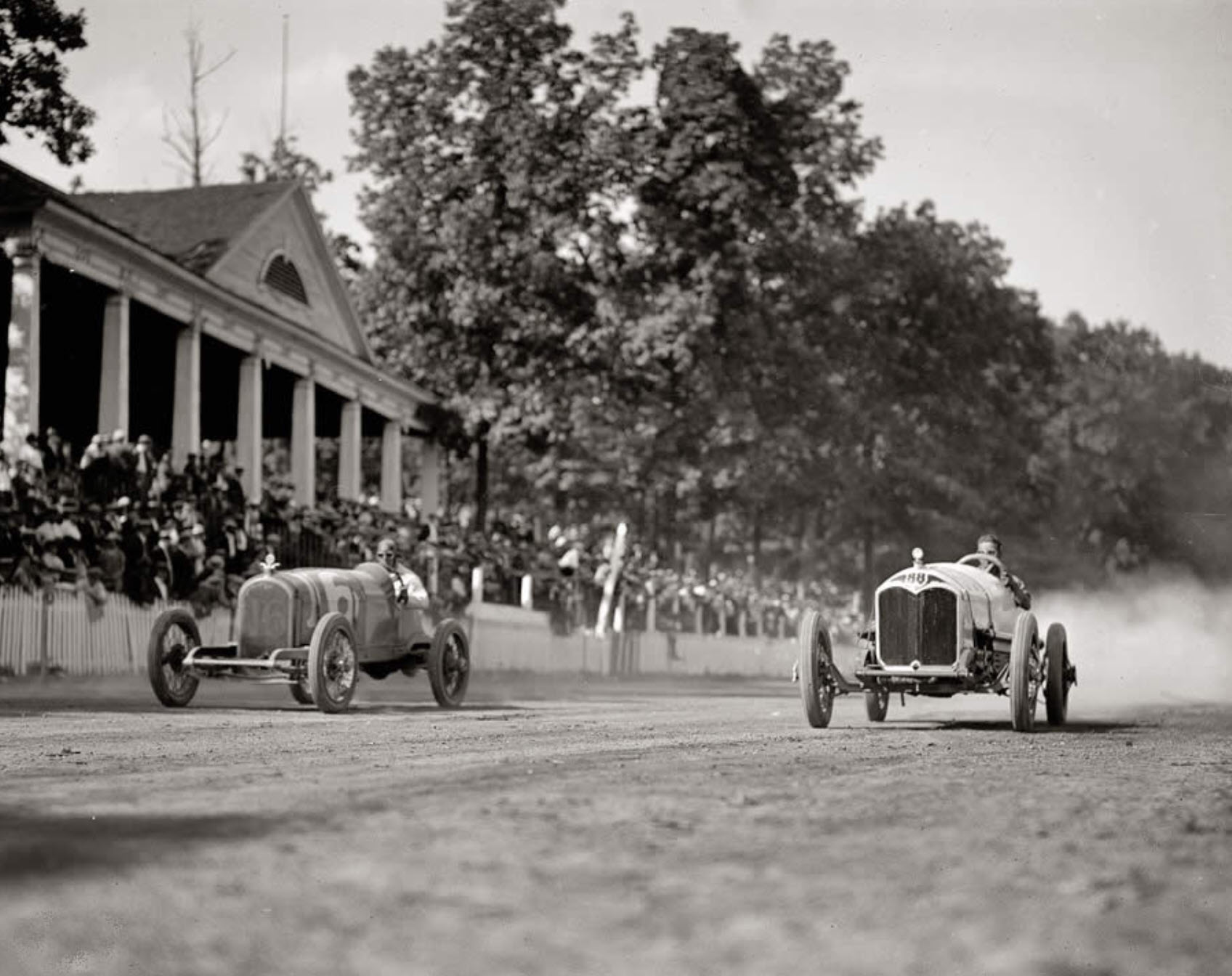
Rockville drew a large crowd for its first automobile races at the Rockville Fair, August 25, 1923. Photo by Lewis Reed.
Rockville’s First Auto Races
The automobile races were the featured attraction on the final day of the 1923 Fair. Contemporary newspaper accounts described them as an innovation for Rockville and confirmed that they were the first automobile races ever held there.
Seven high-powered cars competed in events ranging from one to ten miles, driven by some of the leading professional racers of the day. Canadian dirt-track racer Frank Ripple was among the featured drivers and was expected to attempt speed records in a powerful machine equipped with a 140-horsepower airplane engine.
The new attraction proved popular. Except for Thursday, traditionally the Fair’s biggest day, the Saturday automobile races reportedly drew the largest crowd of the five-day event.
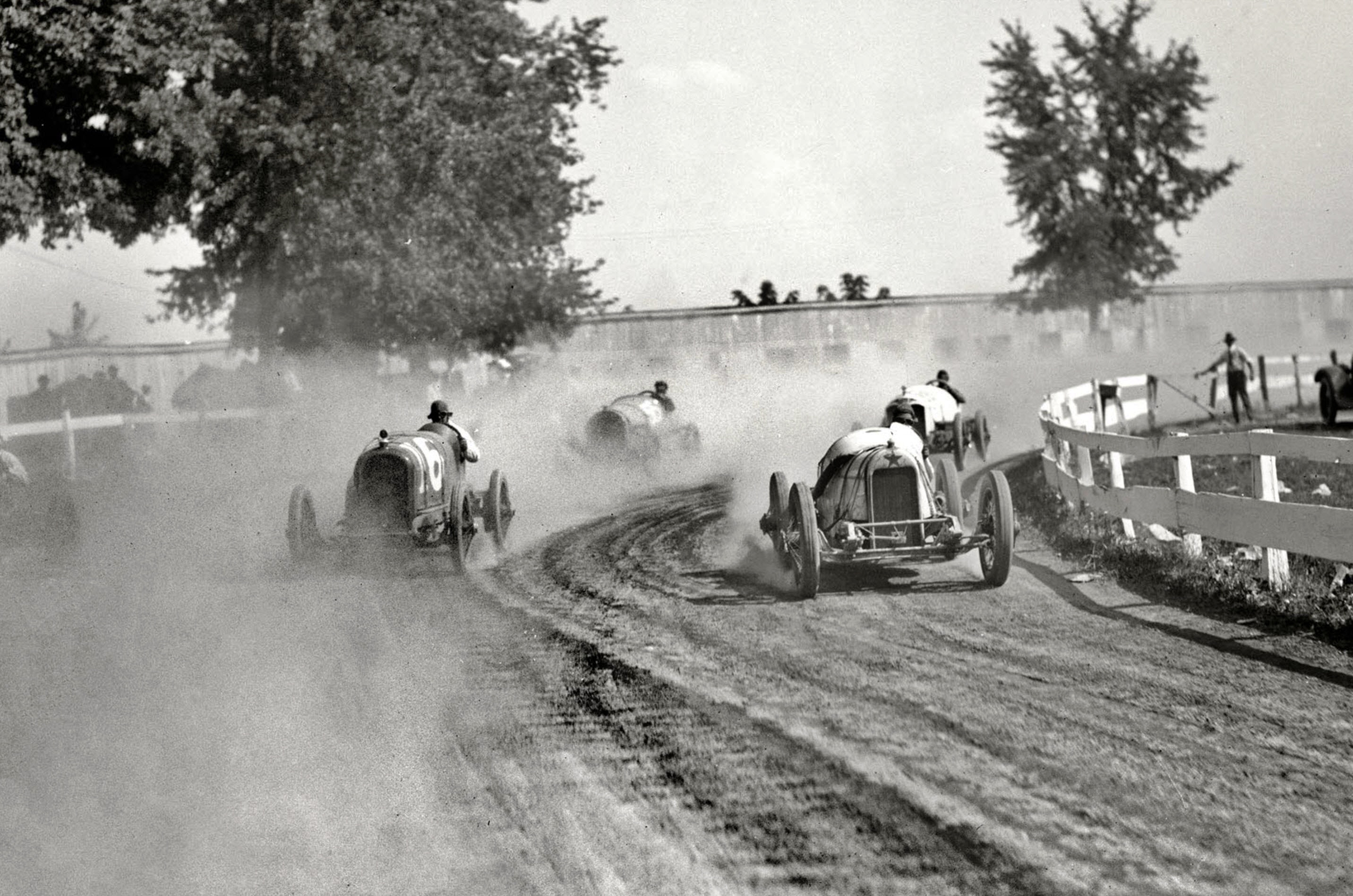
Five racers charge around the dirt track at the Rockville Fairgrounds, August 25, 1923. Photo by Lewis Reed.
Racing on the Dirt Track
Lewis Reed’s photographs show just how exciting early automobile racing could be. Cars raced closely together on the unpaved oval, their narrow tires throwing enormous clouds of dust into the air as drivers fought for position around the sweeping curves.
Spectators stood remarkably close to the action.
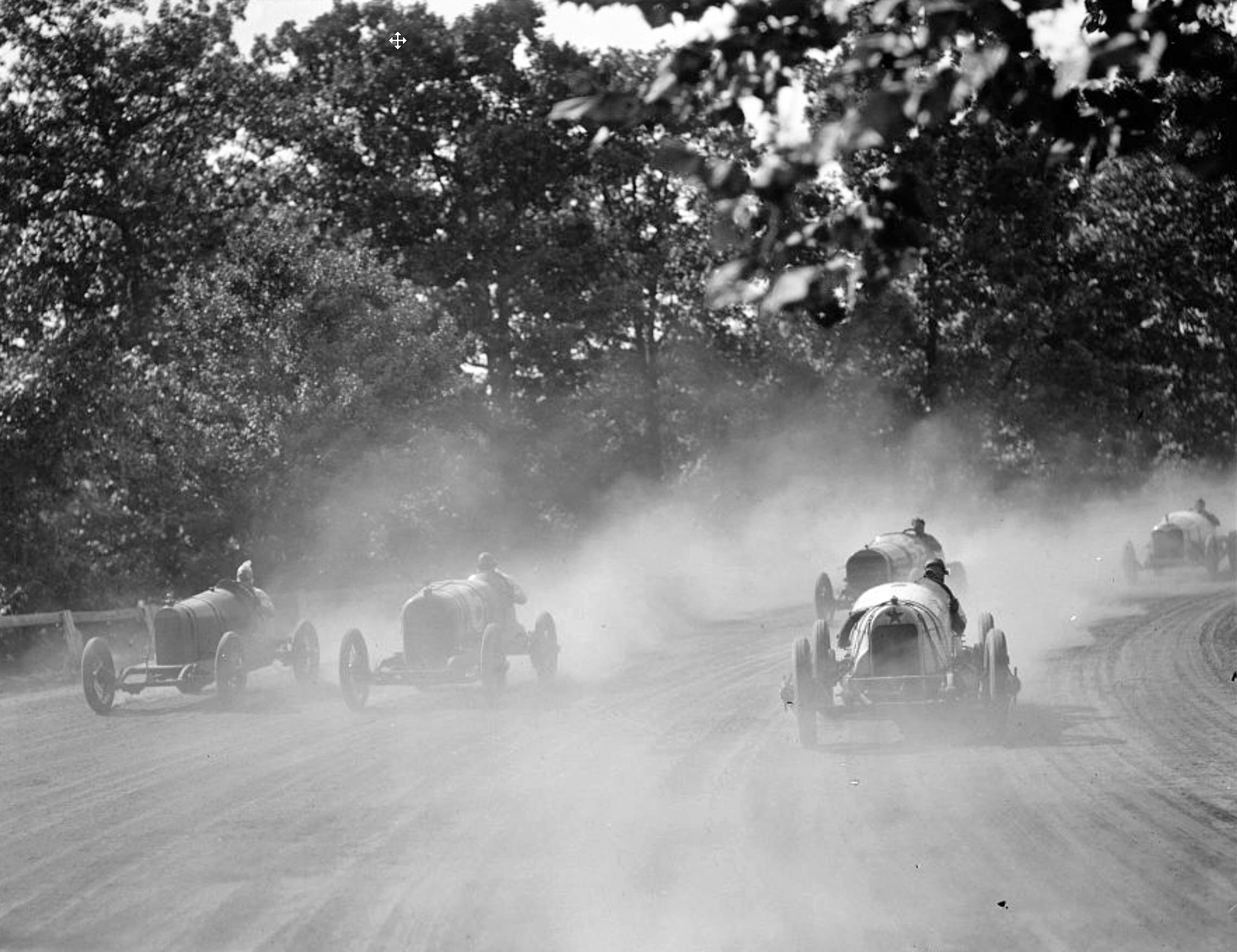
Race cars disappear into a cloud of dust while rounding the Rockville Fairgrounds track. Print made from a Lewis Reed glass negative.
One of Lewis Reed’s most interesting photographs from the races shows a car carrying two men. The passenger was a riding mechanic, once a familiar figure in early automobile racing. In addition to watching the mechanical condition of the car, he served as an extra set of eyes for the driver, keeping watch on competitors approaching from behind.
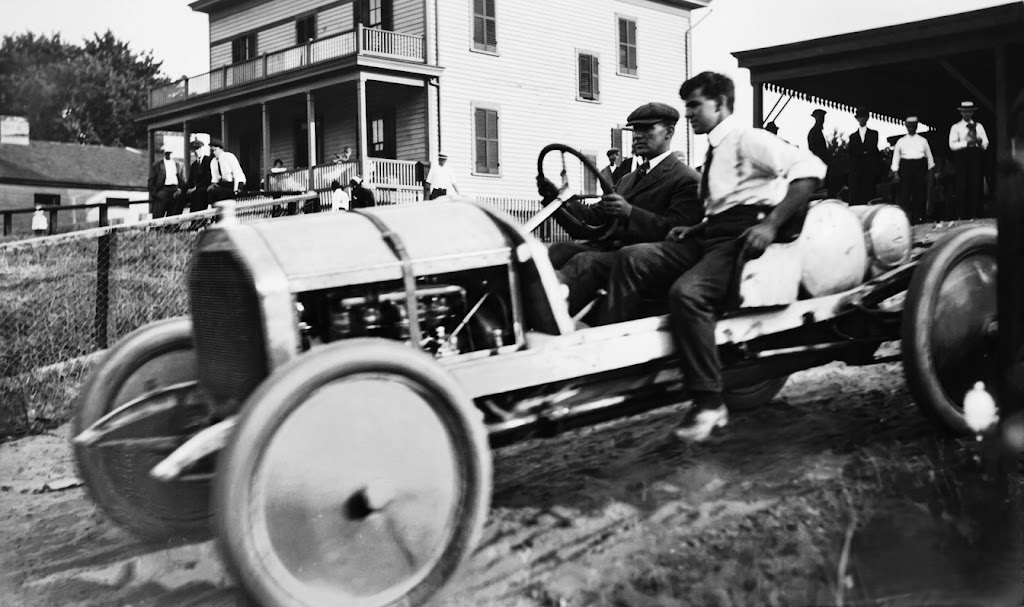
Driver and riding mechanic on the dirt track at the Rockville Fairgrounds, August 25, 1923. Photo by Lewis Reed.
A Future Indianapolis 500 Driver Raced at Rockville
Years after I first published these photographs, the story took an unexpected turn.
I received a message from John Snowberger, whose father, Russ Snowberger, raced at the Rockville Fairgrounds during the early 1920s. John told me that he had photographs of his father in his race car and believed that my grandfather, Lewis Reed, may have taken them.
Russ Snowberger, born in Denton, Maryland, raced throughout the region before going on to become a nationally known driver and a veteran of the Indianapolis 500.
Although I have not been able to establish that Snowberger competed specifically in the August 25, 1923 races, his son’s recollection provides a fascinating connection between Rockville’s early dirt-track racing and a driver who would later compete on one of the world’s most famous speedways.
It also raises an intriguing possibility: somewhere among Lewis Reed’s surviving photographs of early race cars and drivers may be an unidentified image of a young Russ Snowberger.
A Moment Preserved in Photographs
More than a century later, Lewis Reed’s photographs provide a rare visual record of the day automobile racing first came to the Rockville Fair.
They capture speeding cars, clouds of dust, spectators lining the track, and an era when automobile racing was still new enough to be a major local attraction.
And thanks to a message received nearly a century later from the son of an Indianapolis 500 driver, we now know that the old Rockville dirt track had connections extending well beyond Montgomery County.
For one dusty Saturday in August 1923, Rockville became a racing town.
Looking Back at the Montgomery County Fair, Whose Origins Stretch Back to 1846
It’s August, which means the Montgomery County Fair is coming soon! (The Agricultural Center’s website is literally counting down the seconds until opening day.) Since the fair will be here soon, I thought it would be fun and interesting to look back at some rare, historical photographs taken by Lewis Reed at the fair, whose origins stretch back 172 years.
All of these photographs are from the first incarnation of the Fair, held by the Montgomery County Agricultural Society (1846-1932) in Rockville and often known simply as the “Rockville Fair.” The current Fair, held at the Gaithersburg fairgrounds, was started in 1949. From the August 25, 1923 Washington Post Rockville Fair Auto Race article, to some of the earliest known photographs of the original grounds, Lewis Reed’s photos show the splendor of the original fairgrounds with its grandstands, to the oval dirt track used for bicycle, harness, and later, car races, and conversion to a baseball field.
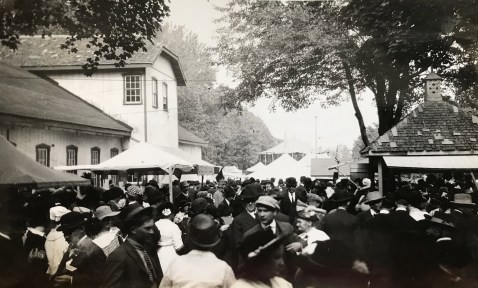
Fair goers in their finest stroll along the midway. Hats were a fashion requirement at the time, as were long flowing dresses and suits. Photo by Lewis Reed, ca. 1910
The headline of the Washington Post article about the race read, “Auto Races to Clash at Rockville Today”.
World speed records will be placed in jeopardy at Rockville fair this afternoon when half score of professional drivers, including speedway and dirt track auto monarchs, will compete in a seven-event program.
The annual County Fair used to be held for four days in the month of August at the old Fairgrounds of Rockville, Maryland. Families came from every section of the Montgomery County in wagons and carriages, and stayed for the duration of the Fair. Like many fairgrounds, the Rockville Fairgrounds included an oval track. Fairground race tracks, typically one-mile or half-mile dirt racing ovals with wide, sweeping curves and grandstands for spectators, were easily adapted for bicycles, harness racing, and the sport of car racing. The fairgrounds were just outside Rockville, about where Richard Montgomery High School is today. As always, click the photos to get a better look.

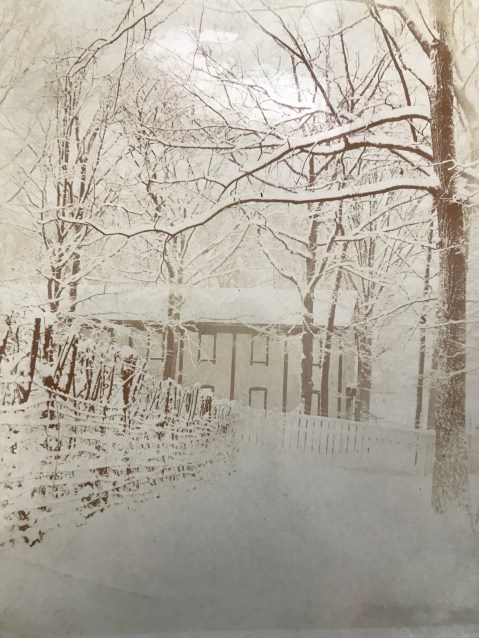
Fairgrounds in the snow. Photo by Lewis Reed, ca. 1910
Chicken House. Photo by Lewis Reed, ca. 1910
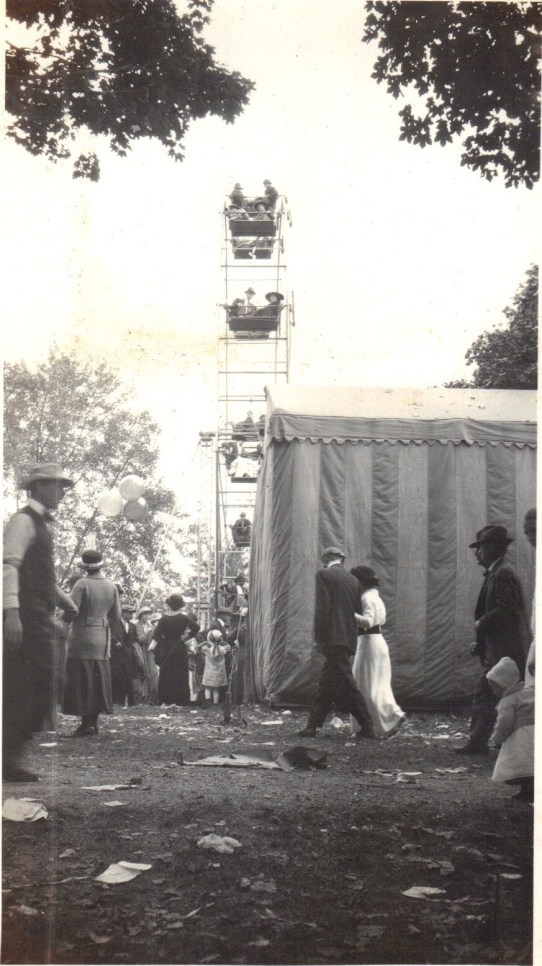
Riding the Ferris Wheel at Rockville Fair, circa 1920s. Photo by Lewis Reed
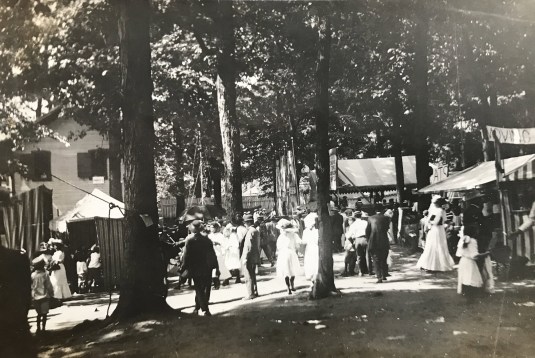
Fair goers meander through exhibits. Photo by Lewis Reed, ca. 1910

Hundreds of cars parked in the fair parking lot. What is fascinating to me is, with all of these early cars painted in black, how on earth would you find your car? Photo by Lewis Reed, ca. 1910

View from the grandstand. Photo by Lewis Reed, ca. 1910
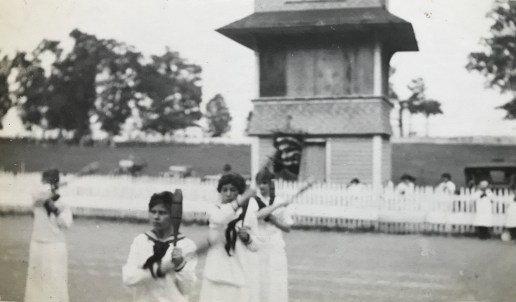
View from the grandstand. Photo by Lewis Reed, ca. 1910
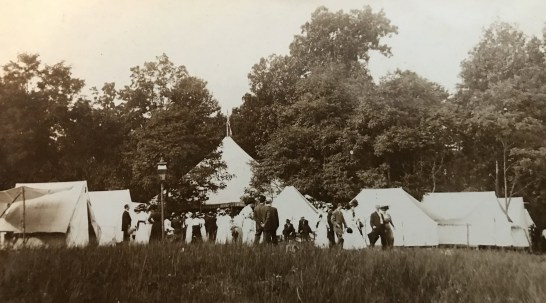
Families came in wagons and carriages to the Rockville Fairgrounds and stayed for the duration. Photo by Lewis Reed, ca. 1910
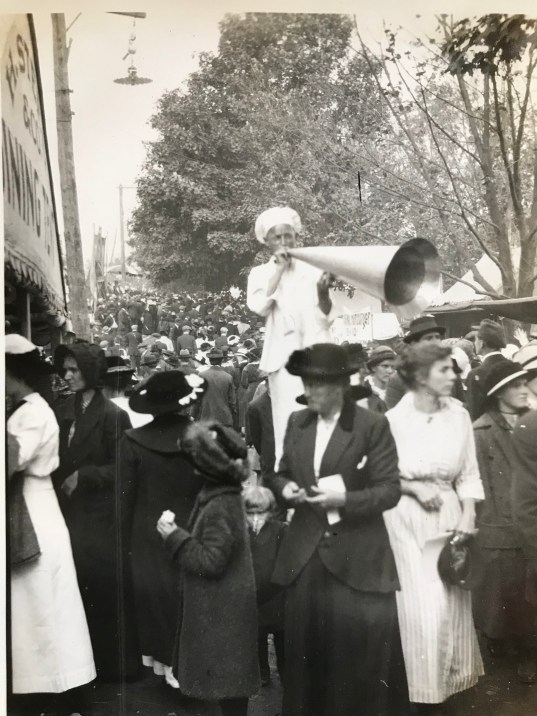
Can you hear me now? Photo by Lewis Reed, ca. 1910

Agricultural and various farm equipment exhibit. Photo by Lewis Reed, ca. 1910
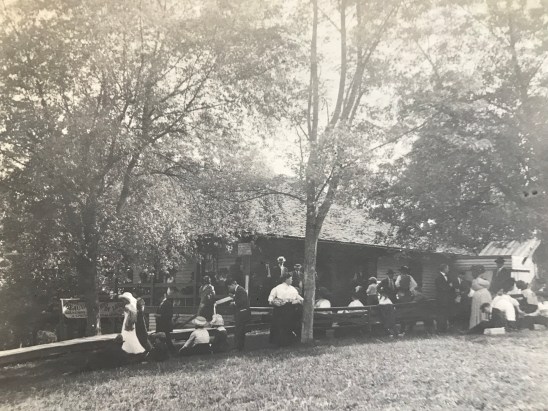
Sign on the left side of the building reads, “The Beautiful Caverns of Luray Souvenirs”. Photo by Lewis Reed, ca. 1910
Bicycle Racing
Like many fairgrounds, the Rockville Fairgrounds included an oval track. Fairground race tracks, typically one-mile or half-mile dirt racing ovals with wide, sweeping curves and grandstands for spectators, were easily adapted for bicycles, harness racing, and the sport of car racing.

This circa 1915 photo of an early bicycle race at the Rockville Fairgrounds gives a sense of just how popular the sport was at the time. Photo by Lewis Reed
Harness Racing

Harness race at the Rockville Fair, circa 1910. All those throngs of people had plenty to see. Photo by Lewis Reed

This photo shows the grandstand and surrounding areas filled with spectators watching the action, ca. 1910. Photo by Lewis Reed
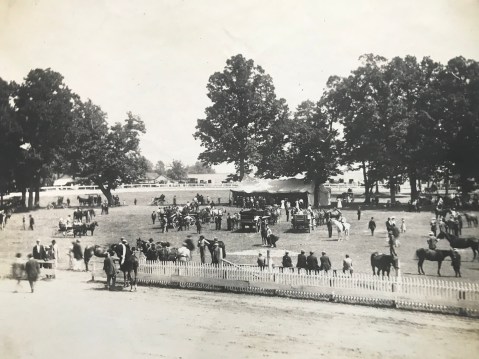
Crowd at the racetrack. Photo by Lewis Reed

Bend on the racetrack, circa 1910. Photo by Lewis Reed

Harness racers rounding the bend on the racetrack, circa 1910. Photo by Lewis Reed
Auto Racing
The photos below reveal what auto racing looked like in the days before helmets, seat belts, air bags, and traction control.
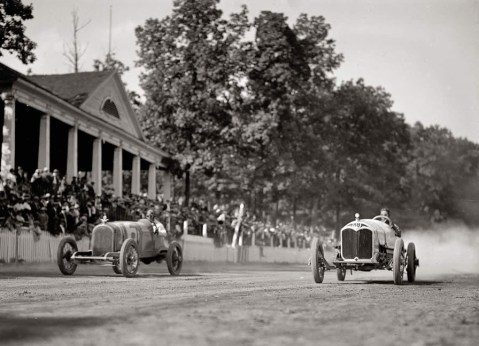
Rockville drew huge crowds for auto races. Rockville Fair, August 1923. Photo by Lewis Reed

Dusty Action – 1923 photo of the exciting auto races at Rockville Fair. Five racers are just coming around the bend on this dirt track with their tires spinning up dust in their wake. Photo by Lewis Reed
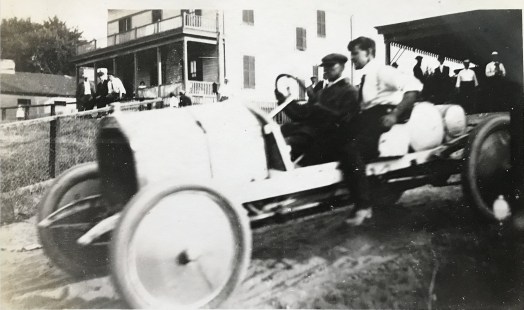
Two-man race car. Some early race cars included both a driver and a ‘riding mechanic’. One of the key jobs of the second man in a race car was to look backward and alert the driver to what was going on behind him. Photo by Lewis Reed
Early race car drivers were required to have a riding mechanic, otherwise it was voluntary. Riding mechanics, who in addition to being lookouts, kept an eye on tire wear and would even hop out of the car and run back through the infield to get fuel.

More dirt track action. Skinny tires make for slippery turns. Photo by Lewis Reed
Below is a 1923 Washington Post article for an auto race at the Rockville Fair.
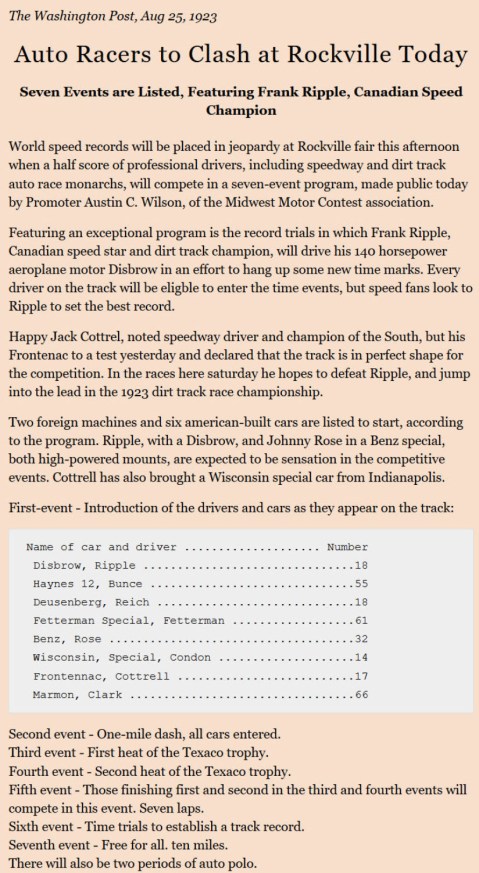
Rockville Fair Race Ad
A football field was designed within the oval of the old Fair racetrack in 1946.
Dirt track racing was one of the main attractions, but the Fair also provided other events such as horse pulls, games of chance, showing of prized livestock and poultry, needlework, homegrown produce, baked and canned goods. A building called the Exhibit House displayed the prize-winning entries of the various categories.
Rockville Garage Displaying New Model Cars at Rockville Fair Grounds, 1918
The Fair also gave automobile dealers the opportunity to display their new models. Below is new car show time as fair goers get their first glimpse at the latest models that Rockville Garage had to offer.
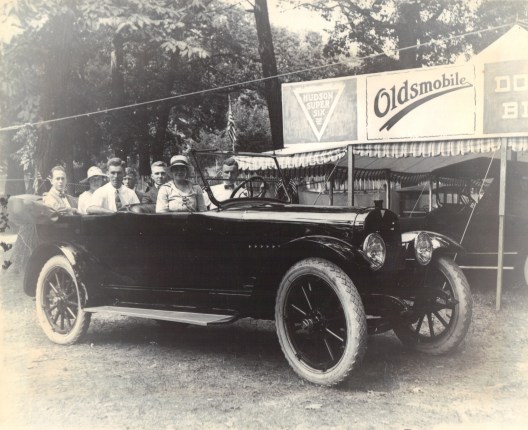
Anybody for a demonstration drive? Identified by the triangle logo on the grill and the number of passengers seated in it, the car appears to be a 1918 Hudson Super Six Seven Passenger Touring. Photo by Lewis Reed
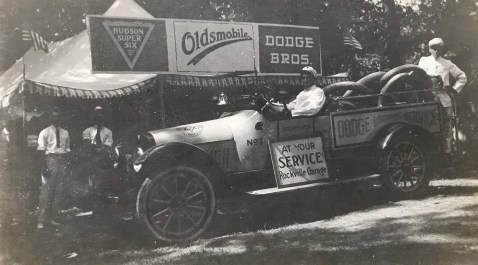
Hudson Super Six, Oldsmobile, and Dodge Brothers Motor Cars on display. Lewis Reed in drivers seat of Rockville Garage Service Truck.
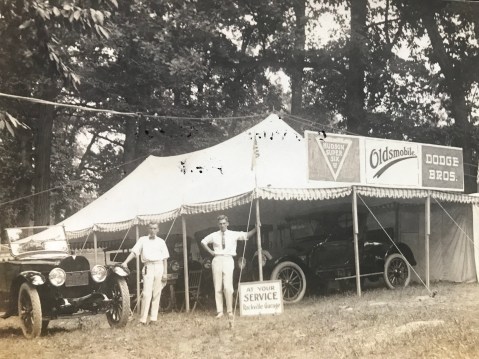
Rockville Garage tent displaying Hudson Super Six, Oldsmobile, and Dodge Brothers Motor Cars at the Rockville Fair Grounds. Photo by Lewis Reed

At Your Service Rockville Garage. Lewis Reed on the left
Reed Brothers Dodge Baseball Team at Rockville Fair, ca. 1920
Most likely, Rockville’s first experience with baseball was during the Civil War on the fields where Richard Montgomery High School now stands. It was known as “Camp Lincoln” because of the Union encampment there, and Federal soldiers helped popularize the new game they brought from the North. After the Civil War those fields – known as the Rockville Fairgrounds – continued to be a popular place for baseball.
Reed Brothers Dodge had a company baseball team that played on those same fields. The photos below were taken by Lewis Reed on a field at the Rockville Fairgrounds circa early 1920s.
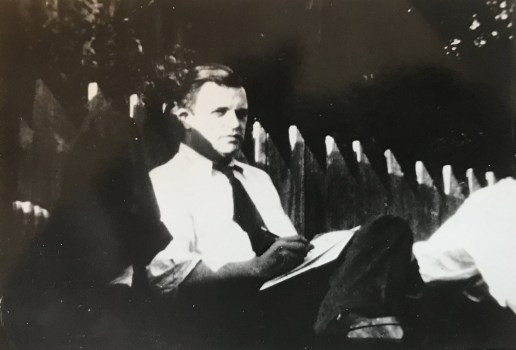
Pat Murray (Parts Department Manager), keeping score. Photo by Lewis Reed
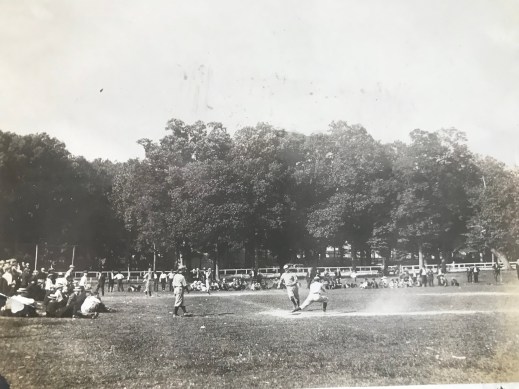
Reed Brothers Dodge Baseball Team, circa early 1920s. Photo by Lewis Reed

Reed Brothers Dodge Baseball Team, circa early 1920s. Photo by Lewis Reed
In 1949, the Montgomery County Agricultural Center (the Fairgrounds) was moved from Rockville to its current location adjacent to the B&O Railroad between Chestnut Street and Perry Parkway.
Source: Montgomery History
1920s Auto Races, Rockville Fair
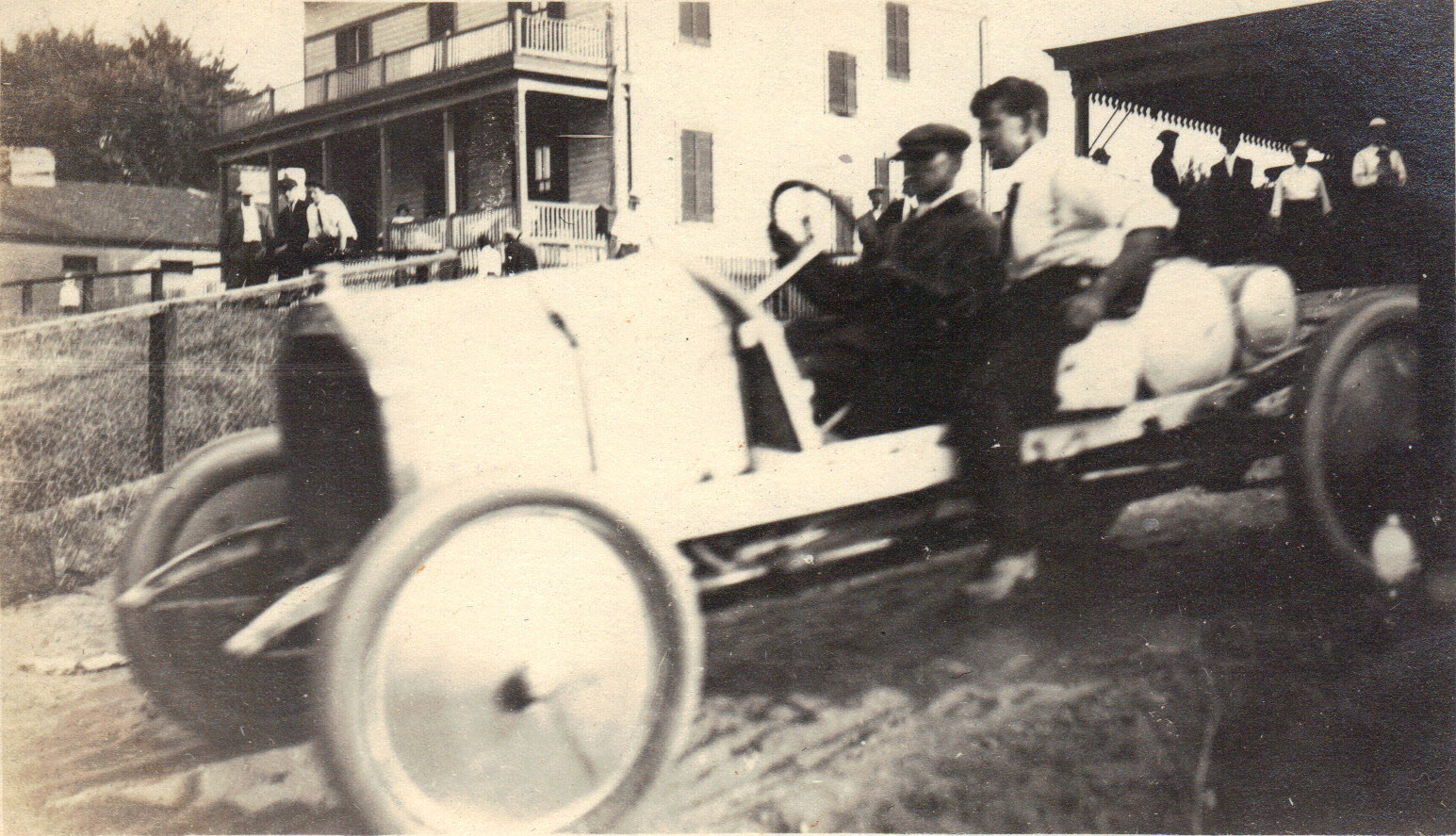
This race car is a total mystery…what on earth is it? It appears to be a two-man race car. Photo by Lewis Reed
Early action shots like these are rare, however, the following photographs were taken by Lewis Reed at the Rockville Fairgrounds in the early 1910-1920s. The fairgrounds were just outside Rockville, about where Richard Montgomery High School is today. The Fair lasted four days, from August 21st to the 24th, and drew visitors from local counties, Washington, and Baltimore.
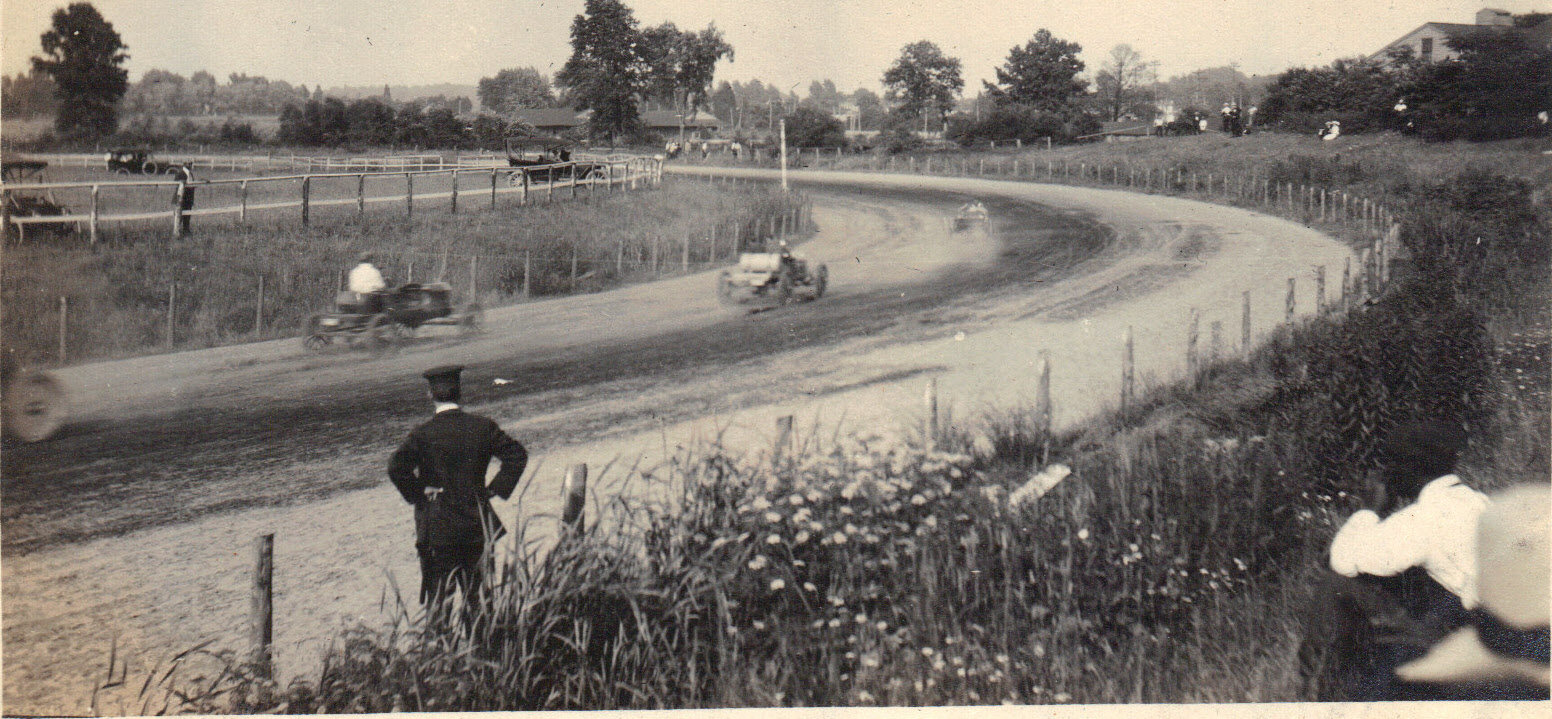
Dirt track action. Photo by Lewis Reed

August 1923. Auto race, Rockville Fair
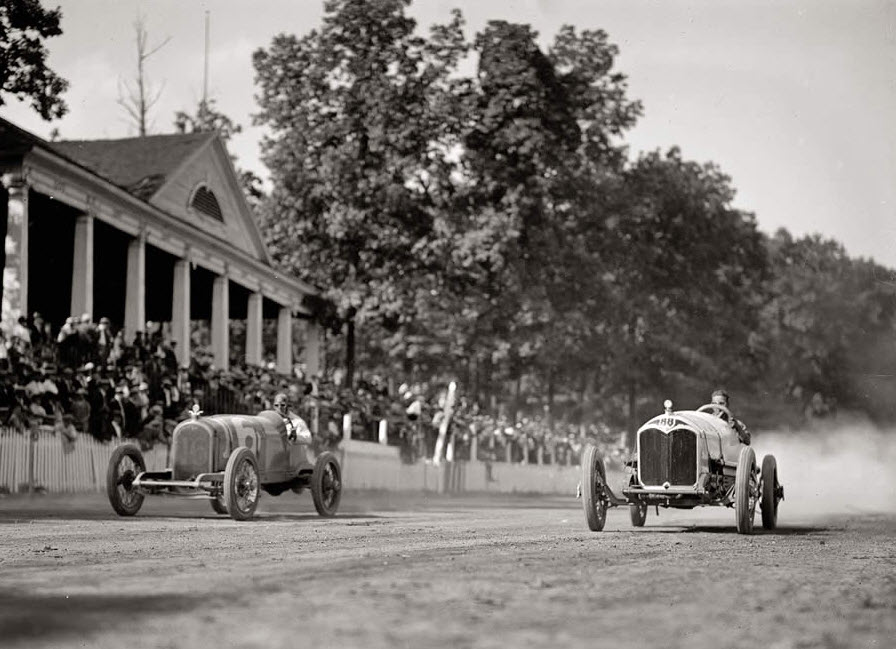
Crowds at the auto racetrack, Rockville Fair, August 1923
The photo above depicts an auto race at the Rockville fairgrounds. The photo of a harness race below was taken from approximately the same vantage point, which you don’t see very often in pictures from that era. Fairground race tracks, typically one-mile or half-mile dirt racing ovals with wide sweeping curves and grandstands for spectators, were easily adapted for the new sport of automobile racing.

Harness race at the Rockville fairgrounds, circa 1910. Same vantage point as auto race above. Photo by Lewis Reed
Below is a 1923 Washington Post ad for auto race at the Rockville Fair.

Sources: Dirt Track Auto Racing, 1919-1941 – A Pictorial History By Don Radbruch
Shorpy.com – a vintage photo blog of high-definition images from the 1850s to 1950s
Books

Related Resources


Copyright Notice

Reed Brothers Dodge History (1915-2012) by Jeanne Gartner is licensed under a Creative Commons Attribution-NonCommercial 3.0 Unported License.


Recent Comments