
The Day Auto Racing Came to Rockville: Rare Photos from 1923
On Saturday, August 25, 1923, spectators gathered at the Rockville Fairgrounds for something never before seen there: automobile racing.
Professional drivers brought their high-powered racing machines to the half-mile dirt track for the first automobile races ever held at the Rockville Fair. Standing trackside with his camera was Rockville automobile dealer and photographer Lewis Reed, who captured a remarkable series of photographs of the action.
More than a century later, his images preserve the day auto racing came to Rockville.
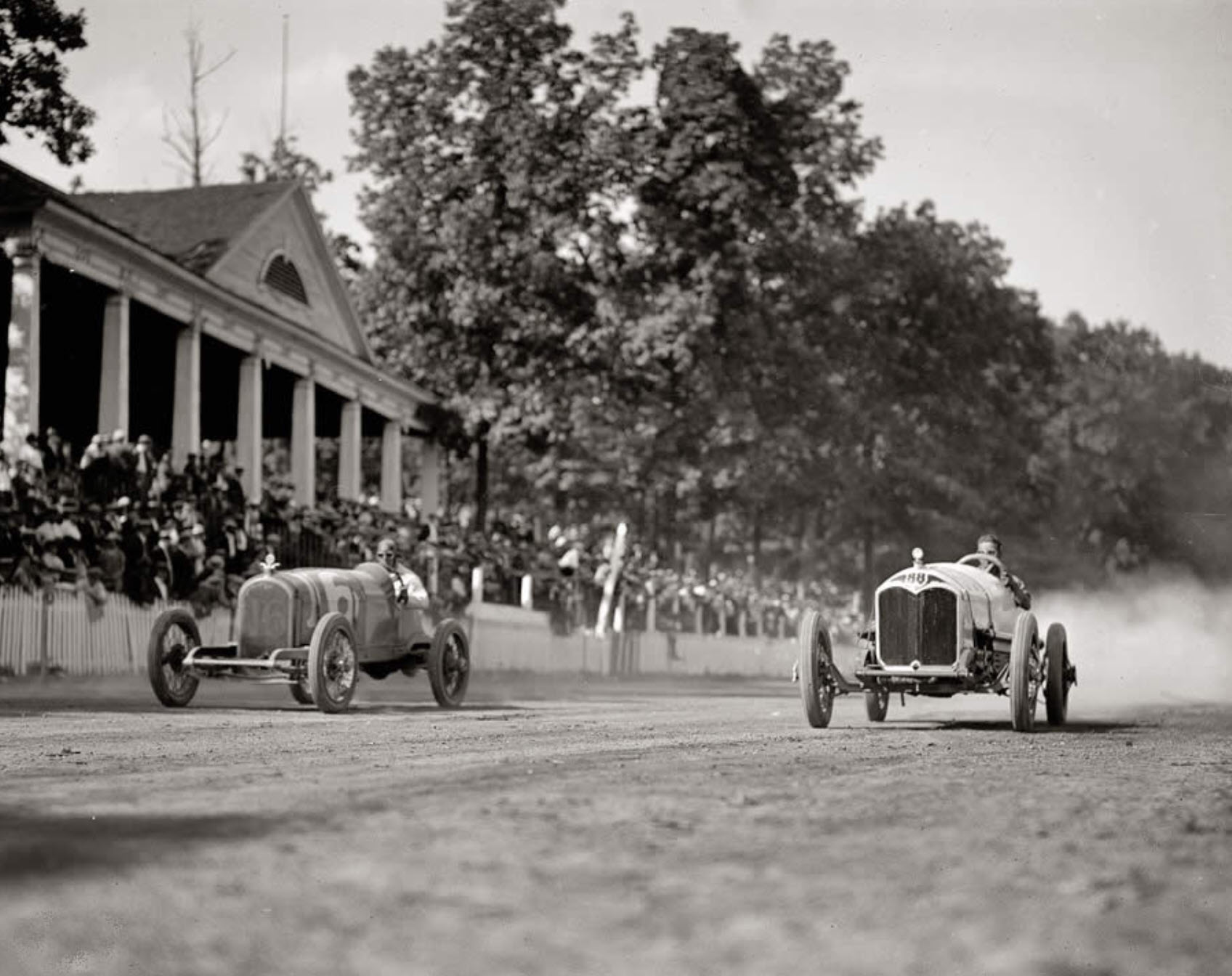
Rockville drew a large crowd for its first automobile races at the Rockville Fair, August 25, 1923. Photo by Lewis Reed.
Rockville’s First Auto Races
The automobile races were the featured attraction on the final day of the 1923 Fair. Contemporary newspaper accounts described them as an innovation for Rockville and confirmed that they were the first automobile races ever held there.
Seven high-powered cars competed in events ranging from one to ten miles, driven by some of the leading professional racers of the day. Canadian dirt-track racer Frank Ripple was among the featured drivers and was expected to attempt speed records in a powerful machine equipped with a 140-horsepower airplane engine.
The new attraction proved popular. Except for Thursday, traditionally the Fair’s biggest day, the Saturday automobile races reportedly drew the largest crowd of the five-day event.
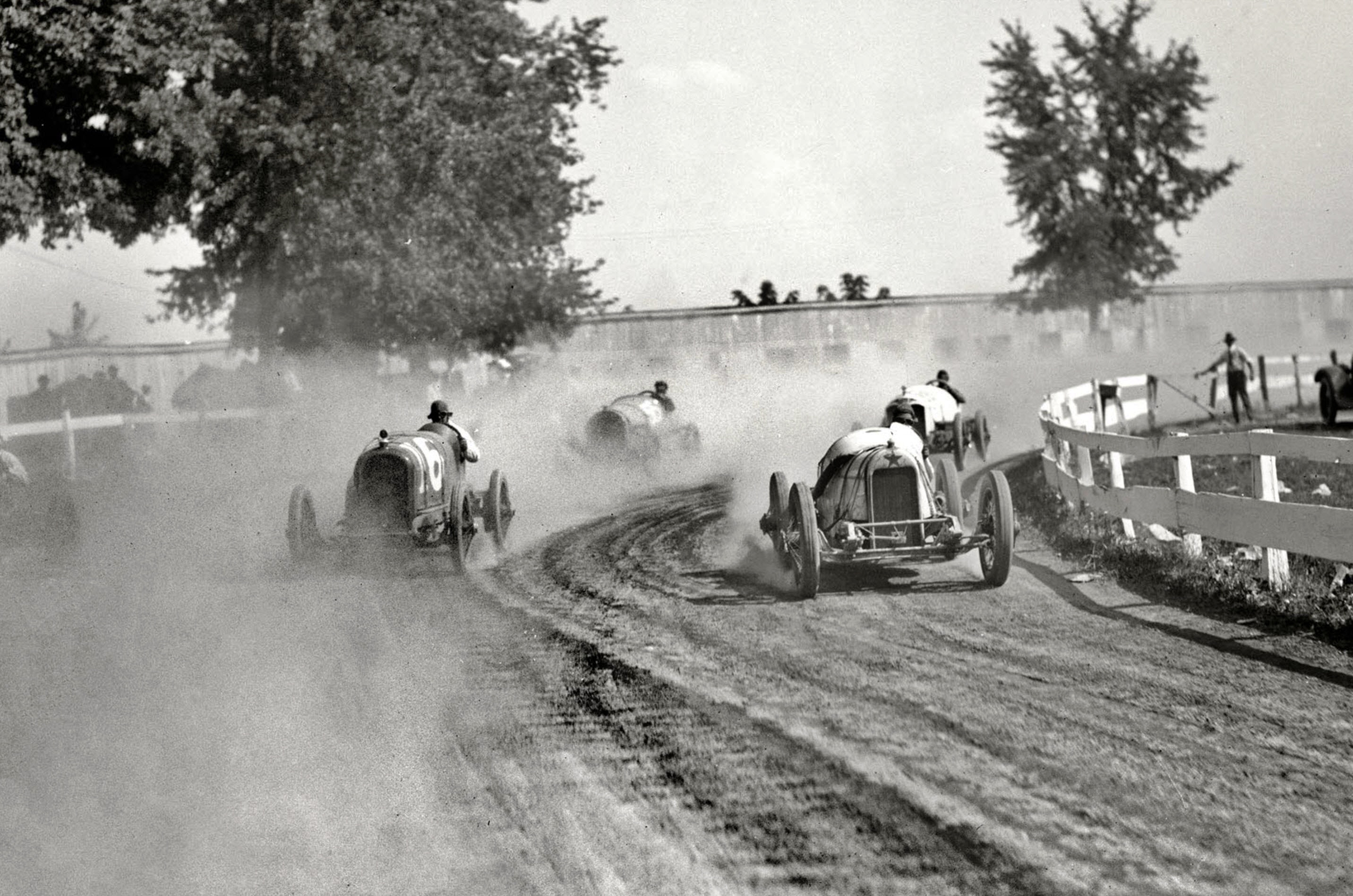
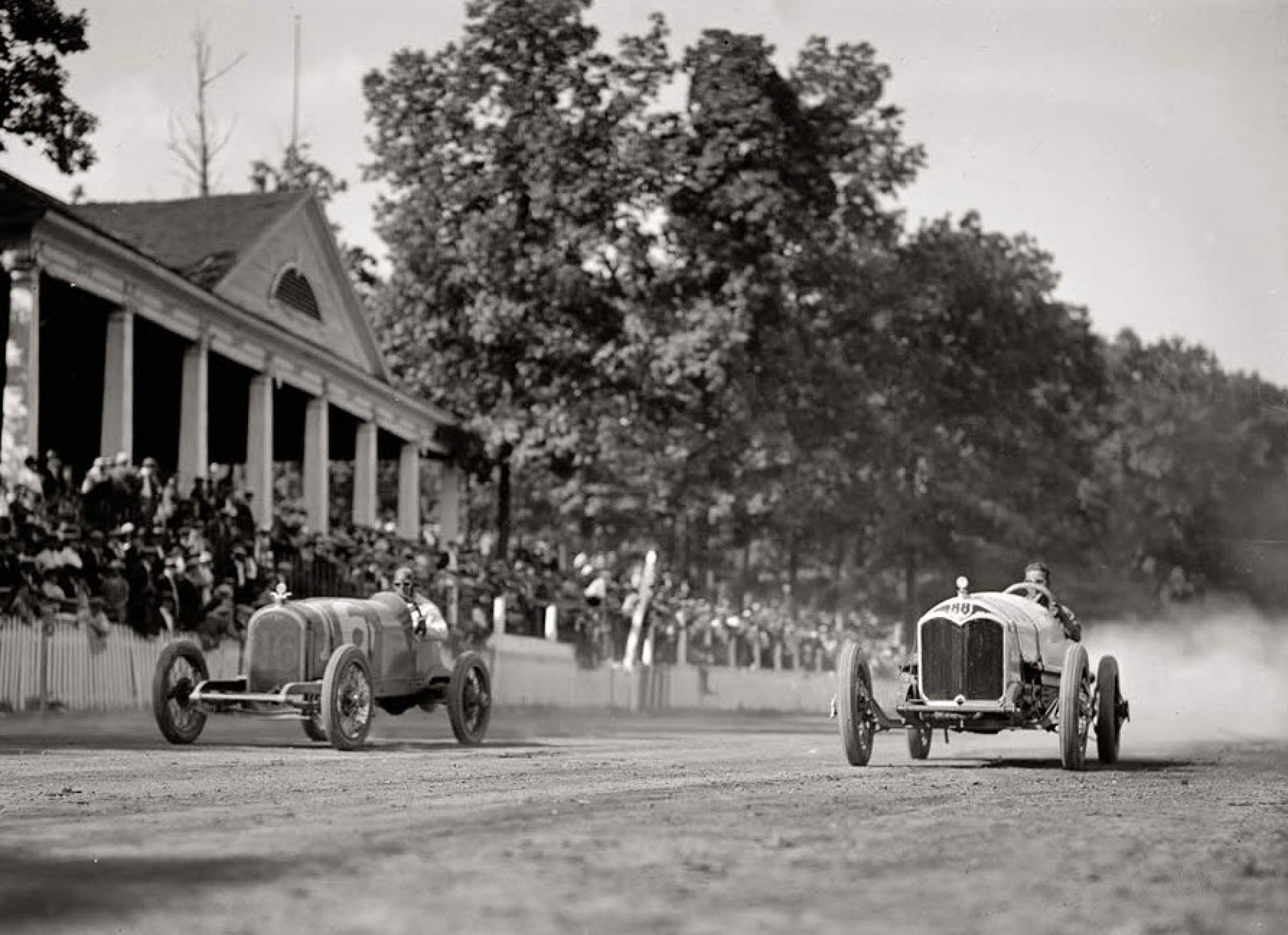
Five racers charge around the dirt track at the Rockville Fairgrounds, August 25, 1923. Photo by Lewis Reed.
Racing on the Dirt Track
Lewis Reed’s photographs show just how exciting early automobile racing could be. Cars raced closely together on the unpaved oval, their narrow tires throwing enormous clouds of dust into the air as drivers fought for position around the sweeping curves.
Spectators stood remarkably close to the action.
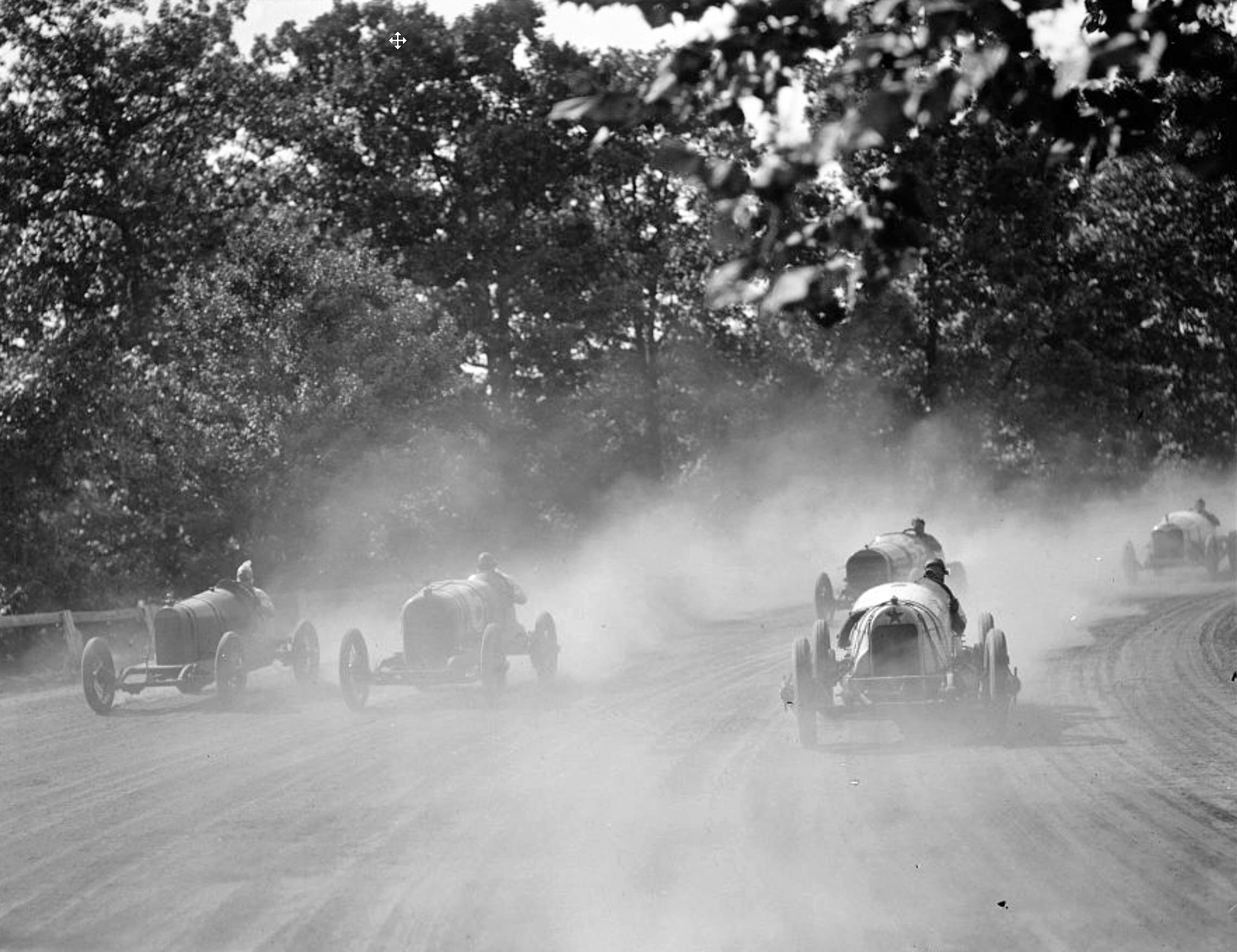
Race cars disappear into a cloud of dust while rounding the Rockville Fairgrounds track. Print made from a Lewis Reed glass negative.
One of Lewis Reed’s most interesting photographs from the races shows a car carrying two men. The passenger was a riding mechanic, once a familiar figure in early automobile racing. In addition to watching the mechanical condition of the car, he served as an extra set of eyes for the driver, keeping watch on competitors approaching from behind.
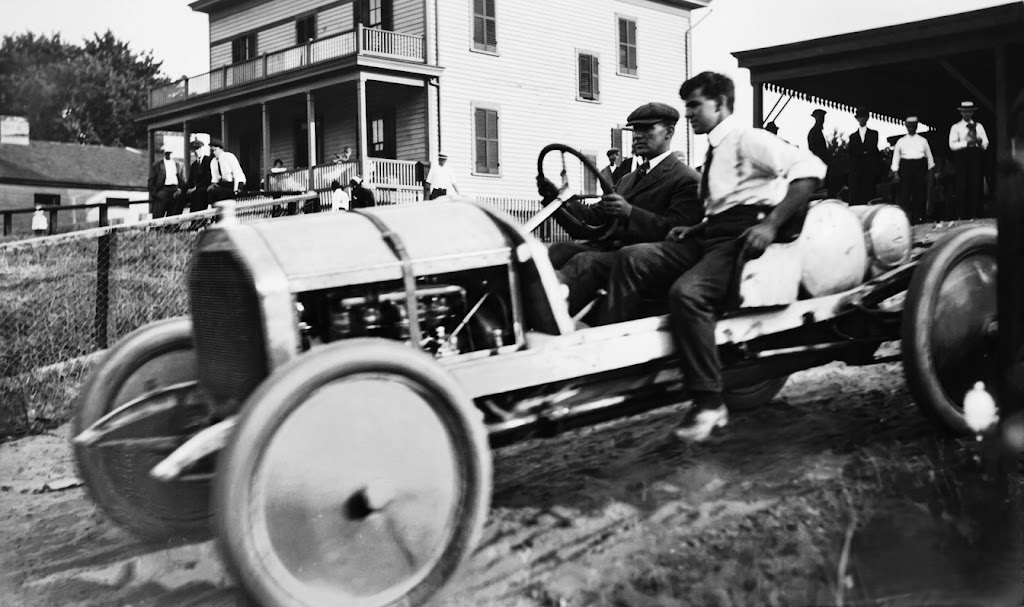
Driver and riding mechanic on the dirt track at the Rockville Fairgrounds, August 25, 1923. Photo by Lewis Reed.
A Future Indianapolis 500 Driver Raced at Rockville
Years after I first published these photographs, the story took an unexpected turn.
I received a message from John Snowberger, whose father, Russ Snowberger, raced at the Rockville Fairgrounds during the early 1920s. John told me that he had photographs of his father in his race car and believed that my grandfather, Lewis Reed, may have taken them.
Russ Snowberger, born in Denton, Maryland, raced throughout the region before going on to become a nationally known driver and a veteran of the Indianapolis 500.
Although I have not been able to establish that Snowberger competed specifically in the August 25, 1923 races, his son’s recollection provides a fascinating connection between Rockville’s early dirt-track racing and a driver who would later compete on one of the world’s most famous speedways.
It also raises an intriguing possibility: somewhere among Lewis Reed’s surviving photographs of early race cars and drivers may be an unidentified image of a young Russ Snowberger.
A Moment Preserved in Photographs
More than a century later, Lewis Reed’s photographs provide a rare visual record of the day automobile racing first came to the Rockville Fair.
They capture speeding cars, clouds of dust, spectators lining the track, and an era when automobile racing was still new enough to be a major local attraction.
And thanks to a message received nearly a century later from the son of an Indianapolis 500 driver, we now know that the old Rockville dirt track had connections extending well beyond Montgomery County.
For one dusty Saturday in August 1923, Rockville became a racing town.
From Rockville to Gaithersburg: The Montgomery County Fair Through the Lens of Lewis Reed
Special Feature for Montgomery County Agricultural Fair Week
August 14–22, 2026
A look back at the fair’s early years through the lens of Lewis Reed.
Every August, hundreds of thousands of visitors flock to the Montgomery County Agricultural Fair to enjoy livestock exhibitions, agricultural displays, carnival rides, competitions, concerts, and family traditions that have endured for generations. While today’s fairgrounds in Gaithersburg are familiar to many, the fair itself began long before the current site existed.
Organized in 1846 by the Montgomery County Agricultural Society, the annual fair was established to promote agriculture, encourage innovation, and strengthen the county’s farming community. For decades, it brought together farmers, merchants, craftsmen, and families from across Montgomery County to exchange ideas, exhibit their finest livestock and crops, and celebrate the region’s agricultural heritage.
By the time Lewis Reed began photographing Montgomery County around the turn of the twentieth century, the fair had become one of the county’s largest and most anticipated annual events. Carrying his camera throughout the fairgrounds, Reed documented not only the exhibits and attractions but also the people who made the fair an enduring community tradition.
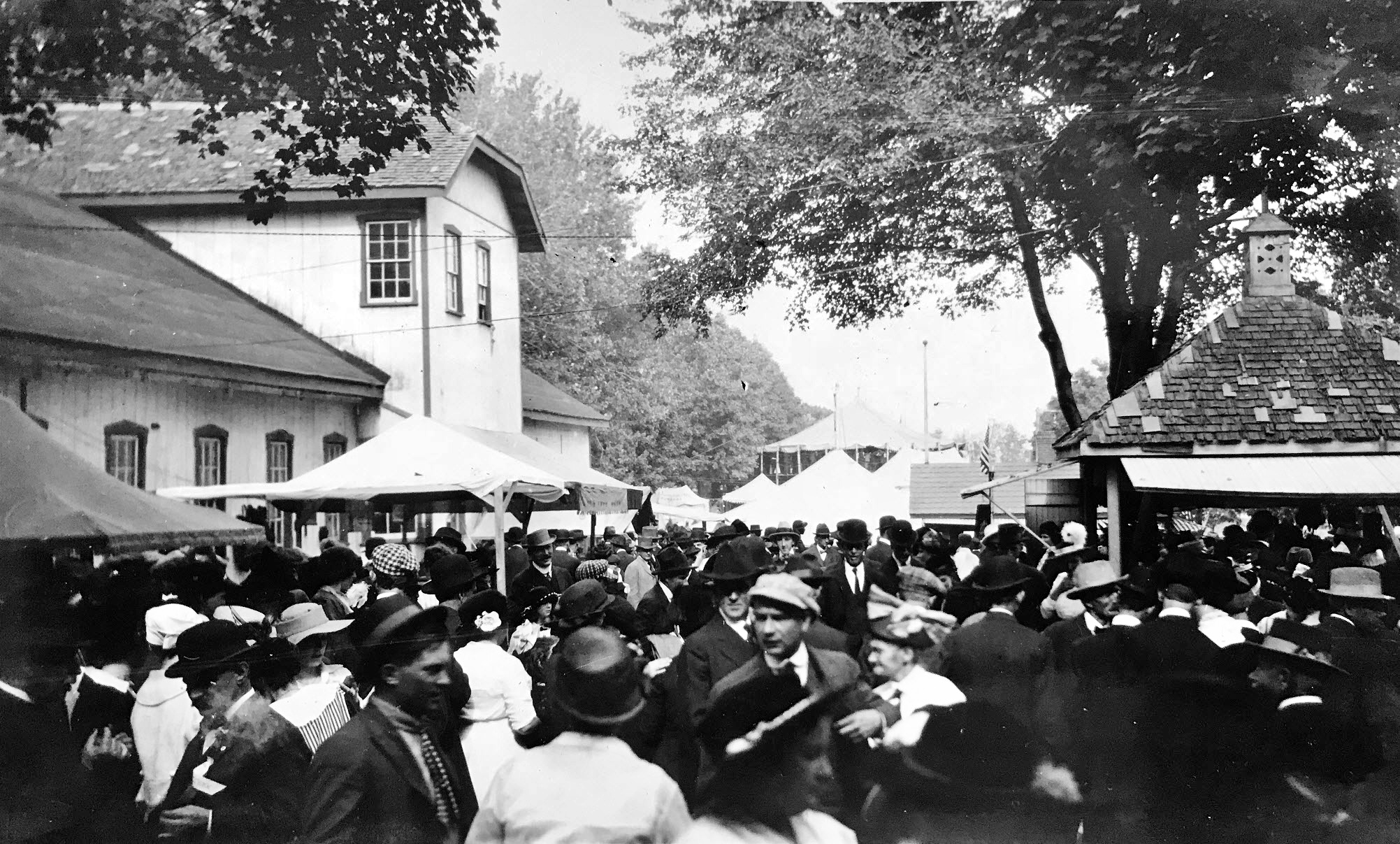
Fairgoers stroll along the midway in their Sunday best, ca. 1910. Broad-brimmed hats, long flowing dresses, and tailored suits reflected the fashion of the era, when dressing for the county fair was as much a social occasion as the event itself.
Reed’s photographs reveal a fair that was both educational and entertaining. Agriculture remained its foundation, but visitors also came to enjoy the excitement of the midway, where amusement rides, games, and food vendors transformed the fairgrounds into a festive gathering place for young and old alike.
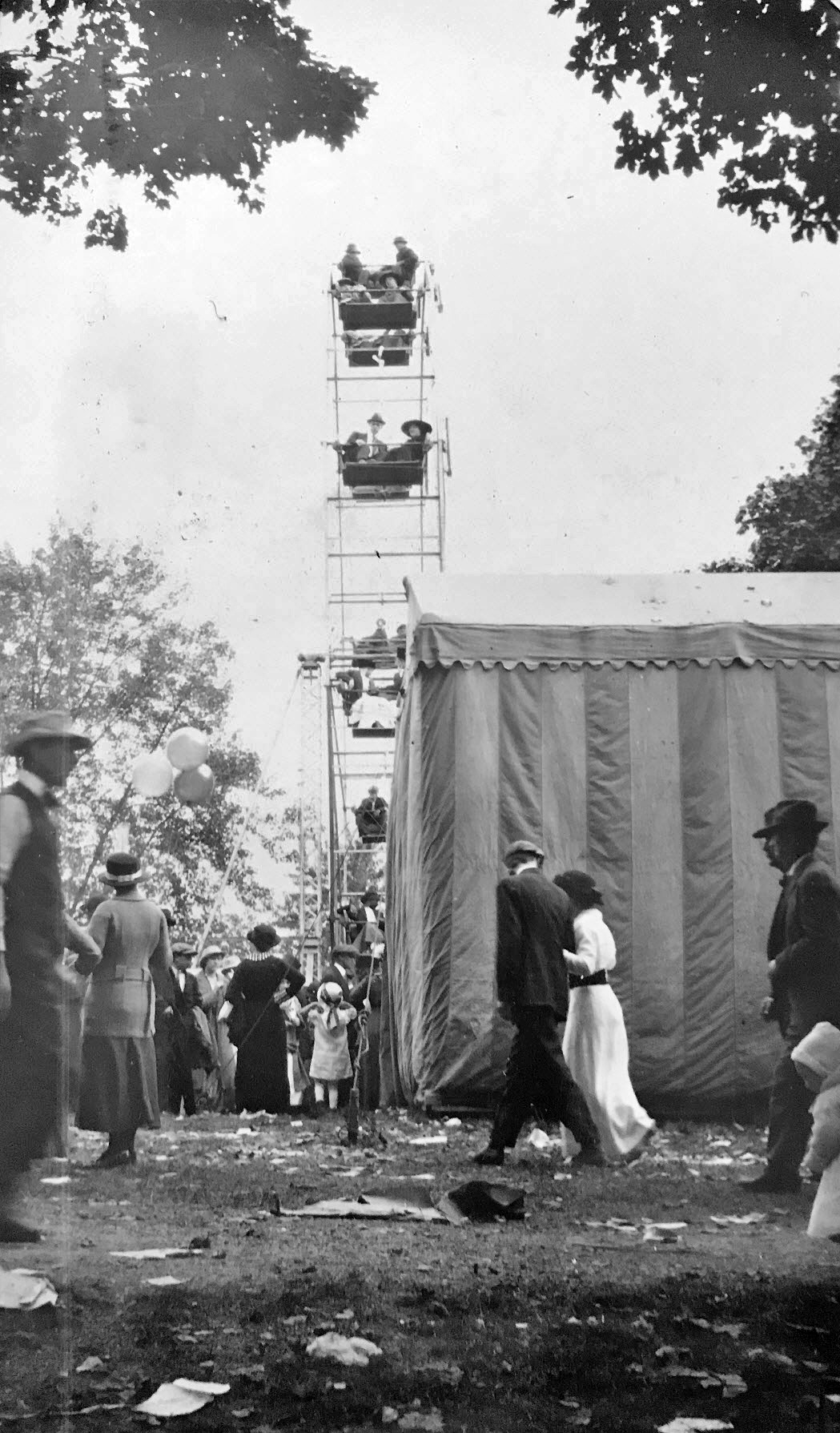
Ferris Wheel at the Montgomery County Fair, Rockville, ca. 1910. One of the fair’s most popular attractions towered above the fairgrounds, symbolizing how the annual exhibition combined agricultural traditions with modern entertainment.
Behind the excitement of the midway was the fair’s original purpose. Exhibition halls displayed the county’s finest produce, flowers, baked goods, preserves, and handcrafted items, while nearby barns housed prize-winning livestock representing the best of Montgomery County’s farms. Manufacturers exhibited the latest farm machinery and equipment, giving visitors an opportunity to see how new technology was steadily transforming rural life.
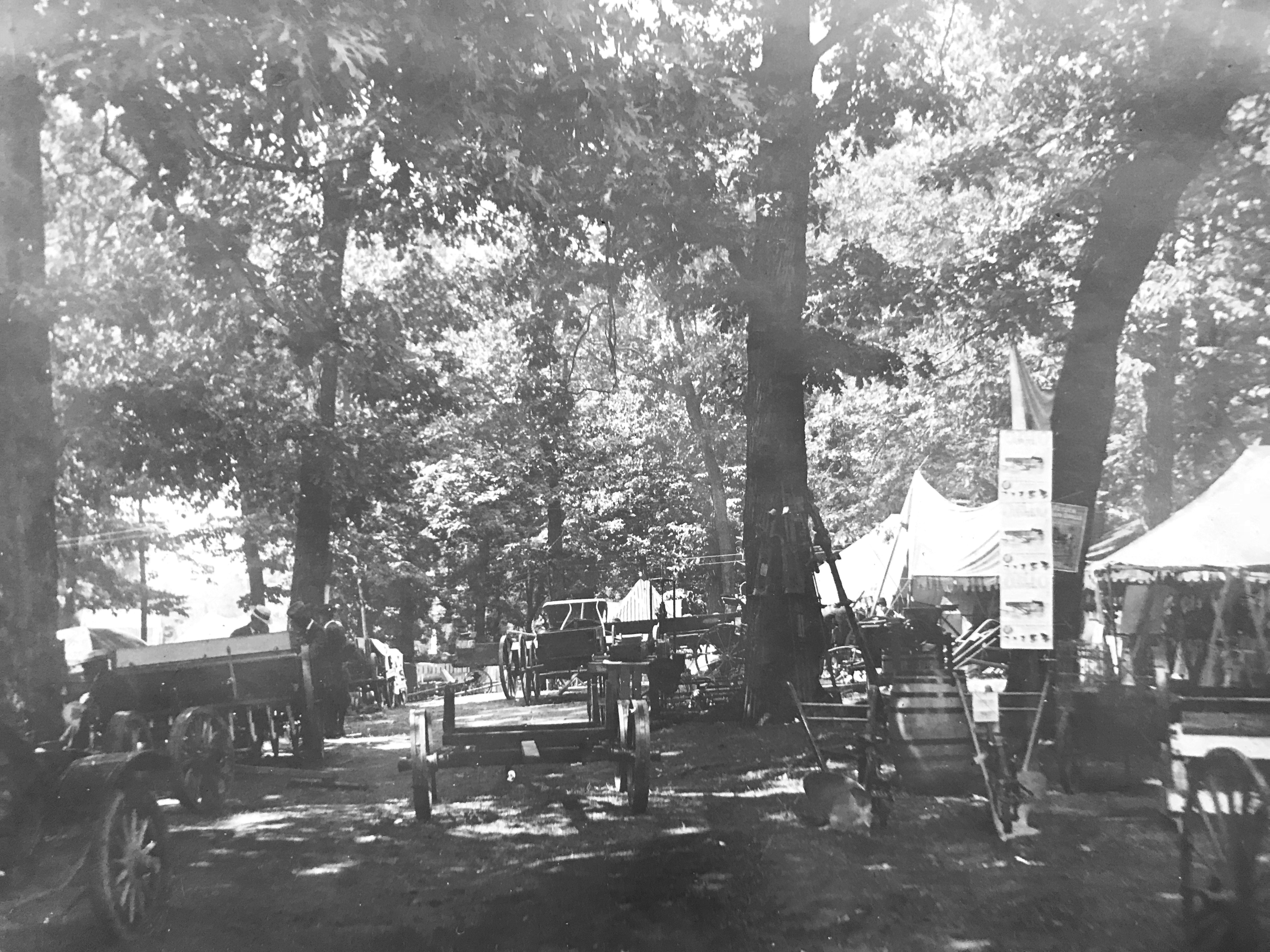
Agriculture remained the heart of the fair. Manufacturers displayed the latest farm machinery, giving local farmers an opportunity to compare new equipment and modern farming methods.
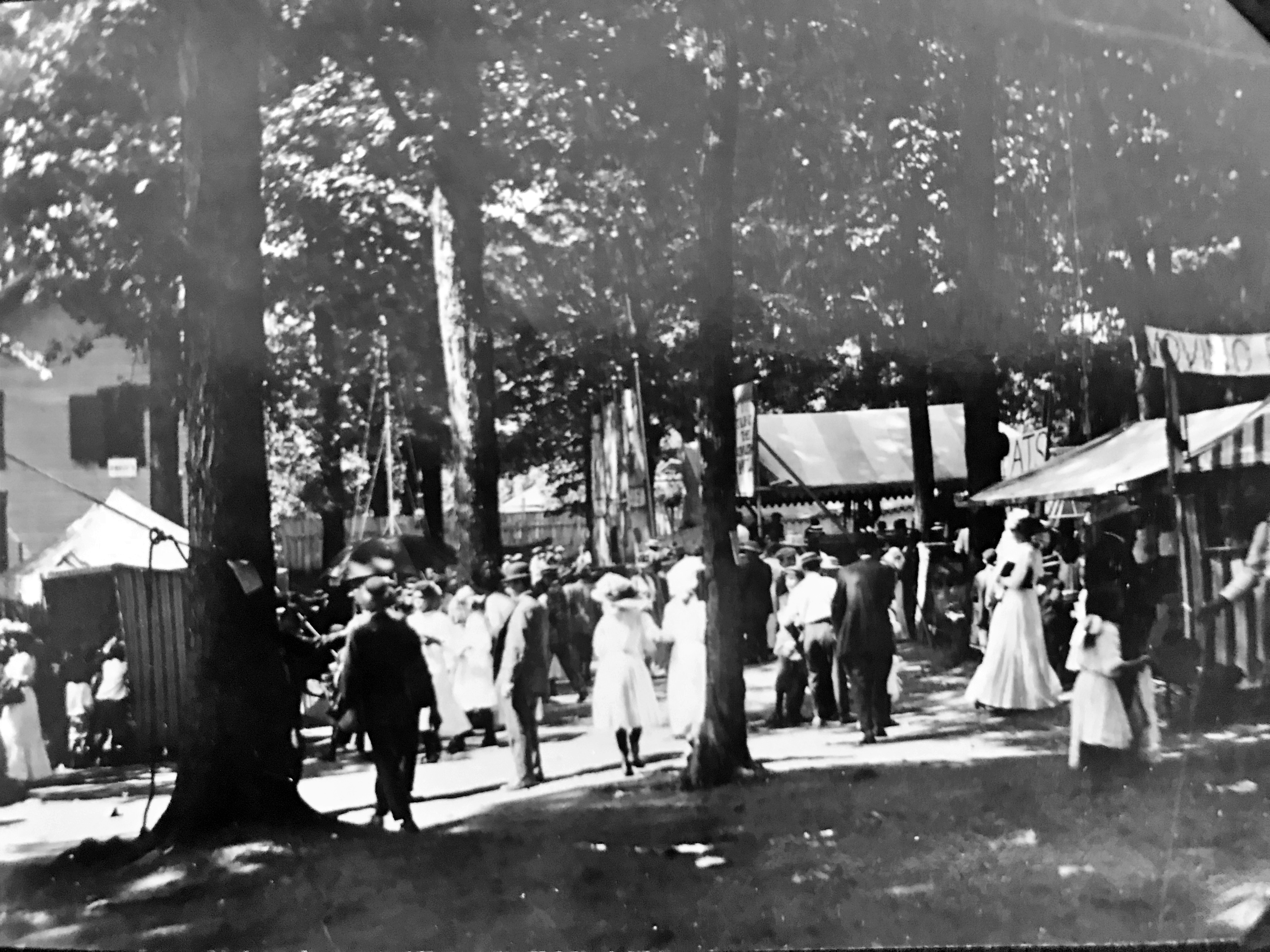
Visitors explored displays celebrating Montgomery County’s agricultural achievements, local craftsmanship, and community pride.
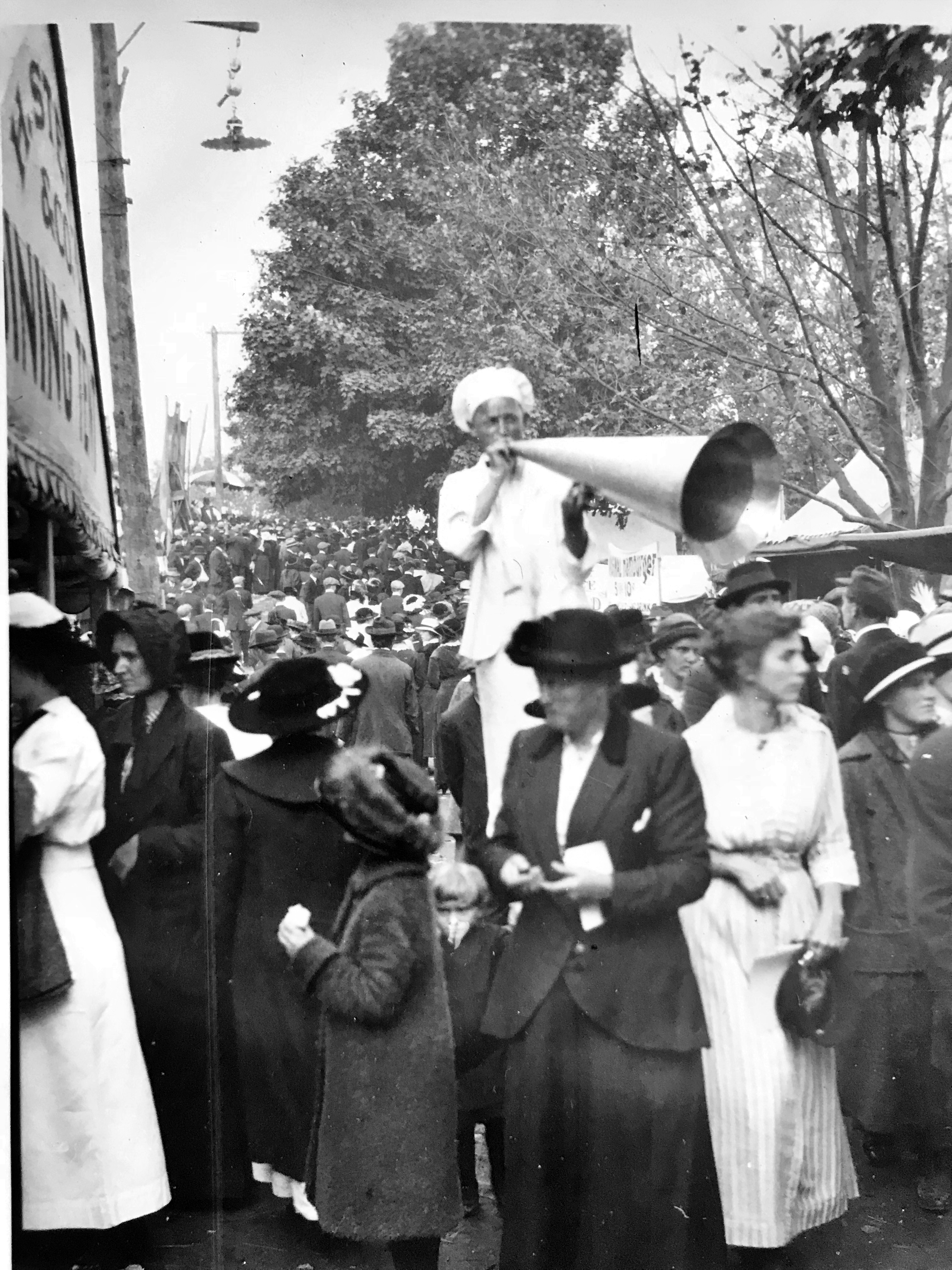
An exhibitor captures the attention of fairgoers.
One of Lewis Reed’s most compelling photographs captures hundreds of automobiles parked throughout the fairgrounds. As a lifelong automobile enthusiast and future founder of Reed Brothers Dodge, Reed recognized that the motorcar was transforming Montgomery County. His photograph preserves that moment when the automobile had become an integral part of daily life and community gatherings.
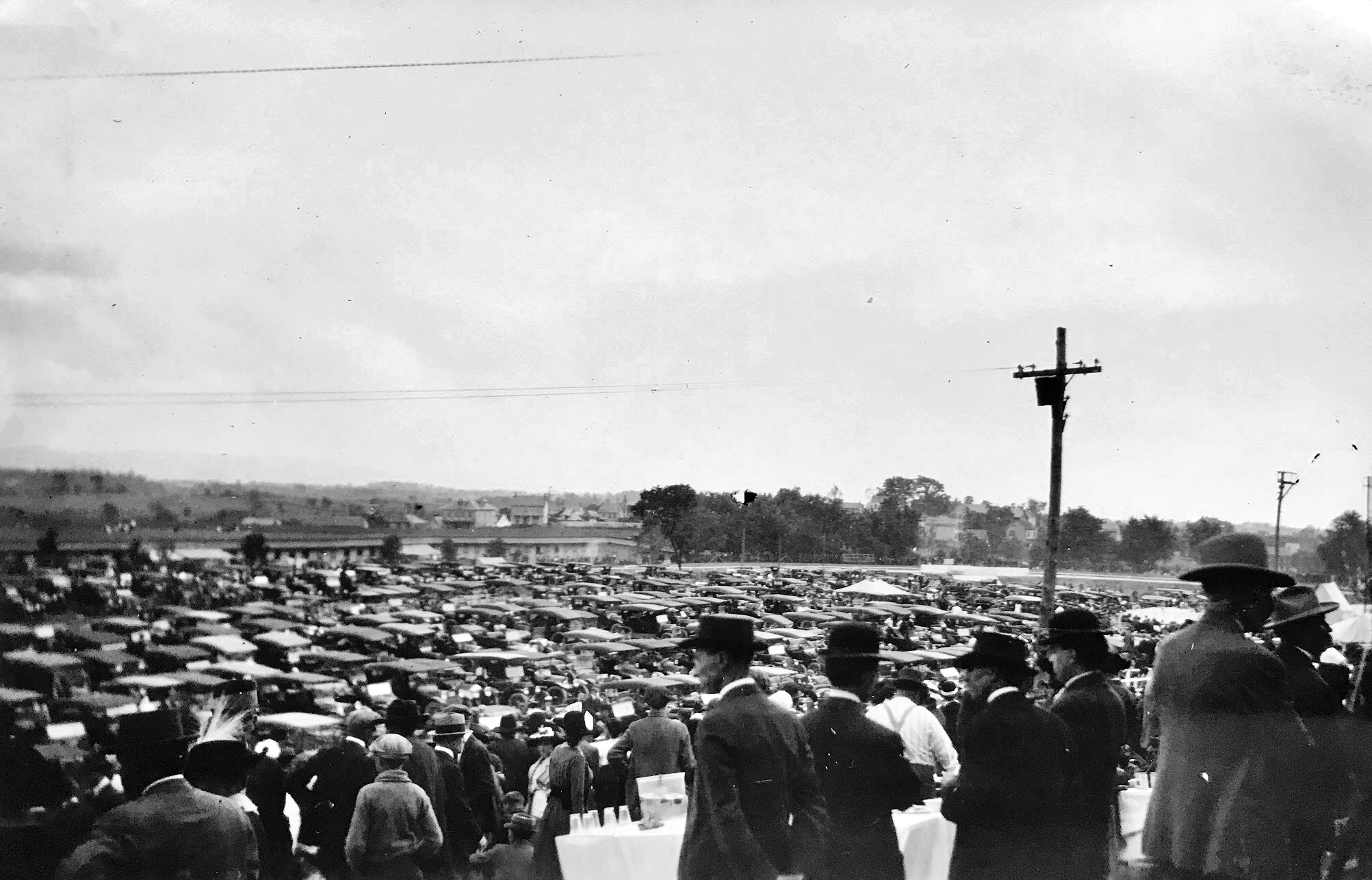
Hundreds of cars in the parking lot.
The grandstand and one-third-mile dirt race track were among the fair’s most popular attractions. Horse racing remained a favorite event, while bicycle races, motorcycle exhibitions, and eventually automobile competitions reflected America’s growing fascination with speed and mechanical innovation. Reed’s photographs preserve these moments at a time when transportation itself was rapidly changing.
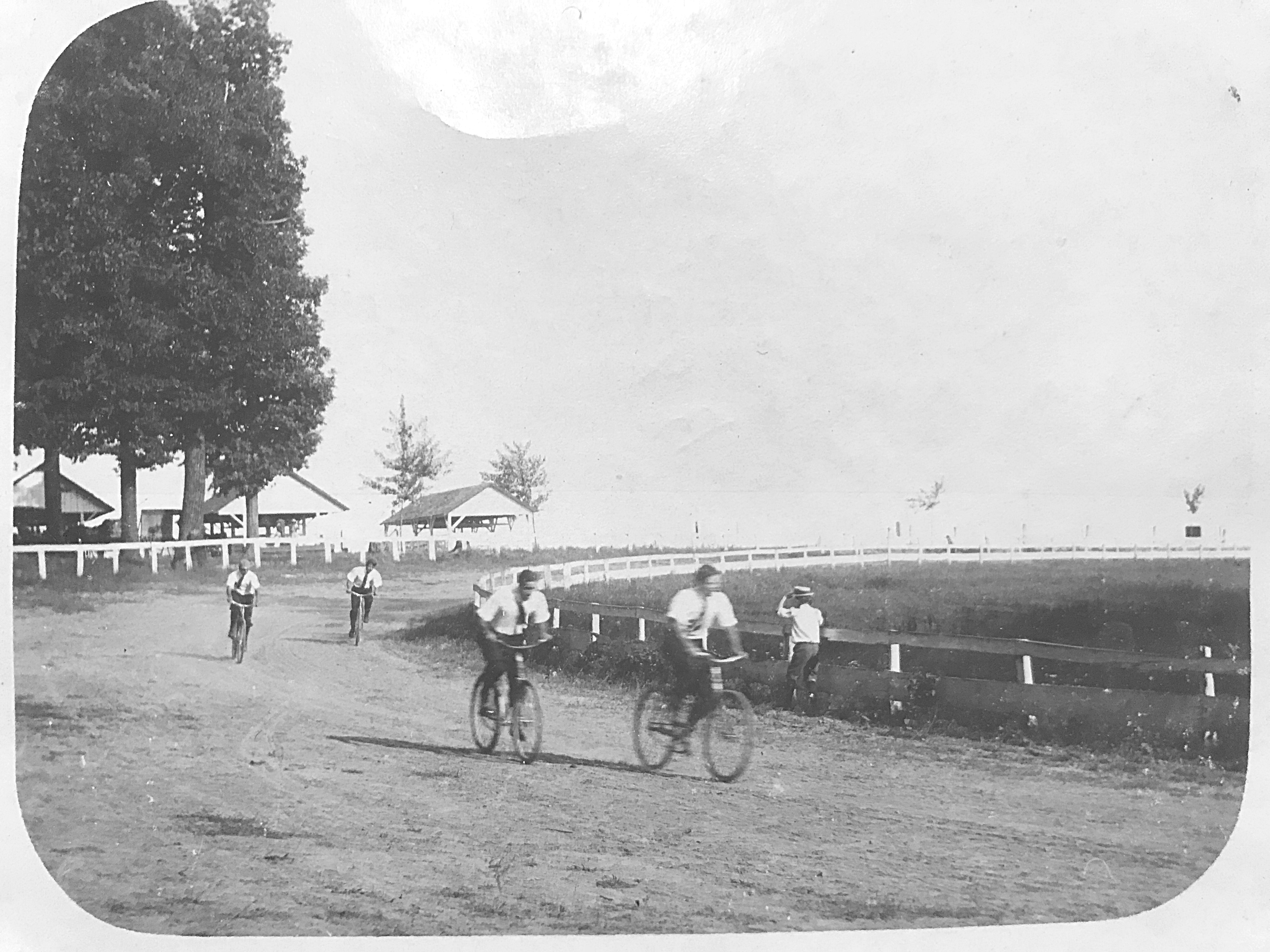
Bicycle races became very popular throughout the country and were a novel event at the Rockville Fairgrounds as early as 1915. The track was a half-mile dirt racing oval with wide, sweeping curves and a grandstand for spectators, which made for clear views. Notice the riders are in shirts and ties.
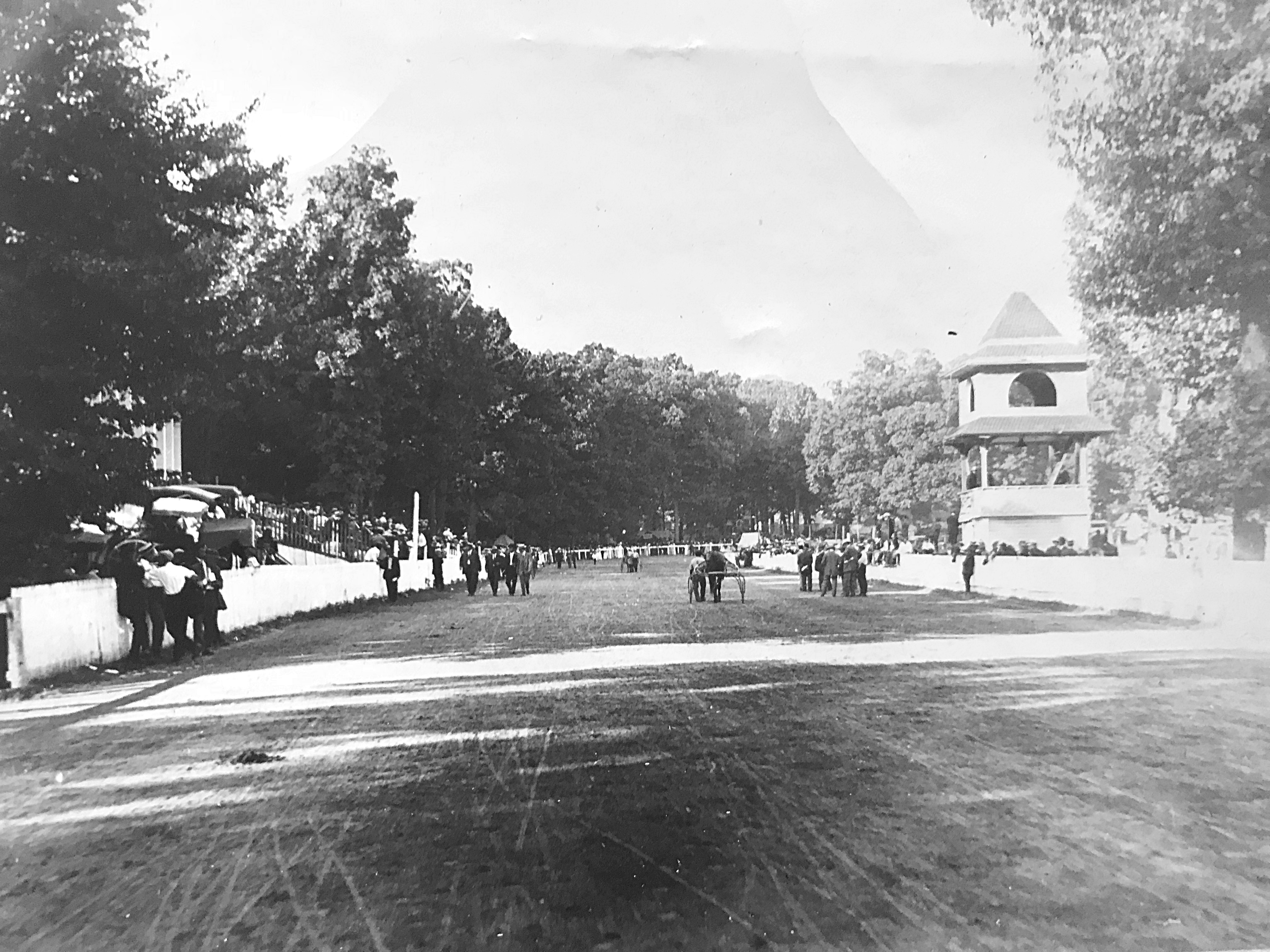
Harness racing was one of the main attractions at the race track before the introduction of the automobile and the subsequent popularity of racing cars.
Spectators pack the grandstand for the automobile races at the Rockville Fair, August 25, 1923. Racing events drew visitors from across the region and showcased the excitement of the new motor age.
The Rockville fairgrounds continued to host the Montgomery County Fair until 1932, when financial hardships brought on by the Great Depression forced the Agricultural Society to sell the property. The site would later become the home of Richard Montgomery High School. In 1949, hundreds of volunteers joined together to establish the Montgomery County Agricultural Center in Gaithersburg, where the fair continues today.
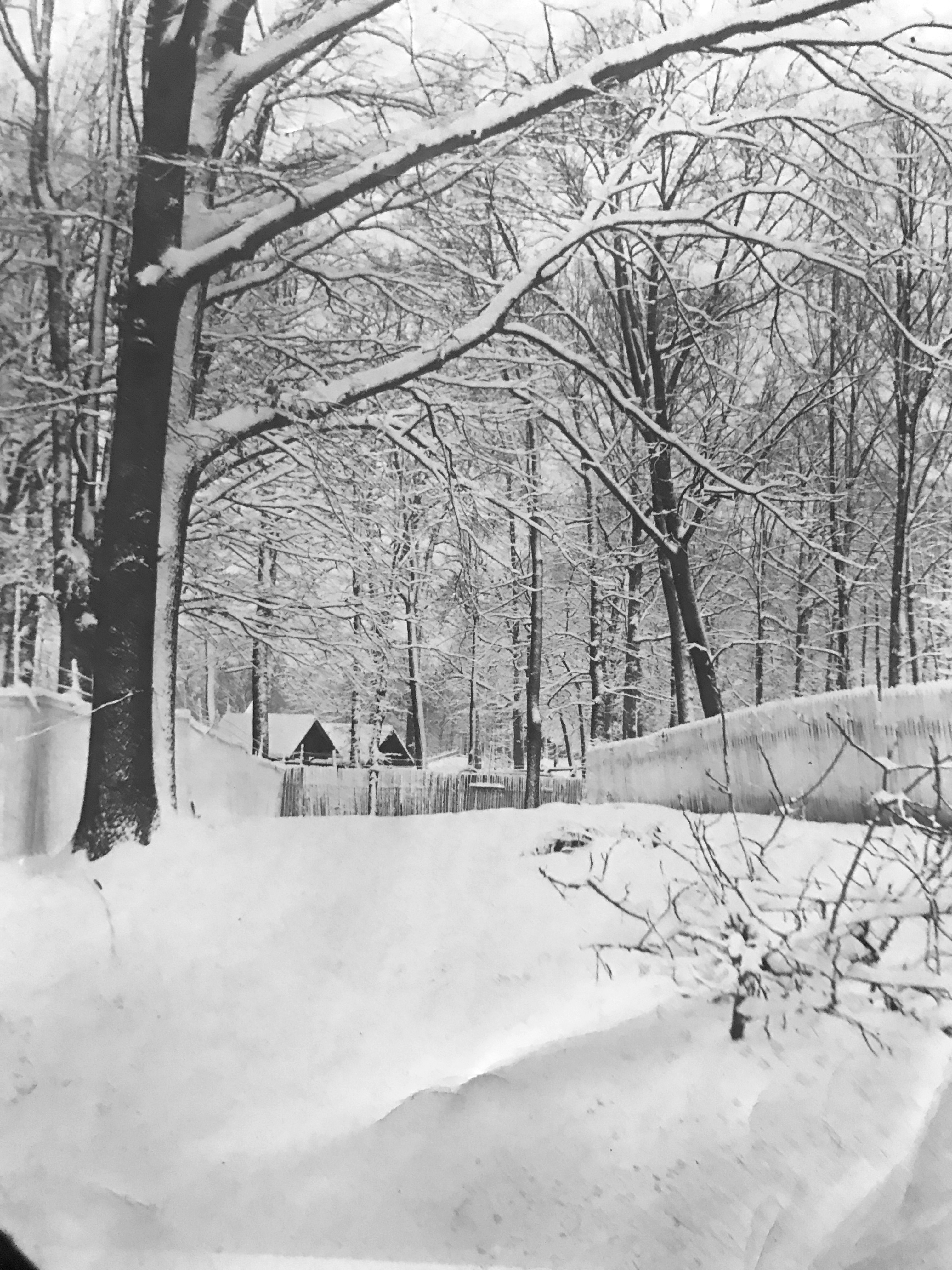
Winter at the Rockville Fairgrounds, 1910. Lewis Reed’s photograph captures a rare, tranquil view of the fairgrounds between seasons, preserving a landscape that would eventually disappear from Montgomery County.
Much has changed since Lewis Reed walked the fairgrounds with his camera. The original race track has disappeared, the Rockville fairgrounds exist only in photographs, and Montgomery County has grown from a rural farming community into one of Maryland’s most populous counties. Yet the fair’s mission has remained remarkably consistent: celebrating agriculture, education, community, and innovation.
As visitors gather for this year’s Montgomery County Agricultural Fair, Lewis Reed’s photographs offer a rare opportunity to look back at the fair’s early years and experience a tradition that has united generations of Montgomery County residents for nearly 180 years.
Off-Season at the Montgomery County Fairgrounds, 1910
These winter photographs, taken around 1910 by Lewis Reed, offer a rare glimpse of the Montgomery County Fairgrounds during its off-season; long before crowds, exhibitions, and midway sounds returned each year. Covered in snow and largely still, the fairgrounds appear almost contemplative, preserving a moment in time that contrasts sharply with the bustle normally associated with the annual fair.
The Montgomery County Fair was held in Rockville from 1846 until 1932, serving as one of the county’s most important agricultural and social gatherings. Farmers, merchants, families, and visitors from across the region—including Washington, D.C.—came together to celebrate livestock, crops, craftsmanship, and community. Yet photographs of the fairgrounds outside the fair season are uncommon, making these images particularly significant.
Lewis Reed’s photographs show the grounds at rest. Snow blankets the open spaces, softening the outlines of fences and walkways. Buildings stand closed for the winter, including the Poultry House, which would have been a hive of activity during fair time. In these images, the structures themselves take center stage, revealing their form and placement without the distraction of crowds.
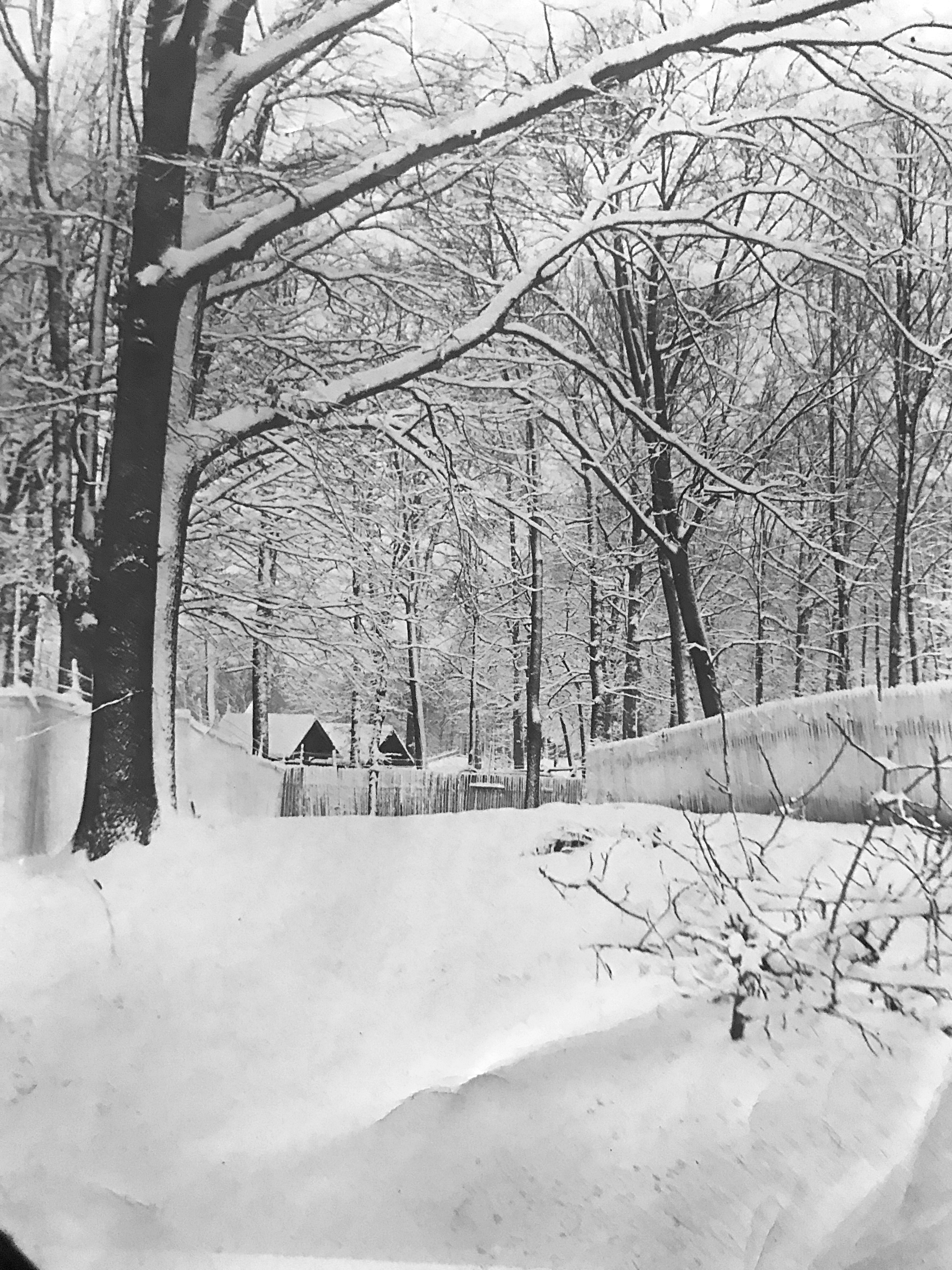
Snow blankets the fairgrounds in this early 20th-century photograph by Lewis Reed. Images such as this offer a rare view of the fairgrounds outside the fair season, documenting the site as it appeared in everyday use.
Reed’s work is notable not only for its subject matter, but for its documentary value. At a time when photography was still a deliberate and technical process, his images captured everyday scenes that might otherwise have gone unrecorded. Today, they provide visual evidence of how the fairgrounds looked and functioned in the early twentieth century, as well as a reminder of the role photography played in preserving local history.
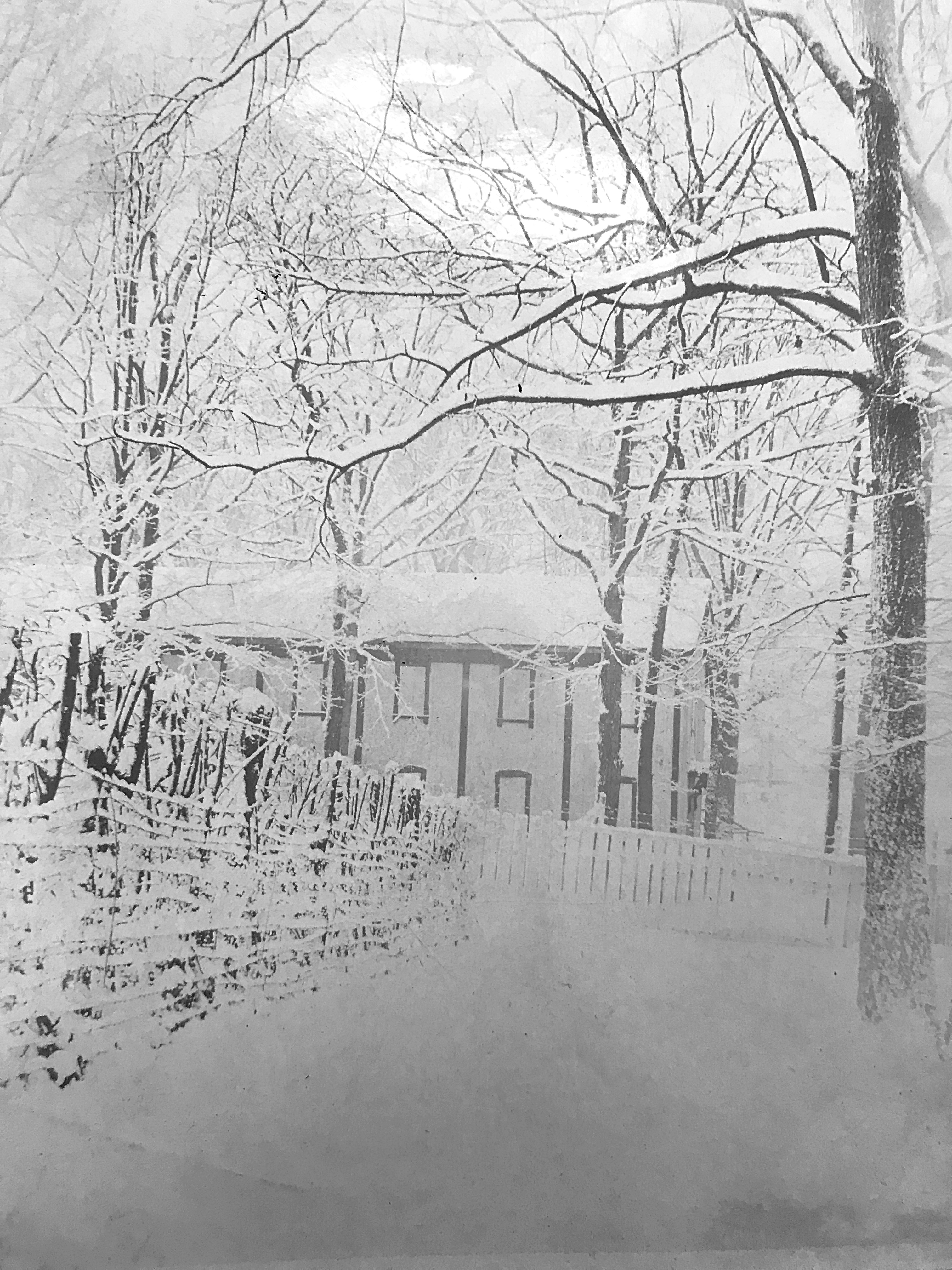
The Poultry House at the Montgomery County Fairgrounds, photographed by Lewis Reed during the winter of 1910. Closed for the season, the building would later host livestock exhibits during the annual Montgomery County Fair.
Viewed more than a century later, these snowy scenes connect us to a slower pace of life and to a Montgomery County that was still largely rural. Thanks to Lewis Reed’s careful eye and willingness to document the ordinary as well as the celebrated, these winter moments at the old fairgrounds endure.
The Great Rockville Fair: A Snapshot of Agriculture and Race Cars
For nearly a century, from 1846 to 1932, the Agricultural Fair was a cherished community tradition marking the close of summer in Montgomery County. Often called the “Rockville Fair” this event was organized by the Montgomery County Agricultural Society and brought neighbors together to celebrate farming, innovation, and local culture. The photos featured in this blog taken by Lewis Reed provide a unique window into the early years of the fair’s rich history.
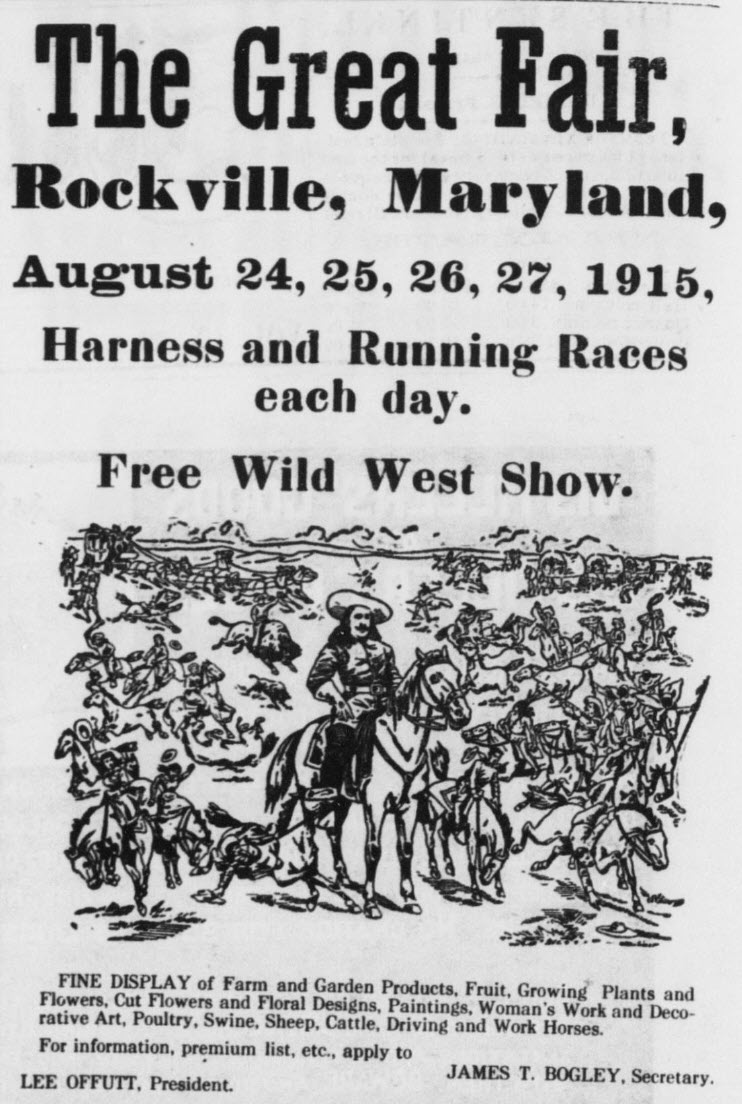
The Montgomery County Sentinel, August 20, 1915
In 1846, when James K. Polk was president, the U.S. flag had just 28 stars, and fewer than 1,500 people called Rockville home, a new tradition was quietly taking root. That year, a group of forward-thinking Rockville farmers formed the Montgomery County Agricultural Society, setting the stage for what would become the Montgomery County Fair.
Led by John P. C. Peter and an inaugural 12-member board of directors, the Society was established with the goal of promoting agricultural progress in the region. Just two years later, in 1848, the inaugural fair took place around Court House Square in downtown Rockville. That early fair wasn’t just about showcasing crops and livestock. It was a true community event. Court House Square bustled with displays of the latest farm tools, and county government offices were transformed into makeshift exhibition halls. The register of wills opened his office to display household goods, while the county clerk’s office filled with locally grown fruits and vegetables. Women competed for prizes in categories ranging from homespun fabrics and needlework to pickles, preserves, butter, cheese, and honey. Men showcased livestock on the grounds of the historic Beall-Dawson House.
As the fair grew in popularity, it moved to the wooded lot owned by Samuel T. Stonestreet, adjacent to St. Mary’s Church, in the early 1850s. While the exact year is not clearly documented, historical references place the move shortly after the first fair was held in 1848 at Court House Square. This relocation allowed for more space and helped transform the fair into a larger, more community-focused event. By settling into Stonestreet’s lot, the fair evolved from a modest agricultural exhibition into a festive annual gathering where locals came not only to display crops and livestock, but also to enjoy races, food, entertainment, and each other’s company.
The fair moved to the 26-acre site along Rockville Pike (where Richard Montgomery High School now stands) in 1917. This new location provided ample space for expanded exhibits, racing events, and other attractions, allowing the fair to grow significantly during the early 20th century until it ceased operations at that site in 1932. The land was eventually repurposed, becoming home to Richard Montgomery High School.
Though the Great Rockville Fair is no more, its legacy lives on in the modern Montgomery County Agricultural Fair held in Gaithersburg, and in the deep agricultural roots and community pride that helped shape Rockville into the vibrant city it is today.
The Most Delightful Way to Reach the Fair: A Trolley Ride from Washington, DC
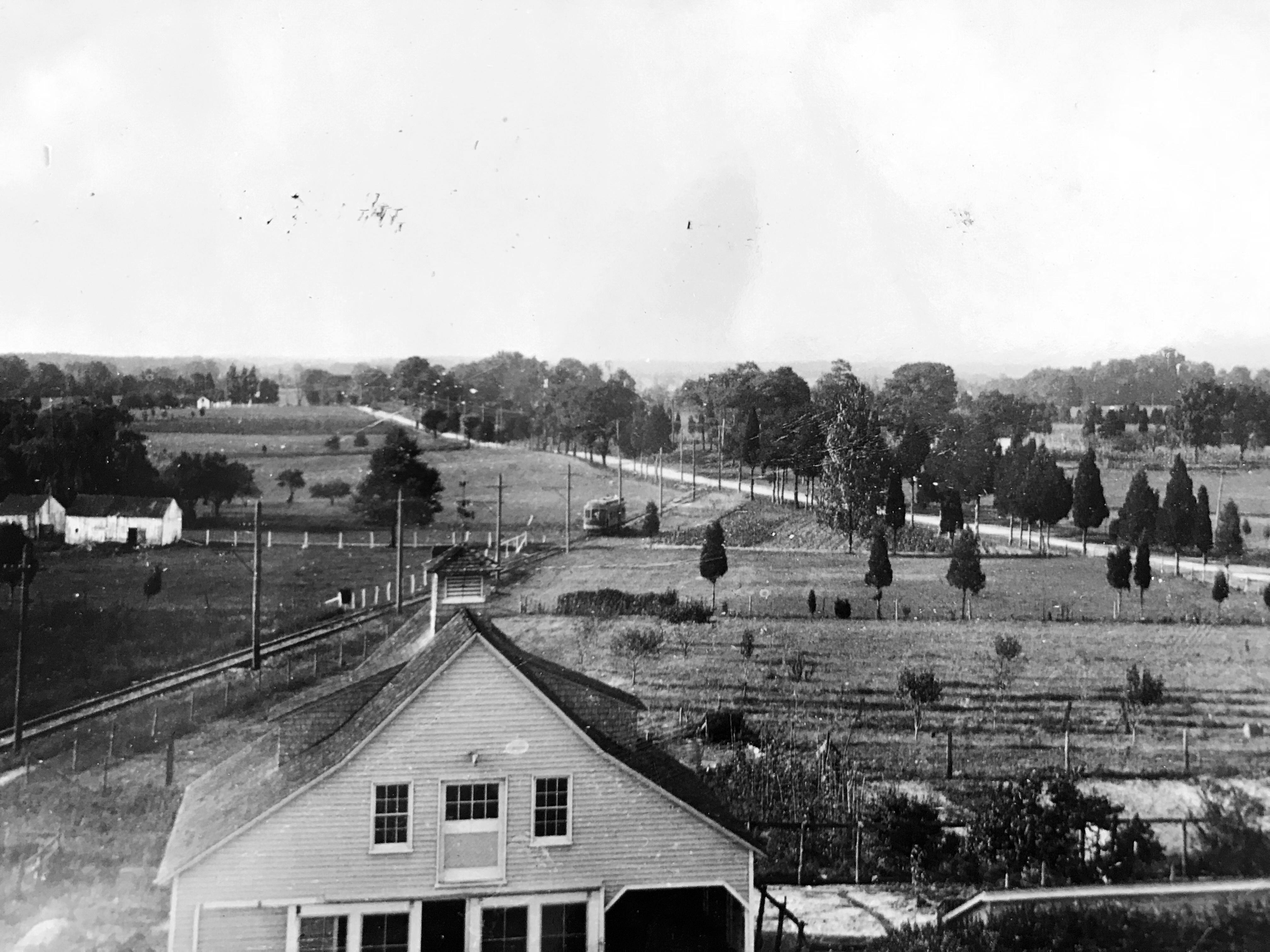
View of the trolley line from Tennalytown, passing through the rural Montgomery County landscape. Photo by Lewis Reed, ca. 1910
For visitors coming from Washington, DC, the most charming way to arrive at the Montgomery County Fair was by trolley. The route meandered through picturesque suburbs before opening into the rich, fertile farmland of Montgomery County. Along the way, travelers would be treated to a stunning glimpse of early autumn: vast cornfields heavy with mature ears, orchards bursting with colorful apples, lush green meadows nearing harvest, and freshly plowed fields ready for wheat planting. This scenic journey set the perfect tone for a day at the fair, offering a peaceful, rural escape just outside the city.
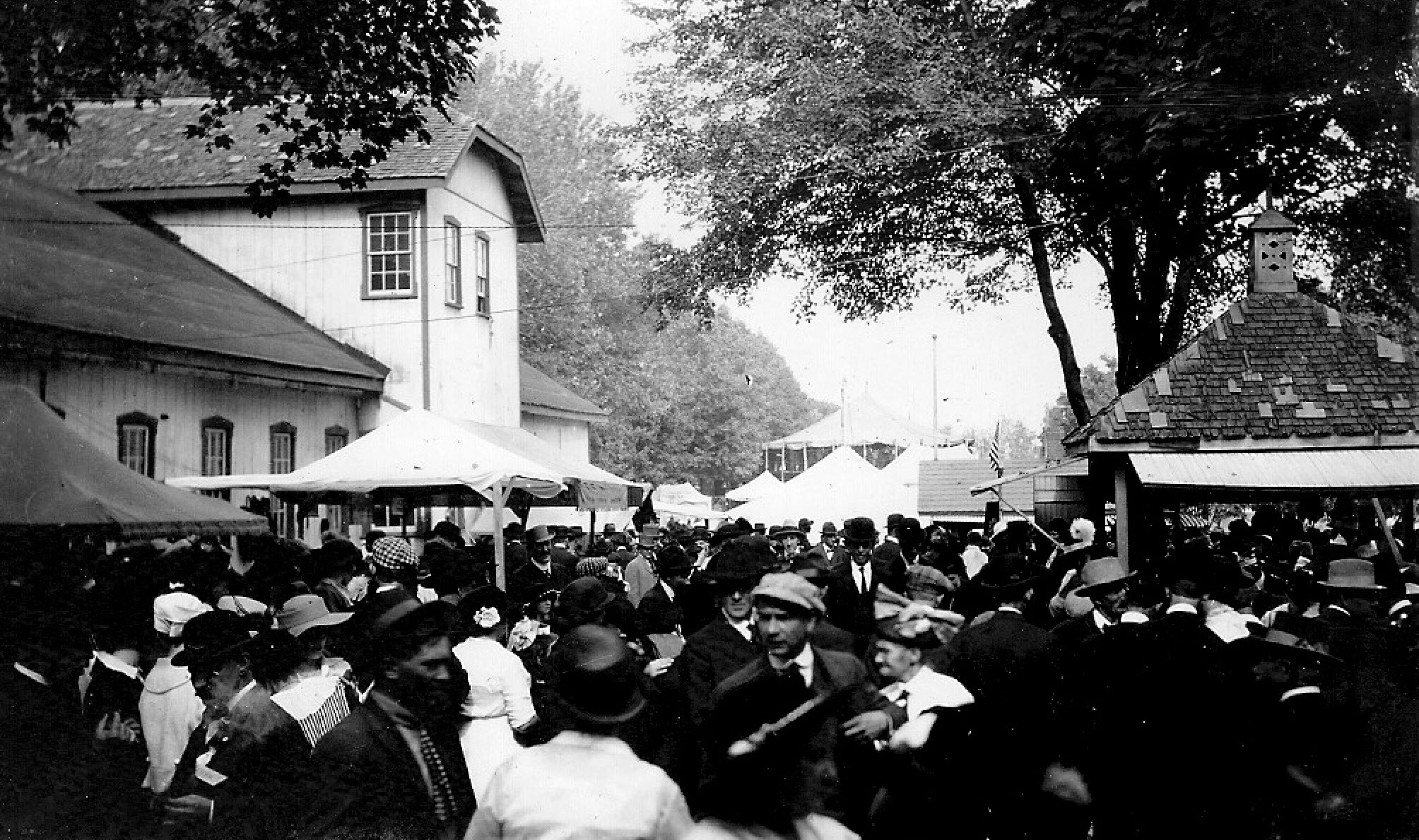
Fair-goers in their finest stroll along the midway. Hats were a fashion requirement at the time, as were long flowing dresses and suits. Photo by Lewis Reed, ca. 1910
All the latest improved machinery in farm and garden implements were there, together with wagons, carriages, automobiles, trucks, and tractors. The display of cattle, sheep and hogs had long been one of the leading features at the Rockville Fair. Many fine herds of cattle, including Jerseys, Guernseys and other varieties were on exhibition. Two hundred of the finest horses in Montgomery County, along with many from the District of Columbia, nearby Virginia, and elsewhere were on exhibition.
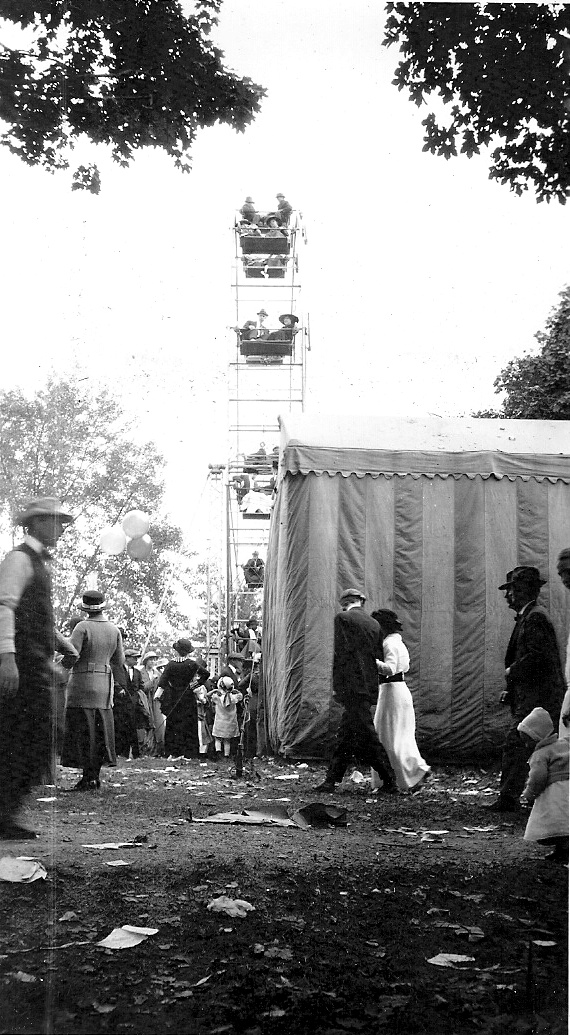
Ferris Wheel at the Rockville Fair. Photo by Lewis Reed, ca. 1910
The fair offered a wide variety of attractions to entertain visitors of all ages. Crowds flocked to the lively midway, where they could enjoy the merry-go-round, Ferris wheel, and an assortment of side shows. Daily events in front of the grandstand featured free exhibitions, thrilling horse, pony, and mule races, and lively automobile contests. Additional highlights included parades of livestock, horse and dog shows, poultry exhibits, and a popular automobile display. One of the standout events was the clay pigeon shoot. The clay-pigeon shoot was one of the biggest events of its kind ever held in Maryland.
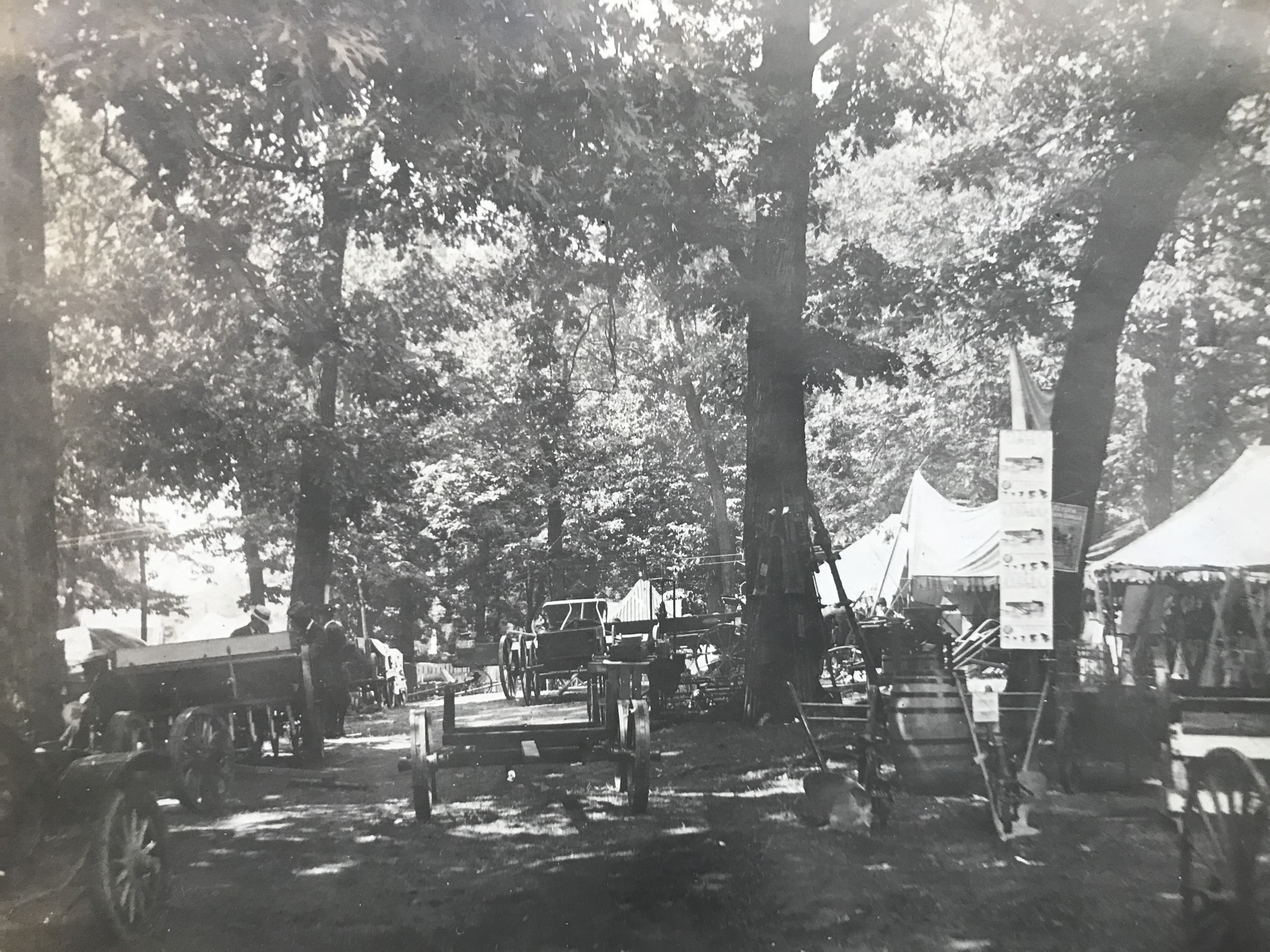
Agricultural and various farm equipment exhibits. Photo by Lewis Reed, ca. 1910
The various departments were filled to overflowing with high-class exhibits. The main exhibition hall was devoted to farm products and garden products, household displays, flowers, fruits, etc. The household department had an endless array of preserves, jellies, canned fruits, bread, cakes, candles, pies, fancy articles, and works of art. Sanders & Stayman and E. F. Droop & Co. of Washington, had excellent displays of musical instruments in this hall. Examples of locally grown produce were abundant in the main hall. Peaches, apples, plums, damsons, cantaloupes and watermelons were piled up in tempting array. The poultry show was also a place of interest. Many fine chickens, turkeys, geese, ducks and pigeons were being shown.
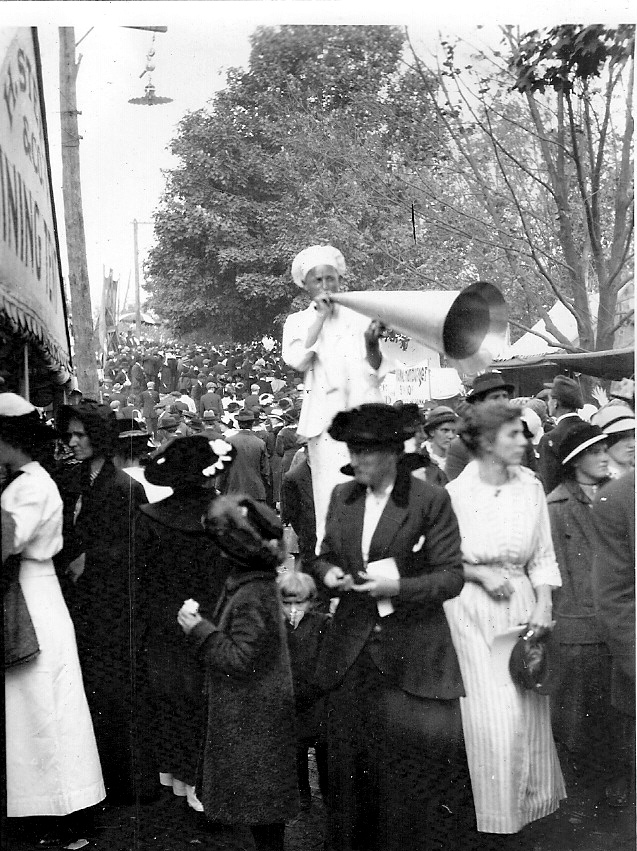
Getting the attention of the crowd. Can you hear me now? Photo by Lewis Reed, ca. 1910
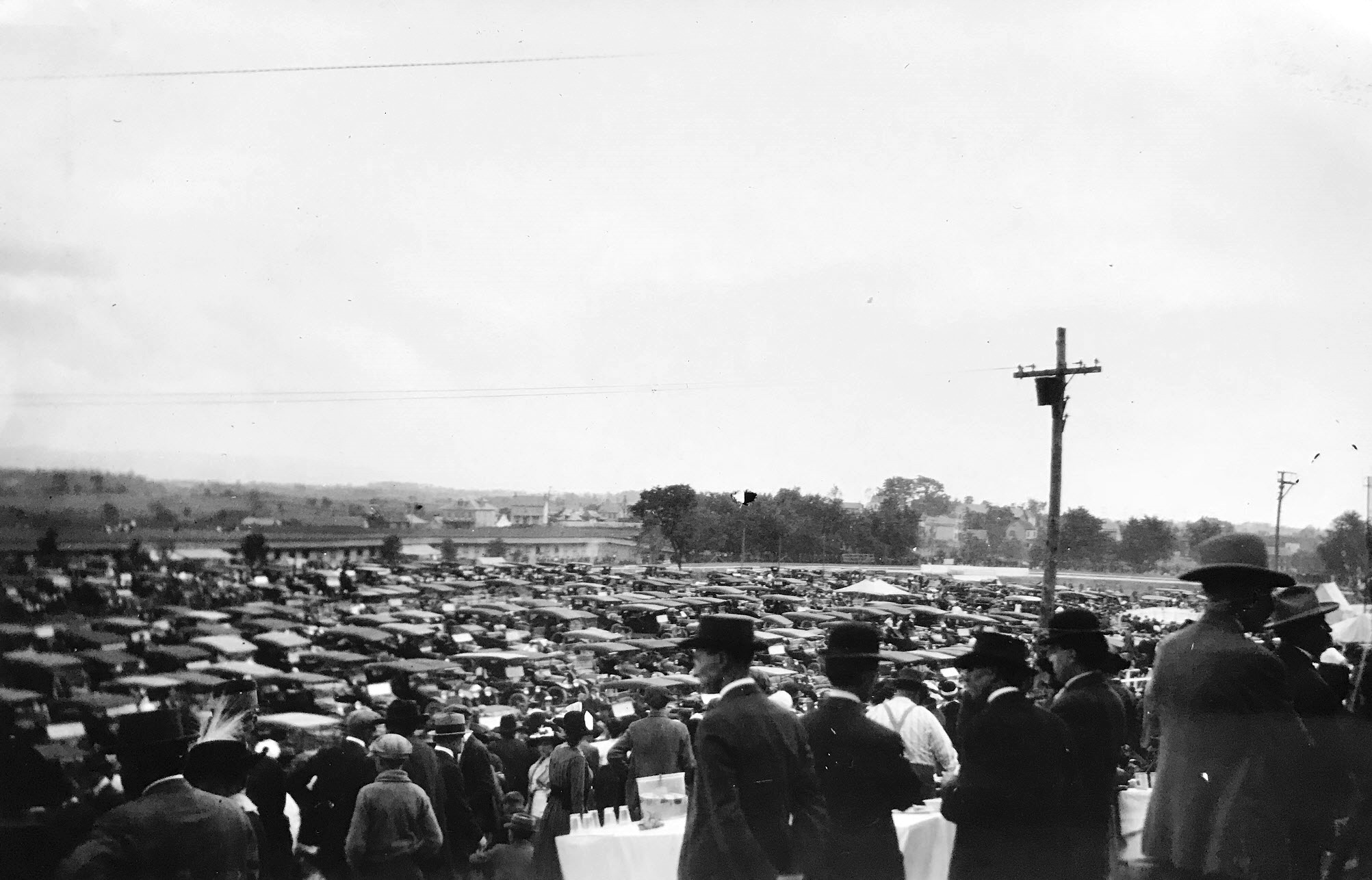
Hundreds of cars parked in the fair parking lot. Photo by Lewis Reed, ca. 1910.
The Fair was always attended by large numbers of out-of-town visitors from other Maryland counties like Frederick, Howard, and Carroll counties, as well as attracting out-of-state fair-goers from the District of Columbia and neighboring counties in Virginia. Vehicles were assigned places all around the fairgrounds, and the park was completely surrounded. What I find especially amusing is the thought of trying to find your car afterward when nearly every early automobile was painted black, how could anyone tell them apart?
The Race Track
The dirt race track at the Rockville Fairgrounds played a central role in the county’s early motorsport history. Established in the late 19th century after the fairgrounds expanded in size, the one-third mile oval dirt track quickly became a popular venue for bicycle and harness racing before automobiles arrived on the scene. By the early 1900s, as car racing grew in popularity, the track welcomed high-powered race cars driven by some of the era’s top speed enthusiasts. The grandstand overlooking the track witnessed thrilling competitions featuring horses, bicycles, motorcycles, and cars, making the Rockville Fairgrounds a beloved hub for racing fans until the fair moved and the track was eventually retired in the early 1930s.
From a recent email: Racing from Rockville to the Indy 500
I was truly thrilled to receive an email from the grandson of one of the early Rockville race car drivers. It’s moments like these that bring history to life and remind me how deeply personal and interconnected these stories really are. Here’s what he shared:
“Hello Jeanne, I just ran across your blog about the Rockville Fairgrounds race track. My dad raced there in the early 1920s and I have a couple of photos of him in his race car. My dad, Russ Snowberger, was born in Denton, Maryland, and raced all over that area before he went on to become a famous Indianapolis 500 driver.”
What makes this connection even more fascinating is that his last name is Snowberger — also a name in my extended family! It’s amazing how history can weave our stories together in unexpected ways.
Learning about Russ Snowberger’s connection to the Rockville track and his racing legacy adds a fascinating layer to this local history. I’m incredibly grateful to have the chance to preserve and share these stories that might otherwise fade with time.
Bicycle Races
Bicycle racing was a rising trend nationwide, and by 1915 it had become a popular feature at the Rockville Fairgrounds. The dirt oval track, stretching one-third of a mile with its gentle curves and elevated grandstand, provided an ideal setting for both racers and spectators. Early photos show riders dressed in shirts and ties, typical attire of the time, even in competition. Behind the track, buildings visible in the background were identified in the 1903 Sanborn Fire Insurance Atlas as cattle pens, highlighting the fairgrounds’ dual role as both a racing venue and agricultural showcase.
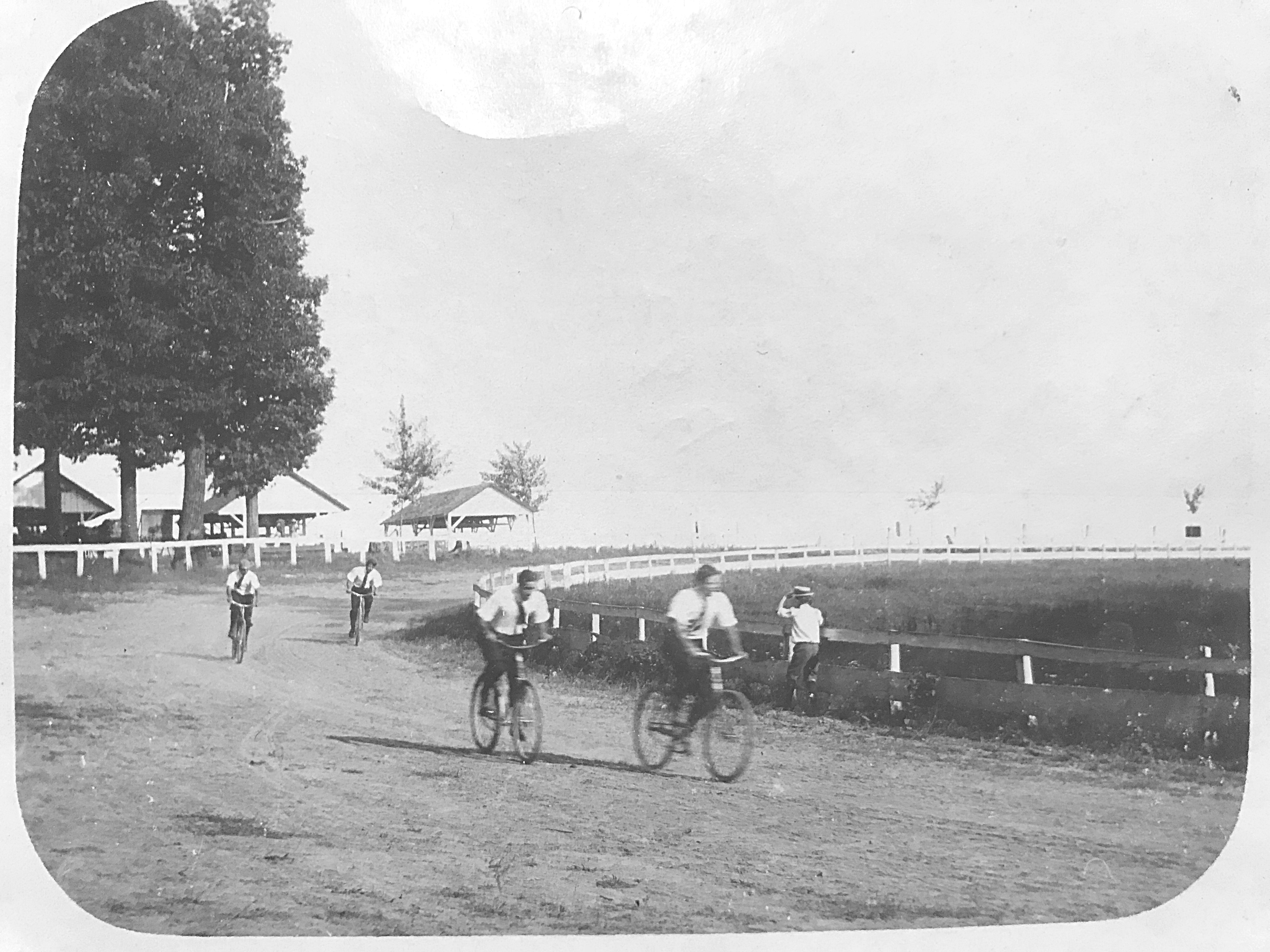
This circa 1915 photo of an early bicycle race at the Rockville Fairgrounds gives a sense of just how popular the sport was at the time. Photo by Lewis Reed
Harness Races
Harness racing was one of the main attractions at the new race track before the introduction of the automobile and the subsequent popularity of racing cars. Horses were harnessed to lightweight one-seater buggies called sulkies, and would race around the track at a trot, as opposed to the galloping gait of horses ridden by jockeys.

Rockville drew huge crowds for harness races. Photo by Lewis Reed, circa 1910
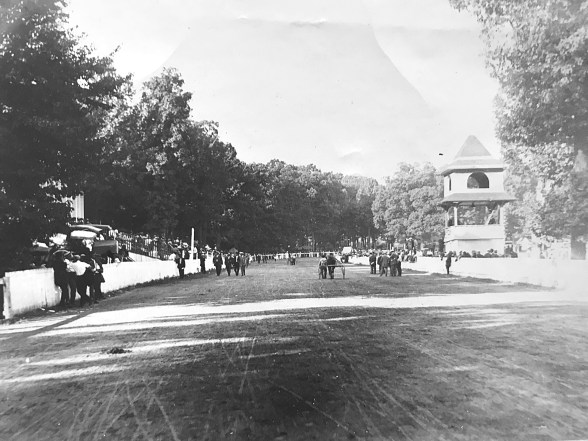
Harness race at the Rockville Fair, circa 1910. All those throngs of people had plenty to see. Photo by Lewis Reed

Harness racers rounding the bend on the racetrack, Rockville Fairground circa 1910. Photo by Lewis Reed
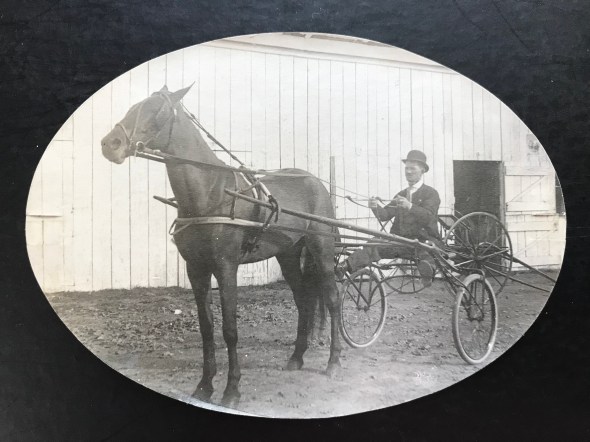
Race horses and two-wheeled sulkies (for trotting races) at the Rockville Fairground stables, Photo by Lewis Reed, ca. 1910.
First Auto Races at Rockville Fair Speedway
From The Baltimore Sun, August 27, 1923:
This is the first year that a Rockville Fair has continued through Saturday. The extra day was added this time as an experiment, the management believing that by substituting new features the additional day could be made a success. Automobile races, the first ever held at Rockville, were the day’s principal attraction and they attracted a good-sized crowd.
Early action shots like the ones below are exceptionally rare, however, Lewis Reed was there to capture six epic moments of race history through the lens of his camera that day.
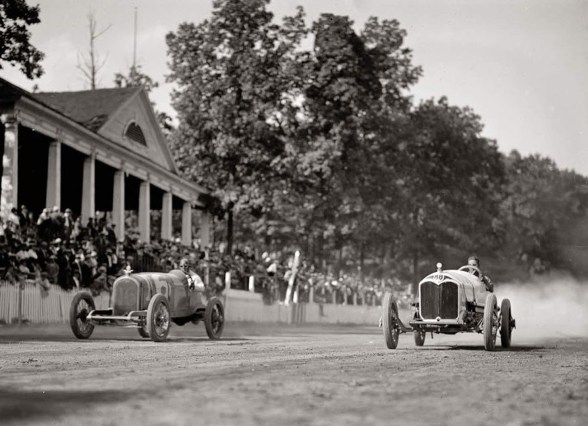
Rockville drew huge crowds for auto races. Rockville Fair, August 25, 1923. Photo by Lewis Reed

Dusty Action – 1923 photo of the exciting auto races at Rockville Fair. Five racers are just coming around the bend on this dirt track with their tires spinning up dust in their wake. Photo by Lewis Reed

Race car drivers deep in dust round a turn at the Rockville Fair auto races. Print made from a Lewis Reed glass negative.
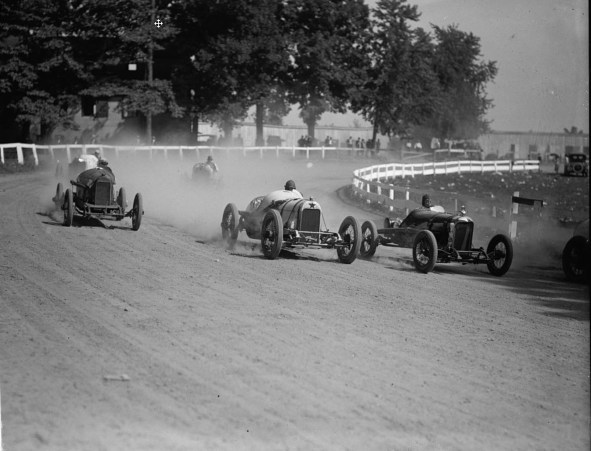
High-powered race cars rounding a wide, sweeping curve at the Rockville Fair auto races, August 25, 1923. Print made from a Lewis Reed glass negative
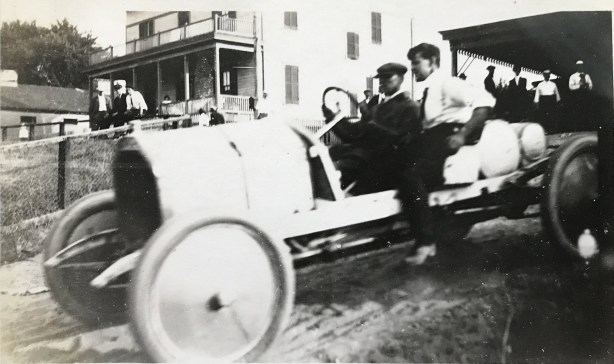
Two-man race car. Some early race cars included both a driver and a ‘riding mechanic’. One of the key jobs of the second man in a race car was to look backward and alert the driver to what was going on behind him. Photo by Lewis Reed
In the early era of race car driving, it wasn’t unusual to see two people in a speeding vehicle, one being the driver, the other a riding mechanic. While sometimes optional, riding mechanics were often required and played a crucial role during races. They served as navigators and spotters, kept a close eye on tire conditions, and were even known to leap from the car mid-race to fetch fuel across the infield. These behind-the-scenes heroes were essential to early racing success. A photograph capturing this unique aspect of racing history, taken by Lewis Reed, was featured on the London Array episode of “Impossible Engineering”, which aired January 24, 2019, on Discovery’s Science Channel. The image was used in a segment on the development of the race car, highlighting the important, and now obsolete, role of the riding mechanic.
Rockville Garage Displaying New Model Cars at the Rockville Fair, 1918
The Rockville Fair wasn’t just about livestock and produce, it also served as a valuable platform for local businesses, including automobile dealers. In 1918, a young Lewis Reed took advantage of the fair’s popularity to showcase the latest cars from the Rockville Garage. Pictured below is the dealership’s new car tent, where fair goers got their first look at the newest models on display. It was a prime opportunity for Lewis Reed to introduce the public to the rapidly evolving world of automobiles, and to the future of transportation in Montgomery County.
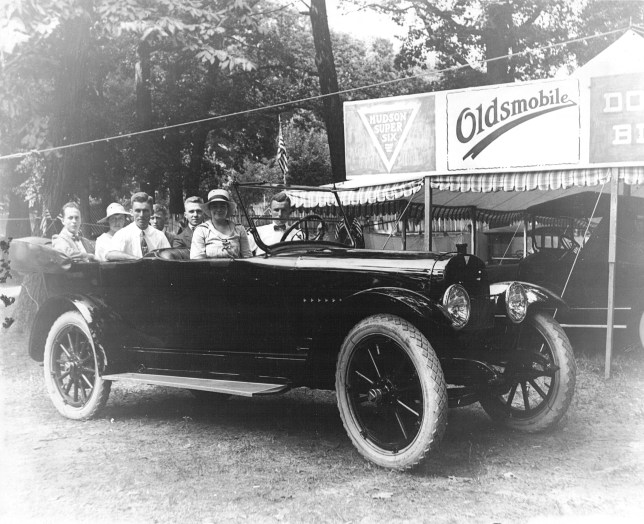
Anybody for a demonstration drive? Identified by the triangle logo on the grill and the number of passengers seated in it, the car appears to be a 1918 Hudson Super Six Seven Passenger Touring. Photo by Lewis Reed
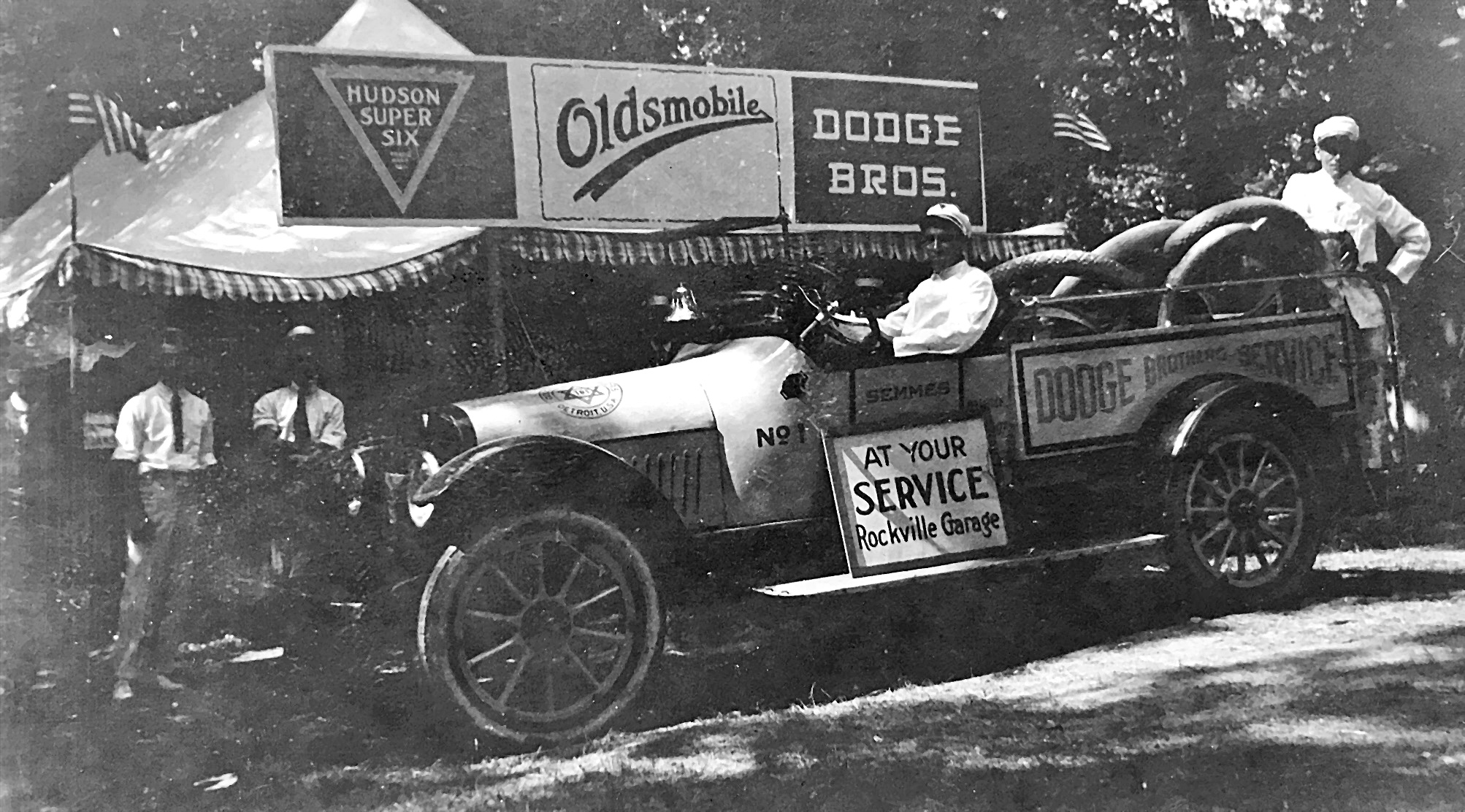
Hudson Super Six, Oldsmobile, and Dodge Brothers Motor Cars on display. Lewis Reed in drivers seat.
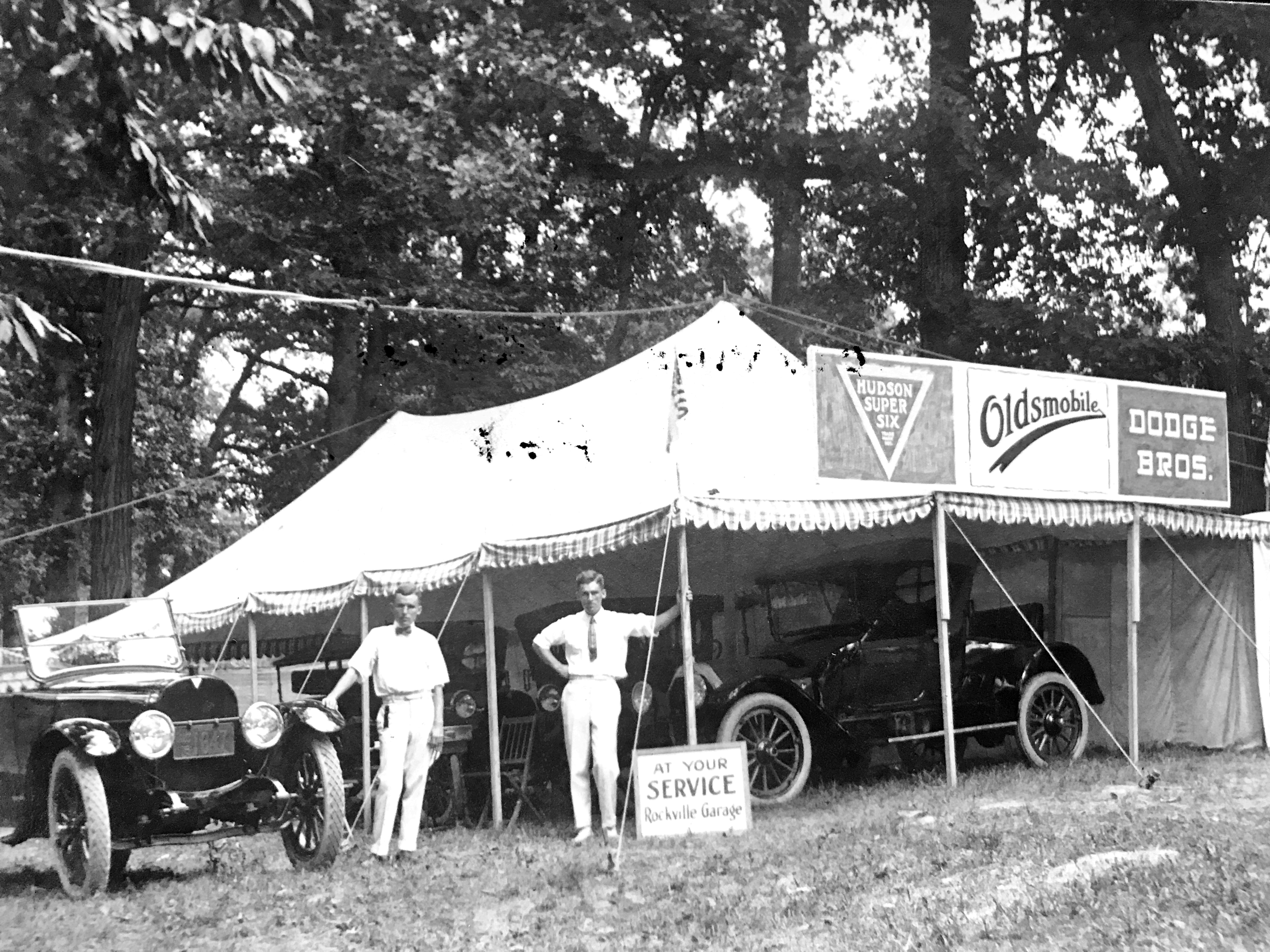
Rockville Garage displaying their new models at the Rockville Fair Grounds. Photo by Lewis Reed
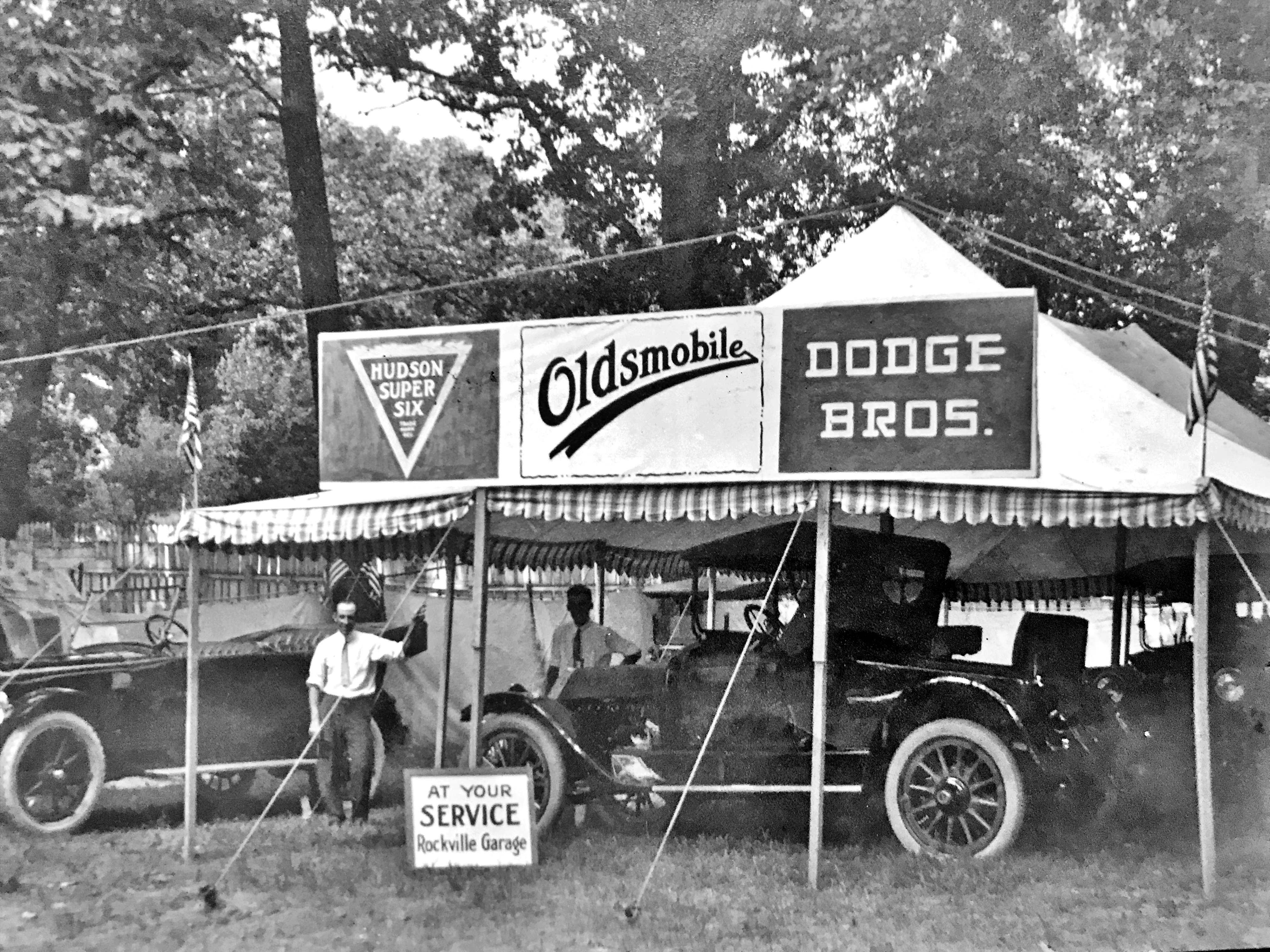
At Your Service Rockville Garage. Lewis Reed on the left
Reed Brothers Company Softball Team at the Rockville Fairgrounds, late 1920s
From a distance, it looks and sounds like a regular baseball game: the crack of the bat, the cheering from the bench, the sliding into home plate. But a closer look at the field shows something is very different. They’re playing on a rough grass field, no one is using a batting helmet, fielding glove, or catcher’s mask. From the 1920s through the 1940s, Reed Brothers Dodge sponsored their own company softball team that played on the fields at the Rockville Fairgrounds where Richard Montgomery High School now stands. It was a win-win: for the company, it offered great publicity, a strong community presence, and promoted employee wellness. For the players, it was simply a fun and spirited way to unwind and connect outside of work.
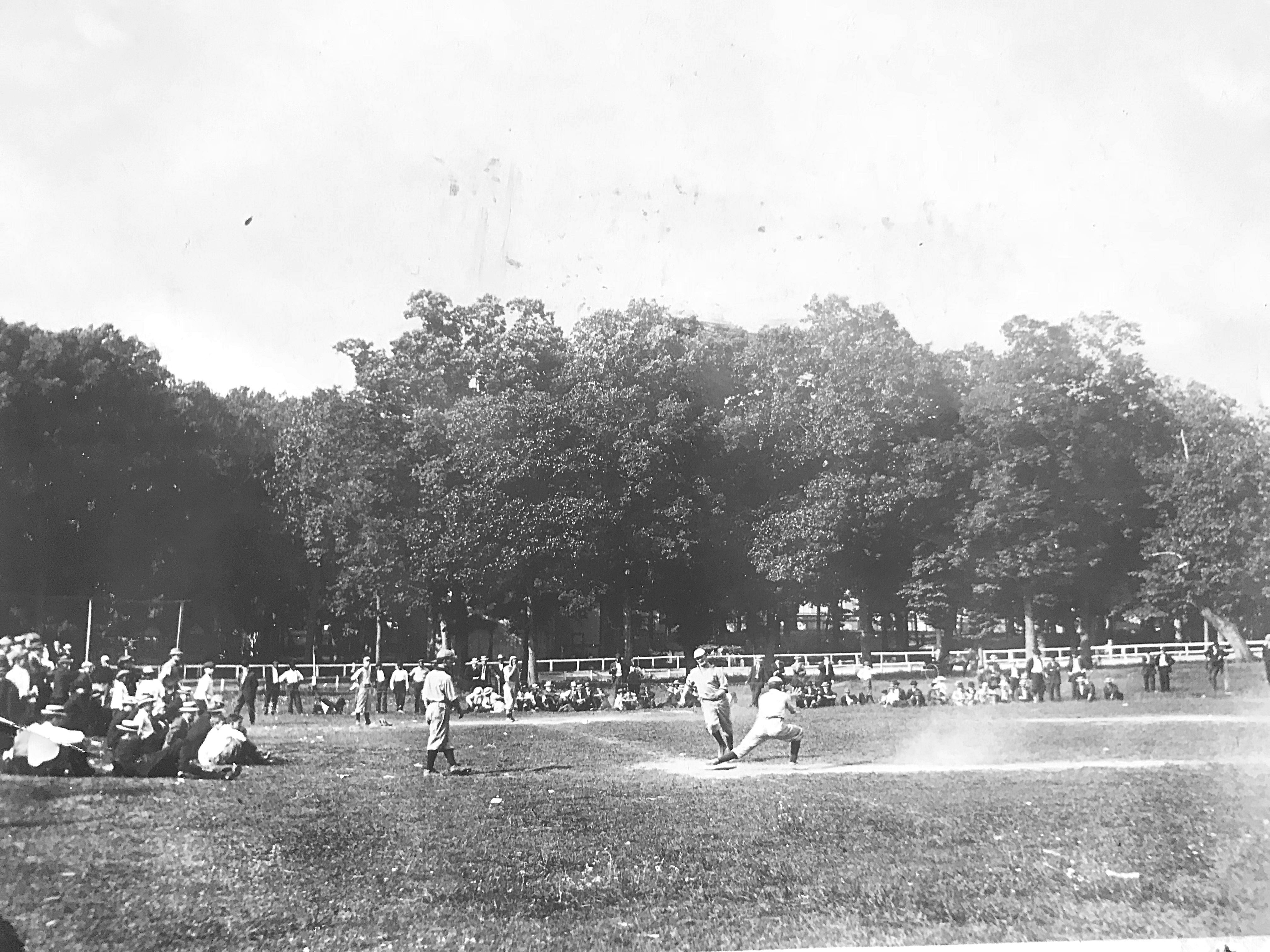
Reed Brothers Softball Team playing on a field set up inside the Rockville Fair racetrack oval, circa late 1920s. Photo by Lewis Reed
Fair Now History
From The Daily Mail (Hagerstown, Maryland) 23 Aug 1933:
The historic Rockville Fairgrounds, scene of many harness race programs, will be sold at a sheriff’s sale Friday afternoon at Rockville. The property consists of 26 acres, a dwelling and numerous stables, exhibition buildings and other structures. The sale is being made to satisfy a claim of a bank. It is rumored that the Montgomery County Board of Education will try to buy the grounds as a site for an elementary school and a future location for the entire Rockville educational plant.
Fair Ground Auctioned
From The Evening Sun (Baltimore, Maryland) 26 Aug 1933:
The Montgomery County National Bank submitted the only bid for the historic Rockville Fair Grounds at a public auction on August 25, 1933 to satisfy a bank’s claim. Its bid was $19,500.00 subject to a mortgage held by the Sandy Spring Savings Institution, and unpaid interest and taxes.
The Montgomery County Fair was reborn in 1949 and again started holding its annual Fair in Gaithersburg. On June 4th, 1949, hundreds of volunteers participated in an old-fashioned barn raising and 12 outbuildings were constructed in one day. The site of the new Montgomery County Agricultural Center was created.
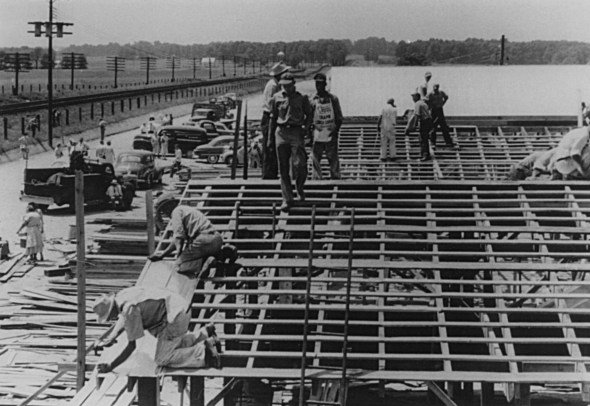
June 4, 1949 – Construction of the cattle barns along the railroad tracks. Photo courtesy of Montgomery County Agricultural Fair photo archives.
End of An Era
While much about the fair has evolved over time – from its location to its attractions – its core mission has remained unchanged. Since its beginnings in 1846, the fair has provided a vital platform for 4-H and FFA members to showcase their livestock, homemaking, and craft projects. It continues to promote agricultural science, preservation, and education throughout Montgomery County. That commitment has endured for generations, and today, the Montgomery County Agricultural Fair stands as one of the largest and most celebrated county fairs in the state of Maryland; a lasting legacy of its humble beginnings in 1846.
Find photos like these and much more on Montgomery History’s online exhibit, “Montgomery County 1900-1930: Through the Lens of Lewis Reed“.
References:
Chronicling America: Historic American Newspapers. Library of Congress
Newspapers.com: newspaper archive
Rockville, Portrait Of A City, Eileen S. McGuckian
Ag Center History
February 14th – National Ferris Wheel Day & Valentine’s Day

Ferris Wheel at the Rockville Fair, circa 1920s. Photo by Lewis Reed
Did you know that February 14th is not only Valentine’s Day, but also National Ferris Wheel Day? This unofficial national holiday is held on this day to honor the birth of the inventor of the Ferris Wheel, George Washington Gale Ferris, Jr. What better way to celebrate Ferris Wheel Day than enjoying this ca.1920s photograph of the Ferris Wheel taken at the Rockville Fairgrounds, courtesy of Lewis Reed.
Books

Related Resources


Copyright Notice

Reed Brothers Dodge History (1915-2012) by Jeanne Gartner is licensed under a Creative Commons Attribution-NonCommercial 3.0 Unported License.


Recent Comments