
A Century in Contrast: Then & Now at the Conowingo Dam
As part of our ongoing “Then & Now” series, we’re journeying through time using photographs from Lewis Reed’s remarkable photo collection. These powerful comparisons highlight how much, and sometimes how little, the world around us has changed. In this installment, we turn our lens to the Conowingo Dam, where echoes of the past still linger in the present. Step back in time and see how this historic site has evolved over the past 100 years.
Conowingo Dam (THEN): The Conowingo Dam, completed in 1928, is a large hydroelectric dam on the Susquehanna River in Maryland, known for its role in power generation and its impact on the Chesapeake Bay. When completed, it was the second-largest hydroelectric project by power output in the United States, after Niagara Falls.
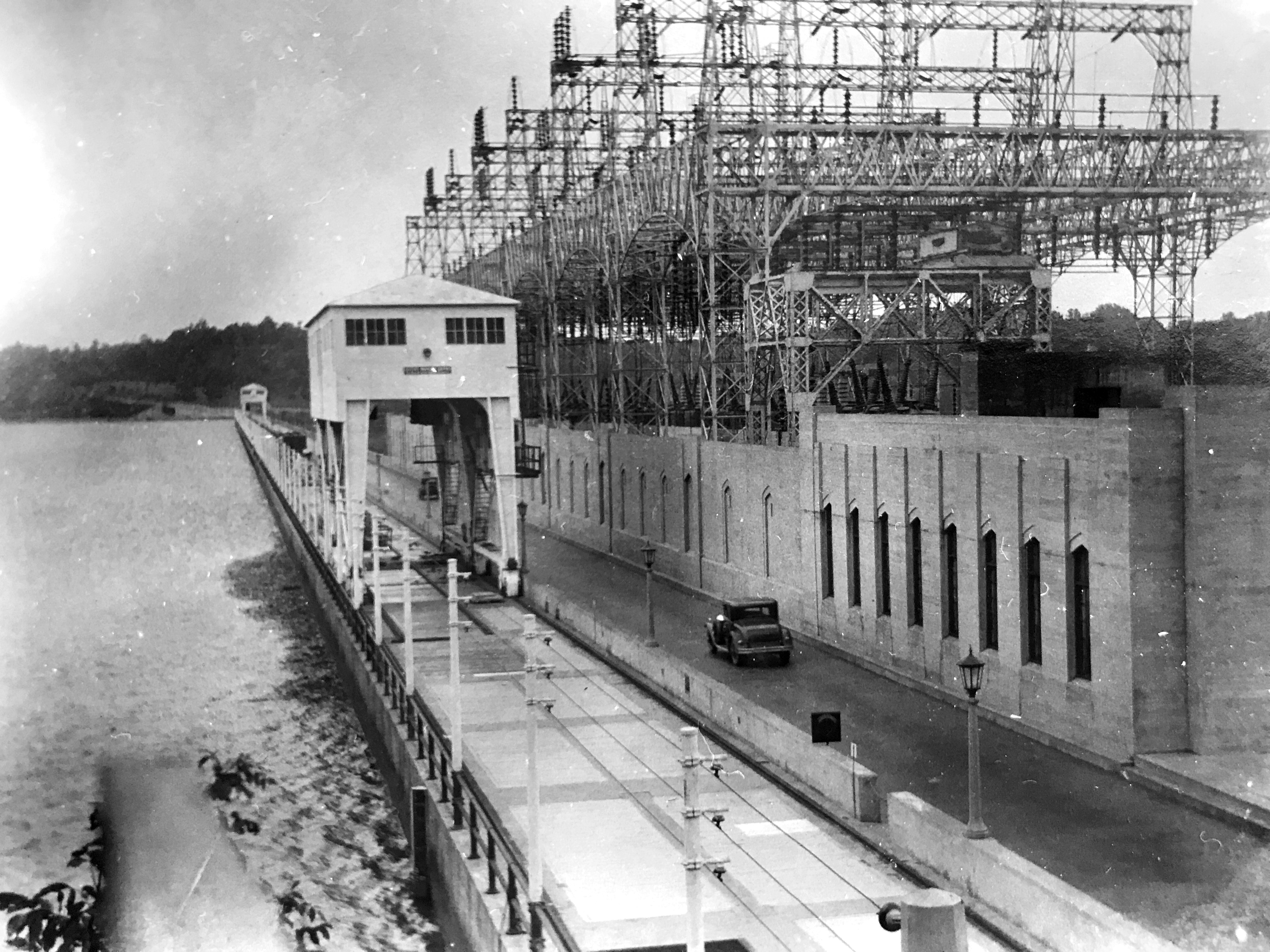
Power House and entrance to driveway crossing Conowingo Dam, Conowingo, Maryland. Photo by Lewis Reed, ca. 1928.
Conowingo Dam (NOW): Today, the Conowingo Dam is operated by the Susquehanna Electric Company, a part of Constellation Energy. The dam is one of the most popular destinations in the United States for seeing bald eagles. While the surrounding area is home to dozens of the eagles year-round, upwards of 200 more will migrate from places like New York and Canada, where lakes and rivers freeze over in the winter and limit fishing opportunities. Their numbers typically peak from November to January, with the eagles taking advantage of the dam’s turbines stunning fish swimming downriver to make for easy hunting. Once a fish is caught, eagles will often battle midair for it, and the spectacle attracts bird photographers from all over the world.
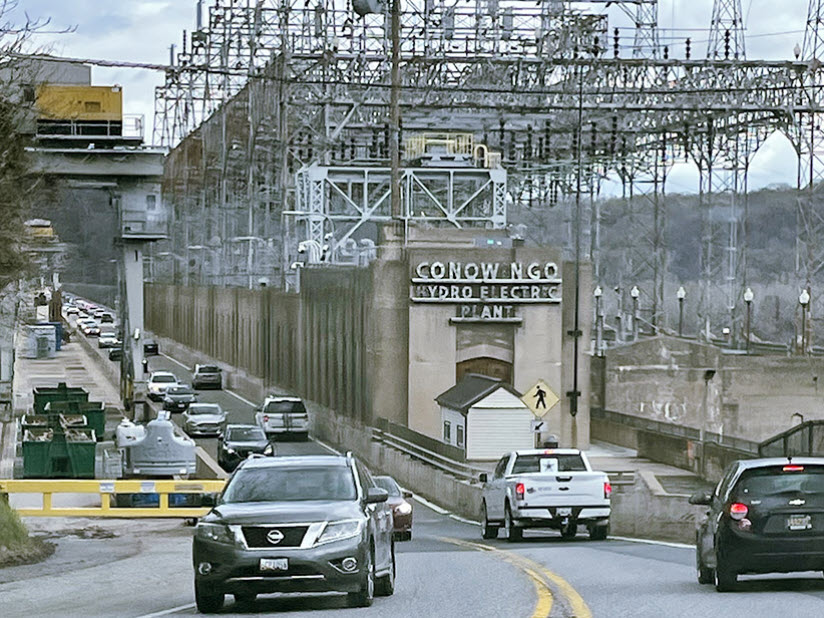
Conowingo Dam today. Google stock image
Source of Information: Conowingo Dam – Wikipedia
The Great Rockville Fair: A Snapshot of Agriculture and Race Cars
For nearly a century, from 1846 to 1932, the Agricultural Fair was a cherished community tradition marking the close of summer in Montgomery County. Often called the “Rockville Fair” this event was organized by the Montgomery County Agricultural Society and brought neighbors together to celebrate farming, innovation, and local culture. The photos featured in this blog taken by Lewis Reed provide a unique window into the early years of the fair’s rich history.
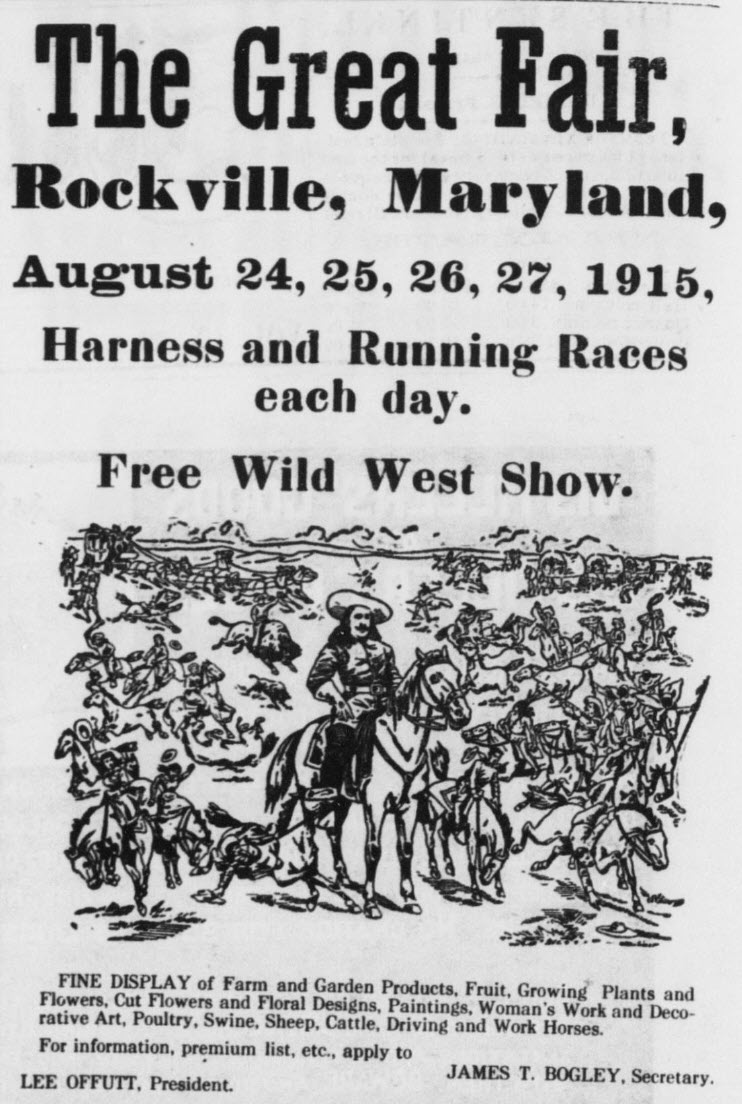
The Montgomery County Sentinel, August 20, 1915
In 1846, when James K. Polk was president, the U.S. flag had just 28 stars, and fewer than 1,500 people called Rockville home, a new tradition was quietly taking root. That year, a group of forward-thinking Rockville farmers formed the Montgomery County Agricultural Society, setting the stage for what would become the Montgomery County Fair.
Led by John P. C. Peter and an inaugural 12-member board of directors, the Society was established with the goal of promoting agricultural progress in the region. Just two years later, in 1848, the inaugural fair took place around Court House Square in downtown Rockville. That early fair wasn’t just about showcasing crops and livestock. It was a true community event. Court House Square bustled with displays of the latest farm tools, and county government offices were transformed into makeshift exhibition halls. The register of wills opened his office to display household goods, while the county clerk’s office filled with locally grown fruits and vegetables. Women competed for prizes in categories ranging from homespun fabrics and needlework to pickles, preserves, butter, cheese, and honey. Men showcased livestock on the grounds of the historic Beall-Dawson House.
As the fair grew in popularity, it moved to the wooded lot owned by Samuel T. Stonestreet, adjacent to St. Mary’s Church, in the early 1850s. While the exact year is not clearly documented, historical references place the move shortly after the first fair was held in 1848 at Court House Square. This relocation allowed for more space and helped transform the fair into a larger, more community-focused event. By settling into Stonestreet’s lot, the fair evolved from a modest agricultural exhibition into a festive annual gathering where locals came not only to display crops and livestock, but also to enjoy races, food, entertainment, and each other’s company.
The fair moved to the 26-acre site along Rockville Pike (where Richard Montgomery High School now stands) in 1917. This new location provided ample space for expanded exhibits, racing events, and other attractions, allowing the fair to grow significantly during the early 20th century until it ceased operations at that site in 1932. The land was eventually repurposed, becoming home to Richard Montgomery High School.
Though the Great Rockville Fair is no more, its legacy lives on in the modern Montgomery County Agricultural Fair held in Gaithersburg, and in the deep agricultural roots and community pride that helped shape Rockville into the vibrant city it is today.
The Most Delightful Way to Reach the Fair: A Trolley Ride from Washington, DC
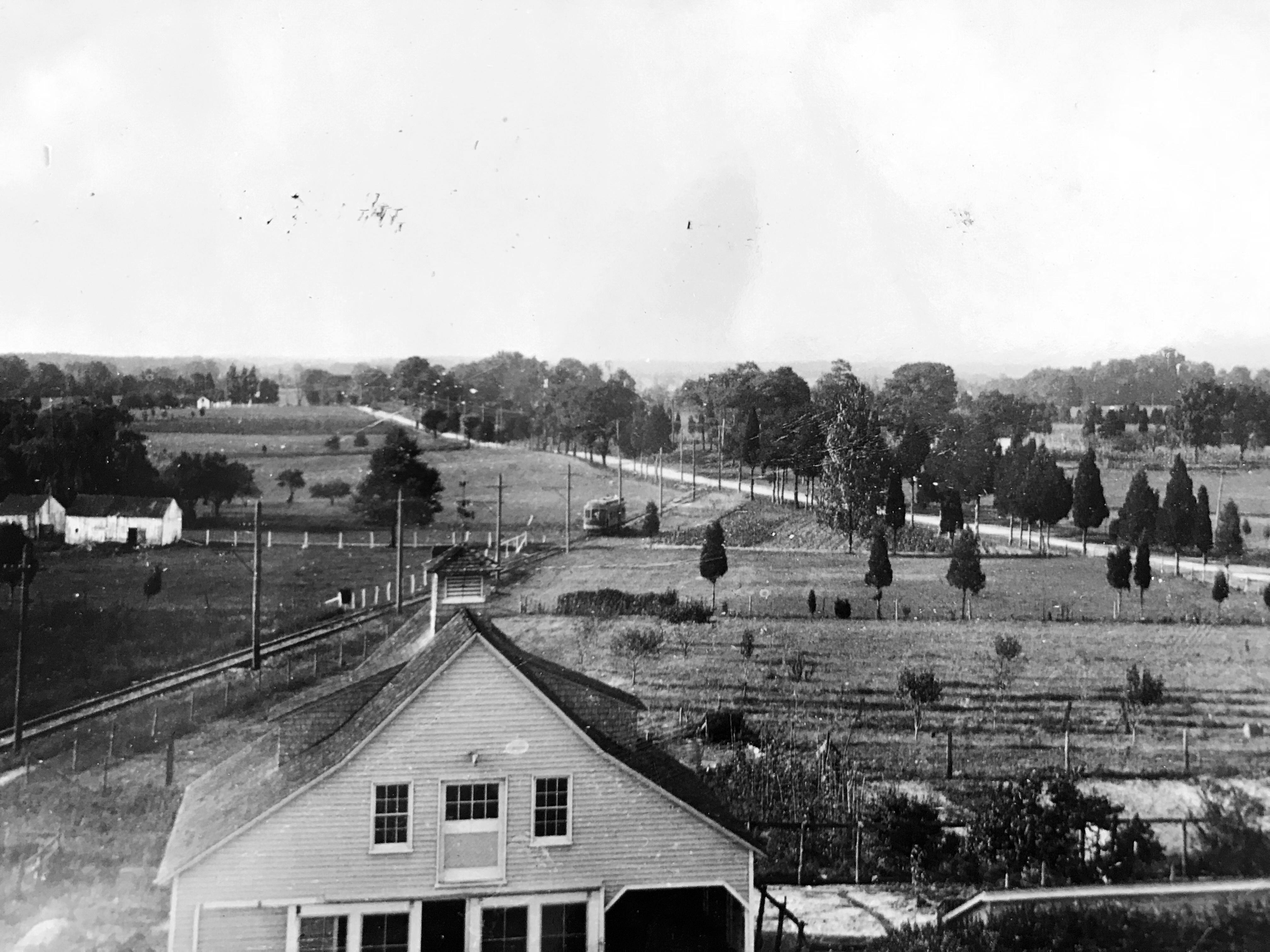
View of the trolley line from Tennalytown, passing through the rural Montgomery County landscape. Photo by Lewis Reed, ca. 1910
For visitors coming from Washington, DC, the most charming way to arrive at the Montgomery County Fair was by trolley. The route meandered through picturesque suburbs before opening into the rich, fertile farmland of Montgomery County. Along the way, travelers would be treated to a stunning glimpse of early autumn: vast cornfields heavy with mature ears, orchards bursting with colorful apples, lush green meadows nearing harvest, and freshly plowed fields ready for wheat planting. This scenic journey set the perfect tone for a day at the fair, offering a peaceful, rural escape just outside the city.
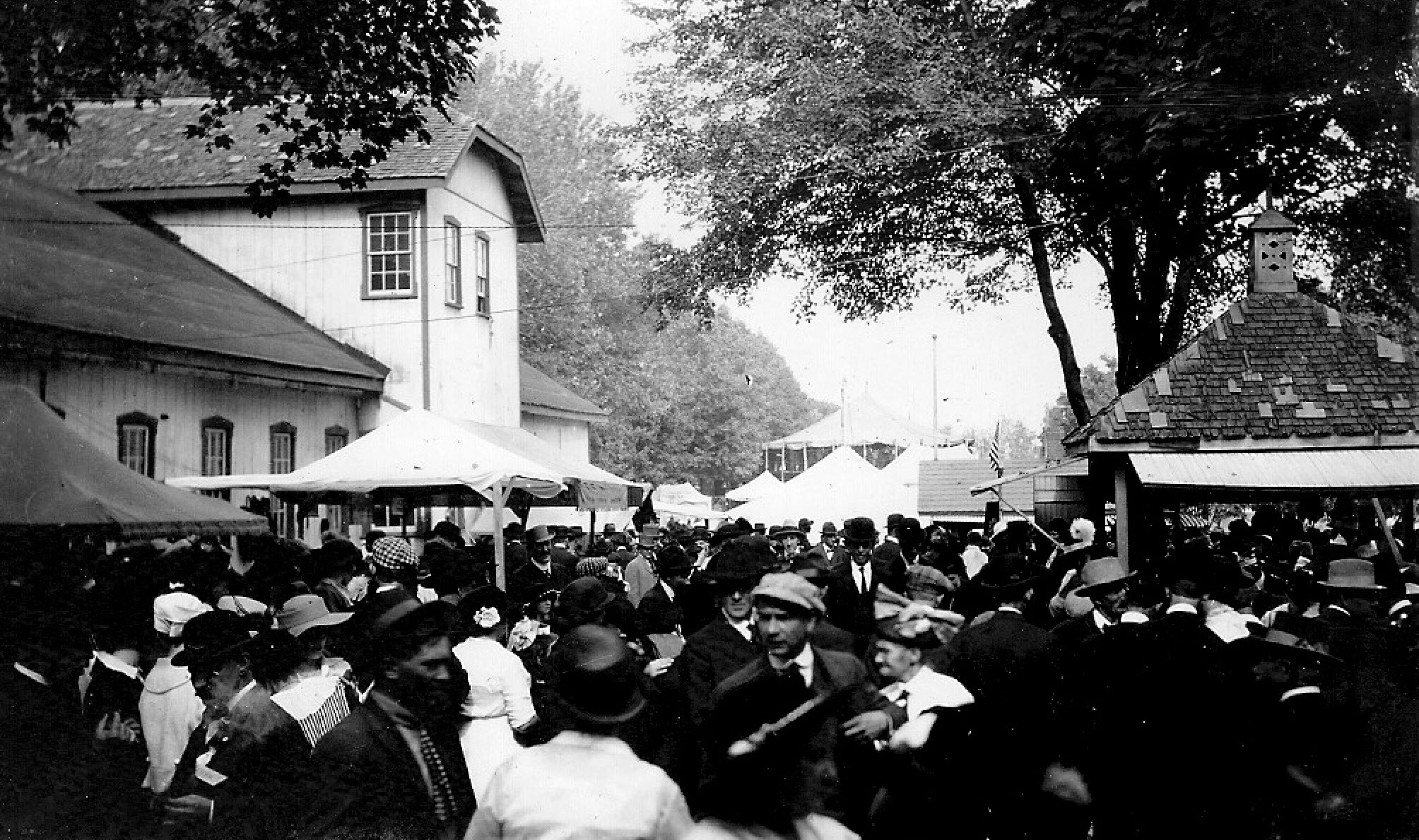
Fair-goers in their finest stroll along the midway. Hats were a fashion requirement at the time, as were long flowing dresses and suits. Photo by Lewis Reed, ca. 1910
All the latest improved machinery in farm and garden implements were there, together with wagons, carriages, automobiles, trucks, and tractors. The display of cattle, sheep and hogs had long been one of the leading features at the Rockville Fair. Many fine herds of cattle, including Jerseys, Guernseys and other varieties were on exhibition. Two hundred of the finest horses in Montgomery County, along with many from the District of Columbia, nearby Virginia, and elsewhere were on exhibition.
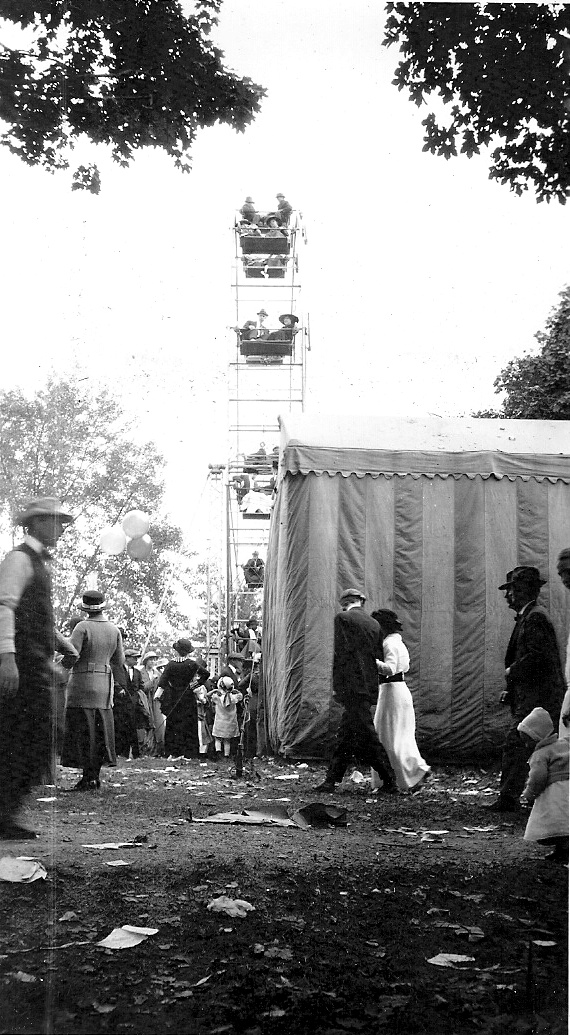
Ferris Wheel at the Rockville Fair. Photo by Lewis Reed, ca. 1910
The fair offered a wide variety of attractions to entertain visitors of all ages. Crowds flocked to the lively midway, where they could enjoy the merry-go-round, Ferris wheel, and an assortment of side shows. Daily events in front of the grandstand featured free exhibitions, thrilling horse, pony, and mule races, and lively automobile contests. Additional highlights included parades of livestock, horse and dog shows, poultry exhibits, and a popular automobile display. One of the standout events was the clay pigeon shoot. The clay-pigeon shoot was one of the biggest events of its kind ever held in Maryland.
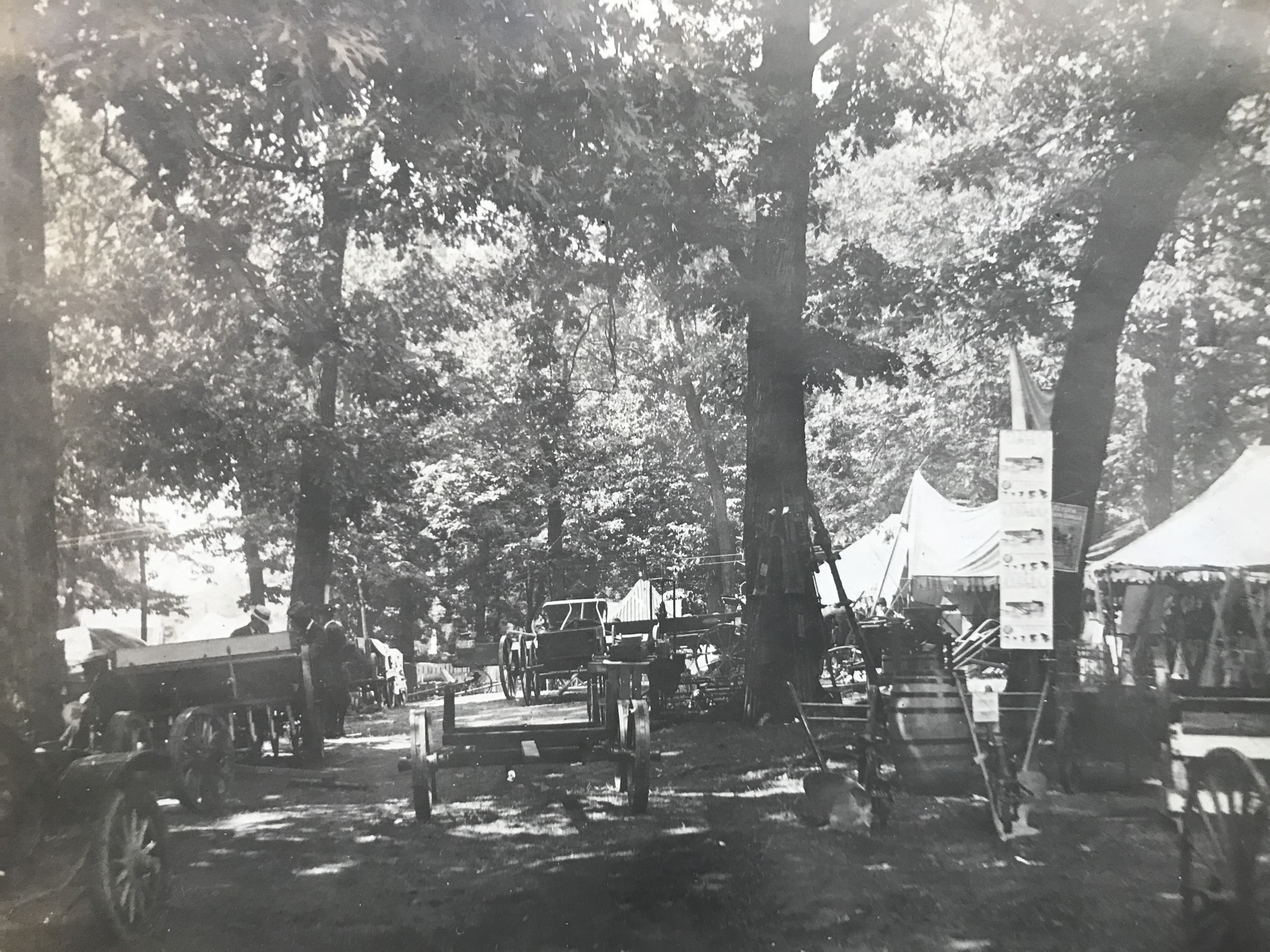
Agricultural and various farm equipment exhibits. Photo by Lewis Reed, ca. 1910
The various departments were filled to overflowing with high-class exhibits. The main exhibition hall was devoted to farm products and garden products, household displays, flowers, fruits, etc. The household department had an endless array of preserves, jellies, canned fruits, bread, cakes, candles, pies, fancy articles, and works of art. Sanders & Stayman and E. F. Droop & Co. of Washington, had excellent displays of musical instruments in this hall. Examples of locally grown produce were abundant in the main hall. Peaches, apples, plums, damsons, cantaloupes and watermelons were piled up in tempting array. The poultry show was also a place of interest. Many fine chickens, turkeys, geese, ducks and pigeons were being shown.
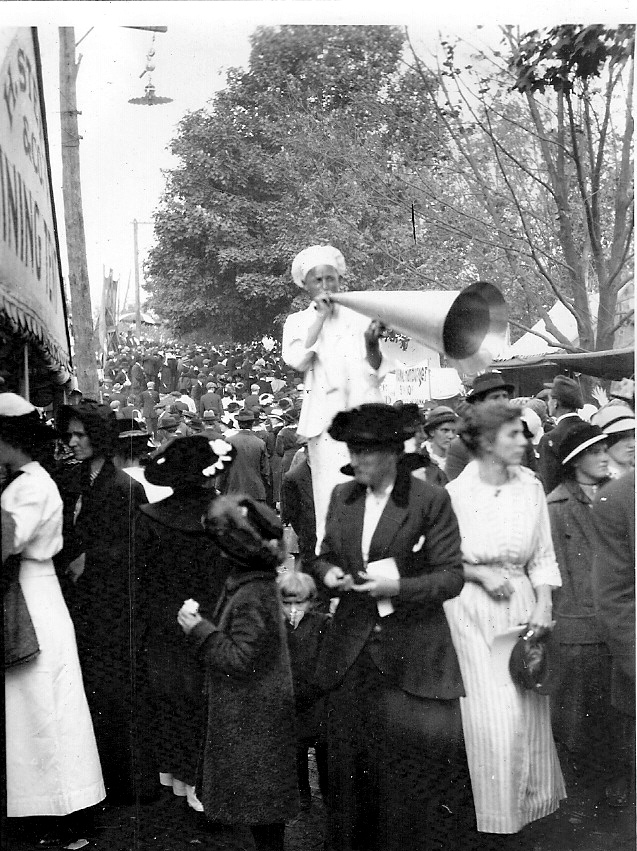
Getting the attention of the crowd. Can you hear me now? Photo by Lewis Reed, ca. 1910
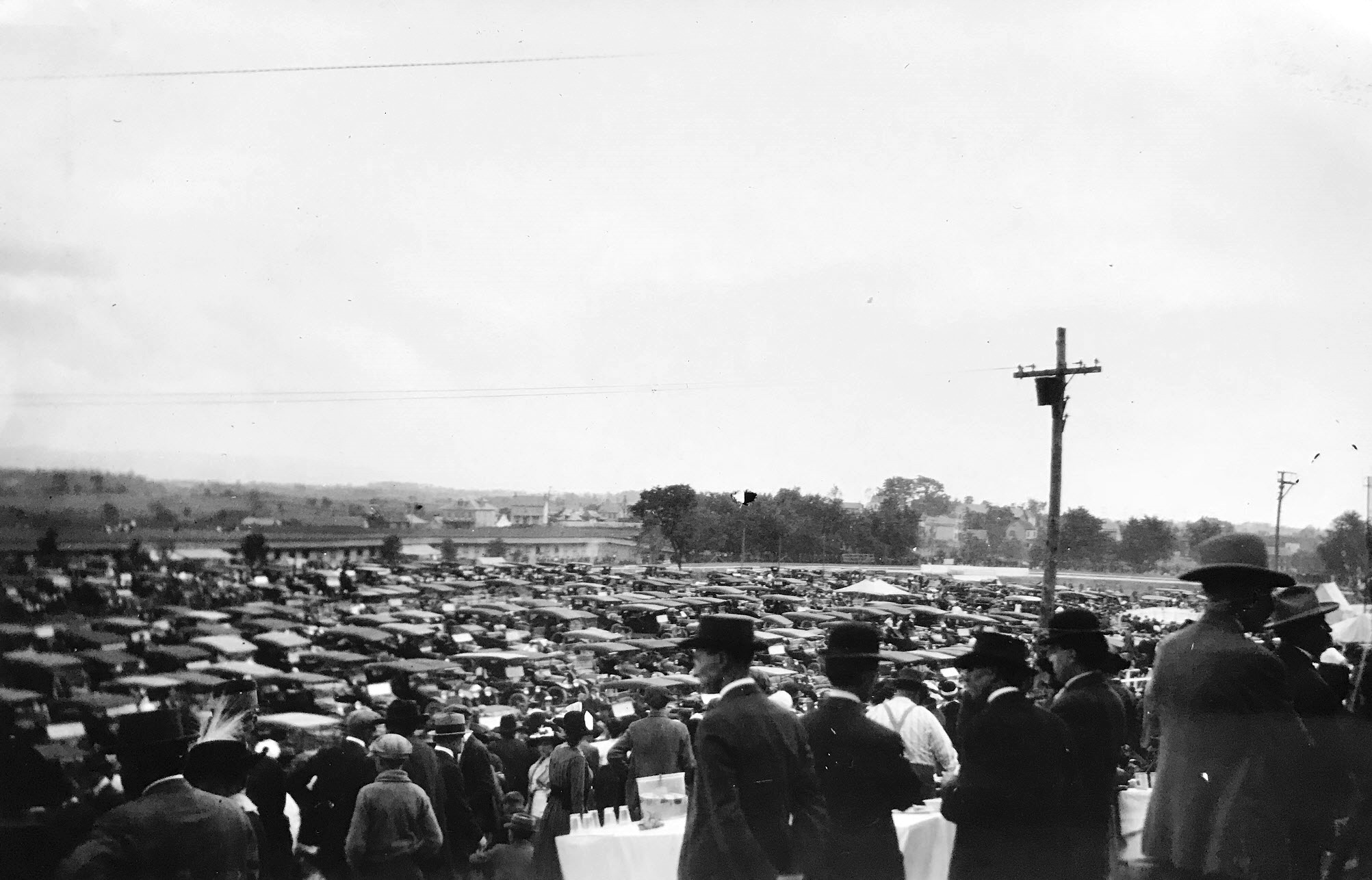
Hundreds of cars parked in the fair parking lot. Photo by Lewis Reed, ca. 1910.
The Fair was always attended by large numbers of out-of-town visitors from other Maryland counties like Frederick, Howard, and Carroll counties, as well as attracting out-of-state fair-goers from the District of Columbia and neighboring counties in Virginia. Vehicles were assigned places all around the fairgrounds, and the park was completely surrounded. What I find especially amusing is the thought of trying to find your car afterward when nearly every early automobile was painted black, how could anyone tell them apart?
The Race Track
The dirt race track at the Rockville Fairgrounds played a central role in the county’s early motorsport history. Established in the late 19th century after the fairgrounds expanded in size, the one-third mile oval dirt track quickly became a popular venue for bicycle and harness racing before automobiles arrived on the scene. By the early 1900s, as car racing grew in popularity, the track welcomed high-powered race cars driven by some of the era’s top speed enthusiasts. The grandstand overlooking the track witnessed thrilling competitions featuring horses, bicycles, motorcycles, and cars, making the Rockville Fairgrounds a beloved hub for racing fans until the fair moved and the track was eventually retired in the early 1930s.
From a recent email: Racing from Rockville to the Indy 500
I was truly thrilled to receive an email from the grandson of one of the early Rockville race car drivers. It’s moments like these that bring history to life and remind me how deeply personal and interconnected these stories really are. Here’s what he shared:
“Hello Jeanne, I just ran across your blog about the Rockville Fairgrounds race track. My dad raced there in the early 1920s and I have a couple of photos of him in his race car. My dad, Russ Snowberger, was born in Denton, Maryland, and raced all over that area before he went on to become a famous Indianapolis 500 driver.”
What makes this connection even more fascinating is that his last name is Snowberger — also a name in my extended family! It’s amazing how history can weave our stories together in unexpected ways.
Learning about Russ Snowberger’s connection to the Rockville track and his racing legacy adds a fascinating layer to this local history. I’m incredibly grateful to have the chance to preserve and share these stories that might otherwise fade with time.
Bicycle Races
Bicycle racing was a rising trend nationwide, and by 1915 it had become a popular feature at the Rockville Fairgrounds. The dirt oval track, stretching one-third of a mile with its gentle curves and elevated grandstand, provided an ideal setting for both racers and spectators. Early photos show riders dressed in shirts and ties, typical attire of the time, even in competition. Behind the track, buildings visible in the background were identified in the 1903 Sanborn Fire Insurance Atlas as cattle pens, highlighting the fairgrounds’ dual role as both a racing venue and agricultural showcase.
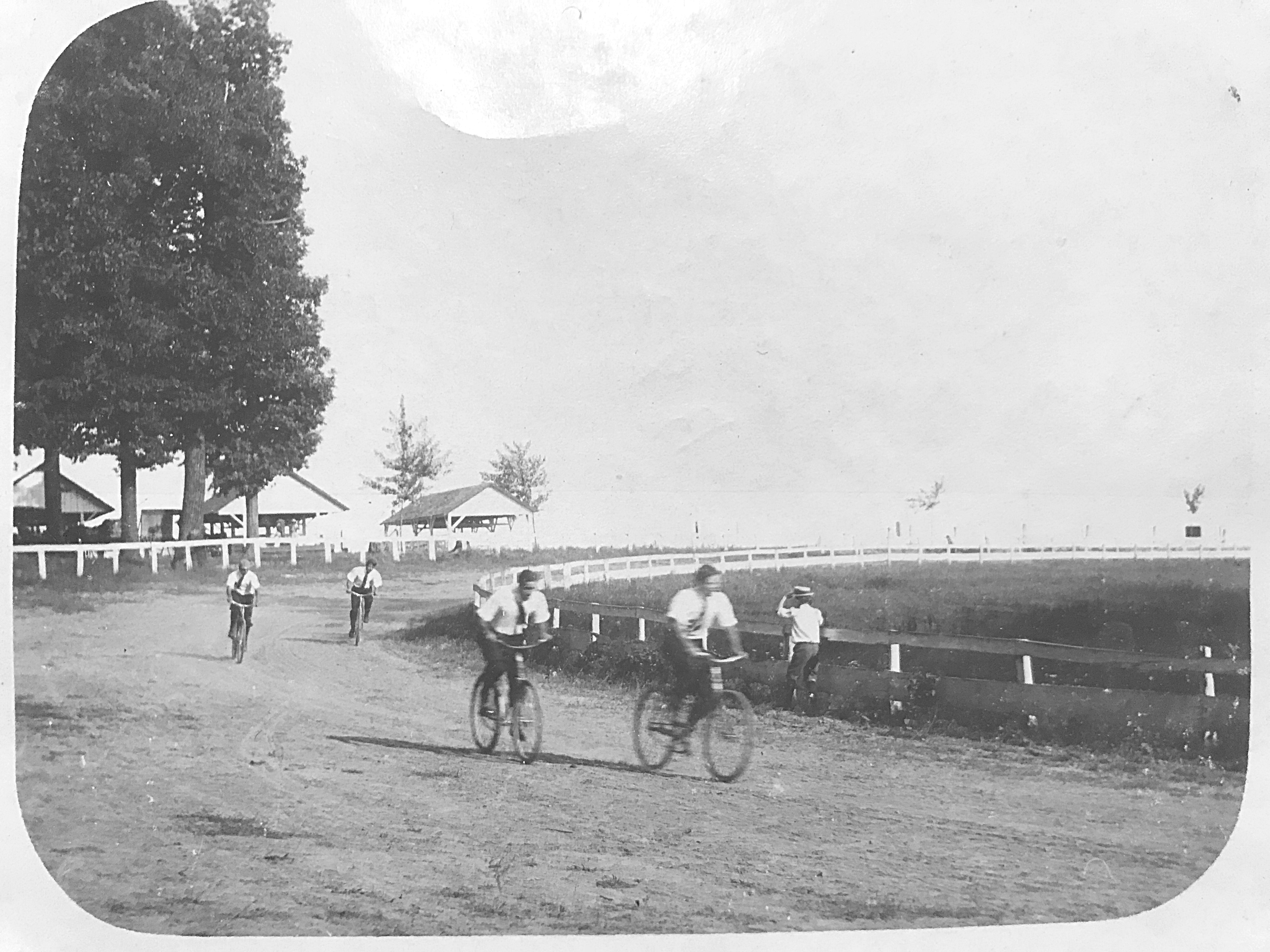
This circa 1915 photo of an early bicycle race at the Rockville Fairgrounds gives a sense of just how popular the sport was at the time. Photo by Lewis Reed
Harness Races
Harness racing was one of the main attractions at the new race track before the introduction of the automobile and the subsequent popularity of racing cars. Horses were harnessed to lightweight one-seater buggies called sulkies, and would race around the track at a trot, as opposed to the galloping gait of horses ridden by jockeys.

Rockville drew huge crowds for harness races. Photo by Lewis Reed, circa 1910
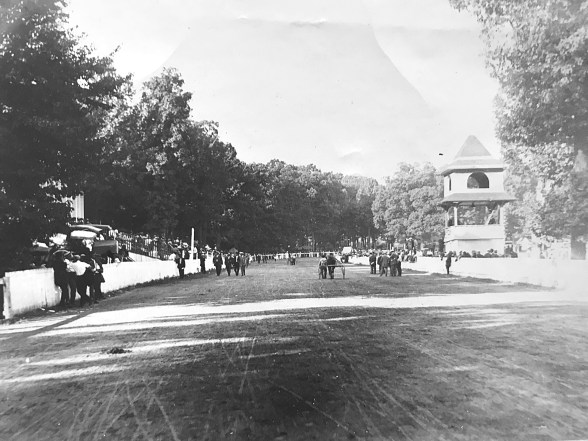
Harness race at the Rockville Fair, circa 1910. All those throngs of people had plenty to see. Photo by Lewis Reed

Harness racers rounding the bend on the racetrack, Rockville Fairground circa 1910. Photo by Lewis Reed
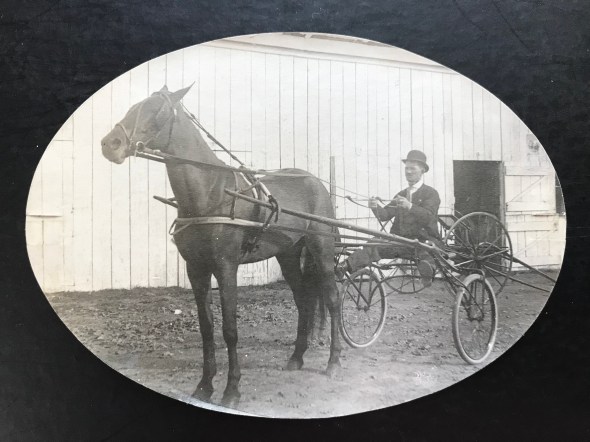
Race horses and two-wheeled sulkies (for trotting races) at the Rockville Fairground stables, Photo by Lewis Reed, ca. 1910.
First Auto Races at Rockville Fair Speedway
From The Baltimore Sun, August 27, 1923:
This is the first year that a Rockville Fair has continued through Saturday. The extra day was added this time as an experiment, the management believing that by substituting new features the additional day could be made a success. Automobile races, the first ever held at Rockville, were the day’s principal attraction and they attracted a good-sized crowd.
Early action shots like the ones below are exceptionally rare, however, Lewis Reed was there to capture six epic moments of race history through the lens of his camera that day.
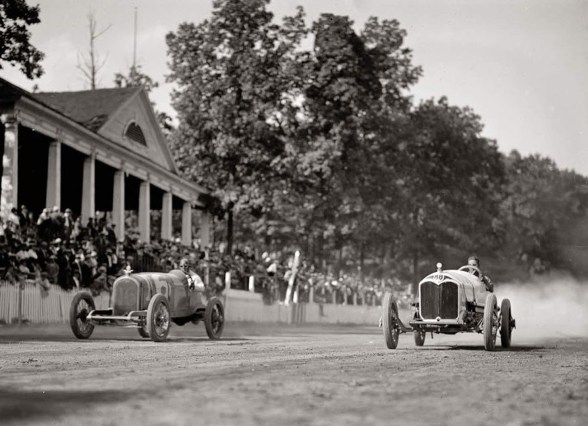
Rockville drew huge crowds for auto races. Rockville Fair, August 25, 1923. Photo by Lewis Reed

Dusty Action – 1923 photo of the exciting auto races at Rockville Fair. Five racers are just coming around the bend on this dirt track with their tires spinning up dust in their wake. Photo by Lewis Reed

Race car drivers deep in dust round a turn at the Rockville Fair auto races. Print made from a Lewis Reed glass negative.
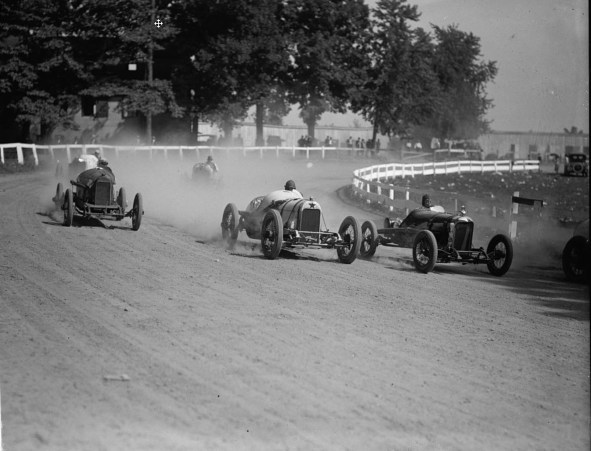
High-powered race cars rounding a wide, sweeping curve at the Rockville Fair auto races, August 25, 1923. Print made from a Lewis Reed glass negative
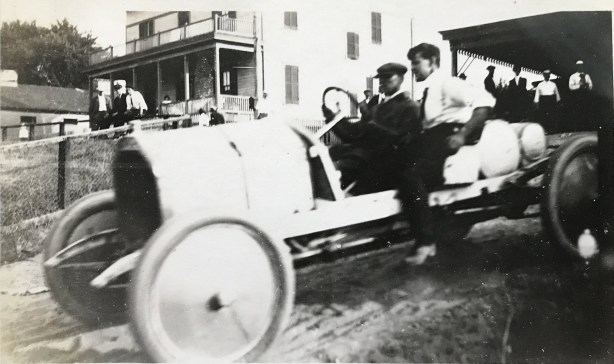
Two-man race car. Some early race cars included both a driver and a ‘riding mechanic’. One of the key jobs of the second man in a race car was to look backward and alert the driver to what was going on behind him. Photo by Lewis Reed
In the early era of race car driving, it wasn’t unusual to see two people in a speeding vehicle, one being the driver, the other a riding mechanic. While sometimes optional, riding mechanics were often required and played a crucial role during races. They served as navigators and spotters, kept a close eye on tire conditions, and were even known to leap from the car mid-race to fetch fuel across the infield. These behind-the-scenes heroes were essential to early racing success. A photograph capturing this unique aspect of racing history, taken by Lewis Reed, was featured on the London Array episode of “Impossible Engineering”, which aired January 24, 2019, on Discovery’s Science Channel. The image was used in a segment on the development of the race car, highlighting the important, and now obsolete, role of the riding mechanic.
Rockville Garage Displaying New Model Cars at the Rockville Fair, 1918
The Rockville Fair wasn’t just about livestock and produce, it also served as a valuable platform for local businesses, including automobile dealers. In 1918, a young Lewis Reed took advantage of the fair’s popularity to showcase the latest cars from the Rockville Garage. Pictured below is the dealership’s new car tent, where fair goers got their first look at the newest models on display. It was a prime opportunity for Lewis Reed to introduce the public to the rapidly evolving world of automobiles, and to the future of transportation in Montgomery County.
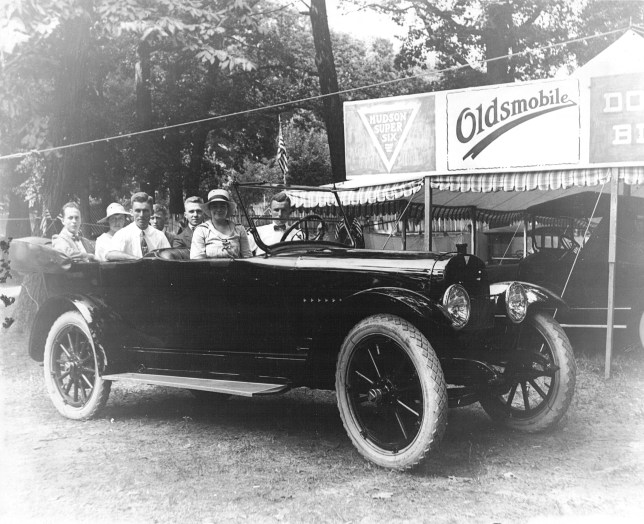
Anybody for a demonstration drive? Identified by the triangle logo on the grill and the number of passengers seated in it, the car appears to be a 1918 Hudson Super Six Seven Passenger Touring. Photo by Lewis Reed
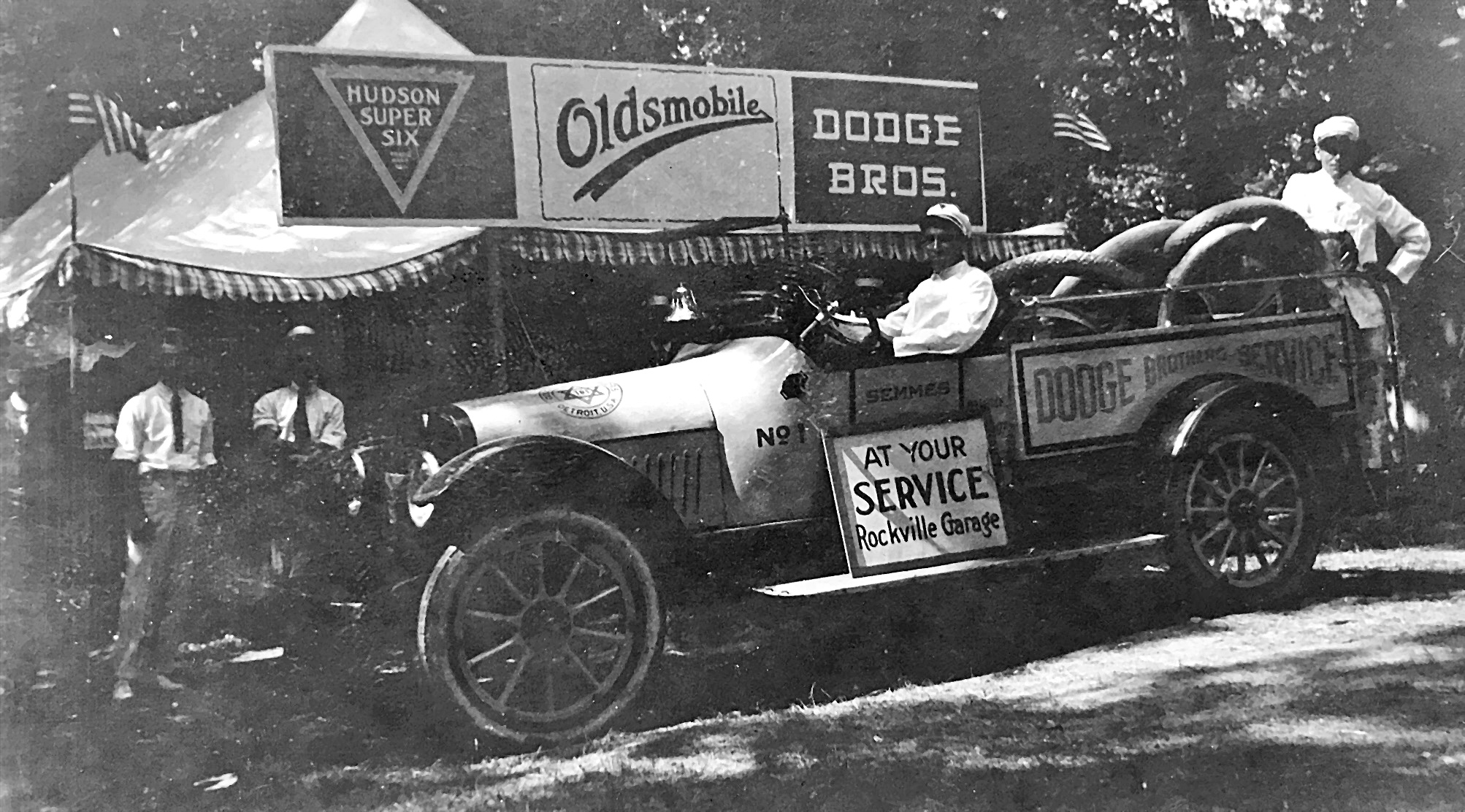
Hudson Super Six, Oldsmobile, and Dodge Brothers Motor Cars on display. Lewis Reed in drivers seat.
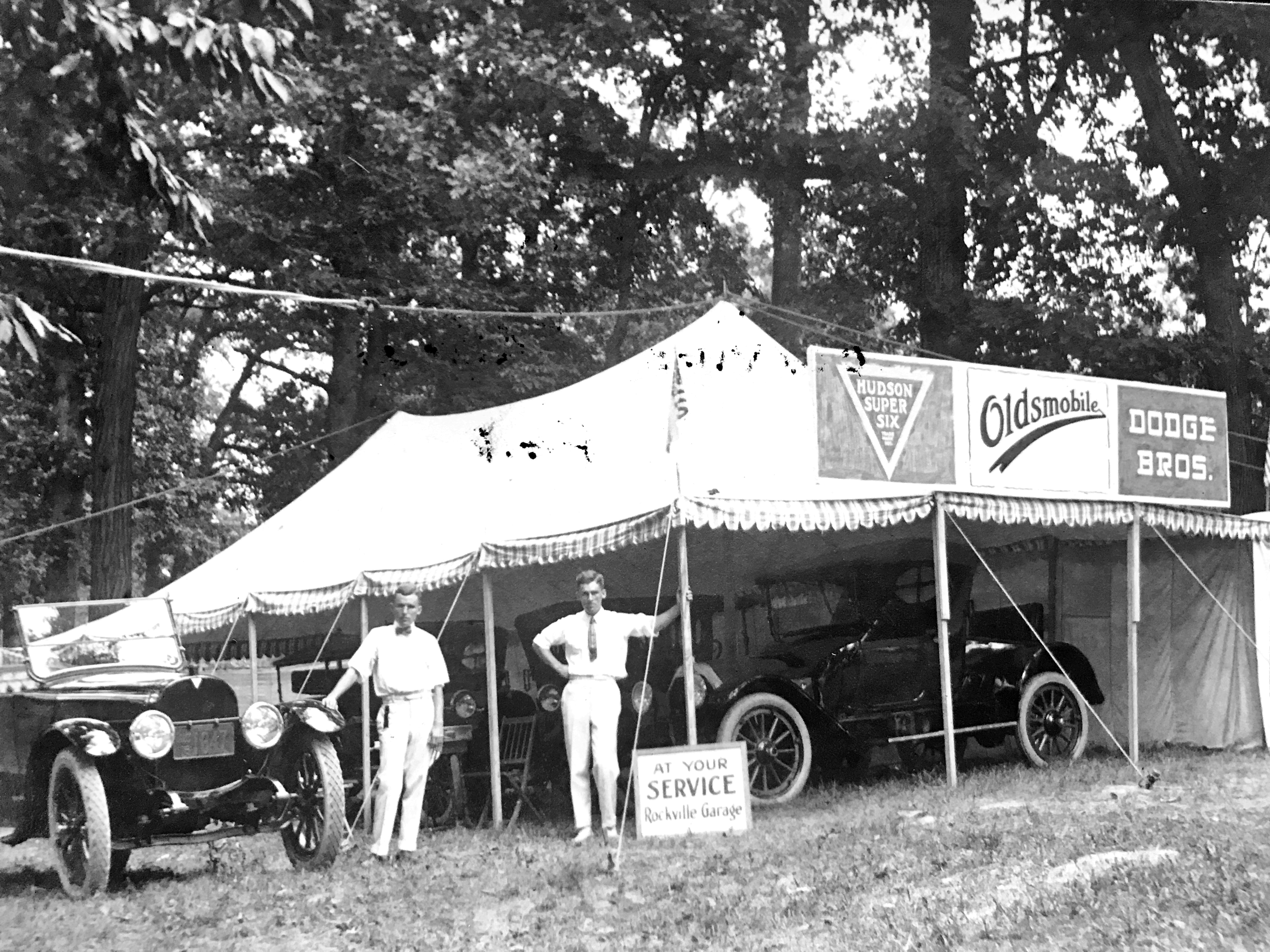
Rockville Garage displaying their new models at the Rockville Fair Grounds. Photo by Lewis Reed
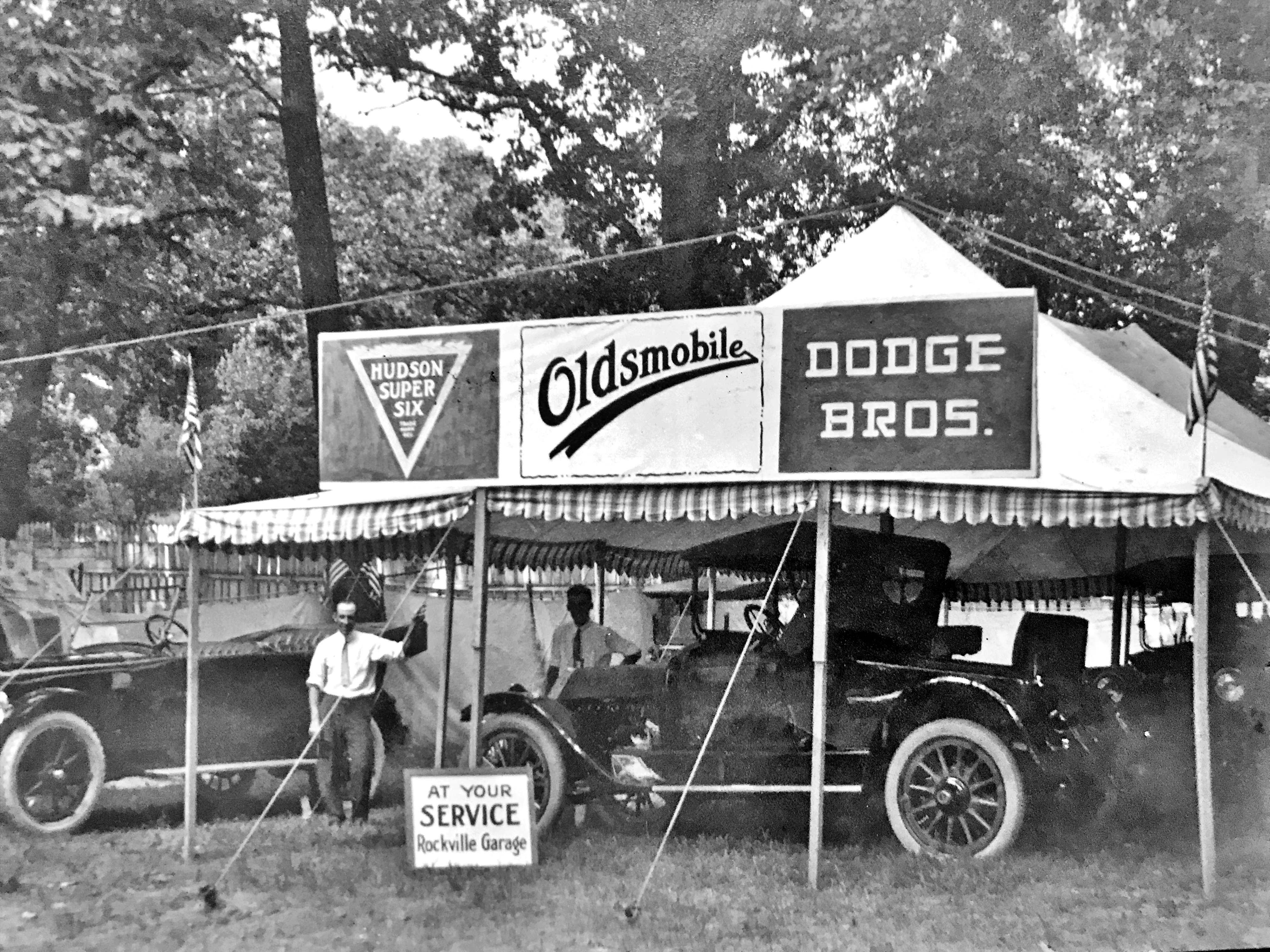
At Your Service Rockville Garage. Lewis Reed on the left
Reed Brothers Company Softball Team at the Rockville Fairgrounds, late 1920s
From a distance, it looks and sounds like a regular baseball game: the crack of the bat, the cheering from the bench, the sliding into home plate. But a closer look at the field shows something is very different. They’re playing on a rough grass field, no one is using a batting helmet, fielding glove, or catcher’s mask. From the 1920s through the 1940s, Reed Brothers Dodge sponsored their own company softball team that played on the fields at the Rockville Fairgrounds where Richard Montgomery High School now stands. It was a win-win: for the company, it offered great publicity, a strong community presence, and promoted employee wellness. For the players, it was simply a fun and spirited way to unwind and connect outside of work.
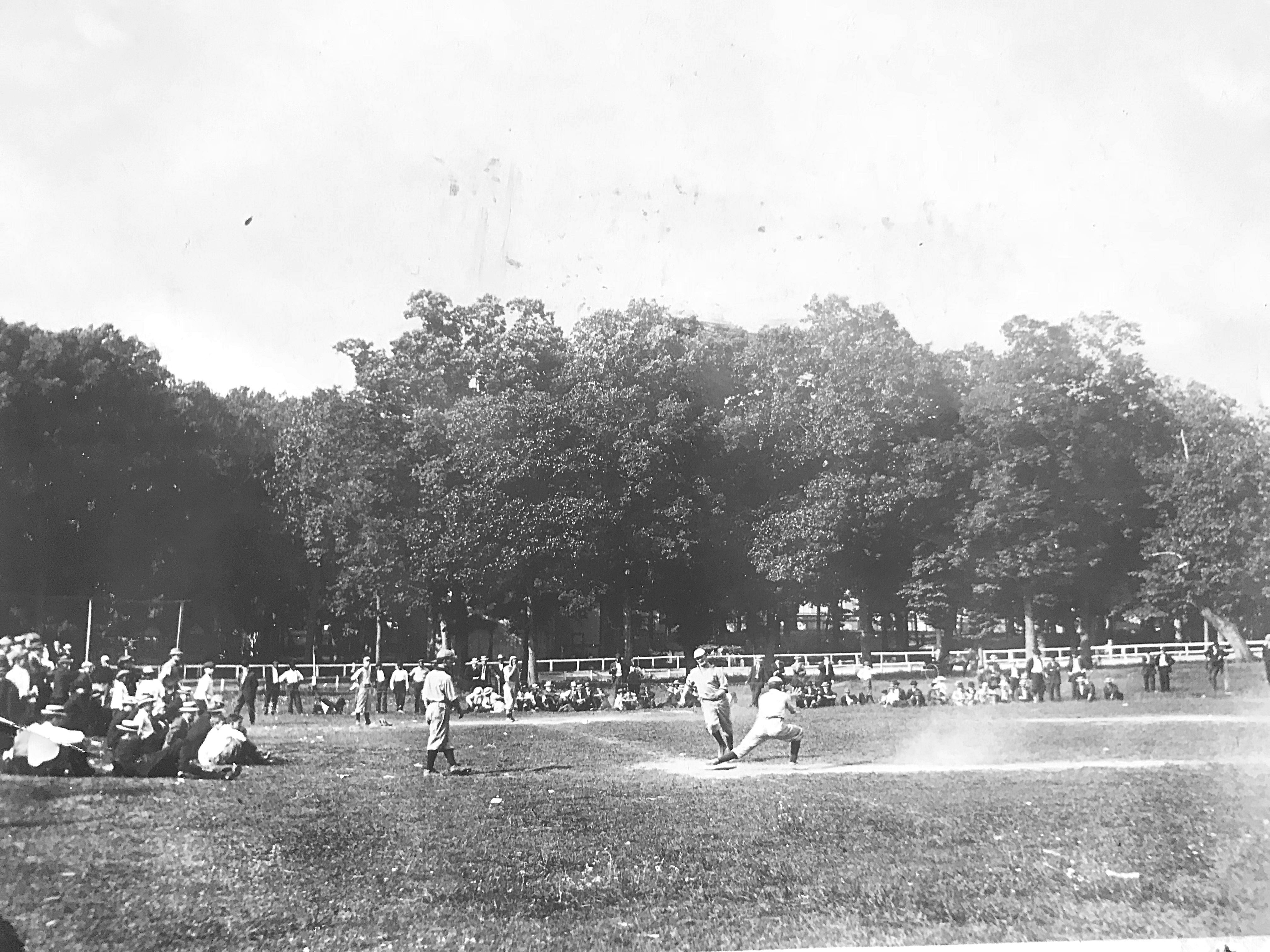
Reed Brothers Softball Team playing on a field set up inside the Rockville Fair racetrack oval, circa late 1920s. Photo by Lewis Reed
Fair Now History
From The Daily Mail (Hagerstown, Maryland) 23 Aug 1933:
The historic Rockville Fairgrounds, scene of many harness race programs, will be sold at a sheriff’s sale Friday afternoon at Rockville. The property consists of 26 acres, a dwelling and numerous stables, exhibition buildings and other structures. The sale is being made to satisfy a claim of a bank. It is rumored that the Montgomery County Board of Education will try to buy the grounds as a site for an elementary school and a future location for the entire Rockville educational plant.
Fair Ground Auctioned
From The Evening Sun (Baltimore, Maryland) 26 Aug 1933:
The Montgomery County National Bank submitted the only bid for the historic Rockville Fair Grounds at a public auction on August 25, 1933 to satisfy a bank’s claim. Its bid was $19,500.00 subject to a mortgage held by the Sandy Spring Savings Institution, and unpaid interest and taxes.
The Montgomery County Fair was reborn in 1949 and again started holding its annual Fair in Gaithersburg. On June 4th, 1949, hundreds of volunteers participated in an old-fashioned barn raising and 12 outbuildings were constructed in one day. The site of the new Montgomery County Agricultural Center was created.
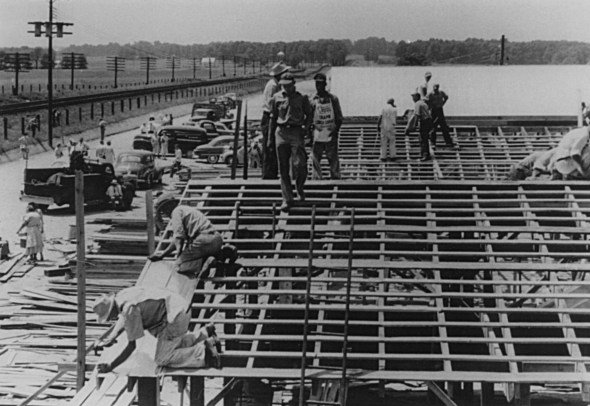
June 4, 1949 – Construction of the cattle barns along the railroad tracks. Photo courtesy of Montgomery County Agricultural Fair photo archives.
End of An Era
While much about the fair has evolved over time – from its location to its attractions – its core mission has remained unchanged. Since its beginnings in 1846, the fair has provided a vital platform for 4-H and FFA members to showcase their livestock, homemaking, and craft projects. It continues to promote agricultural science, preservation, and education throughout Montgomery County. That commitment has endured for generations, and today, the Montgomery County Agricultural Fair stands as one of the largest and most celebrated county fairs in the state of Maryland; a lasting legacy of its humble beginnings in 1846.
Find photos like these and much more on Montgomery History’s online exhibit, “Montgomery County 1900-1930: Through the Lens of Lewis Reed“.
References:
Chronicling America: Historic American Newspapers. Library of Congress
Newspapers.com: newspaper archive
Rockville, Portrait Of A City, Eileen S. McGuckian
Ag Center History
The MCPD Motor Unit: 103 Years of Law Enforcement on Two Wheels

This is the first known photograph of the entire Montgomery County Police Force Motor Unit. Pictured left to right: Earl Burdine, Lawrence Clagett, Guy Jones, Chief Charles Cooley, Leroy Rodgers, and Oscar Gaither. Photo taken by Lewis Reed on July 4, 1922.
July 4th marks the 103rd anniversary of the beginning of the Montgomery County Police Department. Cattle rustling, bootlegging and stealing poultry were among the most common crimes when Montgomery County hired its first police chief and five officers in July 1922. So widespread was the theft of chickens and turkeys that some residents employed a homespun form of crime prevention by cutting off a specific claw on their birds to identify them. “Officers knew who all the chicken thieves were,” said one historical account of the era put together by the police department, “and upon getting a report of missing Rhode Island Reds, or some other breed, would head straight for the thieves’ hideaway to try to catch them ‘red handed’ before the birds got to the frying pan.”
Posing in front of Reed Brothers Dodge on July 4, 1922 Chief Charles Cooley, center, and his men of the first mounted unit of the Montgomery County Police Force, were on their first day of duty. For several years, since there was no police station, the officers would meet for “roll call” on the steps of the Red Brick Courthouse in Rockville at 2:00 p.m. every day to let each other know they were alive and well. Chief Cooley was given the privilege of a Model T Ford. The chief was paid $1,800 a year while the officers got $1,500. Each of the officers was issued a Harley-Davidson motorcycle, a .38 Smith & Wesson handgun, a black jack, law book and was allotted $300.00 a year for the upkeep of their motorcycle. Jones patrolled Silver Spring, Rodgers the Bethesda-Chevy Chase area and Burdine, Clagett and Gaither the Upper County areas.
The county’s population in the early 1920s was just 35,000 (it’s now estimated at more than 1M). Much of the county was farmland, which accounted for the thefts of livestock. It also was the Prohibition era, when bootlegging and moonshine still factored routinely on an officer’s shift.
The officers worked 14 hours at night, 10 hours in the day, with two days off every two weeks. But they were on call at all times. Since there was no mobile radio contact (the first one-way radio system was installed in cars in the early 1930s), the officers tended to hang around the courthouse or a local firehouse that had a phone.
One of the officers came up with the idea of placing a flashing red beacon light on a pole atop the Rockville courthouse. When flashing, it would alert police that they had a call or were wanted at the office. In 1927, similar lights were used at district stations in Silver Spring and Bethesda.
Today, more than 1,300 sworn officers assisted by 600 support personnel provide full service to a large suburban county with over one million people.
Congratulations MCPD and thank you for your many years of service!
Lewis Reed Photo Featured in Gettysburg Educational Program: Enduring Pathways
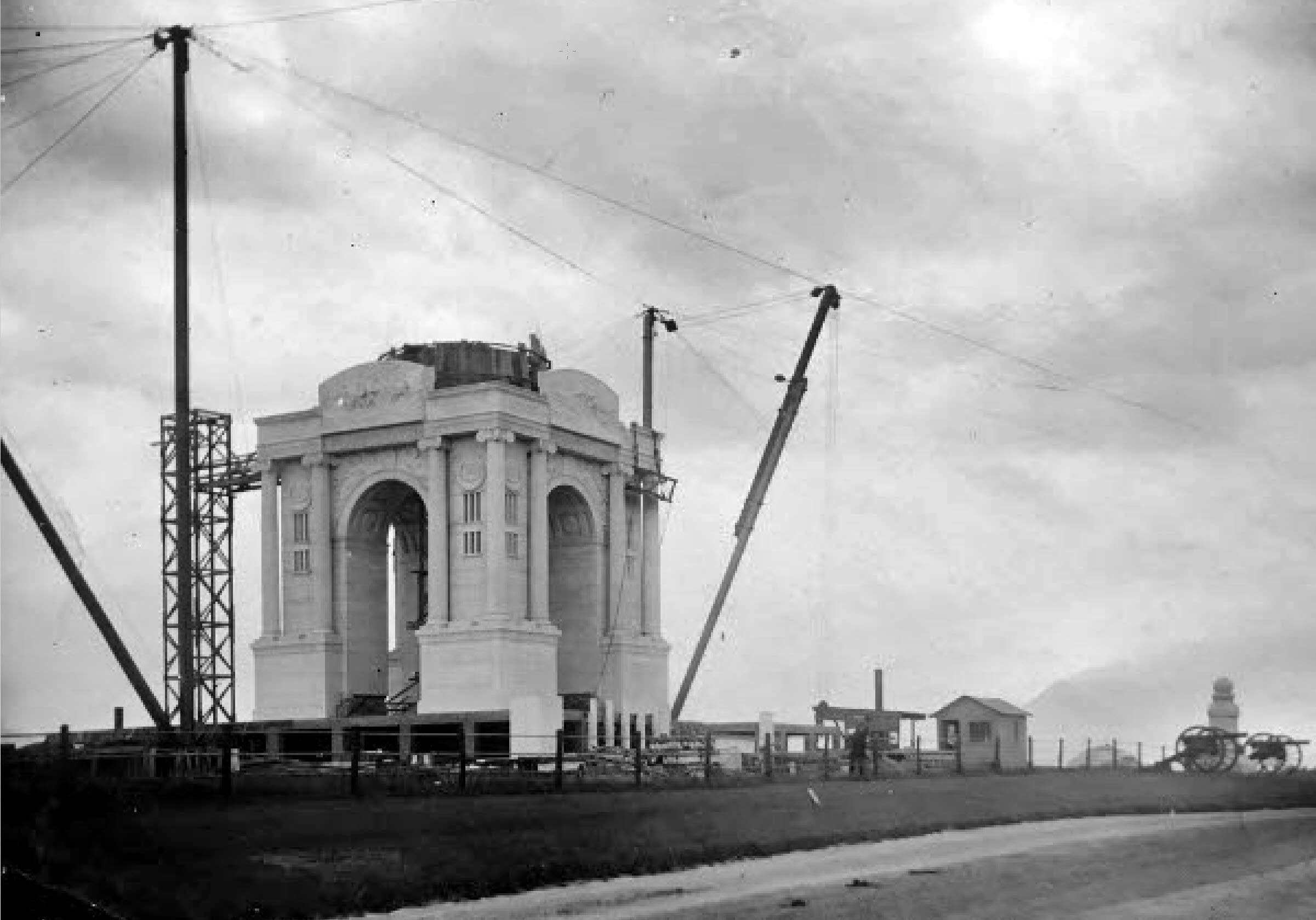
State of Pennsylvania Monument Under Construction, ca. 1910. This rare photograph was taken by Lewis Reed of the State of Pennsylvania Monument while still under construction. Dedicated on September 27, 1910, the Pennsylvania Monument towers above the historic fields of Gettysburg, honoring the sacrifice of Pennsylvania’s soldiers. As the largest monument on the battlefield, it remains one of the most iconic and visited landmarks in the park.
Beginning on Memorial Day and running through Labor Day, the Lincoln Fellowship of Pennsylvania sponsors “100 Nights of Taps”, Gettysburg in partnership with Gettysburg National Military Park, Taps for Veterans, Gettysburg’s Licensed Battlefield Guides, and Eisenhower National Historic Site. A major feature of 100 Nights of Taps program is their “Enduring Pathway” – a historic/educational two minute presentation about Lincoln, the Gettysburg Address, and the history of Taps.
The Enduring Pathway previously presented the history of the Soldier’s National Monument, accompanied by a photo of its construction. Being now located at the Pennsylvania Monument, a member of the Board of Directors of the Lincoln Fellowship of Pennsylvania contacted me requesting permission to use Lewis Reed’s photograph of the Pennsylvania Monument while under construction in their Enduring Pathway educational segment on the monument. To have Lewis Reed’s photograph included in this endeavor is a privilege, and I was delighted to grant the permission. It is a small contribution, perhaps, but one that carries a great deal of personal significance. It’s a reminder that the work we do, the stories we tell, and the images we create can have a lasting impact, connecting us to the past and shaping our understanding of the present.

State of Pennsylvania Monument after completion, ca. 1914. Photo by Lewis Reed
The monument was dedicated in 1910, however, it was unfinished at the time of the dedication, lacking the eight bronze statues which were installed in April 1913. The memorial, including the granite dome, was fully completed in 1914 with the installation of a bronze tablet listing additional veterans’ names. The monument also includes statues of President Abraham Lincoln, Governor Andrew Curtin, and six Pennsylvania generals. The monument is located on Hancock Avenue at Pleasonton Avenue.
Source: Wikipedia, Pennsylvania State Memorial, Gettysburg
Featured Photo: Memorial Day in Gettysburg, A Historic Tradition

Women and children reverently carry bouquets to lay upon the graves in the cemetery. Photo by Lewis Reed, ca. early 1900s.
Memorial Day in Gettysburg holds a significant place in American history, marked by a long-standing tradition of remembrance and commemoration. The Memorial Day parade and ceremony in Gettysburg is recognized as one of the oldest continuously held ceremonies in the United States. A poignant visual record of this tradition is captured in the photograph taken by Lewis Reed. This image depicts local women and children walking en route to the Soldiers National Cemetery to lay flowers. This act of laying flowers is a symbolic gesture of remembrance, a practice that continues to this day.
Gettysburg National Cemetery is the final resting place for 3,512 Union soldiers. This cemetery is not only a burial ground, but also a site of historical significance, as it is where President Abraham Lincoln delivered his iconic Gettysburg Address in 1863.
Books

Related Resources


Copyright Notice

Reed Brothers Dodge History (1915-2012) by Jeanne Gartner is licensed under a Creative Commons Attribution-NonCommercial 3.0 Unported License.
 Reed Brothers Dodge History 1915 – 2012
Recent Comments