
Introducing the Second Edition of The Lewis Reed Photograph Collection (1898-1960)
Some photographs simply capture a moment. Others capture an entire world.

New Cover – Second Edition. An expanded 384-page volume featuring more than 2,500 historic photographs preserved by Lewis Reed, many published for the first time. A remarkable visual record of the early 20th century.
I am pleased to announce the release of the Second Edition of the Lewis Reed Photograph Collection (1898–1960), an expanded and refined visual archive documenting over six decades of life, landscape, and community in Montgomery County, Maryland and the surrounding Mid-Atlantic region.
More than a century ago, Lewis Reed began photographing the towns, farms, roads, and people around him with a camera and a deep curiosity about a world in rapid transition. What began as the hobby of a young motorcycle enthusiast traveling the back roads of Maryland soon grew into one of the most remarkable visual records of the region’s history.
Many of the photographs in this collection were created from glass-plate negatives and early prints; preserving rural crossroads, bustling town centers, early automobiles sharing roads with horse-drawn wagons, and landscapes that look entirely different today. These are images that might otherwise have been lost to time.
What’s New in the Second Edition
This expanded edition presents Lewis Reed’s photographs in thematic sections that highlight the full breadth of his work; from Maryland towns and landscapes to family portraits, travel scenes, and the early history of Reed Brothers Dodge, which Lewis founded in Rockville in 1915. The collection draws from more than 2,500 digitized photographs, each carefully researched to identify the places and people they depict.
Many images were identified through long conversations with Lewis Reed’s daughter, Mary Jane Reed Gartner, whose recollections helped bring these photographs back to life and restore the stories behind them.
Lewis Reed is remembered locally as the founder of Reed Brothers Dodge, but photography was a lifelong passion alongside his business career. His images document everything from the C&O Canal in operation to small-town parades, churches, farms, and early roadways. Taken together, they form one of the most extensive visual archives of Montgomery County during the period when rural communities were giving way to the modern suburban landscape we know today.
A Note on Pricing
This is a photo-intensive volume, approaching four hundred pages, and is printed on demand through Blurb.com, meaning each copy is produced individually rather than in large commercial print runs. The pricing reflects the actual cost of producing such a large photographic archive. This project was created primarily to preserve and share Lewis Reed’s historic photographs, not as a commercial publication.
Get Your Copy
The Lewis Reed Photograph Collection (1898–1960), Second Edition is available now through Blurb.com’s print-on-demand bookstore.
Or visit the collection page for more information: reedbrothersdodgehistory.com
To stay up to date with new posts and historical discoveries, subscribe to the Reed Brothers Dodge History blog and follow along as the story of Lewis Reed and Montgomery County’s past continues to unfold.
A Field, a Gun, and a Trap
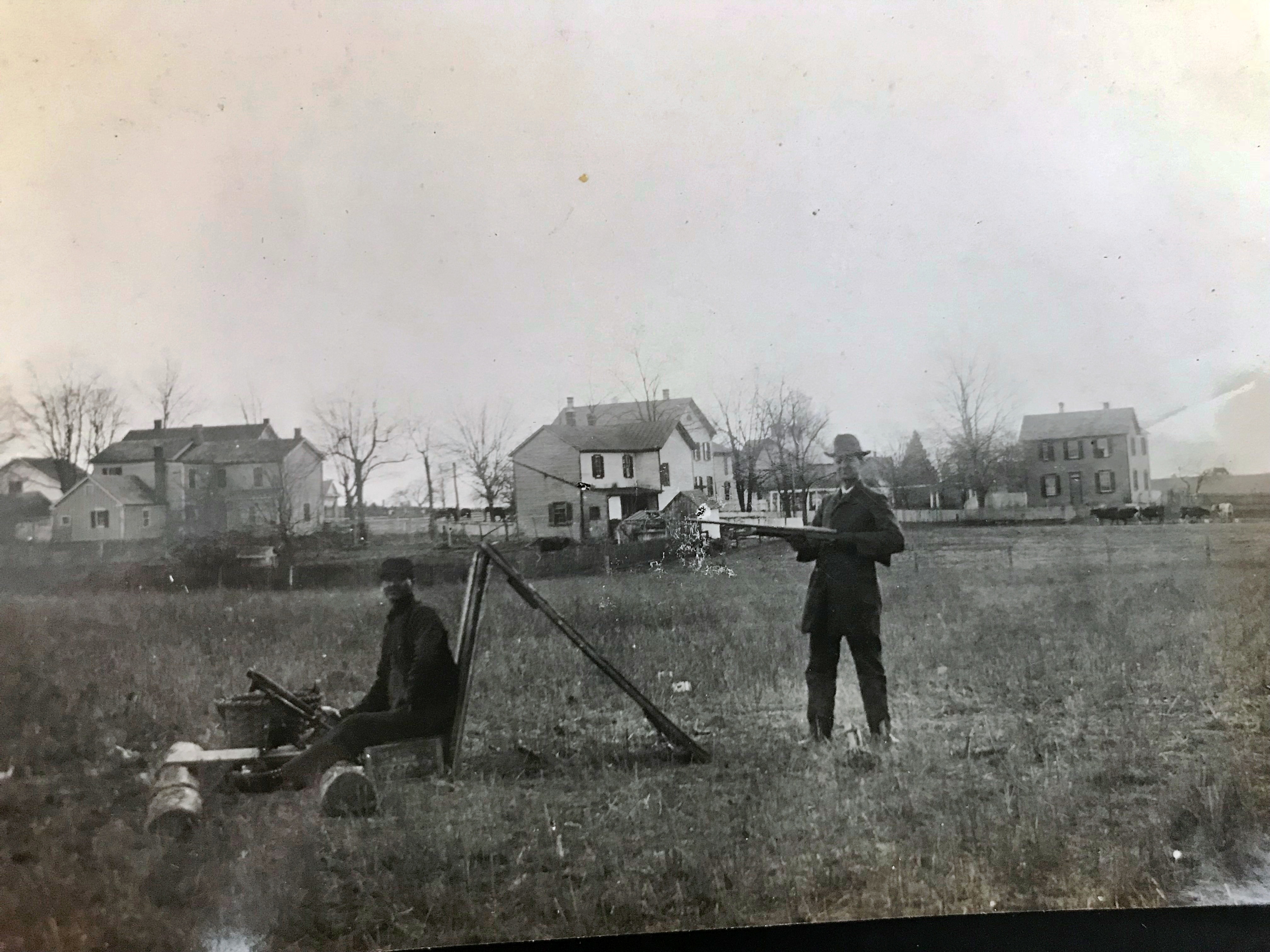
Early 1900s field trap shoot in Darnestown, Maryland, captured by Lewis Reed, showing one man poised with a shotgun while another readies the simple wooden trap amid farmhouses and open pasture.
In this photograph, two men stand in an open field bordered by modest frame houses and fenced pastures, a scene typical of small crossroads communities like Darnestown in the early 1900s. One man holds what appears to be a long gun, while the other sits beside a simple wooden rig that resembles the framework used to cock and release early manually operated target throwers or live‑bird traps
The proximity to grazing livestock suggest that this is not a formal gun club range but an improvised shooting ground on private farmland, which was common before purpose‑built trap clubs spread widely. Rural shooters often practiced in meadows or behind farmhouses, using homemade equipment and relying on a friend to work the trap while the shooter took position in front.
Darnestown in Reed’s era was a small but important crossroads in western Montgomery County with farms, mills, and the Andrew Small Academy serving the surrounding countryside. Later roadside historical markers that use Lewis Reed’s images emphasize how thoroughly he documented the community’s buildings and daily activities, making it likely that he also recorded local recreations such as shooting, fishing, or horse‑related events.
Clay target shooting gained popularity in the United States after the introduction of standardized targets and simple spring‑powered traps in the late 19th century, and Maryland farm communities were no exception. Scenes like this one, with neighbors gathering in an open field to test their marksmanship, reflect how shooting sports blended workday skills with weekend socializing in a largely agricultural landscape.
This image captures a rare glimpse of informal trap shooting at the moment when traditional rural life was beginning to intersect with modern leisure and sport. The combination of farmhouses, fence lines, cattle, and improvised equipment tells a layered story: of a county still rooted in agriculture, of residents embracing new pastimes, and of a photographer committed to preserving unscripted moments as carefully as grand events.
For historians, collectors, and local families, the photograph is more than a quaint scene; it is a visual document that anchors memories of people, place, and pastime in a specific landscape. As additional Reed negatives are identified and researched, images like this may help flesh out the early history of shooting sports in Montgomery County and deepen understanding of how communities like Darnestown spent their rare hours of leisure.
Ethelene Rachel Thomas Reed: The Woman Behind the Reed Legacy
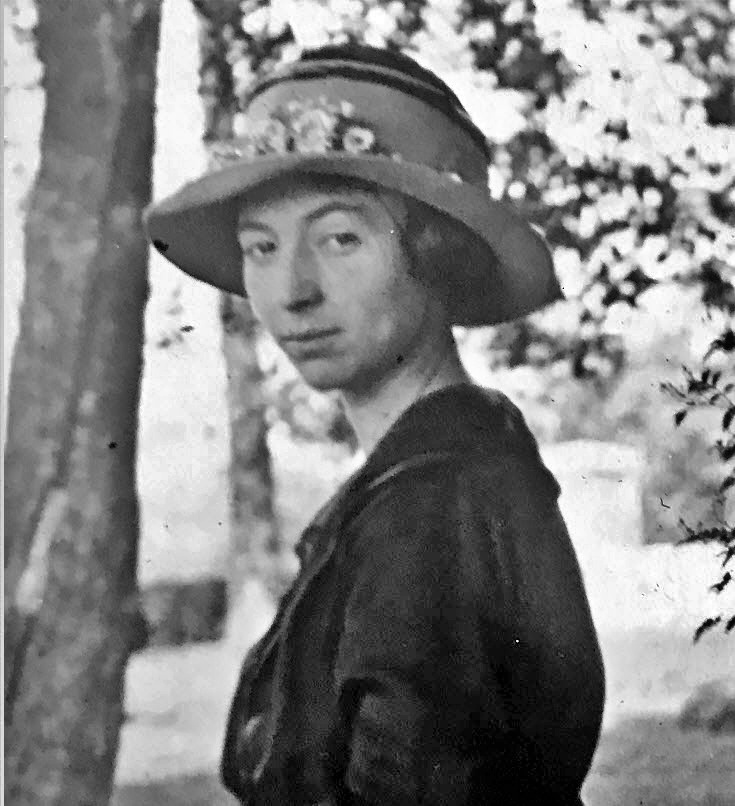
Ethelene Rachel Thomas Reed (Sept 16, 1894-Mar 15, 1977)
Before the name Reed became associated with automobiles, innovation, and customer service in Rockville, Maryland, there was a young farm girl growing up in rural Frederick County. Ethelene Rachel Thomas, born September 16, 1894, spent her childhood on her family’s farm on Butterfly Lane in Buckeystown, Maryland; a quiet countryside that helped shape the woman who would later stand beside Lewis Reed, founder of Reed Brothers Dodge.
Ethelene was the daughter of Clinton Clay Thomas (1856–1940) and Mary Elizabeth Thomas, lifelong farmers whose roots ran deep in Frederick County soil. Their farm, located along Butterfly Lane, was part of a long-established agricultural corridor of small family homesteads, fields, and barns that fed nearby towns for generations.
Growing Up on the Thomas Family Farm
Life on the Thomas farm followed the steady rhythms of the seasons. Long days were filled with planting, harvesting, tending animals, and preserving food for winter. Like many rural children at the turn of the 20th century, Ethelene learned responsibility early, helping with household work and farm chores while growing up in a close-knit, hardworking family.
Butterfly Lane, once little more than a farm road, connected families like the Thomases to Buckeystown and the larger Frederick County community. Though modest, the farm represented stability, perseverance, and a deep connection to the land; values that Ethelene carried with her throughout her life.
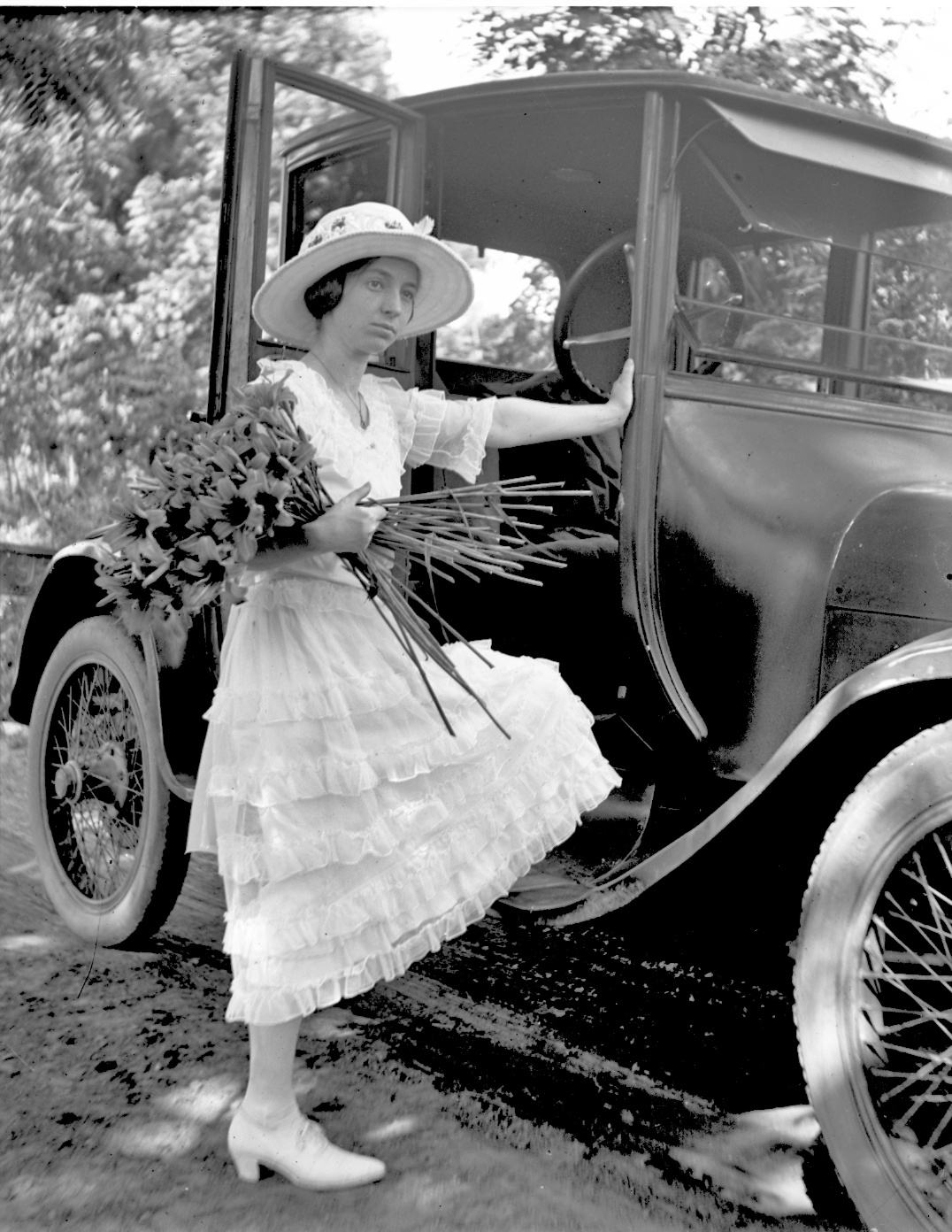
Ethelene Reed was the matriarch of a family that became synonymous with the automotive industry in Maryland. In this photo, her poise and fashionable attire reflect the burgeoning middle-class elegance of the early 1920s.
From Farm to Classroom
Before her marriage to Lewis Reed, Ethelene was a teacher in the Maryland public school system; a role that reflected her commitment to service, learning, and community. Teaching offered young women of her generation one of the few professional paths available, and Ethelene embraced it with the same dedication she had learned on the family farm.
A New Chapter in Rockville
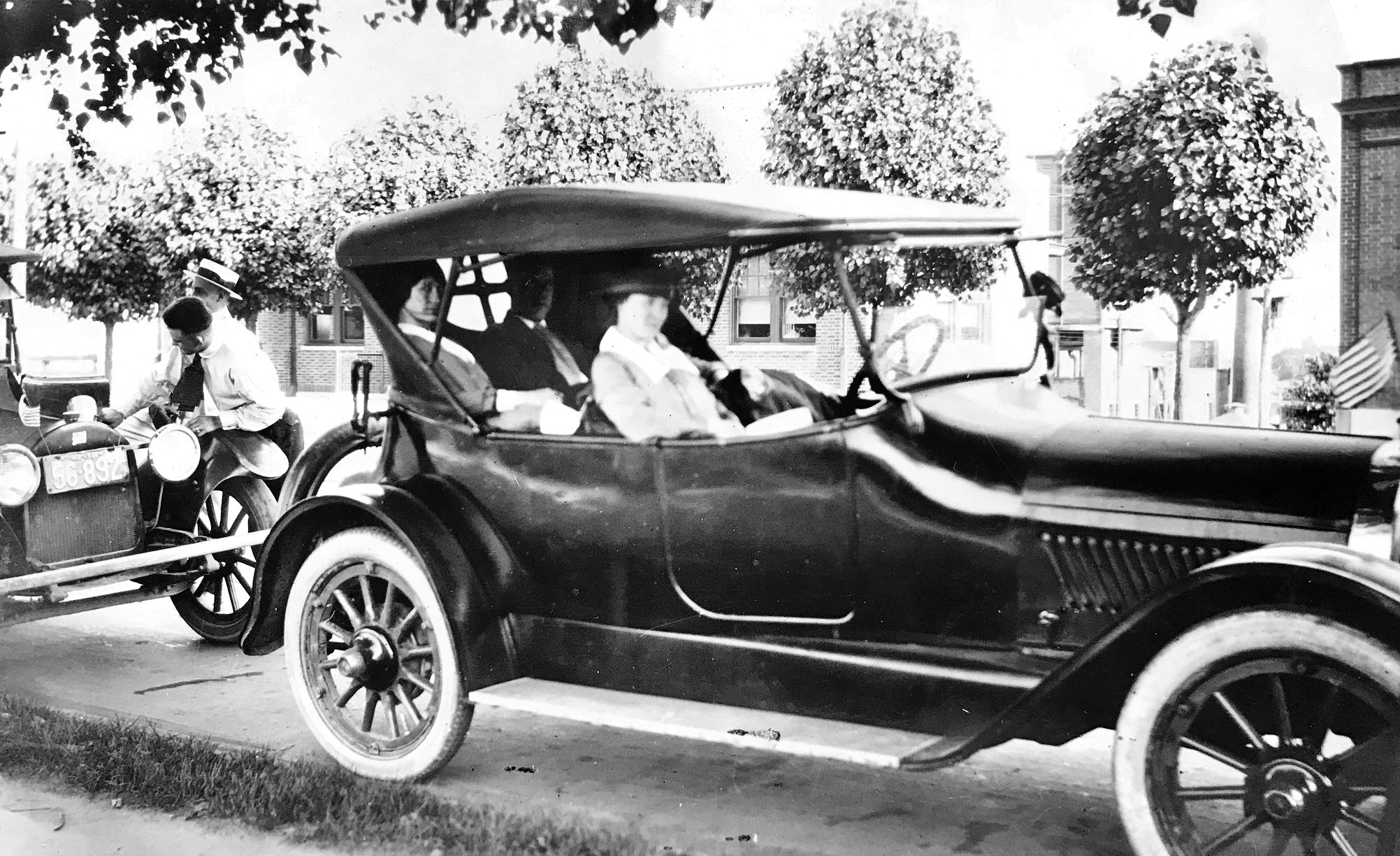
Ethelene Rachel Thomas seen in the passenger seat, joined by her sister, Celeste Thomas, with their father, Clinton Clay Thomas, in the back. Photographed by Lewis Reed, circa 1918.
As the country changed, so did Ethelene’s life. She eventually left the farmland of Frederick County and married Lewis Reed, a gifted photographer and entrepreneur who would go on to found Reed Brothers Dodge in Rockville. While Lewis built a business that helped introduce the automobile age to Montgomery County, Ethelene became an essential partner in that journey.
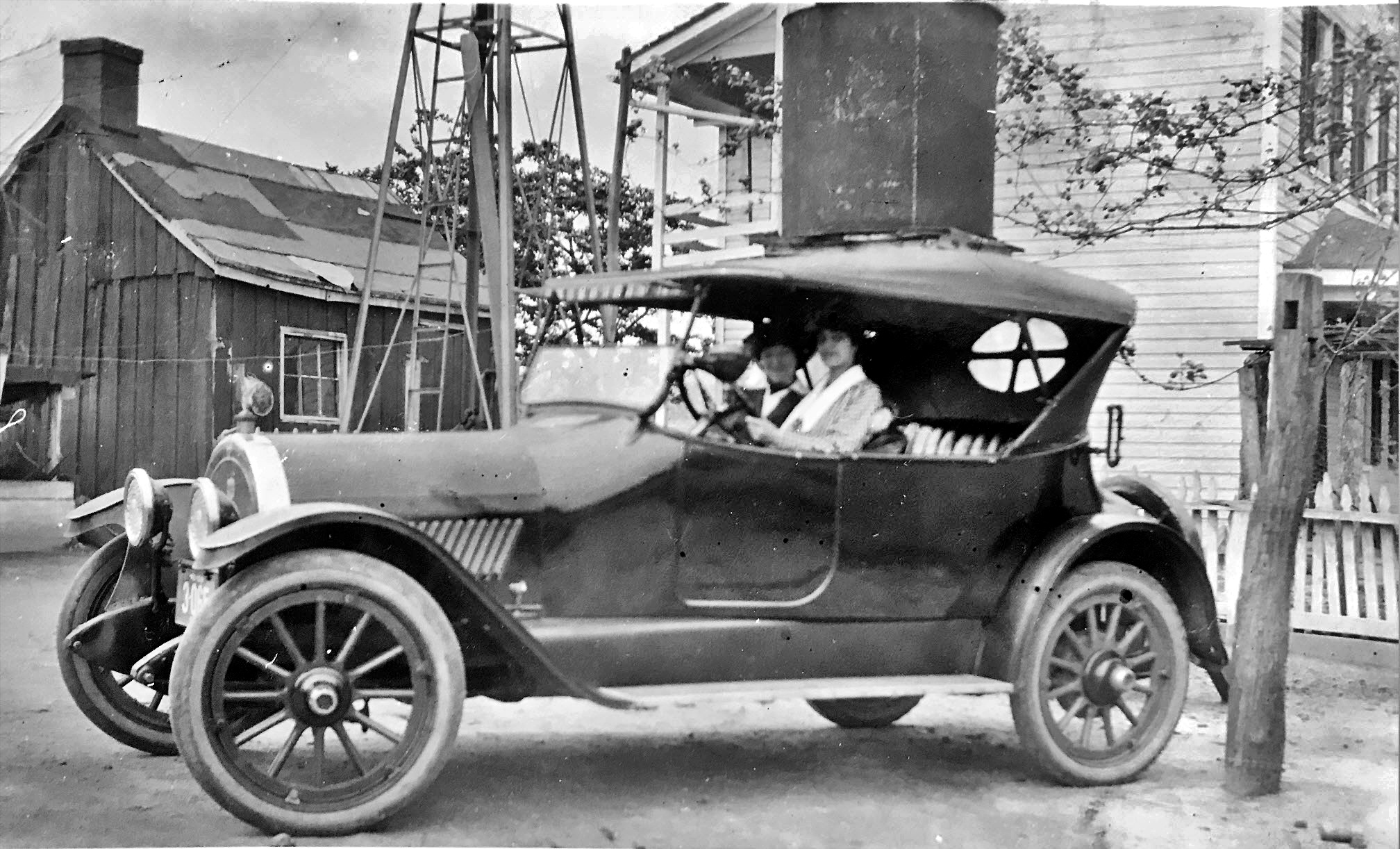
Ethelene Rachel Thomas and her sister, Celeste Thomas Brown, in a 1918 Oldsmobile Club Roadster. Photo taken by Lewis Reed at the Clinton Clay Thomas family farm, located on Butterfly Lane in Buckeystown, Maryland, circa 1918.
Not a great deal has been published about Lewis Reed’s wife, Ethelene Rachel Thomas, despite her central role in the family and in this story. This post is offered as a tribute to her life, her quiet strength, and the rural values she carried from Butterfly Lane into the heart of the Reed legacy.
Ethelene Rachel Thomas Reed was also my maternal grandmother, making this story deeply personal. Preserving and sharing her history is part of honoring not only her life, but the generations that followed and the legacy she helped create.
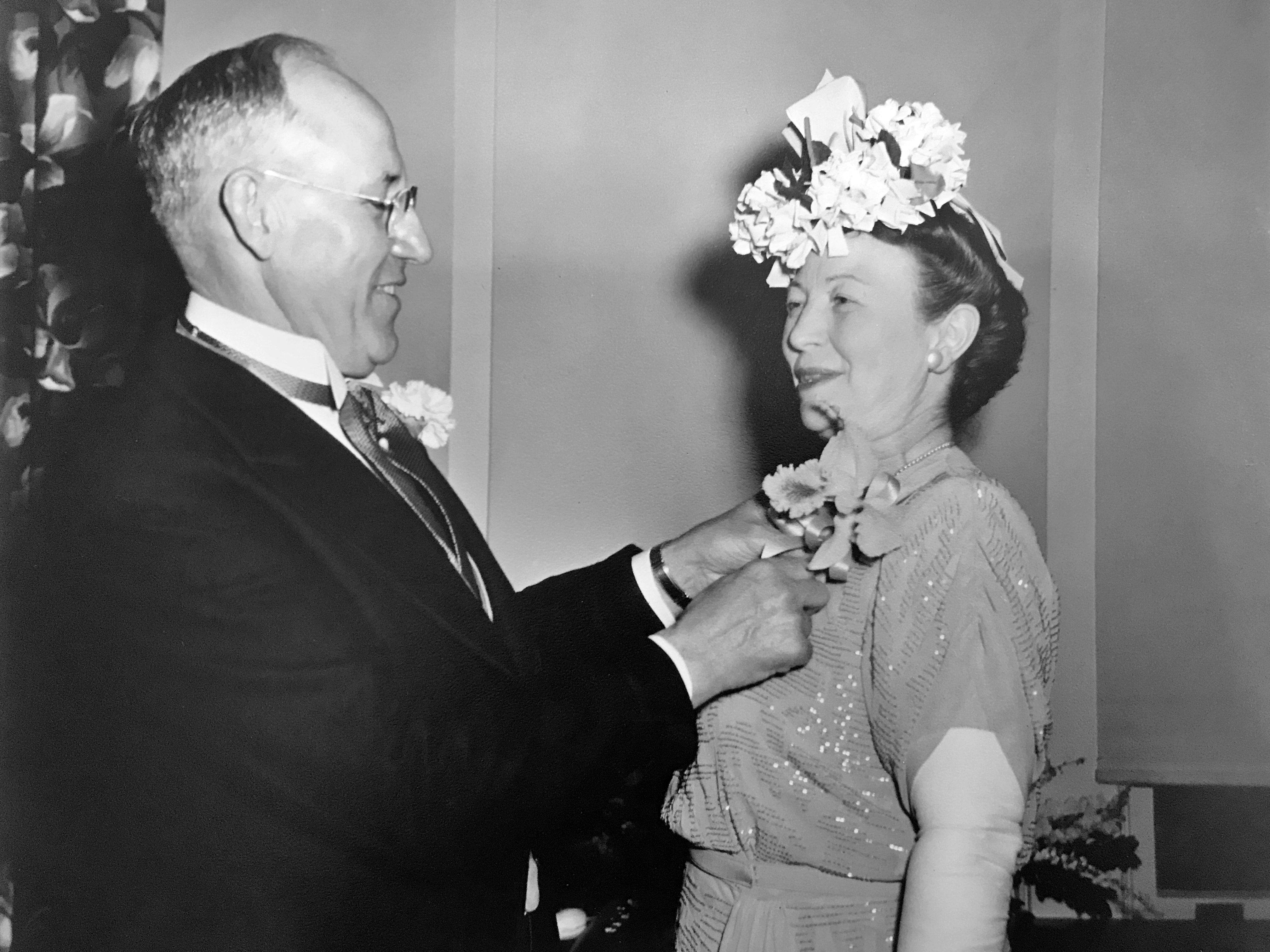
Lewis and Ethelene Reed at their daughter’s wedding reception–founders of a family legacy.
Ethelene Rachel Thomas Reed passed away on March 15, 1977, but her life remains an important link between the rural roots of Maryland and the modern legacy of Reed Brothers Dodge. From the fields of Butterfly Lane to the streets of Rockville, her story reminds us that our dealership’s history is not only about cars; it’s about people, family, and the values passed from one generation to the next.
“The Boardwalk” Along the Waterfront at Chesapeake Beach, Maryland, Early 1900s
In the early 1900s, the Chesapeake Beach Railway Company offered Washingtonians more than transportation, it promised escape. At the rail line’s eastern terminus, a bustling boardwalk emerged along the Chesapeake Bay, carefully designed to attract crowds with hotels, amusements, and sweeping waterfront views. This was a new kind of destination, where leisure was planned, marketed, and delivered by rail.
Lewis Reed recognized the historical significance of this scene and turned his camera toward it. His photographs of the Chesapeake Beach boardwalk capture the rhythms of a day spent seaside: visitors strolling between attractions, pausing to take in the view, or gathering near the latest amusements. Among the highlights of his images is the Griffith Patent Scenic Railway, an early roller coaster whose curves and speed symbolized the era’s fascination with innovation and thrill. (click on thumbnails to view gallery)


Reed’s photographs preserve more than a popular resort, they document a moment when railroads shaped recreation and when leisure itself became part of the modern experience. Through his lens, the Chesapeake Beach boardwalk is frozen in time, offering a vivid glimpse into how Americans relaxed, traveled, and found excitement at the dawn of the 20th century.
Then and Now: Hotel Cape May, 1919
People have been visiting Cape May, “the nation’s oldest seashore resort,” for longer than America has been a country. That makes Cape May the perfect place to look back on over 100 years ago and from today — then and now.
A bit of Hotel Cape May history: The Christian Admiral, formerly Admiral Hotel and Hotel Cape May, was a luxury beachfront hotel located in Cape May, New Jersey. Opened in 1908, as the Hotel Cape May, the ornate hotel was abandoned five years later due to bankruptcy. It was then sold at a Sheriff’s sale. The hotel was leased by the War Department as a hospital from 1918-1919 during WWI. Afterwards, it was again abandoned. In 1932, the Admiral Hotel company purchased it and renamed it the Admiral Hotel. They too went bankrupt in 1940. The military returned for WWII from 1941 to 1945 and afterwards it was once more sold at Sheriff’s sale. It opened and closed multiple times before being abandoned again in the 1950s. Reverend McIntire saved it from demolition in 1963, and operated it until his organization too, went bankrupt. The Christian Admiral never made a profit for any of its owners and was the cause of six bankruptcies. Nonetheless, it was a gorgeous hotel and one of the most recognizable and beloved buildings in Cape May. The people who liquidated McIntire’s organization shopped the hotel around, but it was deemed too far gone to save. Engineer estimates were $20 million and above, just to make it structurally sound and from $60-$80 million to restore it. The hotel was razed in 1996.
Hotel Cape May (THEN): The Christian Admiral Hotel, originally known as the Hotel Cape May, was erected in the Beaux-Arts style between 1905 and 1908. When opened on April 11, 1908, it was the world’s largest hotel. Completed behind schedule and over budget, Hotel Cape May was part of a development project intended to bring wealthy visitors to the city and rival East Coast resorts such as Newport, Rhode Island. During its existence it would undergo five bankruptcies and ownership changes.
Edgar was a partner with his brother Lewis Reed, in Reed Brothers Dodge. During WWI, Edgar served as a Sergeant in the U.S. Army Medical Corps from February 1918 to August 1919 and had been posted to GENERAL HOSPITAL NO. 11 in CAPE MAY, NEW JERSEY. The spirit of patriotic service which swept the country prompted many persons to offer their properties to the War Department for hospital purposes. These offers included buildings of every conceivable kind, such as department stores, private establishments, hospitals, and properties in large cities. It was found that many of these could be obtained and converted into hospitals much more expeditiously than barrack hospitals could be constructed, and at less cost.
The Surgeon General recommended that the War Department authorize the leasing of the Hotel Cape May for use as a general hospital on December 18, 1917. The Hotel Cape May was located on the Ocean Drive, at the eastern end of the city, and within 100 feet of the beach of the Atlantic Ocean. Opened first as GENERAL HOSPITAL NO. 16, the designation was changed to GENERAL HOSPITAL NO. 11, March 14, 1918. The enlisted personnel were quartered in tents which were located to the rear of the building.
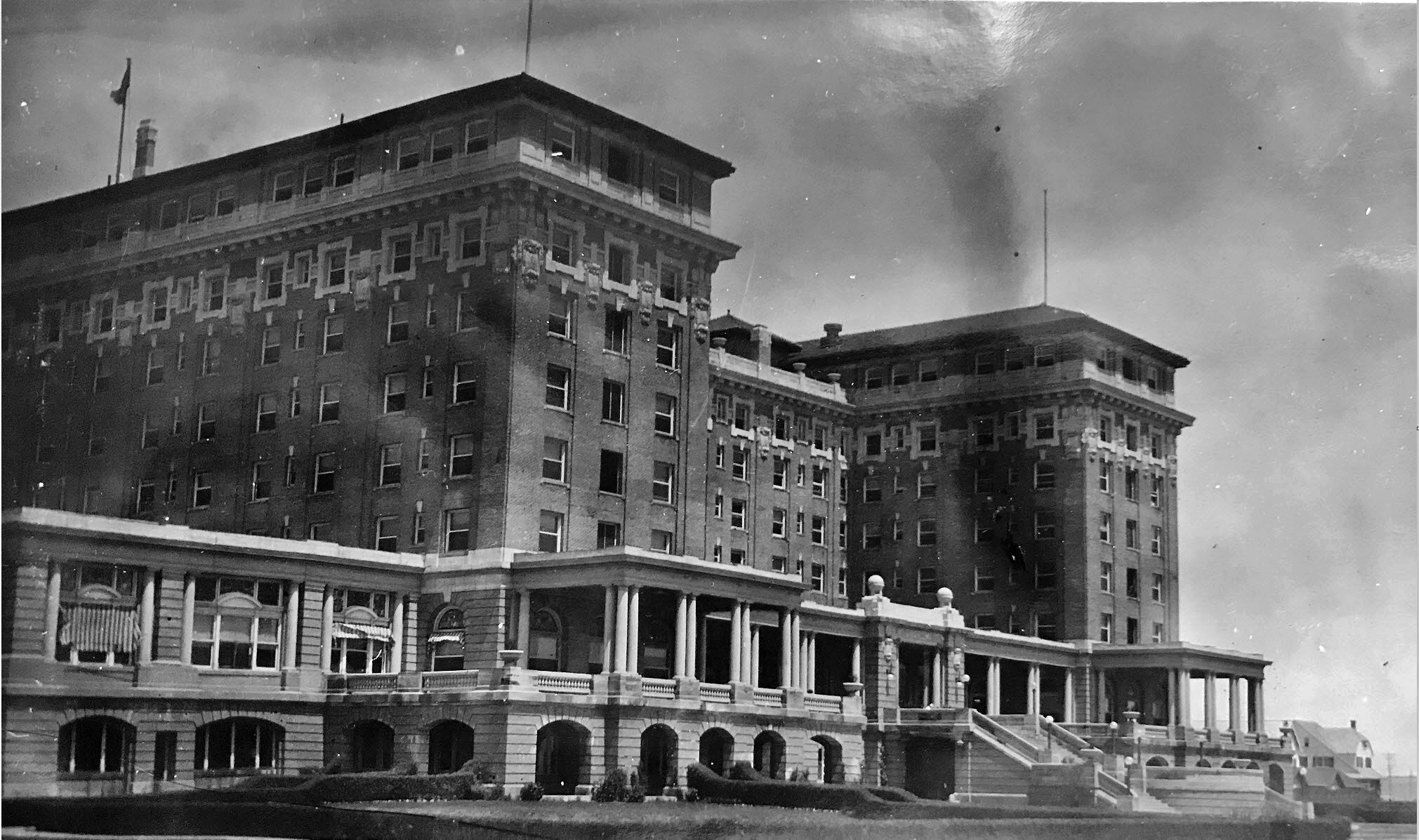
Hotel Cape May as it looked in 1919. Photo by Lewis Reed.
The Christian Admiral Hotel (NOW): In 1991, the hotel was closed by Cape May City officials. The hotel was demolished in 1996 and the site was reused for a development of single family homes. The demolition of the hotel placed the city’s National Historic Landmark status at risk.
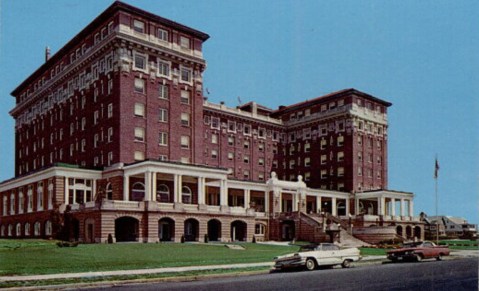
The Christian Admiral Hotel, late 1970s. Closed by Cape May City Officials, 1991 for want of tens of millions of dollars to bring up to modern codes. Destroyed: Feb, 1996.
Books

Related Resources


Copyright Notice

Reed Brothers Dodge History (1915-2012) by Jeanne Gartner is licensed under a Creative Commons Attribution-NonCommercial 3.0 Unported License.


Recent Comments