
Valentines Day and Ferris Wheels!

Ferris Wheel at Rockville Fair, circa 1920s. Photo by Lewis Reed
Did you know that February 14th is not only Valentine’s Day, but also Ferris Wheel Day? This unofficial national holiday is held on this day to honor the birth of the inventor of the Ferris Wheel, George Washington Gale Ferris, Jr. What better way to celebrate Ferris Wheel Day than enjoying this old photograph of the Ferris Wheel taken at the Rockville Fairgrounds, courtesy of Lewis Reed. The fairgrounds were just outside Rockville, about where Richard Montgomery High School is today. The Fair lasted four days, from August 21st to the 24th, and drew visitors from local counties, Washington, and Baltimore.
For the singles and the “enough already with the Valentines”, here is your perfect alternative excuse. Go wish all your friends and family a Happy Ferris Wheel Day!
Then & Now: Windsor Store in Darnestown
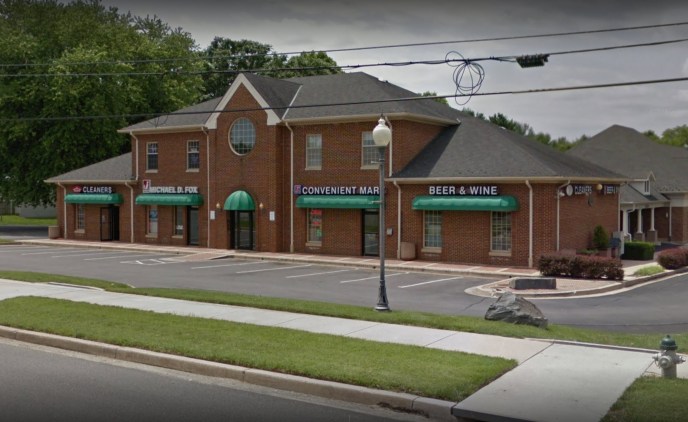
Photos are our window to the past. You might not realize how much Darnestown has changed until you look back and see what it looked like in the past. In this “Then & Now” feature, I have combined one of Lewis Reed’s original photograph’s for “then” and matched it with a google street view image for “now”. Travel back 110 years in time to see how Windsor Store in Darnestown used to be.
A bit of Darnestown history: The Darnestown area, which was located at the intersection of Darnestown and Seneca Roads, was settled in the 1750s. Darnestown Road (Route 28) was an old Indian trail and is recognized as one of the oldest roads in Montgomery County, Maryland. By the 1820’s, the town began to blossom and hosted a wheelwright, the Grist Mill, a blacksmith, a physician, a post office and a variety of other businesses. Darnestown became an important place for commerce in the area. Seneca Road led to a sandstone mill and the C&O canal at Seneca Village. From Darnestown one could travel either by stagecoach along Darnestown Road or board a packet boat on the canal at Seneca.
THEN: Mr James Windsor, grandfather of Curry England, opened the Windsor Store at the corner of Seneca and Darnestown Roads in approximately 1878. He operated the store for many years, and also served as Darnestown’s Postmaster for some 20 years. During the 1800s mail arrived three times a week by stagecoach from Rockville and local people gathered for the arrival, creating a regular social event. The Darnestown Post Office was discontinued in 1911. The Windsor building survived until 1969, when it caught fire and burned to the ground.
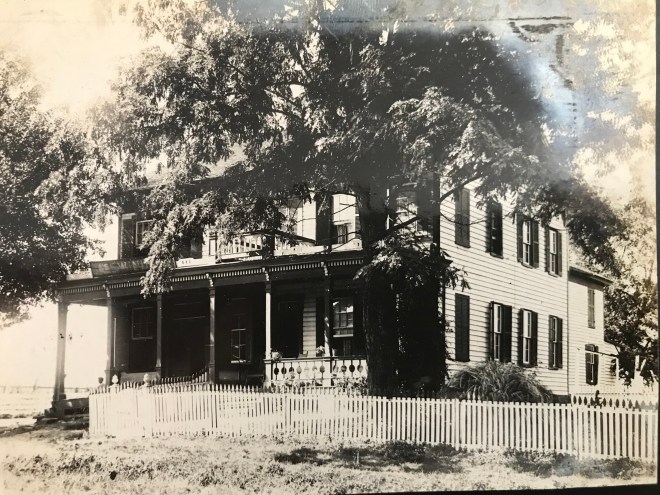
Windsor Store in Darnestown, early 1900s. Photo by Lewis Reed
NOW: Today, a 6-Twelve Convenient Mart sits on the site.
Then & Now: Liberty Milling Company, Germantown
The coming of the Industrial Age meant the end of the Romantic Era and the beginning of machine’s rule over nature. In Germantown, this was represented by the big steam-powered mill. For this post, I have used two of Lewis Reed’s original photographs for “then” and a stock image from today for “now”.
Liberty Milling Company (THEN): “Feed the Liberty Way” was the slogan of Liberty Milling Company, mainstay of the little farming community of Germantown, Maryland for many years. The original mill was steam-powered and began operation in 1888. It was founded by the Bowman brothers – Charles, Eldridge and Upton – of Cedar Grove. Lumber to build the mill was sawed at the Black Rock Mill, one of the oldest water-powered mills in Germantown. The Bowman Brothers did a brisk business milling wheat and corn and selling it in the area as well as shipping it to the Washington, D.C. markets by way of the railroad. In about 1914 fire engulfed the old wood structure and the entire mill was lost. The Bowman brothers rebuilt almost at once. The new mill was sold by the Bowman brothers to the Liberty Milling Company.

Liberty Milling Company, Main Street Germantown, ca. 1910. Photo by Lewis Reed
In 1935 the company purchased an adjacent lot to the south and built a warehouse and store to sell its many products, which, according to a 1963 Damascus Courier article included Gold Leaf Flour, Silver Leaf Flour, Liberty Cake Flour, Liberty self-rising Corn Meal, Liberty Straight-Line Winter Wheat Flour, Liberty Pancake Flour, Liberty Self-rising Buckwheat Flour, Dairy Feeds, Horse Feeds, and Chicken Feeds. These products were sold all across the nation.
By the 1950s, it was the second largest mill in Maryland with eight 50-foot silos and a capacity of 24,00 pounds of flour a day and 9,000 pounds of cornmeal a week, bringing in a profit of more than $1 million a year. During World War II, it produced flour for the armed forces.

Liberty Mill Germantown, ca. 1910. Photo by Lewis Reed
Liberty Milling Company (NOW): The Liberty Milling Company was finally put out of business by the larger commercial mills, its income dwindling in the 1960s. The mill burned in June 1972, and the still-standing cement silos were removed by the county in 1986 to make way for a train commuter parking lot. A historic marker erected by the Germantown Citizens Association stands at the edge of the parking lot.

Liberty Mill Historic Marker
Source: Germantown Patch
Look Out! Early 20th Century Reckless Driving
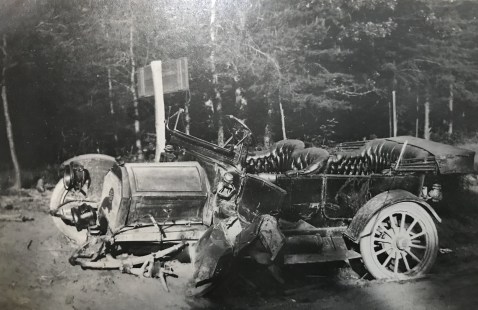
Car Wreck. Photo by Lewis Reed, ca. 1920
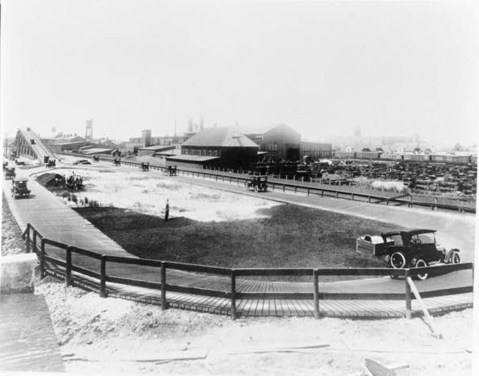
Dodge Test Track 1915
The clipping is from the Bismarck Daily Tribune, April 21, 1915 newspaper.
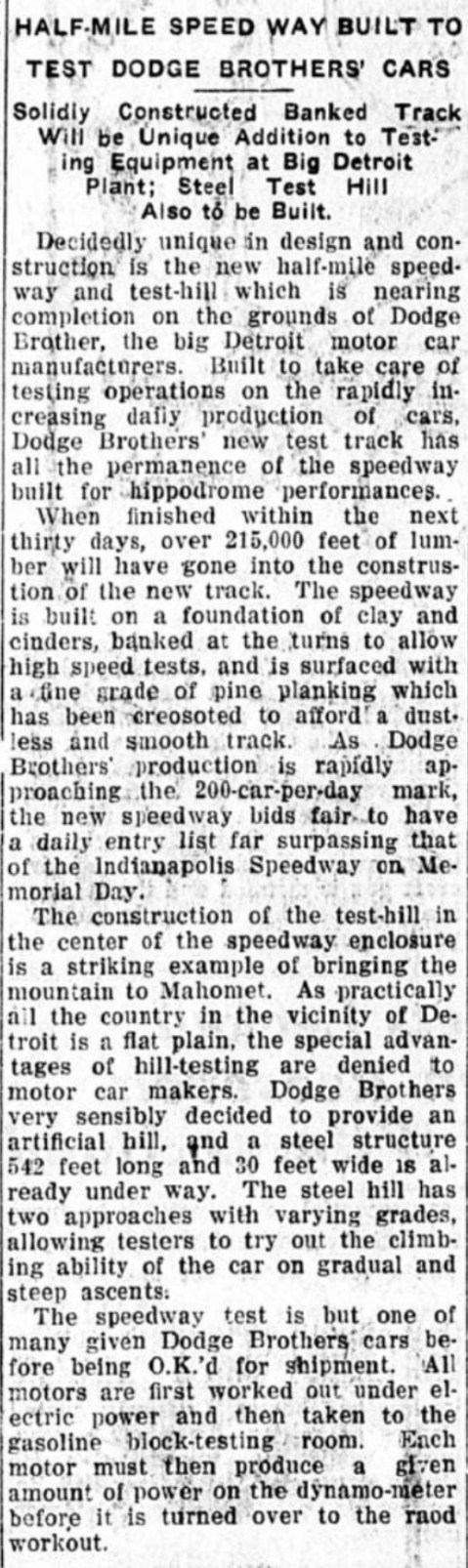
Bismarck Daily Tribune April 21, 1915
UPDATE: Lewis Reed Photos to Appear on Science Channel ‘Impossible Engineering’

I just got word from the Production Assistant at Discovery that the new season of Impossible Engineering Series 4 is about to start airing in the US. Lewis Reed’s race car photographs will be a part of the “London Array Wind Farm” episode which is the second episode of the series. The show is scheduled to be broadcast on Thursday, January 10, 2019 on Discovery’s Science Channel.
The following 1923 dirt track race shots taken by Lewis Reed at the Rockville Fair will be used on the program that will feature a segment on the development of the race car.
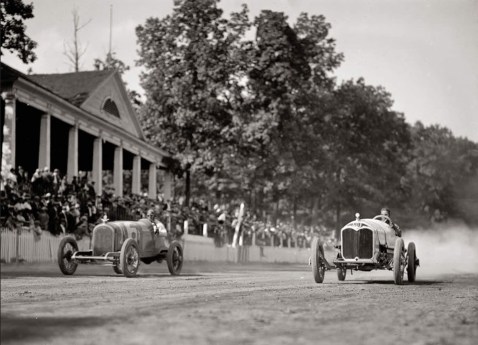
Photo by Lewis Reed
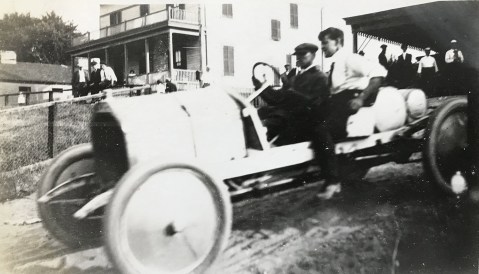
Photo by Lewis Reed
About Impossible Engineering
Behind every seemingly impossible marvel of modern engineering is a cast of historic trailblazers who designed new building techniques, took risks on untested materials and revolutionized their field. Brand new series, ‘Impossible Engineering’, is a tribute to their achievements. Each episode details how giant structures, record-beating buildings, war ships and space crafts are built and work. As the show revels in these modern day creations, it also leaps back in time to recount the stories of the exceptional engineers whose technological advances made it all possible. How would they have ever existed without the historical work of their ancestors? Interviews with their great advocates bring engineering history to life and retell how these incredible accomplishments shaped the modern world.
“Impossible Engineering” is produced for Science Channel by Twofour Broadcast.
Books

Related Resources


Copyright Notice

Reed Brothers Dodge History (1915-2012) by Jeanne Gartner is licensed under a Creative Commons Attribution-NonCommercial 3.0 Unported License.
 Reed Brothers Dodge History 1915 – 2012
Recent Comments