
Can’t Find Your Car? Frederick Fair Parking Lot, 1914

This fascinating scene of hundreds of cars parked in the Frederick Fair parking lot was taken by Lewis Reed in 1914. What is fascinating to me is, with all of these early cars painted in black, how on earth would you find your car in the parking lot?
Can’t find your car, sir? Apparently not a new phenomenon as seen in this 1914 photo of the Great Frederick Fair parking lot, especially since the majority of cars were of only one paint color, your basic black.
This week (September 17-25) marks the 159th edition of the Great Frederick Fair, the largest and greatest county fair in the State of Maryland. There have been many changes since the first fair was held in 1822 when it was known as the Cattle Show and Fair: that was a two-day event, now it’s nine days. The location has changed and so has the name. Today, the Frederick County Fair is officially named the Great Frederick Fair. It’s been held in May, October and November, but now (and for many years) takes place in September — rain or shine.
Fair entertainment has certainly evolved over the years. In 1888, May Lillie, an “expert girl shot with a rifle” from the back of a running mustang, performed. In the early 1900s, acrobatic bears and monkeys, high-wire acts and vaudeville performers took the stage. In 1950, the highlight of the “Irish Horan and the lucky Hell Drivers” show was a “stock convertible catapulted from a giant cannon.” In 1965, it was Jack Kochman’s Hell Drivers performing stunts with cars.
The Thursday of the 1911 fair was noted as a record day with 15,000 people in attendance, 100 autos and 1,000 carriages, according to “The Great Frederick Fair” book. Today, fair attendance can range from 210,000 to 250,000 people during the nine-day fair.
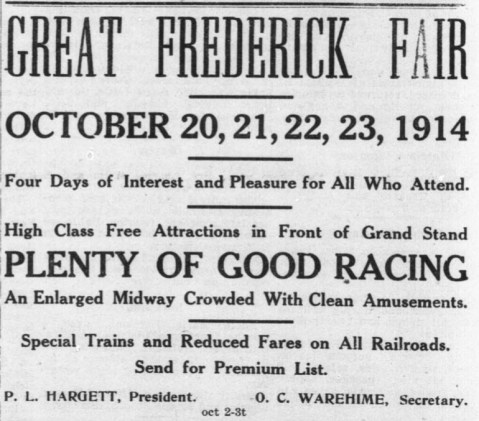
Newspaper ad advertising The Great Frederick Fair. THE DEMOCRATIC ADVOCATE OCTOBER, 1914
Source: Frederick News-Post
A Fun Photograph of Early Rockville: Then & Now
It’s always amazing to look back at the past and see how everything we know today once was. This is exactly why photography is one of the most brilliant inventions ever created – it has documented so many epic moments over the years, and provides the perfect portal to step back in time for just a few moments. In this special “Then & Now” feature, I have combined one of Lewis Reed’s original photograph’s for “then” and paired it with a Google composite image for “now”.
St Mary’s Catholic Church (THEN): This fun and interesting photograph taken by Lewis Reed is one of my favorites. The photo shows William Beall in his 1915 Pullman in front of old St Mary’s Church and his younger brother Vernon on horseback “towing” him to Reed Brothers. The photo was taken from in front of Lewis Reed’s Rockville Garage which was directly across from St Mary’s Church. Several of the Beall family were original employees at Reed Brothers, including: Leonard Beall (paint/auto body shop), Otis Beall, Walter (Bud) Beall, and Mary Anna (Slater) Beall (Bookkeeper). Bud and Otis Beall were two of Reed Brothers’ original Gulf Gasoline Station attendants.
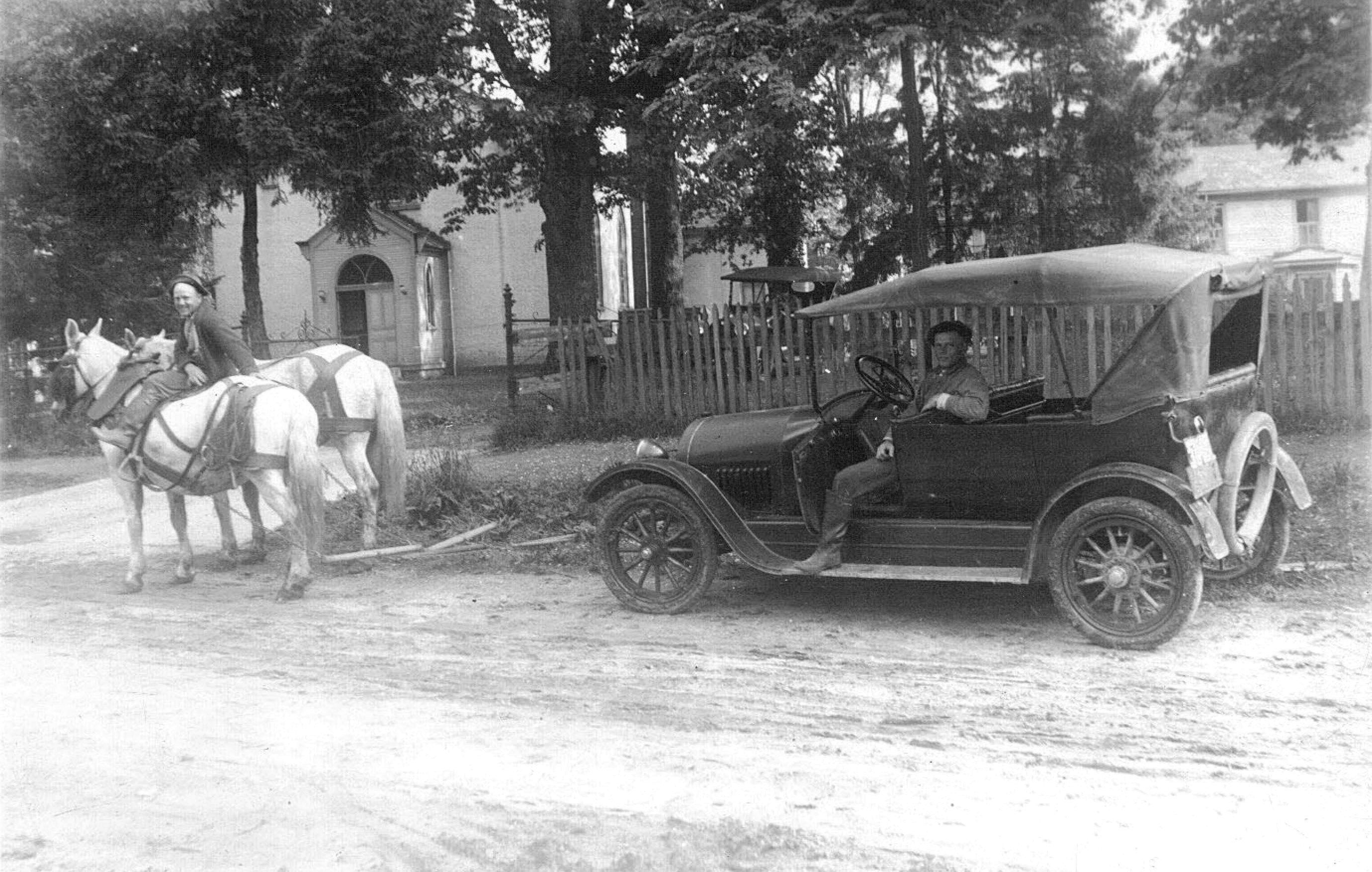
Early transportation powered by true “horsepower”. Photo taken by Lewis Reed, 1915
St Mary’s Catholic Church (NOW): Today, the church overlooks the same intersection of roads now called Veirs Mill Road and Rockville Pike. With the 1950s addition of Hungerford Drive as a bypass to Rockville’s commercial street, this is a busy intersection. It is arguably the symbolic cross-road for the county, and locals refer to it as “the mixing bowl” for its unconventional configuration and heavy volume of traffic. The church’s prominent location and its connection to author F. Scott Fitzgerald, who is buried in its cemetery, contribute to St. Mary’s status as a landmark in Rockville.
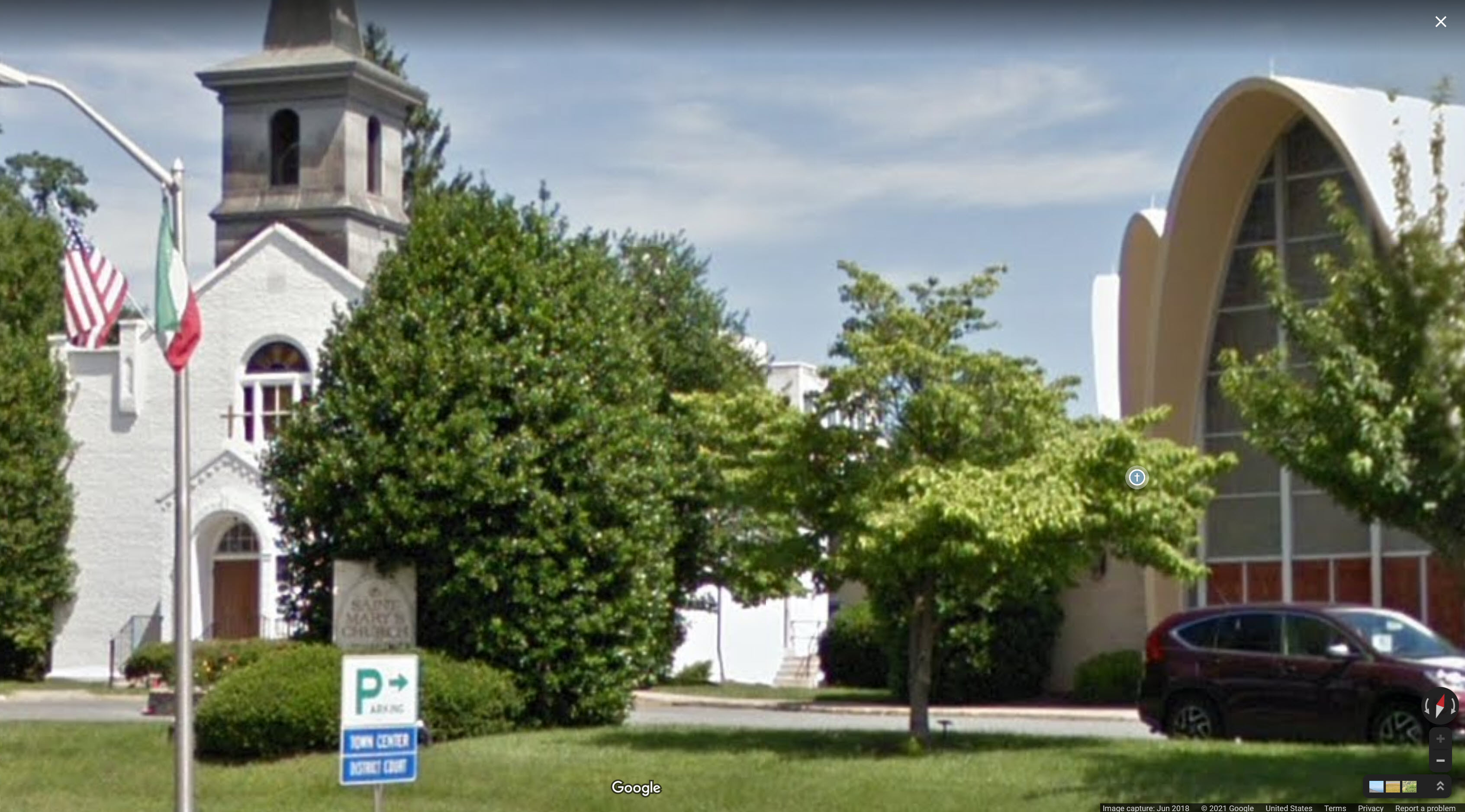
St Mary’s Catholic Church, Google Image, 2021
Women’s History Month | A Spotlight on Blog Author
This special post doesn’t have anything to do with Reed Brothers Dodge history, but it does have a lot to do with this blog’s author. I am so honored and proud to be featured in this article by The United States Air Force Band in recognition of Women’s History Month & International Women’s Day. To read the full article on the Air Force Band’s website, please visit: https://www.music.af.mil/…/IwAR3g1Fiu5VoK9EkGibCUQFtBE…/

Happy Valentine’s (and Ferris Wheel) Day!
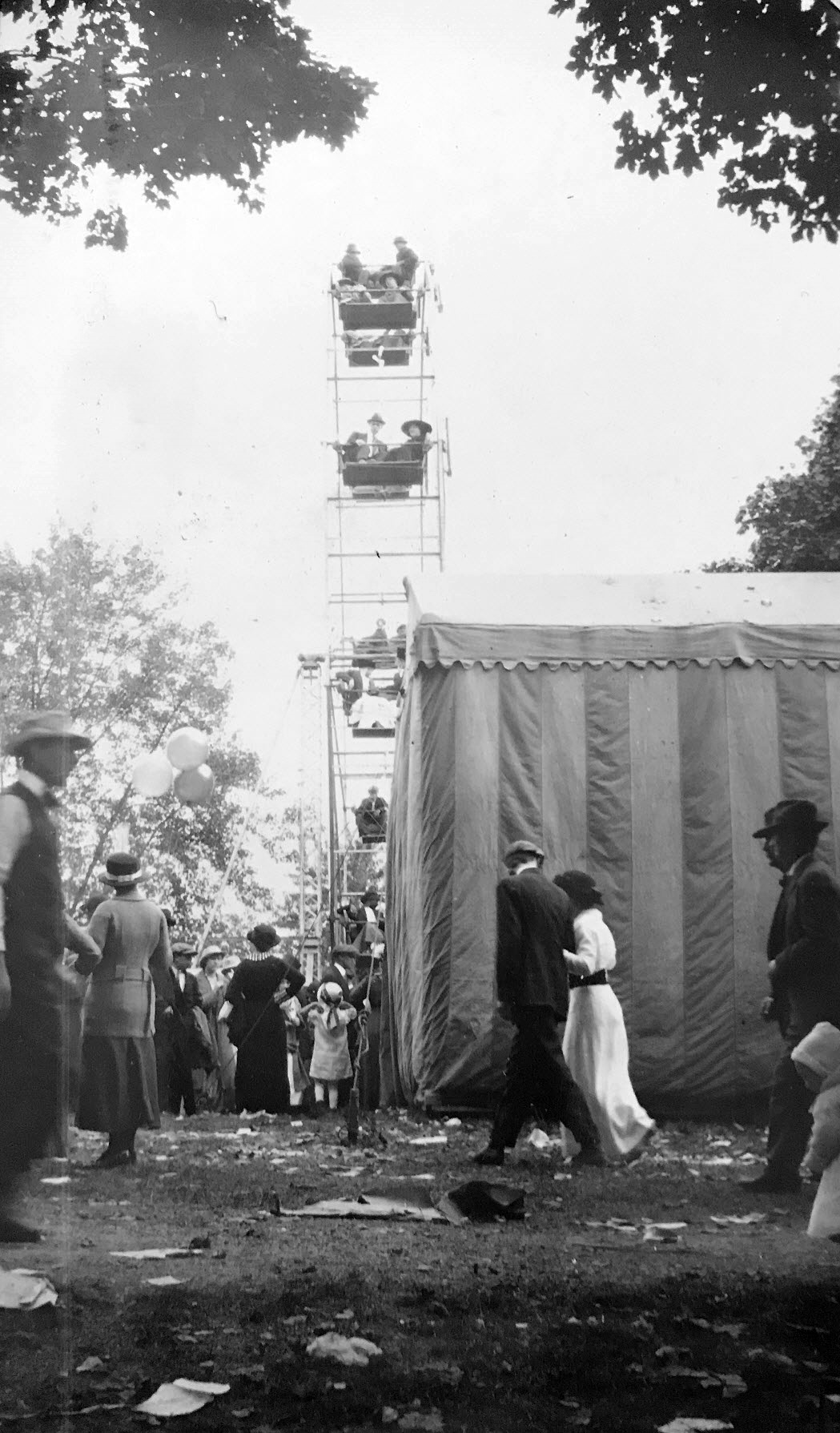
Ferris Wheel at Rockville Fair, circa 1920s. Photo by Lewis Reed
Did you know that February 14th is not only Valentine’s Day, but also Ferris Wheel Day? This unofficial national holiday is held on this day to honor the birth of the inventor of the Ferris Wheel, George Washington Gale Ferris, Jr. What better way to celebrate Ferris Wheel Day than enjoying this old photograph of the Ferris Wheel taken at the Rockville Fairgrounds, courtesy of Lewis Reed. The fairgrounds were just outside Rockville, about where Richard Montgomery High School is today. The Fair lasted four days, from August 21st to the 24th, and drew visitors from local counties, Washington, and Baltimore.
For the singles and the “enough already with the Valentines”, here is your perfect alternative excuse. Go wish all your friends and family a Happy Ferris Wheel Day!
Christmas Trees and Snow Villages from a Century Ago
With only a few days left until Christmas, I thought it might be fun to take a look at some photos from Lewis Reed’s collection that show us what Christmas trees used to look like a century ago. In those days, there was not wide-spread agreement on exactly what a tree should look like, which made for a lot of creativity. Not surprisingly, they were very different than the perfectly shaped tress we have on display today.
The trees were big back then and always fresh. They went right to the ceiling and were very wide. Early Christmas trees were generally fastened onto a flat board surrounded with fence-rails, snow villages and carpeted with cotton blankets of snow. The tree in the photo below has an abundance of tinsel, which grew in popularity to the point that, by the 1920s, it was common to nearly cover the tree in the decorative material.
So, what is tinsel (aka icicles) exactly? Originally made from strands of silver alloy, tinsel was in fact first used to decorate sculptures. It was only later that it became a Christmas tree decoration, employed to enhance the flickering of the candle flames. In the 1950s, tinsel became so popular that it was often used as a substitute for Christmas lights.
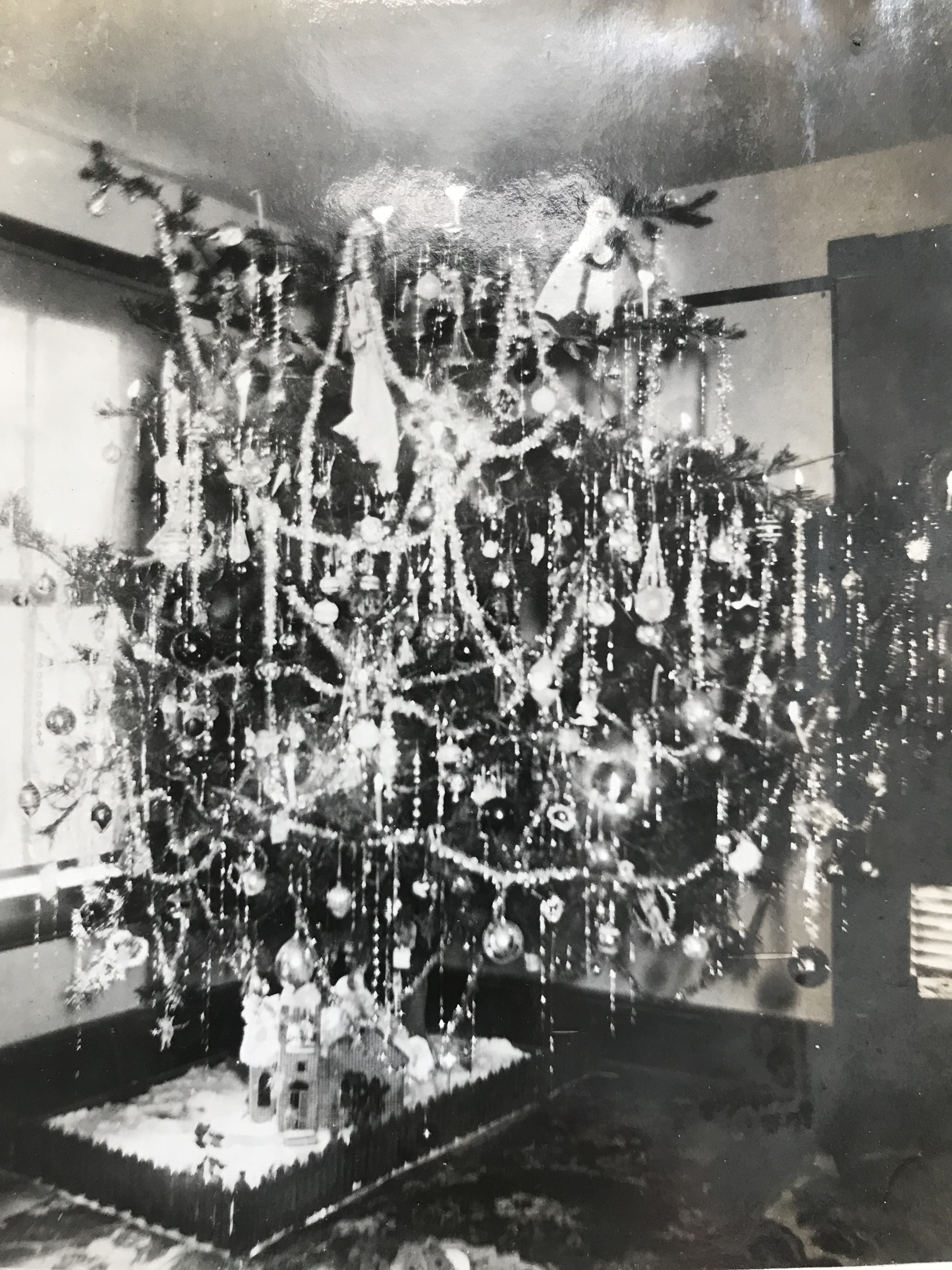
A small snow scene with what appears to be a miniature church is arranged at the foot of the Christmas tree. A popcorn garland adorns the tree. Photo by Lewis Reed
So, where did Washingtonians get their trees?
From The Evening Star, Washington, DC 23 December 1923:
Conduit Road on the long stretch between Glen Echo and Great Falls for many years has been a favorite hunting ground where hundreds and hundreds of families have customarily obtained scrub pine trees for Christmas week. Usually there is plenty of holly and some mistletoe to be found in the rugged and rolling hill lands which are the gateway to Great Falls.

No room for a star on the top of this tree! And just look at those big Santa and Angel dolls. Other fun little details are notable, including a miniature church with picket fence is arranged at the base of the tree. Photo by Lewis Reed
There’s a fine art to decorating Christmas trees that’s been developing since over 100 years ago. People consider lights, garland, ornaments, skirt, and more. But one thing that’s hard to resist sometimes is just filling every available space with decorations. Clearly, that was the case years ago too. What I like about these trees is that they are so randomly shaped and even misshapen. Folks back then didn’t trim them down to a more aesthetically pleasing symmetry like we do today.
The tradition of building miniature Christmas village landscapes, including houses, animals, and other hand-crafted wooden figures, began with the Pennsylvania Dutch in the late 1800s. Mass-produced cardboard houses, sold in dimestores, became popular in the mid-20th century. Today, these villages in good condition can be highly collectible.
Below are photos of Lewis Reed’s snow village set up under the Christmas tree decorated with vintage ornaments, tinsel, and lights. I don’t remember the odd-shaped Christmas trees, but I do remember having a lot of fun helping my grandfather set up the miniature landscapes with the varied figures, little houses, and trees at Christmastime each year. It seemed like a holiday village right out of a storybook.
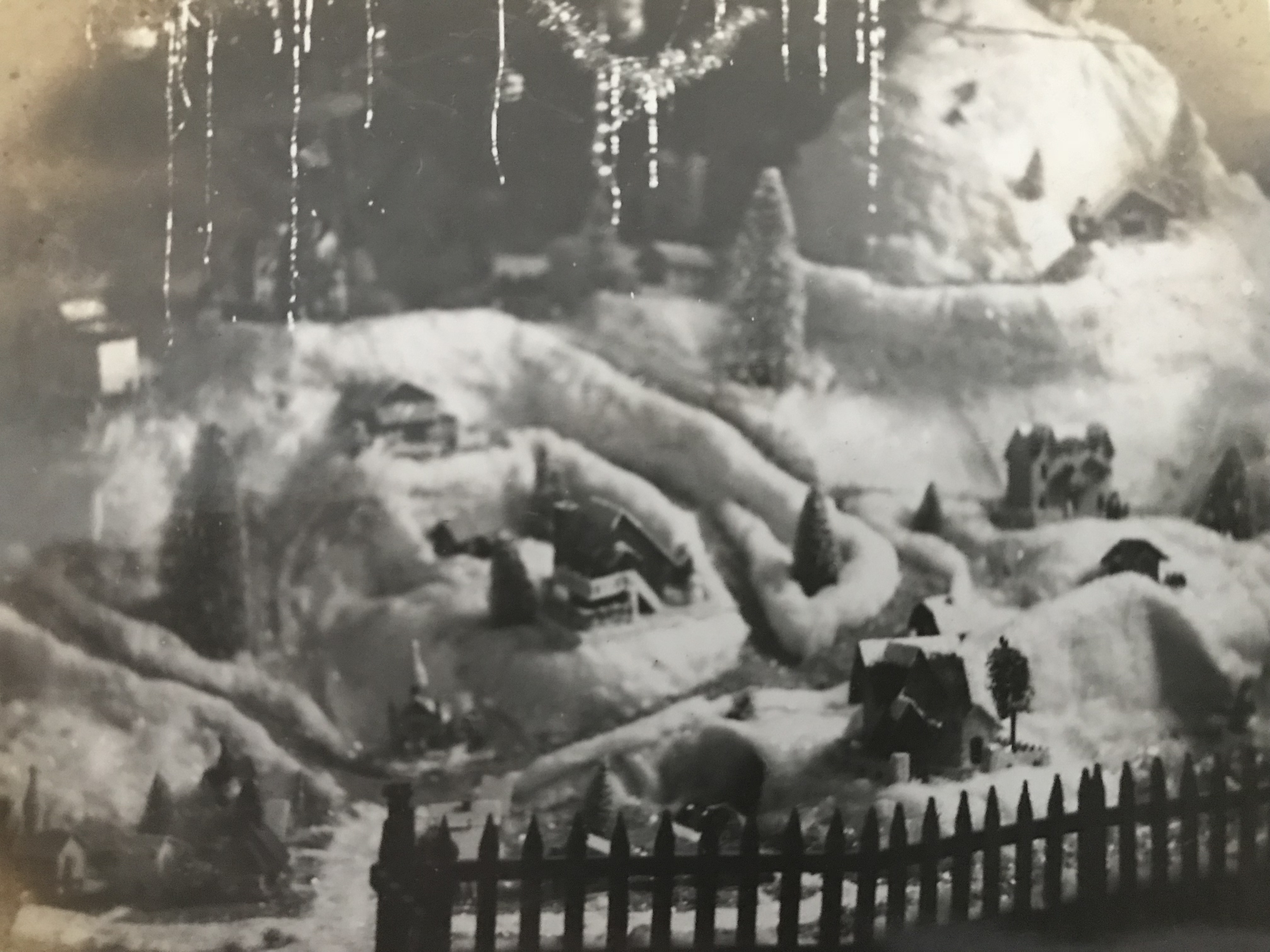
A rustic picket fence is used to set off the village display. Dangling strands of tinsel hang below the tree. Photo by Lewis Reed
The snow villages were set up in Lewis Reed’s basement on top of a big table beneath a small Christmas tree. He made the snow scenes entirely by hand using wire-covered cardboard and balled up paper to make hills and pathways. The little houses and figurines would fit into the landscape with cotton ‘snow’ all around; and lights would be wired underneath.

Little houses, churches, fences, trees, and pathways were added to the scene. Some of the houses have charming light effects in the windows. The roofs of the houses were decorated with fake snow. Photo by Lewis Reed
These Christmas villages were precursors of the Holiday Villages that were made popular by Department 56 that you see today.
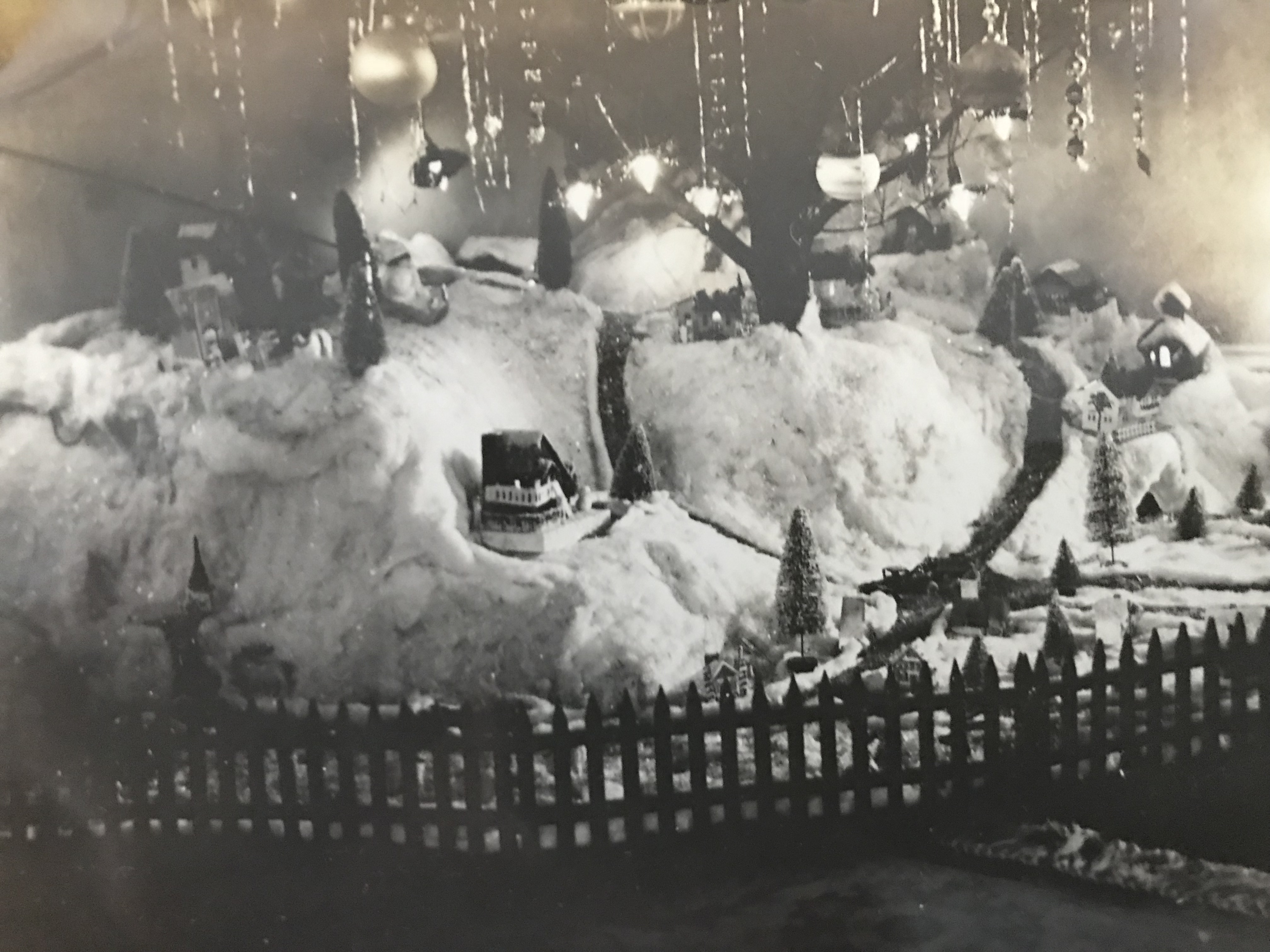
Old-fashioned lights can be seen on the tree, along with lit windows in the houses. The miniature houses usually had holes in the back or the bottom through which tiny lights were placed to provide illumination. Photo by Lewis Reed
Wishing all of you who have stopped in to visit a very Merry Christmas and Happy New Year! Stay safe and enjoy the holiday season with friends and family!

Books

Related Resources


Copyright Notice

Reed Brothers Dodge History (1915-2012) by Jeanne Gartner is licensed under a Creative Commons Attribution-NonCommercial 3.0 Unported License.
 Reed Brothers Dodge History 1915 – 2012
Recent Comments