
Then & Now: The New Raleigh Hotel Washington DC, 1912
Some of the city’s oldest hotels not only have a long history of storied visitors and impressive tales, but they’ve shaped the city’s landscape for decades and perhaps centuries. However, for every Hay-Adams, Willard Continental and Morrison-Clark, there’s a hotel like the the Raleigh Hotel that’s either been converted and or destroyed entirely.
Raleigh Hotel (THEN): Along with the Willard, the Raleigh Hotel was one of the largest and grandest hotels in Washington in the first part of the twentieth century. It held a commanding position on Pennsylvania Avenue across from the Old Post Office Building and was famous as a Mecca for patrons of the performing arts. In 1911, the building was razed and rebuilt as a 13-story Beaux Arts hotel.
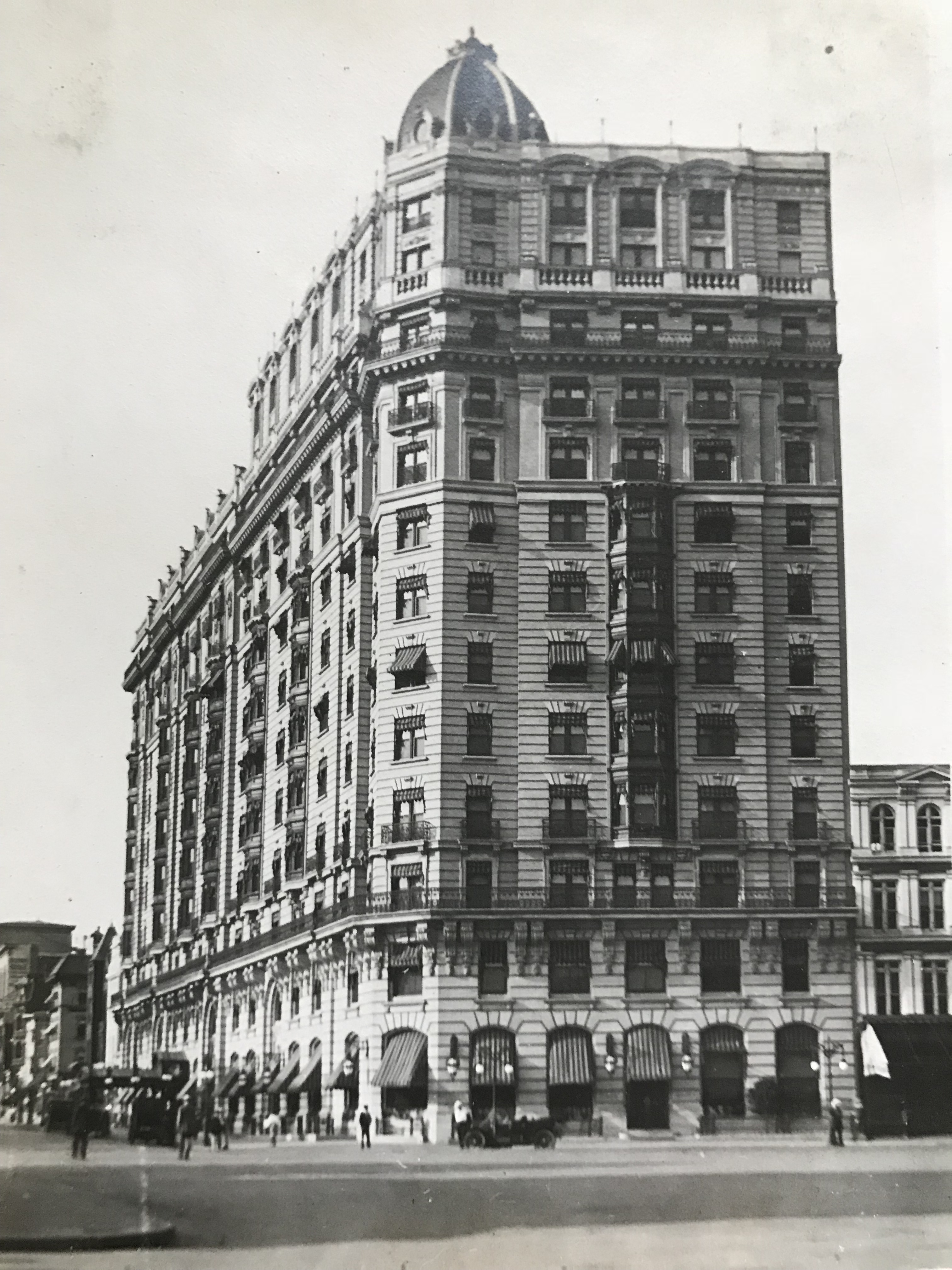
The recently completed Raleigh Hotel at Pennsylvania Ave and 12th Street NW, built on the site of the previous Raleigh Hotel. Photo taken by Lewis Reed, ca. 1912
Raleigh Hotel (NOW): The hotel closed in 1963, its furnishings were sold off, and it was demolished a year later. Its replacement, a 14-story office building at 1111 Pennsylvania Avenue, was completed in 1968, and it still stands on the site today.

The site of the Raleigh as it appears today.
Rare, Historical Photos: 1912 Grading of Massachusetts Ave Washington, DC
Washington, DC is an amazing city with a fascinating history. Massachusetts Avenue intersects every major north–south street and passes numerous Washington, DC landmarks. It is a landmark itself, long considered the northern boundary of the downtown as well as home of Washington’s Embassy Row.
Massachusetts Avenue is tied with Pennsylvania Avenue as the widest road in the District, at 160 feet. The two roads run in parallel through much of the city, Massachusetts about seven blocks north of Pennsylvania. Massachusetts Avenue was long Washington’s premier residential street, as Pennsylvania was once its most sought-after business address. Both streets were named after states with prominent roles in the American Revolution: Massachusetts and Pennsylvania.
Below are some extremely rare, historical photographs that Lewis Reed took of Massachusetts Avenue as it was being graded in 1912. As always, click on the photos to get a better look.
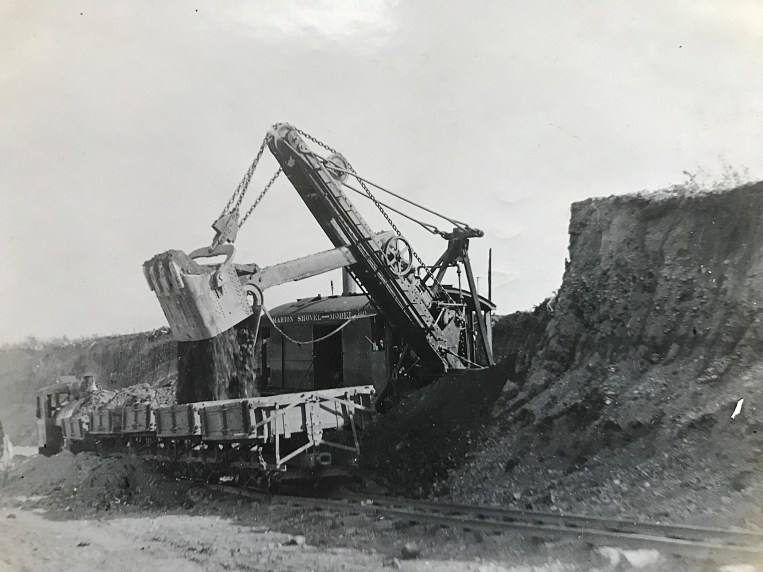
Marion Shovel Model 60 in action cutting a high bank of dirt on Massachusetts Ave. Photo by Lewis Reed, ca.1912

A Bucyrus steam shovel loading dirt onto a railway car. Photo by Lewis Reed, ca. 1912.
A steam shovel is a large steam-powered excavating machine designed for lifting and moving material such as rock and soil. It is the earliest type of power shovel or excavator. Steam shovels played a major role in public works in the 19th and early 20th century.
When digging at a rock face, the operator simultaneously raises and extends the dipper stick to fill the bucket with material. When the bucket is full, the shovel is rotated to load the railway car. Steam shovels usually had a three-man crew: engineer, fireman and ground man.
The track of Massachusetts Avenue was paved in the early 1870s. It was extended beyond Boundary Road (now Florida Avenue) in the 1880s, and beyond Rock Creek up to the District line after 1900. The section between Sheridan Circle and Scott Circle became known as “Millionaires’ Row”.

Hill Grading Massachusetts Avenue, Washington DC. The Washington Monument and many other landmarks can be seen in the background. Photo by Lewis Reed, ca. 1912
The Great Depression forced many to relinquish their homes on Millionaires’ Row. After World War II, Massachusetts Avenue was seen as less fashionable than newer areas such as upper 16th Street. Many residences were sold and demolished to make way for office buildings, particularly around Dupont Circle and to its east. Many others, however, survived as embassies and society houses; the former ‘Millionaires’ Row is today well known as Embassy Row.
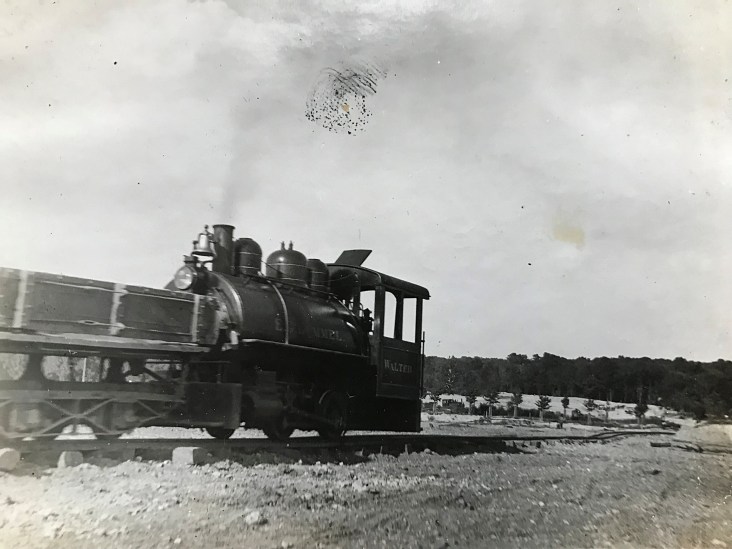
An early steam locomotive is hauling away dirt. Photo by Lewis Reed, ca. 1912
Source: Wikipedia
Then & Now: Library of Congress
You might not realize how much Washington DC has changed until you look back and see what it looked like in the past. In this “Then & Now” feature, I have combined one of Lewis Reed’s original photograph’s for “then” and matched it with a corresponding contemporary shot for “now”.
Library of Congress (THEN): The Library of Congress was relocated to Washington, DC, in 1800, having previously been housed in New York and Philadelphia, which had each served as temporary capitals of the early United States of America. It is the research library serving the U.S. Congress as well as the national library of the United States, and it holds over 23 million volumes in its collection, making it the world’s largest library. The structure as it stands today was erected between 1888 and 1894, following the 1851 fire that destroyed 35,000 of the Library’s books (two-thirds of its holdings at that time), including much of Thomas Jefferson’s donated collection.
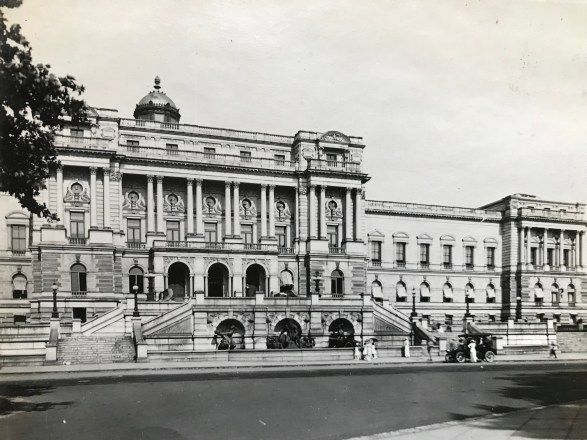
Library of Congress. Photo by Lewis Reed, ca. 1910
Library of Congress (NOW): The same view 108 years later. Now, the Library of Congress is one of the largest and best-equipped libraries in the world. It houses approximately 90 million items on 540 miles of shelves. The Library of Congress is physically housed in three buildings on Capitol Hill and a conservation center in rural Virginia. The Library’s Capitol Hill buildings are all connected by underground passageways, so that a library user need pass through security only once in a single visit.

Library of Congress today
Source: Wikipedia
U.S. Capitol Then & Now… 108 Years of Change
You might not realize how much Washington DC has changed until you look back and see what it looked like in the past. I thought it would be fun to revisit an historic location using one of Lewis Reed’s original photographs for “then” and a stock image from today for “now” to see what differences are visible. In the following photographs, you can see how the United States Capitol looks both the same and completely different from a century ago.
U.S. Capitol (THEN): Seen in the black & white photograph taken by Lewis Reed in 1910, is the United States Capitol in Washington, DC. Visible in both photos is the white marble Peace Monument that stands in the circle to the west of the U.S. Capitol at Pennsylvania Avenue and First Street, NW. A streetcar can also be seen in the black & white photo. The Pennsylvania Ave streetcar line ran from Georgetown, across Pennsylvania Avenue, past the White House, up to Capitol Hill, and then down to the Navy Yard. With no stop signs, speed limits, or lane lines, the streets of the early 1900s were completely different.
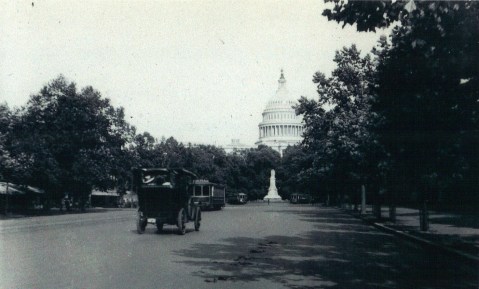
U.S. Capitol as seen from Pennsylvania Ave in 1910. Photo by Lewis Reed
U.S. Capitol (NOW): The same view over a century later hasn’t changed much… except for the traffic and Segway riders with fanny packs.
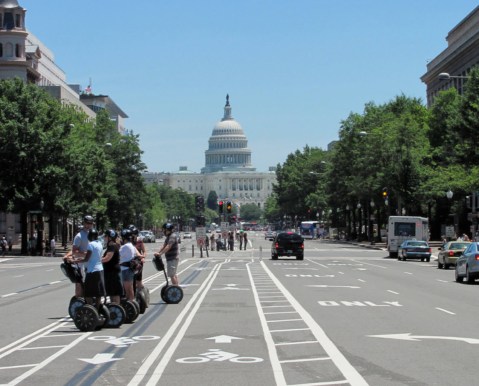
On Pennsylvania Ave and U.S. Capitol building today. A Segway tour is stopped along the bike lanes.
Books

Related Resources


Copyright Notice

Reed Brothers Dodge History (1915-2012) by Jeanne Gartner is licensed under a Creative Commons Attribution-NonCommercial 3.0 Unported License.
 Reed Brothers Dodge History 1915 – 2012
Recent Comments