
Montgomery Magazine Wheels and Deals Feature
 Reed Brothers is very proud and honored to be featured in the month of August/September 2022 Montgomery Magazine, “Then & Now” section. The black and white photograph above shows the expansion of Reed Brothers Dogde showroom and Gulf Gasoline Station that took place in 1941. At about the same time as the gas station was remodeled, Lewis Reed split up the Sales and Parts and Service operations by constructing a complete new building that was located at the intersection of at Montgomery Avenue and Dodge Street.
A closer look at the photo reveals the price of gasoline as 15 cents. On the right attached to a telephone pole is a sign pointing the way to Olney. In addition to the Gulf signage there is a small, barely visible sign below that promotes, “Clean Rest Rooms”.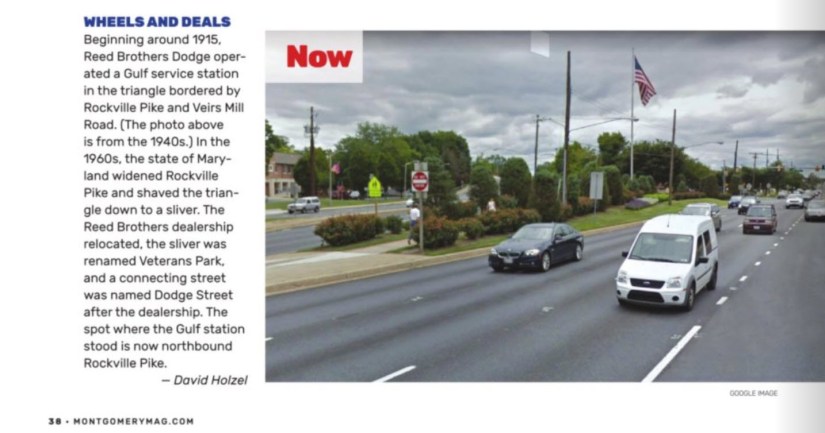
The color photograph above, is the dealership’s location today, now known as Veterans Park. In the 1970s, the site was known as the Francis Scott Key Memorial Park, and later in 1988, it was permanently rededicated as Veterans Park. In the late 1960s, the state of Maryland acquired the land to widen Rt 355 and donated the remaining sliver to the City. The State of Maryland named the connector street behind the dealership’s original location “Dodge Street” following the dealership’s 1941 expansion.
Montgomery Magazine is a lifestyle magazine, with timely articles on county leaders, entertainment, sports, neighborhood and restaurant profiles, entrepreneurs, historic landmarks then and now, plus seasonal special sections of local interest.
Find the issue online at: http://digital.montgomerymag.com/issues/August-2022/index.html
Then & Now: River House Lodge, Rowelsburg, WV
This post is a continuation of a series of “Then & Now” images that will show photographs of buildings, street scenes, and other historical locales from Lewis Reed’s Photo Collection alongside photographs of how they appear today. Taken approximately 100 years apart, these photos show the River House Lodge in Rowelsburg, West Virginia, then and now.
River House Lodge (THEN): This little railroad town of Rowesburg has always had hotels, beginning with the original River House, an early tavern and hotel serving the needs of a growing town in the 1850s. The railroad brought prosperity to Rowlesburg, designed the town and named it. Mr. Rowles was a surveyor with the railroad and laid out the plots and streets for the town.
The house was designed at the turn of the century or just before but the features were unusual. The top part of the house was Edwardian with panels and battens, creating a kind of checkerboard appearance. The lower half of the house was finished with narrow wood siding. The gables were of wood shingles.

River House Lodge located on Main Street in Rowlesburg, West Virginia. Lewis Reed’s circa 1926 Dodge Brothers Sedan is parked in front. Photo by Lewis Reed.
River House Lodge (NOW): Today, the River House has been transformed into a small, boutique lodge tucked away in the mountains of West Virginia. Though razed long ago, the “New” River House now takes its place to welcome guests into a motif of railroading that once dominated the small town of Rowlesburg. B&O artifacts adorn the rooms and hallways. Pictures of the past history of the town take visitors back to a different time, one of railroading in its golden era.
One source says that the original River House was a tavern and railroad lodge operated by A.A. Perry. The lodge was the center of this small settlement, with homes scattered nearby. The building sat next to the railroad, as did most of the early structures in Rowlesburg. Downtown Rowlesburg Historic District was listed on the National Register of Historic Places in 2005.

The River House Lodge today is still very recognizable.
Source: www.riverhouselodge.org
The Legendary Lake House Hotel of Horror, Then & Now
With Halloween just around the corner, I thought it would be fun to feature a photograph that Lewis Reed took of the Saylorsburg Lake House Hotel, now the site of Hotel of Horror. The aging Lake House Hotel in Saylorsburg, Pennsylvania, once a vibrant Poconos retreat, was a popular hotel for the region’s tourists who were looking for fun on nearby Saylors Lake. During the hotel’s heyday, its staff was booking rooms a year in advance. Today, the former hotel’s fame is generated from its annual Halloween haunted-house attraction.
Lake House Hotel (THEN): The legend of the Lake House Hotel spans more than two-hundred years. According to local folklore, during World War II, many of the employees at the Lake House were called to assist in the Pennsylvania National Guard, leaving the local asylum with one lone security guard to watch over the entire building. The inmates escaped, made their way to the hotel and took it over. The insane patients performed experiments on the guests. What was once a renowned resort for the rich and famous, became a torture chamber.
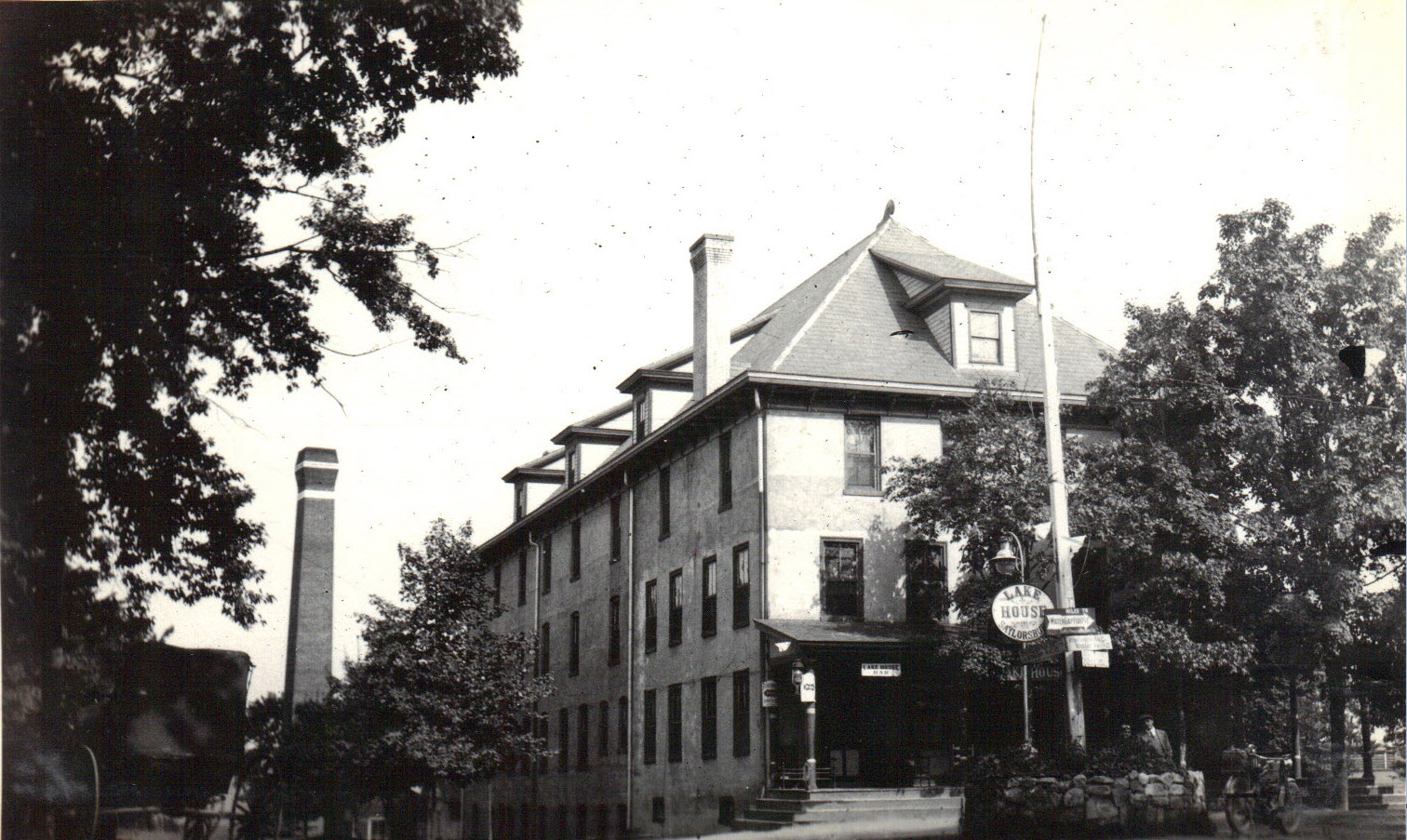
Saylorsburg Lake House Hotel. Photo taken by Lewis Reed, 1915.
Hotel of Horror (NOW): The hotel was purchased in 1990 and turned into an Antique Co-Op, and then in 1992 saw its first haunted house attraction. This 2021 season will celebrate the 29th year that the Hotel of Horror has been fascinating and horrifying legions of fans from the far reaches of the United States and even internationally. To all the readers of this blog: Have a spooky, enjoyable and very safe Halloween!

Welcome to The Hotel of Horror, The Pocono Mountains Premier Haunted House Attraction
Bromo-Seltzer Tower: Then & Now
Baltimore and the surrounding area sure has changed a lot in its centuries-long history. But many traditions and landmarks from decades ago are still around today, give or take a few variations. In this “Then & Now” feature, I have combined one of Lewis Reed’s original photograph’s for “then” and matched it with a corresponding contemporary shot for “now”. In the following photographs, you can see the difference 100 years can make.
So… you’re the inventor of a popular headache remedy living in the city of Baltimore around 1910. You have a factory on Lombard Street, a few blocks from the harbor. You want to create something memorable for the city. Of course, you also want to promote that headache remedy…
What do you do?
If you are Captain Isaac Emerson, inventor of Bromo-Seltzer, you hire a well-known architect and build a massive clock tower next to your factory.
Bromo-Seltzer Tower (THEN): When it was built in 1911, the 15-story Emerson Tower—better known locally as the Bromo-Seltzer Tower—was the tallest building in Baltimore. The tower was inspired by the Palazzo Vecchio in Florence, Italy, and took its name from Captain Isaac Edward Emerson, the inventor of Bromo-Seltzer, a popular cure for headaches and indigestion. Until 1936, the tower was topped by a 51-foot illuminated Bromo-Seltzer bottle that was supposedly visible from twenty miles away.
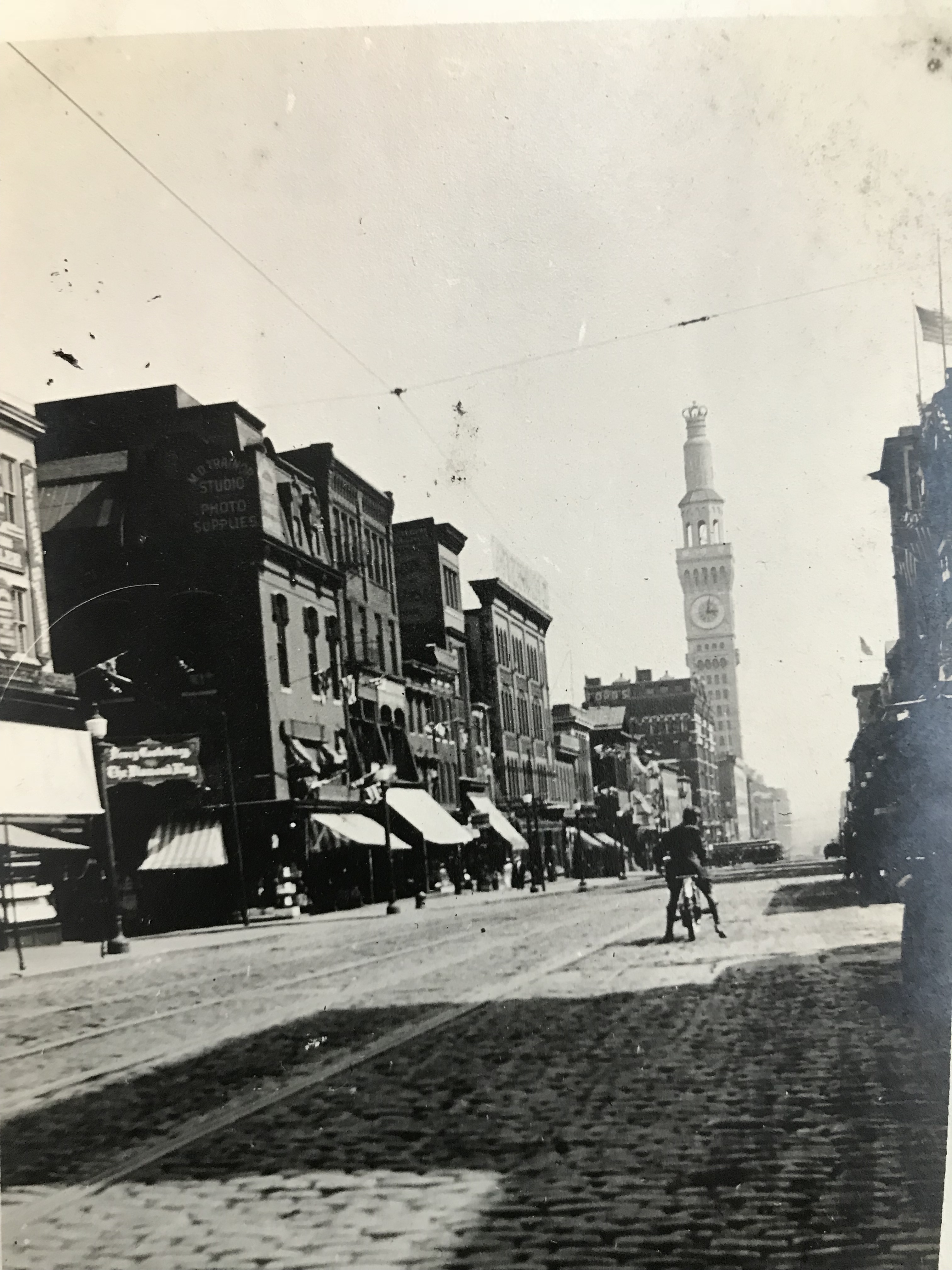
Bromo-Seltzer Tower, Baltimore, Maryland. Photo by Lewis Reed, 1914
Bromo-Seltzer Tower (NOW): The Bromo Seltzer Arts Tower has been transformed into studio spaces for visual and literary artists. Inside the Tower is the Emerson/Maryland Glass Museum which houses the largest collection of Bromo Seltzer and Maryland Glass bottles in existence. The Emerson Bromo-Seltzer Tower was placed on the National Register of Historic Places in 1973.

Bromo Seltzer Arts Tower today
Then & Now: Historic Mathias Point Lighthouse
“Then and Now” photos are an excellent way to explore the passage of time. In this special post, I have combined one of Lewis Reed’s original photograph’s for “then” and matched it with a corresponding contemporary shot for “now”. Taken approximately 50 years apart, these photos show Mathias Point Lighthouse, then and now.
Mathias Point Lighthouse (THEN):
Mathias Point Lighthouse was placed at the edge of a shoal jutting out from a major bend in the Potomac River. This point was considered one of the most dangerous navigation problems on the river. In the summer of 1873, the United States naval steamer Frolic went ashore and remained grounded for over two weeks. It was eventually floated out at a cost of nearly $6,000. After much debate in Congress, $40,000 was finally appropriated in 1874. Originally, a day beacon was approved for Mathias Point and light for Port Tobacco Flats. After a delay of almost two years, the two sites were switched.
Plans were drawn up for Mathias Point and the design was like no other screwpile on the Bay. The design included 3 levels, unlike the other 2-level cottages on the Bay. It had a large second floor and smaller third floor which resulted in a “wedding cake” profile. It also had an unusual amount of ornate detailed woodwork. The pilings were angled inward to the base of the lighthouse, which was also different from other screwpile designs. The house was white with a brown roof and green shutters. Construction started in September 1876 and commissioned December 20, 1876.
The light was automated in 1951 and was monitored by the keeper of Maryland Point Light. In 1961 the light was decommissioned the beautiful lighthouse at Mathias Point was dismantled.

Mathias Point Light, Potomac River, near the Port Tobacco River, Maryland. Photo by Lewis Reed, 1915.
Mathias Point Lighthouse (NOW): The current light is a steel tower on the original screwpile supports and displays a 44-foot high, 6 second flashing green light. The current light can be viewed from the Mt. Bethel Recreation Center at Mathias Point in Virginia. As of 2020, it is still an active aid to navigation.
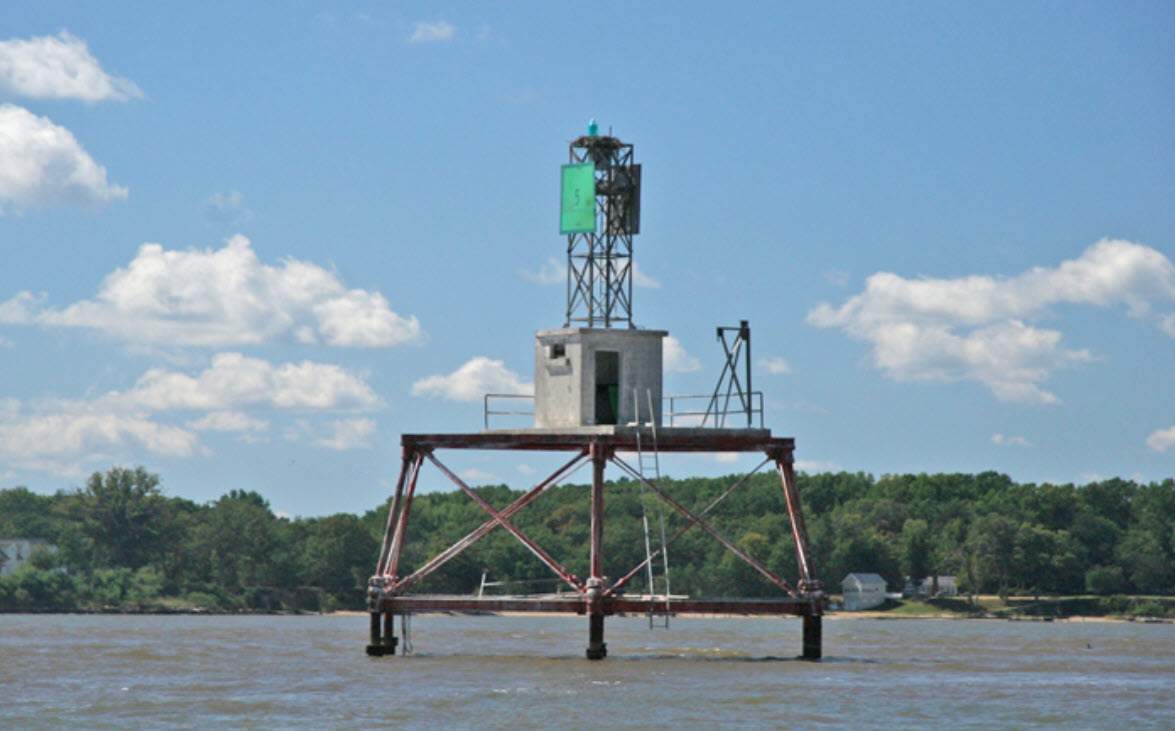
Mathias Point Light in the Potomac River in Maryland is no longer standing, now a beacon.
Books

Related Resources


Copyright Notice

Reed Brothers Dodge History (1915-2012) by Jeanne Gartner is licensed under a Creative Commons Attribution-NonCommercial 3.0 Unported License.
 Reed Brothers Dodge History 1915 – 2012
Recent Comments