
Then & Now: The Original 1917 Rockville Garage
Reed Brothers Dodge and the surrounding area sure has changed a lot in its almost century-long history. You might not realize how much things have changed until you look back and see what it looked like in the past. For this post, I have used one of Lewis Reed’s original photographs for “then” and a Google Maps street view image from today for “now”.

1917 view of the original Rockville Garage two-story addition. Until 1920, Dodge sported a set of six hexagonal windows in the back of each passenger cabin on their Touring and Roaster models. These were called cathedral lights and became the first trademark feature to make Dodge vehicles stand out from the rest. Parked in front is an early Dodge car with the exclusive Dodge Brothers cathedral-style rear curtain windows.
NOW: The color photograph below, is the dealership’s location today, now known as Veterans Park. In the 1970s the site was known as the Francis Scott Key Memorial Park, and later in 1988, it was permanently rededicated as Veterans Park. In the late 1960s, the state of Maryland acquired the land to widen 355 and donated the remaining sliver to the City. The connector street behind the dealership’s original location was named “Dodge Street” by the State of Maryland following the dealership’s 1941 expansion. Dodge Street today is one of the shortest roads in the State of Maryland, running between the Rockville Pike (at Richard Montgomery High School) and Veirs Mill Road, a distance of only 250 feet.

Rockville Garage (Reed Brothers Dodge) original location at the triangle today. Google Image Capture, 2021
13 Years, 488 Posts & Thank You
 This month marks the 13-year anniversary of this blog. It’s been an honor to share the history of Reed Brothers Dodge – whether you’ve read our blog, followed us on “X” (Twitter), or “liked” us on Facebook. I would like to thank all of you who have visited, followed, shared, or commented on this blog, and many others, for their kind words and the visibility they have provided.
Here’s a look back at the last year.
What People are Saying Around Facebook:
“Amazing blog and postings. I spent sometime reviewing your site and found it both fascinating and interesting.”
“I am thankful for the documentation this site provides with images of a beloved hometown that can no longer be seen.”
“Love seeing the old photos.”
“This is soooo cool! Someone needs to do one of those historical books of Historical Rockville photos!”
“These photos are absolutely awesome!!!”
“Thank you so much for sharing! This is classic Montgomery County info.”
“That was so cool reading all your memory posts. Best thing I’ve read on FB in a while.”
“I love seeing these old photos and reading the history. Thank you.”
“Thank you for this history. There is so much we take for granted.”
“Great historical photos from Reed Bros.”
Past Lectures:
History Conversations: The History of Reed Brothers Dodge
with Jeanne Gartner September 24, 2024 at 3:00 p.m. | Virtual Event |
The presentation features a unique collection of rare photographs taken by the dealership’s founder, Lewis Reed, and highlights how Reed Brothers Dodge came into being, and how the company overcame the inevitable changes and challenges throughout almost a century of being in business.
 The email below was forwarded to me from Montgomery History who sponsored my virtual presentation on The History of Reed Brothers Dodge.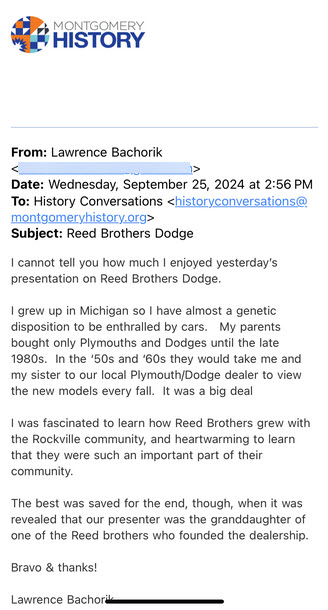
First Baptist Church of Rockville Senior Group Talk
Thursday, October 10, 2024 at 12:00 p.m. | On Location |
Presentation on the history of Reed Brothers Dodge as part of Montgomery History’s Speakers Bureau at the First Baptist Church of Rockville. A personal history for me, as well as community history for Montgomery County and the city of Rockville. Thanks to Ministry Assistant, Melanie Blankenship who invited me to speak.

New Online Exhibit: Reed Brothers Dodge: Montgomery County’s Oldest Dodge Dealership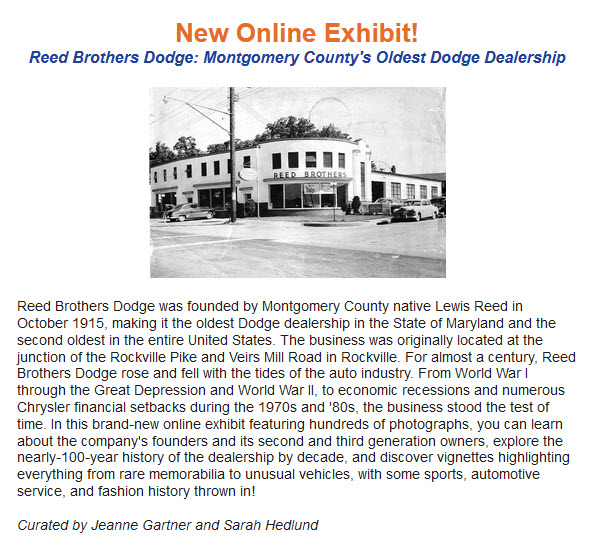 I appreciate all of you for your continued support and making Reed Brothers Dodge History one of the places you visit during the course of your day.

Demolition of Original Rockville Garage Buildings (1971)
When the state widened the roads in 1970, Reed Brothers Dodge relocated its business to a brand new service complex at 15955 Rockville Pike, several miles north of its old location across from King Farm. The buildings on the Dodge Street site were all demolished to allow for re-routing of the Veirs Mill Road and Rockville Pike intersection.
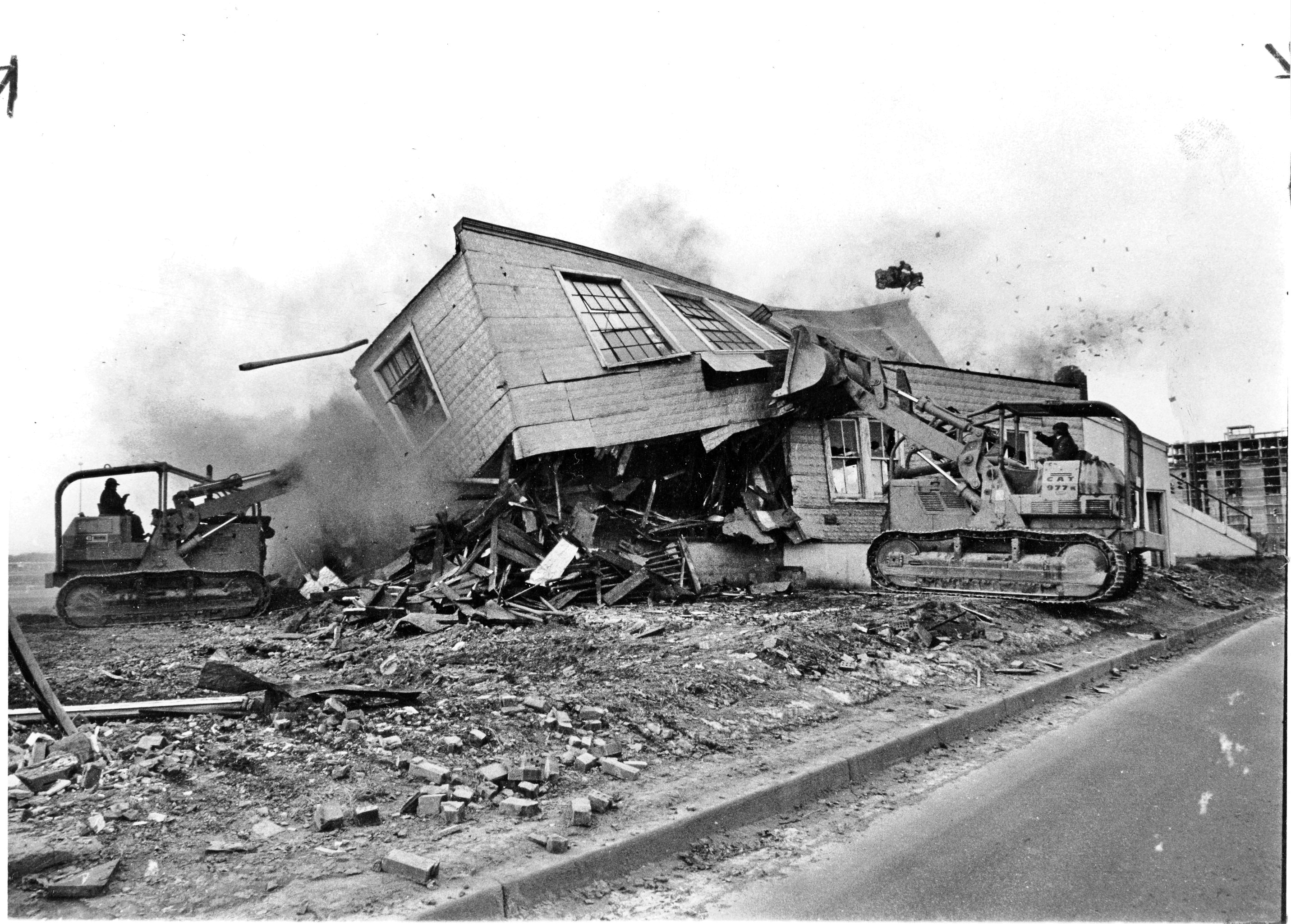
February, 1971: demolition of the original Rockville Garage buildings, which had stood on the Veirs Mill/Rockville Pike location for more than fifty years. (Montgomery History, Sentinel Photo Morgue)
Top photo from Montgomery History’s Sentinel Photo Morgue: Taken from Veirs Mill Road, the photo shows demolition of the original Rockville Garage buildings, which stood at the triangle site for more than 50 years.
Note: I think the picture captured the moment the bulldozer pushed the second story of the flat-roofed Body Shop OFF of the first, hence all the dust and debris flying in the air! Zoomed in, you can just see the edge of the old concrete ramp on the right side which led up to the Body Shop, as well as a partially completed building in the background, which I believe is the Americana Centre that opened in 1972.
Bottom photo: aerial view of the empty lot taken in 1971 after the business had been relocated and the buildings had been razed.
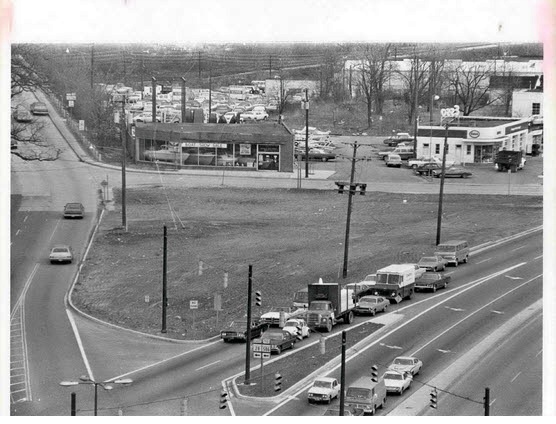
This photo of the Reed Brothers Dodge site was taken later in 1971, after the business had been relocated to 15955 Frederick Road and the buildings had been razed. (Montgomery History, photo by Bob Pusey)
Montgomery History Online Exhibit: Reed Brothers Dodge

Opened September 24, 2024
Curated by Jeanne Gartner and Sarah Hedlund
Montgomery History has unveiled a new online exhibition titled “Reed Brothers Dodge – Montgomery County’s Oldest Dodge Dealership.” Officially launched on September 24, 2024, the exhibition was co-curated by Jeanne Gartner, author of the Reed Brothers Dodge History blog and co-owner of the former dealership, in collaboration with Sarah Hedlund, Montgomery History’s Librarian and Archivist.
This digital exhibition presents a comprehensive narrative of Reed Brothers Dodge, tracing its evolution from its founding in the early twentieth century through its decades of service to the Montgomery County community. Organized into distinct historical periods, the exhibition highlights rare artifacts, photographs, and memorabilia; offering insights into not only the dealership’s operations but also broader cultural contexts such as automotive service, local sports, and mid-century fashion. The full exhibition is available online at https://sites.google.com/view/reedbrothersdodge/home
Jeanne Gartner, granddaughter of Lewis Reed, founder of Reed Brothers Dodge, serves as the curator and historian behind the Reed Brothers Dodge History blog. Honored with the 2016 Arthur M. Wagman Award for Historic Preservation Communication from Peerless Rockville, the blog functions as a living digital archive that preserves the dealership’s enduring legacy and its integral role in Montgomery County’s development. Since its debut in April 2012, the site has garnered more than half a million views, documenting over a century of the family business’s history, community engagement, and contributions to the American automobile industry. Drawing from Lewis Reed’s extensive photographic collection and business records, Gartner’s work offers a richly detailed portrait of local enterprise, early transportation, and the entrepreneurial spirit that helped shape both the region and the broader American story.
Remember the Rockville VFD Carnival?
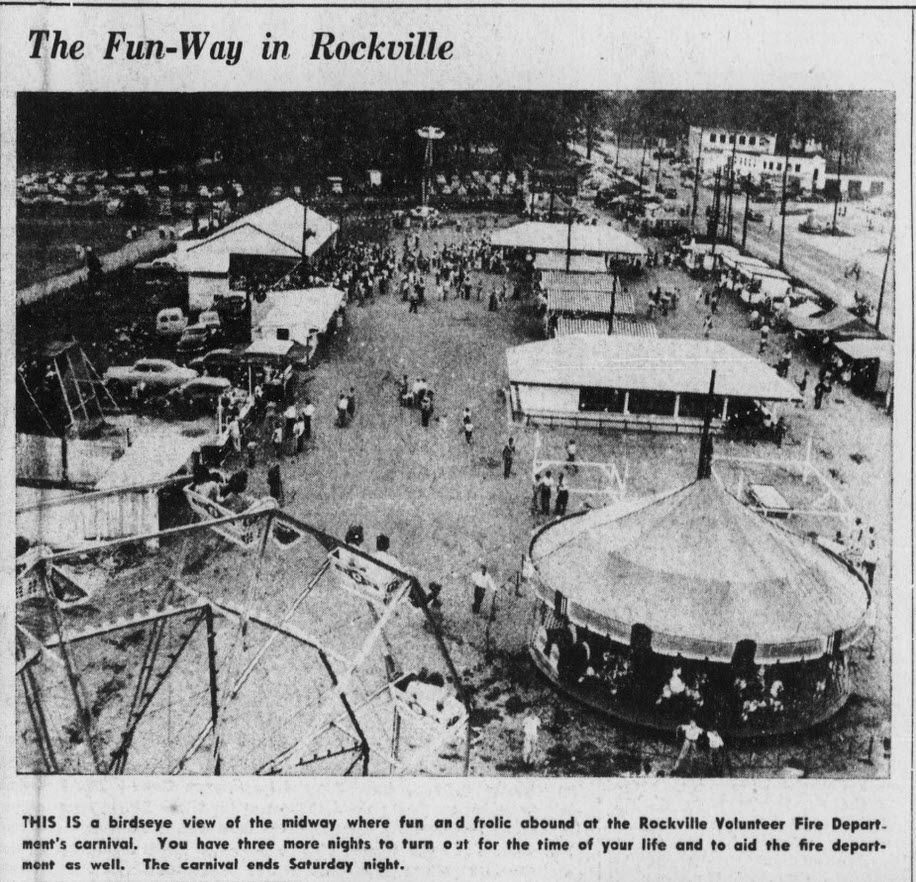
Reed Brothers Dodge can be seen across the Pike in the top right corner.
On this date 92 years ago the Rockville Volunteer Fire Department held its first annual carnival. The article above from the August 20, 1953 edition of the Montgomery County Sentinel is a birds-eye view of the carnival midway. From what I have been able to piece together from newspaper archives, the carnival began in 1932 and closed sometime in the early 1970s.
From The Daily News, Frederick Maryland, August 10, 1932:
At a special meeting of the department August 5 it was unanimously voted that a carnival should be held on the Fairgrounds from September 3 to 10, inclusive. The first event will be a fireman’s parade and hook-up contests with three cups being offered as prizes. Other items of interest will be the baby show, the old-fashioned square dance, and the public wedding. An automobile and fifteen cash prizes are to be given away during the carnival.
The Carnival Parade
The carnival parade always kicked off the celebrations and were held on the first day, with the intent of drawing the spectators to the carnival grounds. There were always a few high school bands in the lineup, and most of the floats were simple, many being your average flatbed farm wagons decorated with yards of colored crepe paper and sponsored by a local business. Following the procession, teams of 10 men each, engaged in a tug-of-war contests in front of the dancing pavilion at the fair ground.
The June 1960 Rockville Sanborn map below shows the location of the Rockville Fire Department Carnival Grounds. From what I have been able to piece together from newspaper archives, the carnival began in 1932 and closed sometime in the early 1970s. The carnival office and administrative building used to be the one-room doctor’s office built for and used by Dr. Edward E. Stonestreet from 1852 to 1903. It was donated to the Montgomery County Historical Society and moved to the complex in 1972.
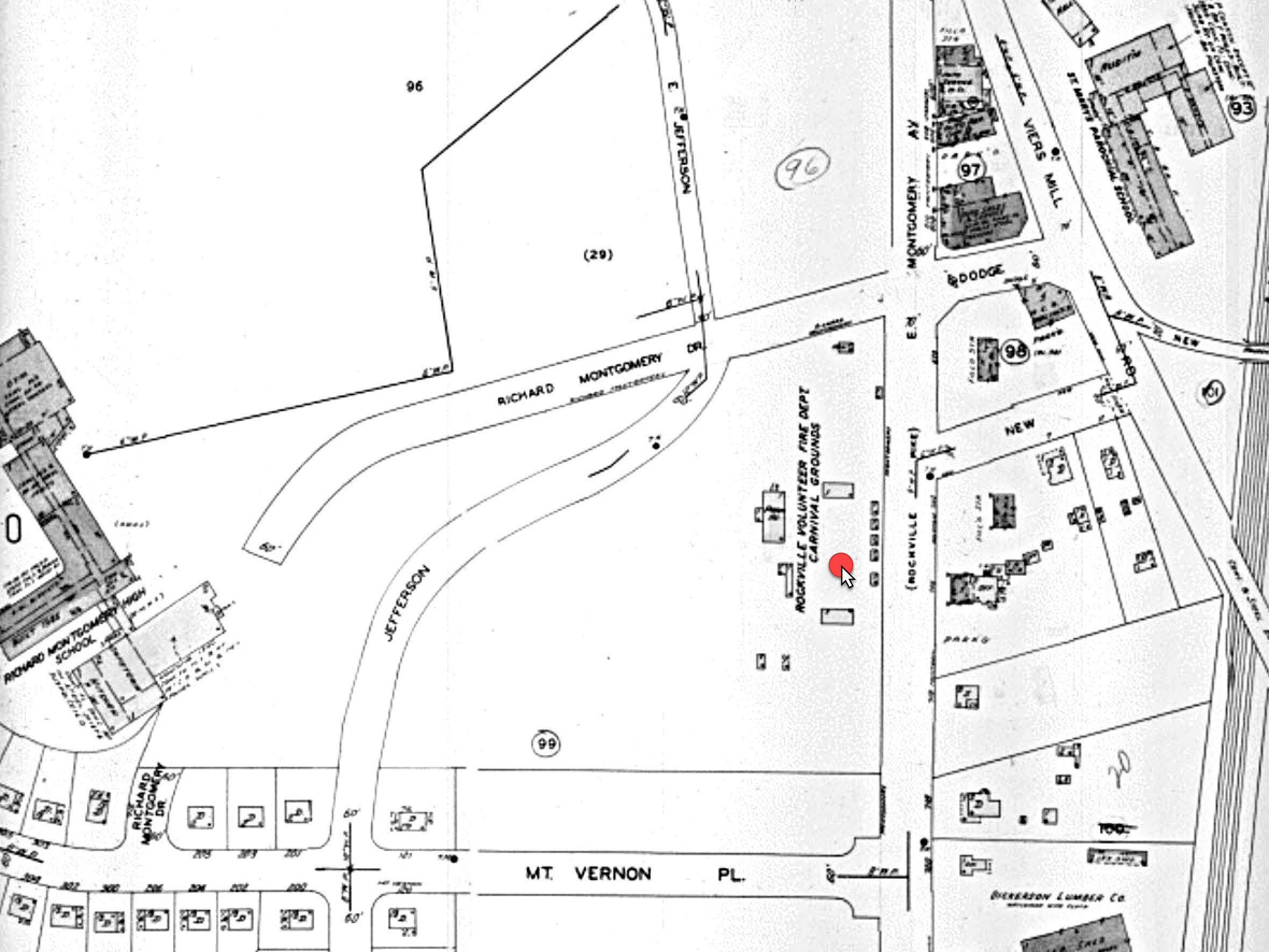
Rockville Fire Department Carnival Grounds location, circa 1960. Courtesy of the Library of Congress digital collection of Sanborn maps.
All of the buildings, including flood lights, fencing and metal frames for carnival stands, on the 10-acre site on the Rockville Pike were permanent fixtures all year long and remained unused until the carnival. In 1947, a 70-foot dance pavilion with detachable side walls was built by labor and materials donated by members of the department and Rockville citizens. Over the years, department members built the 12 red and white wooden buildings on the grounds.

View of the Rockville Volunteer Fire Department Carnival buildings across from Beall’s Esso on Rockville Pike, circa 1960s. Photo credit: RVFD Photo Archives.
The Rockville Fire Department held its annual carnival during the month of August. The eight-night carnival was the staple of the organization’s fundraising for several decades. Locals came to the carnival every year to enjoy the rides, win raffle prizes, listen to the live music every night and most importantly, to eat the food. It was the perfect place to catch up with friends, ride a few rides and maybe win a gold fish that might actually remain alive by the time you got home.
Valuable prizes given away nightly. Prizes by General Electric:
- 4-Speed Record Player
- Vacuum Cleaner
- Portable Transistor Radio
- Roll Around Fans
- Toaster Ovens
All prizes — including the automobiles, and the items like vacuum cleaners and record players as grounds prizes — were bought by the Department. Nothing was donated except the time and work of the volunteers.
Not One, Not Two, but Three…
It is exciting to note that for many years, a car was the grand prize given away at the carnival. Three spanking new automobiles were awarded to lucky ticket holders.

Automobiles were given away as Grand Awards. Photo credit: RVFD Photo Archives.
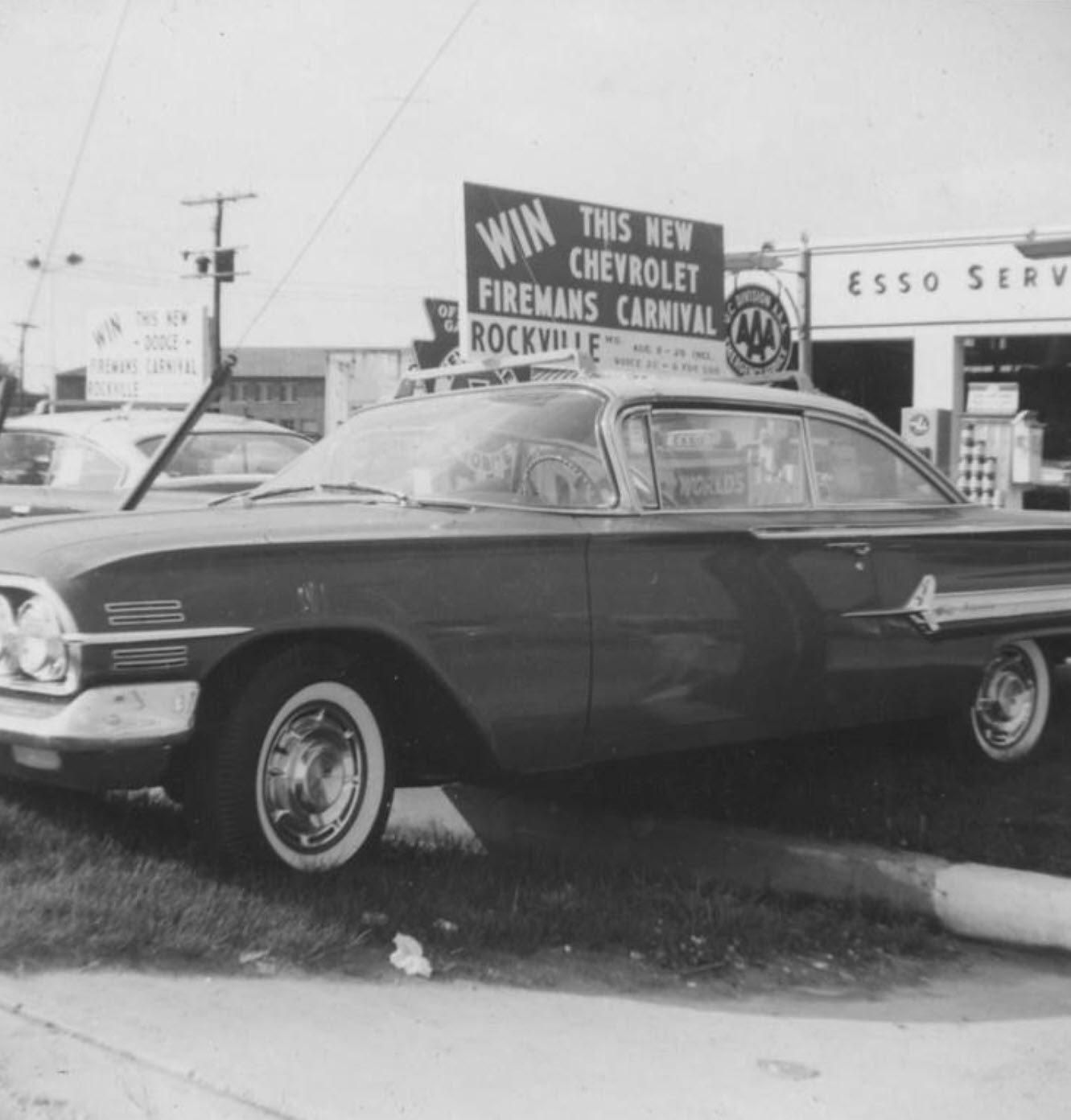
Win this new Chevrolet! Photo credit: RVFD Photo Archives.

Win this new Ford! Photo credit: RVFD Photo Archives.
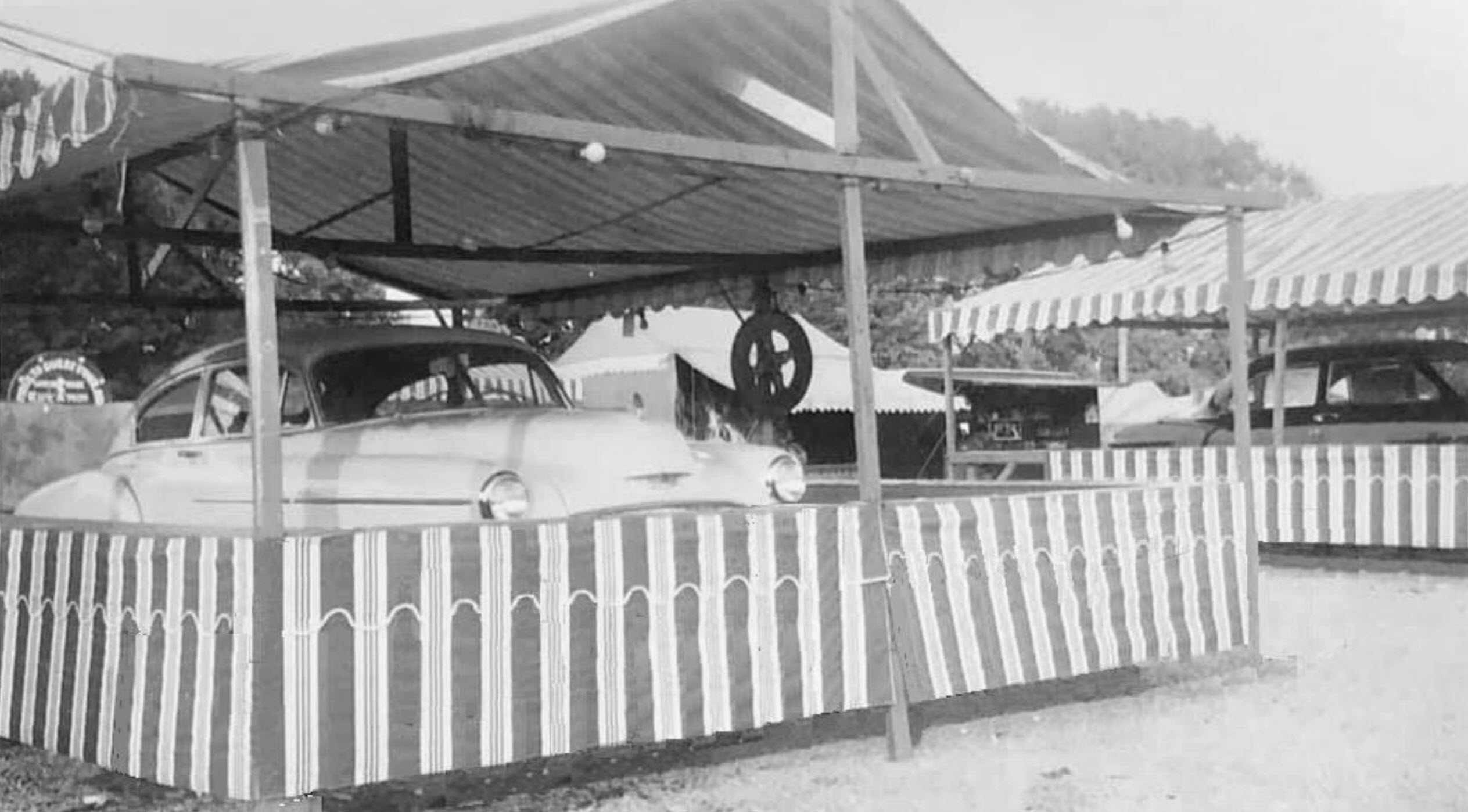
Car tent, ca. 1950
Beauty Contest, Wedding to Highlight Carnival
A public wedding and a bathing beauty contest for “Miss Rockville” highlighted the eight-night carnival on August 12, 1949. The contest winner receives $75 and have the honor of representing the firemen in a September contest at Sandy Spring for the title of “Miss Montgomery County Fireman of 1949.”

The Evening Star, August 17, 1949
From The Evening Star, August 17, 1949:
Rockville’s Volunteer firemen are beginning to believe in sawdust wedding aisles as lucky omens.
All 17 couples who in as many years have been married in public at the Rockville fireman’s carnival have lived happily ever after – at least without a divorce.
And the firemen are counting on this year’s couple, Arthur Fleming, 21, Rockville Post Office employee, and his 18 year old bride, Dorothy Lucille Campbell Fleming of Gaithersburg to maintain that record. The two were married last night at the carnival, and like their predecessors, they spoke their vows over a loud speaker in view of a merry-go-round and walked down a sawdust aisle edged with 5,000 onlookers.
Chief W. Valentine Wilson originated the public wedding at the Rockville Carnival back in 1932. The firemen provided a $500 set of furniture, the wedding license, ring, minister, bridal gown, bridegroom’s and ushers’ white tie and tails and flowers.
Some of the town folk weren’t too much in favor of the idea and almost talked a town minister out of performing the ceremony. Later they found out the ceremonies are all very solemn affairs with no frivolity and bystanders even whimpered. For the 17 weddings, State Fireman’s Association Chaplain James C. Minter has conducted the ceremonies. Most of the nuptials ran smoothly, but the Chief remembered one that edged on the border line. That was the time a bridegroom, kneeling at the altar with his bride, whispered, “I can’t get up.”
As to why the marriages have been such successes, Fire Department General Counsel David E. Betts, thinks he has the answer: “If they love each other enough to be married at a carnival public wedding under the populace’s eyes, they’ve got enough love to hold them together for life.”
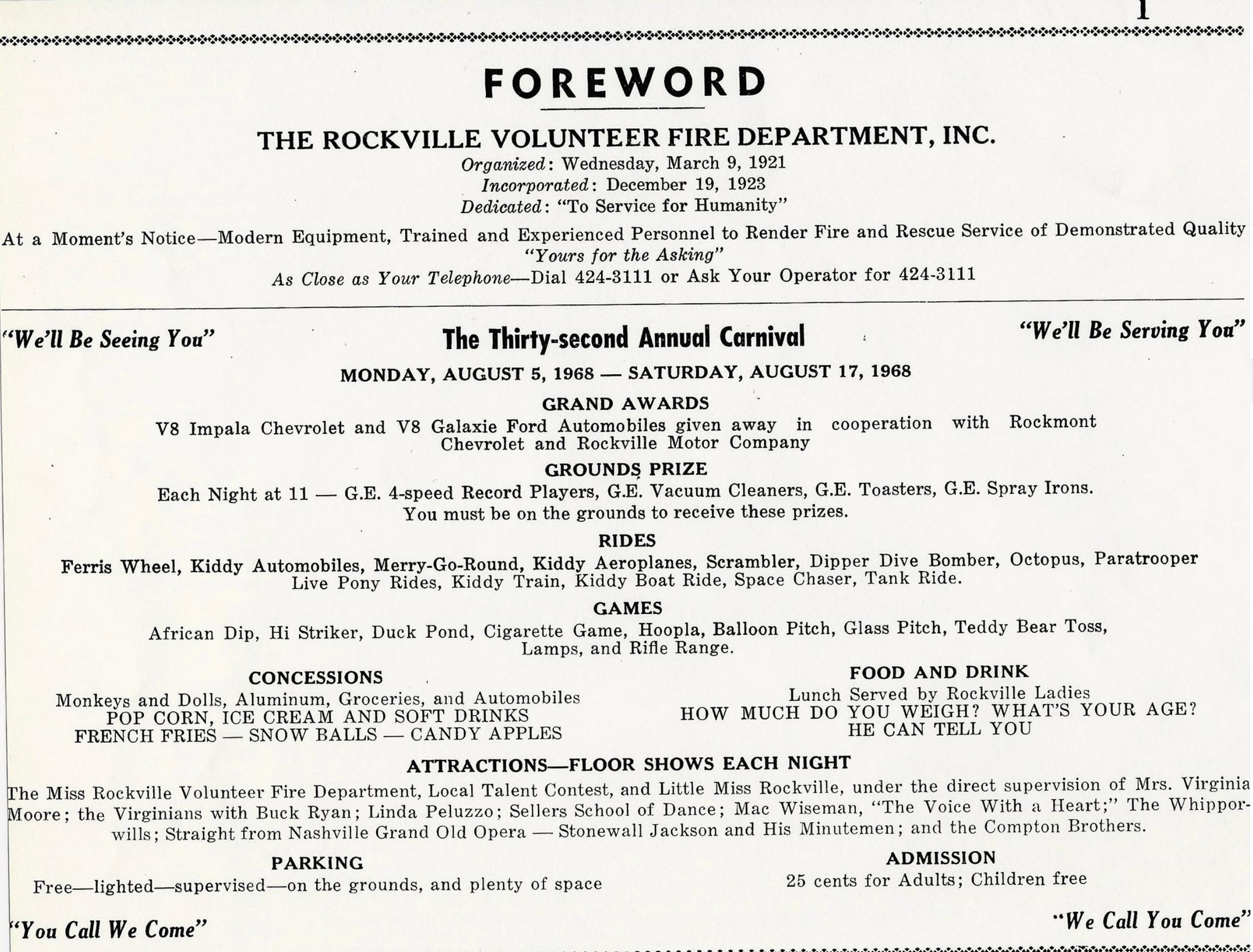
1968 Carnival Program
The Music
Music has been a big part of the carnival over the years too, as big-name country acts performed at the fairgrounds. There were floor shows each night featuring artists such as Conway Twitty & the Twittybirds, Loretta Lynn, Buck Owens, Jimmy Dean, Patsy Cline, the Osborne Brothers, and many others.
Nightly entertainment featured attractions such as a trapeze artist, hillbilly comedy, Punch and Judy show, old fashioned hoedowns, the Jamboree Boys of television fame, a western rope spinning and whip act, thrilling acrobatic on the slack wire, comedy juggling act by Billy Dale, the Ringling Brothers circus clown, and the Blue Mountain Boys. And nightly dancing in the Pavilion to the music of Sid Graham’s “Five Tones.”
Also appearing were the Shirleyettes with Linda Rita Peluzo, a versatile young lady who danced, sang, and played the accordion. The Eng Sisters, a Chinese trio, entertained with modern song. Carol Bo Barnstead, a flaming baton twirler, appeared with the young Jean Kruppa and Bert Bottamilla on drums.
From The News, Frederick MD 07 August 1965:
Local talent such as the Rockville Municipal Band under the direction of Frank Troy, the Tune Twisters with the Darnell Sisters, and Johnny Glaze and the Night Hawks will round out the entertainment for the two week period. Proceeds from the carnival will go toward payment of a $15,000 Miller-Meteor Cadillac ambulance and a $62,000 Peter Pirsch, 100 foot aerial ladder which were put into service to meet the demands of a growing community.

1961 Cadillac Ambulance by Miller-Meteor. Photo credit: RVFD Photo Archives.
The Games
“Dime to play, dime to win, come on in!” The games – The Duck Pond, simply pick up a floating rubber duck out of the water, turn it over to see your prize. Dunk Tank, Rifle Range, Hoop-la (throw hoops around pegs), Balloon Pitch, Teddy Bear Toss (get ring completely around bear stand for 1st prize), Guess Your Age, Cigarette Wheel (spin the wheel and win unfiltered cigarettes)… Lucky Strikes, Camels, and other horrible brands. Lamps (ring toss over miniature lamps was a lot harder than it looked). Panda Bear Stand, ring a coke bottle to win one. Test your strength on the “High Striker” (driving a puck up a tower with a hammer to ring the bell). Rifle Range, 25 cents for shots with a carnival rifle at rotating ducks you just fired away for prizes. And for those a bit older, the favorite game was Bingo.
The closest thing to “big” trouble the carnival ever had was the escape of a mouse from the “guess-which-hole” mouse game. A stand that year featured a game in which a live mouse was put on a board with several numbered holes. Players bet on which hole the mouse would choose. When the mouse was put on the board, it got scared and ran away! It was the only mouse, so two firemen had to chase it all over the grounds to catch it. The game was discontinued after that incident.
In 1935, county residents, in a special referendum, gave the Fire Department and other non-profit community and church groups the right to hold raffles and bingo games.
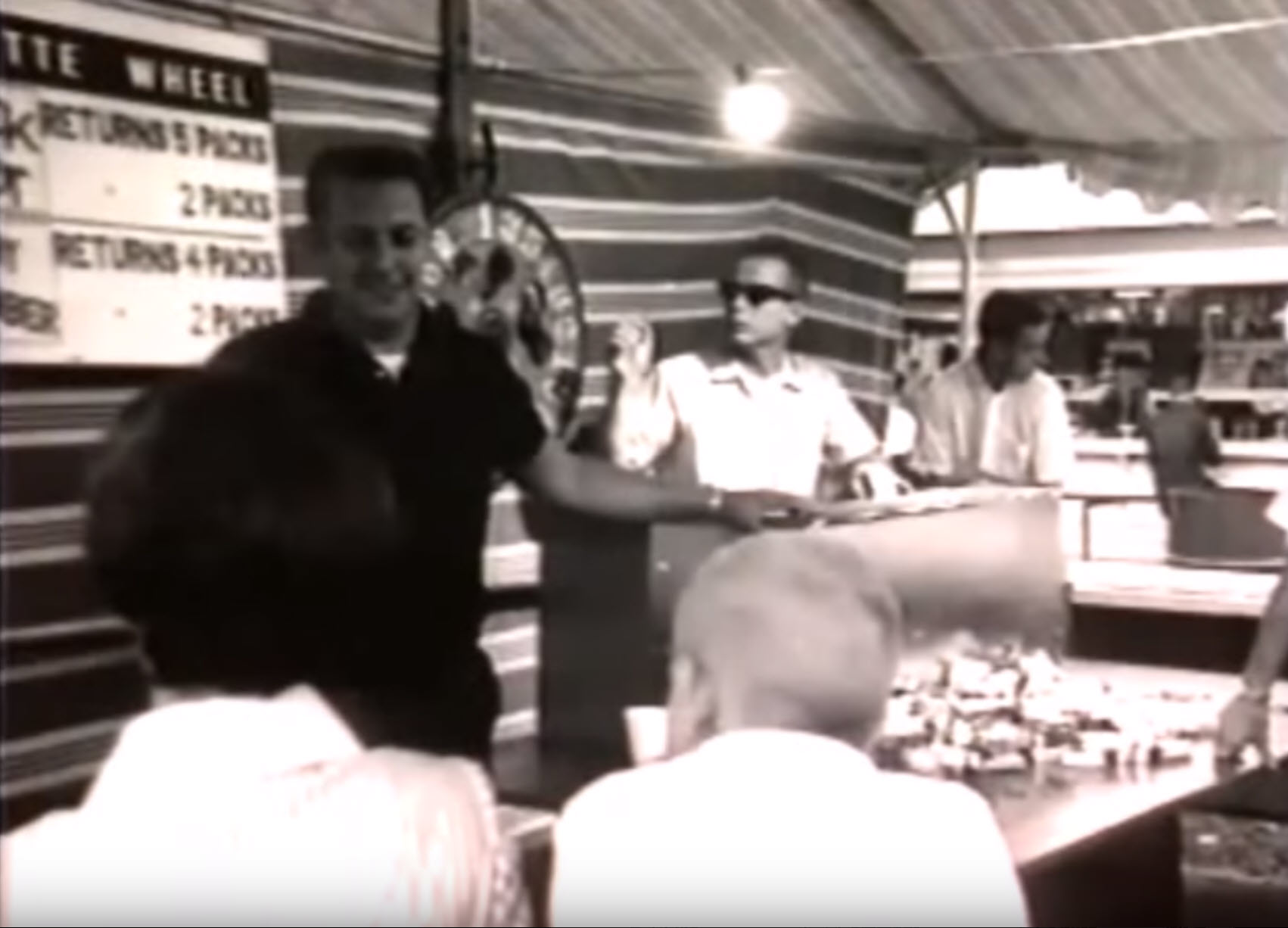
Cigarette wheel at RVFD Carnival. Photo credit: RVFD Photo Archives.

Lucky Number Ball Game at RVFD Carnival. Photo credit: RVFD Photo Archives.

Calling Bingo at RVFD Carnival, August 1961. Photo credit: RVFD Photo Archives.
The Rides
The heart of the historic fireman’s carnival was the rides – Ferris Wheel, Kiddy Automobiles, Merry-Go-Round, Kiddy Aeroplanes, Scrambler, Loop-O-Plane, Round Up, Dipper Dive Bomber, Octopus, Paratrooper, Live Pony Rides, Kiddy Train, Kiddy Boat Ride, Space Chaser and Tank Ride. The rides were operated by a commercial firm. Everything else was staged or staffed by the volunteer firemen and their families, plus friends of the department who donated their time. For parents, a lot of enjoyment came from seeing their kids having such a good time. Below are a few samples (only) of the rides that were featured at the carnival.
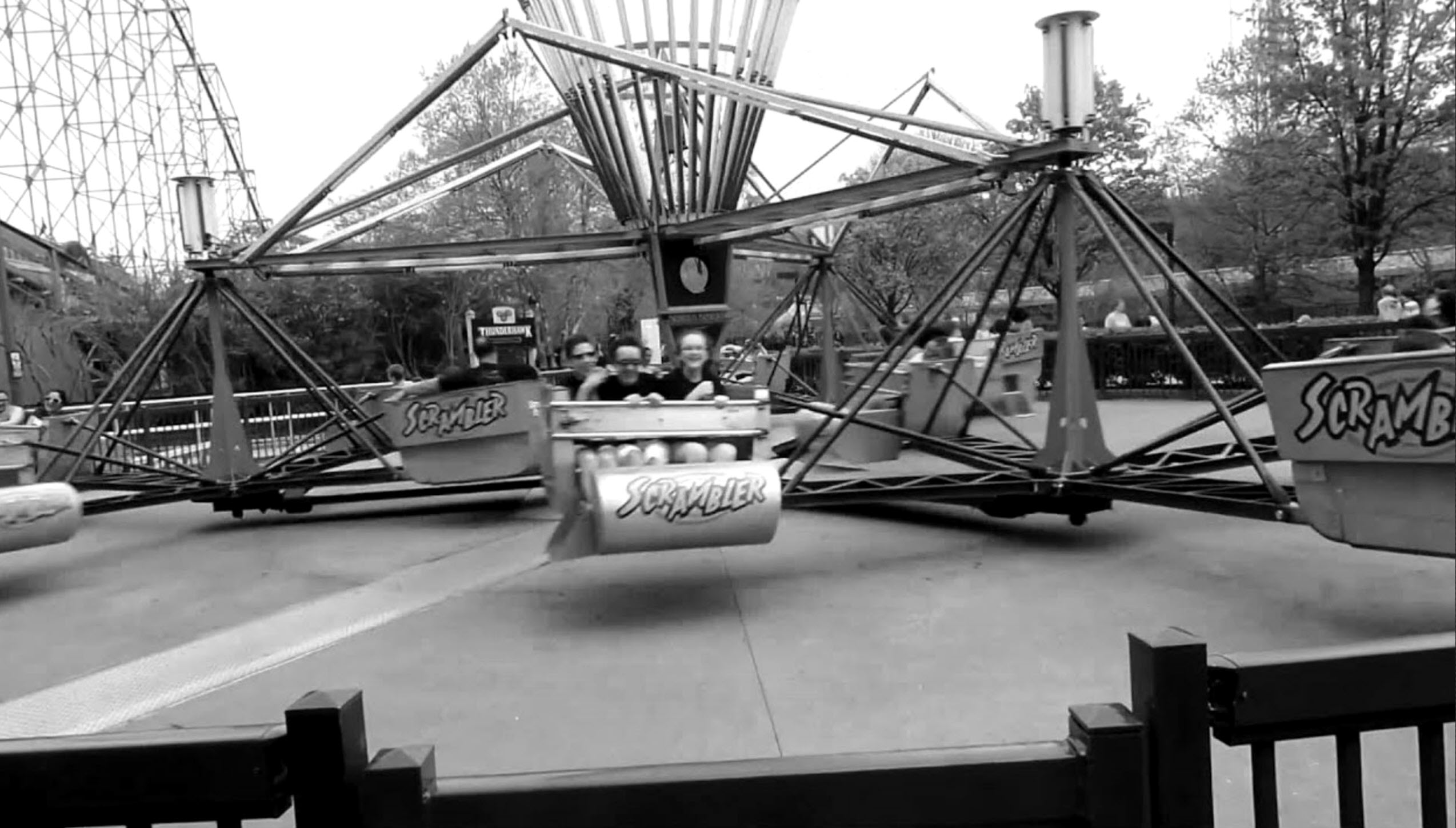
The Scrambler
This ride is fast — really fast. Proving that rides don’t have to go high to make you question all of your choices, The Scrambler is something you shouldn’t ride if you’ve eaten within your current lifetime. Picture this: the ride has three arms. On the ends of each of those arms are clusters of individual cars, each on a smaller arm of its own. When the Scrambler starts, the main arm and the little arms all rotate. The outermost arms are slowed and the inner arms are accelerated, creating an illusion of frighteningly close collisions between the cars and passengers. The Scrambler proves that you don’t have to go on a roller coaster to lose your lunch or have the wits scared out of you.

The Octopus
One of the most entertaining rides that you can go on at any carnival is called The Octopus. The arms go up and down multiple times during the ride, but it is the spinning action of the ride itself which causes the carts to automatically spin, making this one of the most fun rides ever created.

Paratrooper
The Paratrooper, also known as the Parachute Ride or Umbrella Ride is a type of carnival ride where the seats are suspended below a wheel which rotates at an angle. The seats are free to rock sideways and swing out as the wheel rotates.

Tilt-a-Whirl
The Tilt-a-Whirl ride wildly spins in countless directions at variable speeds. Calculated chaos ensued. Those who look a little green or lose their lunch of hot dogs, cotton candy, and soda pop are probably just coming off a Tilt-a-Whirl.
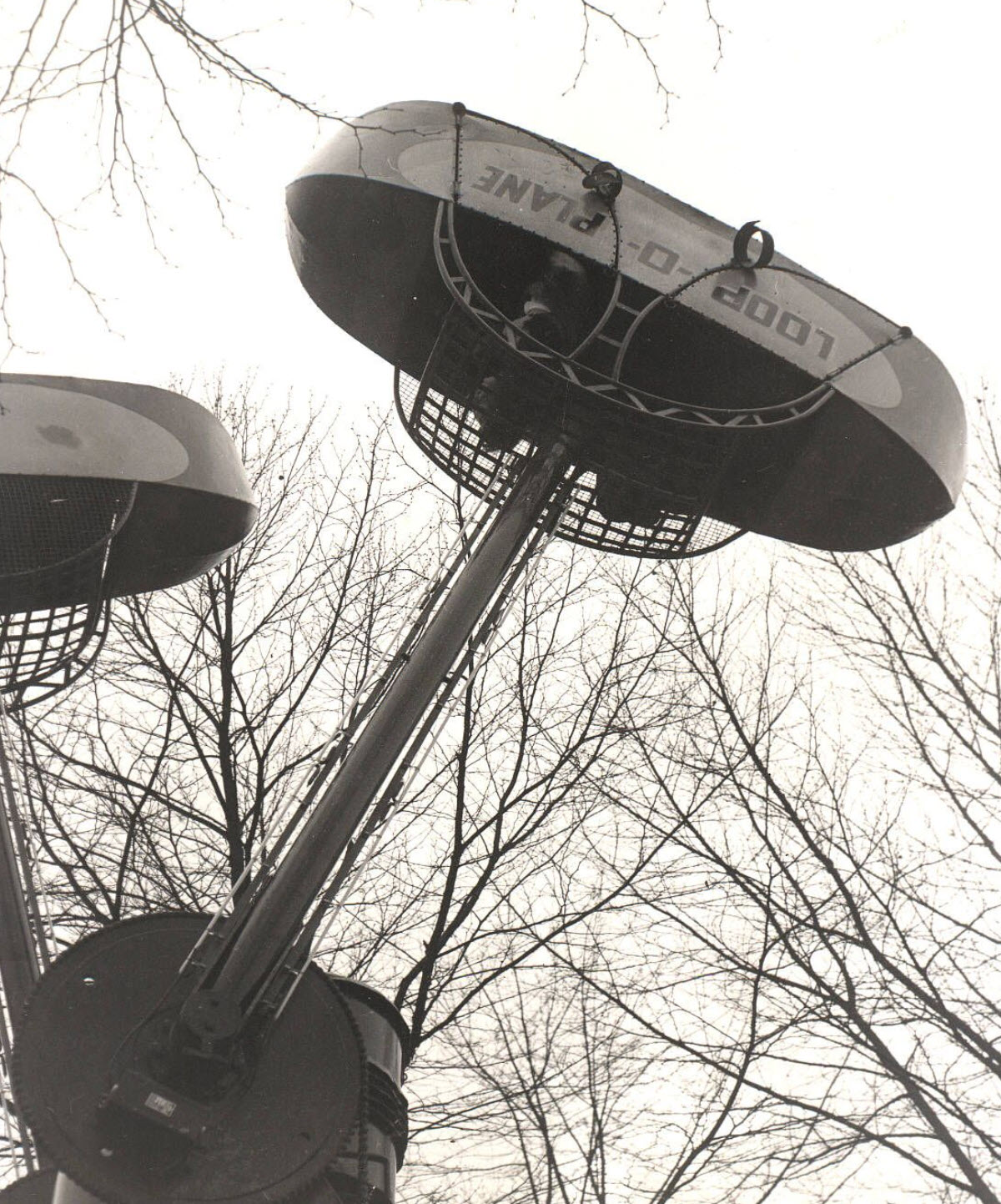
Loop-O-Plane
The Loop-O-Plane is just what it sounds like: Mechanical arms take riders, over and over, in a stomach flip-flopping, upside-down-turning loop.
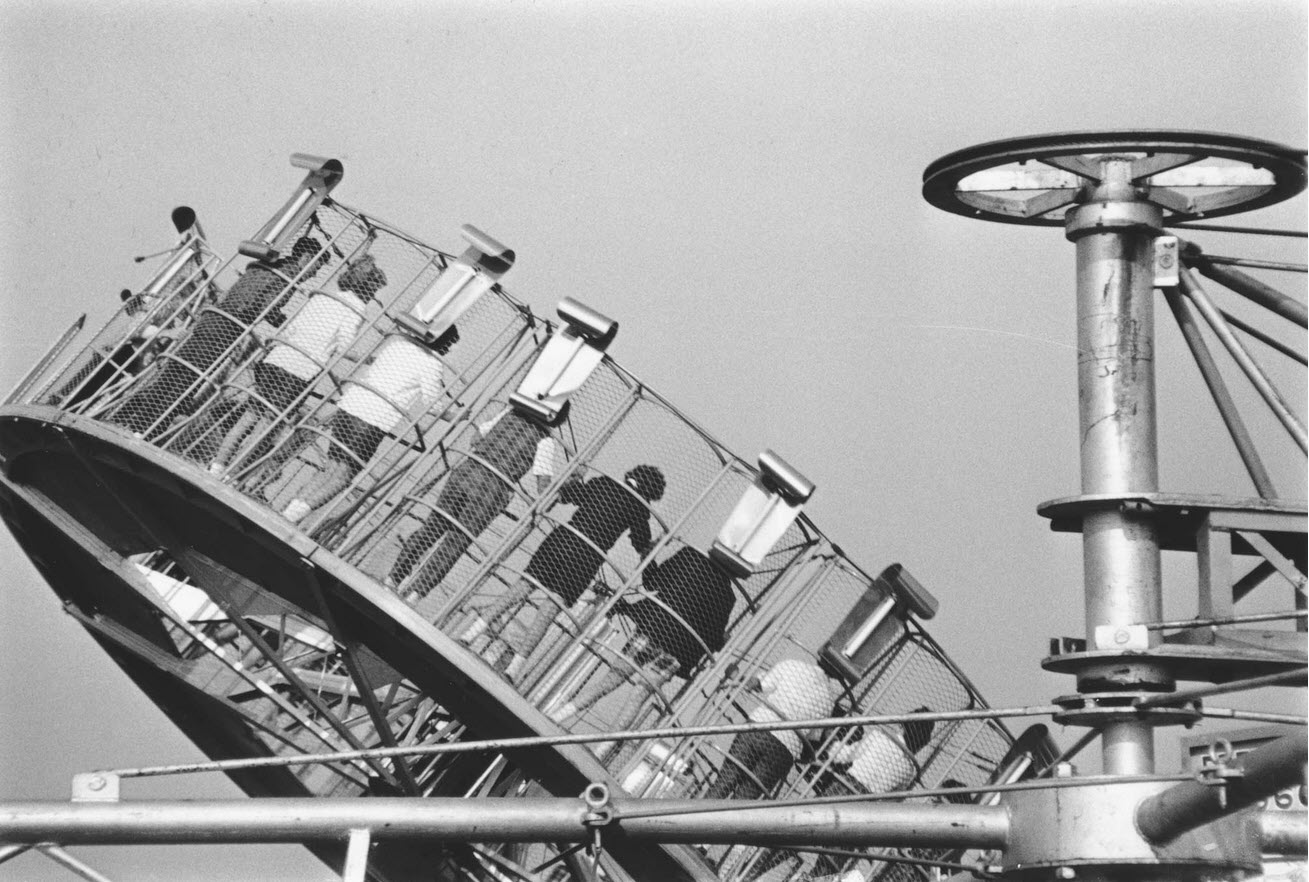
The Round Up
The Round Up has been a popular ride on the American carnival midway since the 1950s. Riders stand against the wall and as the barrel begins to spin, they are stuck to the wall. The barrel soon raises in the air at a 70 degree angle.
The Food
Did I mention the food? Carnivals are a feast for the senses. The smells of food floods the air with the toasty, oily, salty smell of french fried potatoes mingled with scents of buttered popcorn, spicy pizza, burgers, hot dogs, and other tasty treats. Those french fries in a paper cone with vinegar… didn’t you just love those french fries? There was fried chicken that Colonel Sanders would have to salute. And as if that was not enough, there was snack time. The night would not be complete without cotton candy or a caramel apple. And I would be remiss to not mention the infamous funnel cake, which is either loved or hated; there is no middle ground.
For hundreds of children who grew up in the Rockville area, the carnival is where they held their first job. It was such a great tradition and a real community effort. Unfortunately, due to increased call volume, the fire department had to end the annual event. Carnival revenue has since been replaced by a combination of public funding, private donations, and commercial income.
It made a lot of money for the fire department, and by the end of each evening there were quite a few happy young girls to be seen in the crowd, carrying a large stuffed animal and accompanied by a smiling young man.
Sources of Information:
Library of Congress digital collection of Sanborn maps
Chronicling America digitized newspapers
Newspapers.com historical newspapers
Books

Related Resources


Copyright Notice

Reed Brothers Dodge History (1915-2012) by Jeanne Gartner is licensed under a Creative Commons Attribution-NonCommercial 3.0 Unported License.


Recent Comments