
Then & Now: Thomas & Co. Cannery in Gaithersburg
“Then and Now” photos are an excellent way to explore the passage of time. In this special post, I have combined one of Lewis Reed’s original photograph’s for “then” and matched it with a corresponding contemporary shot for “now”. Taken approximately 100 years apart, these photos show the Thomas and Company Cannery in Gaithersburg, then and now.
Thomas & Company Cannery (THEN): The largest and longest-lived cannery in Montgomery County, the Thomas and Company Cannery operated from 1917 until 1962. While Baltimore had been the center of the canning industry in the 19th century, the outbreak of World War I created a need to rationalize. Frank and Clyde Thomas were leaders in the 20th century canning industry in Maryland. In 1917, the Thomas family opened a cannery in Gaithersburg, the first in Montgomery County. The factory was the focus of local industry and economy, providing an important market for farmers, and employment for local migrant workers.
The factory canned peas, pumpkin and corn, supplied both the local retail market and the war effort during WW I and II. During the war years, the cannery expanded operations and functioned on a three shift schedule to provide vegetables for shipment to troops. After the war, the cannery continued to produce vegetables under the brand names MY-T-NICE, EVER-GOOD, BARBARA FRITCHIE and ON-TOP corn, peas and succotash.
Built along the B & O Railroad to facilitate shipping, the brick cannery had three main parts: the central processing station, the shipping section and boiler plant. The cannery was designated a Gaithersburg landmark in 1987.

Circa 1917 photo taken behind the Thomas and Company Cannery in Gaithersburg. The Cannery was the first and largest vegetable cannery in Montgomery County. It closed in 1963 after fire damage and lay empty until its recent restoration. Photo by Lewis Reed.

Thomas & Company Cannery (NOW): The building saw various uses after the closing of the Cannery, but then lay empty until its recent restoration for office and commercial use.

Source: Maryland Historical Trust
Then & Now: Cherry Blossoms on the Tidal Basin
Time passes, but the cherry blossoms always come back. Seeing the cherry blossoms is a time-honored D.C. tradition that dates back to 1912, when Tokyo gifted 3,020 cherry trees to the U.S. in an act of friendship. While many of the original trees have been replaced, the Tidal Basin’s beauty has persisted for more than a century. Each spring, more than 1.5 million visitors descend upon Washington, D.C. each year to admire the 3,000-plus trees. The three-week-long National Cherry Blossom Festival, which runs from March 20 – April 14, 2019, is full of events that honor both American and Japanese cultures and represents a close bond forged between the two countries that began with Tokyo Mayor Yukio Ozaki’s gift of the trees back in 1912.
Here’s a great “then and now” comparison shot of the Cherry Blossoms on the Tidal Basin in Washington, D.C. from the 1930s and 2019.
Cherry Blossoms on the Tidal Basin (THEN): From Lewis Reed’s collection of photographs. Cherry blossoms in bloom along the Tidal Basin, circa 1930s with my mother, Mary Jane (Reed) Gartner.

Cherry blossoms in bloom along the Tidal Basin with my mother, Mary Jane (Reed) Gartner. Photo by Lewis Reed, ca. 1930s
Cherry Blossoms on the Tidal Basin (NOW): The “now” photo is a google image of approximately the same location… some 80 years later. According to the National Park Service, the 2019 cherry blossom peak bloom period began on April 1. The best viewing of the cherry blossom trees typically lasts four to seven days after peak bloom begins, but the blossoms can last for up to two weeks under ideal conditions.

Cherry blossoms in bloom along the Tidal Basin today.
Fun facts about Washington, DC’s cherry blossoms
- The first donation of 2,000 trees, received in 1910, was burned on orders from President William Howard Taft. Insects and disease had infested the gift, but after hearing about the plight of the first batch, the Japanese mayor sent another 3,020 trees to DC two years later.
- The first two trees were planted on the north bank of Tidal Basin in March 1912, and they still stand today. You can see them at the end of 17th Street Southwest, marked by a large plaque.
- It’s against the law to pick the cherry blossoms in Washington DC. While there aren’t any subtle wire fences or stern security guards like in a museum, any attempts to create your own corsage may very well land you a fine.
- The majority of the cherry blossom trees around the Tidal Basin are of the Yoshino variety. But another species, the Kwanzan, usually blooms two weeks after the Yoshino trees, giving visitors a second chance to catch the blossoms.
- The average lifespan of a cherry blossom tree is only 20 to 30 years, but nearly 100 of the original trees from 1912 still thrive at the Tidal Basin due to the maintenance of the National Park Service.
- No, they’re not all from 1912, reinforcements are sometimes necessary. New trees have been regularly planted, including in 1965, the late 1980s, 1999 and from 2002 to 2006, according to the NPS.
Then & Now: Computing Tabulating Recording Company (aka IBM)
It might feel like things are always changing in Washington DC. There are always new buildings being built, businesses closing and with every few years. But you might not realize how much Washington DC has changed until you look back at what it looked like in the past. In this “Then & Now” feature, I have combined one of Lewis Reed’s original photograph’s for “then” and matched it with a google street view image for “now”. Taken approximately 108 years apart, these photos show Hollerith’s Plant then and now.
THEN: Before becoming interested in automobiles, Lewis Reed was one of the original employees of the Computing Tabulating Recording Company, a Georgetown-based manufacturing firm that eventually became International Business Machines, Inc. The Tabulating Machine Company was formed by Hermann Hollerith in 1896 and merged to form the Computing-Tabulating-Recording Company in 1911. Seen in the photo below, the two-story building housed Hollerith’s card manufacturing plant, assembly plant, repair shop and development laboratory. Hollerith later incorporated his business as the Tabulating Machine Company. It was consolidated into the Computing-Tabulating-Recording Co. in 1911, and was renamed International Business Machines (IBM) in 1924.

Hollerith’s Plant 1911. Photo by Lewis Reed
NOW: Today the U.S. technology sector is inextricably linked with the West Coast, but the history of data processing actually traces back to an unassuming brick factory in Washington, D.C. This was the Georgetown headquarters of the Tabulating Machine Company, an early analog computer manufacturer that you may know by the contemporary moniker IBM. IBM placed a historical plaque on the corner of the building by 31st Street and the Canal. Hollerith is also buried nearby in the Oak Hill Cemetery.

Front of the old Tabulating Machine Company on 31st Street today
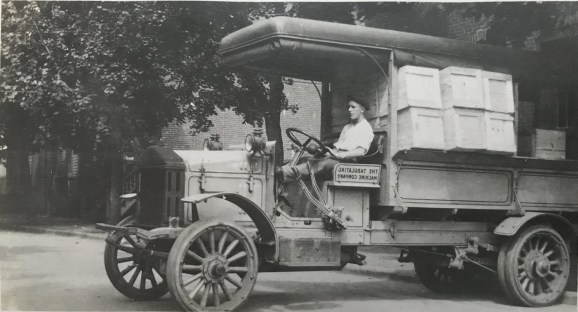
Tabulating Machine Company Delivery Truck. Note that the writing on the side of the truck is in reverse… I have no idea why. Photo by Lewis Reed
The following photographs are interior images.
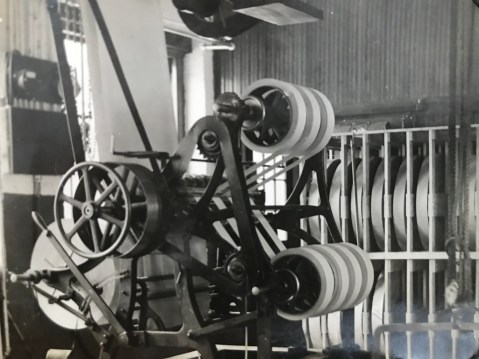
Photo by Lewis Reed

Photo by Lewis Reed

Photo by Lewis Reed
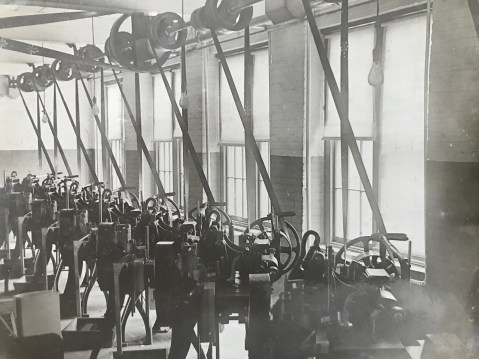
Photo by Lewis Reed

Photo by Lewis Reed
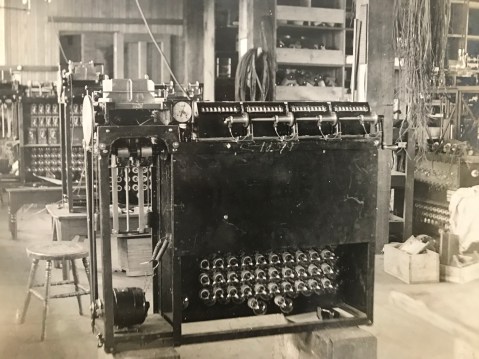
Photo by Lewis Reed
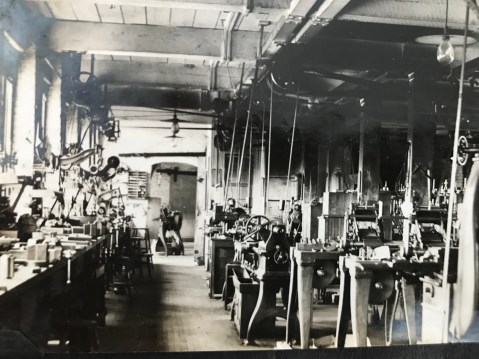
Photo by Lewis Reed

Photo by Lewis Reed
Source: IBM Archives
Valentines Day and Ferris Wheels!

Ferris Wheel at Rockville Fair, circa 1920s. Photo by Lewis Reed
Did you know that February 14th is not only Valentine’s Day, but also Ferris Wheel Day? This unofficial national holiday is held on this day to honor the birth of the inventor of the Ferris Wheel, George Washington Gale Ferris, Jr. What better way to celebrate Ferris Wheel Day than enjoying this old photograph of the Ferris Wheel taken at the Rockville Fairgrounds, courtesy of Lewis Reed. The fairgrounds were just outside Rockville, about where Richard Montgomery High School is today. The Fair lasted four days, from August 21st to the 24th, and drew visitors from local counties, Washington, and Baltimore.
For the singles and the “enough already with the Valentines”, here is your perfect alternative excuse. Go wish all your friends and family a Happy Ferris Wheel Day!
Then & Now: Windsor Store in Darnestown
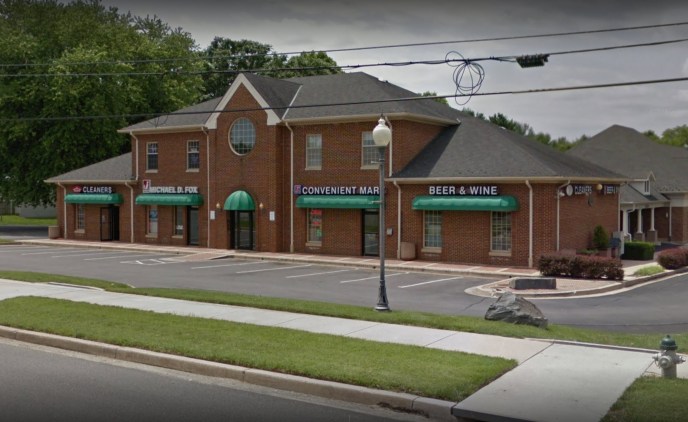
Photos are our window to the past. You might not realize how much Darnestown has changed until you look back and see what it looked like in the past. In this “Then & Now” feature, I have combined one of Lewis Reed’s original photograph’s for “then” and matched it with a google street view image for “now”. Travel back 110 years in time to see how Windsor Store in Darnestown used to be.
A bit of Darnestown history: The Darnestown area, which was located at the intersection of Darnestown and Seneca Roads, was settled in the 1750s. Darnestown Road (Route 28) was an old Indian trail and is recognized as one of the oldest roads in Montgomery County, Maryland. By the 1820’s, the town began to blossom and hosted a wheelwright, the Grist Mill, a blacksmith, a physician, a post office and a variety of other businesses. Darnestown became an important place for commerce in the area. Seneca Road led to a sandstone mill and the C&O canal at Seneca Village. From Darnestown one could travel either by stagecoach along Darnestown Road or board a packet boat on the canal at Seneca.
THEN: Mr James Windsor, grandfather of Curry England, opened the Windsor Store at the corner of Seneca and Darnestown Roads in approximately 1878. He operated the store for many years, and also served as Darnestown’s Postmaster for some 20 years. During the 1800s mail arrived three times a week by stagecoach from Rockville and local people gathered for the arrival, creating a regular social event. The Darnestown Post Office was discontinued in 1911. The Windsor building survived until 1969, when it caught fire and burned to the ground.
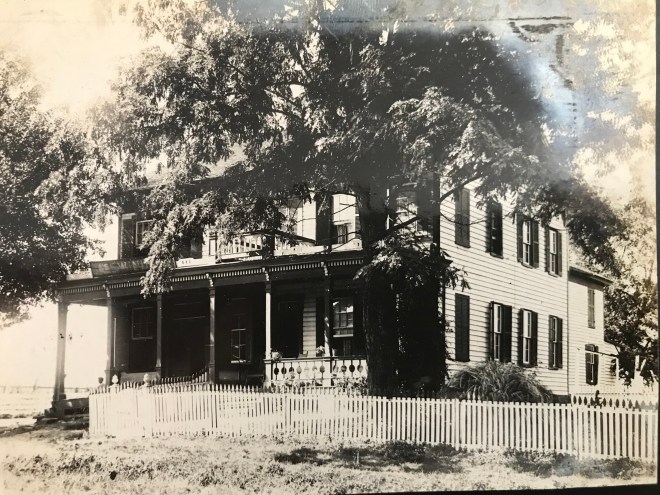
Windsor Store in Darnestown, early 1900s. Photo by Lewis Reed
NOW: Today, a 6-Twelve Convenient Mart sits on the site.
Books

Related Resources


Copyright Notice

Reed Brothers Dodge History (1915-2012) by Jeanne Gartner is licensed under a Creative Commons Attribution-NonCommercial 3.0 Unported License.
 Reed Brothers Dodge History 1915 – 2012
Recent Comments