
New Year Greetings from Lewis and Edgar Reed, 1950
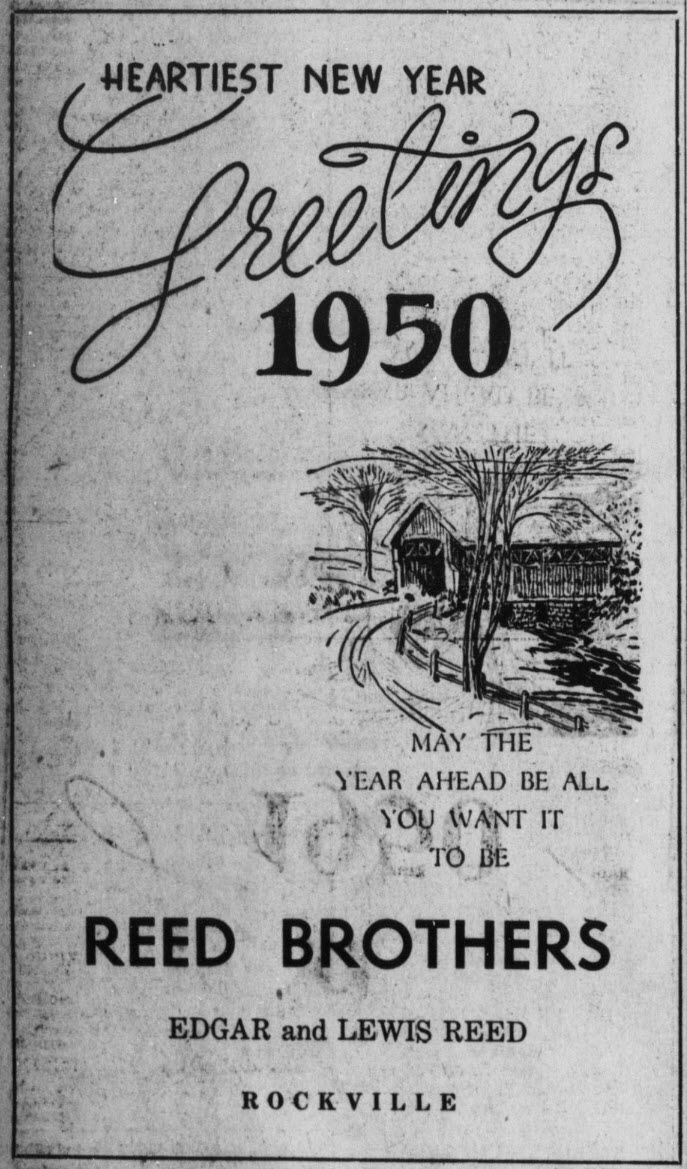
As another year begins, it feels fitting to look back at a New Year greeting shared more than seven decades ago. In the December 29, 1949 edition of the Montgomery County Sentinel, Edgar and Lewis Reed offered a warm message to the community:
“May the year ahead be all you want it to be.”
Simple and sincere, those words still resonate today. They reflect not only the spirit of the season, but also the long-standing connection the Reed family had with Montgomery County and the people they served. In that same spirit, I would like to extend my heartfelt thanks to all the visitors and followers of this blog. Your interest, comments, and support help keep this local history alive and meaningful.
Wishing you all a very Happy New Year, and every good wish for a safe, healthy, and prosperous 2026.

From Chauffeur to Dodge Dealer
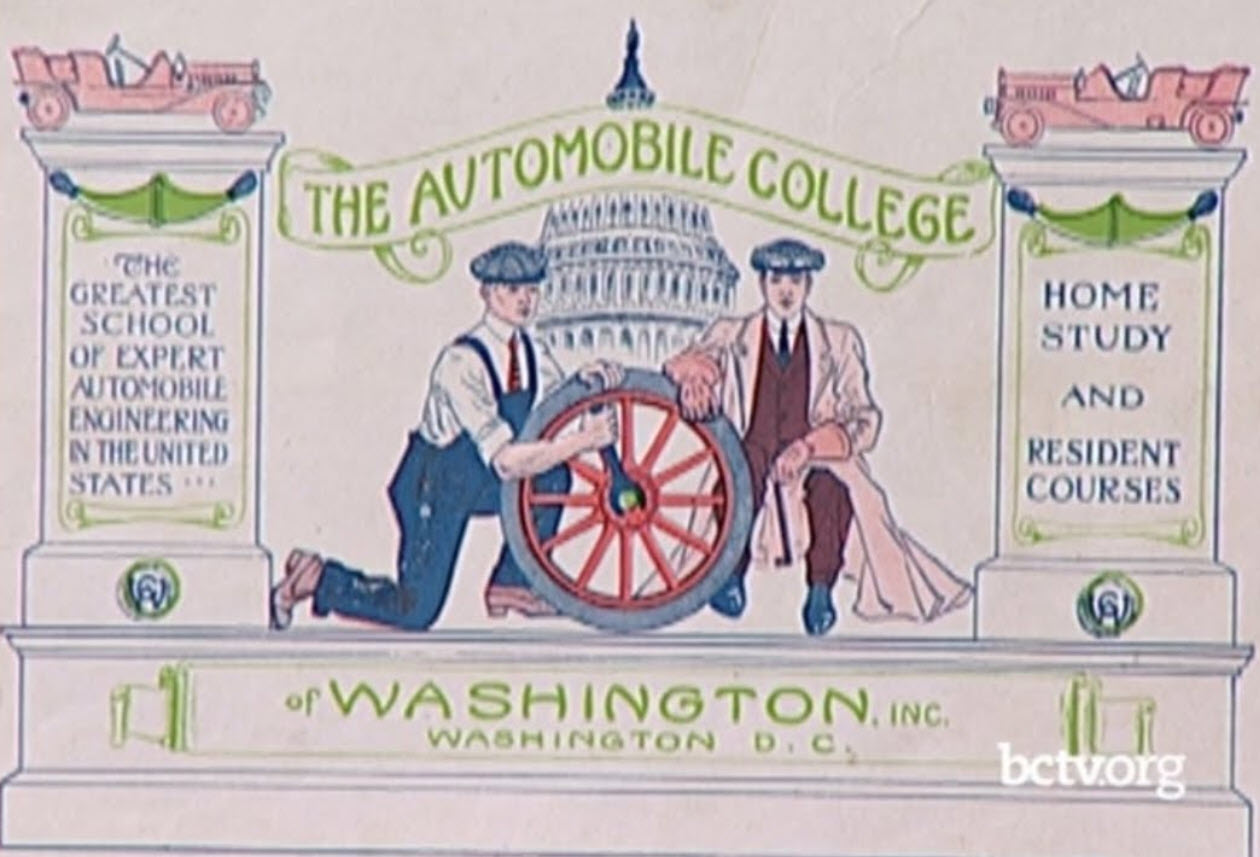 In the early 1900s, owning an automobile was a luxury few could afford, and operating one was no simple task. Early cars were finicky machines that required constant attention and mechanical knowledge. This gave rise to a unique profession: the chauffeur-mechanic. To meet the growing demand for this specialized role, schools began offering technical training in automobile operation and repair. One such institution was The Automobile College of Washington, founded in 1909 in Washington, D.C. Given the timing and location, it is likely that Lewis Reed received his early chauffeur and mechanical training at this institution, a step that helped pave the way for his later work with prominent manufacturers. In addition to the Automobile College of Washington, Lewis Reed received automotive training at the Pierce-Arrow factory in Buffalo, New York and the Dodge Hamtramck and Hudson Motor Car factories in Detroit, Michigan.
The school featured a fully equipped repair department and machine shop, complete with modern engines for hands-on learning. Students were trained on a variety of vehicles, including the Washington A-1 Touring Car, Pope Tribune, Peerless 35hp, Ricketts Model G 6-cylinder, and Mitchell 25hp, giving them practical experience with some of the era’s most advanced technology.
According to the 1910 census, 23-year-old Lewis Reed was employed as a machinist. Coming from a blacksmithing family background, he was already familiar with tools and machinery. As the automobile industry gained momentum, his mechanical aptitude made the transition to working with cars a natural one.

Two ladies with parasols are sitting in the landaulet section of an early Pierce-Arrow limousine, while chauffeur Lewis Reed tends to the motor. The rear portion of the limousine is partitioned from the driver with a glass shield, and covered by a convertible top, which you can see is currently in the lowered position behind the ladies. Photo taken circa 1910.
Early cars were temperamental, mechanically complex, and prone to breakdowns. As a result, the job of a chauffeur demanded not only driving ability but also technical knowledge. Their duties went beyond transportation; they were responsible for keeping the car running smoothly, diagnosing problems on the road, and performing regular upkeep. The role was seen as a respectable and skilled profession that required formal training.
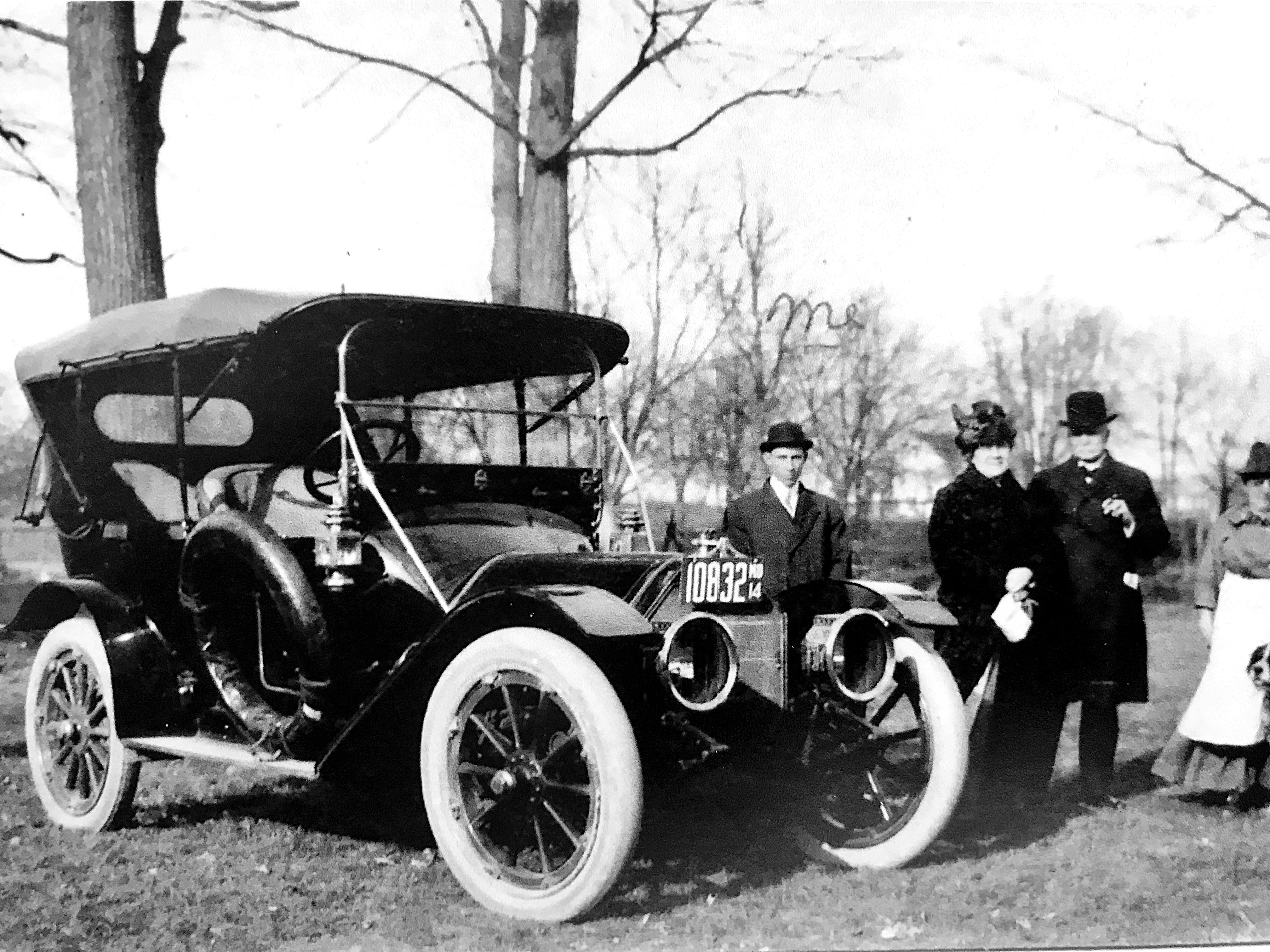
Chauffeur Lewis Reed (left) with unidentified family, 1914
Lewis Reed’s experience behind the wheel, and under the hood, lasted until about 1914, when he transitioned into the business of selling and repairing cars. The above image captures Lewis at a pivotal moment in his life, just before he transitioned from being a chauffeur-mechanic to becoming an automobile dealer. His time in this role not only reflects the expectations of early chauffeurs but also laid the groundwork for what would become a lifelong career in the auto industry.
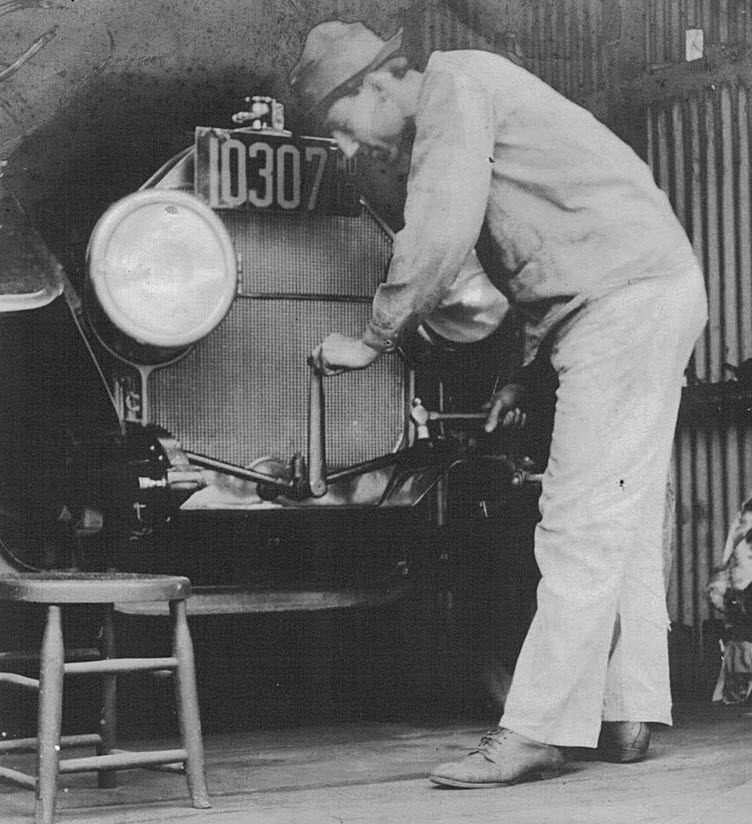
Lewis Reed hand cranking an old car. The hammer in Lewis Reed’s right hand is for straightening the hand crank. Apparently they can bend when starting big engines. The license plate is MD 10307 dated 1913.
The chauffeur-mechanic profession eventually faded as cars became more reliable and easier to operate. Lewis Reed’s experience as a chauffeur-mechanic in the early 1900s was more than just a job; it was the foundation of a lifelong career in the automobile industry. At a time when cars were still a novelty and required hands-on expertise, Reed’s skills and mechanical knowledge set him apart. His early years behind the wheel and under the hood gave him a unique understanding of the vehicles he would one day sell and service as a dealer.
“Greetings at Christmastide” to Our Friends and Readers

Montgomery County Sentinel. December 20, 1945
This Christmas ad from Reed Brothers of Rockville, published in the Montgomery County Sentinel in December 1945, reflects both the relief and renewed hope felt across America after the end of World War II. The war had officially ended just months earlier, and this holiday season carried deep emotional weight; gratitude, remembrance, and optimism for the future.
One detail that stands out is the use of the word “Christmastide.” Today, the term feels old-fashioned, but in the late 19th and early-to-mid 20th centuries it was still widely used in print. Christmastide refers not just to Christmas Day, but to the entire sacred and festive season surrounding Christmas, traditionally extending from December 25 through Epiphany in early January. The word carries a deeper sense of continuity, reflection, and spiritual meaning; something especially meaningful in a postwar world seeking comfort and renewal.
The poetic message in this ad– speaking of pine, holly, friendly voices, faith, hope, and gladness– captures the emotional heartbeat of Christmas in 1945. After years of rationing, separation, and uncertainty, families across Montgomery County and the nation were finally able to celebrate the season with returning loved ones and a renewed sense of peace.
Vintage advertisements like this don’t just sell a business; they preserve the language, values, and spirit of an era. This Reed Brothers Christmastide greeting is a reminder of how deeply meaningful that first postwar Christmas truly was.
As we look back on that historic Christmas season eight decades ago, we’re reminded that the true heart of the holidays shines brightest when times are most difficult. I would like to wish everyone who finds time during the course of your day to visit this blog a very Merry Christmas and a safe and healthy Happy New Year in 2026.
Warmest holiday wishes,
Jeanne Gartner
Blog Author
Snapshots in Time: Reed Brothers Dodge Then and Now
Reed Brothers Dodge occupies a distinctive place in Montgomery County’s commercial and transportation history, operating as a family-run dealership for nearly a century and weathering profound shifts in American life. Established in 1915 by automobile pioneer Lewis Reed and later joined by his brother Edgar, the firm grew from a modest Rockville garage into one of the nation’s oldest continuously operated Dodge dealerships, surviving two world wars, economic downturns, and repeated upheavals in the auto industry. “Snapshots in Time: Reed Brothers Dodge Then and Now” examines this trajectory through paired historical and contemporary images, inviting readers to view the dealership not simply as a business, but as a long-running institution that helped drive Montgomery County’s transition from rural crossroads to modern suburb. (click images to enlarge)


The black-and-white photograph on the left shows Lewis Reed’s original Rockville Garage in 1915, located at the intersection of Veirs Mill Road and Rockville Pike. In the early days of the automobile, many dealerships evolved from existing repair garages, and Rockville Garage was no exception. That same year, Lewis Reed became a partner with Robert L. and Griffith Warfield. The Warfield brothers later purchased the building in July 1915 from Lee Ricketts and Sons, who had operated the local Overland agency. The business continued under the Rockville Garage name until, shortly after Edgar Reed joined his brother, it was renamed at the suggestion of the late Judge Edward Peter.
The image on the right is a 1970 artist’s rendering of the new Reed Brothers Dodge dealership, representing a pivotal moment in the company’s history. After 55 years at the original downtown triangle location, Lee Gartner purchased 4.37 acres from Eugene Casey and relocated the business to a modern facility at 15955 Frederick Road in Rockville. Featuring a contemporary showroom and a full Dodge, Chrysler, and Jeep service complex, the new site marked the beginning of a new era, while carrying forward a legacy that began nearly six decades earlier in a modest corner garage.


The black and white photograph above, taken by Lewis Reed, shows the original Reed Brothers Dodge dealership nearly 80 years ago… and on the right is the same location today, now known as Veterans Park. In the 1970s, the site was briefly called Francis Scott Key Memorial Park, before being permanently rededicated as Veterans Park in 1988 to honor those who served. During the late 1960s, the State of Maryland acquired the property to widen Route 355. The remaining portion of land was donated to the City of Rockville, and a small street created behind the dealership was named “Dodge Street”—a lasting tribute to the more than 50 years Reed Brothers Dodge called that location home. What was once a center of automotive innovation has been transformed into a quiet place of remembrance, but the legacy of Reed Brothers Dodge remains forever etched in the street signs and stories of Rockville’s past.


These photographs show the intersection of King Farm Boulevard and Frederick Road; the site where Reed Brothers Dodge stood proudly for more than 40 years. The image on the left, captured by Google Street View in April 2012, shows the dealership just before it closed its doors for the last time.
Today, the legacy of Reed Brothers Dodge continues in a new form. On the right, the property is now home to The Reed, a rebranded apartment complex that pays tribute to the site’s deep roots in local history. In early 2025, the familiar Bainbridge name officially disappeared from 15955 Frederick Road in Rockville. Along with the signage, the apartment complex underwent a complete rebranding, now honoring the legacy of the Reed family and the dealership that once stood there. Though the building is gone, the memory of Reed Brothers Dodge remains deeply rooted in the landscape and spirit of the community.


The black and white photograph above was taken by Lewis Reed in 1915, looking west from the site of his original Rockville Garage. Visible in the image is the dealership’s very first “gas station”—a single pump. In the distance, an early trolley car makes its way along Main Street (now Rockville Pike), part of a transit line that operated from 1900 to 1935, running past Reed Brothers Dodge. Also visible in the background is the historic St. Mary’s Cemetery, a landmark that still exists today.
Fast forward to the present, and the same view seen on the right looks dramatically different. The once-quiet corridor has evolved into what locals now affectionately call “the mixing bowl,” a complex web of modern roads, traffic signals, and constant motion. While the landscape has changed, the photo offers a rare window into the early days of Rockville’s automotive and transit history.


The “then” photograph above was taken by Lewis Reed in 1953 at the corner of East Montgomery Avenue and Dodge Street. It captures the newly constructed building, which housed the showroom along with the parts and service departments. When the State of Maryland widened the surrounding roads in 1970, the connector street behind the dealership’s original location was officially named “Dodge Street,” a nod to the many years Reed Brothers Dodge operated there—from 1915 to 1970.
The “now” image on the right is a Google Maps view of the same location, captured in 2016—64 years later—showing just how dramatically the area has changed over time.


Both of the “then and now” images above are Google Maps Street View photographs taken just ten years apart. The image on the left shows Reed Brothers Dodge in 2007, while the image on the right captures the same site after its transformation into the Bainbridge Shady Grove Metro Apartments.
In early 2025, the familiar Bainbridge name officially disappeared from 15955 Frederick Road in Rockville. Along with the signage, the apartment complex underwent a complete rebranding. Today, the property is known simply as The Reed, a name that pays tribute to the site’s deep roots in local history.


The 1917 photo on the left is the original Rockville Garage located at the intersection of Veirs Mill Road and Rockville Pike, 100 years ago. Note the unpaved dirt road on Rockville Pike and trolley tracks running past the Rockville Garage. Both photographs were taken by Lewis Reed on the Rockville Pike side of the dealership.
On the right, is the same location 50 years later of the Reed Brothers Dodge Gulf Gasoline station. Due to changes in the highway, Reed Brothers began an extensive remodeling and rebuilding program. Two-thirds of the original location at the junction of then Route 240 and Veirs Mill Road was razed and a modern Gulf Service Station was erected.


On the left is a mid-1960s view from the corner of Veirs Mill Road and Dodge Street showing the new building for Reed Brothers Service Department. On the right is a Google street view image of the same location today, 50 years later.


The photograph on the left shows a side view of the Rockville Garage, including its two-story addition to the original shop, taken nearly a century ago. The first floor housed the service department, while the upper level was used for parts storage. A tall chimney, likely connected to a coal furnace, provided heat, and the abundance of windows flooded the workspace with natural light for servicing early automobiles. By this time, Firestone Tire signage had replaced the earlier Fisk brand sold at Rockville Garage in 1915.
The photograph on the right was taken in 1968 from the same location, roughly 50 years later. By then, major highway changes had dramatically altered the site. Nearly two-thirds of the original property at the junction of what was then Route 240 and Veirs Mill Road had been razed, making way for a modern Gulf service station.


The beginning and the end at 15955 Frederick Road: 1970 and 2013.
The photograph on the left shows the dealership’s newly completed building in 1970, following its move from the original location at the triangle formed by Veirs Mill Road and Rockville Pike. This modern facility marked Reed Brothers Dodge’s 55th year of selling Dodge vehicles and signaled a new chapter for the business.
The image on the right was taken on May 16, 2013. The building stands vacant, photographed on the very day demolition began, bringing nearly a century of automotive history at this location to a close.


The photograph on the left shows rows of beige and baby-blue cars lined up neatly in the side lot. Just across the road stands King Farm, dominated by its large barn painted with the words “Milk for Thompson’s Dairy,” long before the land was transformed into a dense mixed-use community. At the time, Lawson King’s dairy cows grazed in fields only a few feet from the roadway. At its height, King Farm was the area’s largest milk producer and had remained in agricultural use for nearly 75 years before development was approved in 1996.
The image on the right was taken from the same vantage point in 2009, more than three decades later. The familiar barn still rises in the background, but the surrounding fields are gone, replaced by the streets, buildings, and neighborhoods of what is now known as King Farm.
Looking at these images side by side, it’s clear that progress doesn’t erase history, it builds on it. Streets may widen, buildings may disappear, and businesses may move on, but traces of what once was are still there for those who know where to look. Lewis Reed’s photographs give us a rare anchor to the past, allowing today’s landscape to be seen with new eyes. In comparing then and now, we’re reminded that Rockville’s story is not just about change, but about continuity, memory, and the people who lived and worked along these streets long before us.
Off-Season at the Montgomery County Fairgrounds, 1910
These winter photographs, taken around 1910 by Lewis Reed, offer a rare glimpse of the Montgomery County Fairgrounds during its off-season; long before crowds, exhibitions, and midway sounds returned each year. Covered in snow and largely still, the fairgrounds appear almost contemplative, preserving a moment in time that contrasts sharply with the bustle normally associated with the annual fair.
The Montgomery County Fair was held in Rockville from 1846 until 1932, serving as one of the county’s most important agricultural and social gatherings. Farmers, merchants, families, and visitors from across the region—including Washington, D.C.—came together to celebrate livestock, crops, craftsmanship, and community. Yet photographs of the fairgrounds outside the fair season are uncommon, making these images particularly significant.
Lewis Reed’s photographs show the grounds at rest. Snow blankets the open spaces, softening the outlines of fences and walkways. Buildings stand closed for the winter, including the Poultry House, which would have been a hive of activity during fair time. In these images, the structures themselves take center stage, revealing their form and placement without the distraction of crowds.
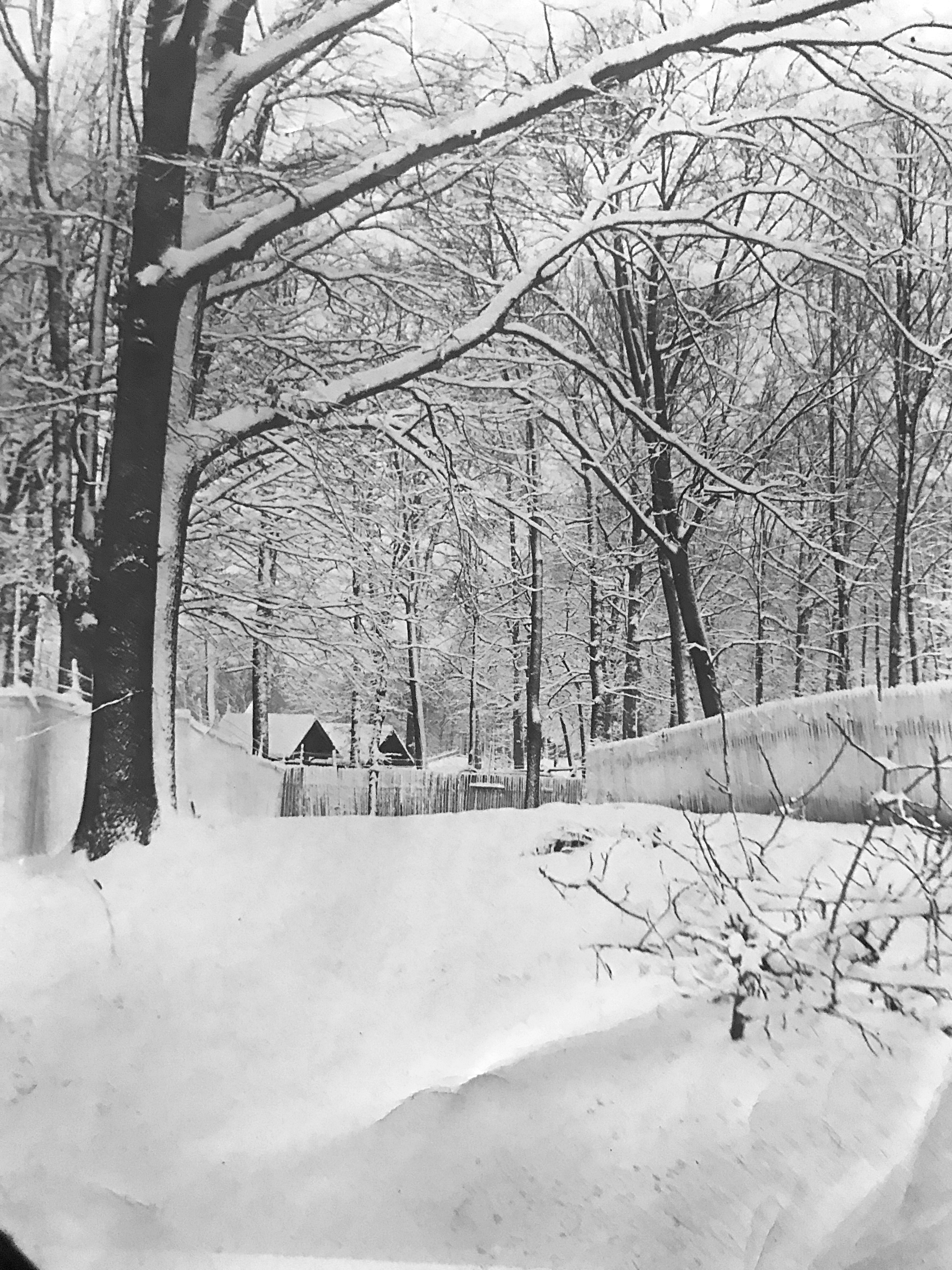
Snow blankets the fairgrounds in this early 20th-century photograph by Lewis Reed. Images such as this offer a rare view of the fairgrounds outside the fair season, documenting the site as it appeared in everyday use.
Reed’s work is notable not only for its subject matter, but for its documentary value. At a time when photography was still a deliberate and technical process, his images captured everyday scenes that might otherwise have gone unrecorded. Today, they provide visual evidence of how the fairgrounds looked and functioned in the early twentieth century, as well as a reminder of the role photography played in preserving local history.
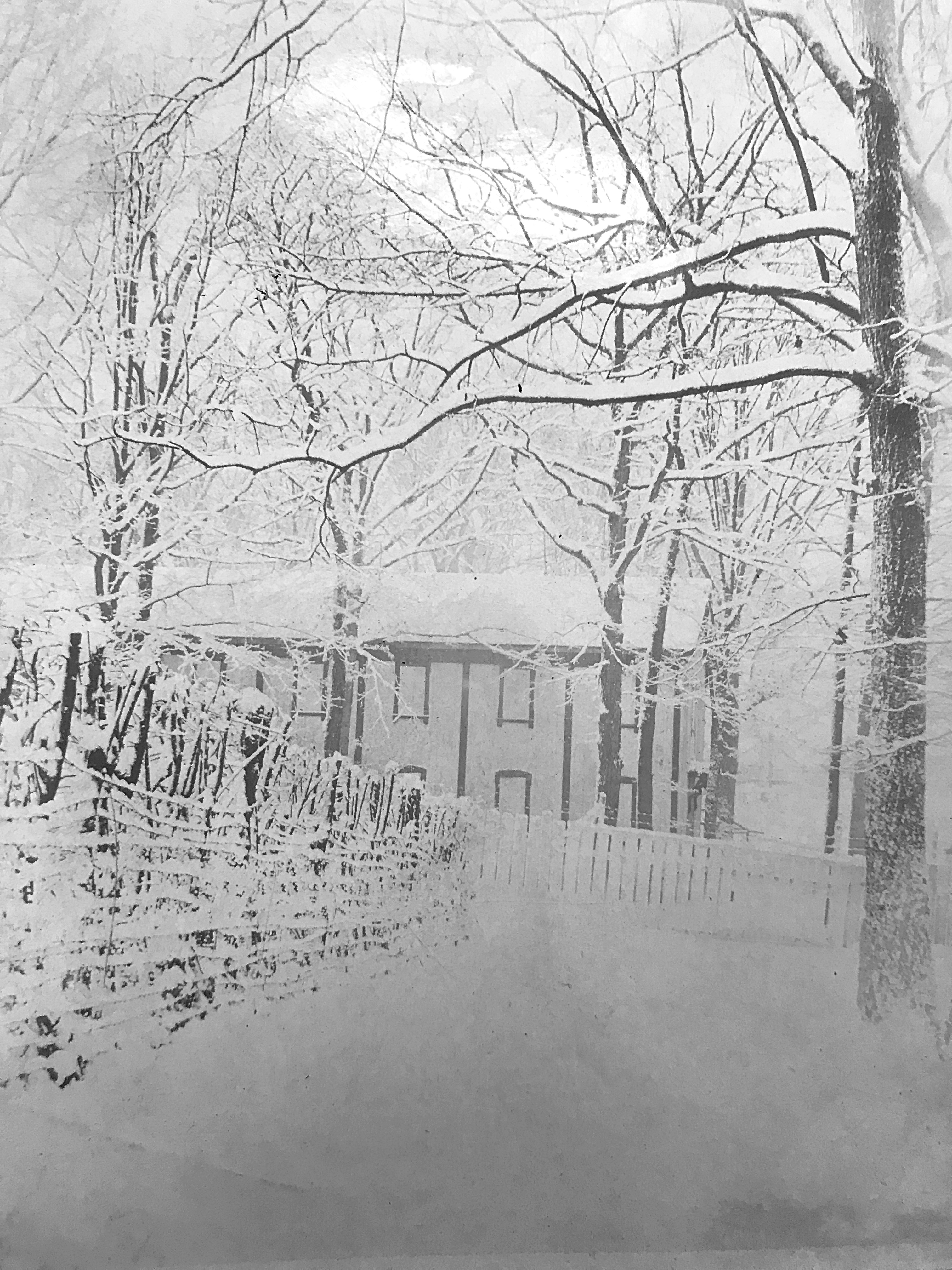
The Poultry House at the Montgomery County Fairgrounds, photographed by Lewis Reed during the winter of 1910. Closed for the season, the building would later host livestock exhibits during the annual Montgomery County Fair.
Viewed more than a century later, these snowy scenes connect us to a slower pace of life and to a Montgomery County that was still largely rural. Thanks to Lewis Reed’s careful eye and willingness to document the ordinary as well as the celebrated, these winter moments at the old fairgrounds endure.
Books

Related Resources


Copyright Notice

Reed Brothers Dodge History (1915-2012) by Jeanne Gartner is licensed under a Creative Commons Attribution-NonCommercial 3.0 Unported License.


Recent Comments