
Then & Now: Quebec Bridge (8th Wonder of the World)
The Quebec Bridge (Pont de Québec in French) has been an icon of Canada for more than a century. But did you know that the Quebec Bridge collapsed twice (1907 & 1916) before it was completed, making it the world’s worst bridge construction disaster. Taken approximately 90 years apart, these photos show the Quebec Bridge (8th Wonder of the World) then and now.
Quebec Bridge (THEN): Hailed at the time as the 8th wonder of the world, the Quebec Bridge was the first bridge over the St. Lawrence River in Montreal. Accommodating three highway lanes, one rail line and a pedestrian walkway, it represented a colossal challenge to construct at the time. First conceived in 1887, the bridge collapsed failed twice, at the cost of 88 lives, and took over 30 years to complete. A riveted steel truss structure, the Quebec Bridge is the longest cantilever bridge span in the world. The Quebec Bridge was declared a historic monument in 1987 by the Canadian and American Society of Civil Engineers, and on January 24, 1996, the bridge was declared a National Historic Site of Canada.

Quebec Bridge (8th Wonder of the World). Photo by Lewis Reed, ca. 1930
Quebec Bridge (NOW): The same view almost 90 years later. The bridge remains in use to this day, carrying both road and rail traffic. rails in the middle and roadways on both sides.

Night view of the Quebec Bridge, today. Photo credit: Martin St-Amant – Wikipedia
Source: Wikipedia
Then & Now: Rockville Fair Dirt Track Oval
The black and white photograph of the Rockville Fair auto races below was taken by Lewis Reed in 1923. The photograph was from the first incarnation of the Fair, held by the Montgomery County Agricultural Society (1846-1932) in Rockville and often known simply as the “Rockville Fair.” For this “Then & Now” feature, I have combined Lewis Reed’s original photograph for “then” and matched it with a corresponding contemporary shot for “now” to see how the location has changed throughout almost 95 years.
Rockville Fair Dirt Track Oval (THEN): Like many fairgrounds, the Rockville Fairgrounds included an oval track. Fairground race tracks, typically one-mile or half-mile dirt racing ovals with wide, sweeping curves and grandstands for spectators, were easily adapted for bicycles, harness racing, and the sport of car racing. Harness racing was one of the main attractions, but after the introduction of the automobile in the early 20th century, car races took over. The fairgrounds were just outside Rockville, where Richard Montgomery High School is today.

Crowds at the auto racetrack, Rockville Fair, August 1923. Photo by Lewis Reed
Rockville Fair Dirt Track Oval (NOW): In 1946, after the construction of Richard Montgomery High School, the old oval race track became a football field and stadium.
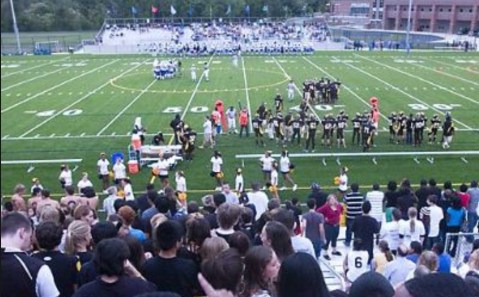
Richard Montgomery High School football field and stadium today
Featured Photo: Buffalo Zoo Bear Pits, Early 1920s

Buffalo Zoo Bear Pits, Buffalo, New York, ca. early 1920s. Note the car in the photo is mostly open-bodied, with no windows and certainly no heat. Tire chains are on the rear tires. I cannot say with any certainty, but I believe it is Lewis Reed’s car with his wife and baby daughter, Mary Jane, sitting inside all bundled up. Photo by Lewis Reed.
Founded in 1875, the Buffalo Zoo, located at 300 Parkside Ave in Buffalo, New York, is the third oldest zoo in the United States and is the second largest tourist attraction in Western New York; second only to Niagara Falls. The zoo traces its history to the mid-19th century when Jacob E. Bergtold, a Buffalo furrier, presented a pair of deer to the city of Buffalo. Five years after the deer were donated, more animals were added to the collection, and the first permanent building was erected, signifying the establishment of the Buffalo Zoological Gardens in 1875.
From this simple gift would grow the earliest origins of the Zoo, still operating on the same spot as that original 1871 Deer Paddock. A pair of bison and eight elk were added to the animal collection in 1895, and a zoo curator was hired the same year. Two years later, the bear pits, designed to look like Roman ruins, were built as the zoo we now know was beginning to take shape.
Source: Wikipedia
Rockville Garage Hudson Motor Car Ads (1919-1920)
The advertisements in this post do more than just simply pitch a product, they capture a moment in history. A moment in history when Lewis Reed’s Rockville Garage represented several franchise nameplates along with Dodge, including Oldsmobile, Hudson, and Essex. The Hudson and Oldsmobile were sold at Reed Brothers from roughly 1917 through 1923.
Hudson introduced the Essex brand in 1919. The Essex was intended to compete with Ford and Chevrolet for budget-minded buyers. The Essex offered one of the first affordable sedans and by 1925 the combined Hudson and Essex sales made Hudson the third largest automobile manufacturer in the United States.
Prior to the advent of television and radio advertising, print media was the most popular form of advertising and most car ads were black and white. The following ads distributed by the Lambert Automobile Company in The Baltimore Sun newspaper advertises the Hudson and Essex automobiles.
In addition to franchise car dealers, there were also factory stores. In the early days, the factory stores did the national advertising. A factory store, also known as a branch store or branch dealer, was a dealership owned and run by the manufacturer. A list of area Dealers was placed in fine print at the bottom of the ads. Rockville Garage, Rockville, Md, is highlighted in yellow on each of these ads.

The Baltimore Sun 2 March 1919
By the 1920s, Hudson and Essex Motor Car advertisements featured elegant architectural borders with static drawings of their cars; some ads never pictured people during this period.

The Baltimore Sun 30 May 1920

The Baltimore Sun 29 Aug 1920
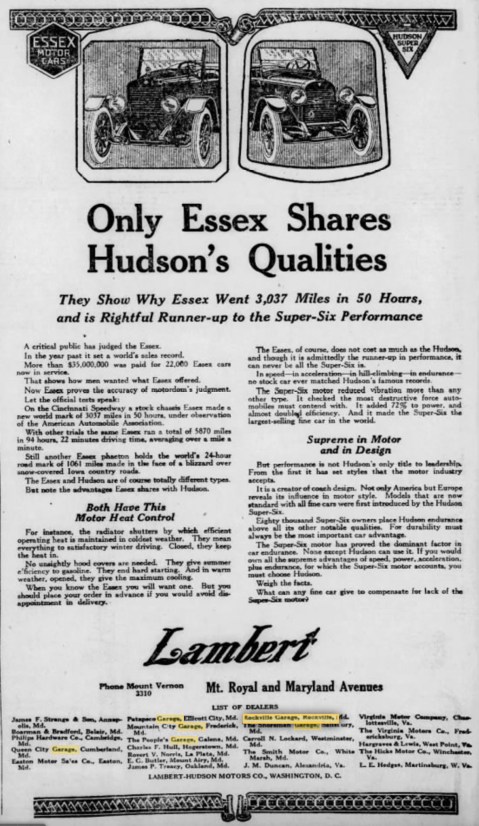
The Baltimore Sun 25 Jan 1920
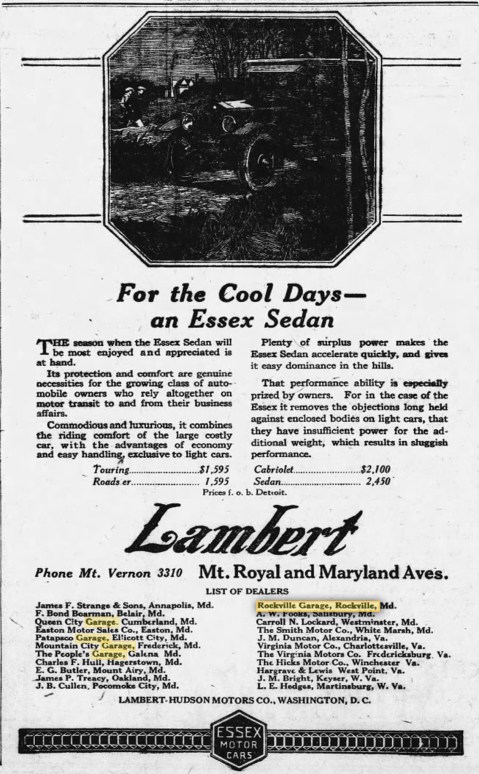
The Baltimore Sun 24 Oct 1920

The Baltimore Sun 21 Nov 1920

The Baltimore Sun 17 Oct 1920

The Baltimore Sun 13 Jun 1920

The Baltimore Sun 10 Oct 1920

The Baltimore Sun 1 Feb 1920

The Baltimore Sun 3 Oct 1920
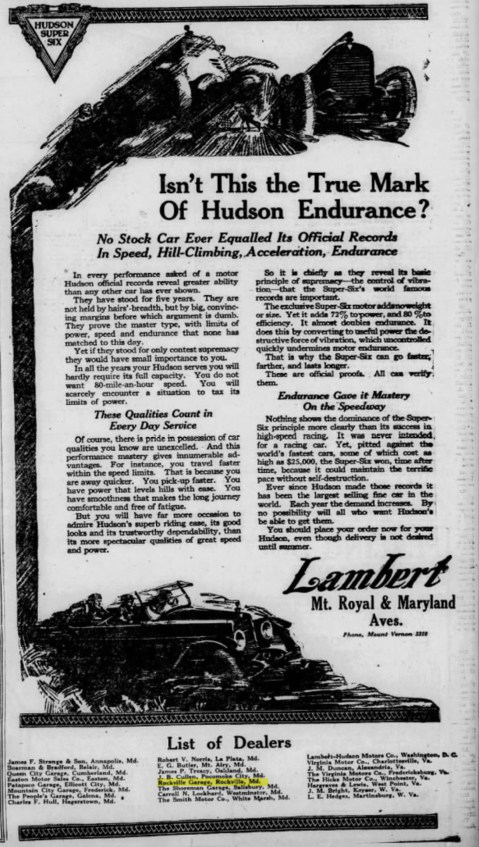
The Baltimore Sun 28 Mar 1920
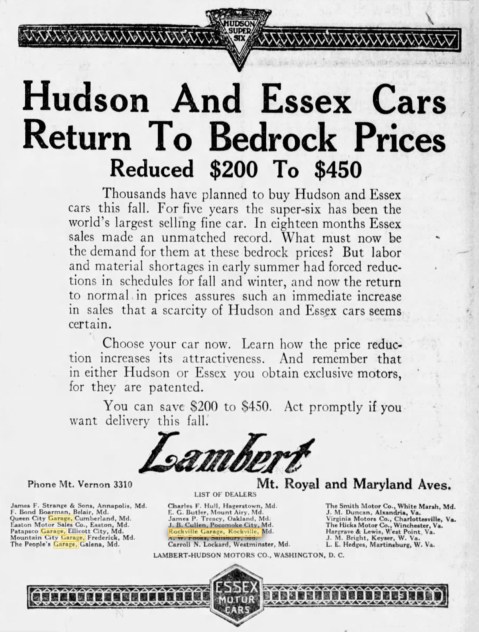
The Baltimore Sun 30 Sep 1920

The Baltimore Sun 5 Mar 1922
A lot of old newspapers have found their way online and with digital archival, it’s easier to take a trip back through old newspapers than ever before. These ads were found on NewspaperARCHIVE.com, the largest historical newspaper database online.
Looking Back at the Montgomery County Fair, Whose Origins Stretch Back to 1846
It’s August, which means the Montgomery County Fair is coming soon! (The Agricultural Center’s website is literally counting down the seconds until opening day.) Since the fair will be here soon, I thought it would be fun and interesting to look back at some rare, historical photographs taken by Lewis Reed at the fair, whose origins stretch back 172 years.
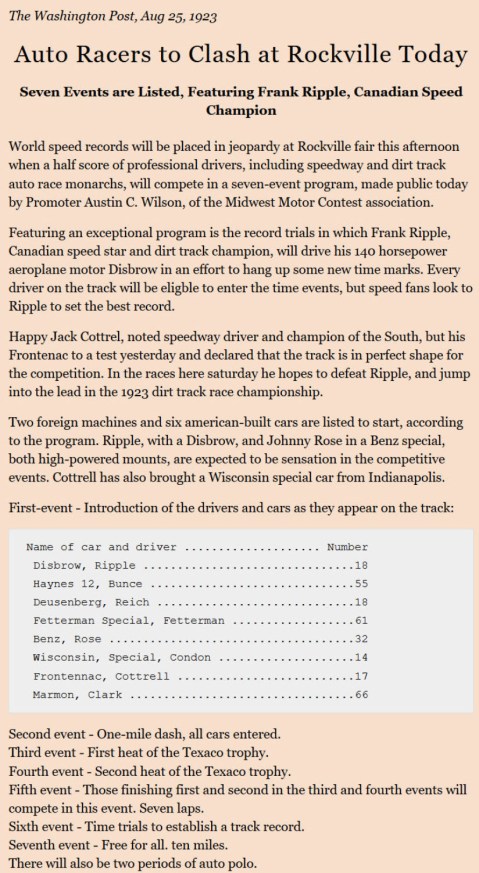
All of these photographs are from the first incarnation of the Fair, held by the Montgomery County Agricultural Society (1846-1932) in Rockville and often known simply as the “Rockville Fair.” The current Fair, held at the Gaithersburg fairgrounds, was started in 1949. From the August 25, 1923 Washington Post Rockville Fair Auto Race article, to some of the earliest known photographs of the original grounds, Lewis Reed’s photos show the splendor of the original fairgrounds with its grandstands, to the oval dirt track used for bicycle, harness, and later, car races, and conversion to a baseball field.
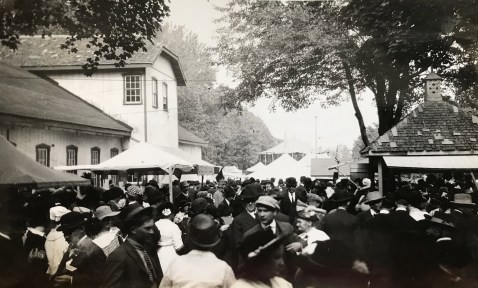
Fair goers in their finest stroll along the midway. Hats were a fashion requirement at the time, as were long flowing dresses and suits. Photo by Lewis Reed, ca. 1910
The headline of the Washington Post article about the race read, “Auto Races to Clash at Rockville Today”.
World speed records will be placed in jeopardy at Rockville fair this afternoon when half score of professional drivers, including speedway and dirt track auto monarchs, will compete in a seven-event program.
The annual County Fair used to be held for four days in the month of August at the old Fairgrounds of Rockville, Maryland. Families came from every section of the Montgomery County in wagons and carriages, and stayed for the duration of the Fair. Like many fairgrounds, the Rockville Fairgrounds included an oval track. Fairground race tracks, typically one-mile or half-mile dirt racing ovals with wide, sweeping curves and grandstands for spectators, were easily adapted for bicycles, harness racing, and the sport of car racing. The fairgrounds were just outside Rockville, about where Richard Montgomery High School is today. As always, click the photos to get a better look.

Fairgrounds in the snow. Photo by Lewis Reed, ca. 1910
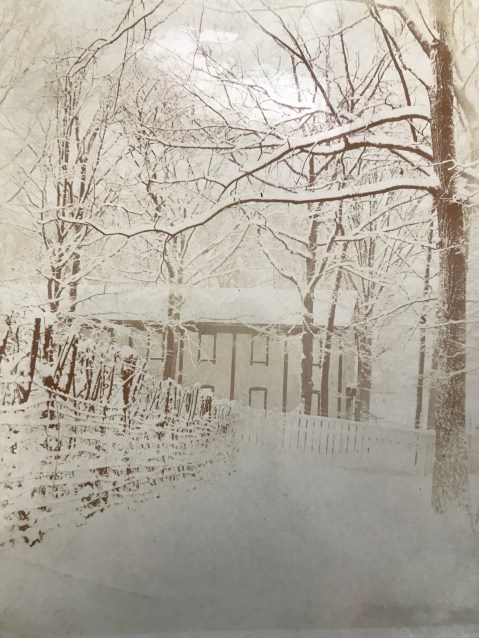
Chicken House. Photo by Lewis Reed, ca. 1910
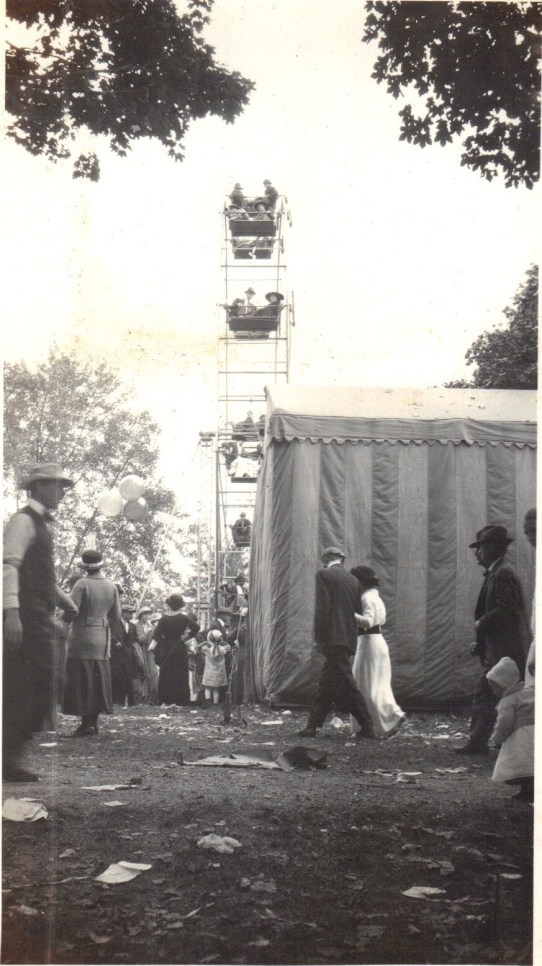
Riding the Ferris Wheel at Rockville Fair, circa 1920s. Photo by Lewis Reed
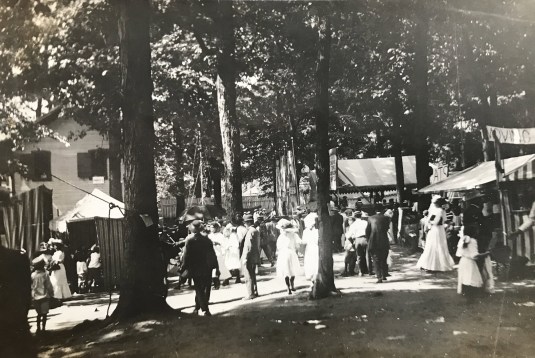
Fair goers meander through exhibits. Photo by Lewis Reed, ca. 1910

Hundreds of cars parked in the fair parking lot. What is fascinating to me is, with all of these early cars painted in black, how on earth would you find your car? Photo by Lewis Reed, ca. 1910

View from the grandstand. Photo by Lewis Reed, ca. 1910
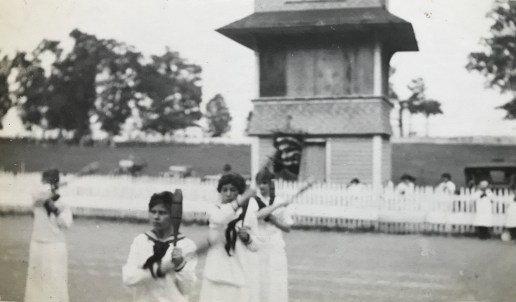
View from the grandstand. Photo by Lewis Reed, ca. 1910
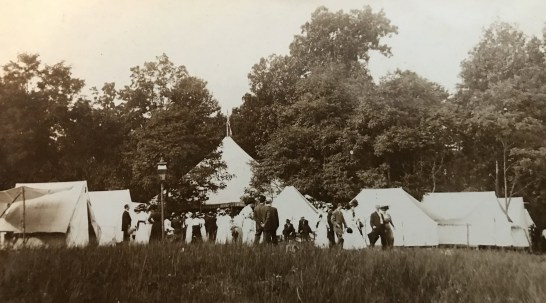
Families came in wagons and carriages to the Rockville Fairgrounds and stayed for the duration. Photo by Lewis Reed, ca. 1910
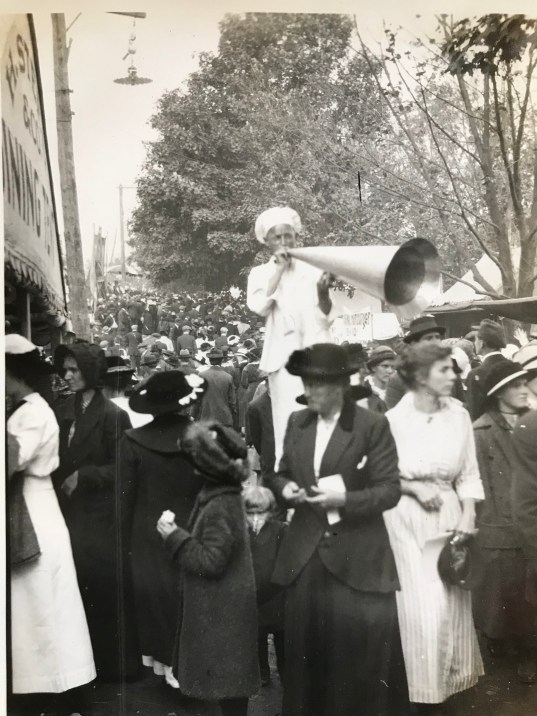
Can you hear me now? Photo by Lewis Reed, ca. 1910

Agricultural and various farm equipment exhibit. Photo by Lewis Reed, ca. 1910
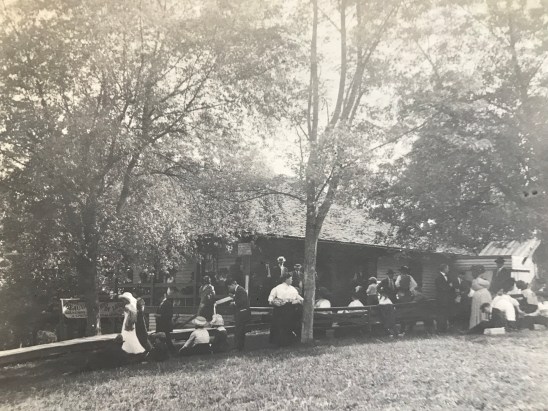
Sign on the left side of the building reads, “The Beautiful Caverns of Luray Souvenirs”. Photo by Lewis Reed, ca. 1910
Bicycle Racing
Like many fairgrounds, the Rockville Fairgrounds included an oval track. Fairground race tracks, typically one-mile or half-mile dirt racing ovals with wide, sweeping curves and grandstands for spectators, were easily adapted for bicycles, harness racing, and the sport of car racing.

This circa 1915 photo of an early bicycle race at the Rockville Fairgrounds gives a sense of just how popular the sport was at the time. Photo by Lewis Reed
Harness Racing

Harness race at the Rockville Fair, circa 1910. All those throngs of people had plenty to see. Photo by Lewis Reed

This photo shows the grandstand and surrounding areas filled with spectators watching the action, ca. 1910. Photo by Lewis Reed
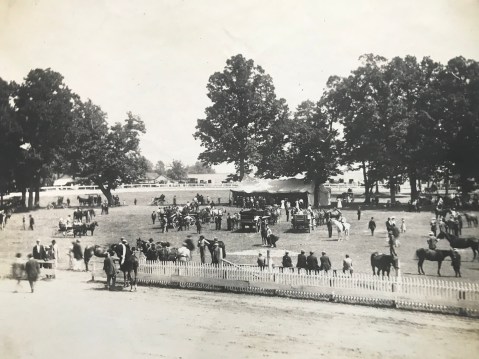
Crowd at the racetrack. Photo by Lewis Reed

Bend on the racetrack, circa 1910. Photo by Lewis Reed

Harness racers rounding the bend on the racetrack, circa 1910. Photo by Lewis Reed
Auto Racing
The photos below reveal what auto racing looked like in the days before helmets, seat belts, air bags, and traction control.
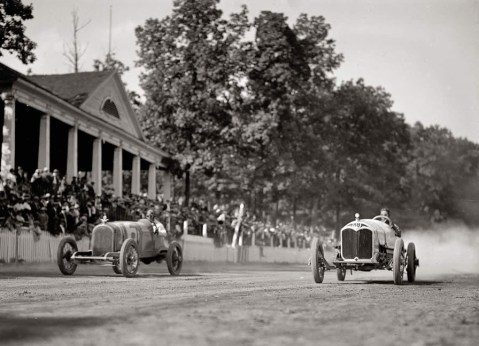
Rockville drew huge crowds for auto races. Rockville Fair, August 1923. Photo by Lewis Reed

Dusty Action – 1923 photo of the exciting auto races at Rockville Fair. Five racers are just coming around the bend on this dirt track with their tires spinning up dust in their wake. Photo by Lewis Reed
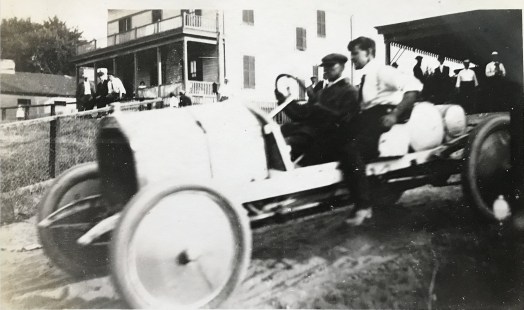
Two-man race car. Some early race cars included both a driver and a ‘riding mechanic’. One of the key jobs of the second man in a race car was to look backward and alert the driver to what was going on behind him. Photo by Lewis Reed
Early race car drivers were required to have a riding mechanic, otherwise it was voluntary. Riding mechanics, who in addition to being lookouts, kept an eye on tire wear and would even hop out of the car and run back through the infield to get fuel.

More dirt track action. Skinny tires make for slippery turns. Photo by Lewis Reed
Below is a 1923 Washington Post article for an auto race at the Rockville Fair.
Rockville Fair Race Ad
A football field was designed within the oval of the old Fair racetrack in 1946.
Dirt track racing was one of the main attractions, but the Fair also provided other events such as horse pulls, games of chance, showing of prized livestock and poultry, needlework, homegrown produce, baked and canned goods. A building called the Exhibit House displayed the prize-winning entries of the various categories.
Rockville Garage Displaying New Model Cars at Rockville Fair Grounds, 1918
The Fair also gave automobile dealers the opportunity to display their new models. Below is new car show time as fair goers get their first glimpse at the latest models that Rockville Garage had to offer.
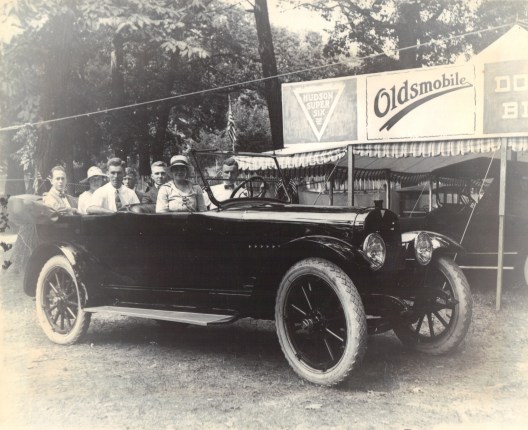
Anybody for a demonstration drive? Identified by the triangle logo on the grill and the number of passengers seated in it, the car appears to be a 1918 Hudson Super Six Seven Passenger Touring. Photo by Lewis Reed
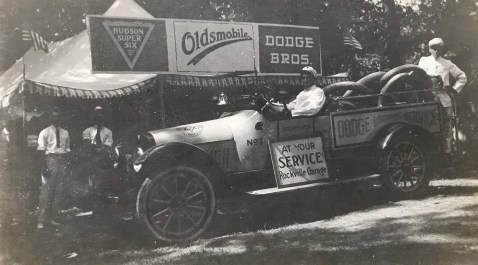
Hudson Super Six, Oldsmobile, and Dodge Brothers Motor Cars on display. Lewis Reed in drivers seat of Rockville Garage Service Truck.
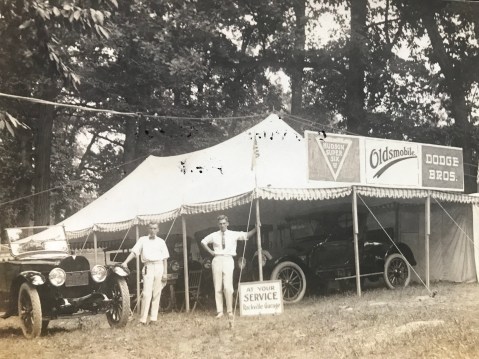
Rockville Garage tent displaying Hudson Super Six, Oldsmobile, and Dodge Brothers Motor Cars at the Rockville Fair Grounds. Photo by Lewis Reed

At Your Service Rockville Garage. Lewis Reed on the left
Reed Brothers Dodge Baseball Team at Rockville Fair, ca. 1920
Most likely, Rockville’s first experience with baseball was during the Civil War on the fields where Richard Montgomery High School now stands. It was known as “Camp Lincoln” because of the Union encampment there, and Federal soldiers helped popularize the new game they brought from the North. After the Civil War those fields – known as the Rockville Fairgrounds – continued to be a popular place for baseball.
Reed Brothers Dodge had a company baseball team that played on those same fields. The photos below were taken by Lewis Reed on a field at the Rockville Fairgrounds circa early 1920s.
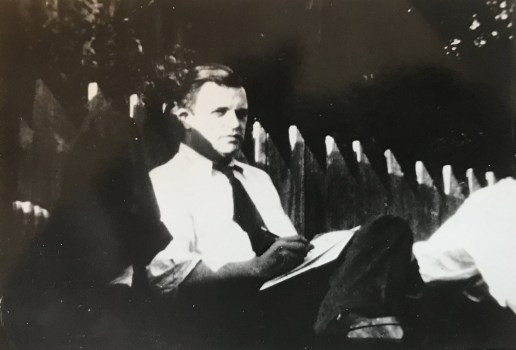
Pat Murray (Parts Department Manager), keeping score. Photo by Lewis Reed
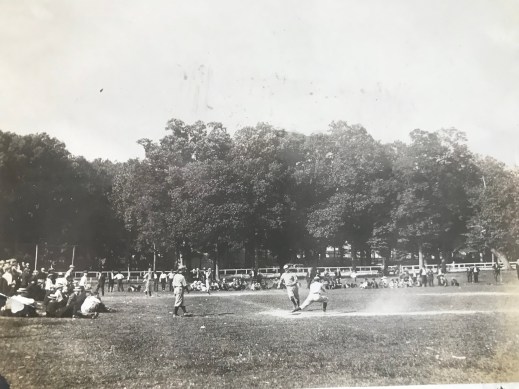
Reed Brothers Dodge Baseball Team, circa early 1920s. Photo by Lewis Reed

Reed Brothers Dodge Baseball Team, circa early 1920s. Photo by Lewis Reed
In 1949, the Montgomery County Agricultural Center (the Fairgrounds) was moved from Rockville to its current location adjacent to the B&O Railroad between Chestnut Street and Perry Parkway.
Source: Montgomery History
Books

Related Resources


Copyright Notice

Reed Brothers Dodge History (1915-2012) by Jeanne Gartner is licensed under a Creative Commons Attribution-NonCommercial 3.0 Unported License.
 Reed Brothers Dodge History 1915 – 2012
Recent Comments