
Darnestown One Room Schoolhouse (1898)
Have you ever wondered what it would be like to attend a one-room school, to be in the same classroom as your older brother or younger sister, where all the kids, no matter how old, are in the same class? One-room schoolhouses are all but a memory now. But at the turn of the 20th century, they were where most rural students received their educations. One room schoolhouses were the pioneers of the early education period. At the period’s peak, just under 100 one- and two-room schools existed in Montgomery County.
One of the most amazing photographs in Lewis Reed’s collection is of the one-room schoolhouse where he and his brother, Edgar, attended school. This photograph is the only one known to exist of this school. The schoolhouse, now long gone, was located on Thomas Kelley’s Farm at Pleasant Hill (which today, would be located in the center of the Spring Meadows community). Lewis Reed grew up on a farm in rural Darnestown and for much of his young life had no running water or electricity. His father was an early settler and worked as a Cabinetmaker and Blacksmith. The Reed family farmhouse and blacksmith shop was located on 12 acres of land west of Seneca Road on Route 28.
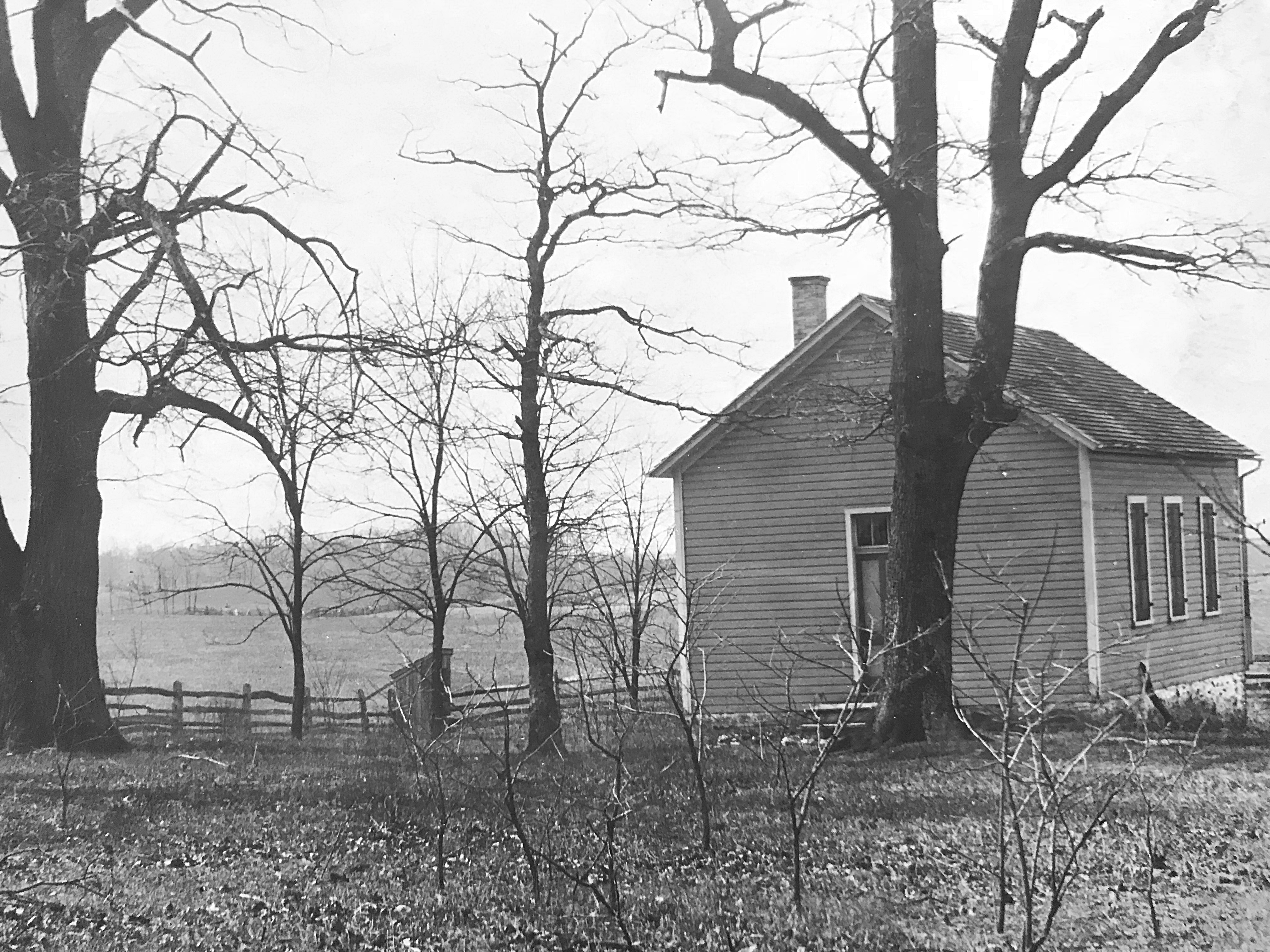
Darnestown One-Room Schoolhouse. The chimney was probably to a wood-burning stove that was used to heat the building. Note the outhouse on the left. Photo from the Lewis Reed Collection
The details of the Darnestown one-room schoolhouse is not widely known.
One-room schoolhouses were common in rural America during the late 1800s and early 1900s. They typically housed students from various grades—often from first through sixth grade—under the instruction of a single teacher. In Darnestown, this particular schoolhouse was attended by Lewis Reed and his brother Edgar, among approximately thirty other students. The age range of students could vary significantly, from as young as six years old to sixteen years old.
This small, one-room schoolhouse was within walking distance of the Reed family farmhouse. In those days, walking distance generally meant within a few miles. Lewis Reed attended this school with his brother, Edgar. First through sixth grades were under the instruction of a single teacher (Minnie McAtee) to about thirty or more students. Few students went beyond sixth or seventh grade; in fact, Lewis Reed’s education stopped after the sixth grade. He would later be home-schooled by his wife, Ethelene Thomas, who was a teacher in the Maryland public school system.
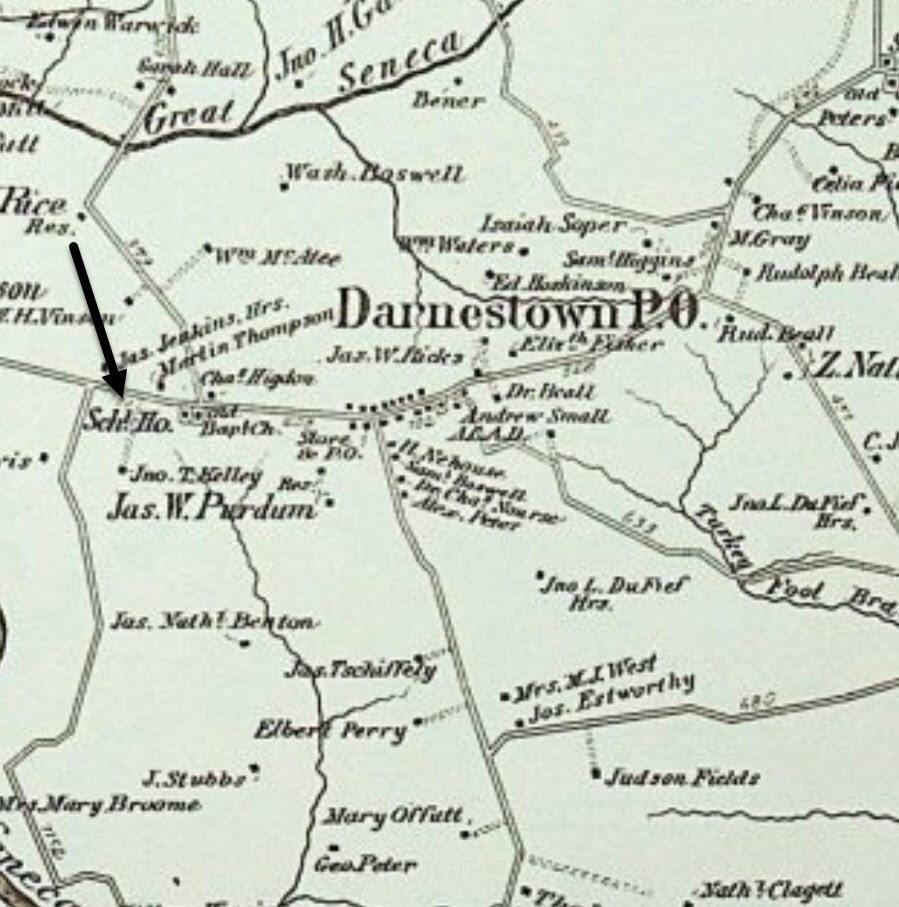
Darnestown Map detail, with school house location indicated
Due to limited resources, many of these schools lacked electricity and indoor plumbing; they relied on wood-burning stoves for heating and oil lamps for lighting. The students were separated roughly by level of study in each particular subject, rather than by age as they are now: a child might have studied 3rd grade math while also doing 6th grade reading or history. This flexible structure allowed for personalized learning experiences, but also required considerable skill from the teacher to manage diverse educational needs. Gender separation was maintained by seating girls and boys on opposite sides of the room. The larger boys were expected to help bring in the wood and carry out the ashes. Misbehavior begot corporal punishment.
The simplicity of these structures reflected both the educational philosophy of the time and the practical realities of rural life. School usually took place between the hours of 8 a.m. and 4 p.m. The youngest children sat in the front, while the oldest students sat in the back. The teacher usually taught reading, writing, arithmetic, history, and geography. Students memorized and recited their lessons. The teacher’s desk may have been on a raised platform at the front of the room, however, and there would have been a wood-burning stove since there was no other source of heat. The bathroom would have been outside in an outhouse.

Circa 1898 class photo taken at Lewis and Edgar Reed’s one-room schoolhouse (Darnestown School). There were six grades in the school with one teacher. Minnie McAtee, teacher (right rear). Photo from the Lewis Reed Collection.
Lewis Reed’s love of photography began at a very young age, at a time when most families did not own a camera. One of the oldest photos in his collection (class photo, pictured above) is dated 1898, which would have made him around 11-12 years old when he started using a camera. Lewis likely took this photo himself, setting the camera up on a tripod, and then running quickly into the shot before the shutter went off.
As for Minnie McAtee (1873-1962), according to The Baltimore Sun (Baltimore, Maryland) June 5, 1901, Miss McAtee resigned from the Montgomery County school system in 1901. In 1901 she moved to Washington, D.C., where she was employed by the government’s Bureau of Printing and Engraving. For 42 years she worked for the Bureau in a variety of positions, steadily working her way up. She retired in 1943.
Born in Darnestown, Miss McAtee attended the Andrew Small Academy in Darnestown, after which she completed correspondence courses to further her education. For eight years, she taught in the one-room schoolhouse at Pleasant Hill, Darnestown.
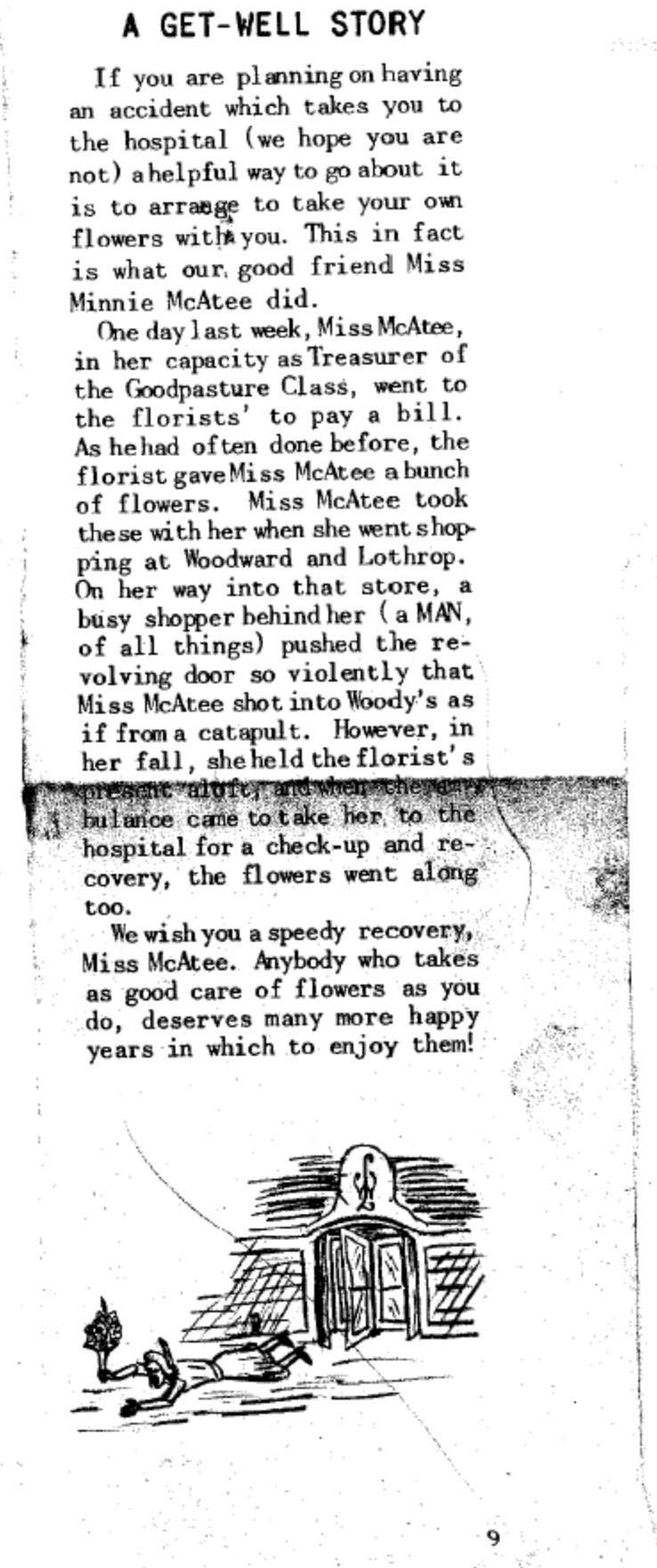
The undated “Get Well Story” below was posted on the Find A Grave website in her memory. Anybody who took such good care of flowers as she did, most certainly must have been a great school teacher.
Legacy
At least 34 schoolhouses of this bygone era still stand today in Montgomery County, an astounding total considering how developed Montgomery County is today. The five schoolhouses in Montgomery County restored as museums — Boyds, Brookeville (one-room school), Kingsley, Seneca, and Smithville — are open to the public at various times during the year. Most are open during Heritage Days; check www.heritagemontgomery.org for the schedule.
Sources of Information:
Find A Grave
Chronicling America digitized newspapers
Newspapers.com historical newspapers
The Baltimore Sun newspaper
February 14th – National Ferris Wheel Day & Valentine’s Day

Ferris Wheel at the Rockville Fair, circa 1920s. Photo by Lewis Reed
Did you know that February 14th is not only Valentine’s Day, but also National Ferris Wheel Day? This unofficial national holiday is held on this day to honor the birth of the inventor of the Ferris Wheel, George Washington Gale Ferris, Jr. What better way to celebrate Ferris Wheel Day than enjoying this ca.1920s photograph of the Ferris Wheel taken at the Rockville Fairgrounds, courtesy of Lewis Reed.
Then and Now: Commander Hotel Ocean City MD 1930
Few hotels in Ocean City can celebrate continually trading for over 90 years. The family owners can trace their local history back over 200 years. There have been many changes in the world of travel at that time, but The Commander’s beachfront boardwalk location remains as special today as it was on the day it all began.
Commander Hotel (THEN): The Commander Hotel first opened on Memorial Day in 1930, offering 62 rooms, a full American Plan dining room, and a kitchen equipped with wood-burning stoves. The hotel featured the city’s first elevator, in-room telephone service, and both ocean and boardwalk-facing front porch with rocking chairs. During the World War II era, the hotel welcomed doctors, lawyers, and executives. Each room was equipped with blackout curtains for use at night, which protected the windows from enemy shelling from offshore submarines.

Commander Hotel on the boardwalk at Ocean City, Maryland. Photo by Lewis Reed, ca. 1930
Commander Hotel (NOW): The same view today. The Commander Hotel was, for a long time, the northernmost hotel on the Boardwalk. Its dining room was famous and the Commander outranked many other hotels, enjoying “elite” status. The facility underwent a two-stage renovation in 1979, and in 1992 the cabanas near the pool were rebuilt. The original structure was razed in 1997 and the current eight-story Commander was constructed on the 14th Street site the following year.

Commander Hotel today
Then & Now: Veirs Mill Road, 1911
Do you recognize the road pictured below? Few modern residents of Montgomery County would guess, but it is a shot of Veirs Mill Road before it was paved.
Veirs Mill Road (THEN): In the early 19th century, rural roads were often little more than muddy trails. The popularity of the car coincided with the improvement of public roads around Rockville. By 1929, when Montgomery County residents owned 13,000 cars, Rockville Pike and Montgomery Avenue had both been paved, but the less-traveled Veirs Mill Road remained a narrow dirt road for decades after that. By the end of 1935, the highway was paved as a macadam road. Today, Veirs Mill Road is a four-lane divided highway.
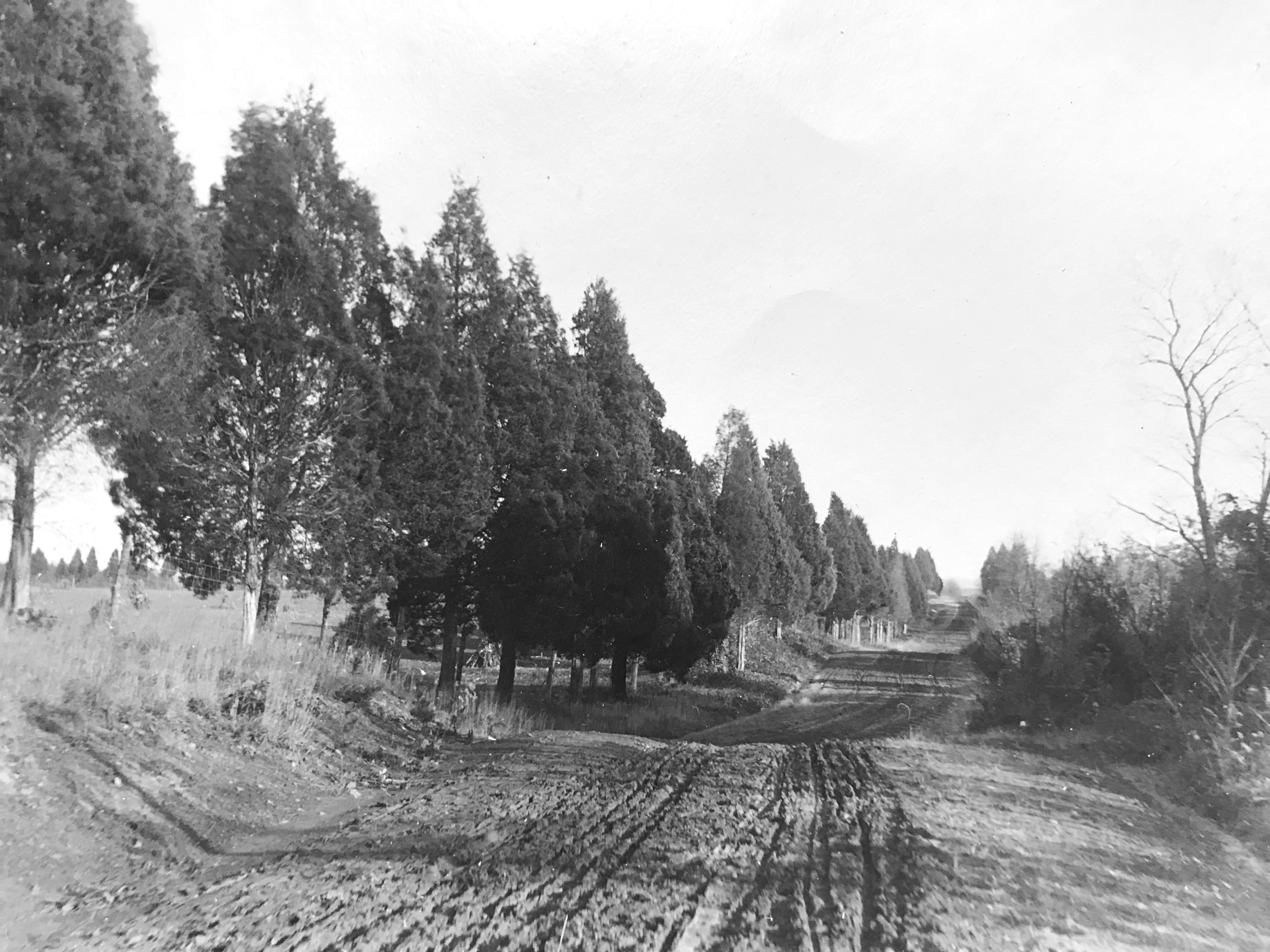
Veirs Mill Road looking east at Cedar Lane prior to paving, 1911. This roadway was not paved until 1935. Photo by Lewis Reed
Veirs Mill Road (NOW): Today, Veirs Mill Road is a four-lane divided highway. Google Map Link: https://goo.gl/maps/7uvDAWoYvwQ6KUUt9
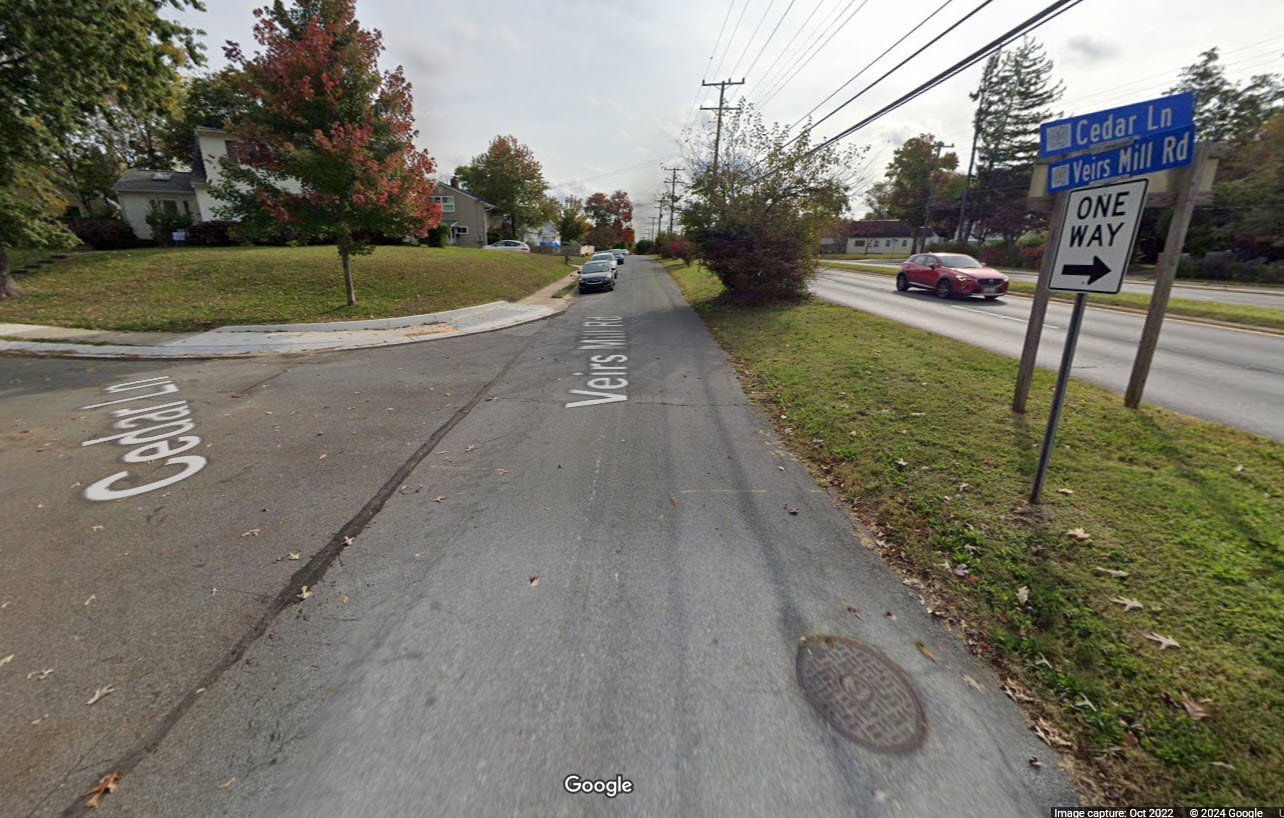
Today, Veirs Mill Road is a four-lane divided highway.

Veirs Mill Road at Cedar Lane showing deep ruts in the surface, 1911. The wagon wheels and tires of the time were very thin, and would sink straight into ruts, sometimes getting stuck. Photo by Lewis Reed.
From the “Times” (Washington):
Stalled in the mud… “Although he put on the entire 20-horsepower of his machine and called in assistance of several neighbors, it was not until shovels and crowbars had been procured to move his car… he was able to resume his journey. This experience not only caused more than an hour’s delay in reaching the city but the wear and tear on himself, those who rendered assistance, and incidentally, the machine. Thus, at least two months of the life of a $3,000 auto was spent in simply traversing a short stretch of roadway.”

A view down Cedar Lane in Bethesda, 1911. Photo by Lewis Reed.
Rockville Pike’s reputation as “one of the worst pieces of main highway in the state” eventually helped initiate Maryland’s Good Roads Movement, alongside a nationwide initiative to improve America’s roads. Responding to citizen demands, the newly created State Roads Commission incorporated the Rockville Pike into the state highway system.
In 1956, President Eisenhower passed legislation to implement (arguably) the greatest public-works project in U.S. history: the Interstate Highway System.
With this, every major city in America would be connected via highway construction, and mobility within the U.S. would ideally become limitless: a giant leap from the dirt roads and muddy paths that existed at the beginning of the century.
Find photos like these and much more on Montgomery History’s online exhibit, “Montgomery County 1900-1930: Through the Lens of Lewis Reed“.
Driving Into the 20th Century
Before 1900, there weren’t any traffic laws in regular use pertaining to automobiles other than certain regulations for the use of horse-drawn wagons and locomotives. The rise of the automobile changed all that. Local governments attempted to develop signage and laws to deal with this massive increase in the use of mechanized vehicles.

In the early 20th century, traveling cross-country by automobile was intimidating, if not a little bit dangerous. Cars were unreliable and roads were rough. The child in the photo is Lewis Reed’s daughter, Mary Jane. Photo by Lewis Reed
There were no paved highways for automobiles to shoot along at 60 and 70 miles an hour; just country roads, filled with ruts, sand, and mud, over which no one wanted to drive at the maximum speed of passenger cars, which was about 25 miles an hour.
You didn’t always need a license to drive. In fact, in the beginning of the 20th century, driver’s licenses didn’t even exist. Anyone could operate a vehicle, even if they had no idea what they were doing. As the number of automobiles increased, states slowly began to require people to be licensed in order to drive, with Maryland beginning in 1910.
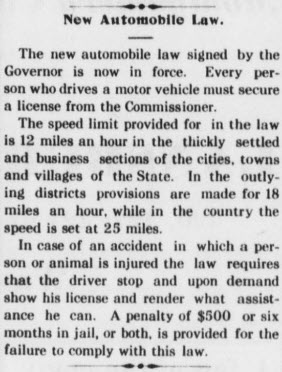
New license and speed limit laws in effect regarding automobile use for the state of Maryland. Montgomery County Sentinel, May 6, 1910.
Horses were skittish of the loud motors, and those who drove cars often had little training on how to operate them safely–both situations caused unprecedented accidents. Reed Brothers Dodge salesmen at the time often had to teach their customers how to drive the automobiles they had just purchased. “Speed limits” were a new concept, as individually-controlled vehicles capable of speeds much faster than a horse were previously non-existent.
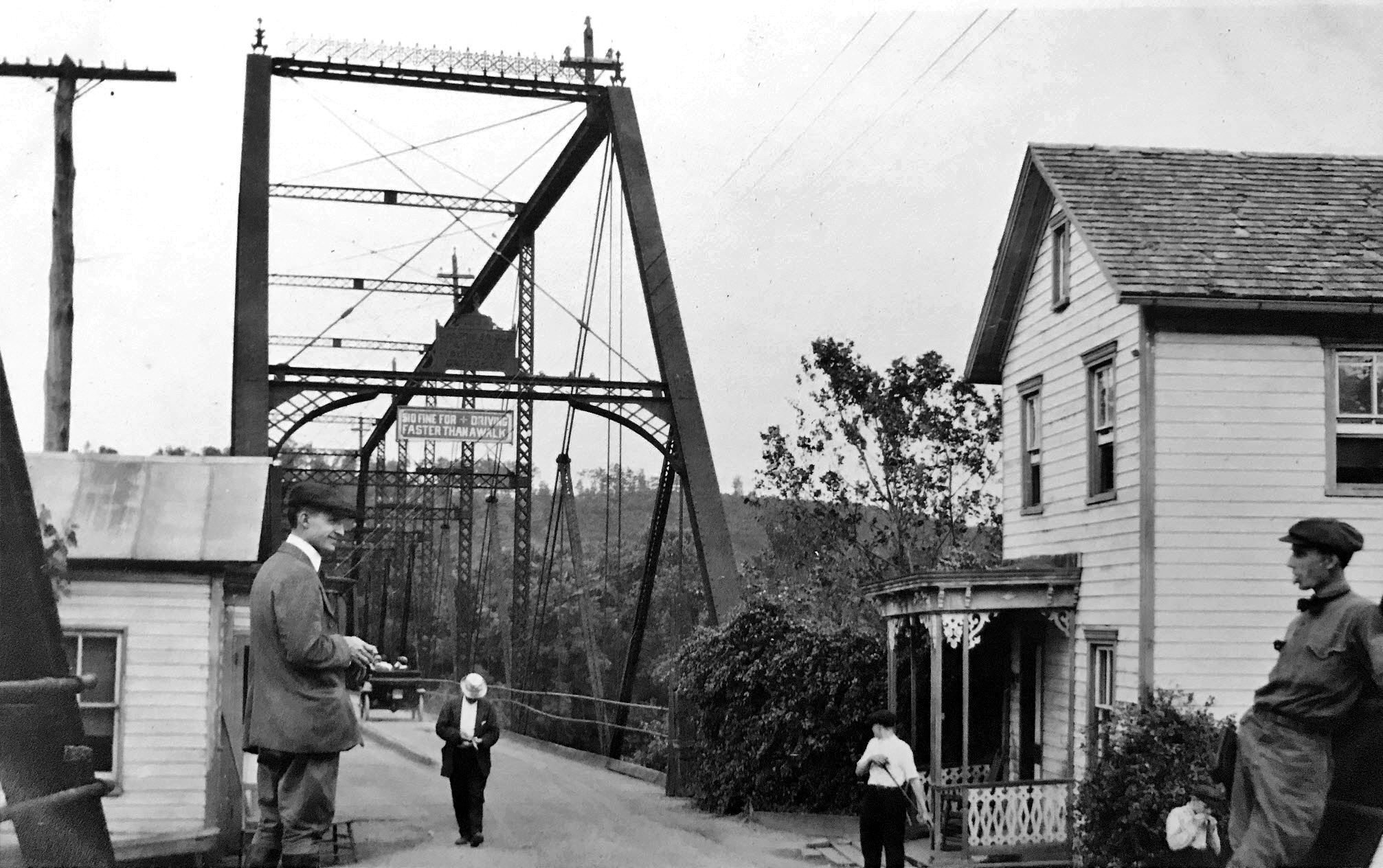
Sign on this bridge reads “$10 fine for driving faster than a walk.” Photo by Lewis Reed, c. 1910
The photograph above evokes a sense of nostalgia for slower-paced times. Literally slower: the sign over the bridge entrance reads “$10 fine for driving faster than a walk.” That’s equivalent to about $300 in today’s money.
From “Rules of the Road,” written by William P. Eno in 1903:
The mandatory registration of automobiles was one of the first traffic regulations in the United States. New York became the role model in 1901 by being the first state to require that automobile owners register their vehicles. By 1920, license plates were mandatory in all states. It took longer for the states to require a driver’s license. In 1935, there were just 39 states that issued the licenses and only a few tested applicants. Before the 1930s, most drivers received their training from automobile salesmen, nonprofit organizations such as the YMCA, family members and friends.
There was a good reason to discourage speeding in the first decades of the 1900s, as there were no stop signs, traffic lights, lane lines, brake lights, driver’s licenses, or posted speed limits, to name only a few modern safety measures. Drinking and driving? Not that big a deal. Poorly maintained roads, untrained and inexperienced drivers, and potential speeds approaching 40 mph created the perfect catalyst for horrific accidents. The photograph below illustrates how fragile those early cars were.
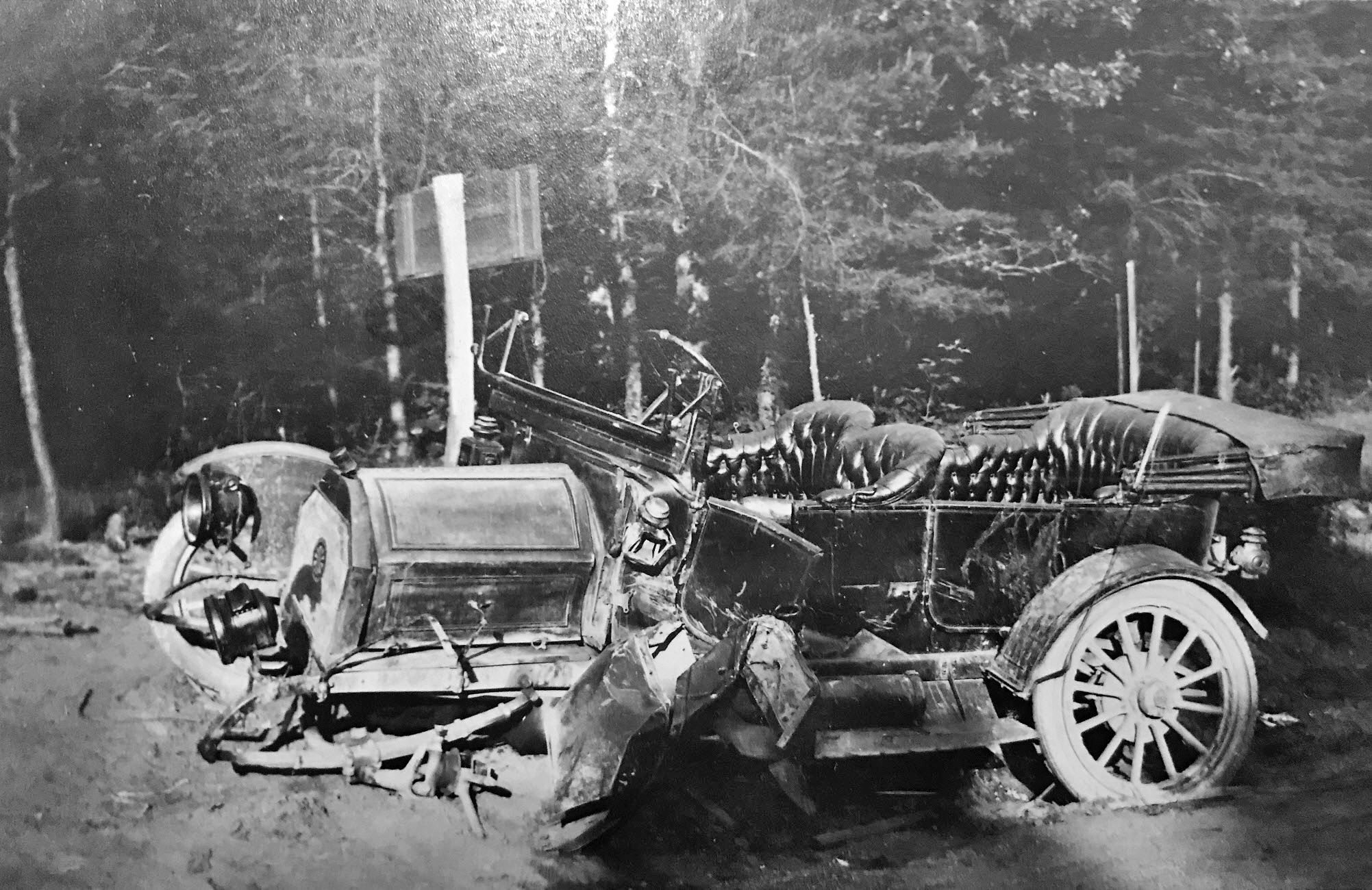
Early 20th century automobile accident. Photo by Lewis Reed
Trained as a chauffeur early in his life, Lewis Reed later leveraged his knowledge of automobiles into founding one of the longest-lived and most successful car dealerships in the state of Maryland.
Books

Related Resources


Copyright Notice

Reed Brothers Dodge History (1915-2012) by Jeanne Gartner is licensed under a Creative Commons Attribution-NonCommercial 3.0 Unported License.


Recent Comments