
The Founding of the Rockville Chamber of Commerce
In the summer of 1925, Rockville’s business leaders came together with a shared vision: to strengthen their growing community. About sixty local merchants and professionals gathered at the Montgomery County Country Club to form what would become the Rockville Chamber of Commerce.
Among the founding members was Edgar Reed, co-owner of Reed Brothers Dodge. At that first meeting, officers were elected, and Reed was chosen to serve on the Executive Board, where he also chaired the Better Business Bureau committee.
According to the Montgomery County Sentinel (September 25, 1925), the Chamber’s mission was clear:
To advance the commercial, industrial, and civic interests of Rockville and vicinity, and to promote integrity and good faith in matters of business.
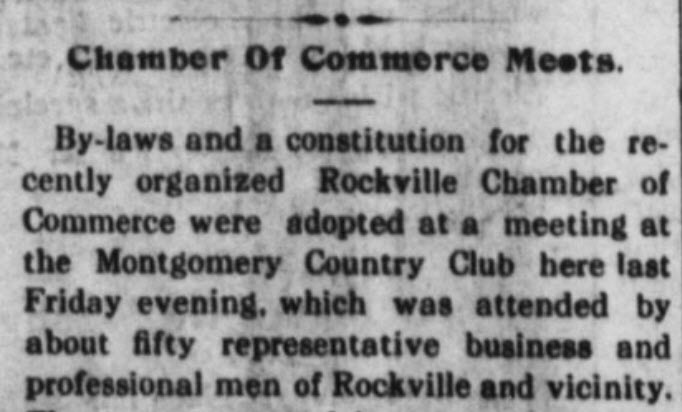
Montgomery County Sentinel. September 25, 1925
From the beginning, the Chamber focused on real, local issues: improving schools and playgrounds, addressing sanitation and public utilities, and supporting public projects. Members also partnered with county organizations to plan the 150th anniversary celebration of Montgomery County in 1926.
The new group didn’t shy away from tackling tough topics, either. They investigated questionable business practices, promoted honest advertising, and even began collecting data to help plan Rockville’s growth.
By 1926, the Chamber had taken civic pride a step further by sponsoring a short promotional film about Rockville. The movie featured local businesses, the brand-new firehouse, and the area’s thriving farms, complete with the memorable slogan:
Clean cows — clean udders — clean milk.
The creation of the Rockville Chamber of Commerce marked an important moment in the city’s history. It gave Rockville’s business community a unified voice; one that continues to shape and support the city’s growth nearly a century later.
Sources of Information:
Montgomery County Sentinel
Rockville Portrait of a City by Eileen S. McGuckian
From Rockville Garage to Reed Brothers Dodge
In early 20th-century Rockville, Maryland, a modest garage marked the beginning of a new era in transportation. From this starting point, Lewis Reed established what would become Reed Brothers Dodge; one of the nation’s earliest Dodge dealerships. Far more than a business, it grew into a lasting institution that reflected the progress of Rockville itself as the community transitioned from rural roads to suburban thoroughfares.

The dealership was originally located at the junction of Rockville & Georgetown Turnpike and Washington (Veirs Mill) Road in Rockville from 1915-1970, during which it expanded from a small-scale garage and dealership to one of the largest and most recognized commercial enterprises on Rockville Pike.
Origins of the Rockville Garage
From The Montgomery County Sentinel. May 20, 1914:
Mr. Alva Ricketts has purchased the vacant lot opposite the fair grounds, in this town, from Mr. Benjamin Haney and will in the course of a few days erect upon it a garage, in which will be kept his autos for the accommodation of the traveling public.
The Ricketts family, Leonidas “Lee” Ricketts and his sons Raymond, Emory, and Alva, managed the local Overland Agency at this pivotal location near the intersection of Veirs Mill Road and Rockville Pike from 1914 to 1915. Despite the promise of the burgeoning automobile market, the Overland Agency was short-lived. By July 1915, Lewis Reed, along with brothers Robert L. and Griffith Warfield, acquired the property from the Ricketts family and established the Rockville Garage.
Lewis Reed, originally an employee of the Rockville Garage, began his deeper involvement by purchasing a one-third interest from the Warfield brothers in January 1916. Over the next few years, his stake increased until by 1919, he became sole owner after acquiring the remainder from the Warfields. Shortly thereafter, in August 1919, Lewis’s brother Edgar joined the business, prompting the transformation of the company’s identity to Reed Brothers Dodge–marking the true beginning of a legacy that would drive Rockville’s automotive future for generations to come.
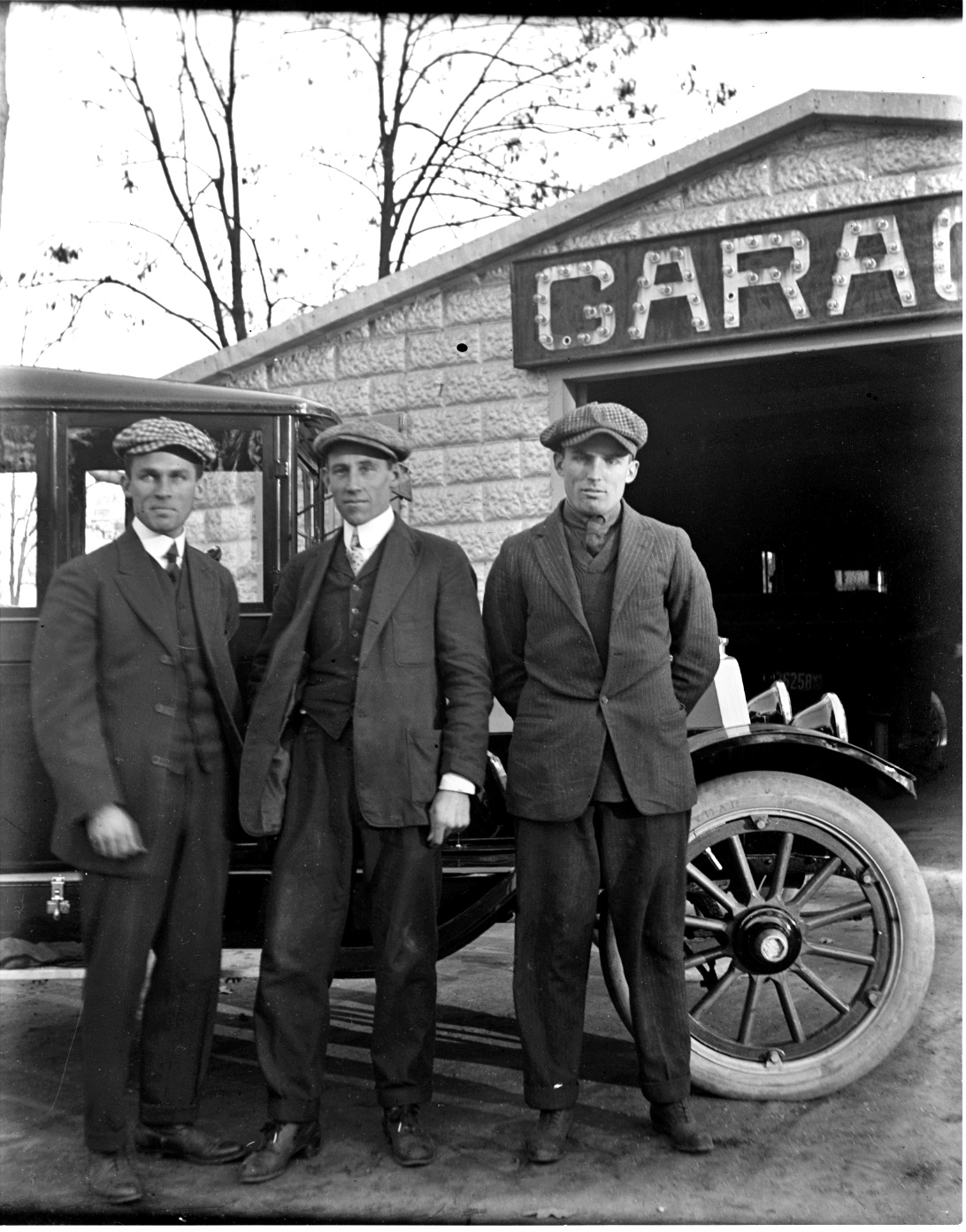
Original owners of the Rockville Garage, 1916. L-R: Roy Warfield, Lewis Reed, Griffith Warfield
The Rockville Garage: A New Era in Transportation
At a time when horses and wagons still crowded the streets of Rockville, the garage provided a range of critical services to early motorists, from fuel and tire repair to mechanical work. The business quickly became more than just a repair shop; it was a gathering place for locals fascinated by the emerging world of motor travel. Visitors could fill up with gasoline, get their cars serviced, or simply stop to marvel as these novel machines rumbled along Rockville Pike.
A Dodge Brothers Franchise
In October 1915, Reed Brothers took an important step that would define its trajectory for the next nine decades: it became one of the nation’s first Dodge Brothers Motor Car dealerships. This move reflected the Reeds’ forward-looking vision and their confidence in the automobile’s growing role in American life. The Dodge franchise brought credibility, new customers, and a steady stream of business opportunities for Reed Brothers, marking the transition from a small-town garage to a full-service dealership.
The First Building to Display the Reed Name
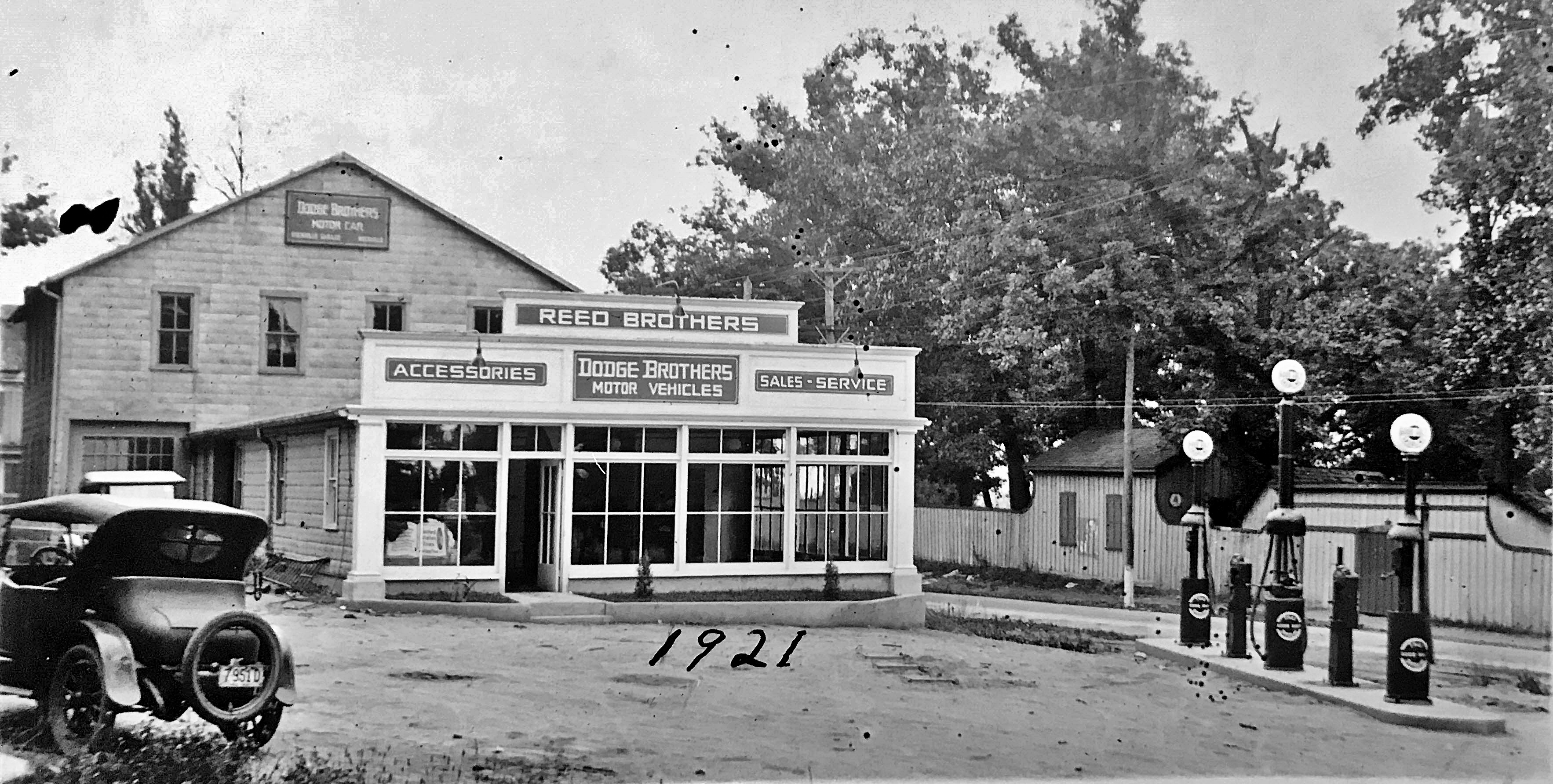
Reed Brothers Dodge got a new remodel in 1921. Note the new signage and three new modern gas pumps. The Rockville Fair Grounds are beyond the boarded fence on the right.
This 1921 photograph captures an important milestone in the history of Reed Brothers Dodge. Shown above is the first building to display the Reed Brothers name across the front, proudly advertising “Dodge Brothers Motor Vehicles Sales & Service.” With its remodeled façade and a row of brand new gas pumps out front, the building symbolized the dealership’s growth from a small garage into a full-service automobile business.
The addition of gasoline pumps was significant, marking the transition into a one-stop location where customers could not only purchase and service their Dodge vehicles but also fuel them conveniently on site. This was the earliest step in Reed Brothers’ evolution into a modern dealership; and the first time their name became a landmark in the Rockville community.
Serving Montgomery County Through the Years
Over the decades, Reed Brothers Dodge grew right alongside the county it served. As farming communities gave way to new neighborhoods, and Route 355 became one of Maryland’s busiest thoroughfares, the dealership adapted to meet the changing needs of its customers. The business expanded its showroom, introduced innovative advertising campaigns, and built a reputation for honest service and long-term customer relationships.
During the mid-20th century, Reed Brothers Dodge wasn’t just a place to buy a car; it was part of the fabric of Rockville life. Generations of local families purchased their first cars there, passed them down, and returned when it was time to buy the next one.
A Family Legacy
What set Reed Brothers apart from many other dealerships was its strong sense of continuity and stewardship. For more than 97 years, the dealership remained under the careful management of the Reed family, embodying values of integrity, community service, and dedication to employees. This family-run aspect fostered deep loyalty among customers and helped the dealership weather the ups and downs of the automotive industry.
The End of an Era, the Preservation of History

Reed Brothers Dodge in Rockville, Maryland, circa 2006, captured near the end of its nearly century-long legacy as one of the oldest family-owned Dodge dealerships in the nation.
When Reed Brothers Dodge eventually closed its dealership doors after more than 97 years, it left behind more than just a business. It left a legacy that continues to resonate in Montgomery County’s history. From the original Rockville Garage to the modern dealership that bore the Reed name, the enterprise represents an important chapter in how automobiles reshaped the physical and social landscape of the county.
The Reed: A Legacy Remembered
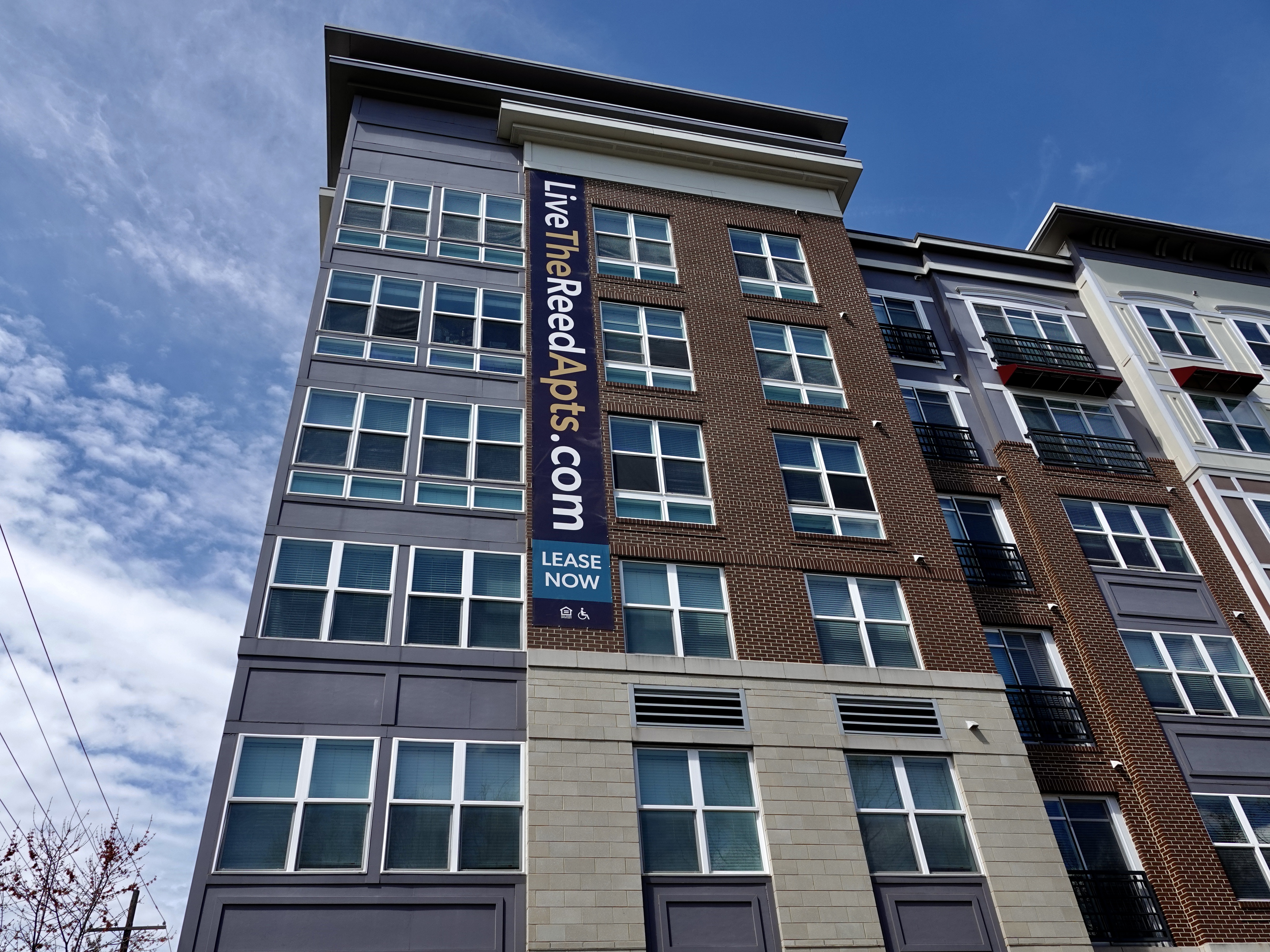
The Reed apartments in Rockville, named in tribute to the historic Reed Brothers Dodge dealership that once stood on this site.
Today, the dealership’s legacy endures not only in history but also in the fabric of the community. The modern apartment complex known as The Reed, located on the former site of Reed Brothers Dodge, was named in tribute to the pioneering dealership and the family whose business helped shape Rockville’s identity for nearly a century. In this way, the Reed name continues to stand as a landmark of resilience, progress, and community presence – just as it did when the first automobiles arrived on Rockville’s streets.
A Birthday Tribute to My Mother, Mary Jane (Reed) Gartner
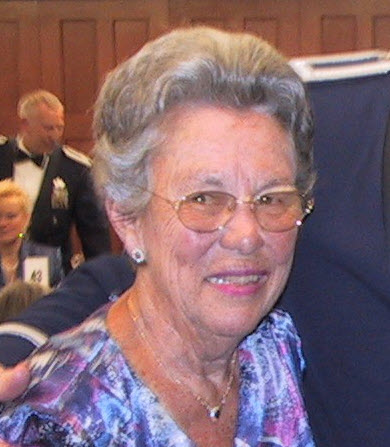
Mary Jane (Reed) Gartner September 24, 1922 – September 10, 2019
On September 24, 1922, Mary Jane (Reed) Gartner was born into a family whose name would become part of Rockville’s history. The daughter of Lewis Reed, founder of Reed Brothers Dodge, she came of age in the midst of a family business that spanned almost 100 years and three generations. Today, on her birthday, I dedicate this post to her memory.
It is impossible for me not to pause and reflect on what an extraordinary person she was. Like many, I have a handful of people in my life who truly inspire me, and my mom is at the very top of that list. From the earliest days of my life, she instilled in me a fundamental belief: if I set my mind to something, I could achieve it. She often said that “anything worth doing, is worth doing well,” and that motto has been a guiding light in everything I pursue. More than once, she reminded me that there is “no such thing as “can’t.” I should always look for reasons why I “can”. Because of that, I became fearless in reinventing myself as life changed, always striving to meet new challenges head-on.
One of the greatest joys of my adult life was the time we spent together exploring family history. On many afternoon visits with her, we went through hundreds of old photographs and stories that connected us to generations past. Many of the photographs had no documentation, so I relied on her remarkable memory; who the people were, where it was taken, the stories behind the faces. Those afternoons of listening and learning shaped the foundation of the books I’ve written and many of the posts I’ve shared on this blog. Without her willingness to share those details, the history I’ve documented would not be the same.
My mother carried the heart and energy of someone far younger. She never let age define what she could or couldn’t do. At 90 years old, she joined Facebook, and she didn’t stop there; she became a Skyper, a Texter, and easily navigated both iPhone and a Windows PC. Her fearless embrace of technology, when most would shy away, was inspiring to everyone around her. She proved that it’s never too late to learn something new.
Throughout my life, my mother was always my greatest supporter. She celebrated every achievement with pride, and one of my most cherished memories is having her in the audience in 2016 when I received the Arthur M. Wagman Award for Historic Preservation Communication from Peerless Rockville. The ceremony was held at Glenview Mansion, and while the recognition was a tremendous honor, what made it unforgettable was sharing it with her. As I looked out into the audience and saw her smile, I felt her joy. In that moment I knew the award wasn’t just mine, it was ours.
On this day, as I honor her birthday, I think of the countless ways she shaped my life. She taught me resilience, curiosity, and the importance of honoring the past while embracing the future. She lived with grace, humor, and a spirit that never grew old. Though I can no longer see her smile or hear her voice, I carry her with me every day in the lessons she taught, the love she gave, and the memories that continue to guide and inspire me.
The Montgomery County Poor Farm: A Glimpse Through Lewis Reed’s Lens
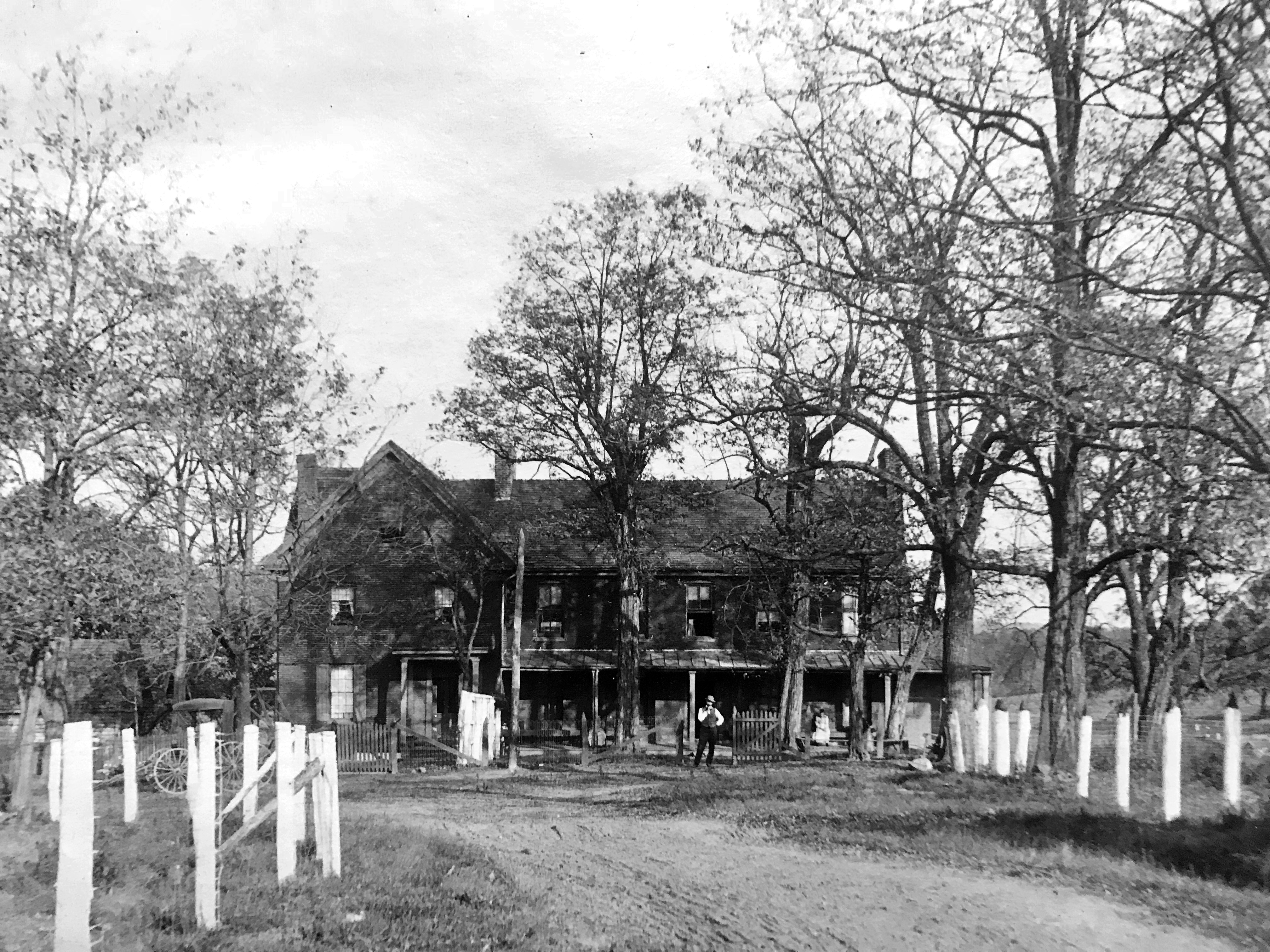
The Montgomery County Maryland Almshouse aka Poor Farm was established in 1789 and torn down in 1959. A modern jail is on its site on Seven Locks Road near Falls Road. Photo taken by Lewis Reed, ca. 1912.
When Lewis Reed raised his camera to capture the Montgomery County Poor Farm around 1912, he was doing more than photographing a building. He was making a choice about what deserved to be remembered.
Reed, known today as the founder of Reed Brothers Dodge, was also an avid photographer with a keen instinct for documenting the everyday life of his community. He photographed barns and bridges, parades and trains, town squares and quiet dirt roads. His lens turned toward the ordinary, and in doing so, he created an extraordinary record of Montgomery County as it was in the early 20th century.
The Poor Farm was not a picturesque subject. It carried with it a history of hardship; established in 1789 as a county-run farm for the poor, the elderly, and the sick, it was a place many preferred not to think about. By Reed’s time, reports described overcrowding, segregation, and unsanitary conditions. Countless residents who died there were buried in unmarked graves nearby. For most, the Almshouse stood as an uncomfortable reminder of poverty in a community that otherwise celebrated progress.
And yet, Lewis Reed photographed it.
Why? Perhaps because he understood, instinctively, that history is not just made up of celebrations and landmarks. It is also written in the places that society tried to hide. His photograph of the Poor Farm framed by leafless trees, a dirt road, and the faint figures of people at its entrance, reminds us that even the least visible institutions were part of the fabric of Montgomery County.
Lewis Reed’s eye was not sentimental, but it was honest. He recorded what was there, not just what was pleasant to see. By turning his lens on the Poor Farm, he acknowledged its existence and its place in the community’s story. Without that decision, we might have no image at all of this building that stood for more than a century and was torn down in 1959.
Today, this photograph is one of the few surviving visual records of the Montgomery County Poor Farm. It endures because Reed believed it mattered. As he might have said himself:
I photographed barns and houses, streets and machines, but also this place because it, too, was part of us. The Poor House was not grand, but it stood for something true about our county. Buildings vanish, memories fade, but a photograph holds them steady. Someday, when the Poor Farm is gone, this image may be all that remains. That is why I pressed the shutter.
Find more photos like this and much more on Montgomery History’s online exhibit, “Montgomery County 1900-1930: Through the Lens of Lewis Reed“.
A Century in Contrast: Then & Now at the Conowingo Dam
As part of our ongoing “Then & Now” series, we’re journeying through time using photographs from Lewis Reed’s remarkable photo collection. These powerful comparisons highlight how much, and sometimes how little, the world around us has changed. In this installment, we turn our lens to the Conowingo Dam, where echoes of the past still linger in the present. Step back in time and see how this historic site has evolved over the past 100 years.
Conowingo Dam (THEN): The Conowingo Dam, completed in 1928, is a large hydroelectric dam on the Susquehanna River in Maryland, known for its role in power generation and its impact on the Chesapeake Bay. When completed, it was the second-largest hydroelectric project by power output in the United States, after Niagara Falls.
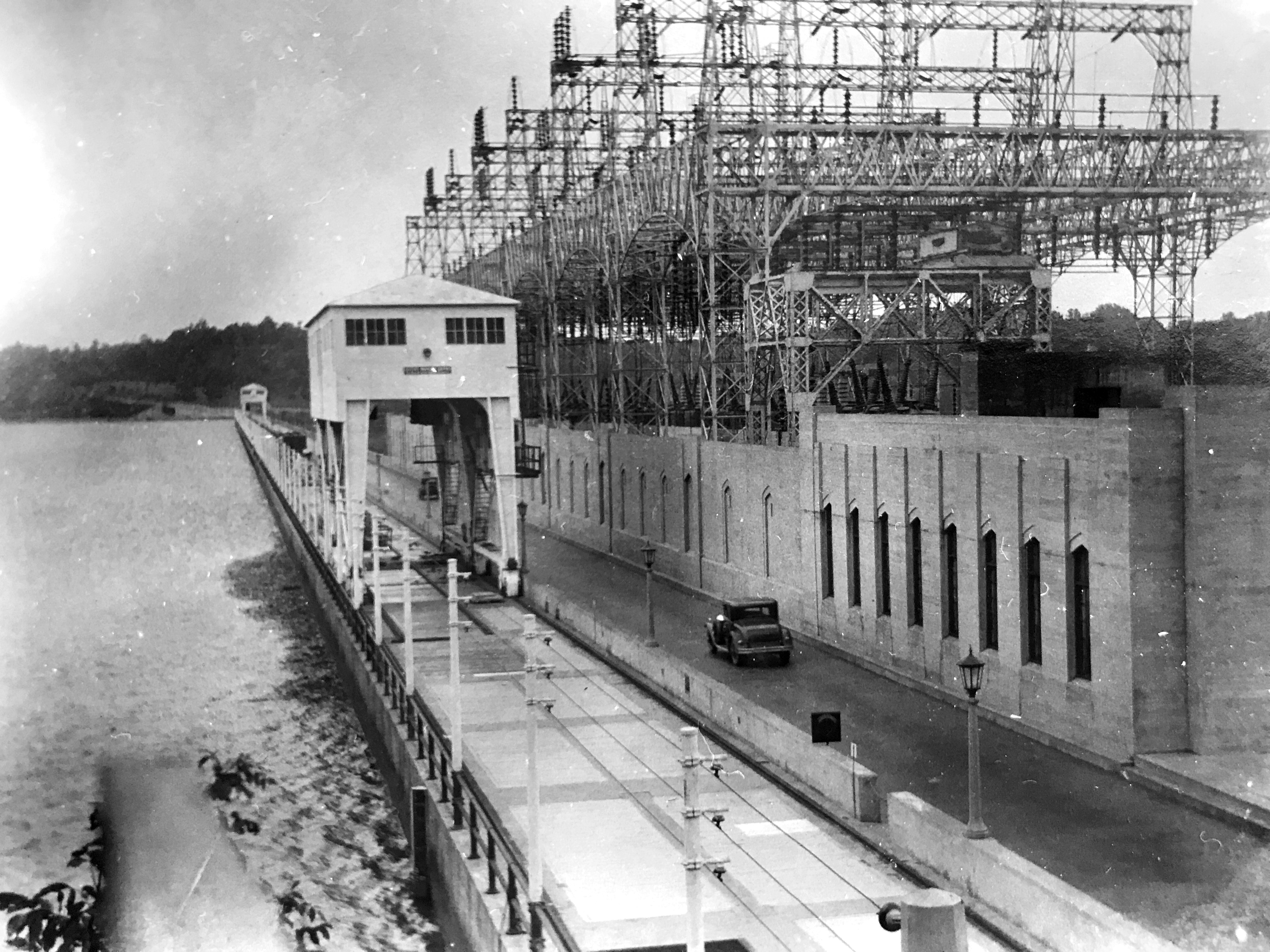
Power House and entrance to driveway crossing Conowingo Dam, Conowingo, Maryland. Photo by Lewis Reed, ca. 1928.
Conowingo Dam (NOW): Today, the Conowingo Dam is operated by the Susquehanna Electric Company, a part of Constellation Energy. The dam is one of the most popular destinations in the United States for seeing bald eagles. While the surrounding area is home to dozens of the eagles year-round, upwards of 200 more will migrate from places like New York and Canada, where lakes and rivers freeze over in the winter and limit fishing opportunities. Their numbers typically peak from November to January, with the eagles taking advantage of the dam’s turbines stunning fish swimming downriver to make for easy hunting. Once a fish is caught, eagles will often battle midair for it, and the spectacle attracts bird photographers from all over the world.
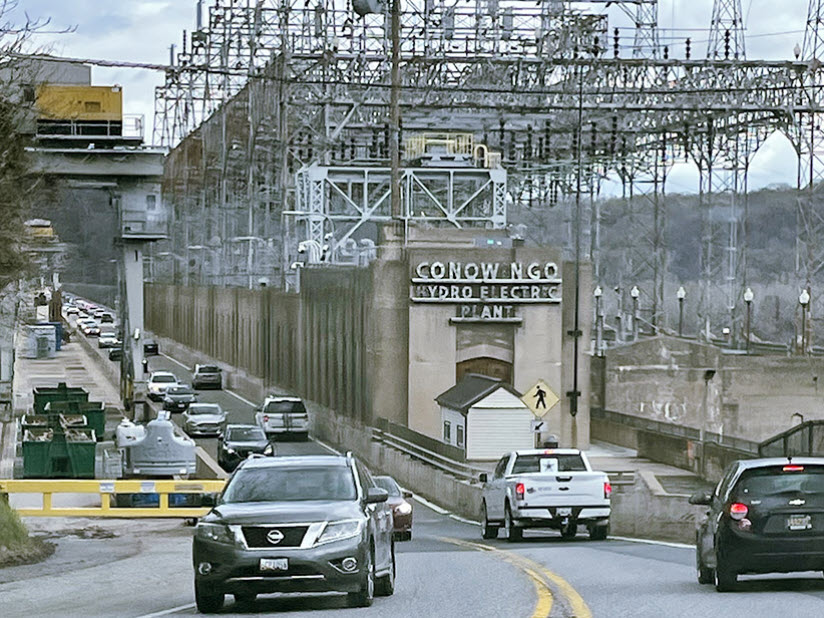
Conowingo Dam today. Google stock image
Source of Information: Conowingo Dam – Wikipedia
Books

Related Resources


Copyright Notice

Reed Brothers Dodge History (1915-2012) by Jeanne Gartner is licensed under a Creative Commons Attribution-NonCommercial 3.0 Unported License.
 Reed Brothers Dodge History 1915 – 2012
Recent Comments