
From Auto Dealer to Bank Director: Edgar Reed’s Legacy of Trust in Rockville History
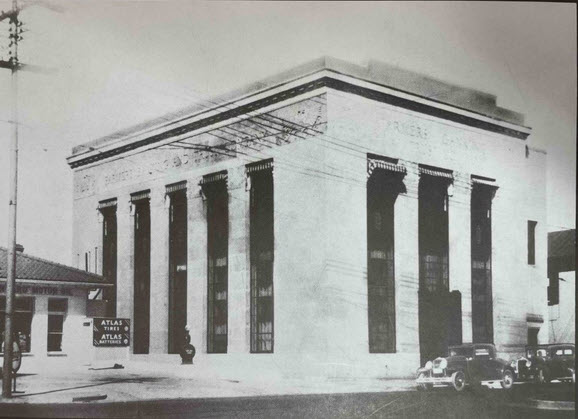
Farmers Banking and Trust building, 1930. From the collections of Peerless Rockville (Malcolm Walter collection)
For decades, Edgar Reed wore two hats that helped shape the future of Rockville. Best known as the co-founder of Reed Brothers Dodge, he was also a longtime Director of Farmers Banking and Trust Company, providing steady leadership to one of the community’s most important financial institutions while helping build Maryland’s oldest family-owned Dodge dealership.
A Timeline of Trust in the Montgomery County Sentinel
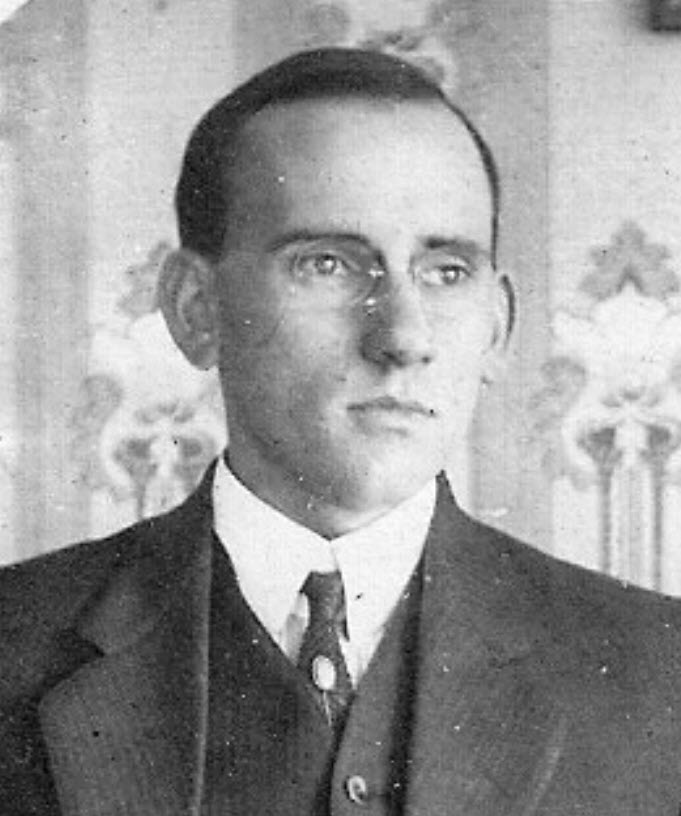
Beyond putting Montgomery County on wheels, Edgar Reed was a foundational figure in Rockville’s financial sector and civic life. In addition to his formidable 18-year tenure as a Director of Farmers Banking and Trust, he served as acting mayor of Rockville, President of the Montgomery County Municipal League, and was a charter member of both the Rockville Volunteer Fire Department and the Rockville Rotary Club.
Archival accounts from the Montgomery County Sentinel offer a vivid window into how Reed’s 18-year tenure began during one of the most volatile eras in American banking, maintaining an unbroken line of stewardship through mid-century:
- May 4, 1933 — “Richard F. Green Elected President of Farmers Bank”: Following the historic federal banking holidays of that spring, the Sentinel recorded the vital restructuring of the institution. Under the newly elected leadership of President Richard F. Green, Farmers Banking and Trust positioned itself as a bedrock of regional commerce. Edgar Reed’s appointment to this resilient board of directors signaled to local farmers and merchants that their capital was guarded by hands thoroughly invested in the community’s future.
- July 12, 1934 — Annual Meeting Updates: As the federal government rolled out stringent New Deal regulations to patch the holes in the American financial system, the newspaper reaffirmed the bank’s steady, prosperous course, detailing Reed’s ongoing, active oversight at the annual meetings.
- January 10, 1935 — “Report of Condition of Farmers’ Banking and Trust Company”: Published statements of condition from this era routinely listed the directors responsible for the bank’s assets. Reed’s name on these public reports stood as a symbol of accountability as the institution steadily rebuilt local consumer confidence during the later years of the Depression.
- January 27, 1938 — “Upper County Banks Elect 1938 Officers and Directors”: On the eve of World War II, the Sentinel highlighted the continuity of Rockville’s financial leadership, noting Reed’s steady re-election to the board as the county seat began transitioning from an agricultural hub into a modern center.
- January 13, 1944 — “Report of Condition of Farmers’ Banking and Trust Company”: In the thick of wartime home-front financing, official bank reports continued to list Reed as a vital director, steering institutional support toward war bonds and keeping local credit fluid despite strict wartime supply controls.
-
November 1, 1951 — “Edgar Reed” (Obituary): Following his passing on October 24, 1951, the Sentinel paid final tribute to Reed’s life of service. His obituary cemented his legacy not just as a pioneering auto dealer, but as an unwavering financial steward who gave nearly two decades of continuous devotion to the stability of Rockville.
A New Chapter: The Montgomery History Center

The historic Art Deco building at 4 Courthouse Square in Rockville, captured during its years operating as an M&T Bank branch prior to its acquisition by Montgomery History. (Image source: Google Street View)
In January 2025, Montgomery History purchased the historic 4 Courthouse Square building with a grand vision for its future. The organization is currently transforming the historic Art Deco structure into its permanent headquarters: the Montgomery History Center.
Scheduled to open in 2026, coinciding with the 250th anniversary of Montgomery County, the newly renovated space will serve as a vibrant community hub. The center will feature spaces for historical exhibits, lectures, and community receptions, as well as the new home of the Jane Sween Research Library and Special Collections.
Though the day-to-day records of Edgar Reed’s era are gone, the building’s legacy of serving Montgomery County endures. By adaptive reuse of this architectural landmark, the stories of early 20th-century leaders like Edgar Reed will live on, anchoring the community’s past directly into its future.
Sources of Information:
“Richard F. Green Elected President of Farmers Bank.” Montgomery County Sentinel, May 04, 1933
“Report of Condition of Farmers’ Banking and Trust Company.” Montgomery County Sentinel, Thursday, January 10, 1935
“Upper County Banks Elect 1938 Officers and Directors.” Montgomery County Sentinel, Thursday, January 27, 1938
“Report of Condition of Farmers’ Banking and Trust Company.” Montgomery County Sentinel, Thursday, January 13, 1944
“Edgar Reed.” Montgomery County Sentinel, November 01, 1951
Hedlund, Sarah. “History of the Farmers Banking and Trust Company building” February 2026.
Honoring Sergeant Edgar Reed: A Veterans Day Remembrance
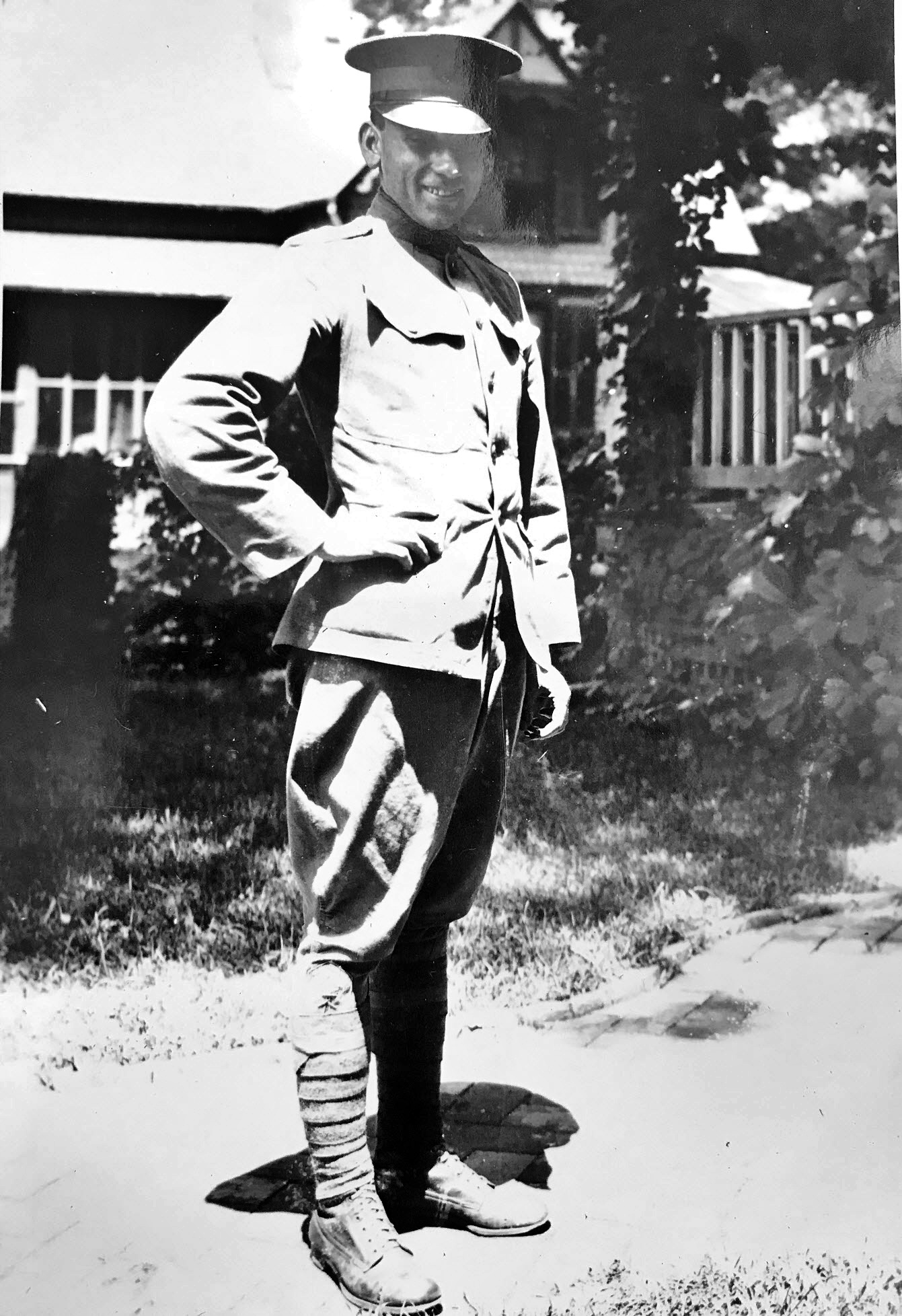
This photo of Edgar was taken around 1918 by Lewis Reed.
Veterans Day, observed annually on November 11th, is a time to honor all who have served in the United States Armed Forces. It is a day to reflect on the sacrifices made by these brave individuals and to express gratitude for their dedication to protecting our nation’s freedoms. This special tribute commemorates the dedication and contributions of Sergeant Edgar Reed, who served his nation with honor during World War I.
Military Service in World War I
The United States initiated a draft for World War I on September 28, 1917. On this day, the first 40 draftees from Montgomery County reported for duty at the Montgomery County Court House in Rockville, Maryland. Following speeches, dinner, and a parade, these recruits, including Rockville resident Edgar Reed, departed by train for Camp Meade, Maryland. Approximately 160 men from Rockville served in the eighteen-month war.
Edgar Reed enlisted in the U.S. Army as a Private on February 26, 1918, at the age of 27. At the time, he resided on Montgomery Avenue in Rockville and had been employed for eight years by R.W. Vinson, a Rockville druggist. His military career saw rapid advancement; he was promoted to Private First Class on April 27, 1918, and subsequently to Sergeant on February 14, 1919.
According to “Maryland Military Men, 1917-1918,” Edgar Reed served in the U.S. Army Medical Corps from February 1918 to August 1919. During his service, he was posted to General Hospital No. 16 in New Haven, Connecticut, and later to General Hospital No. 11 in Cape May, New Jersey.
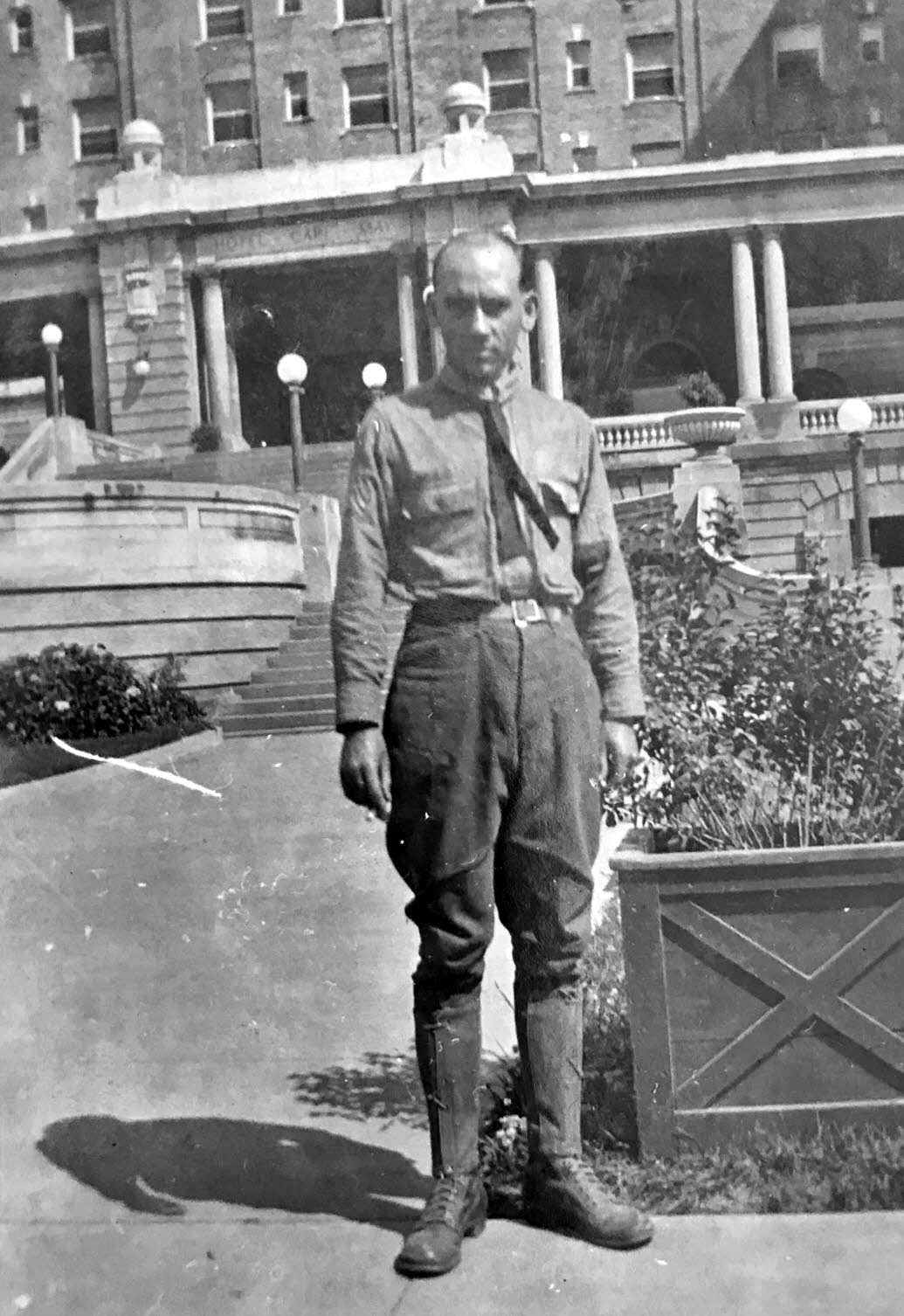
Edgar at Hotel Cape May, New Jersey. Photo by Lewis Reed, 1918
General Hospital No. 11, Cape May, New Jersey
The establishment of military hospitals during World War I often involved converting existing structures. The War Department, upon the recommendation of the Surgeon General, leased the Hotel Cape May in New Jersey for use as a general hospital on December 18, 1917. Initially designated as General Hospital No. 16, its name was changed to General Hospital No. 11 on March 14, 1918. This facility, located on Ocean Drive near the Atlantic Ocean, quartered enlisted personnel in tents behind the main building.
Post-War Life and Legacy
World War I officially concluded with an armistice between Germany and the Allied nations on November 11, 1918, at 11:00 AM. Edgar Reed was transferred to the Demobilization Center at Camp Lee, Virginia, on August 4, 1919, and received an honorable discharge on August 6, 1919.

Edgar Reed and friends returning home on the train after the war ended wearing the World War I “Victory Medal” on their lapels. Photo taken by Lewis Reed.
After returning from the war, Edgar joined his brother, Lewis, in the automobile business and became an active member of the Henderson-Smith-Edmonds American Legion Post 86 in Rockville. Through this organization, he continued his commitment to service by supporting fellow veterans, participating in community events, and helping preserve the legacy of those who served. This engagement not only reinforced his personal sense of duty but also strengthened the ties between his family’s business and the local community.
The Founding of the Rockville Chamber of Commerce
In the summer of 1925, Rockville’s business leaders came together with a shared vision: to strengthen their growing community. About sixty local merchants and professionals gathered at the Montgomery County Country Club to form what would become the Rockville Chamber of Commerce.
Among the founding members was Edgar Reed, co-owner of Reed Brothers Dodge. At that first meeting, officers were elected, and Reed was chosen to serve on the Executive Board, where he also chaired the Better Business Bureau committee.
According to the Montgomery County Sentinel (September 25, 1925), the Chamber’s mission was clear:
To advance the commercial, industrial, and civic interests of Rockville and vicinity, and to promote integrity and good faith in matters of business.
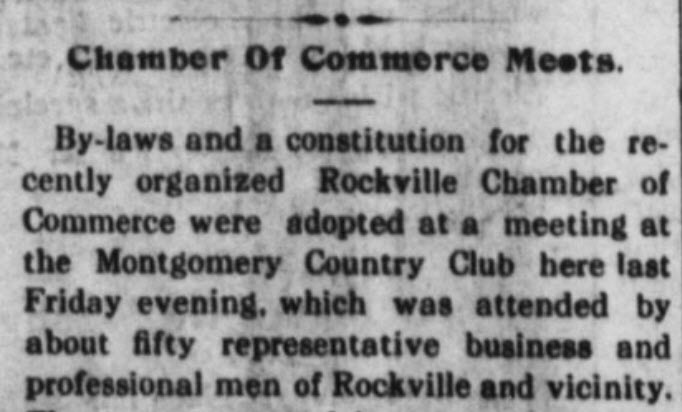
Montgomery County Sentinel. September 25, 1925
From the beginning, the Chamber focused on real, local issues: improving schools and playgrounds, addressing sanitation and public utilities, and supporting public projects. Members also partnered with county organizations to plan the 150th anniversary celebration of Montgomery County in 1926.
The new group didn’t shy away from tackling tough topics, either. They investigated questionable business practices, promoted honest advertising, and even began collecting data to help plan Rockville’s growth.
By 1926, the Chamber had taken civic pride a step further by sponsoring a short promotional film about Rockville. The movie featured local businesses, the brand-new firehouse, and the area’s thriving farms, complete with the memorable slogan:
Clean cows — clean udders — clean milk.
The creation of the Rockville Chamber of Commerce marked an important moment in the city’s history. It gave Rockville’s business community a unified voice; one that continues to shape and support the city’s growth nearly a century later.
Sources of Information:
Montgomery County Sentinel
Rockville Portrait of a City by Eileen S. McGuckian
A Special Veterans Day Tribute to Edgar Reed
Veterans Day is a time to recognize the veterans in our lives — to honor their service for our country and show them that we appreciate their sacrifices made in our behalf. World War I began on July 28, 1914 and later ended on November 11, 1918. In commemoration of Veterans Day, this very special post is in honor of the contributions Sergeant Edgar Reed made for our country during World War I.

Edgar Reed, partner with brother Lewis, in Reed Brothers Dodge. Photo taken ca. 1918 by Lewis Reed.
Edgar was a partner with his brother Lewis Reed, in Reed Brothers Dodge. I never got to know my great uncle Edgar like the rest of the Reed family, because he passed away the year after I was born. My mother told me she took me to the hospital right after I was born to meet Edgar, but of course, I have no recollection of that. I do, however, feel like I know him through all of the family stories and photographs I have spent archiving over the last 10+ years.

Edgar, center. Photo taken ca. 1918 by Lewis Reed.

Edgar at Hotel Cape May, New Jersey. Photo by Lewis Reed, 1918
On September 28, 1917 a draft for World War I began and the first 40 men reported for duty at the Montgomery County Court House in Rockville, Maryland. In the photograph below, cars are parked around the court house during the speech-making in the court room to drafted men. Montgomery County’s first recruits left Rockville by train for Camp Meade, Maryland on this same day. They each received a package of smoking tobacco and a rousing send-off from two thousand people after speeches at the courthouse, dinner at the Montgomery House Hotel, and a parade to the depot. About 160 Rockville men served in the eighteen-month war. One of those men was Rockville resident, Edgar Reed.

Montgomery County Court House. Note two tags on the cars; it was necessary to have DC as well as Maryland tags if the car was to be driven in DC. Photo by Lewis Reed, 1917.
Edgar Reed (1890–1951) was born in Darnestown, Maryland on October 17, 1890. On February 26, 1918 at the age of 27 years old, Edgar was enlisted into the U.S. Army as a Private. At this time, he lived on Montgomery Avenue in Rockville. He had been employed by R.W. Vinson, Rockville druggist for eight years.
On April 27, 1918, Edgar was promoted to the rank of Private First Class, and on February 14, 1919, he was promoted to Sergeant. According to “Maryland Military Men, 1917-1918”, Edgar served as a Sergeant in the U.S. Army Medical Corps from February 1918 to August 1919. He had been posted to GENERAL HOSPITAL NO. 16, NEW HAVEN, CONNECTICUT and GENERAL HOSPITAL NO. 11, CAPE MAY, NEW JERSEY.
The spirit of patriotic service which swept the country prompted many persons to offer their properties to the War Department for hospital purposes. These offers included buildings of every conceivable kind, such as department stores, private establishments, hospitals, and properties in large cities. It was found that many of these could be obtained and converted into hospitals much more expeditiously than barrack hospitals could be constructed, and at less cost.
The Surgeon General recommended that the War Department authorize the leasing of the Hotel Cape May in New Jersey for use as a general hospital on December 18, 1917. The Hotel Cape May was located on the Ocean Drive, at the eastern end of the city, and within 100 feet of the beach of the Atlantic Ocean. Opened first as GENERAL HOSPITAL NO. 16, the designation was changed to GENERAL HOSPITAL NO. 11, March 14, 1918. The enlisted personnel were quartered in tents which were located to the rear of the building.
At eleven o’clock on the eleventh day of the eleventh month in 1918, World War I fighting came to an end when an armistice between Germany and the Allied nations went into effect. On August 4, 1919, Edgar was transferred to the Demobilization Center at Camp Lee, Virginia and was honorably discharged on August 6, 1919.
Pictured below is Edgar Reed’s World War I draft card, signed and dated June 5, 1917.


Below is Edgar Reed and friends returning home on the train after the war ended wearing the World War I “Victory Medal” on their lapels.

Edgar Reed, right. Photo by Lewis Reed.
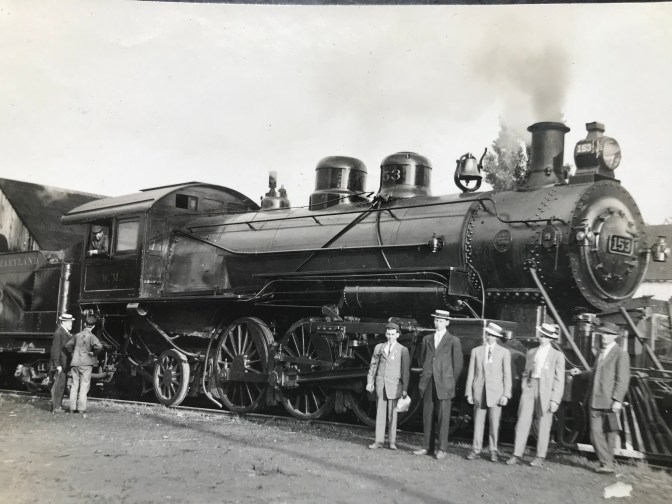
This photo captures the moment Edgar Reed (left) and friends arrived home from World War I. Photo by Lewis Reed.
Edgar was fortunate enough to survive World War I and to settle back in Rockville and enjoy a successful life and career in the automobile business. After returning from the war in 1919, Edgar joined his brother in the business and the name changed to Reed Brothers Dodge. Edgar was in the automobile business with his brother, Lewis, for 35 years until his death in 1951.
So while we honor all who served this Veterans Day, on this day, I salute you Edgar Reed, and thank you for your service to our country.
Sources:
U.S. Army Office of Medical History
Ancestry.com
Maryland Military Men, 1917-1918
A Special Veterans Day Tribute to Edgar Reed
Veterans Day is a time to recognize the veterans in our lives — to honor their service for our country and show them that we appreciate their sacrifices made in our behalf. World War I began on July 28, 1914 and later ended on November 11, 1918. In commemoration of Veterans Day, this very special post is in honor of the contributions Sergeant Edgar Reed made for our country during World War I.
Edgar Reed, partner with brother Lewis, in Reed Brothers Dodge. Photo taken ca. 1918 by Lewis Reed.
Edgar was a partner with his brother Lewis Reed, in Reed Brothers Dodge. I never got to know my great uncle Edgar like the rest of the Reed family, because he passed away the year after I was born. My mother told me she took me to the hospital right after I was born to meet Edgar, but of course, I have no recollection of that. I do, however, feel like I know him through all of the family stories and photographs I have spent archiving over the last 10+ years.
Edgar, center. Photo taken ca. 1918 by Lewis Reed.
Edgar at Hotel Cape May, New Jersey. Photo by Lewis Reed, 1918
On September 28, 1917 a draft for World War I began and the first 40 men reported for duty at the Montgomery County Court House in Rockville, Maryland. In the photograph below, cars are parked around the court house during the speech-making in the court room to drafted men. Montgomery County’s first recruits left Rockville by train for Camp Meade, Maryland on this same day. They each received a package of smoking tobacco and a rousing send-off from two thousand people after speeches at the courthouse, dinner at the Montgomery House Hotel, and a parade to the depot. About 160 Rockville men served in the eighteen-month war. One of those men was Rockville resident, Edgar Reed.
Montgomery County Court House. Note two tags on the cars; it was necessary to have DC as well as Maryland tags if the car was to be driven in DC. Photo by Lewis Reed, 1917.
Edgar Reed (1890–1951) was born in Darnestown, Maryland on October 17, 1890. On February 26, 1918 at the age of 27 years old, Edgar was enlisted into the U.S. Army as a Private. At this time, he lived on Montgomery Avenue in Rockville. He had been employed by R.W. Vinson, Rockville druggist for eight years.
On April 27, 1918, Edgar was promoted to the rank of Private First Class, and on February 14, 1919, he was promoted to Sergeant. According to “Maryland Military Men, 1917-1918”, Edgar served as a Sergeant in the U.S. Army Medical Corps from February 1918 to August 1919. He had been posted to GENERAL HOSPITAL NO. 16, NEW HAVEN, CONNECTICUT and GENERAL HOSPITAL NO. 11, CAPE MAY, NEW JERSEY.
The spirit of patriotic service which swept the country prompted many persons to offer their properties to the War Department for hospital purposes. These offers included buildings of every conceivable kind, such as department stores, private establishments, hospitals, and properties in large cities. It was found that many of these could be obtained and converted into hospitals much more expeditiously than barrack hospitals could be constructed, and at less cost.
The Surgeon General recommended that the War Department authorize the leasing of the Hotel Cape May in New Jersey for use as a general hospital on December 18, 1917. The Hotel Cape May was located on the Ocean Drive, at the eastern end of the city, and within 100 feet of the beach of the Atlantic Ocean. Opened first as GENERAL HOSPITAL NO. 16, the designation was changed to GENERAL HOSPITAL NO. 11, March 14, 1918. The enlisted personnel were quartered in tents which were located to the rear of the building.
At eleven o’clock on the eleventh day of the eleventh month in 1918, World War I fighting came to an end when an armistice between Germany and the Allied nations went into effect. On August 4, 1919, Edgar was transferred to the Demobilization Center at Camp Lee, Virginia and was honorably discharged on August 6, 1919.
Pictured below is Edgar Reed’s World War I draft card, signed and dated June 5, 1917.
Below is Edgar Reed and friends returning home on the train after the war ended wearing the World War I “Victory Medal” on their lapels.
Edgar Reed, right. Photo by Lewis Reed.
This photo captures the moment Edgar Reed (left) and friends arrived home from World War I. Photo by Lewis Reed.
Edgar was fortunate enough to survive World War I and to settle back in Rockville and enjoy a successful life and career in the automobile business. After returning from the war in 1919, Edgar joined his brother in the business and the name changed to Reed Brothers Dodge. Edgar was in the automobile business with his brother, Lewis, for 35 years until his death in 1951.
So while we honor all who served this Veterans Day, on this day, I salute you Edgar Reed, and thank you for your service to our country.
Sources:
U.S. Army Office of Medical History
Ancestry.com
Maryland Military Men, 1917-1918
Books

Related Resources


Copyright Notice

Reed Brothers Dodge History (1915-2012) by Jeanne Gartner is licensed under a Creative Commons Attribution-NonCommercial 3.0 Unported License.


Recent Comments