
Then & Now: The New Raleigh Hotel Washington DC, 1912
Some of the city’s oldest hotels not only have a long history of storied visitors and impressive tales, but they’ve shaped the city’s landscape for decades and perhaps centuries. However, for every Hay-Adams, Willard Continental and Morrison-Clark, there’s a hotel like the the Raleigh Hotel that’s either been converted and or destroyed entirely.
Raleigh Hotel (THEN): Along with the Willard, the Raleigh Hotel was one of the largest and grandest hotels in Washington in the first part of the twentieth century. It held a commanding position on Pennsylvania Avenue across from the Old Post Office Building and was famous as a Mecca for patrons of the performing arts. In 1911, the building was razed and rebuilt as a 13-story Beaux Arts hotel.
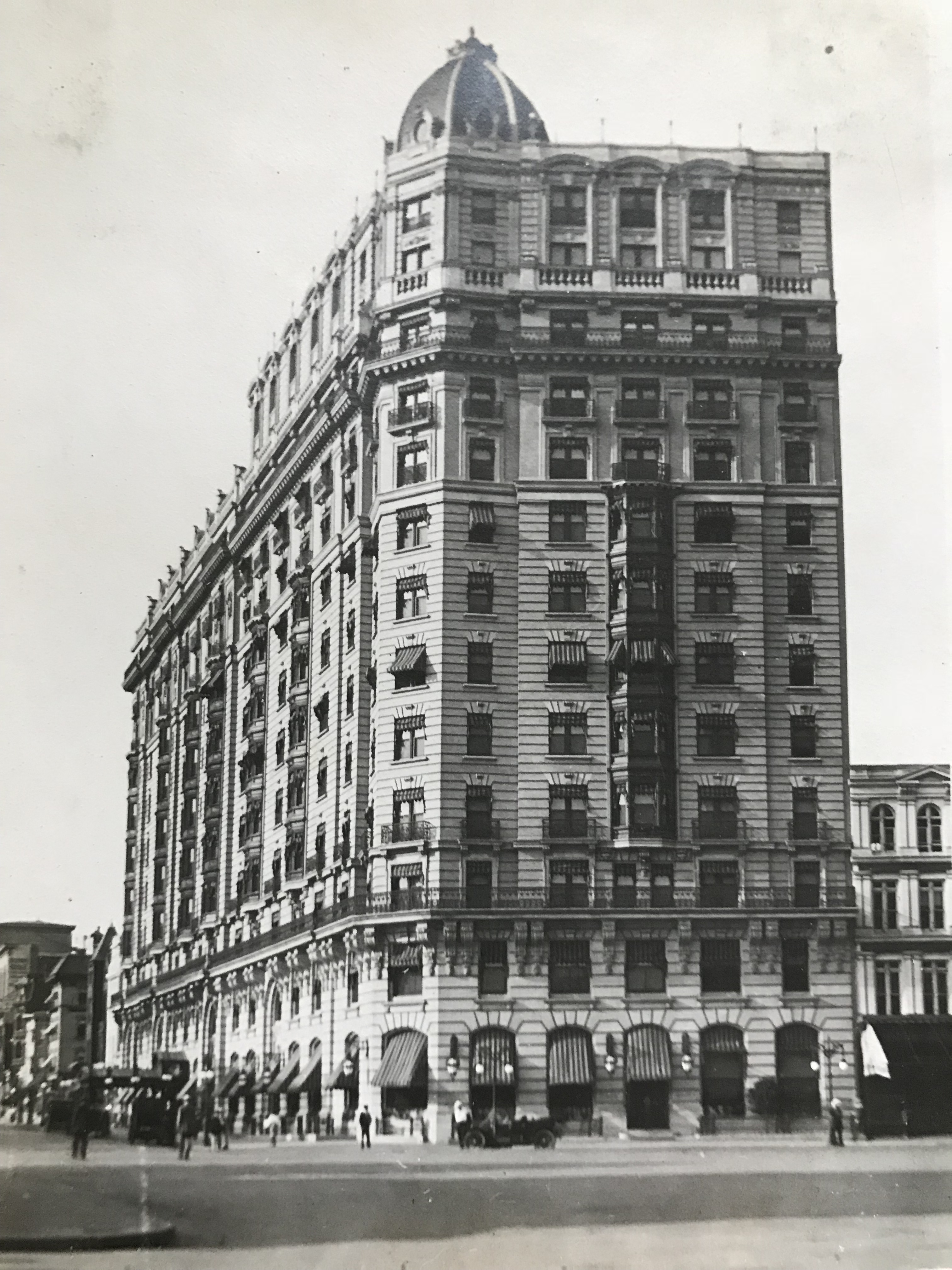
The recently completed Raleigh Hotel at Pennsylvania Ave and 12th Street NW, built on the site of the previous Raleigh Hotel. Photo taken by Lewis Reed, ca. 1912
Raleigh Hotel (NOW): The hotel closed in 1963, its furnishings were sold off, and it was demolished a year later. Its replacement, a 14-story office building at 1111 Pennsylvania Avenue, was completed in 1968, and it still stands on the site today.

The site of the Raleigh as it appears today.
Then & Now: Smithsonian Institution Castle
This post is a continuation of a series of “Then & Now” images from Lewis Reed’s Photo Collection alongside photographs of how they appear today. Lewis Reed worked hard to preserve a visual history of Montgomery County, Maryland and surrounding area long before automobiles were even around. As early as 1905, he toured on his motorcycle across the states of Maryland, Virginia, and Washington, D.C. and took photographs of many historic locations. Taken approximately 115 years apart, you can see how the Smithsonian Institution Castle looks both the same and completely different from over a century ago.
Smithsonian Institution Castle (THEN): The Smithsonian Institution Building, popularly known as the “Castle,” was designed by architect James Renwick, Jr. Initially, the Castle was intended to be built in white marble and then in yellow sandstone. The architect and the building committee finally agreed on using Seneca red sandstone from the Seneca Quarry, located in Montgomery County, Maryland. When it was completed in 1855, it sat on an isolated piece of land cut off from downtown Washington, DC, by a canal. In the ensuing decades, the Castle became the anchor for the National Mall, as additional museums and government buildings were constructed around it.

Smithsonian Institution Castle. Photo taken by Lewis Reed in 1907
Smithsonian Institution Castle (NOW): The same view over a century later. The Smithsonian Institution Castle, located near the National Mall in Washington, D.C. behind the National Museum of African Art and the Sackler Gallery, houses the Smithsonian Institution’s administrative offices and information center.

Smithsonian Institution Castle today
Rare, Historical Photos: 1912 Grading of Massachusetts Ave Washington, DC
Washington, DC is an amazing city with a fascinating history. Massachusetts Avenue intersects every major north–south street and passes numerous Washington, DC landmarks. It is a landmark itself, long considered the northern boundary of the downtown as well as home of Washington’s Embassy Row.
Massachusetts Avenue is tied with Pennsylvania Avenue as the widest road in the District, at 160 feet. The two roads run in parallel through much of the city, Massachusetts about seven blocks north of Pennsylvania. Massachusetts Avenue was long Washington’s premier residential street, as Pennsylvania was once its most sought-after business address. Both streets were named after states with prominent roles in the American Revolution: Massachusetts and Pennsylvania.
Below are some extremely rare, historical photographs that Lewis Reed took of Massachusetts Avenue as it was being graded in 1912. As always, click on the photos to get a better look.
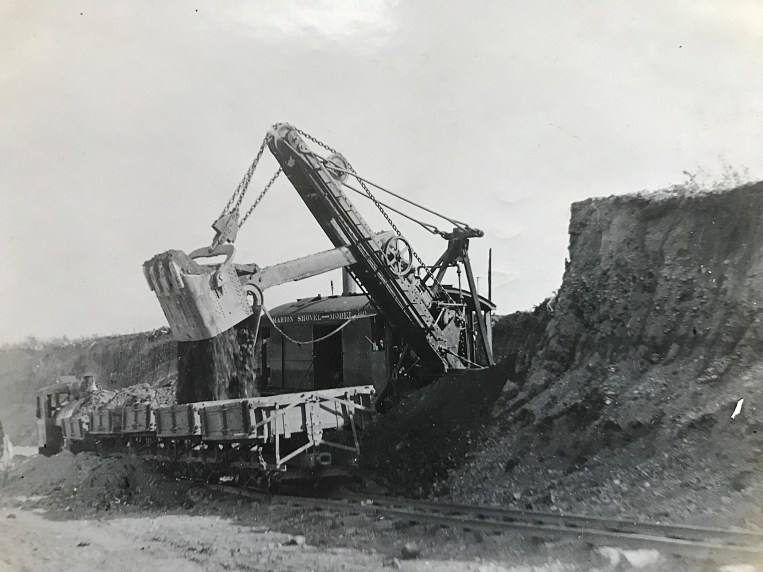
Marion Shovel Model 60 in action cutting a high bank of dirt on Massachusetts Ave. Photo by Lewis Reed, ca.1912

A Bucyrus steam shovel loading dirt onto a railway car. Photo by Lewis Reed, ca. 1912.
A steam shovel is a large steam-powered excavating machine designed for lifting and moving material such as rock and soil. It is the earliest type of power shovel or excavator. Steam shovels played a major role in public works in the 19th and early 20th century.
When digging at a rock face, the operator simultaneously raises and extends the dipper stick to fill the bucket with material. When the bucket is full, the shovel is rotated to load the railway car. Steam shovels usually had a three-man crew: engineer, fireman and ground man.
The track of Massachusetts Avenue was paved in the early 1870s. It was extended beyond Boundary Road (now Florida Avenue) in the 1880s, and beyond Rock Creek up to the District line after 1900. The section between Sheridan Circle and Scott Circle became known as “Millionaires’ Row”.

Hill Grading Massachusetts Avenue, Washington DC. The Washington Monument and many other landmarks can be seen in the background. Photo by Lewis Reed, ca. 1912
The Great Depression forced many to relinquish their homes on Millionaires’ Row. After World War II, Massachusetts Avenue was seen as less fashionable than newer areas such as upper 16th Street. Many residences were sold and demolished to make way for office buildings, particularly around Dupont Circle and to its east. Many others, however, survived as embassies and society houses; the former ‘Millionaires’ Row is today well known as Embassy Row.
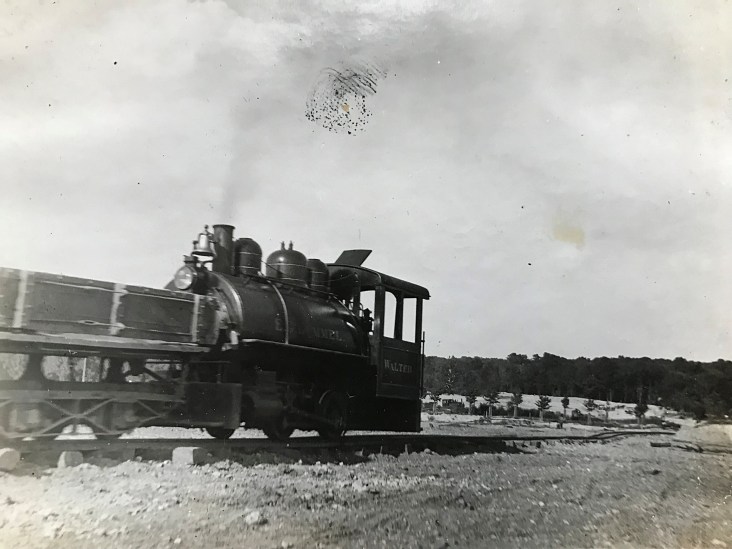
An early steam locomotive is hauling away dirt. Photo by Lewis Reed, ca. 1912
Source: Wikipedia
Then & Now: Old Post Office and Clock Tower Washington, DC
Old Post Office and Clock Tower (THEN): Seen in the black & white photograph taken by Lewis Reed in 1910, is the Old Post Office building in Washington, D.C. The Old Post Office, listed on the National Register of Historic Places as the Old Post Office and Clock Tower and located at 1100 Pennsylvania Avenue NW in Washington, D.C., was begun in 1892, completed in 1899. It is the second-tallest structure in the nation’s capital, after the Washington Monument. Adjoining the building to the right is the E. H. Snyder Tailors Shop and Washington Utilities Company.

Old Post Office, 1910. Photo by Lewis Reed
Trump International Hotel and Clock Tower (NOW): Though DC residents might call it the Old Post Office out of habit, it now houses the Trump International Hotel. Even though it has been renovated into a luxury hotel, the Old Post Office Pavilion Clock Tower remains open to the public and run by the National Park Service.

Trump International Hotel and Clock Tower in Washington, DC today
Source: Wikipedia
Then & Now: Computing Tabulating Recording Company (aka IBM)
It might feel like things are always changing in Washington DC. There are always new buildings being built, businesses closing and with every few years. But you might not realize how much Washington DC has changed until you look back at what it looked like in the past. In this “Then & Now” feature, I have combined one of Lewis Reed’s original photograph’s for “then” and matched it with a google street view image for “now”. Taken approximately 108 years apart, these photos show Hollerith’s Plant then and now.
THEN: Before becoming interested in automobiles, Lewis Reed was one of the original employees of the Computing Tabulating Recording Company, a Georgetown-based manufacturing firm that eventually became International Business Machines, Inc. The Tabulating Machine Company was formed by Hermann Hollerith in 1896 and merged to form the Computing-Tabulating-Recording Company in 1911. Seen in the photo below, the two-story building housed Hollerith’s card manufacturing plant, assembly plant, repair shop and development laboratory. Hollerith later incorporated his business as the Tabulating Machine Company. It was consolidated into the Computing-Tabulating-Recording Co. in 1911, and was renamed International Business Machines (IBM) in 1924.

Hollerith’s Plant 1911. Photo by Lewis Reed
NOW: Today the U.S. technology sector is inextricably linked with the West Coast, but the history of data processing actually traces back to an unassuming brick factory in Washington, D.C. This was the Georgetown headquarters of the Tabulating Machine Company, an early analog computer manufacturer that you may know by the contemporary moniker IBM. IBM placed a historical plaque on the corner of the building by 31st Street and the Canal. Hollerith is also buried nearby in the Oak Hill Cemetery.

Front of the old Tabulating Machine Company on 31st Street today
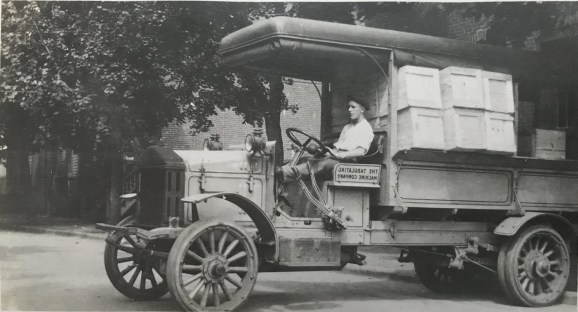
Tabulating Machine Company Delivery Truck. Note that the writing on the side of the truck is in reverse… I have no idea why. Photo by Lewis Reed
The following photographs are interior images.
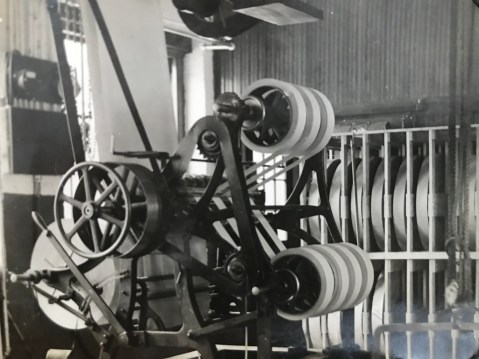
Photo by Lewis Reed

Photo by Lewis Reed

Photo by Lewis Reed
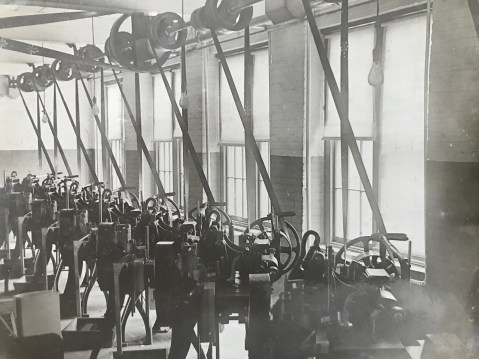
Photo by Lewis Reed

Photo by Lewis Reed
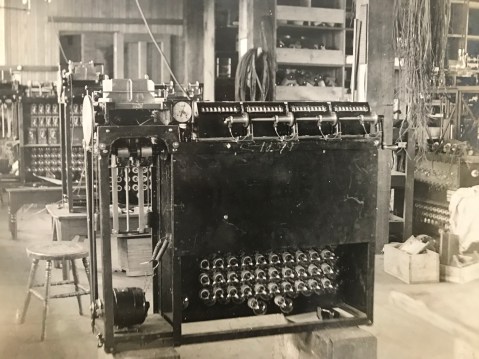
Photo by Lewis Reed
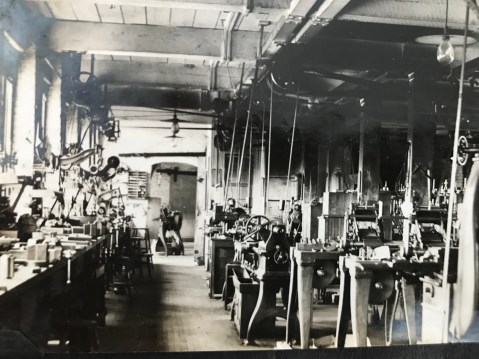
Photo by Lewis Reed

Photo by Lewis Reed
Source: IBM Archives
Books

Related Resources


Copyright Notice

Reed Brothers Dodge History (1915-2012) by Jeanne Gartner is licensed under a Creative Commons Attribution-NonCommercial 3.0 Unported License.
 Reed Brothers Dodge History 1915 – 2012
Recent Comments