
Lewis Reed Photo: Old Country Store

Circa 1900s country store on a dirt road. Note the sign advertising Battle Axe Shoes. Two ladies standing on the porch. Location Unknown. Photo by Lewis Reed
This early 1900s photo taken by Lewis Reed is a flashback to a time when the clip-clop of horses could be heard going down the street, kids would walk to school, and people took the time to care about and create things that would last. This old store would have been considered not very clean from modern standards and the roads outside were unpaved.
While every store was different, there were similarities among many, including a front that was decorated by tin sign advertising, tobacco, cigars, shoes, hardware, and more. The sign in front advertises Battle Axe Shoes, Stephen Putney Shoe Company. I did a little research and found out Samuel and Stephen Putney were father and son shoe manufacturers of Battle Axe Shoes in Richmond, Virginia.
Usually, country stores featured double doors that opened inward and lots of barrels that might contain any number of items — from pickles, to crackers, potatoes, flour and candies. The store was usually an unpainted, two-story frame building fronted by a raised porch for convenient loading and unloading.
One thing in this photo I can’t explain are the steps seemingly leading to nowhere on side of the building. And I wonder what the tall pole is for? It seems to be bracketed on the side of the building. Ideas, folks?
The Putney’s owned and ran Battle Axe Shoes, and had this factory on 2200 West Broad Street as touted by the 1909 Postcard below.
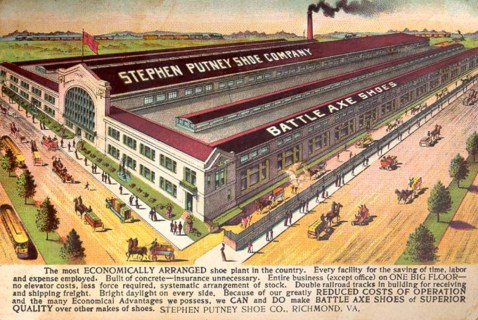
By the way, it appears as if the writer of this postcard was a big fan of CAPS-lock to get his point across.
Impressive….
And environmentally friendly to boot! (Pun intended)
The postcard reads:
“The most ECONOMICALLY ARRANGED shoe plant in the country. Every facility for the saving of time, labor and expense employed. Built of concrete – insurance unnecessary. Entire business (except office) on ONE BIG FLOOR – no elevator costs, less force required, systematic arrangement of stock. Double railroad tracks in building for receiving and shipping freight. Bridge daylight on every side. Because of our greatly REDUCED COSTS OF OPERATION and the many Economical Advantages we posses, we CAN and DO make BATTLE AXE SHOES of SUPERIOR QUALITY over other makes of shoes. STEPHEN PUTNEY SHOE CO., RICHMOND, VA.”
Reed Brothers Baseball Team, 1920
Rockville’s first experience with baseball was during the Civil War on the fields where Richard Montgomery High School now stands. It was known as “Camp Lincoln” because of the Union encampment there, and Federal soldiers helped popularize the new game they brought from the North. One little known part of the history of the grounds is that during the Civil War, President Abraham Lincoln was afraid that Maryland would secede from the Union and that the District of Columbia would thus be bordered on both sides by Confederate states. He used the land of the fairgrounds for tents to maintain up to 10,000 Federal soldiers at a time in order to do his utmost to keep Maryland, especially via the major thoroughfare of Rockville Pike, within the Union.
After the Civil War, those fields – known as the Rockville Fairgrounds – continued to be a popular place for baseball. At the dawn of the 20th century, Reed Brothers Dodge had their own company baseball team that played on those same fields. The photos below were taken by Lewis Reed on a field at the Rockville Fairgrounds in the early 1920s.
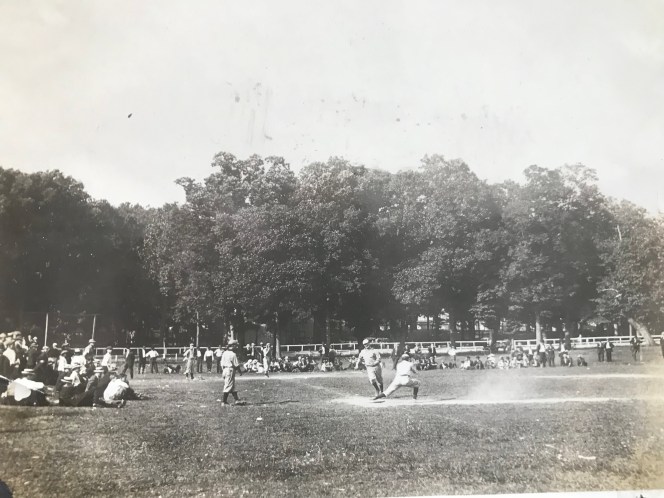
Reed Brothers Dodge Baseball Team on field at Rockville Fairgrounds, circa early 1920s. Photo by Lewis Reed
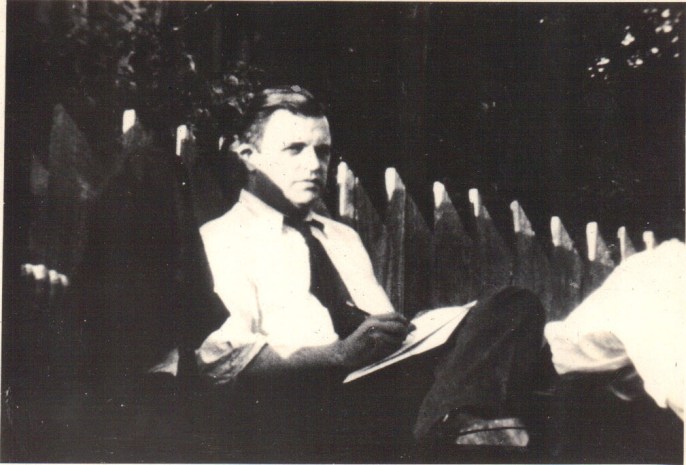
Leo (Pat) Murray (Parts Department Manager), keeping score. Photo by Lewis Reed

Reed Brothers Dodge Baseball Team on field at Rockville Fairgrounds, circa early 1920s. Photo by Lewis Reed
Note the player with the five finger glove in the photo above. Out of all of these photos, this is the only glove that can be seen on a player. The use of gloves wasn’t original to the first years of the game; needing a padded glove was viewed as pretty wimpy. (According to this article in the Smithsonian Magazine, one of the first players to wear a glove tried – and failed – to find one that would be invisible to fans.) By the 1880s gloves were accepted equipment, however, and soon inventors and manufacturers were coming up with new and improved gloves (more padding, deeper webbing…)

Reed Brothers Dodge Baseball Team, circa early 1920s. This photo was taken at Welsh Field, which is the site of the County Office Building. The house in the background was in right field. Photo by Lewis Reed
Then & Now: Lucy the Elephant Atlantic City, New Jersey
This post is a continuation of a series of “Then & Now” images that will show photographs of buildings, street scenes, and other historical locales from Lewis Reed’s Photo Collection alongside photographs of how they appear today.
Lucy the Elephant (THEN): Through the first half of the 20th century, Lucy served as a restaurant, business office, cottage, and tavern (the last closed by Prohibition). The building was depicted on many souvenir postcards, often referred to as “The Elephant Hotel of Atlantic City.” (The actual hotel was in a nearby building, not inside the elephant.)
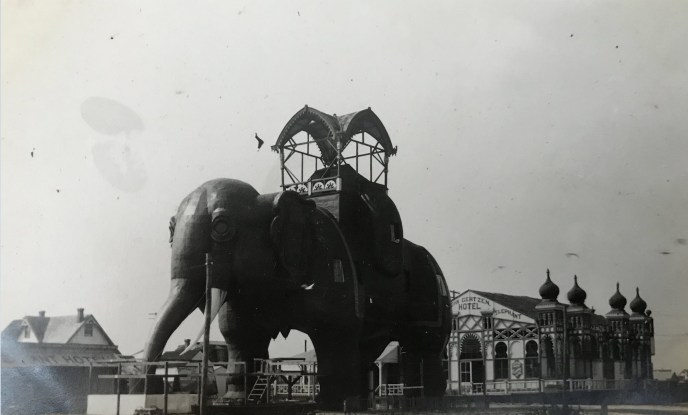
Lucy the Elephant. Photo by Lewis Reed, 1910.
Lucy the Elephant (NOW): The Elephant Hotel was neglected in more recent years, and eventually fell into a sad state of disrepair. In 1966, “Lucy” was saved from the wrecking ball when she was designated as a National Historic Landmark. On July 20, 1970 Lucy was moved about 100 yards to the west-southwest to a city owned lot and completely refurbished. In October, 2012, Hurricane Sandy made landfall near Margate. Lucy remained unscathed, although the surge reached the building’s toes and a small booth in the parking lot was blown over. On July 23, 2016, Lucy announced her candidacy for President of the United States at a celebration for her 135th birthday.

Lucy the Elephant, National Historic Landmark, November 20, 2011
Then & Now: Georgetown University and Potomac Aqueduct Bridge 100 Years Apart
Washington DC has a lot of history. The Smithsonian museums, the monuments, etc., but it is interesting to see just how much the city has changed over the years. I thought it would be fun to revisit an historic location using one of Lewis Reed’s original photographs for “then” and a stock image from today for “now” to see what differences are visible. In the following photographs, you can see how Washington, DC looks both the same and completely different from a century ago.
Georgetown University and Aqueduct Bridge (THEN): The Key Bridge was not the original connector between Georgetown and Virginia. Prior to that construction in the 1920s, there were two iterations of the Aqueduct Bridge. The second iteration of the bridge looked visibly different, but even that one suffered from deterioration and was only used between 1889 and 1918. The Aqueduct Bridge continued as a bridge for traffic until the Key Bridge opened in 1923.
Seen in the black & white photograph taken by Lewis Reed in 1913, is the Aqueduct Bridge over the Potomac River in Washington, DC. The spires of buildings at Georgetown University can be seen in the background.
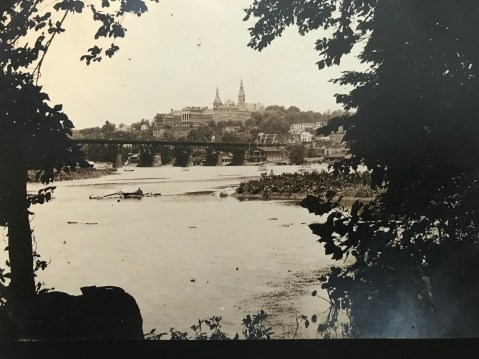
Potomac Aqueduct Bridge Washington DC 1913. Photo by Lewis Reed
Georgetown University and Key Bridge (NOW): The same view over a century later hasn’t changed much.

Georgetown University and Key Bridge Washington DC today
Here’s How Rockville’s Trolley Era Looked Over 115 Years Ago
This special post is a collection of early trolley car photos that were taken by Lewis Reed in the early 20th century. Trolleys existed in American cities before the Civil War, but a line did not connect Washington, DC to Rockville, Maryland, until 1900.
The agreement between the town of Rockville and the W&R Railway Co. ran for 35 years. From 1900 to 1935, street cars plied the track from the Washington terminus at Wisconsin and M Streets, N.W., up Wisconsin and then Old Georgetown Road, over a steel trestle just before the cars approached Georgetown Prep, through dense woods at Montrose and onto the Rockville Pike, through Rockville on Montgomery Avenue, to Laird Street, and back again. The cars could be driven from either end. In 1929, W&R ran 24 trips a day between 6:30 a.m. and 12:30 a.m. to connect Rockville and Washington. Major stops along the line included Georgetown, Alta Vista, Bethesda, Montrose, Halpine, the Fairgrounds, Courthouse Square, and Chestnut Lodge. Six switching stations and side tracks enabled street cars to pass as they went in different directions.
Below are a collection of photographs taken by Lewis Reed that shows what the old trolley cars looked like, highlighting what riding the trolley car was like in the early 1900s. From wood-paneled exteriors with ceiling fans to advertisements, here’s a nostalgic look back at Rockville’s Trolley car era through the lens of Lewis Reed. (click on photos to enlarge)

Western Avenue car barn for the streetcars that served the Georgetown-Tenelytown-Bethesda-Rockville line. Photo by Lewis Reed
A car barn is the streetcar equivalent of a garage for buses. It’s a covered facility in which streetcars were stored overnight, cleaned and given light repairs before the next day’s run. The car barn for the trolleys at the time was the second Western Avenue car barn for the streetcars that served the Georgetown-Tenelytown-Bethesda-Rockville line. It was located at on west side of Wisconsin at between Harrison and Jennifer. It was demolished and later replaced by a purpose-built bus garage which is still in use by WMATA. The National Capital Trolley Museum was instrumental in helping to identify the car barn in the photo above.
Leroy King described the street car below as one of Washington Railway’s majestic “Rockville” cars, at 4 switch in 1908. Note multiple unit jumper box under center front window.

Passengers board car #596 heading to Rockville in 1908. These distinctively styled cars, popularly know as ‘Rockville’ cars, were also used on Washington Railway’s Maryland line. Note the ‘people catcher’ or ‘lifeguard’ in the front. Photo by Lewis Reed, 1908
Traveling in snow was sometimes hazardous to trolley cars, as evidenced by the trolley pictured below which derailed the train tracks and plowed into a telephone pole at Montrose Road and Rockville Pike. Lewis Reed was there to capture the accident from two different perspectives using a five-by-four box camera which produced images on a glass plate.
In populated areas, street cars kept speeds to 12 mph (6 mph at intersections), but in open country they could get up to 40 mph.

Derailed trolley at Montrose Road and Rockville Pike. Photo by Lewis Reed
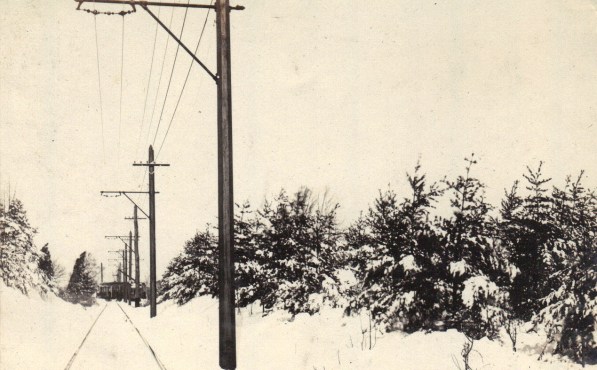
Derailed trolley through dense woods at Montrose Road and Rockville Pike. Photo by Lewis Reed
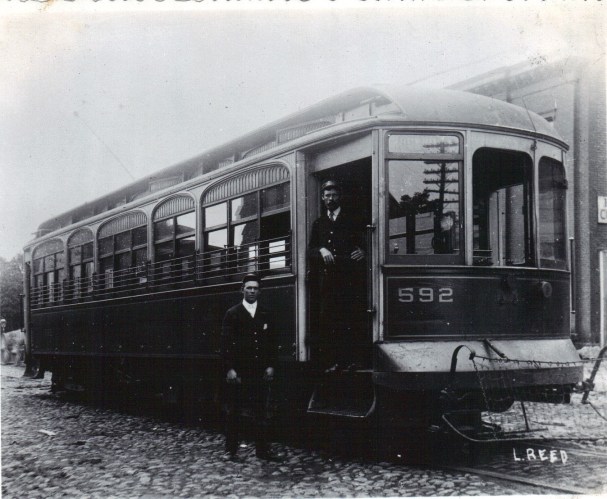
Rockville Trolley Car 592. Photo by Lewis Reed
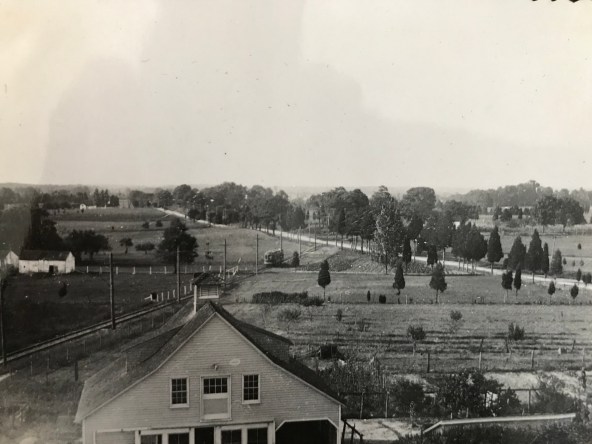
A trolley heads south from Rockville toward Tenallytown through open farmland. This view appears to be looking north and shows the area south of where Montrose Road intersects with Rockville Pike. The Pike is in the background. Photo by Lewis Reed, 1910

Trolley tracks on Rockville Pike south of Sherrer Farm. Note that one of the young men is holding a bicycle. Photo by Lewis Reed, ca. 1911
The Archival Producer for television’s most-watched history series, AMERICAN EXPERIENCE on PBS, found the photograph of the 1920’s trolley interior on this blog and asked permission to use it in the documentary, “The Great War,” a six-hour, three-night event, that premiered April 10-12, 2017 in conjunction with the 100th anniversary of America’s entry into WWI.
All of these prints were originally made from a glass plate negative, an early photographic technique which was in common use between the 1880s and the late 1920s. The early 1900s were considered by many to be the golden era of early photography, because of its new availability to the public and somewhat simplified production methods. Many of Lewis Reed’s early photographs are now part of the Montgomery County Historical Society photo archives.
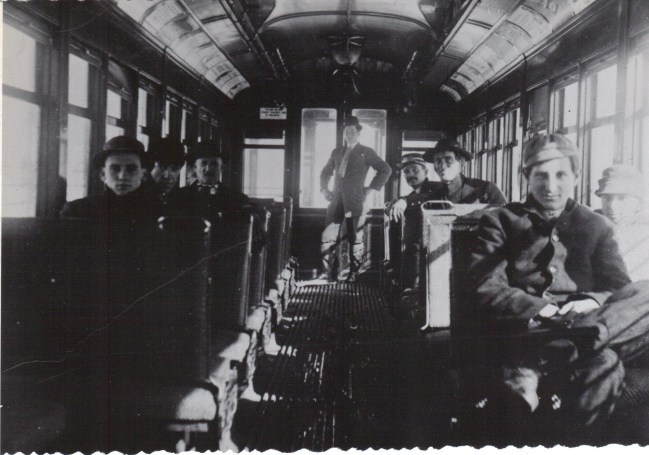
Interior of 1920’s Rockville trolley car. Photo taken by Lewis Reed
Panels for advertising line the edge of the ceiling on both sides of the trolley. Instead of AC, the interiors were cooled with wooden ceiling fans.
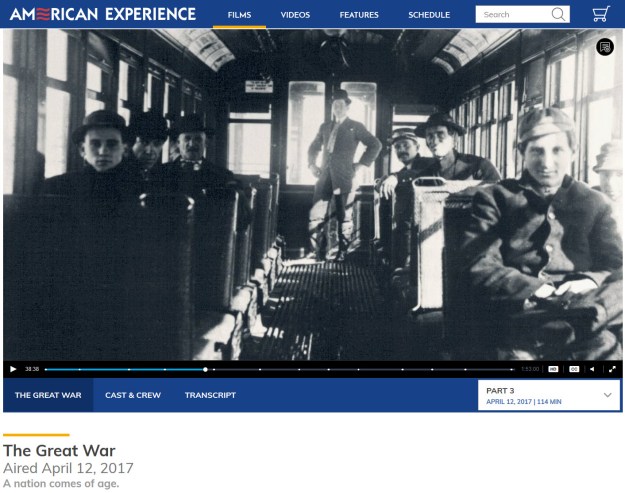
Rare peak of the inside of a 1920’s trolley car and passengers featured in PBS documentary “The Great War”. Photo taken by Lewis Reed
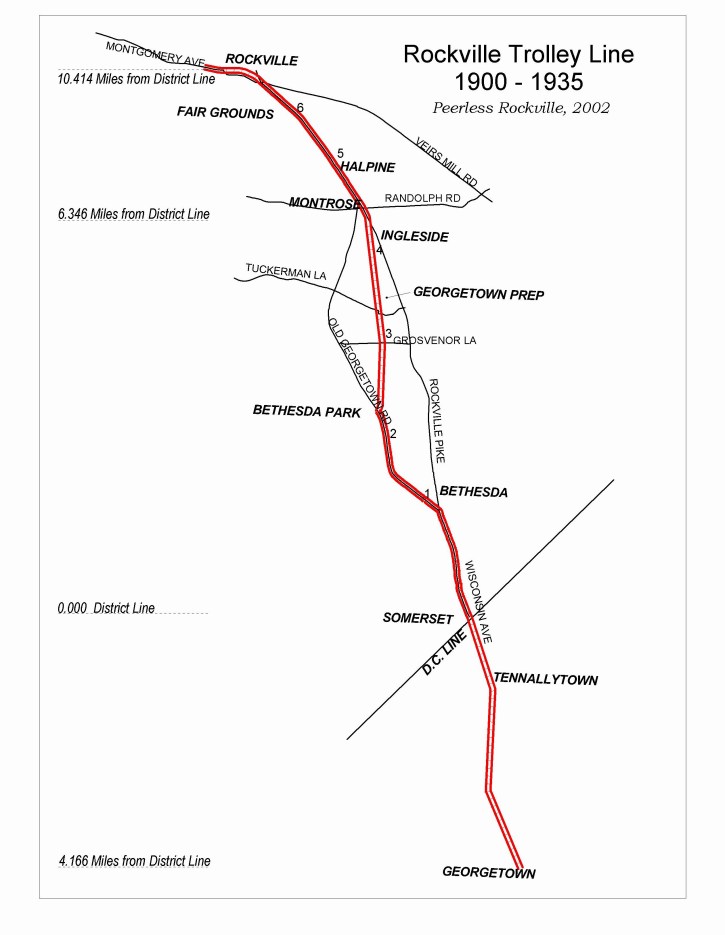
Rockville Trolley Line 1900-1935 – Peerless Rockville 2002
Sources: Rockville Pike History – City of Rockville
History of the Street Car Lines of Montgomery County
Books

Related Resources


Copyright Notice

Reed Brothers Dodge History (1915-2012) by Jeanne Gartner is licensed under a Creative Commons Attribution-NonCommercial 3.0 Unported License.
 Reed Brothers Dodge History 1915 – 2012
Recent Comments