
Early Images of Gaithersburg and Surrounding Area
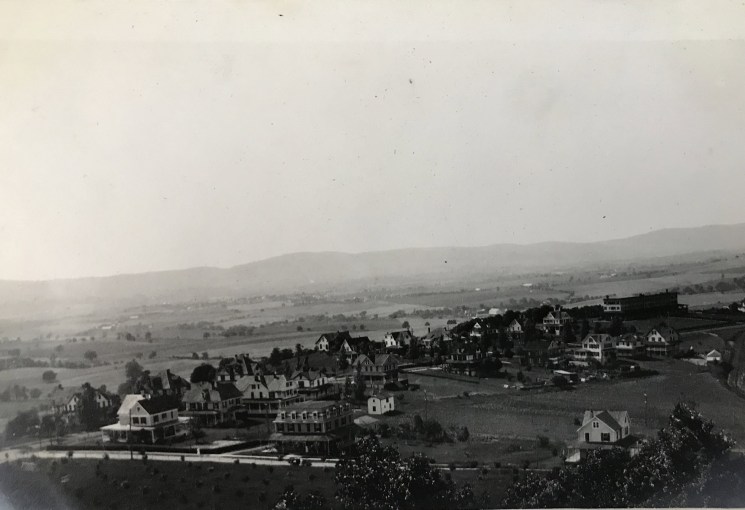
Early 1900s aerial view of Braddock Heights. Photo by Lewis Reed.
Old photos have an amazing way of showing us what life was like years ago and depicting how our communities once looked. You might not realize how much things have changed until you look back and see what it looked like in the past. Lewis Reed grew up in Darnestown and later lived in Gaithersburg, so many of his photographs depict that specific region of Montgomery County. Take a journey back in time through the lens of Lewis Reed and see what Gaithersburg and the surrounding area looked like more than one hundred years ago. As always, click the photos to get a better look.
Philip Reed Blacksmith Shop and Farmhouse in Darnestown, early 1900s
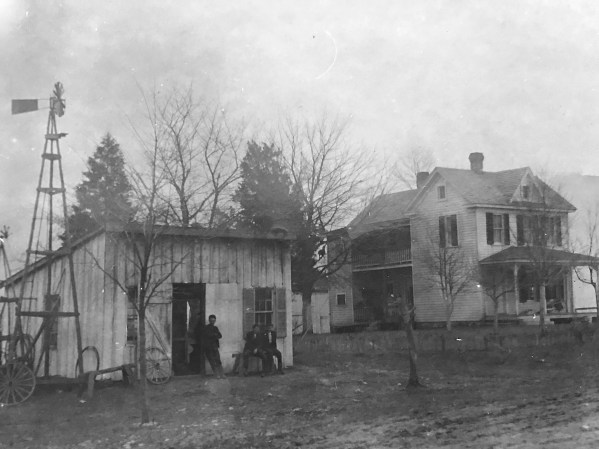
Philip Reed farmhouse and blacksmith shop located on Darnestown Road near the intersection of Seneca Road. Photo by Lewis Reed, early 1900.
Philip Reed (1845-1918), father of Lewis Reed, was an early settler in Darnestown and operated a blacksmith, wheelwright, and cabinet making business next to his home. Darnestown residents of that time included a doctor, a merchant, a blacksmith and a wheelwright. As late as 1910, there were still approximately 60 blacksmith shops in the county.
Hunting Hill, 1903
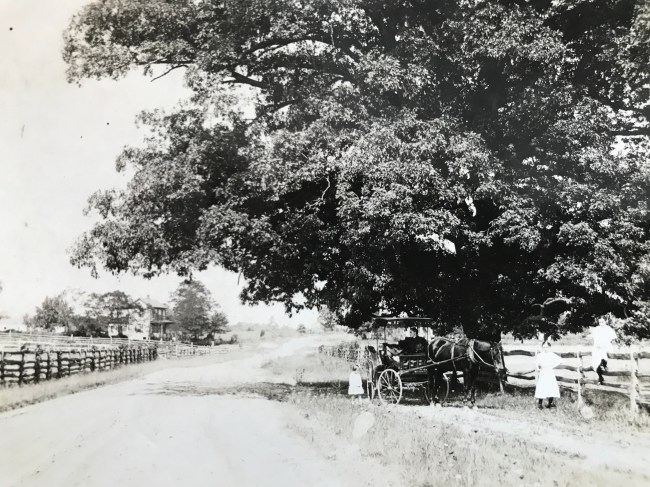
Buggies traversed rutted dirt roads across the Montgomery County countryside — sometimes their occupants needed a rest in the shade from the jolting motion of the carriage and the pounding heat of the sun. The photo above was taken by Lewis Reed on Hunting Hill Road ca. 1903.
The area along Darnestown Road between Travilah and Muddy Branch Roads was once a small rural community known as Hunting Hill. The village included a blacksmith shop, two general stores, and a schoolhouse. This photograph of Darnestown Road looking west shows the Magruder house at the corner of Travilah Road.
General Store at Quince Orchard, 1906
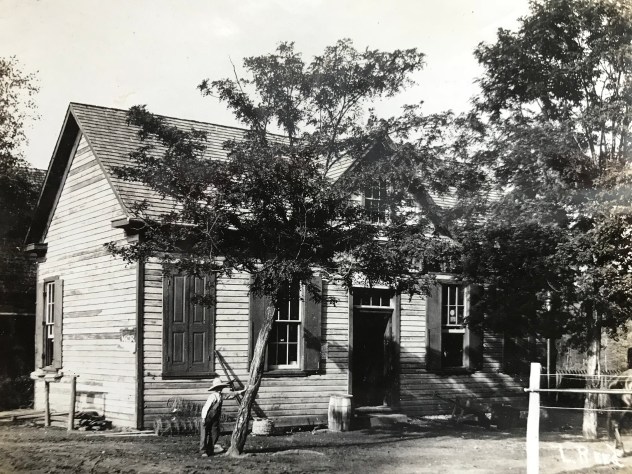
General Store at Quince Orchard. Photo by Lewis Reed, 1906
A small school for white children was established on the northeast corner of Darnestown and Quince Orchard Roads around 1850. It was damaged during the Civil War and eventually burned down in 1873. The school was rebuilt on the same site in 1875 but was moved across the road next to Pleasant View Methodist Church in 1902 after the fire destroyed the school for black children. The General Store at Quince Orchard was built on the same site shortly after the school building was moved.
Barnesville B&O Train Station, 1912

Barnesville B&O Train Station, 1912. Photo by Lewis Reed.
The original station building was torn down in the late 1950s, and for many years there was no shelter at this popular up-county stop. It was finally decided to move to the site a 16-by-22-foot historic metering station owned by the Washington Gas Light Company, with the gas company, the county, and the city and residents of Barnesville sharing the costs. The squarish little structure had a makeover after the move. It was painted inside and out and a wide overhanging roof was added just below the original roof line, giving the building more an authentic “train station” look, and it was re-dedicated on October 10, 1977. Snuggled up against the woods, surrounded by trees and shrubbery in a rural area just south of Barnesville on Route 109 (Beallsville Road), the station today is a pretty sight.
Martin Thompson House, 1907
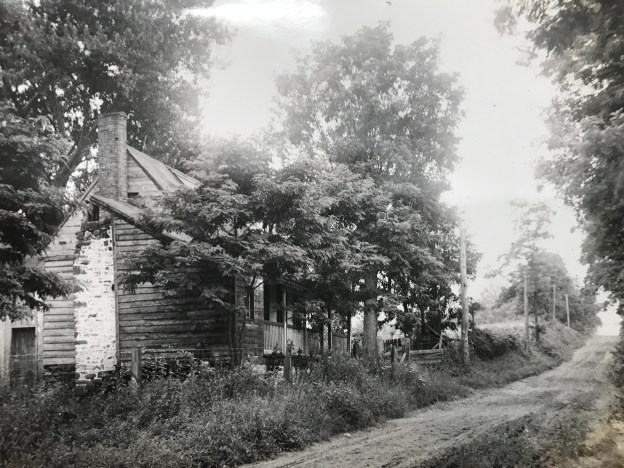
Route 28, Darnestown Road Circa 1907 – Martin Thompson House, owned by Lewis Reed’s maternal grandfather. Photo by Lewis Reed.
The home in the photo was owned by James Martin Thompson (1825–1902), Lewis Reed’s maternal grandfather. It was then called “Pleasant Hills”, which was located just opposite of the Thomas Kelly farm. In the early days, it was common practice for a family to give a name to their property. The house was accessed from Darnestown Road by a long tree-lined drive.
Route 28, in Darnestown is depicted in this photo before paving. What is now Route 28 is one of the earliest roads in the county, and was one of the main ways farmers in Poolesville, Darnestown, Dickerson, and Barnesville reached the courthouse in Rockville. Darnestown Road has existed since before the Civil war, and it remained a mud path for years into the automobile age.
Most houses in the Darnestown “Pleasant Hills” area were not very large and most were made of wood rather than brick. According to the 1860 Federal Census, Martin Thompson’s occupations were listed as Carpenter and Farmer living in Darnestown, Montgomery County, Maryland.
This photograph won an honorable mention in a contest sponsored by Rotary International for Lewis Reed.
Germantown Road at Seneca Creek, 1907
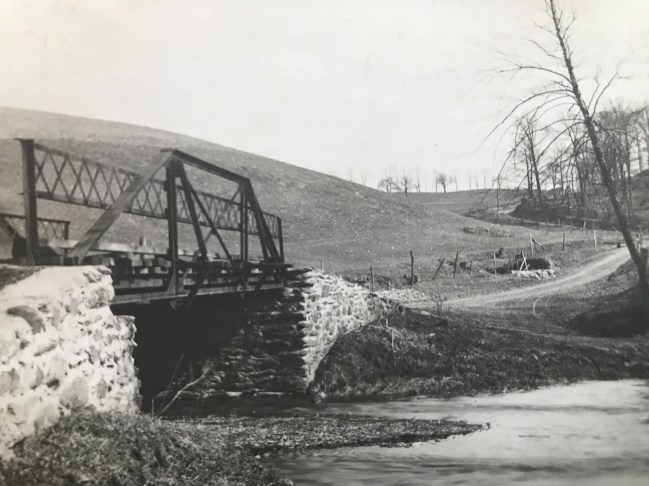
Germantown Road at Seneca Creek looking West. Photo by Lewis Reed, 1907

Germantown Road at Seneca Creek. Photo by Lewis Reed, 1907.
This view of Route 118 looking west shows the old one-lane stone bridge over the creek. In the 1930s, many of these old bridges were replaced with concrete bridges, and concrete roads were installed. Today, the rolling hills are covered with trees, and hikers can enjoy the Seneca Creek Ridge Trails, which runs directly through the land in this photograph.
Diamond Avenue in Gaithersburg, 1911

Left to Right: Belt’s Store, (sign) Charlie Foo’s Laundry, Nicholl’s Harness Shop, Etchison’s Drug Store (now Diamond Drugs), First National Bank of Gaithersburg, Jacob Miller’s Livery Stable. Photo by Lewis Reed, 1911
After the arrival of the Baltimore and Ohio Railroad in 1873, Gaithersburg’s business district had diversified to include John Belt’s mercantile store, reportedly the largest general store in the county. Many of the business owners probably lived above their shops. When constructed in 1903, the Belt building was the most ornate and substantial commercial structure in Gaithersburg.
Etchison’s Drug Store was one of the two first commercial buildings that sprang up near the business center of Gaithersburg. Earlier, two upstairs rooms of the drug store had been occupied as the dental office of Bates Etchison, DDS. Dr. Etchison would on occasion throw extracted teeth out his window, to the curious amazement of young boys below.
The second of the two nineteenth century commercial buildings was the Nicholl’s Harness shop. Nicholls Harness Shop claimed to have the best selection of harnesses and related merchandise in the state. Charlie Foo, a Chinese immigrant, owned and operated a laundry shop. The First National Bank of Gaithersburg opened on the northeast corner of Diamond and Summit Avenues in 1891.
Gaithersburg B&O Train Station, 1911

Baltimore & Ohio Railroad Station in Gaithersburg. Photo by Lewis Reed, 1911.
The station was originally built as the Gaithersburg B&O Railroad Station and Freight Shed in 1884, for the Metropolitan Branch of te Baltimore and Ohio Railroad (B&O). A freight house, which currently houses the Gaithersburg Community Museum, allowed farmers to easily ship their products. Over the years, the station buildings gradually fell into disrepair and by the 1960’s were slated for demolition. According to the Gaithersburg city website, they were purchased by the city from the Chessie Systems in 1984 and restored. The Station and Freight House have been listed in the National Register of Historical Places since 1978.
Montgomery County Almshouse, 1912

Montgomery County Almshouse. Photo by Lewis Reed, 1912
Before nursing homes, there were almshouses. The Montgomery County Almshouse was built in 1789 to provide for the County’s Indigent. The Almshouse never housed a large number of people. Over the years, the maximum number of residents appeared to range between 20 and 30. Occasionally, the Almshouse sheltered migrants, hitchhikers, or others in need of short-term temporary quarters. The 50-acre tract also included a pauper’s graveyard. As the 19th century began to unwind, women and church groups began founding Homes for the Aged.
Clarksburg Main Street, 1913
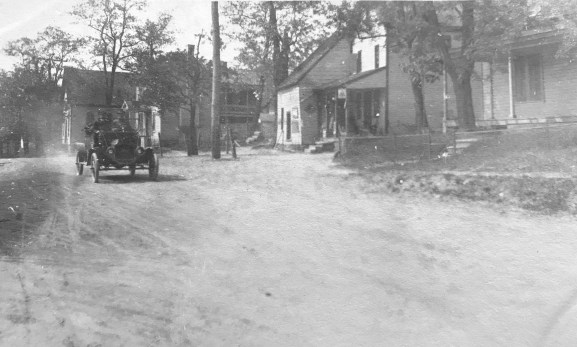
Main street (Frederick Road Rt 355) Clarksburg, 1913. Photo by Lewis Reed
By the early 20th Century, Clarksburg was the third largest town in Montgomery County after Rockville and Poolesville. Clarksburg had four general stores, two hotels, and an academy of learning. It also had a blacksmith, a doctor’s office, tanneries, shoemakers, winemakers, tailors, wheelwrights, fertilizer businesses, skilled farmers, master carpenters and two town bands.
Thomas & Company Cannery, 1917

Circa 1917 photo taken behind the Thomas and Company Cannery in Gaithersburg. The Cannery was the first and largest vegetable cannery in Montgomery County. It closed in 1963 after fire damage and lay empty until its recent restoration. Photo by Lewis Reed.
The largest and longest-lived cannery in Montgomery County, the Thomas and Company Cannery operated from 1917 until 1962. While Baltimore had been the center of the canning industry in the 19th century, the outbreak of World War I created a need to rationalize. Frank and Clyde Thomas were leaders in the 20th century canning industry in Maryland. In 1917, the Thomas family opened a cannery in Gaithersburg, the first in Montgomery County. The factory was the focus of local industry and economy, providing an important market for farmers, and employment for local migrant workers.
The factory canned peas, pumpkin and corn, supplied both the local retail market and the war effort during WW I and II. During the war years, the cannery expanded operations and functioned on a three shift schedule to provide vegetables for shipment to troops. After the war, the cannery continued to produce vegetables under the brand names MY-T-NICE, EVER-GOOD, BARBARA FRITCHIE and ON-TOP corn, peas and succotash.
Built along the B & O Railroad to facilitate shipping, the brick cannery had three main parts: the central processing station, the shipping section and boiler plant. The cannery was designated a Gaithersburg landmark in 1987.
Walker Avenue in Gaithersburg, late 1920s
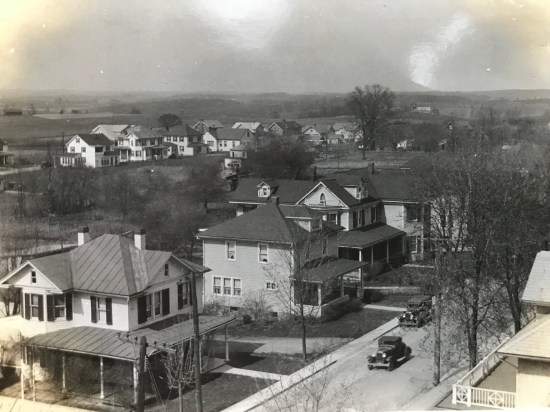
Walker Avenue in Gaithersburg taken from the steeple of Grace United Methodist Church, late 1920s. Photo by Lewis Reed
This photo of Walker Avenue in Gaithersburg was taken by Lewis Reed from the steeple of Grace United Methodist Church in the late 1920s. The street is named after John Walker, whose farm became Walker Avenue when he decided to subdivide the front end in 1904. Walker was mayor of Gaithersburg from 1906 to 1908 and again from 1918 to 1924. In June 1913, Walker Avenue was the first street in Gaithersburg to have electric streetlights installed along its full length. This period saw major advances in technology, communication, and transportation. Most of its houses were built between 1904 and 1930.
Thomas Hardware Store, 1928

Thomas Hardware Store, originally built and operated by Thomas I. Fulks. Photo by Lewis Reed, 1928
The above photo was taken by Lewis Reed when the first system of water mains and sewers were installed by the WSSC in Gaithersburg, circa 1926-1928. The store in the background is the Thomas Hardware Store, originally built and operated by Thomas Iraneous Fulks. The water pipes to be laid are resting by the side of the road. The child on the right in the photograph is Lewis Reed’s daughter, Mary Jane (Reed) Gartner. T. I. Fulks was a businessman and farmer. He worked as a bookkeeper for the Gaithersburg Milling and Manufacturing Company and then opened a hardware store at 219 East Diamond Avenue.
Asbury Methodist Village, late 1920s

“Methodist Home for the Aged”. Photo by Lewis Reed, ca. late 1920s
Asbury Methodist Home for the Aged, predecessor of the Village, was established in Montgomery County almost 100 years ago. When care for the elders of the community failed, aged citizens with no funds were designated paupers and sent to the Montgomery County Almshouse on Seven Locks Road in Rockville.
Built in 1926 on the 106-acre dairy farm of William Magruder, called Rolling Acres, Asbury Methodist Home for the Aged opened its doors for residents on April 15, 1926, and the first five elderly residents moved in. The community changed its name to Asbury Methodist Village in 1969. Today, Asbury Methodist Village is the largest continuing care retirement community in Montgomery County, Maryland, and the 14th largest in the United States.
Montgomery County F3 Tornado (Aftermath) May 2, 1929
At about 9 p.m. on Thursday, May 2, 1929, northeastern Montgomery County was struck by an F3 tornado, part of a large storm system that caused devastation from Florida to Ohio. The weekly Montgomery County Sentinel reported on May 10th that the “wind storm of cyclonic power . . . was of limited width and serpentine on its course. Everything in its path met with destruction.” These photographs were taken by Lewis Reed “after the tornado of May 2, 1929”.
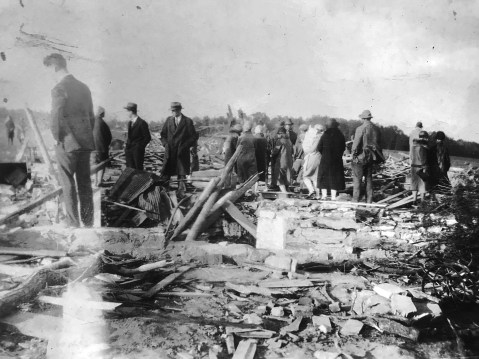
Spectators view the destruction at the Benson farm, May 1929. Photo by Lewis Reed
The damage in the county was limited to the rural Unity area, north of Brookeville. The Sentinel article detailed each affected farm, noting that “thousands of persons from far and near visited the scene for several days to look upon the indescribable wreckage.”

May 1929. Photo by Lewis Reed
From the Sentinel: “The storm showed its first violence upon the farm of Mr. J. William Benson. There it destroyed every building – the dwelling house, large barn, 117 feet long, including an attached shed, and all other outbuildings.” The farm was unoccupied, but furniture belonging to “a prospective tenant” was destroyed. Mr. Benson’s apple orchard was also significantly damaged, and the article claimed that “many [trees] were lifted into the air, carried over woods and landed several miles away.”
The fire departments of Rockville, Gaithersburg and Sandy Spring responded to the call made by farm worker James Leizear, who “extricated himself from the wreckage” and ran half a mile to a neighbor’s house to summon help.
The Post reported on May 4th that 28 people in Maryland and Virginia had been killed by tornadoes during the storm; most of the casualties were in Virginia, where an elementary school was struck full-force and at least 18 children died. In Montgomery County, the local Red Cross Chapter formed a citizen committee to raise funds “for relief of the sufferers.”
An Historic Look at Montgomery County, Then & Now
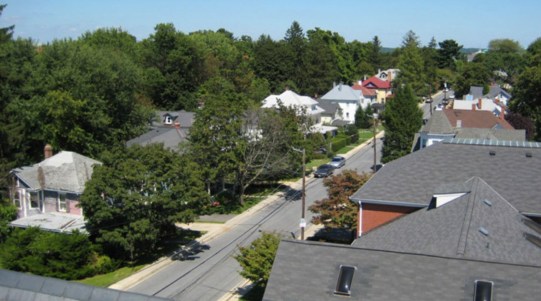
Old photos have an amazing way of showing us what life was like years ago and depicting how our communities once looked. You might not realize how much things have changed until you look back and see what it looked like in the past. For this post, I have chosen some of Lewis Reed’s original photographs of landmark buildings and streetscapes and paired them with a Google stock image to show how the county has transformed over the years.
Some locations have changed so much that they’re barely recognizable. Others appear much the same. Scroll down to see how Montgomery County looks “then and now.”
Walker Avenue in Gaithersburg, 1920 The street is named after John Walker, whose farm became Walker Avenue when he decided to subdivide the front end in 1904. Walker was mayor of Gaithersburg from 1906 to 1908 and again from 1918 to 1924. In June 1913, Walker Avenue was the first street in Gaithersburg to have electric streetlights installed along its full length. It is the most cohesive street in Gaithersburg’s historic district. Most of its houses were built between 1904 and 1930.
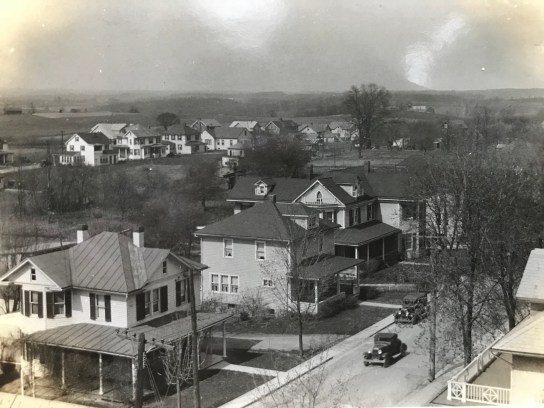
Walker Avenue in Gaithersburg taken from the steeple of Grace United Methodist Church, late 1920s. Photo by Lewis Reed
Diamond Avenue in Gaithersburg, 1911 After the arrival of the Baltimore and Ohio Railroad in 1873, Gaithersburg’s business district had diversified to include John Belt’s mercantile store, reportedly the largest general store in the county. Many of the business owners probably lived above their shops. When constructed in 1903, the Belt building was the most ornate and substantial commercial structure in Gaithersburg. Two upstairs rooms of Etchison’s Drug Store had been occupied as the dental office of Bates Etchison, DDS. The dentist would on occasion throw extracted teeth out his window, to the curious amazement of young boys below.

Diamond Avenue in Gaithersburg, 1911. Left to Right: Belt’s Store, (sign) Charlie Foo’s Laundry, Nicholl’s Harness Shop, Etchison’s Drug Store (now Diamond Drugs), First National Bank of Gaithersburg, Jacob Miller’s Livery Stable. Photo by Lewis Reed

Clinton Zion A.M.E. Church in Rockville, 1912 In 1867, several of Rockville’s African American families left Jerusalem Methodist Episcopal Church to start the African Methodist Episcopal (A.M.E.) Zion Church under the leadership of Reverend Charles Pipkins. In 1890, Pipkins and his congregation cut timbers and erected. a frame church on Middle Lane. The congregation sold the brick church in 1955 to make way for a shopping center, dedicating their present church on Elizabeth Avenue in Lincoln Park in the fall of 1956. The growth of Clinton was the impetus for the most recent expansion effort. Construction of the new sanctuary began in 1989 and the newly renovated edifice was dedicated on Sunday, May 13, 1990.

Zion A.M.E. Church, Rockville, 1912. Photo by Lewis Reed

Rockville Fair Dirt Track Oval, 1923 Like many fairgrounds, the Rockville Fairgrounds included an oval track. Fairground race tracks, typically one-mile or half-mile dirt racing ovals with wide, sweeping curves and grandstands for spectators, were easily adapted for bicycles, harness racing, and the sport of car racing. Harness racing was one of the main attractions, but after the introduction of the automobile in the early 20th century, car races took over. The fairgrounds were just outside Rockville, where Richard Montgomery High School is today. In 1946, after the construction of Richard Montgomery High School, the old oval race track became a football field and stadium.

Crowds at the auto racetrack, Rockville Fair, August 1923. Photo by Lewis Reed

Richard Montgomery High School football field and stadium
Thomas Hardware Store in Gaithersburg, 1928 The black & white photo was taken when the first system of water mains and sewers were installed by the WSSC in Gaithersburg, circa 1926-1928. The store in the background is the Thomas Hardware Store, originally built and operated by Thomas Iraneous Fulks. The water pipes to be laid are resting by the side of the road. T. I. Fulks was a businessman and farmer. He worked as a bookkeeper for the Gaithersburg Milling and Manufacturing Company and then opened a hardware store at 219 East Diamond Avenue. Today, the old hardware store is enclosed in the present brick building (Gaithersburg Rental Center) at 219 East Diamond Avenue.

Thomas Hardware Store, originally built and operated by Thomas I. Fulks. Photo by Lewis Reed, ca. 1928

Darnestown Presbyterian Church, early 1900s In 1855, the Darnestown Presbyterian Church, which is located at the corner of Turkey Foot and Darnestown Roads, was founded by the generous donation of three acres of land by John Dufief. The church was constructed of stone which was hauled from the local quarry by the men of the congregation. The completed church was dedicated on this day, May 22, 1858. The iron fence along the cemetery at the back of the church was taken from the Rockville Courthouse. Then, in the late 1860s, Andrew Small, a friend of the Church, granted sums of money to be used to building the parsonage (1868) and to establish and build a private academy (1867). The church was renovated in 1897 and then again in 1953.

Darnestown Presbyterian Church Circa early 1900s. Photo by Lewis Reed

Asbury Methodist Village, late 1920s Built in 1926 on the 106-acre dairy farm of William Magruder, called Rolling Acres, Asbury Methodist Village was originally a “Methodist Home for the Aged”. The community changed its name to Asbury Methodist Village in 1969. Today, Asbury Methodist Village is the largest continuing care retirement community in Montgomery County, Maryland, and the 14th largest in the United States.
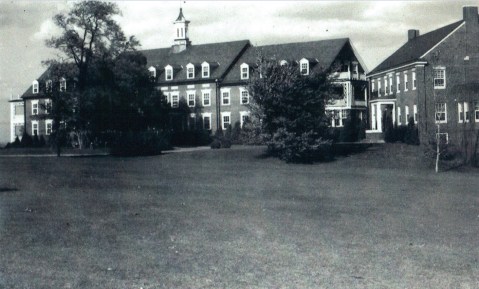
“Methodist Home for the Aged”. Photo by Lewis Reed, ca. late 1920s
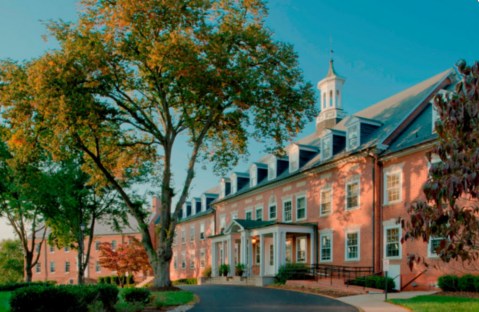
Thomas & Company Cannery, 1917 The largest and longest-lived cannery in Montgomery County, the Thomas and Company Cannery operated from 1917 until 1962. While Baltimore had been the center of the canning industry in the 19th century, the outbreak of World War I created a need to rationalize. Frank and Clyde Thomas were leaders in the 20th century canning industry in Maryland. In 1917, the Thomas family opened a cannery in Gaithersburg, the first in Montgomery County.
The factory canned peas, pumpkin and corn, supplied both the local retail market and the war effort during WW I and II. During the war years, the cannery expanded operations and functioned on a three shift schedule to provide vegetables for shipment to troops. After the war, the cannery continued to produce vegetables under the brand names MY-T-NICE, EVER-GOOD, BARBARA FRITCHIE and ON-TOP corn, peas and succotash. Built along the B & O Railroad to facilitate shipping, the cannery was designated a Gaithersburg landmark in 1987.

Photo taken by Lewis Reed behind the Thomas and Company Cannery in Gaithersburg just after it was built in 1917.

Montrose School, 1909 Completed in 1909, Montrose School was designed as a two room schoolhouse and offered classes for first to seventh grade. Other modern amenities included kerosene hurricane lamps affixed to the walls and pot-bellied coal burning stoves in each classroom; an outside hand pump provided well water, and outdoor boys’ and girls’ rest rooms. Increased modernization, including electricity and indoor plumbing were added throughout the early to middle decades of the 20th century. One hundred students enrolled.
In 1979, Montrose School was designated historic by Montgomery County and in 1983, it was listed in the National Register of Historic Places. Restored by Peerless Rockville, Montrose School was last open to the public in 2009. The school continues to serve the local communities as an historic icon and a reminder of the value of local preservation.

Montrose School, 1909. Photo by Lewis Reed

Clopper Grist Mill, 1910 Francis Cassatt Clopper bought this mill and 541 acres in 1810, but the earliest mention of a mill on this site dates back to 1777. Clopper’s mill was a square, three-story grist mill, with basement and first floor levels made of local field stone and a third story of brick. The mill was destroyed by a fire in 1947.
On April 15, 1865 Clopper Mill became part of national history when would-be assassin of the Vice President of the United States, George Atzerodt, spent the night there while fleeing from Washington D.C. after the assassination of President Lincoln. George was part of the gang assembled by John Wilkes Booth to eliminate the heads of the U.S. government. He was supposed to kill Vice President Johnson at the Willard Hotel at the same time as Booth assassinated the President. But Atzerodt ran out of courage and instead made his way to Germantown. The ruins of this large brick and stone mill stand on the west bank of Great Seneca Creek, just south of Clopper Road near the intersection of Warring Station Road. The property was acquired by the State in 1955 as part of Seneca Creek State Park.

Clopper Grist Mill. Photo by Lewis Reed, ca. 1910

Seneca Creek Aqueduct, 1914 The Seneca Aqueduct is a unique structure, not only being the first built, but also the only red sandstone aqueduct on the C&O−and the only aqueduct that is also a lock (Lock 24, or Riley’s Lock). It is located at the end of Riley’s Lock Road in Seneca, Maryland. The Seneca Creek Aqueduct was of a three-arch design, meaning that three arches supported the weight of the canal bed. Unfortunately, in 1971 a flood washed away one of the arches and the National Park Service has never repaired it, though it did construct a walkway over the gap so that hikers and bikers could make the trip up or down the canal. The west arch fell September 1971, being carried out by water backed-up in a flood of Seneca Creek. The berm parapet and coping remained intact over west arch but were removed when temporary repairs were made.

Seneca Creek Aqueduct. Photo by Lewis Reed, 1914

Gaithersburg B&O Railroad Station, 1911 The station was originally built as the Gaithersburg B&O Railroad Station and Freight Shed in 1884, for the Metropolitan Branch of the Baltimore and Ohio Railroad (B&O). A freight house, which currently houses the Gaithersburg Community Museum, allowed farmers to easily ship their products. Over the years, the station buildings gradually fell into disrepair and by the 1960’s were slated for demolition. According to the Gaithersburg city website, they were purchased by the city from the Chessie Systems in 1984 and restored. The Station and Freight House have been listed in the National Register of Historical Places since 1978.
The station has limited hours but still serves as a ticket office for MARC train daily commuters going to and from Washington, DC. Amtrak trains rumble through Gaithersburg but this is no longer a scheduled stop on their routes. As many as 50 freight trains travel through Gaithersburg each day.

Gaithersburg B&O Railroad Station (looking north up the tracks), 1911. Photo by Lewis Reed
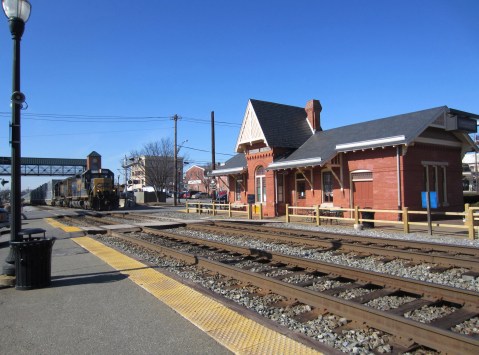
Rockville B&O Railroad Station, early 1900s Built in 1873, the station was one of several stops along the route between Washington’s Union Station and Point of Rocks where the Metropolitan Branch joined the B&O Main Line of the railroad. Along the route of the railroad were twenty-six stations. In the early days people came to the stations on foot, on horseback, in buggies. Some wives took their commuting husbands to the station in the buggy in the morning and then met the train as it came through in the evening.
While the station helped to spur Rockville’s early growth, development pressures would later threaten its existence. In the mid-1970s Metro’s original plans for the Rockville Metro Station and the final phase of construction on the Red Line called for the demolition of the B&O Station which by then was disused and in disrepair. However, Peerless Rockville, then only one year old, brought the station’s plight to the attention of the City and Metro, ultimately negotiating a compromise—the station and its freight house would not be demolished, but instead would be relocated so that a new tenant could be found to occupy the historic buildings, while allowing the Metro construction to continue as planned.
In 1981, the 400-ton station carefully was lifted off of its foundation, moved approximately 30 feet to the south, and reoriented 180 degrees so that the train platform which originally faced the tracks now faced Church Street and the Wire Hardware Store.
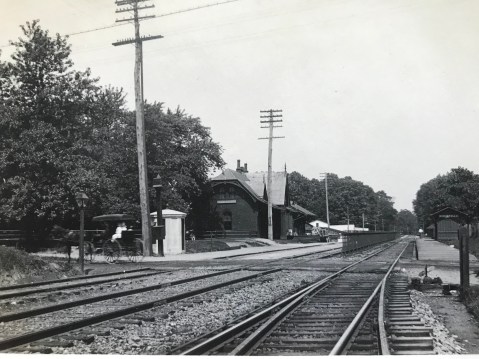
Rockville B&O Train Station early 1900s. On the left, a horse-drawn carriage has just left the station. Photo by Lewis Reed

Black Rock Saw & Grist Mill in Germantown, 1905 A key part of Montgomery County’s agricultural economy in the 18th and 19th centuries, grist mills ground wheat and corn into flour and meal for local farmers. Today, besides the more than 30 streets that are named for mills, all that is left are the remains that have been uncovered in our parks. All of the mill structures are in various stages of ruin and are barely visible today.
Black Rock Mill was built by Thomas Hillary and has stood along the banks of Great Seneca Creek as a landmark since its construction in 1815-1816. The mill was in working operation for over a hundred years until a flood in 1920 destroyed a dam on Seneca Creek and damaged the mill. Today, it is a unique survivor of the many mills in Montgomery County harnessing the water-power of the creeks to grind wheat and corn into flour. It is one of only two mills standing in Montgomery County Maryland. As far as can be determined, Lewis Reed’s collection of about 20 Black Rock Mill photographs are some of the earliest known in existence.
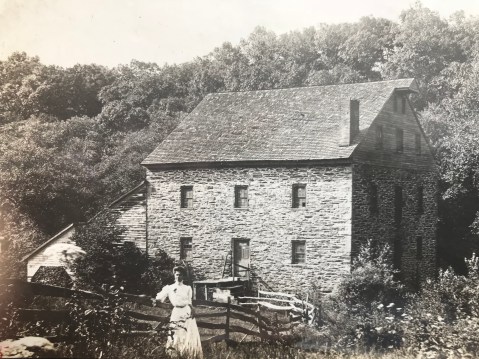
An unidentified lady poses in front of Black Rock Mill, circa 1905. Photo by Lewis Reed
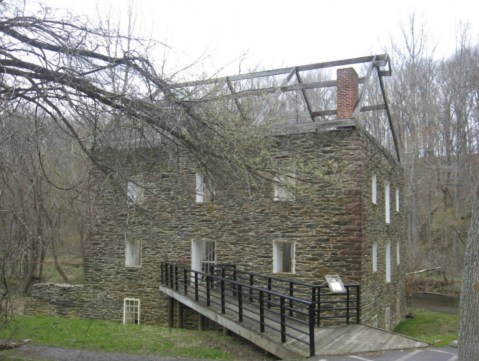
Halpine Store in Rockville, 1906 The Halpine Store, also known as the Lenovitz General Store, was built on Rockville Pike in 1898, taking advantage of the prime location on the trolley and railroad lines and the Pike. The store sold food, gasoline and other items to locals and Pike travelers. There is a young African American man standing in front of the store. Note the telephone or telegraph poles, and the trolley tracks paralleling the road. The nearby Halpine railroad station also brought customers to the area, and the store became the social/community gathering place for the Halpine area.
The proprietors, Benjamin and Anna Lenovitz, lived on the second floor. The building burned in 1923 and a new fire-resistant brick building was rebuilt in its place. This building, at 1600 Rockville Pike, became a Radio Shack, selling computers and electronics.
Seen in the black & white photograph taken by Lewis Reed in 1906, is The Halpine-Lenovitz General Store at Rockville Pike and Halpine Road. The same view in color one hundred and eleven years later. Rockville Pike is now six lanes, linking the once outlying Halpine and Montrose with Rockville’s town center in one long strip of commercial enterprises and office buildings.
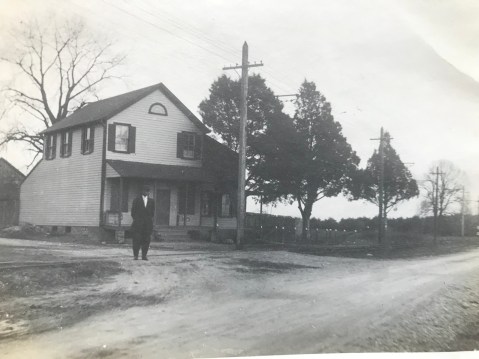
Halpine-Lenovitz General Store at Rockville Pike and Halpine Road, 1906. Photo taken by Lewis Reed.

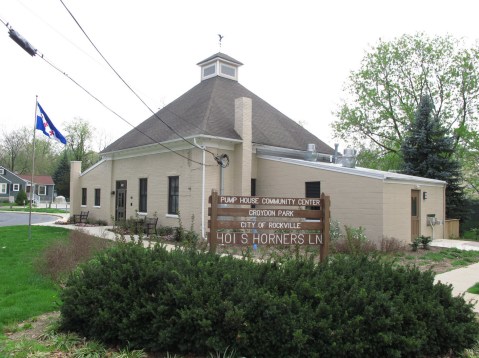
The Pump House at Croydon Park, 1912 Built in 1897, the Pump House is a significant historical landmark. Once known as the “Rockville Electric Lights & Water Works,” the building was the City’s first public water system and supplier of electricity for street lights and private homes. By 1957 a new water treatment facility was opened, drawing water from the Potomac River. With the new plant, the City stopped the use of the wells at the Pump House and renovated the building for the Public Works Department. They remained there until 1962 when the building was slated for demolition.
By 2009, the facility was in dire need of a significant upgrade for use. The City of Rockville completed a full interior and partial exterior renovation of the Pump House and on January 9, 2011, the City rededicated the building.
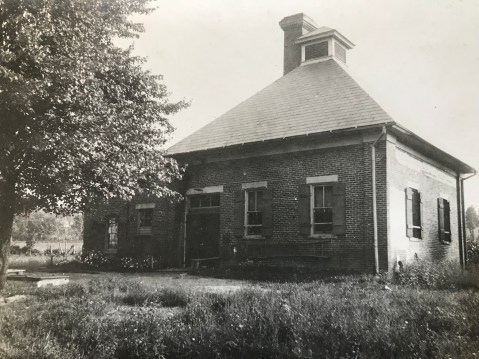
Pump House at Croydon Park, 1912. Photo by Lewis Reed
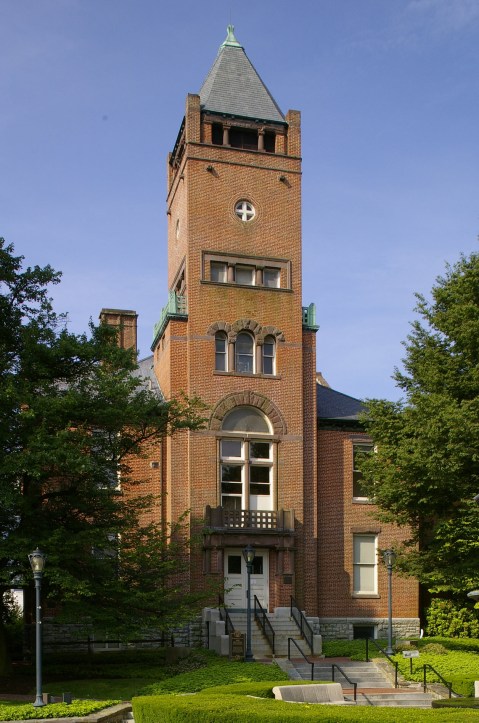
Red Brick Courthouse in Rockville, 1914 The Red Brick Courthouse is not the first courthouse in Montgomery County, but it is the oldest. When Montgomery County was established in 1776, a tavern served as the first courthouse and the County seat was located at the rural but central crossroads of what was to become Rockville. Completed in 1891, the Red Brick Courthouse was the County’s fourth courthouse.
During the 1970s, the Courthouse was renovated and used by the Sheriff and the Circuit Court. When the new Judicial Center opened across the street in 1982, the Red Brick Courthouse ended nearly a century of continuous judicial use. Today, the Red Brick Courthouse serves as headquarters for Peerless Rockville and continues to serve as a working courthouse for Montgomery County.
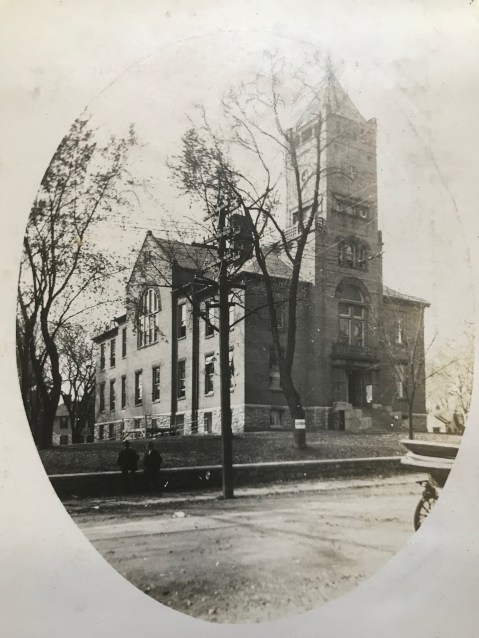
Rockville Courthouse, 1914. Photo by Lewis Reed
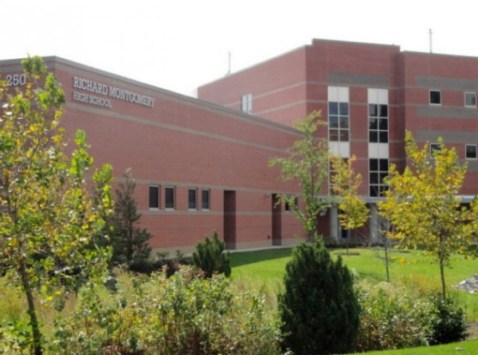
Montgomery County High School, 1911 Rockville High School was established in 1892, when the state Board of Education first allocated funds to local school to educate high school students. In the first State report of school statistics nine years later, the Rockville school was listed as enrolling 47 pupils. The first 12 graduates received their diplomas from “Rockville High School” in 1897. A new high school was constructed and opened for use in September 1905 on East Montgomery Avenue and Monroe Street. An addition was built in 1917, expanding the school to 19 classrooms. The school was renamed Richard Montgomery High School 1935.

Originally known as Montgomery County High School, later as Rockville High School. Located at corner of Monroe Street and E. Montgomery Avenue. Photo by Lewis Reed, 1911
Muncaster Mill, 1910 Joseph Elgar built a saw and grist mill on Rock Creek, later known as Muncaster Mill. Muncaster Mill was built in the early 1800s and closed in 1925 due to competition from modern milling practices. It was burned to its foundation in 1935. Muncaster Mill was the last mill to operate in what is now Rock Creek Park. During its lifetime, the mill served 30–50 farmers in the area. There were three millstones, each designed for a specific grinding job. One ground unshelled corn for animal feed; one coarsely ground wheat, barley, and oats; and one ground fine flour. The color photo is what’s left of Muncaster Mill today.

Muncaster Mill 1910. Photo by Lewis Reed

Books

Related Resources


Copyright Notice

Reed Brothers Dodge History (1915-2012) by Jeanne Gartner is licensed under a Creative Commons Attribution-NonCommercial 3.0 Unported License.
 Reed Brothers Dodge History 1915 – 2012
Recent Comments