
A Century in Contrast: Then & Now at the Conowingo Dam
As part of our ongoing “Then & Now” series, we’re journeying through time using photographs from Lewis Reed’s remarkable photo collection. These powerful comparisons highlight how much, and sometimes how little, the world around us has changed. In this installment, we turn our lens to the Conowingo Dam, where echoes of the past still linger in the present. Step back in time and see how this historic site has evolved over the past 100 years.
Conowingo Dam (THEN): The Conowingo Dam, completed in 1928, is a large hydroelectric dam on the Susquehanna River in Maryland, known for its role in power generation and its impact on the Chesapeake Bay. When completed, it was the second-largest hydroelectric project by power output in the United States, after Niagara Falls.
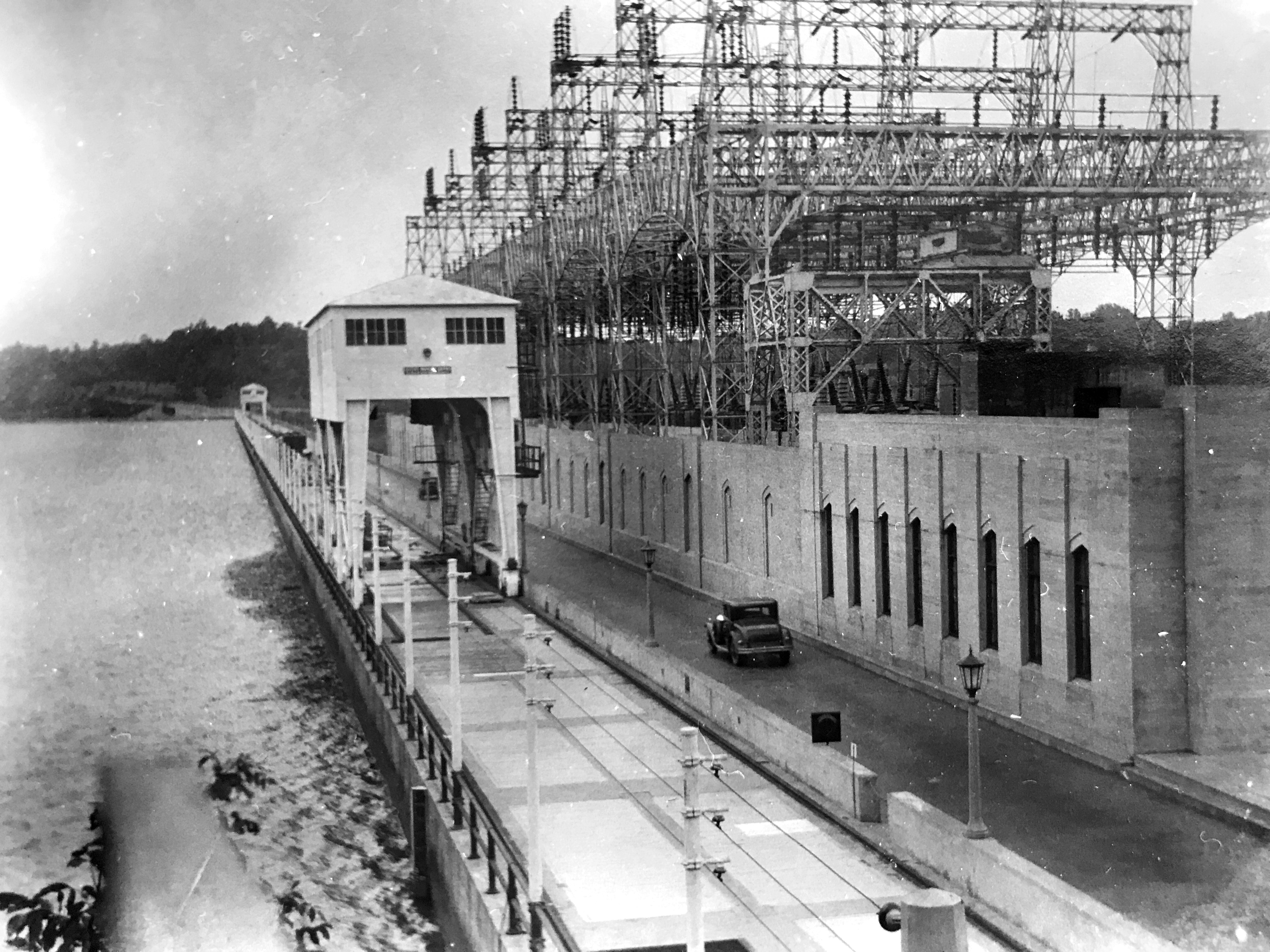
Power House and entrance to driveway crossing Conowingo Dam, Conowingo, Maryland. Photo by Lewis Reed, ca. 1928.
Conowingo Dam (NOW): Today, the Conowingo Dam is operated by the Susquehanna Electric Company, a part of Constellation Energy. The dam is one of the most popular destinations in the United States for seeing bald eagles. While the surrounding area is home to dozens of the eagles year-round, upwards of 200 more will migrate from places like New York and Canada, where lakes and rivers freeze over in the winter and limit fishing opportunities. Their numbers typically peak from November to January, with the eagles taking advantage of the dam’s turbines stunning fish swimming downriver to make for easy hunting. Once a fish is caught, eagles will often battle midair for it, and the spectacle attracts bird photographers from all over the world.
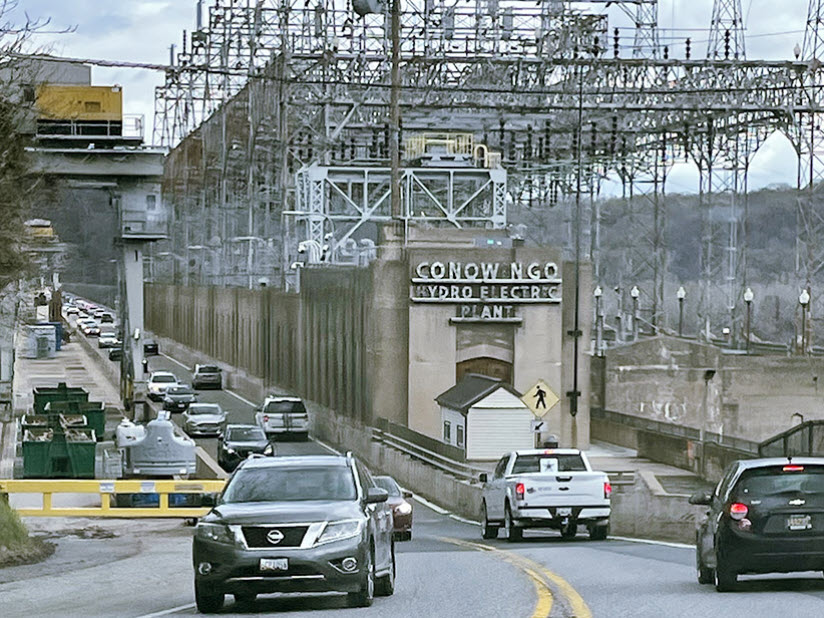
Conowingo Dam today. Google stock image
Source of Information: Conowingo Dam – Wikipedia
Then & Now: The Original 1917 Rockville Garage
Reed Brothers Dodge and the surrounding area sure has changed a lot in its almost century-long history. You might not realize how much things have changed until you look back and see what it looked like in the past. For this post, I have used one of Lewis Reed’s original photographs for “then” and a Google Maps street view image from today for “now”.

1917 view of the original Rockville Garage two-story addition. Until 1920, Dodge sported a set of six hexagonal windows in the back of each passenger cabin on their Touring and Roaster models. These were called cathedral lights and became the first trademark feature to make Dodge vehicles stand out from the rest. Parked in front is an early Dodge car with the exclusive Dodge Brothers cathedral-style rear curtain windows.
NOW: The color photograph below, is the dealership’s location today, now known as Veterans Park. In the 1970s the site was known as the Francis Scott Key Memorial Park, and later in 1988, it was permanently rededicated as Veterans Park. In the late 1960s, the state of Maryland acquired the land to widen 355 and donated the remaining sliver to the City. The connector street behind the dealership’s original location was named “Dodge Street” by the State of Maryland following the dealership’s 1941 expansion. Dodge Street today is one of the shortest roads in the State of Maryland, running between the Rockville Pike (at Richard Montgomery High School) and Veirs Mill Road, a distance of only 250 feet.

Rockville Garage (Reed Brothers Dodge) original location at the triangle today. Google Image Capture, 2021
Then & Now: Emmanuel Episcopal Church (Cumberland, Maryland) 1912
Cumberland is known as the “Queen City of the Alleganys.” The National Road, the Baltimore and Ohio Railroad, and the Chesapeake and Ohio Canal pass through the town, which was once an Ohio Company outpost and the westernmost part of the British Empire in North America. Cumberland has changed from a trading site to a manufacturing locality, to a tourist haven over many generations.
For this post, I have used one of Lewis Reed’s original photographs for “then” and a google stock image for “now”. Taken over 113 years apart, you can see how the Emmanuel Episcopal Church in Cumberland, Maryland looks almost the same from over a century ago.
Emmanuel Episcopal Church (THEN): The Emmanuel Episcopal Church of Cumberland, Maryland in Cumberland’s Historic District is built on the foundations of Fort Cumberland, where George Washington began his military career. Although the Emmanuel parish dates from 1803, the cornerstone of the current native sandstone building was laid in 1849 and completed in 1851.
Standing at the eastern end of the Washington Street Historic District, it is one of Maryland’s examples of early Gothic Revival architecture. The church is on the former site of Fort Cumberland, and earthwork tunnels remaining from the fort run under the church. The church was constructed around 1850 and designed by Philadelphia architect John Notman.

Emmanuel Episcopal Church Cumberland, 1912. Photo by Lewis Reed
Emmanuel Episcopal Church (NOW): Emmanuel Episcopal Church is active and continues to service the city of Cumberland. Emmanuel Church is part of the Episcopal Diocese of Maryland. The church allows self-guided tours of the stained glass; the church also offers guided tours of the tunnels. Make contact with the church in order to arrange a tour. Emmanuel Episcopal Church is part of the Washington Street Historic District, which is on the National Register of Historic Places.
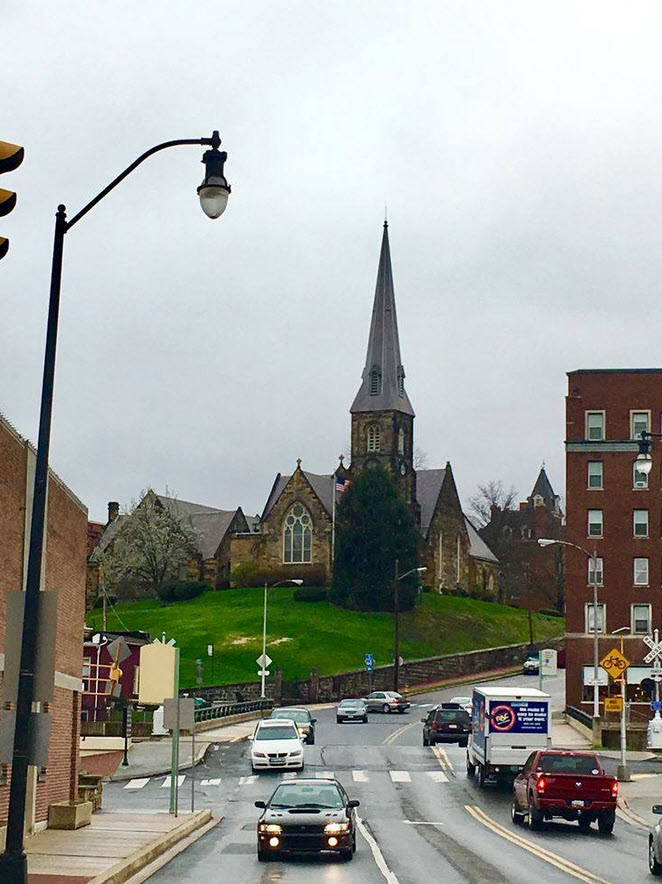
Emmanuel Episcopal Church Cumberland today. Google image.
Source: Wikipedia
Then & Now: Barnesville (Sellman’s Depot”) Train Station, 1912
BARNESVILLE (“Sellman’s Depot”) B&O TRAIN STATION (THEN): Barnesville Station, constructed circa 1873, this frame building apparently housed the post office as well. The station house in 1874 was referred to as “Sellman’s Depot”, and was named for William 0. Sellman, owner of the lands on which the station was built. Development began around 1873 when the railroad came through and the town was gradually abandoned with the advent of interstate highways and automobiles. The station was demolished in the 1950’s.
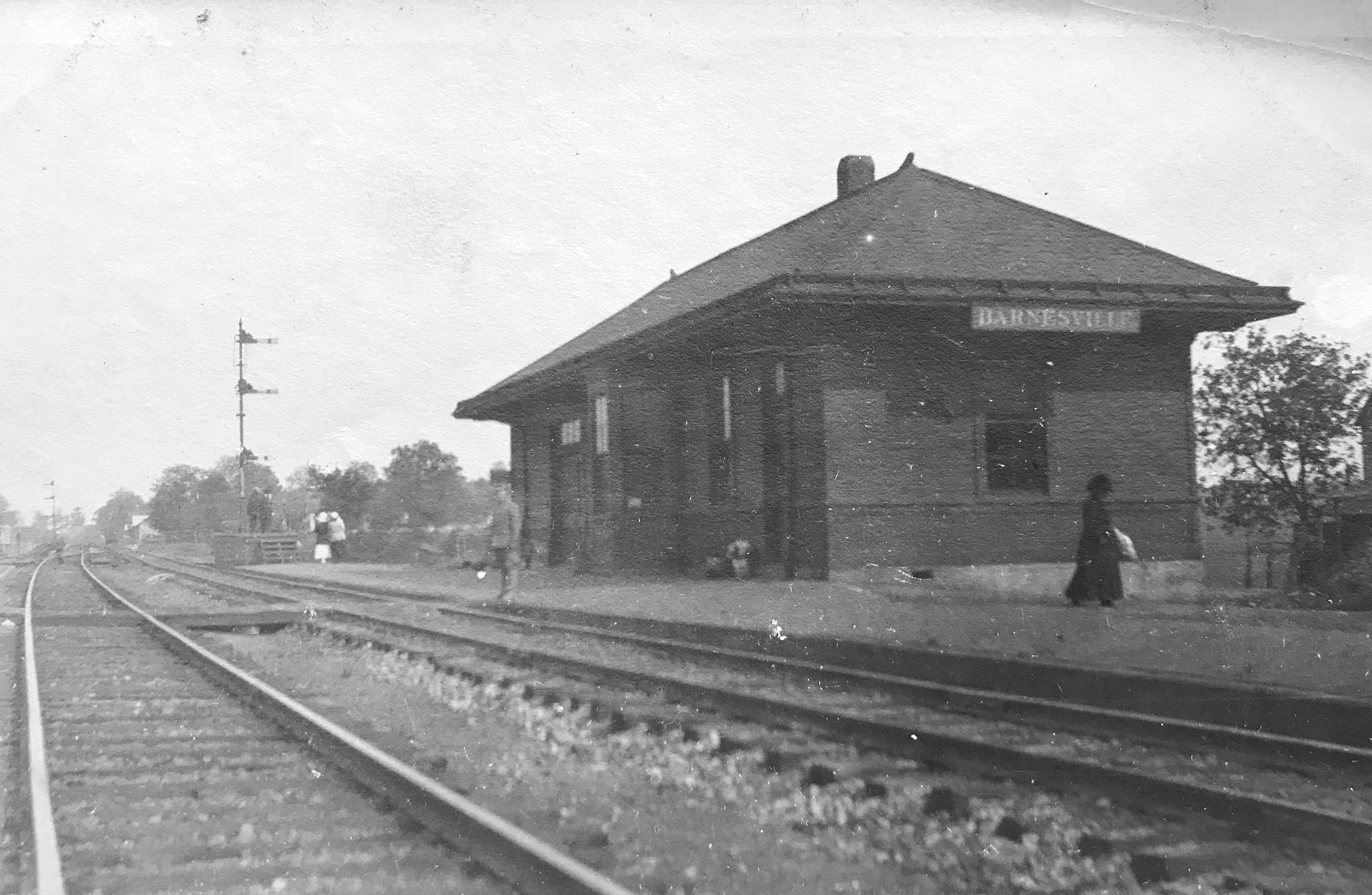
Barnesville (Sellman’s Depot”) Train Station. Photo by Lewis Reed, 1912.
BARNESVILLE MARC STATION (NOW): Built about 1930 as the first metering station for the Washington area gas supply, this building was saved from imminent destruction by concerned citizens dedicated to both the preservation of the visible past and revitalization of the railroad. On February 16, 1977 the historic metering station owned by the Washington Gas Light Company traveled 23 miles by road from Rockville to begin a new existence as the Barnesville railroad station. The squarish little structure had a makeover after the move. It was painted inside and out and and a wide overhanging roof was added just below the original roof line, giving the building more an authentic “train station” look, and it was re-dedicated on October 10, 1977. Snuggled up against the woods, surrounded by trees and shrubbery in a rural area just south of Barnesville on Route 109 (Beallsville Road), the station today is a pretty sight.

The metering station installed at Sellman station by the tracks which today serves as the Barnesville (MARC) Station. It was moved here from Rockville in 1977 for preservation. Image from Wikimedia Commons.
Source: The Montgomery County Story Newsletter, Vol. 37, No.1, February 1994. “Train Stations and Suburban Development Along the Old Baltimore and Ohio Railroad” by Jo Beck
A Fun Photograph of Early Rockville: Then & Now
It’s always amazing to look back at the past and see how everything we know today once was. This is exactly why photography is one of the most brilliant inventions ever created – it has documented so many epic moments over the years, and provides the perfect portal to step back in time for just a few moments. In this special “Then & Now” feature, I have combined one of Lewis Reed’s original photograph’s for “then” and paired it with a Google composite image for “now”.
St Mary’s Catholic Church (THEN): This fun and interesting photograph taken by Lewis Reed is one of my favorites. The photo shows William Beall in his 1915 Pullman in front of old St Mary’s Church and his younger brother Vernon on horseback “towing” him to Reed Brothers. The photo was taken from in front of Lewis Reed’s Rockville Garage which was directly across from St Mary’s Church. Several of the Beall family were original employees at Reed Brothers, including: Leonard Beall (paint/auto body shop), Otis Beall, Walter (Bud) Beall, and Mary Anna (Slater) Beall (Bookkeeper). Bud and Otis Beall were two of Reed Brothers’ original Gulf Gasoline Station attendants.
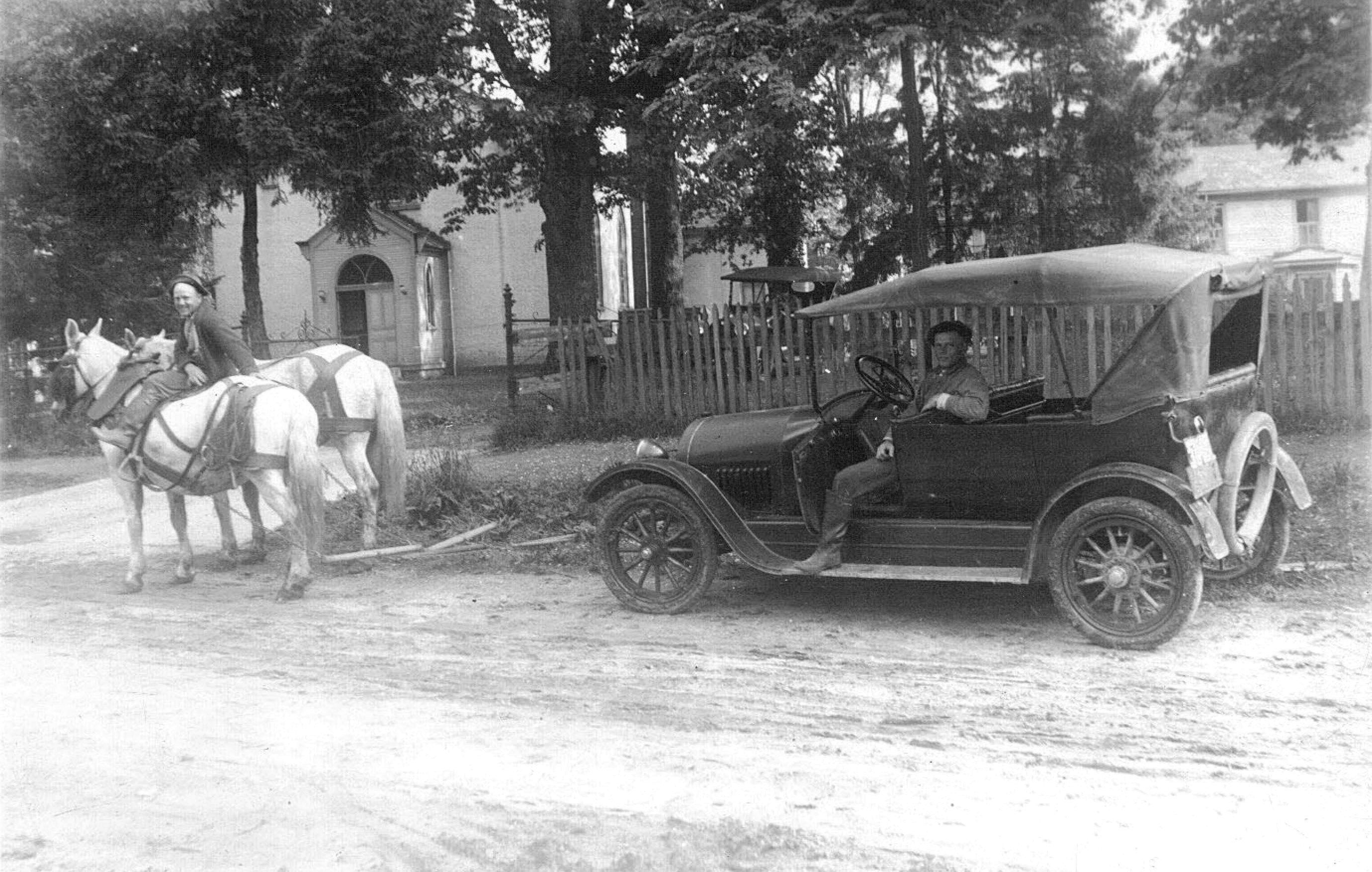
Early transportation powered by true “horsepower”. Photo taken by Lewis Reed, 1915
St Mary’s Catholic Church (NOW): Today, the church overlooks the same intersection of roads now called Veirs Mill Road and Rockville Pike. With the 1950s addition of Hungerford Drive as a bypass to Rockville’s commercial street, this is a busy intersection. It is arguably the symbolic cross-road for the county, and locals refer to it as “the mixing bowl” for its unconventional configuration and heavy volume of traffic. The church’s prominent location and its connection to author F. Scott Fitzgerald, who is buried in its cemetery, contribute to St. Mary’s status as a landmark in Rockville.
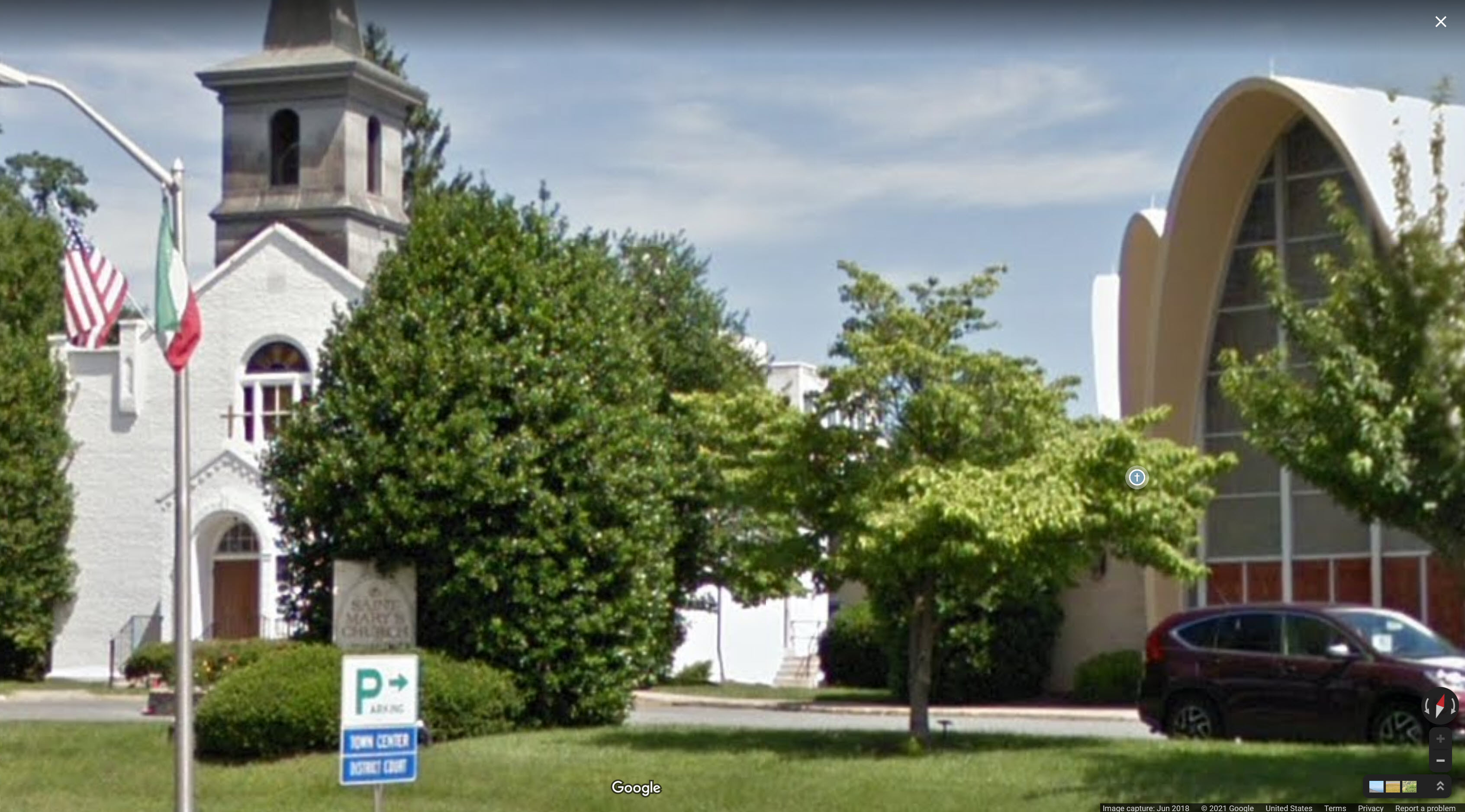
St Mary’s Catholic Church, Google Image, 2021
Books

Related Resources


Copyright Notice

Reed Brothers Dodge History (1915-2012) by Jeanne Gartner is licensed under a Creative Commons Attribution-NonCommercial 3.0 Unported License.


Recent Comments