
Then & Now: Clopper Grist Mill
This post is a continuation of a series of “Then & Now” images that will show photographs of buildings, street scenes, and other historical locales from Lewis Reed’s Photo Collection alongside photographs of how they appear today. Taken approximately 109 years apart, these photos show the Clopper Grist Mill then and now.
Clopper Mill (THEN): Francis Cassatt Clopper bought this mill and 541 acres in 1810, but the earliest mention of a mill on this site dates back to 1777. Clopper’s mill was a square, three-story grist mill, with basement and first floor levels made of local field stone and a third story of brick. The mill was destroyed by a fire in 1947.
On April 15, 1865 Clopper Mill became part of national history when would-be assassin of the Vice President of the United States, George Atzerodt, spent the night there while fleeing from Washington D.C. after the assassination of President Lincoln. George was part of the gang assembled by John Wilkes Booth to eliminate the heads of the U.S. government. He was supposed to kill Vice President Johnson at the Willard Hotel at the same time as Booth assassinated the President. But Atzerodt ran out of courage and instead made his way to Germantown.

Clopper Grist Mill. Photo by Lewis Reed, ca. 1910
Clopper Mill (NOW): The ruins of this large brick and stone mill stand on the west bank of Great Seneca Creek, just south of Clopper Road near the intersection of Warring Station Road. The property was acquired by the State in 1955 as part of Seneca Creek State Park.

Clopper’s Mill Ruins today.
Lewis Reed Photos: Black Rock Mill, 1905
Looking back at photography from the past is a fascinating experience for me. I have no formal history training, just a general interest in local history where I grew up. This special post is a part of a new blog feature called, “Rockville’s Past Through the Lens of Lewis Reed”. It doesn’t have anything to do with Reed Brothers Dodge, but it does have a lot to do with it’s founder, Lewis Reed. With photography for a hobby, one that began even before automobiles were around, Lewis Reed had amassed an extensive collection of photographs from historical locations in Maryland, Washington, DC and Virginia.
With that said, I will not try to be an historian; I will simply highlight some photos and supply a few sentences of context. I will begin with some images of Black Rock Mill … through the lens of Lewis Reed.

An unidentified lady poses in front of Black Rock Mill, circa 1905. Photo by Lewis Reed
Black Rock Mill was built by Thomas Hillary and has stood along the banks of Great Seneca Creek as a landmark since its construction in 1815-1816. The mill was in working operation for over a hundred years until a flood in 1920 destroyed a dam on Seneca Creek and damaged the mill. Today, it a unique survivor of the many mills in Montgomery County harnessing the water-power of the creeks to grind wheat and corn into flour. It is one of only two mills standing in Montgomery County Maryland. (click on images to enlarge)
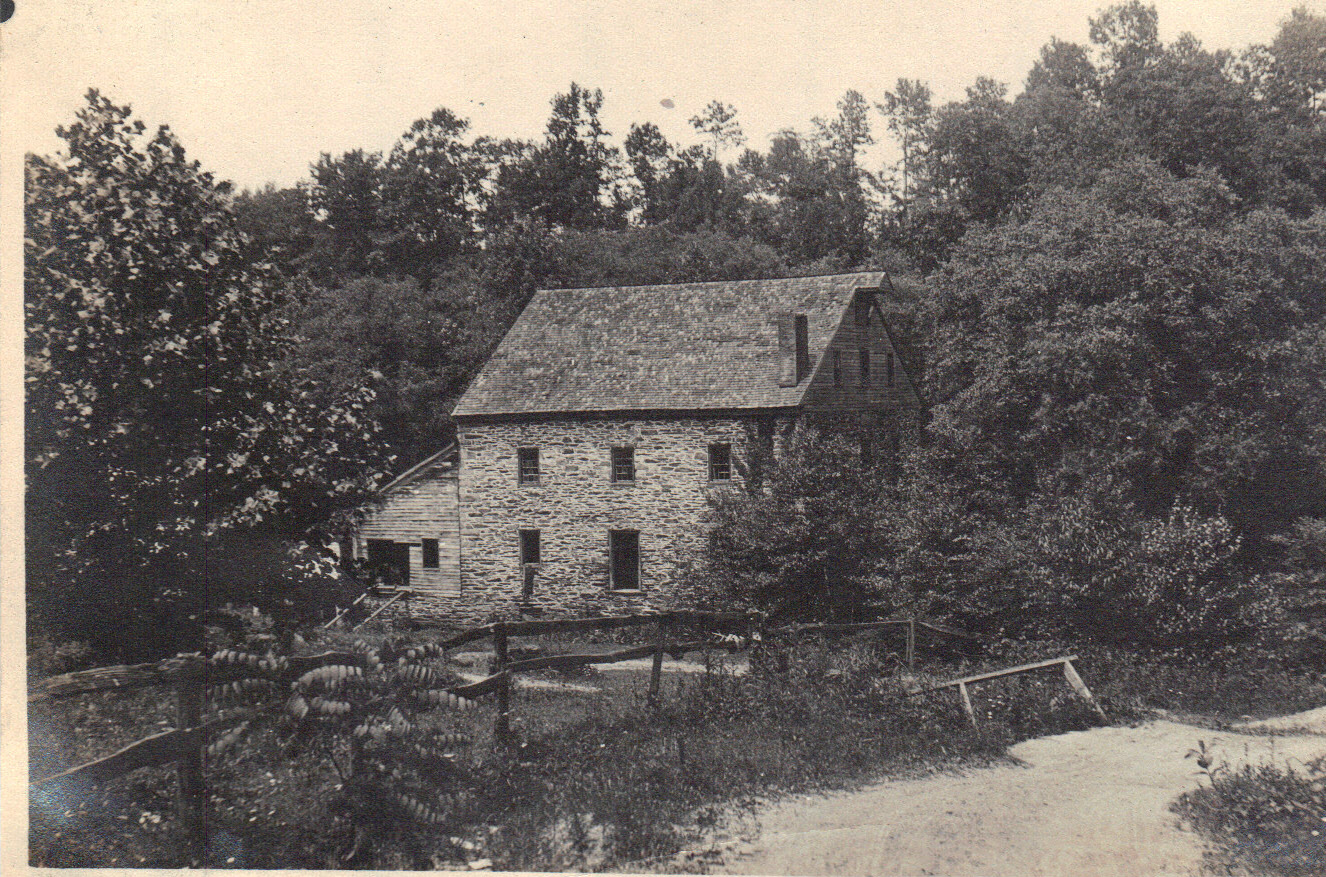
Black Rock Mill. Photo by Lewis Reed
As far as can be determined, Lewis Reed’s collection of Black Rock Mill photographs are probably some of the earliest known.
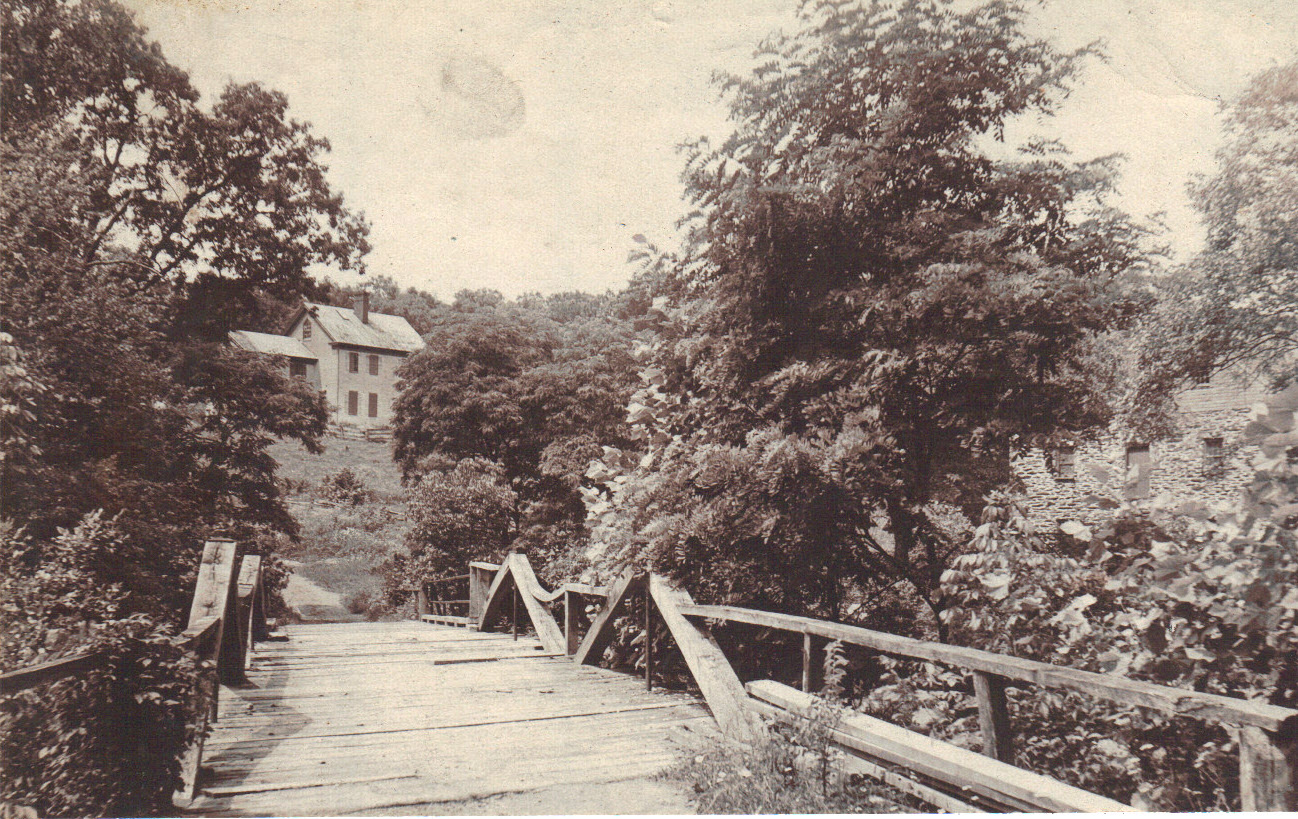
Bridge over Seneca Creek. Photo by Lewis Reed
Lewis Reed was a well-known photographer in the county and many of his early photographs are now part of the Montgomery County Historical Society photo archives. The Jane C. Sween Library was recently given a collection of 280 glass plate negatives, showing Montgomery County in the early 20th century.
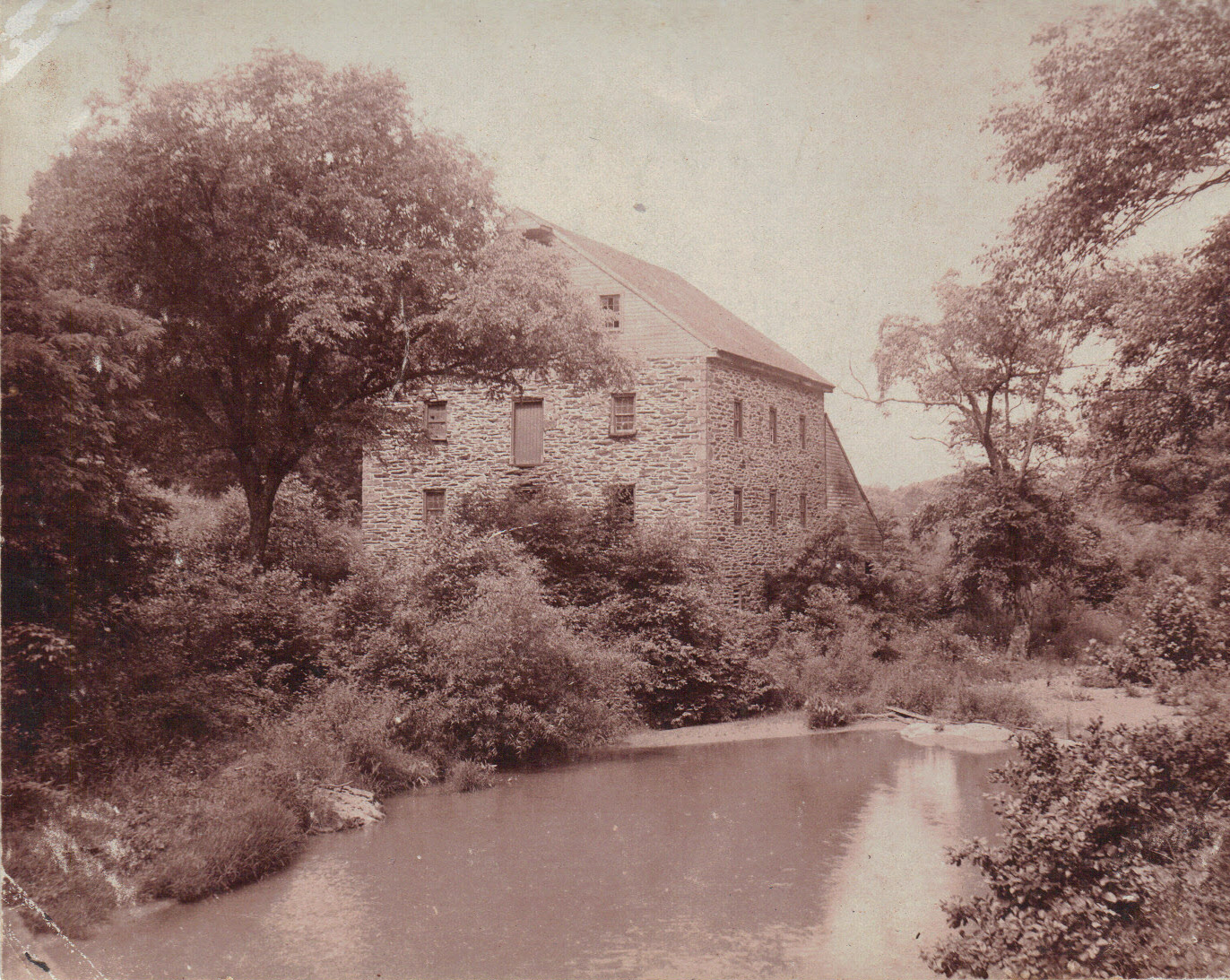
The two-story stone mill is set into the side of a hill beside Great Seneca Creek. Photo by Lewis Reed
A photo taken by Lewis Reed appeared below in an undated Montgomery County Courier newspaper.
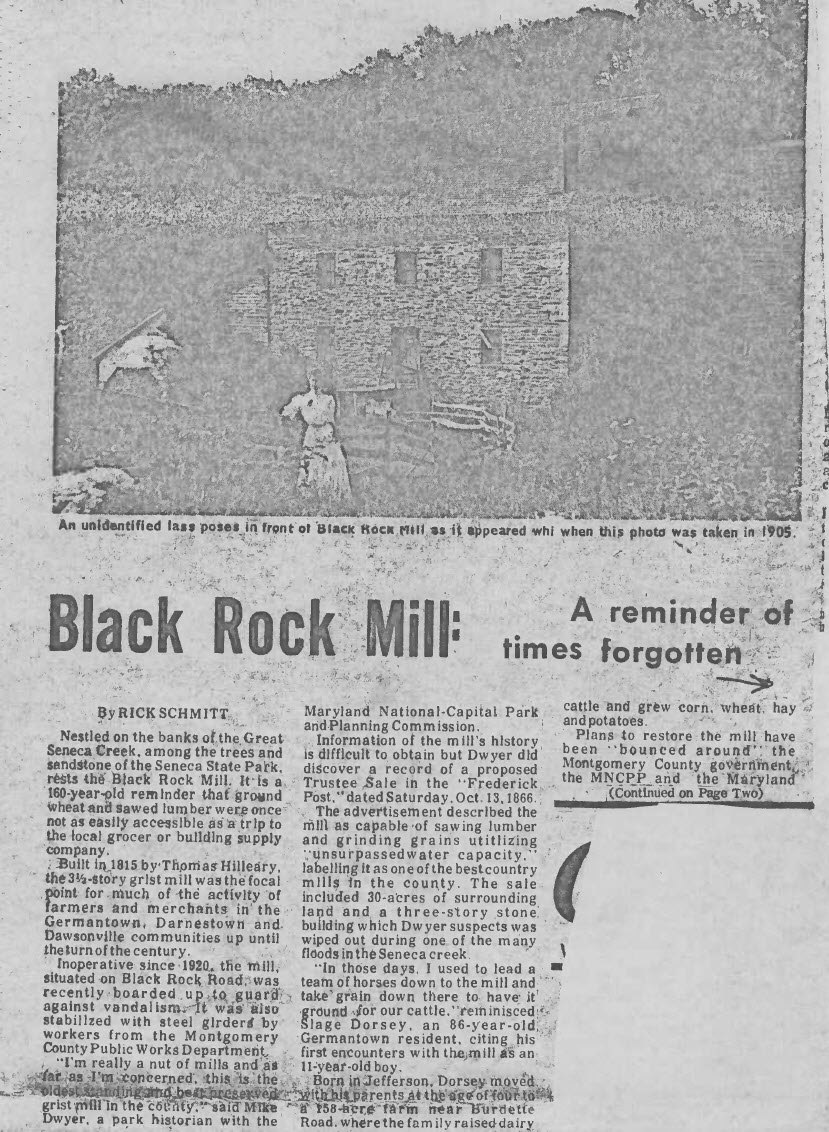
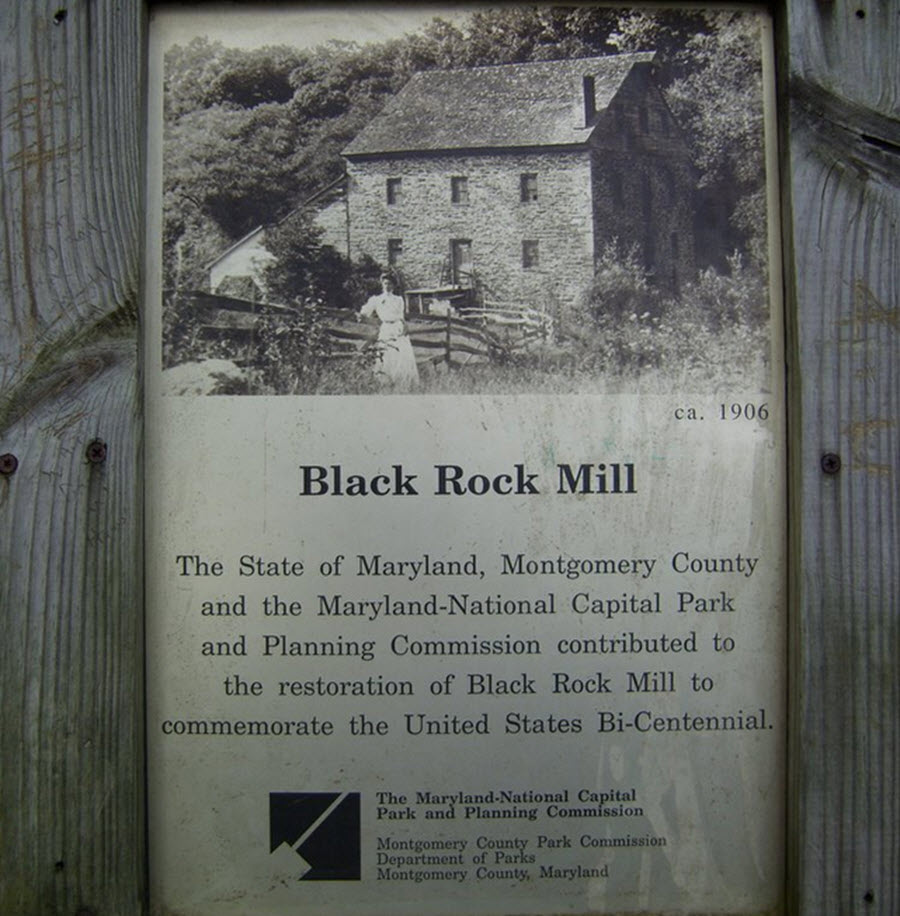
For now, the mill sits idle but majestic on the Seneca Creek, a reminder of a long time ago. Black Rock Mill is owned by MCPS and is open to the public during daylight hours. There are also hiking trails all around it since it sits within the parks system. This is a very large structure and is one of the best preserved old mills in Montgomery County. It also sits directly alongside a creek and the interior of the building has flood markers on the walls. At least one flood took over 2/3 of the building.
Directions: From Germantown, go south on Germantown Road/Md 118 for 2.5 miles, turn right onto Black Rock Road and go about 3 miles to the mill on the right at Great Seneca Creek. The mill is located in Seneca Creek State Park.
References:
M: 24-6: Black Rock Mill – Maryland State Archives
Montgomery County Historical Society
Books

Related Resources


Copyright Notice

Reed Brothers Dodge History (1915-2012) by Jeanne Gartner is licensed under a Creative Commons Attribution-NonCommercial 3.0 Unported License.
 Reed Brothers Dodge History 1915 – 2012
Recent Comments