
Lewis Reed Photos Featured on WETA’s “If You Lived Here” Rockville
Several of Lewis Reed’s photos were featured on a historical segment of “If You Lived Here” series on Rockville that aired on December 4, 2023 on WETA. While in Rockville, viewers learn about the history of Rockville, Maryland and the town’s transformation after World War II. The post-war era brought about a wave of growth and change.
This video is part of WETA’s house-hunting “If You Lived Here” series, which spotlights a wide array of neighborhoods and properties throughout the national capital area while celebrating each area’s history, culture, notable places and flavor. Hosts, best friends and longtime Washingtonians Christine Louise and John Begeny tour homes and communities with local realtors, exploring the D.C. Metro region one neighborhood at a time.
The following photos are screenshots of Lewis Reed’s photographs that appeared in the video. (click any image to view photo gallery)
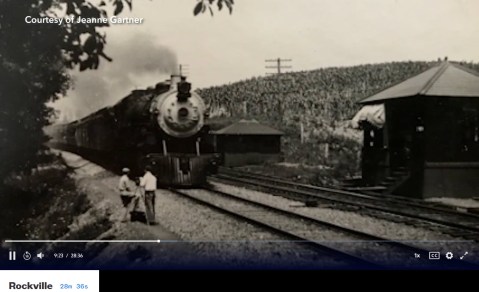
Lewis Reed (at left) using a tripod and five-by-four box camera to shoot photos of an arriving B&O train near Germantown in 1913

Rockville B&O Railroad Station pictured here at the turn of the century.

Rockville Trolley car #596, 1908

Tenallytown and Rockville Pike Trolley Line, 1910
The “If You Lived Here” series is now WETA PBS’ most popular local show ever produced. Follow the link to watch the video of Episode 16 of Season 3 on WETA/PBS series, “If You Lived Here” Rockville.
Happy Birthday to Lewis Reed Founder of Reed Brothers Dodge

This ca. 1965 photo of Lewis Reed was taken in the new car showroom at Reed Brothers Dodge original location at the triangle at Veirs Mill Road and Rockville Pike.
Happy 136th birthday Lewis Reed! The founder of Reed Brothers Dodge was born on this day in 1887 in Darnestown, Maryland. In 1915, he founded what would become the oldest Dodge dealership under the same family ownership in the state of Maryland, and one of the oldest in the entire nation.
Lewis Reed was just 27 years old when he started selling cars built by brothers Horace and John Dodge in Detroit. Few people jumped onto the Dodge Brothers bandwagon earlier than Lewis Reed, and not many have lasted longer. Reed Brothers was franchised as a Dodge dealership and service facility less than one year after the first Dodge automobile rolled off the assembly line. Lewis Reed was the first to sell Dodge cars in Montgomery County, Maryland and his company was the first Gulf gas dealer in the Washington, D.C. area. During the early years, Reed Brothers represented several franchise nameplates along with Dodge, including Oldsmobile, Hudson and Essex. The Hudson and Oldsmobile were sold at Reed Brothers from roughly 1917 through 1923.
Lewis Reed was a member of the Gaithersburg Grace Methodist Church where he served as a member and Chairman of the Board of Stewards, a Lay Leader, and President of the Men’s Bible Class. He was one of nine original incorporators of the Gaithersburg-Washington Grove Volunteer Fire Department when it was created by charter in 1928. He was a Charter Member and Past President of the Gaithersburg-Washington Grove Fire Department and a member of the advisory board of the Rockville Branch of the First National Bank of Maryland. He belonged to the Masonic Lodge of Rockville, the Pentalpha Chapter of the Eastern Star and the Rockville Rotary Club. Before opening his Dodge dealership in 1915, Lewis Reed was one of the earliest and most prolific photographers in Montgomery County. Many of his photographs are now part of Montgomery History’s photo archives. Unsurprisingly, his love of both cars and cameras resulted in his taking numerous pictures of car culture all over the State of Maryland as it developed from infancy to supremacy.
Prior to World War I, Lewis Reed’s love of automobiles led him to becoming a chauffeur. Chauffeurs were not only trained to be proficient with their driving skills, but they also had to keep the luxury automobiles in tip top shape which is where his mechanic training would have come into play. He received his training as an automobile mechanic at the Pierce Arrow factory at Buffalo, New York, the Dodge and Hudson factories at Detroit and the Washington Auto College.
Active in the dealership daily until the day of his death, Lewis Reed passed on January 28, 1967 at the age of 79. Shortly after his death, the Senate of Maryland passed Senate Resolution No. 10, expressing “the deepest regret and sympathy of every member of this body,” describing Reed as “a kindly and loyal person completely devoted to his duties” which he carried out “with fairness and human understanding.” The resolution was sponsored by Senator Thomas M. Anderson, Jr. and Senator Louise Gore.
When you look back and consider what has taken place in the world in the past 100 years or so, you gain a perspective of what Lewis Reed faced. He overcame a lot of obstacles throughout his life. He steered his dealership through World War I, The Great Depression and World War II. When Reed Brothers had no new cars to sell for three and a half years and many dealers went bankrupt, he converted his car showroom into a display room and sold GE Washing Machines, Westinghouse Radios, and other large appliances. Reed Brothers Dodge occupied two locations, the original at the Veirs Mill Road and Rockville Pike intersection and the second at 15955 Frederick Road in front of the Shady Grove Metro.
Lewis Reed set an outstanding example through his success, but more importantly through his sacrifices and commitment to the community he served. Today, Bainbridge Shady Grove Metro Apartments pays tribute to the oldest Dodge dealership in Maryland with commemorative art on the former site of the iconic Reed Brothers dealership.

Bainbridge Shady Grove Metro Apartments now stands on the former site of the Reed Brothers Dodge dealership at 15955 Frederick Road. A sculpture now installed on the property pays tribute to the oldest Dodge dealership in Maryland history. More than 20 feet high, and over 6 feet wide, the public art is inspired by 1939 Dodge headlamps, and the fender of a 1957 Dodge pickup truck.
Front-of-the-House Photography of the Early 20th Century
Get the kids, the horses, the cats and dogs, buggies and tractors. Lewis Reed is here, and it’s time to gather in front of the house for a family picture!
Front-of-the-house family photographs were popular from the 1880s through the first decade of the 20th century. Until the early 1900s, people went to the photographer’s studio in town to get a picture, a “likeness” as they sometimes called it. But soon after, the reverse was possible: the photographer sometimes came to the family house to take a picture (and yes, a single picture!).
In the early 1900s, families rarely took their own photographs. Most people would never even consider owning a camera, which then was an expensive and complicated piece of equipment. If they wanted a picture of their family or their home, they called on a photographer like Lewis Reed to take it for them.
Below are some houses on which Lewis Reed trained his lens in the first decade of the 1900s–some identified, some not–but all a fascinating glimpse into the everyday world as it was back then. As always, click on the photos to get a better look.
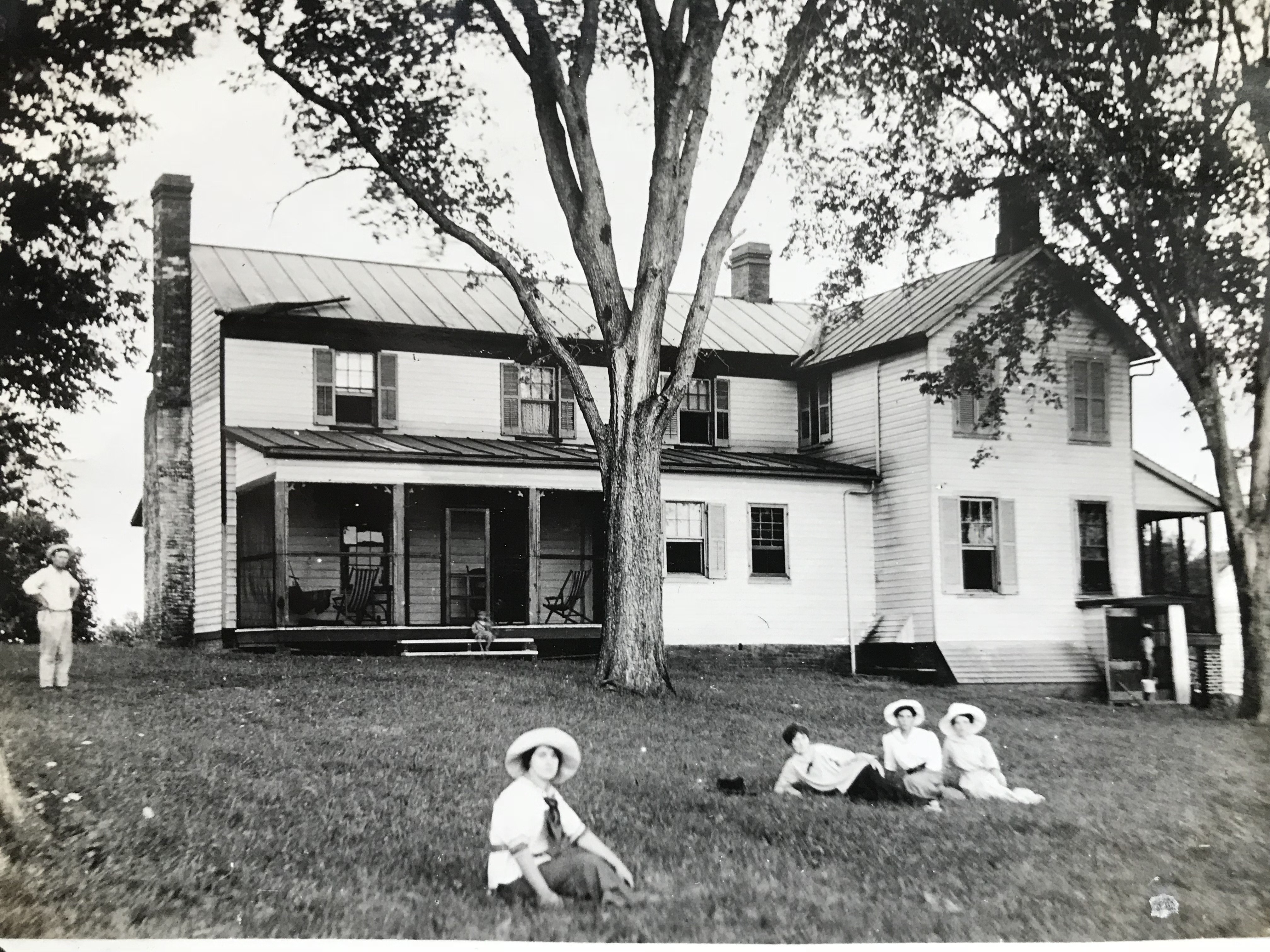
An unusual view of the backyard of a house, with its screened-in porch and children relaxing in big floppy hats.

This photo and the one below it, are very interesting in that they depict a small child posing with likely her nursemaid or a house servant who is African American, and still a child herself. Above, a view of the front porch…

…and the same house as above with the girls now playing in the side yard. The smaller child is in a buggy styled to look like a sleigh.

Here, the women of the family pose for the camera (while a young man photo-bombs from behind a bush).
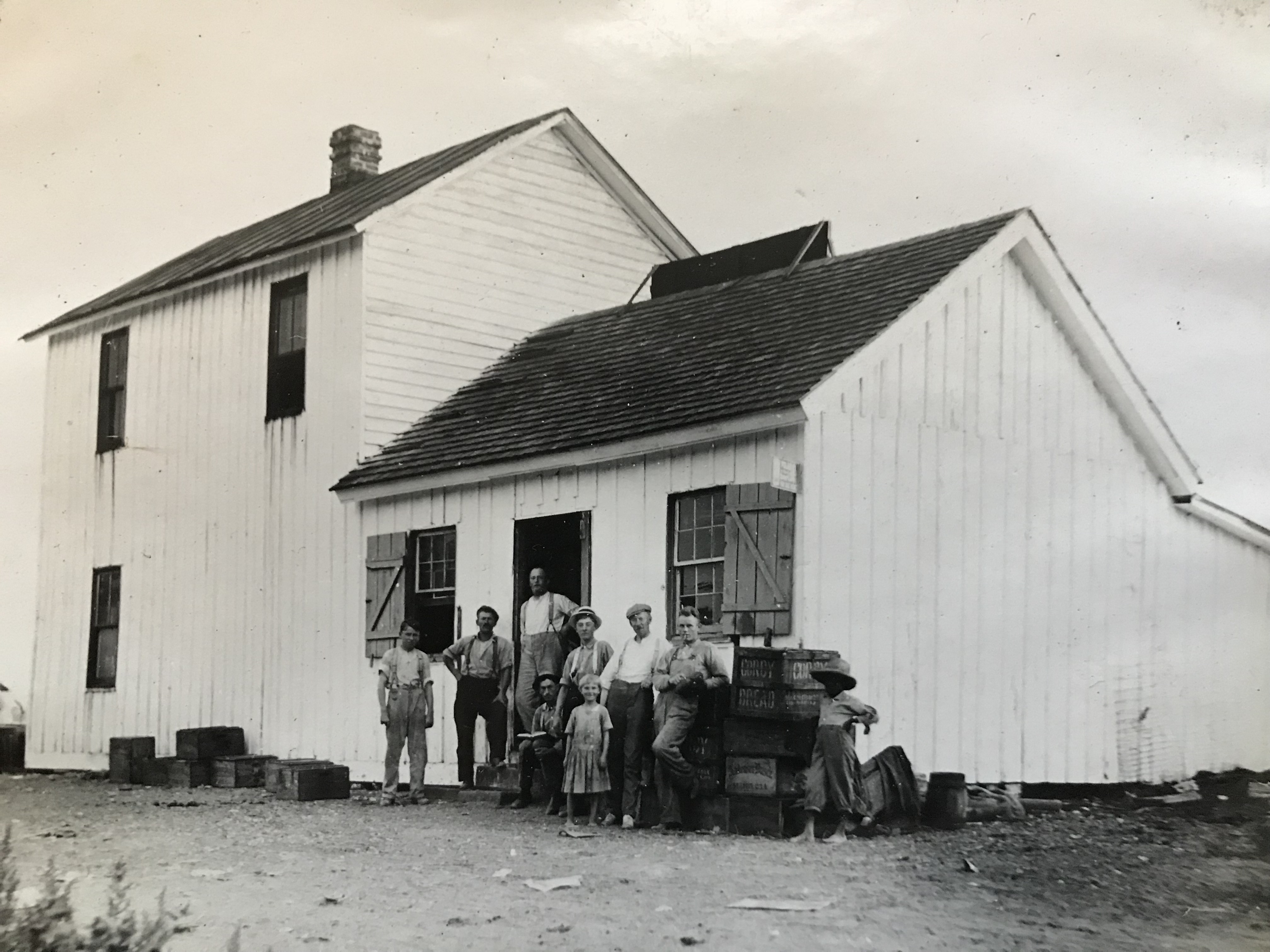
This unusual group of people posing at the back door of an unidentified building may be running a store. The crates and debris on the ground, and the back side of a possible sign on the roof indicate a mercantile rather than a home.

This family is clearly dressed in their Sunday best on a winter day. The sidewalk in front of their house is made of wooden planking.

Several women can be seen on this house’s front porch, with its flowering vines strung from trellis to rail.
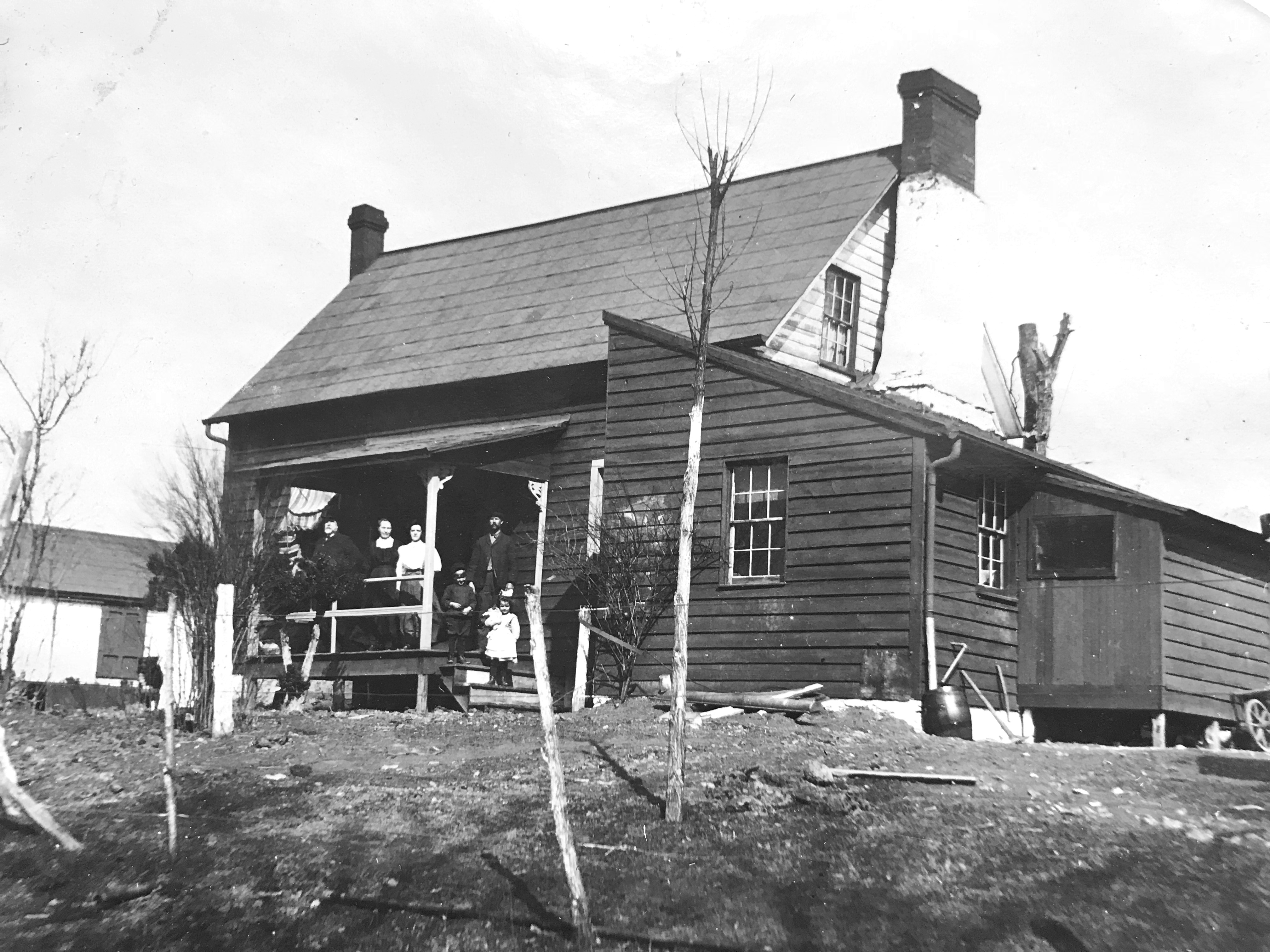
This modest house has had an addition put on–it looks rather new and perhaps Father wished to show it off. Here, a portion of the family poses on the front porch (possibly with a set of in-laws)…
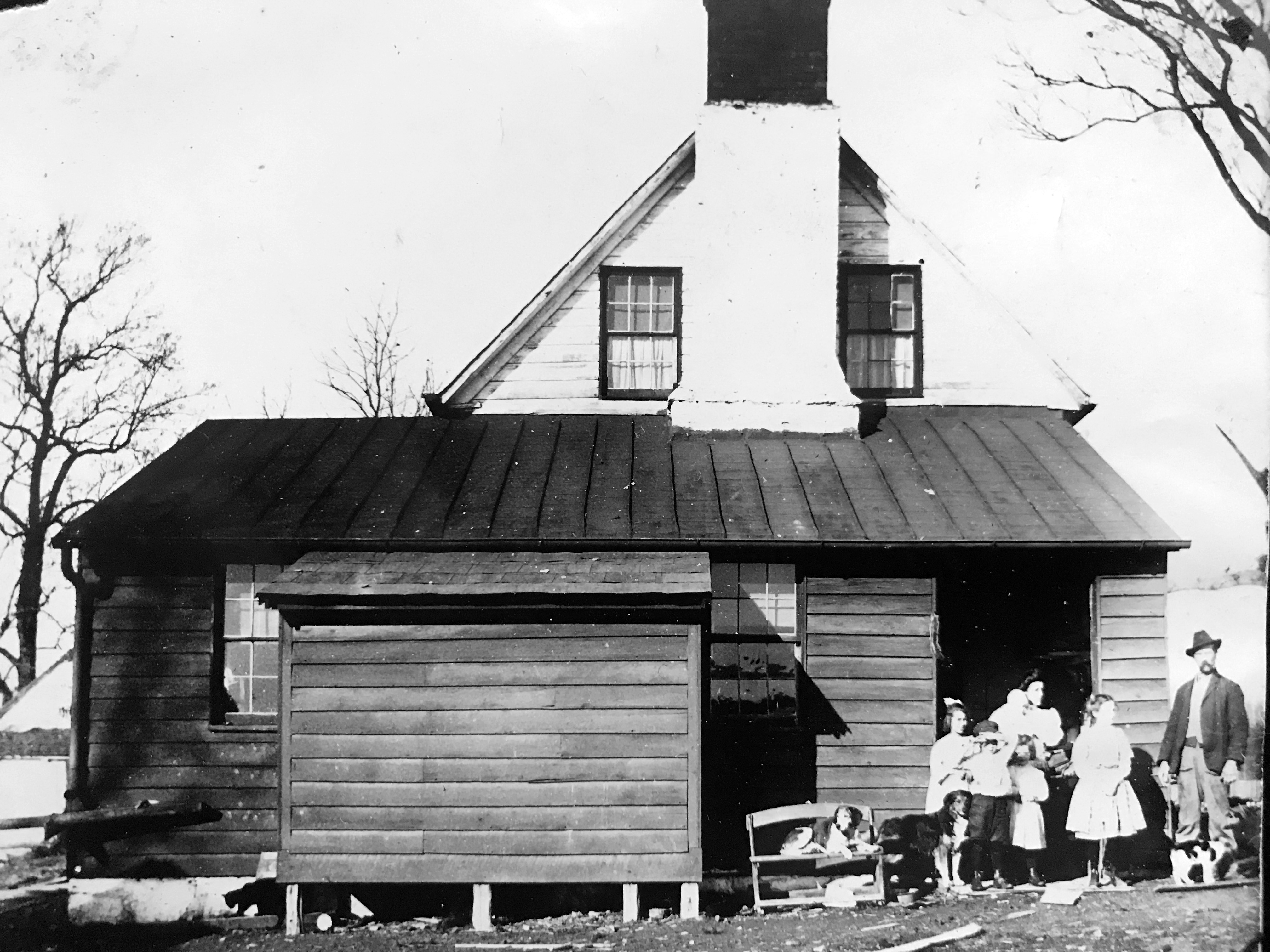
…and here a different grouping are at the side door. In this less formal shot, there are far more children, as well as two dogs and a cat in the picture.

One downside to photographing an entire house is you lose the detail of each family member. The families in this photo and the one below, clearly cared more about seeing their faces than their houses. Notice the youngest girl above couldn’t keep still long enough, so her face is blurred.
Modern observers of these photographs are often drawn to the poverty, or at least the relative poverty of the people in the images. In reality, however, the front-of-home family photograph was a sign of wealth. It’s function was to record a moment in which a family was prosperous enough to have their own homes, their own horses or tractor.

There is a chicken near the steps in the photo.
Around the turn of the century, middle class Americans could start to afford their own personal cameras.
Then & Now: Baltimore & Ohio Railroad, Point of Rocks Tunnel
This post is a continuation of a series of “Then & Now” images from Lewis Reed’s Photo Collection alongside photographs of how they appear today. Lewis Reed worked hard to preserve a visual history of Montgomery County, Maryland and surrounding area long before automobiles were even around. As early as 1905, he toured on his motorcycle across the states of Maryland, Virginia, and Washington, D.C. and took photographs of many historic locations. Taken over 112 years apart, you can see how the Point of Rocks Train Tunnel in Maryland looks almost the same from over a century ago.
Point of Rocks Tunnel (THEN): Just west of the Point of Rocks Train Station is the Point of Rocks Tunnel. The original single-track main line is the track on the far left which goes around the cliff. A boxcar is visible just to the left of the tunnel opening. The tunnel was completed in 1902 when it became necessary to add a second track. The tunnel portal has a brick facade with the bricks forming the words, “Point of Rocks” above the opening. Just over the river bank from the original main line was the Chesapeake & Ohio Canal (C&O). Space is tight there and the railroad and canal folks were often at odds. A wall between the two was constructed to help ensure the trains did not scare the mules pulling the canal boats.
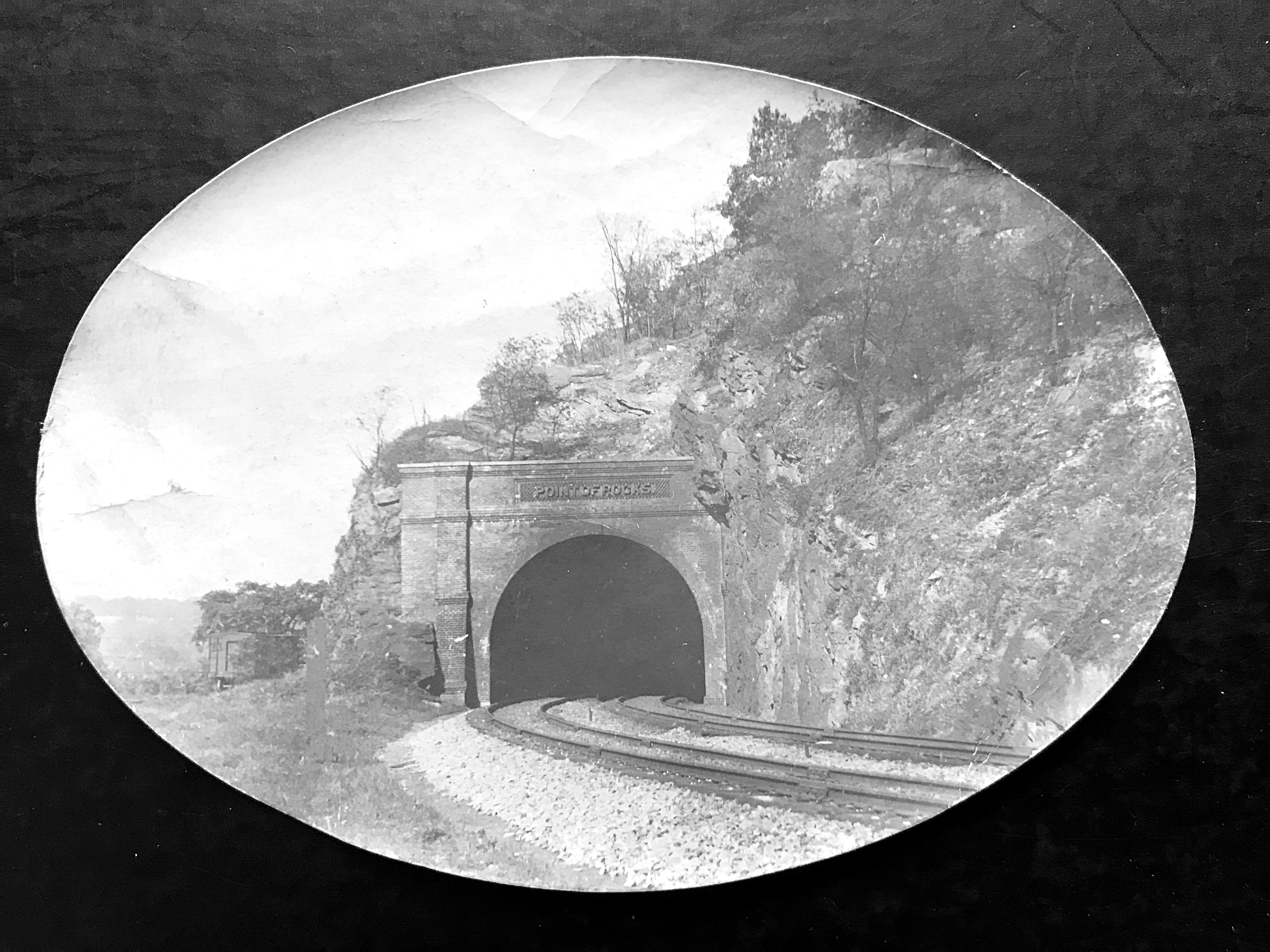
Point of Rocks Train Tunnel, 1911. Photo by Lewis Reed
Point of Rocks Tunnel (NOW): The tunnel was enlarged in 1902 to accommodate larger trains. In the early 1960s, the eastbound track was moved to the outside of the tunnel to accommodate still larger trains. This was done by blasting the rocks on the old alignment outside the tunnel, enlarging the road bed, and dumping the excavation rocks into the canal bed, where they remain today.
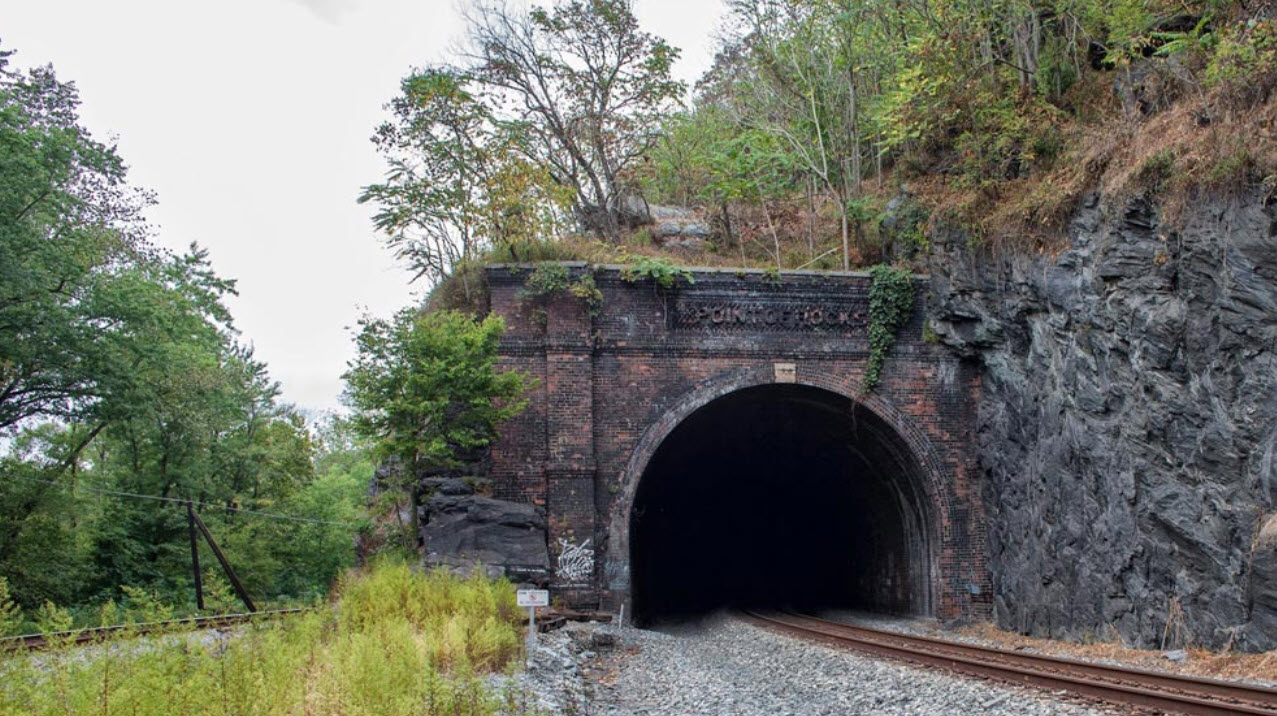
Point of Rocks Train Tunnel today
Point of Rocks Maryland, 1911
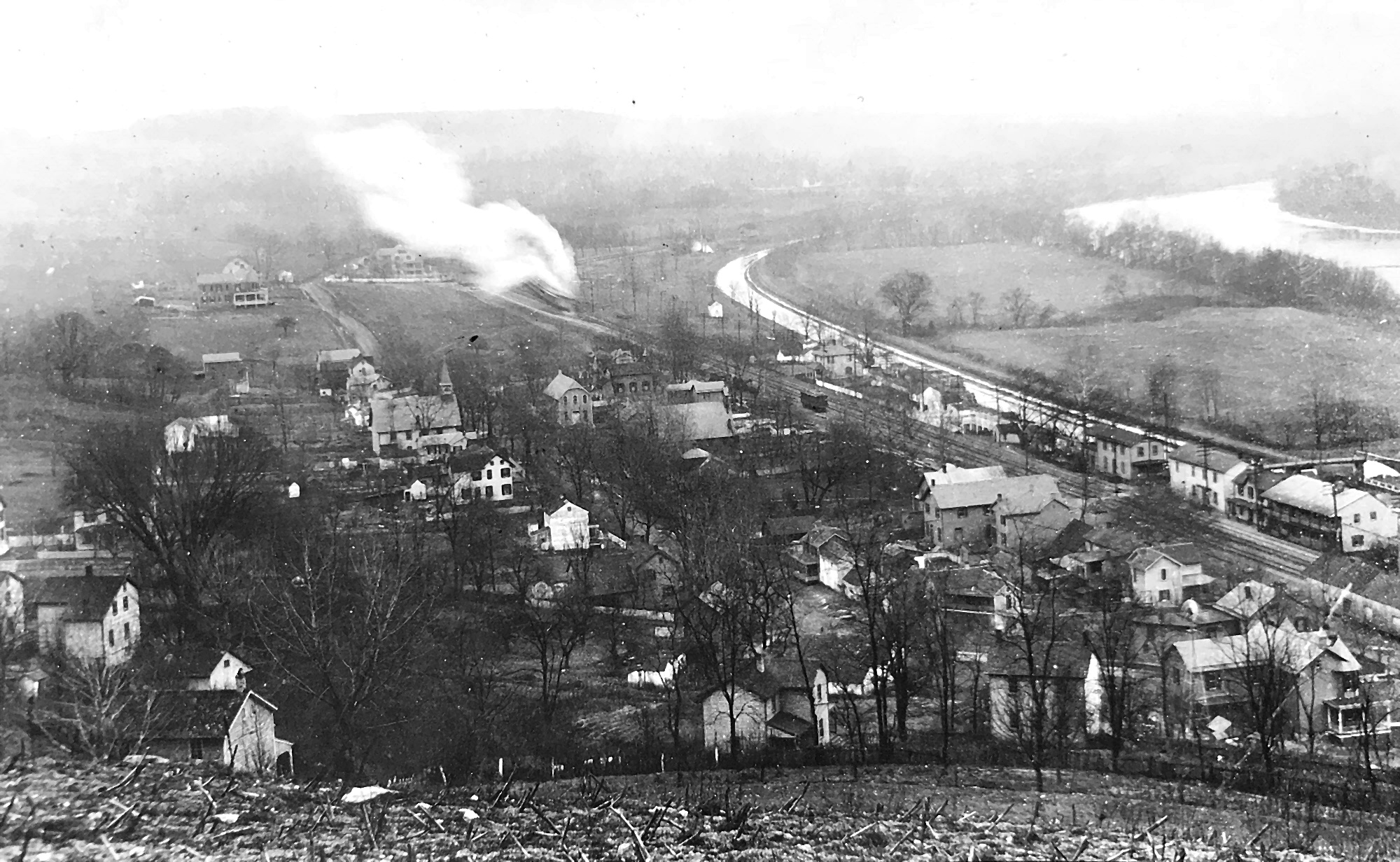
Point of Rocks, 1911. Photo by Lewis Reed
In 1835, the community of Point of Rocks, originally known as Trummelstown, was laid out at the foot of the Catoctin Mountains along the route of the C&O Canal and the B&O Railroad in order to provide dwellings for workers building the railroad and canal. The community was soon thereafter renamed for a nearby notable geographic feature of projecting rocks formed at the point where the Catoctin mountain range reached the Potomac River. This feature is no longer visible today, as it has been largely removed to accommodate the construction of the railroad and Point of Rocks Tunnel. The coming of the transportation routes and the construction of an adjacent bridge crossing and railroad spur over the Potomac River in 1852 lead to the growth of the town. By 1858, dwellings, a store, a hotel and a number of warehouses and flour mills that received grain from northern Virginia farmers for transport to Washington were located along the north side of the railroad.
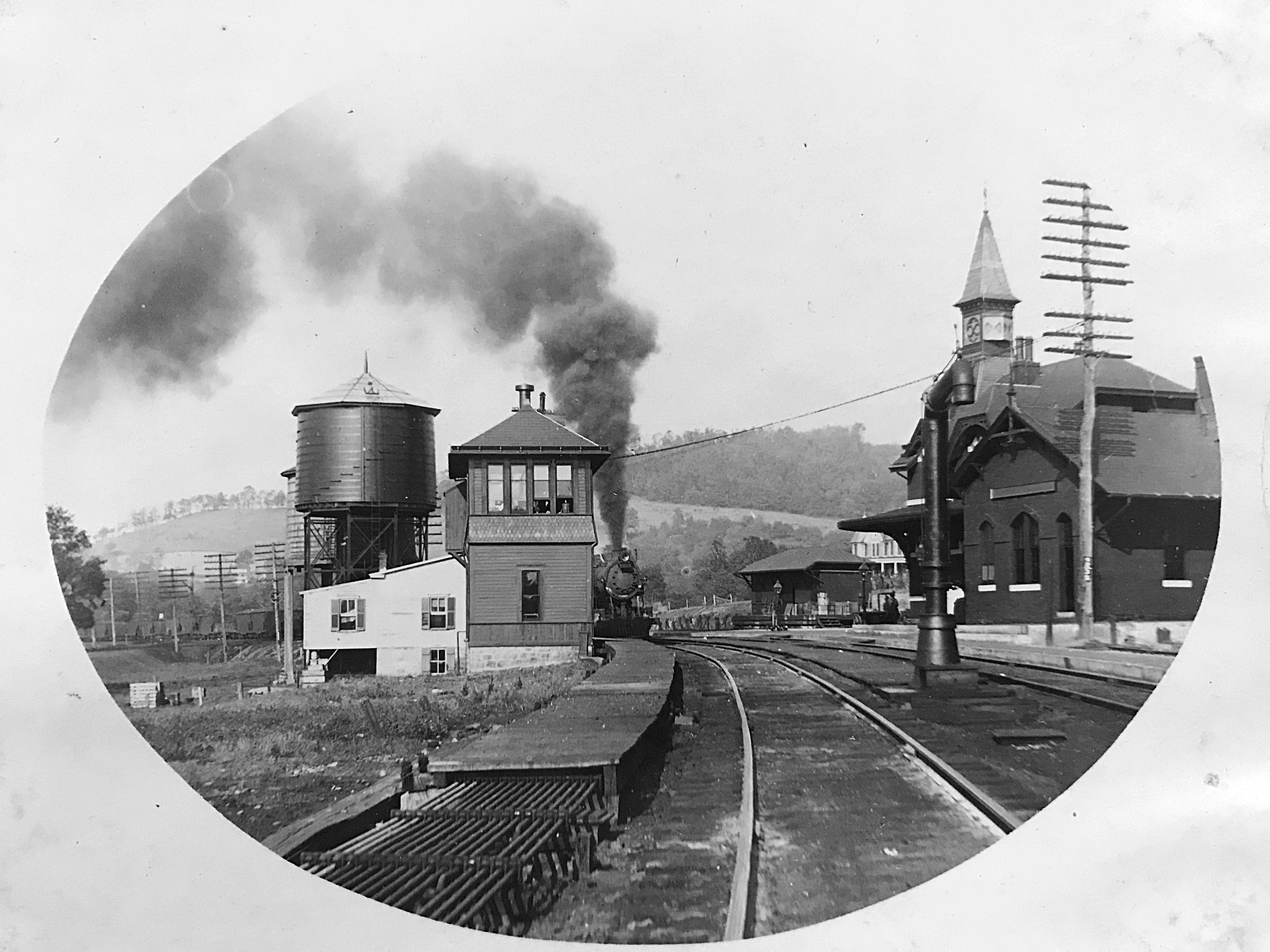
Point of Rocks Railroad Station, 1911. Photo by Lewis Reed
The growth of the Point of Rocks area was further prompted by the erection of the largest iron forge in the tri-state area on the opposite bank of the Potomac in Loudoun County, Virginia. In the mid-19th century, the operation employed over 250 men, many of whom crossed over the bridge from Maryland. The town also served passenger traffic on the railroad and became one of a number of resort towns along the Potomac River. By 1873, warehouses, hotels, and other commercial building lined both sides of the railroad and canal in an area south of the present-day village. In 1873, a location about a mile to the southeast of Point of Rocks became the junction of the B&O Railroad’s Metropolitan Branch and the Old Main Line passenger trains. The station name was first Point of Rocks, then changed to Washington Station in 1876, and reverted back to Point of Rocks in 1923.

Point of Rocks Railroad Station, 1911. Photo by Lewis Reed
The growth of the low-lying village was inhibited throughout the 19th and 20th centuries by several floods. By 1910, few remnants of the original village remained, with most of the village now being located on higher ground. In 2009, the earliest extant buildings date to the late 19th century.
Books

Related Resources


Copyright Notice

Reed Brothers Dodge History (1915-2012) by Jeanne Gartner is licensed under a Creative Commons Attribution-NonCommercial 3.0 Unported License.


Recent Comments