
Then & Now: Halpine Store/Radio Shack 111 Years Apart
Looking at old photographs is like peering through an open window back into history. Not only do they give you a sense of wonder from traveling back in time, but also a staggering feeling of awe from seeing just how much things have changed. For this post, I have used one of Lewis Reed’s original photographs for “then” and a Google Maps street view image from today for “now”.
The Halpine Store (THEN): The Halpine Store, also known as the Lenovitz General Store, was built on Rockville Pike in 1898, taking advantage of the prime location on the trolley and railroad lines and the Pike. The store sold food, gasoline and other items to locals and Pike travelers. The man standing just in front of the trolley tracks is James H. Handy (b. 1890) who lived at Halpine and worked for Mr. Copeland on the Wilkins farm. Handy served in the U.S. Army during WWI, as a gunner for the 371st infantry, doing two tours of duty in France. In this photo, he is about 16 years old. Note the telephone or telegraph poles, and the trolley tracks paralleling the road. The nearby Halpine railroad station also brought customers to the area, and the store became the social/community gathering place for the Halpine area. Tradition has it that during the days of “Local Option” when the sale of alcoholic beverages was forbidden in the County, the men of Rockville traveled to the Halpine Store to gather on the broad front porch and sip its special brand of “coffee” served in tin cups.
The proprietors, Benjamin and Anna Lenovitz, lived on the second floor. The building burned in 1923 and a new fire-resistant brick building was rebuilt in its place. This building, at 1600 Rockville Pike, became a Radio Shack, selling computers and electronics.
Seen in the black & white photograph taken by Lewis Reed in 1906, is The Halpine-Lenovitz General Store at Rockville Pike and Halpine Road.

Halpine-Lenovitz General Store at Rockville Pike and Halpine Road, 1906. Photo taken by Lewis Reed.
The Halpine Store/Radio Shack (NOW): The same view one hundred and eleven years later. Rockville Pike is now six lanes, linking the once outlying Halpine and Montrose with Rockville’s town center in one long strip of commercial enterprises and office buildings.

Halpine Store/Radio Shack, Google Image Capture, Nov 2016
Source: Maryland Historical Trust
Meet Lewis Reed, Photographer


Before opening his Dodge dealership in 1915, Lewis Reed was a well-known photographer in Montgomery County Maryland. At the turn of the century, before automobiles were even around, Lewis Reed toured up and down the East Coast on his motorcycle, taking photographs of landscapes, monuments, historic places, and people.
Some of the historic locations in his photograph collection includes the Black Rock Grist Mill, Smithsonian Institution, Montgomery County Maryland Almshouse, United States Capitol, Key Bridge, Union Station and other important sites in and around the Maryland, Virginia, and Washington, D.C. area. There are also photographs of many non-Maryland locations including Virginia, West Virginia, Pennsylvania, Georgia, New York, Boston, Georgia, North Carolina, and Canada. Especially stunning are images of the aftermath of the 1936 Gainesville Georgia tornado, one of the deadliest tornadoes in American history. As his photograph collection reveals, Lewis Reed was on the scene for some of the most important events in the history of the twentieth-century, and he always had his camera with him.
Lewis Reed developed all of his own photographs. He had a darkroom in his house — in the kitchen, to be exact — and worked at night to develop the negatives.
His photography has appeared in highly regarded history books such as, Montgomery County: Two Centuries of Change by Jane C. Sween, Rockville: Portrait of a City by Eileen S. McGuckian, and Gaithersburg: History of a City. His photographs have been featured in the Norris-Banonis Automotive Wall Calendar, on the national television show, American Pickers, and on television’s most watched history series, American Experience on PBS.
In a way, his photographs — more than 2500 in all — serve as an unwritten diary of his early adventures as an amateur photographer. My greatest pleasure now — more than 100 years later — is being able to share them.
Huckleberry Finn?
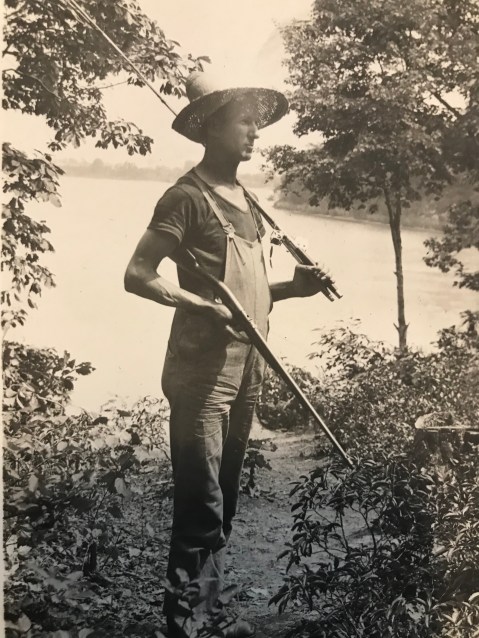
An adult Huckleberry Finn look-alike poses at Pope’s Creek, Maryland on the Potomac River. Photo by Lewis Reed, ca. early 1900s.
Pope’s Creek is located on the shore of a north-south section of the Potomac River north of and in sight of the Harry Nice Memorial Bridge. Lewis Reed was an avid fisherman and frequently fished and camped at Pope’s Creek with friends and family.
Near here, John Wilkes Booth was rowed across the river, a week after he assassinated President Abraham Lincoln.
Lewis Reed Shows Off His “Photoshopping” Skills… 100 Years Ago
If you take a look at the state of photography today, such as the advances of digital cameras and the artful image manipulation by Photoshop, it is easy to forget that back in the 1900s photographers couldn’t just go into a computer program and change their images any way they wanted. They did what they could with the tools they had. Double image exposure was one tool Lewis Reed had in his photography tool belt. He was doing crazy things to images and creating humorous effects over 100 years ago. With double exposure technique, you could create certain effects like placing the same person on both sides of a picture simultaneously. Photographs were pieced together in the darkroom from separate photographs.
Below are eight (circa 1920s) photographs from Lewis Reed’s collection that will make you do a double take. No digital manipulation here. (click on photos to enlarge)

A double exposure image of Lewis Reed’s brother, Edgar, seated on both sides of a table.
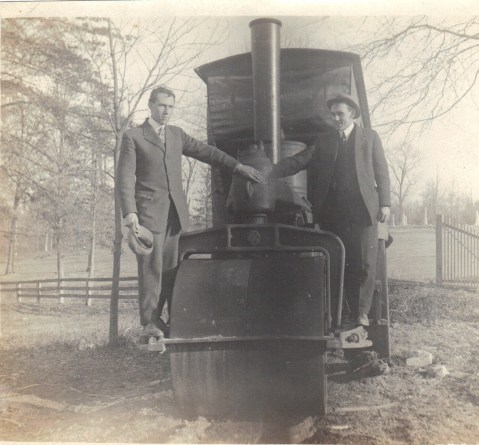
Lewis Reed standing on both sides of a steamroller

Another double exposure wonderment. Wanna Fight?

Oh No! What on earth are they doing? I don’t know, but this one is epic.
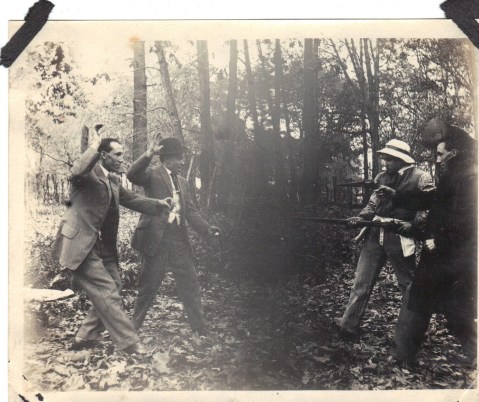
Don’t Shoot! Lewis Reed is standing both front left and front right in this photo
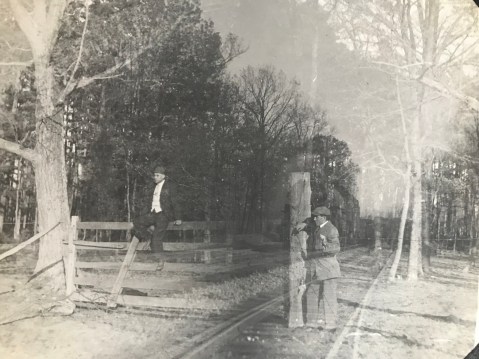
Surrealistic, ghost-like effect of Lewis Reed standing next to a tree in the middle of train track.

More “photoshop” fun. Lewis Reed pushing the same man in baby carriage on both sides of the photo.
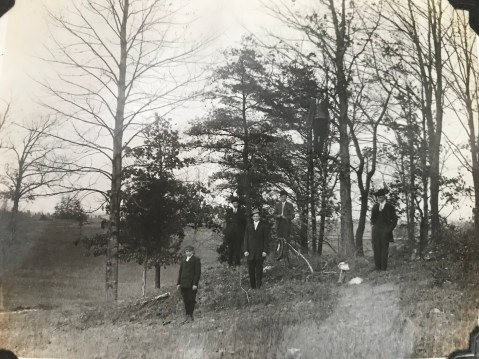
It’s a bird, it’s a plane .. no, it’s a man up in a tree!
Reed Photo Collection (1898-1960)
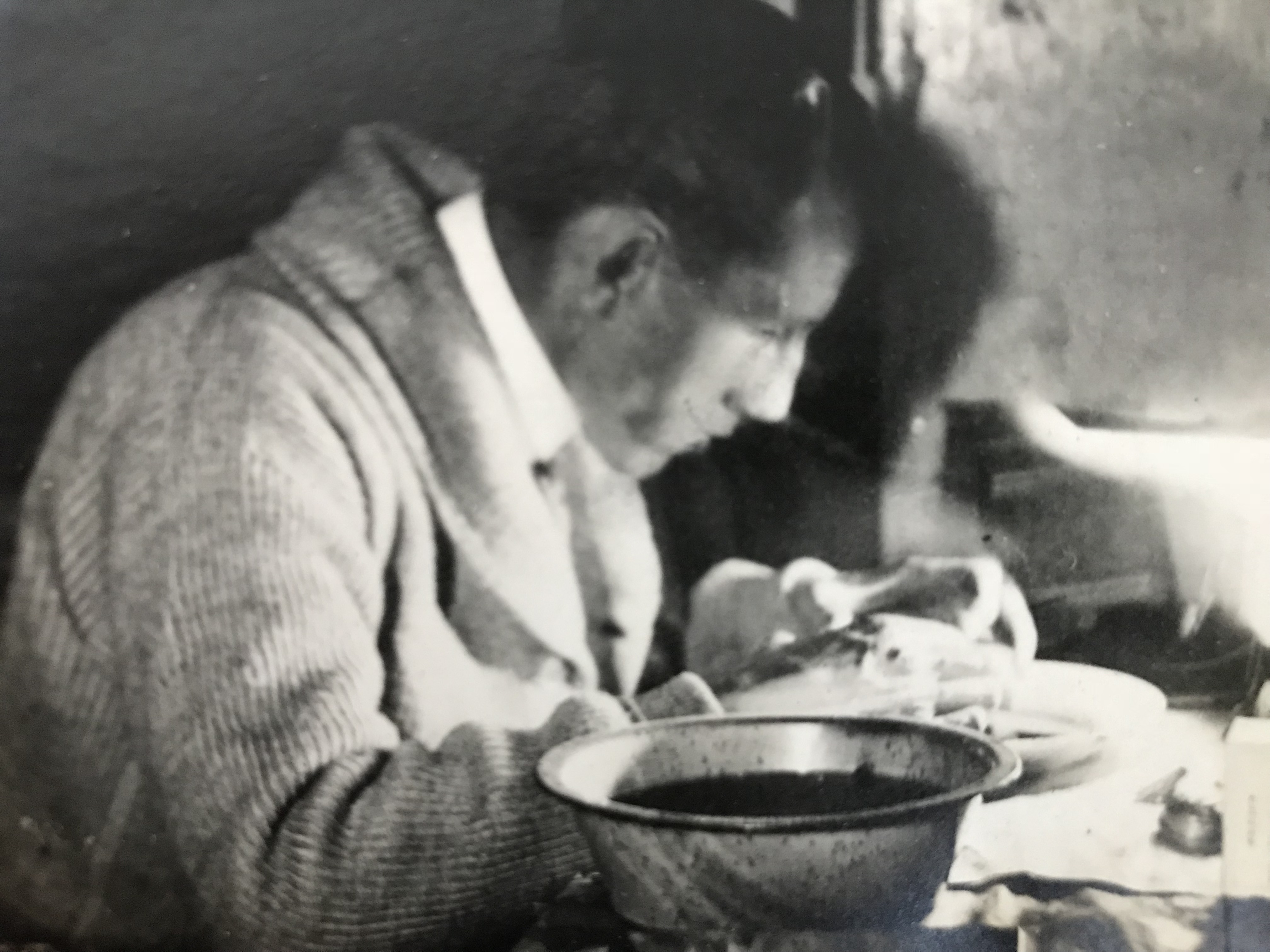
Lewis Reed, founder of Reed Brothers Dodge, was one of the most prolific photographers in Montgomery County at the turn of the 20th century. A self-taught photographer, he used a darkroom set up in his kitchen, sometimes working late at night to develop the negatives.
About This Collection:
Since launching this blog, it has been possible to explore an extraordinary archive: Lewis Reed’s photographs, taken across Maryland, Washington, DC, Virginia, and well beyond. The Reed Photo Collection (1898-1960) highlights the images that have been researched and identified, gathered into 200+ blog posts that offer vivid glimpses of everyday life more than a century ago.
Featured subjects range from the Black Rock Grist Mill, Rockville Water Tower, and C&O Canal to the 1939-1940 New York World’s Fair, Rockville Fair dirt track races, trolley cars, the Wright Brothers’ airplane, and the Quebec Bridge, once called the “Eighth Wonder of the World.” Particularly striking are the images documenting the devastation of the 1936 Gainesville, Georgia tornado, one of the deadliest in U.S. history; many photographs in this collection have never before appeared in print.
Lewis Reed’s legacy
Lewis Reed’s photographs have become an essential visual resource for local historians and have appeared in respected publications as well as historical television programs, including American Pickers, Science Channel’s Impossible Engineering, Maryland Public Television, and the PBS American Experience series.
In Montgomery County, his work is woven into the landscape: if you see a historical marker by the roadside, there is a good chance it features one of his images. His photographs appear on markers such as the Andrew Small Academy and Origins of Darnestown markers, the Baltimore & Ohio Railroad Station marker in Gaithersburg, From Trolley to Trail in Bethesda, the African American Heritage Walking Tour in Rockville, and the 19th Century Crossroads marker in Darnestown, as well as on an interpretive sign along the trail at Watters Smith Memorial State Park in West Virginia.
Early photographic “special effects”
One especially intriguing part of the collection is Lewis Reed’s experimentation with manipulated images. Long before digital cameras and Photoshop, he was creating imaginative “special effects,” a full century ahead of his time. His techniques included hand-tinting, double exposures, applied handwork, and playful compositions that introduce ghostly figures into the frame, all achieved with the limited tools of the early twentieth century. These experiments reveal not only technical skill but also a remarkable sense of creativity and humor.
Preserving historical authenticity
All images presented here are scanned from prints made from Lewis Reed’s original glass plate negatives, which were commonly used from the 1880s through the late 1920s. No digital retouching or alteration has been applied, preserving the photographs as faithfully as possible and maintaining their historical character.
Click here to step back in time and explore the lives, places, and stories captured through Lewis Reed’s camera.
Books

Related Resources


Copyright Notice

Reed Brothers Dodge History (1915-2012) by Jeanne Gartner is licensed under a Creative Commons Attribution-NonCommercial 3.0 Unported License.
 Reed Brothers Dodge History 1915 – 2012
Recent Comments