
Iconic Advertising Slogans by Dodge
Like any major business that’s been around throughout the evolution of television advertising, Dodge has been on the point of many trends and gimmicks over the decades. At the same time, they’ve also set an advertising tone that challenges other manufacturers to try and keep up. Whether you’re a young buck or an ol’ timer, you’re bound to remember at least a few of these Dodge advertising slogans over the past five decades.
Through the years the ads have definitely improved from a timeless, artistic aspect; however the older ads definitely transport you back to a simpler time, both in the car world and in American history.
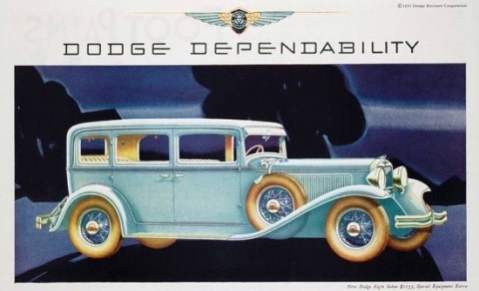
1. Dependability, The Dependables. (1920s–1967)
Capitalizing on their reputation, the Dodge Brothers used their name, “Dodge Brothers” followed by “Reliable, Dependable, Sound” to market their products. Devoted Dodge customers raved about the rugged construction, quality, and power of their vehicles. Buyers consistently commented that this was a car that could be depended upon. In a Dodge marketing stroke of genius, Theodore MacManus coined the word “dependability.” Dodge was using the term in advertising from around 1914, and by the 1930’s, the word was appearing in dictionaries, and soon found its way into common, everyday usage.
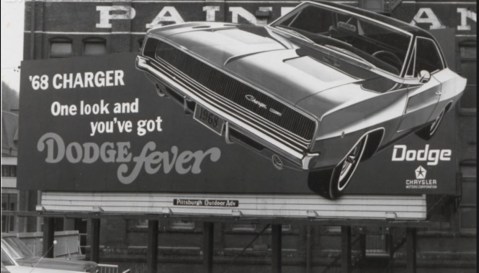
2. Dodge Fever. (1968–1969)
It was the fall of 1967, and for the 1968 model year, Dodge introduced the all-new second-generation Charger that was an instant hit with car buyers and would eventually become an iconic symbol of the muscle car era. In 1968, Dodge started the successful Dodge Fever campaign. A prospective buyer could check off the desired performance options when ordering a new Dodge, work out the terms for a manageable down payment and monthly installments, and drive out with one of the bumblebee striped Dodges. If a twin tail striped Charger R/T was purchased, the new owner now owned one of the “five from the hive” Dodges, which included the Swinger 340, Dart 340 GTS, Coronet R/T, Super Bee, and the Charger R/T. Picking up one of these Dodges authorized the owner to “Run with the Dodge Scat Pack,” which was always a cure for the fever.
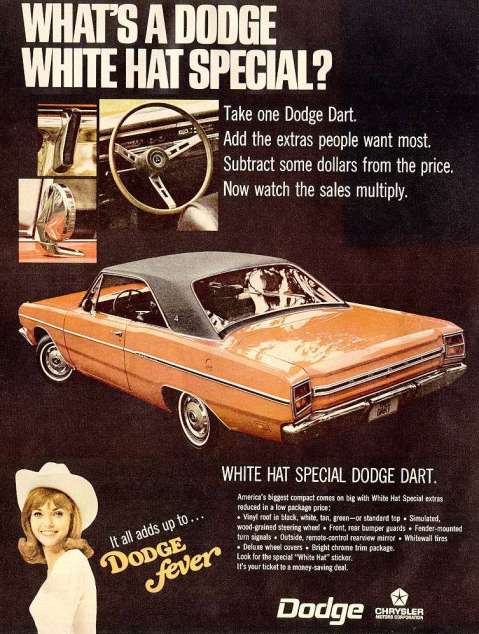
3. Dodge White Hat Specials (late 1960s)
Banking on the height of the popular spaghetti westerns of the late 1960′s, Dodge launched the 1969 “White Hat Special” editions of their lineup. Named after the old Roy Rodgers maxim that, “The good guys wore the white hats,” the White Hat Specials were more about the look and comfort than say, the more performance heavy R/T packages. Vinyl tops, seats, light packages, wheel covers, and remote-controlled side-view mirrors were par for the course. The White Hat Special package was also made available on Darts, Polaras, and Coronets in addition to the sporty Chargers.
4. You Could be Dodge Material. (1970–1971)
Advertising has changed a lot over the years, but it doesn’t even feel like too long ago that this commercial for the 1970 Dodge Charger 500 was airing on the networks. Nowadays, though, a spot like this ends up being more hilarious than most of the ads that are intentionally funny. In this spot, you can see for yourself just how attractive the 1970 Dodge Charger really was. So much so that it could change your whole image, therefore causing you to leave your lady stranded on the beach.
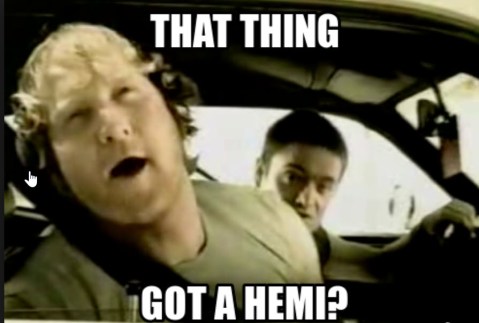
5. That Thing Gotta Hemi?
The actor Jon Reep launched his career by uttering, “That thing got a Hemi?” in a Dodge Ram television ad. In the video, we see two scuzzy dudes in a scuzzy Plymouth Duster. They stop at a light and find themselves next to a gleaming Dodge Ram pickup—which in turn tows behind it a gorgeous, vintage Dodge Charger. The scuzzy passenger leans out of his window and asks, “Hey, that thing got a Hemi?” The Ram owner answers, “Yeah.” The scuzzy driver says, “Sweeeeeeeeeeeet,” and revs his engine. Cue green light. The pickup waxes the scuzzmobile. At the next light, the Ram driver turns to the Plymouth. “Did you mean the Charger?” he asks. ” ‘Cause, you know that’s got a Hemi, too.”
6. An American Revolution. (1982–1989)
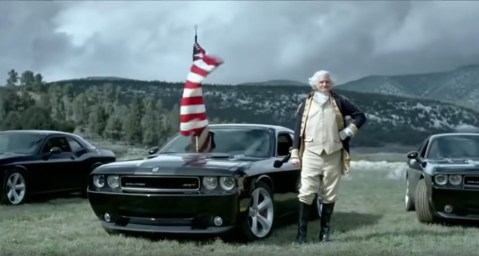
If George Washington drove back in the 1700s, he would be driving a Dodge Challenger. At least that’s what a new commercial wants you to think. A running commercial for the Challenger, which debuted during the World Cup, shows Washington scaring off the Redcoats in the muscle car, effectively winning the American Revolution.
7. The Pride is Back (1980)
Lee Iacocca saves Chrysler. Reeling from the combined effects of a recession and a global energy crisis, in 1979 Chrysler was forced to seek government loan guarantees. Meanwhile, Chrysler chairman Lee Iacocca took the company’s case straight to the people in a series of television commercials. Looking straight into the camera, the legendary auto executive pitched the company’s new K-cars with total conviction, asserting, “America, if you can find a better car, buy it.”
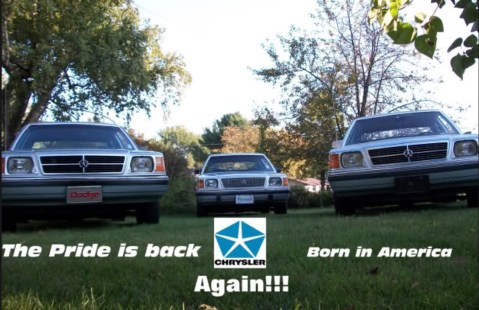
Buyers took up Iacocca’s challenge, flocking to the showrooms to buy their own K-cars. Nearly one million Aries were sold (and another million Reliants), allowing Chrysler to pay off its loans a full seven years early. Soon Iacocca was back on the airwaves with another ad campaign. This one was called “The Pride Is Back.”
8. The New Dodge. (1992–2000)
In 1992, Dodge moved their performance orientation forward substantially with the Viper and all Dodge cars and trucks were shown in bright red ads. This was the first step in what was marketed as “The New Dodge”, which was an aggressive advertising campaign with a litany of new models, with television ads that pointed out the innovations in the vehicles and challenged their competitors.

9. Dodge. Different. (2000–2001)
“The New Dodge” signature was replaced by “Dodge Different”. Dodge found the way to success was to offer products that were bolder and more exciting than its competitors. In other words, by being different. It was the largest and most comprehensive print and television campaign in the company’s 85-year history.

10. Grab Life By The Horns. (2001–2007, mainly for Dodge truck market)
The slogan “Grab life by the horns” started appearing in Dodge commercials in 2001.
11. Grab life. (2007 – mid-June 2010, in Ram pickup truck ads)
The whole idea of ‘Grab Life’ as opposed to ‘Grab Life by the Horns’ kind of disenfranchises it from the Dodge Ram. The slogan shift was planned by Dodge to coincide with its car sales growth. The automaker is rolling out cars to circumvent the declining sales of pickups due to the volatile gasoline prices. If they cut off ‘by the horns,’ you’re less likely to think Ram and more likely to think maybe a Caliber or Avenger.
12. Never neutral. (2010–present)
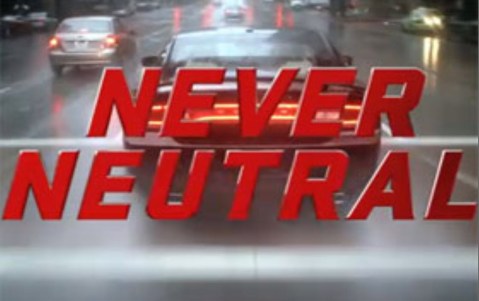
The 2012 Dodge Charger advertisement called Never Neutral takes a swing at one of the major issues of the car industry: their tendency to take out driver involvement on the actual act of driving. The Never Neutral commercial says that the new model will always be an alternative to hands free driving, cars that park themselves, and to the unmanned car driven by a search engine company. In essence, the main point of Dodge’s new TV spot is to say that the 2012 Charger is a car made for driving, and for being driven in.
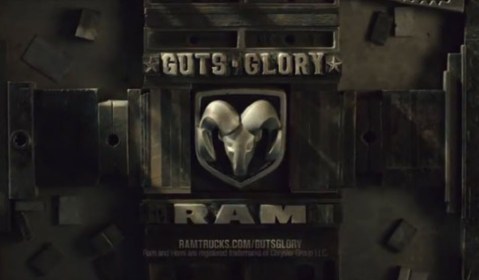
13. Guts. Glory. Ram. (2010–present, Ram Truck division)
“Guts. Glory. Ram,” with an old western theme—a perfect setting for what Ram suggests its brand portrays. Of course, the only forms of transportation back then consisted of horses, trains and wagons, but the spots foster the idea that if an automobile existed during these times of courageousness and survival, it would be the Ram pickup.
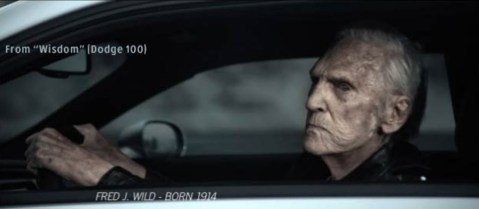
14. Wisdom (2014, commemorating Dodge’s 100-year anniversary )
In “Wisdom,” commemorating the century mark of the Dodge brand, a one-minute spot honored centenarians who laughed heartily and grinned big in front of the camera while handing out timely nuggets of wisdom on life and fast cars. “Live for now … Because life is good, you make it good.” Each person from the era when Dodge Brothers was still independent was identified by name and their birth year. The theme was simple but earnest: “You learn a lot in a hundred years … Here’s to the next hundred. Born Dodge.” So, here’s to putting the pedal to the metal … and never, ever forgetting where we came from. “Wisdom” was named 2015’s Automotive Ad of the Year during the 10th Nielsen Global Automotive Advertising Awards.
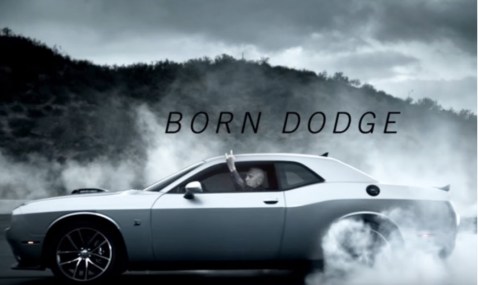
15. Born Dodge. (2014–present)
The Dodge car brand turned 100 years old in 2014. For this they released special 100th anniversary edition cars, re-designed the Charger and Challenger and released this epic commercial. Featuring timeless advice from people who’ve been around as long (or nearly as long) as the Dodge brand itself.
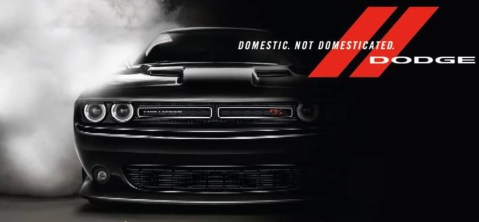
16. Domestic. Not Domesticated. (2016–present)
The tagline, “Domestic. Not Domesticated.” aims to capture the passion and attitude of Dodge. ‘Domestic. Not Domesticated.’ means that Dodge vehicles can handle grocery runs and recital pickups just as well as they can handle laps around the race track. You don’t have to sacrifice pleasure for practicality. You can have both.
Reed Brothers Beginnings at the “Triangle”
Woodrow Wilson was President of the United States; the Green Bay Packers did not yet exist; the United States was two years away from joining World War I; the cost of a stamp was two cents, and Reed Brothers Dodge in Rockville, Maryland was founded. It is a family business history that parallels the evolution of the American automobile industry itself.
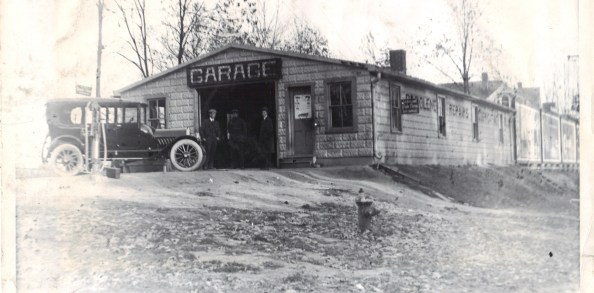
1915 Rockville Garage located at the intersection of Veirs Mill Road and Rockville Pike. The sign on the right side of the Garage reads Gasoline, Fisk Tires and Supplies. Note the single gas pump in front. Rockville Garage had the first Gulf gas station in the still-rural Washington D.C. area.
One hundred years ago, the direction of the auto industry was uncharted territory to be explored by many people. Lewis Reed was an enterprising young man who put his future in the fledgling automobile industry. Although the specific motivation for Lewis Reed to go into the automobile business is not clear, the 1910s was a period of exponential growth in the American automobile industry, and with a location on the major east-west route through Rockville, a town that was on its way to becoming a satellite community of Washington, D.C., he was well positioned for success.
The 1910 census indicates that 23-year old Lewis Reed was working as a machinist. In 1915, Lewis Reed and brothers Robert L. and Griffith Warfield established Rockville Garage after acquiring the building from Lee Ricketts and Sons who had the Overland Agency. In 1918, Lewis Reed bought out Rockville Garage from the Warfield’s and changed the name to Reed Brothers Dodge. Soon after opening the doors to his dealership, Lewis Reed started to expand. In 1917, a two-story addition was added. The first floor housed the Service Department and upper floor was used for parts storage. At the left side of the two story building was a narrow vehicle entrance that led to the service department in the rear. A house can be seen behind the addition. Lewis Reed later purchased the remaining five residential lots to expand his dealership in the back.
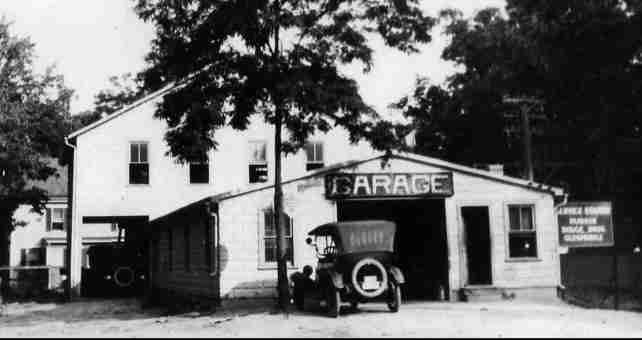
1917 Rockville Garage with two-story addition. Photo by Lewis Reed
In addition to Dodge Brothers Motor Cars, Rockville Garage carried Hudson and Oldsmobile. To survive the early days in the automobile business, most dealerships sold several makes of cars. Cross-selling was an acceptable business practice until the late 1940s when brand loyalty took hold. Also by then, the vast number of automobile manufacturers had been pared down. Reed Brothers got a new remodel in 1921, and an island with three new modern gas pumps were added. By this time, gasoline retailers had determined that placing gas pumps on an “island” in front of the station, where drivers could approach from either side, provided the most efficient station layout.
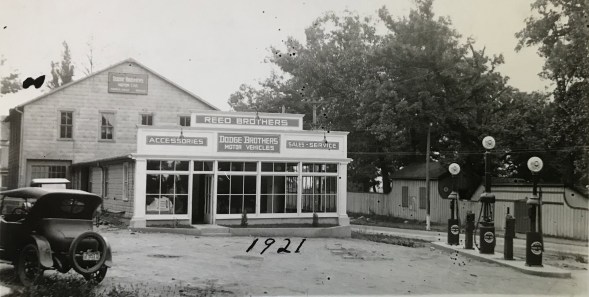
Reed Brothers Dodge got a new remodel in 1921. The original part of the garage was converted into a new car showroom and the service operation was moved out into the rear portion of the building. Note the modern gas pumps. Photo by Lewis Reed.
In the late 1920s, a second story was added to the showroom with a glazed front looking out onto Rockville Pike on the right. A modern drive-through canopy was added along with new gasoline pumps and Dodge Brothers Motor Car and Graham Brothers Truck signage. “That Good Gulf” was one of the the Gulf Refining Company’s marketing slogans for a number of years during the twenties and thirties. Another interesting detail is the placement of floodlights on the canopy roof pointing at the signs.

That Good Gulf Gasoline drive-through filling station with canopy and gasoline pumps were added in the late 1920s. Photo by Lewis Reed
The new car showroom below is filled with late 1920s Dodge Brothers new car models. The high ceilings and mezzanine floor gives an air of elegance to the showroom and the expanse of windows on the front extends the full width of the building. Locating a showroom “in relation to traffic” was of the utmost importance. The showroom faced the triangle at Veirs Mill Road and Rockville Pike which gave the dealership maximum visibility to the largest volume of cross traffic. Behind the large plate glass windows and an awning above was the product — the new car. It appears the showroom could accommodate 4-5 new automobiles. An upper floor mezzanine housed the dealership’s Parts Department and storage area. This level was accessed by a wide, open staircase. All of the elaborate design features inside, such as the high ceiling, wood railings, and mezzanine were usually reserved for upscale dealerships. To find this level of construction expense in a dealership selling mid-priced cars was extremely rare.
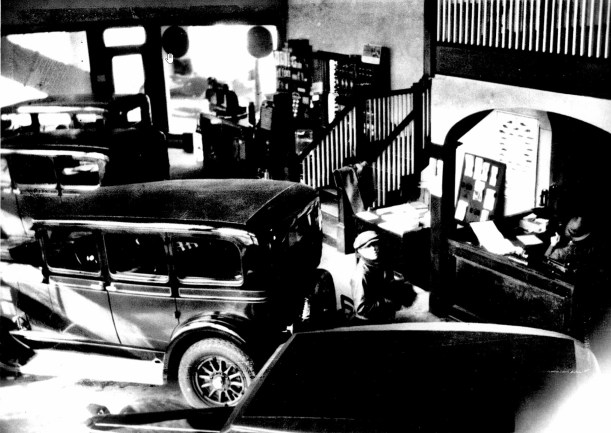
Late 1920s New Car Showroom. Photo by Lewis Reed
In 1930, Reed Brothers added the Plymouth line. Even though times were tough during the Great Depression, Reed Brothers was doing well enough to finance another facelift and renovation; the front of the Gulf Gasoline Station and the canopy was remodeled as shown below during the mid-thirties.
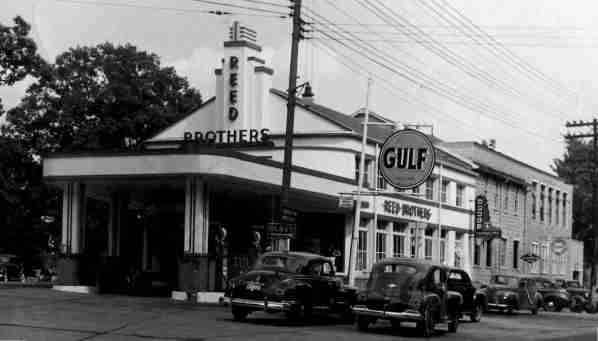
The forth update to the showroom and Gulf Gas Station during the mid-thirties. Plymouth signage can now be seen on the side of the building along with Dodge. Photo by Lewis Reed
After years of hard work that also helped to establish an excellent reputation, once again Reed Brothers Dodge needed to expand. At about the same time as the gas station was remodeled, Lewis Reed split up the sales and parts and service operations by constructing a complete new building; it was located at the intersection of at East Montgomery Avenue and Dodge Street. The showroom was ideally located at the intersection of two streets, with a large curving window placed within the field of vision of approaching traffic and designed in such as way as to increase drivers’ viewing time. The corner showroom window simulated a “corner statement.”
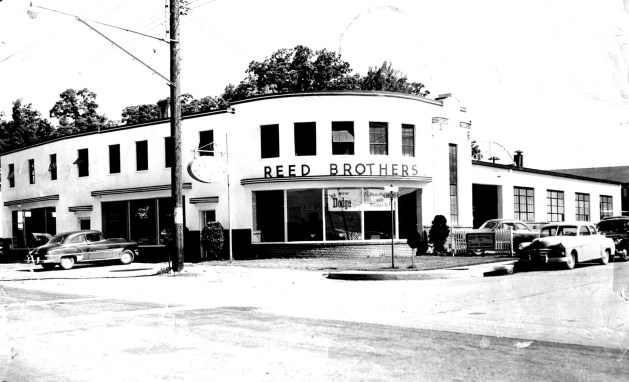
In 1936 Reed Brothers constructs a complete new building for the Parts and Service Departments. Photo by Lewis Reed.
At this point, eight new cars and trucks were being sold each month, along with a number of used car sales. Many purchases at the time, as had been the custom for years in the automobile business, were still initiated at a prospect’s home or job site; as many of the customers were farmers, the Reed’s had an active team of salesman in place who called on prospects right on their property.
Due to changes in the highway, Reed Brothers began an extensive remodeling and rebuilding program. Two-thirds of the original location at the junction of then Route 240 and Veirs Mill Road was razed and a modern Gulf Service Station was erected. Below is a mid-1960’s photo of the Reed Brothers Dodge Gulf Gasoline station. The famous Gulf “ice box” design dates back to late 1930’s and there were probably more of these built than any single one of the later Gulf designs.

The fifth update after 1953 reconstruction of new Gulf Gas Station. Photo by Lewis Reed.
Two great entrepreneurs, Lewis and Edgar Reed, built and sustained a business that lasted for more than a half-century at one location under one ownership, and earned a place not just in the history of Maryland, but in American automobile history as well. For 55 years at the triangle, Reed Brothers Dodge became a community icon and a local landmark for motorists traveling to and through Rockville.
Then & Now: Rockville Garage 102 Years Ago
Reed Brothers Dodge and the surrounding area sure has changed a lot in its almost century-long history. You might not realize how much things have changed until you look back and see what it looked like in the past. For this post, I have used one of Lewis Reed’s original photographs for “then” and a Google Maps street view image from today for “now”.
THEN: The photo below is the Rockville Garage located at its original location at the triangle at Veirs Mill Road and Rockville Pike. In 1917, Reed Brothers became an authorized Texaco Filling Station and sold Texaco gasoline from a single pump. To the right is a Texaco Gasoline Filling Station sign. One very tall Texaco branded fuel pump can be seen in this photo along with two Texaco Petroleum refueling trucks. Parked in front is a line-up of some very early Dodge Brothers Motor Cars.
Note the unpaved dirt road on Rockville Pike and trolley tracks running past the dealership. From 1900-1935, the trolley cars went past Reed Brothers Dodge as they traveled up Rockville Pike. Major stops along the line included Georgetown, Alta Vista, Bethesda, Montrose, Halpine, the Fairgrounds, Courthouse Square, and Chestnut Lodge.
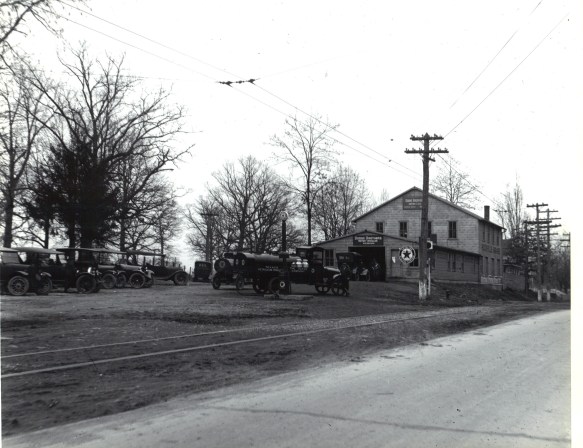
1917 Original Rockville Garage with 2 story addition. Note the Texaco Filling Station signage and the Texaco Petroleum fuel truck refilling the single pump in front. Photo by Lewis Reed
NOW: The “now” photo is a google maps image of the same location… 102 years later. The dealership’s location today is now known as Veterans Park. In the 1970s the site was known as the Francis Scott Key Memorial Park, and later in 1988, it was permanently rededicated as Veterans Park. In the late 1960s, the state of Maryland acquired the land to widen 355 and donated the remaining sliver to the City. The state named the connector street behind the dealership’s location “Dodge Street” because Reed Brothers Dodge dealership was located there for more than 50 years. New pavement has long since replaced the trolley tracks on Rockville Pike in this photo.

Reed Brothers Dodge original location at the triangle today. Google Image, 2019.
Horsemobile?
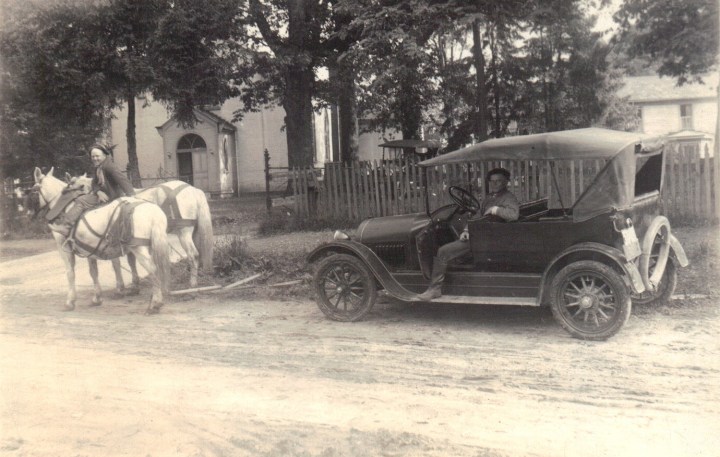
Early transportation powered by true “horsepower”. Photo taken by Lewis Reed, 1915
This fun and interesting photograph taken by Lewis Reed is one of my favorites. The photo shows William Beall in his 1915 Pullman in front of old St Mary’s Church and his younger brother Vernon on horseback “towing” him to Reed Brothers. The photo was taken from in front of Reed Brothers Dodge which was directly across the street from St Mary’s Church.
Several of the Beall family were original employees at Reed Brothers, including: Leonard Beall (paint/auto body shop), Otis Beall, Walter (Bud) Beall, and Mary Anna (Slater) Beall (Bookkeeper). Bud and Otis Beall were two of Reed Brothers’ original Gulf Gasoline Station attendants.

Meet George Waters, One of Reed Brothers’ Longest Tenured Employees

George Raymond Waters holds the distinction of being among one of the longest tenured employees in Reed Brothers Dodge history.
George Raymond Waters worked as a mechanic and auto body repair specialist at Reed Brothers for over 30 years. I do not know the exact dates of his employment, but George’s 30+ years of tenure which started sometime in the early-mid 1940’s, puts him among a handful of employees who worked at both Reed Brothers locations, at the triangle at Veirs Mill Road and Rockville Pike and at the new location at 15955 Frederick Road in Rockville.
George did auto body work and all of the radiator rebuilds (acid dip, pressure wash, repaint and seal). George also drove the Reed Brothers company tow truck. He was on 24-hour call and his personal phone number was listed with the local police departments. Rain or shine, sleet or snow, day or night, George was available 24-7 and always made sure that when people were in need, they were taken care of.

This personnel picture was taken January 15,1946 when Reed Brothers held its annual dinner at the Hungerford Tavern. George Waters, third row, far left.
George’s three-plus decades at Reed Brothers spanned some major and minor bumps in the road for the business. He was with Reed Brothers through three renovations and expansions, including demolition of the 1953 service station to make room for a new free standing Gulf Service Station and a new car showroom.
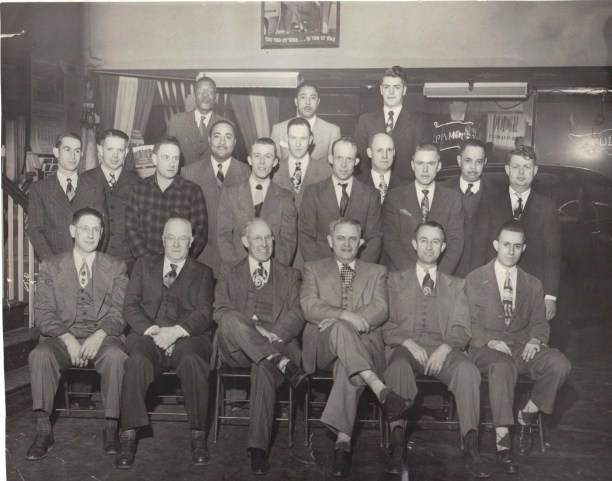
This 1950 employee group photo was taken inside the new car showroom at its original location in Old Rockville at the triangle at Veirs Mill Road and Rockville Pike. George Waters, second row, 2nd from right
When the state widened the roads in 1970, George relocated with Reed Brothers to its new location at 15955 Frederick Road in Rockville. Turning out to honor the company at their Grand Opening were several hundred dignitaries, officials, businessmen, and friends. The new building marked Reed Brothers 55th year of selling Dodge’s. The gentleman in the hat in the picture below is George Waters.
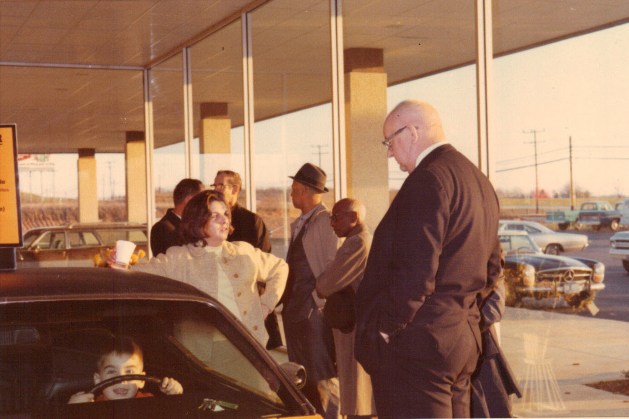
This photo was taken during the 1970 Grand Opening of Reed Brothers new location at 15955 Frederick Road in Rockville. George Waters is third from right in the hat.
Reed Brothers didn’t just slip and fall into success over the course of almost a century of being in business. We were propelled there by the hard work of our employees. For us to be able to say that we’ve had anyone work for our company for more than 30 years is a milestone that is unsurpassed. We should all aspire to do what we love in our work, and I think George’s long history with Reed Brothers is a testament to that.
Books

Related Resources


Copyright Notice

Reed Brothers Dodge History (1915-2012) by Jeanne Gartner is licensed under a Creative Commons Attribution-NonCommercial 3.0 Unported License.


Recent Comments