
Introducing the Second Edition of The Lewis Reed Photograph Collection (1898-1960)
Some photographs simply capture a moment. Others capture an entire world.

New Cover – Second Edition. An expanded 384-page volume featuring more than 2,500 historic photographs preserved by Lewis Reed, many published for the first time. A remarkable visual record of the early 20th century.
I am pleased to announce the release of the Second Edition of the Lewis Reed Photograph Collection (1898–1960), an expanded and refined visual archive documenting over six decades of life, landscape, and community in Montgomery County, Maryland and the surrounding Mid-Atlantic region.
More than a century ago, Lewis Reed began photographing the towns, farms, roads, and people around him with a camera and a deep curiosity about a world in rapid transition. What began as the hobby of a young motorcycle enthusiast traveling the back roads of Maryland soon grew into one of the most remarkable visual records of the region’s history.
Many of the photographs in this collection were created from glass-plate negatives and early prints; preserving rural crossroads, bustling town centers, early automobiles sharing roads with horse-drawn wagons, and landscapes that look entirely different today. These are images that might otherwise have been lost to time.
What’s New in the Second Edition
This expanded edition presents Lewis Reed’s photographs in thematic sections that highlight the full breadth of his work; from Maryland towns and landscapes to family portraits, travel scenes, and the early history of Reed Brothers Dodge, which Lewis founded in Rockville in 1915. The collection draws from more than 2,500 digitized photographs, each carefully researched to identify the places and people they depict.
Many images were identified through long conversations with Lewis Reed’s daughter, Mary Jane Reed Gartner, whose recollections helped bring these photographs back to life and restore the stories behind them.
Lewis Reed is remembered locally as the founder of Reed Brothers Dodge, but photography was a lifelong passion alongside his business career. His images document everything from the C&O Canal in operation to small-town parades, churches, farms, and early roadways. Taken together, they form one of the most extensive visual archives of Montgomery County during the period when rural communities were giving way to the modern suburban landscape we know today.
A Note on Pricing
This is a photo-intensive volume, approaching four hundred pages, and is printed on demand through Blurb.com, meaning each copy is produced individually rather than in large commercial print runs. The pricing reflects the actual cost of producing such a large photographic archive. This project was created primarily to preserve and share Lewis Reed’s historic photographs, not as a commercial publication.
Get Your Copy
The Lewis Reed Photograph Collection (1898–1960), Second Edition is available now through Blurb.com’s print-on-demand bookstore.
Or visit the collection page for more information: reedbrothersdodgehistory.com
To stay up to date with new posts and historical discoveries, subscribe to the Reed Brothers Dodge History blog and follow along as the story of Lewis Reed and Montgomery County’s past continues to unfold.
A Field, a Gun, and a Trap
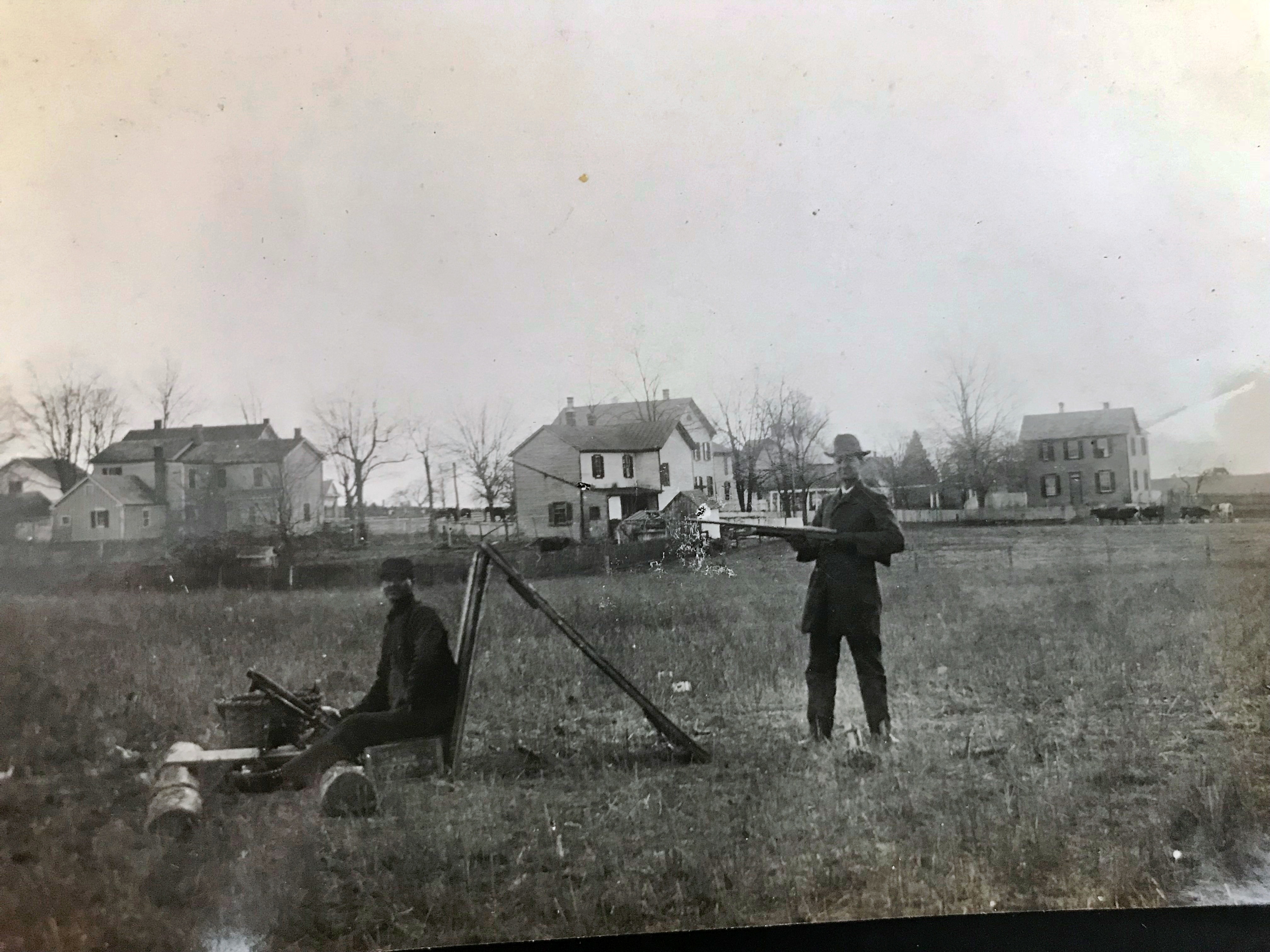
Early 1900s field trap shoot in Darnestown, Maryland, captured by Lewis Reed, showing one man poised with a shotgun while another readies the simple wooden trap amid farmhouses and open pasture.
In this photograph, two men stand in an open field bordered by modest frame houses and fenced pastures, a scene typical of small crossroads communities like Darnestown in the early 1900s. One man holds what appears to be a long gun, while the other sits beside a simple wooden rig that resembles the framework used to cock and release early manually operated target throwers or live‑bird traps
The proximity to grazing livestock suggest that this is not a formal gun club range but an improvised shooting ground on private farmland, which was common before purpose‑built trap clubs spread widely. Rural shooters often practiced in meadows or behind farmhouses, using homemade equipment and relying on a friend to work the trap while the shooter took position in front.
Darnestown in Reed’s era was a small but important crossroads in western Montgomery County with farms, mills, and the Andrew Small Academy serving the surrounding countryside. Later roadside historical markers that use Lewis Reed’s images emphasize how thoroughly he documented the community’s buildings and daily activities, making it likely that he also recorded local recreations such as shooting, fishing, or horse‑related events.
Clay target shooting gained popularity in the United States after the introduction of standardized targets and simple spring‑powered traps in the late 19th century, and Maryland farm communities were no exception. Scenes like this one, with neighbors gathering in an open field to test their marksmanship, reflect how shooting sports blended workday skills with weekend socializing in a largely agricultural landscape.
This image captures a rare glimpse of informal trap shooting at the moment when traditional rural life was beginning to intersect with modern leisure and sport. The combination of farmhouses, fence lines, cattle, and improvised equipment tells a layered story: of a county still rooted in agriculture, of residents embracing new pastimes, and of a photographer committed to preserving unscripted moments as carefully as grand events.
For historians, collectors, and local families, the photograph is more than a quaint scene; it is a visual document that anchors memories of people, place, and pastime in a specific landscape. As additional Reed negatives are identified and researched, images like this may help flesh out the early history of shooting sports in Montgomery County and deepen understanding of how communities like Darnestown spent their rare hours of leisure.
“The Boardwalk” Along the Waterfront at Chesapeake Beach, Maryland, Early 1900s
In the early 1900s, the Chesapeake Beach Railway Company offered Washingtonians more than transportation, it promised escape. At the rail line’s eastern terminus, a bustling boardwalk emerged along the Chesapeake Bay, carefully designed to attract crowds with hotels, amusements, and sweeping waterfront views. This was a new kind of destination, where leisure was planned, marketed, and delivered by rail.
Lewis Reed recognized the historical significance of this scene and turned his camera toward it. His photographs of the Chesapeake Beach boardwalk capture the rhythms of a day spent seaside: visitors strolling between attractions, pausing to take in the view, or gathering near the latest amusements. Among the highlights of his images is the Griffith Patent Scenic Railway, an early roller coaster whose curves and speed symbolized the era’s fascination with innovation and thrill. (click on thumbnails to view gallery)


Reed’s photographs preserve more than a popular resort, they document a moment when railroads shaped recreation and when leisure itself became part of the modern experience. Through his lens, the Chesapeake Beach boardwalk is frozen in time, offering a vivid glimpse into how Americans relaxed, traveled, and found excitement at the dawn of the 20th century.
Winter’s Harvest: Ice-Cutting in 1910 Montgomery County
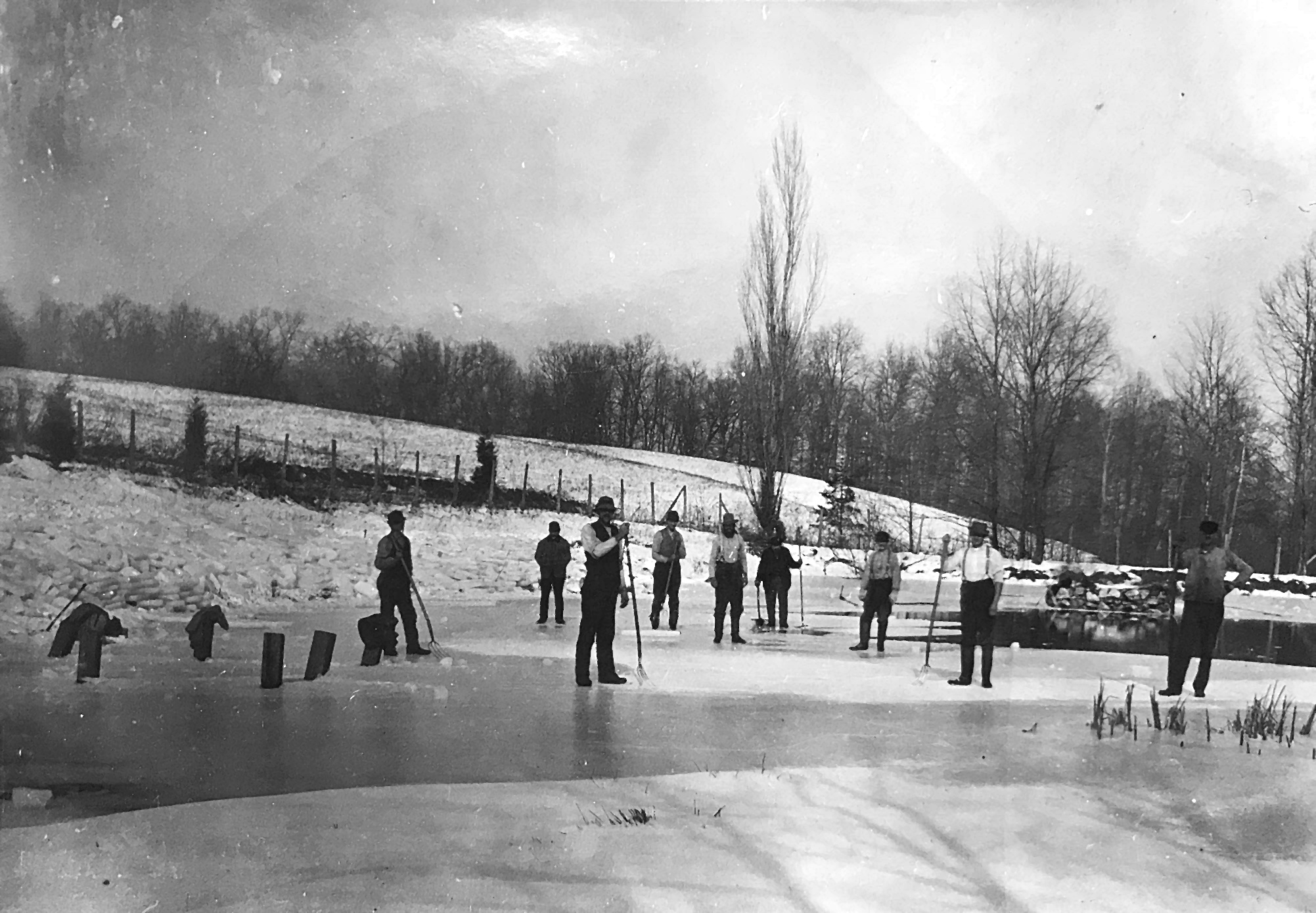
Men harvest ice with pitchforks and hand saws on a frozen pond in Darnestown, circa 1910. Stacked blocks line the shoreline, ready for storage in nearby ice houses. Photo by Lewis Reed.
Most people wouldn’t consider the winter months of December through February a season of harvest in Montgomery County. But in our not so distant past, this was harvest time for—ICE. Rivers, lakes and ponds were generally frozen and ice was harvested like a winter crop to keep food cold all summer long.
Much of what we know visually about this era survives thanks to Lewis Reed, founder of Reed Brothers Dodge, and one of the county’s most prolific early photographers. Among his many surviving images is a striking photograph of men harvesting ice on a Darnestown pond around 1910. In it, workers stand poised with their tools, the frozen surface carved into neat glistening blocks ready for transport.
Ice harvesting wasn’t merely a winter job; it was a community effort that tied households, farms, and businesses together. Timing was everything. Too early in the season, the ice was fragile and dangerous; too late, and the freezing window had passed. Because the work involved standing on frozen water with sharp tools and heavy loads, it carried genuine risk. Yet despite the hazards, these annual harvests were essential to community well-being. The ice collected in the winter months might be keeping milk or meat cold on farms well into August.
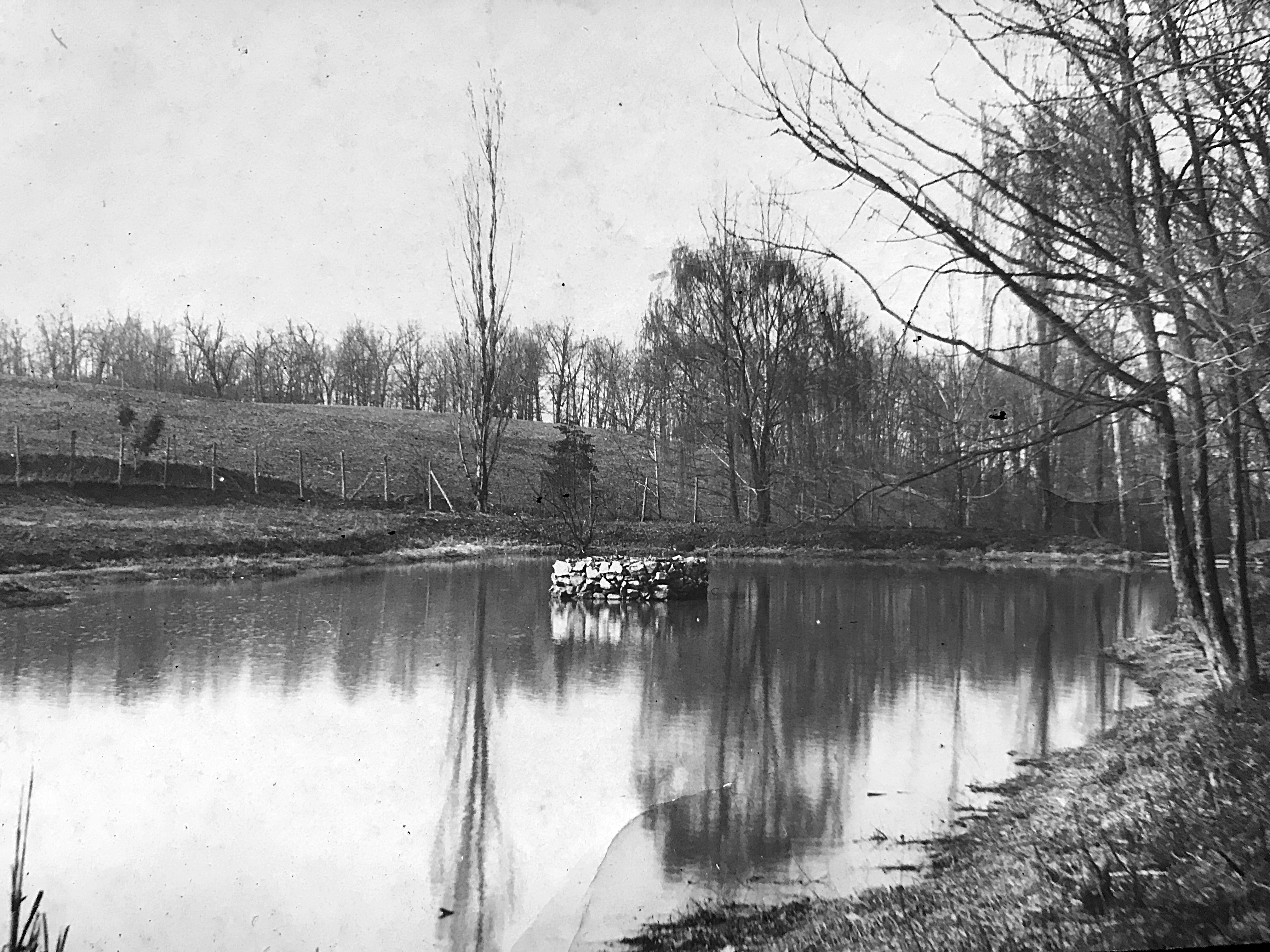
The same pond once used for ice harvesting, seen here ice-free. Photo by Lewis Reed, 1910.
From The Evening Star, Washington, D.C. December 22, 1904
ROCKVILLE AND VICINITY GENERAL NEWS
The cold weather of the past ten days has frozen the ponds and creeks throughout this county to a thickness of six or seven inches, and the ice harvesting is now the order of the day. The quality of the ice is not regarded as first-class, however, and for this reason many persons will defer filling their houses until later in the winter.
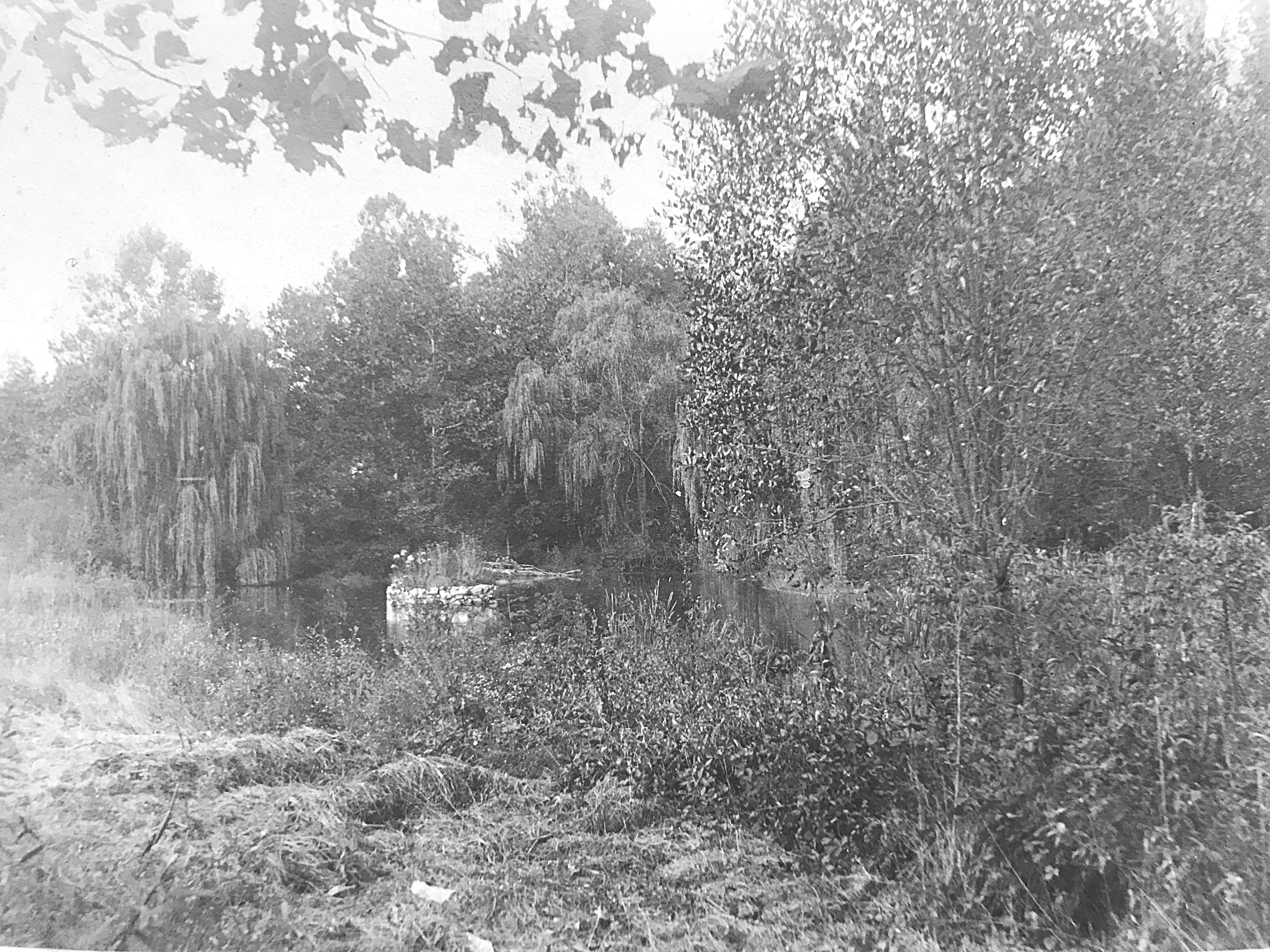
Summertime view of the same pond, seen from a different vantage point. Photo by Lewis Reed, 1910.
As we look back more than a century later, these images invite us to appreciate not only the hard labor that made year-round food storage possible, but also the photographers like Lewis Reed who understood the importance of documenting everyday life. Thanks to his lens, we can still witness this fleeting moment of Montgomery County’s past; a time when winter’s cold was not an inconvenience, but a resource to be harvested, stored, and relied upon long after the ice had melted.
Historic Tracks: Gettysburg Lincoln Railroad Station Then and Now
The Gettysburg Lincoln Railroad Station is more than just a building, it’s a piece of American history. From Abraham Lincoln’s famous journey to deliver the Gettysburg Address to the thousands of visitors who pass through today, this station has seen it all. In this “Then & Now” post, we take a look at how this iconic landmark has changed (or stayed the same!) over the years, giving us a fresh perspective on a place that helped shape our nation’s story.
Gettysburg Lincoln Railroad Station (THEN): Captured by photographer Lewis Reed in 1914, this remarkable image shows a crowd gathered along the tracks outside the Gettysburg Lincoln Railroad Station. The station’s elegant Italianate architecture with its arched windows, decorative brickwork, and central cupola stands prominently in the background. A steam locomotive waits at the platform as men in suits and bowler hats fill the scene, evoking an era when rail travel was both essential and ceremonial. The photograph offers a vivid glimpse into early 20th-century life in Gettysburg, when the railroad still served as the town’s vital connection to the wider world.
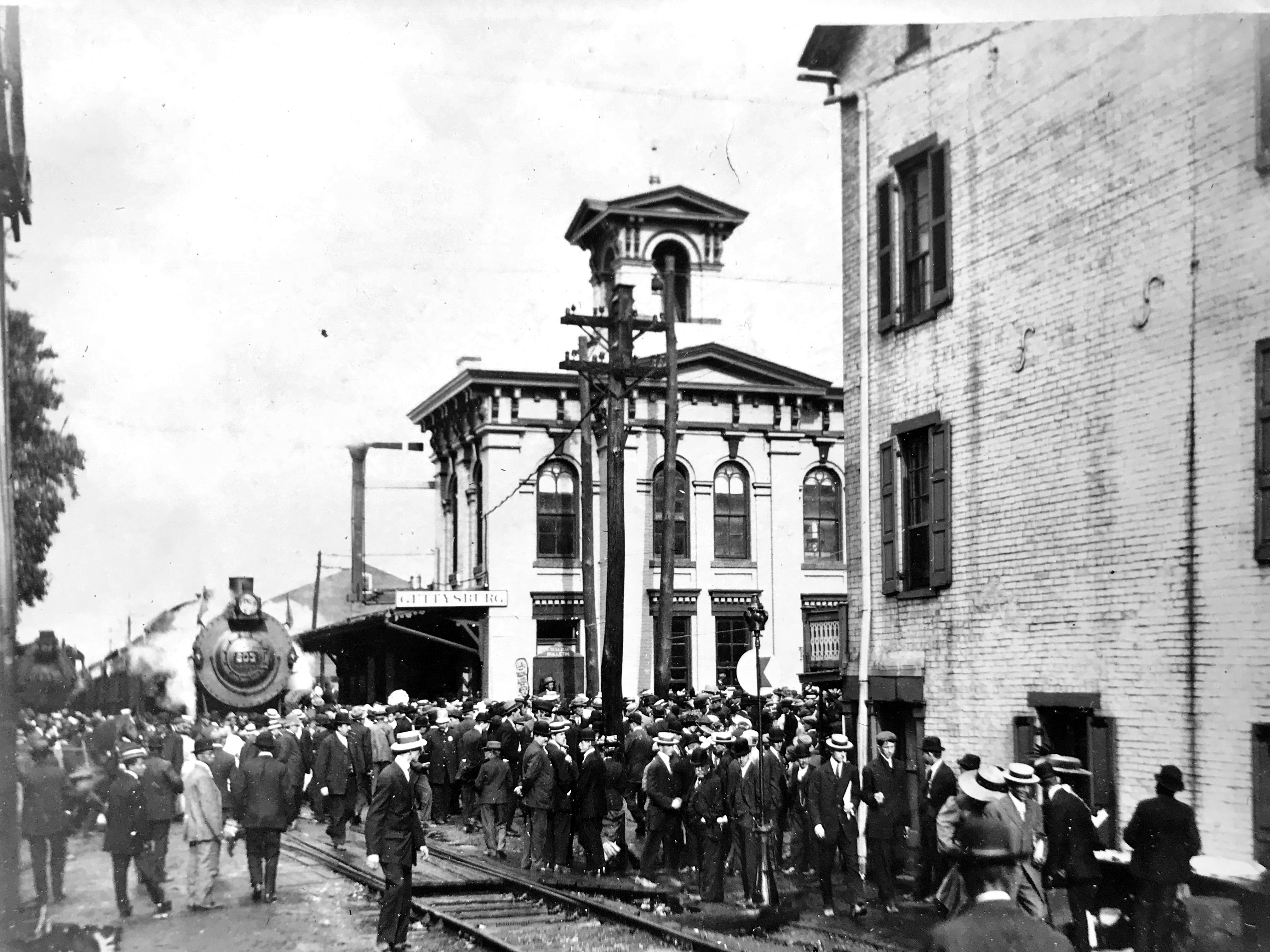
A historic photograph of the Gettysburg Lincoln Railroad Station captured by Lewis Reed in 1914, showing the depot in its early 20th-century setting.
Gettysburg Lincoln Railroad Station (NOW): More than a century later, the restored Gettysburg Lincoln Railroad Station continues to welcome visitors; though today, they come not to board trains, but to step back in time. The station now operates as a museum and visitor center, preserving the story of Abraham Lincoln’s arrival to deliver the Gettysburg Address in 1863. Its beautifully restored façade and carefully maintained details honor both its Civil War legacy and the generations that followed, ensuring this historic landmark remains a lasting link between past and present.
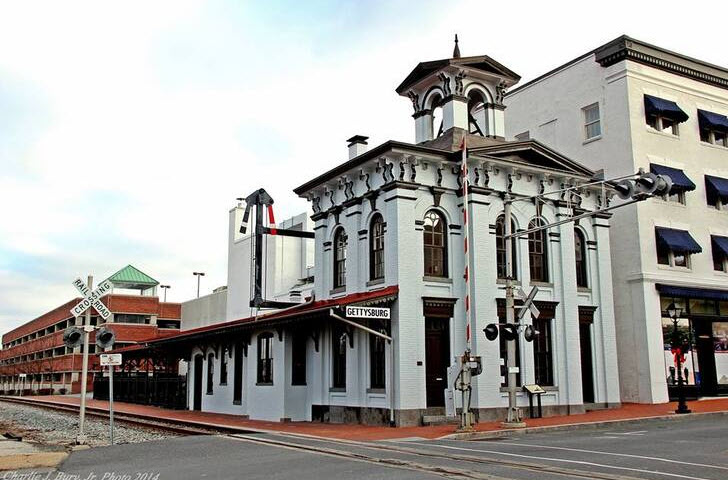
Gettysburg Railroad Lincoln Train Museum Today
Books

Related Resources


Copyright Notice

Reed Brothers Dodge History (1915-2012) by Jeanne Gartner is licensed under a Creative Commons Attribution-NonCommercial 3.0 Unported License.
 Reed Brothers Dodge History 1915 – 2012
Recent Comments