
February 14th – National Ferris Wheel Day & Valentine’s Day

Ferris Wheel at the Rockville Fair, circa 1920s. Photo by Lewis Reed
Did you know that February 14th is not only Valentine’s Day, but also National Ferris Wheel Day? This unofficial national holiday is held on this day to honor the birth of the inventor of the Ferris Wheel, George Washington Gale Ferris, Jr. What better way to celebrate Ferris Wheel Day than enjoying this ca.1920s photograph of the Ferris Wheel taken at the Rockville Fairgrounds, courtesy of Lewis Reed.
Thomas Kelley’s Pumpkin Patch
When the leaves begin to change and the air takes on a chill that means it’s time for one thing – pumpkin picking! This is a rare photograph of three well-dressed men pumpkin picking in Thomas Kelley’s field of pumpkins in Pleasant Hills, circa early 1900s. Tom Kelley farmed much of the land around the Pleasant Hills homestead and was famous for his “Kelley Corn” farm wagon of fresh dairy produce during the summer months, as well as the corn that fed visitors to the Montgomery County Fair each August and, of course, his pumpkin patch in the fall.

Pumpkin picking in Thomas Kelley’s Pumpkin Patch, Darnestown, Maryland circa. early 1900s. Photo by Lewis Reed
Then & Now: Monrovia Post Office
This post is a continuation of a series of “Then & Now” images from Lewis Reed’s Photo Collection alongside photographs of how they appear today. Lewis Reed worked hard to preserve a visual history of Montgomery County, Maryland and surrounding areas long before automobiles were even around. As early as 1905, he toured on his motorcycle across the states of Maryland, Virginia, and Washington, D.C. and took photographs of many historic locations. Taken approximately 114 years apart, you can see how the Post Office of Monrovia Maryland looks almost the same from over a century ago.
Monrovia Post Office (THEN): On November 15, 1901, the Monrovia Post Office was one of the first places in the U.S. to participate in the Rural Free Delivery (RFD) experiment established by the U.S. Post Office. RFD was established on an experimental basis in 1896. In 1902, it became an official part of the Post Office Department’s services.
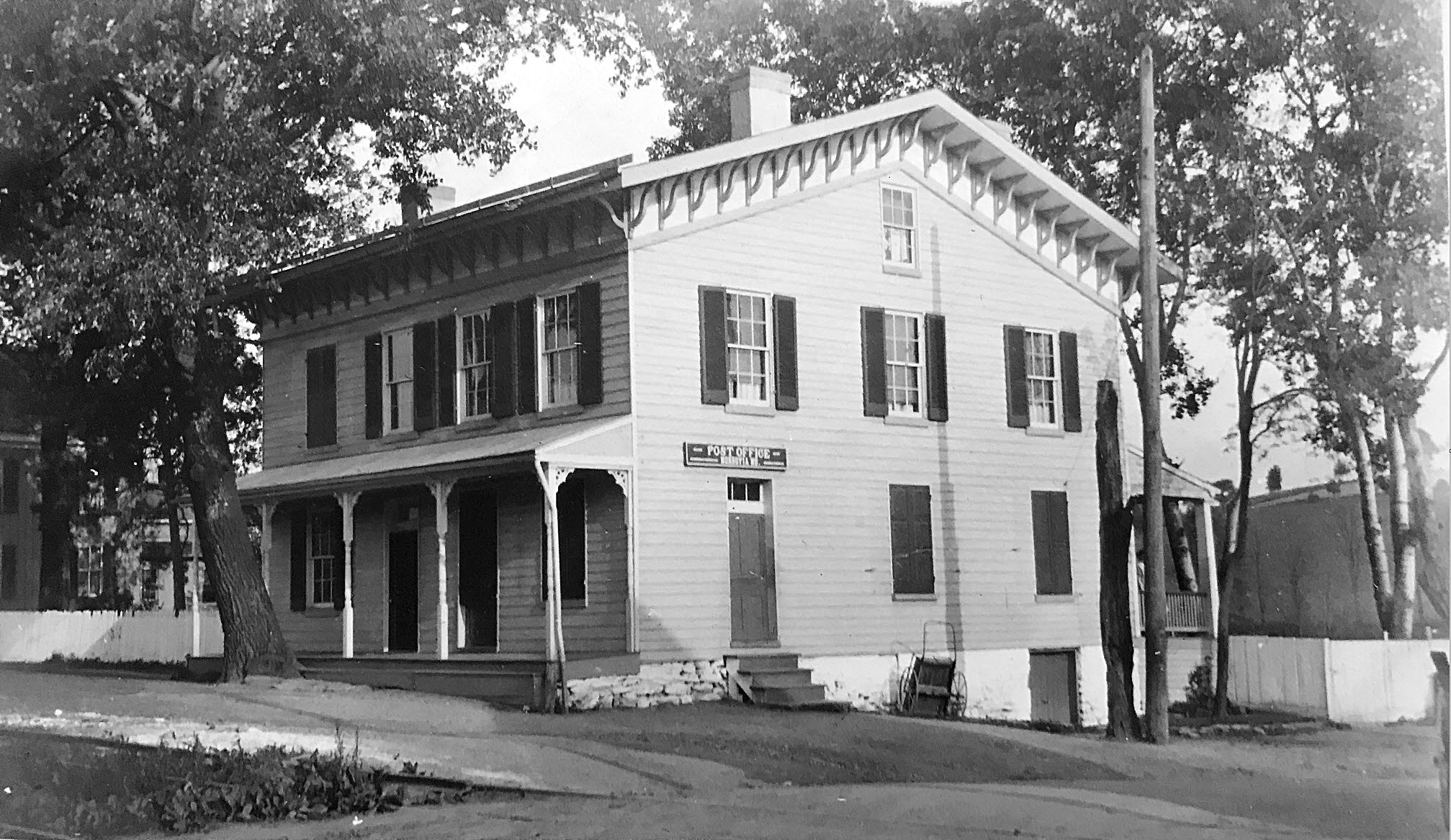
Monrovia Post Office, 1910. Photo by Lewis Reed
Monrovia Post Office (NOW): The little village of Monrovia is today not much more than an underpass, a post office, and a few abandoned buildings. The old post office building is now an Office Park area in Monrovia.
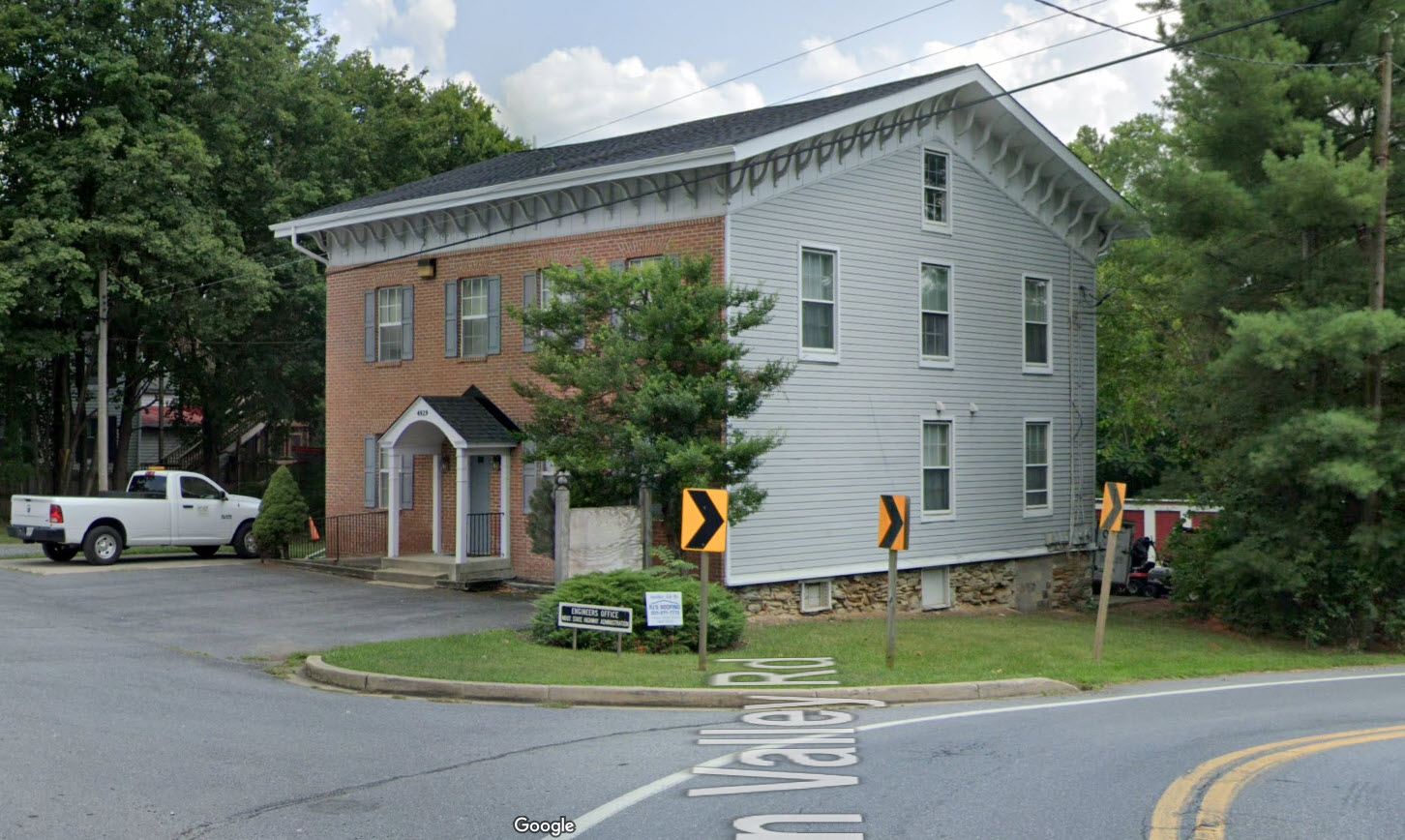
This google image of Monrovia Post Office today is still very recognizable.
Source: Wikipedia
First RDF Maryland
Back in Time: Roadside Springs
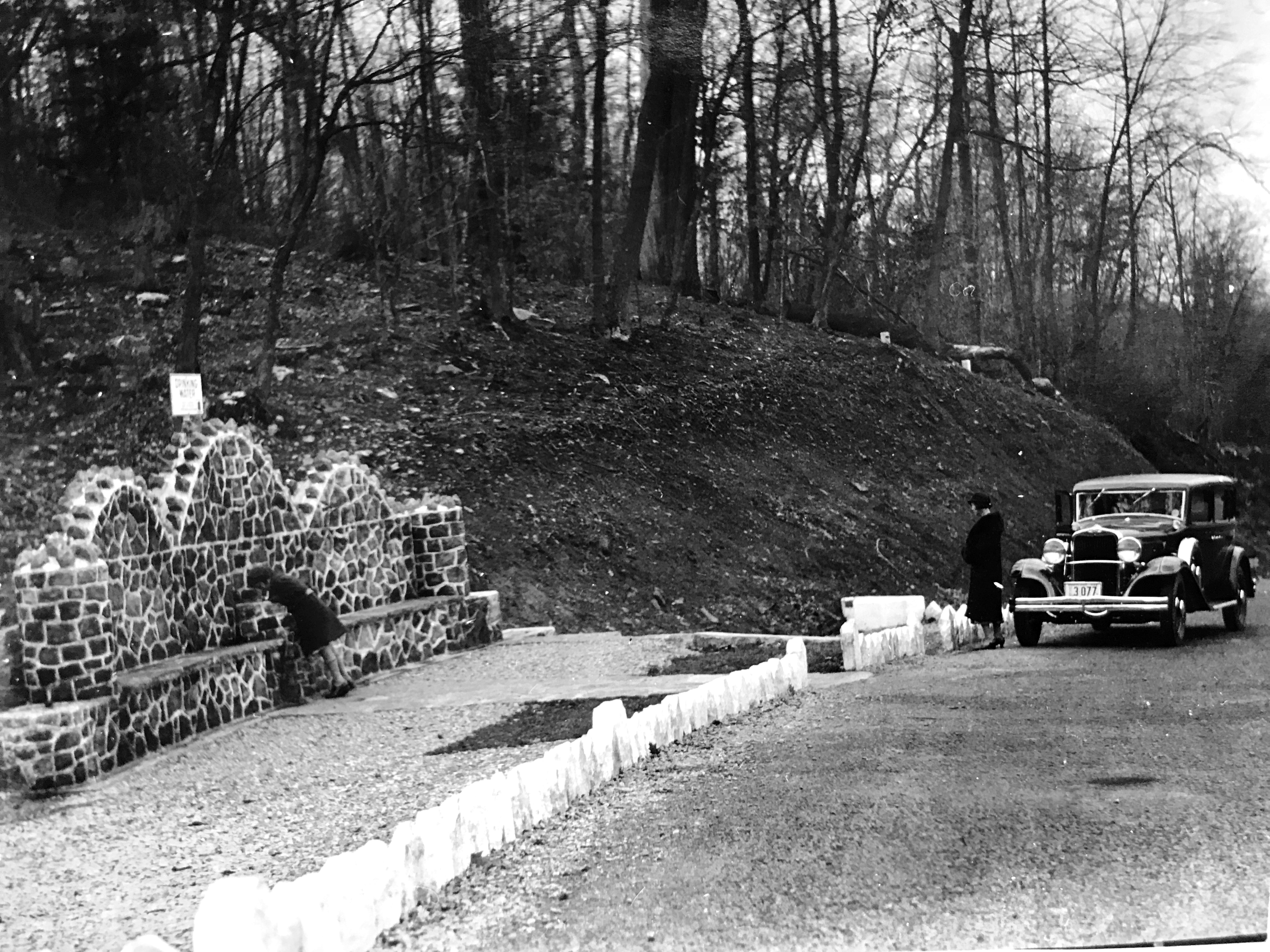
Early 1930s roadside spring. The sign above the wall reads, “drinking water”. Fountains like these were placed along roads to give motorists an opportunity to stop for a drink. The child at the fountain is Lewis Reed’s daughter, Mary Jane, and the woman standing next to the circa 1930s Dodge Sedan is his wife, Ethelene. Photo by Lewis Reed.
Imagine a time when automobiles lacked air conditioning, highway travel was young and life moved at a much slower pace. Back in the day, it was more about the journey than the destination. As better roads allowed motorists to travel increased distances it became apparent that they would need places to stop along the way. The model of place that led to the establishment of waysides and roadside parks was initiated by the traveling public. Stopping sites emerged in rural areas where commercial establishments were not available. Often they appeared in areas of scenic interest or merely in places where there was room for a car to pull off the roadway. These earliest waysides materialized out of necessity, when motorists needed to wanted to stop they pulled off and parked along the roadside.
The photo was taken by Lewis Reed on one of his many cross country road trips. This unknown roadside rest area with water fountain gives us a real sense of a bygone era. We don’t travel like this anymore. Now we’re just trying to get from point A to point B as quickly as possible.
During the 1930s, the State Road Commission was engaged in a program to improve the road infrastructure, which included beautification efforts as well as road paving and bridge construction. Numerous roadside fountains were constructed across the state. No statewide inventory exists.
Ice Cold History in Montgomery County (1910)
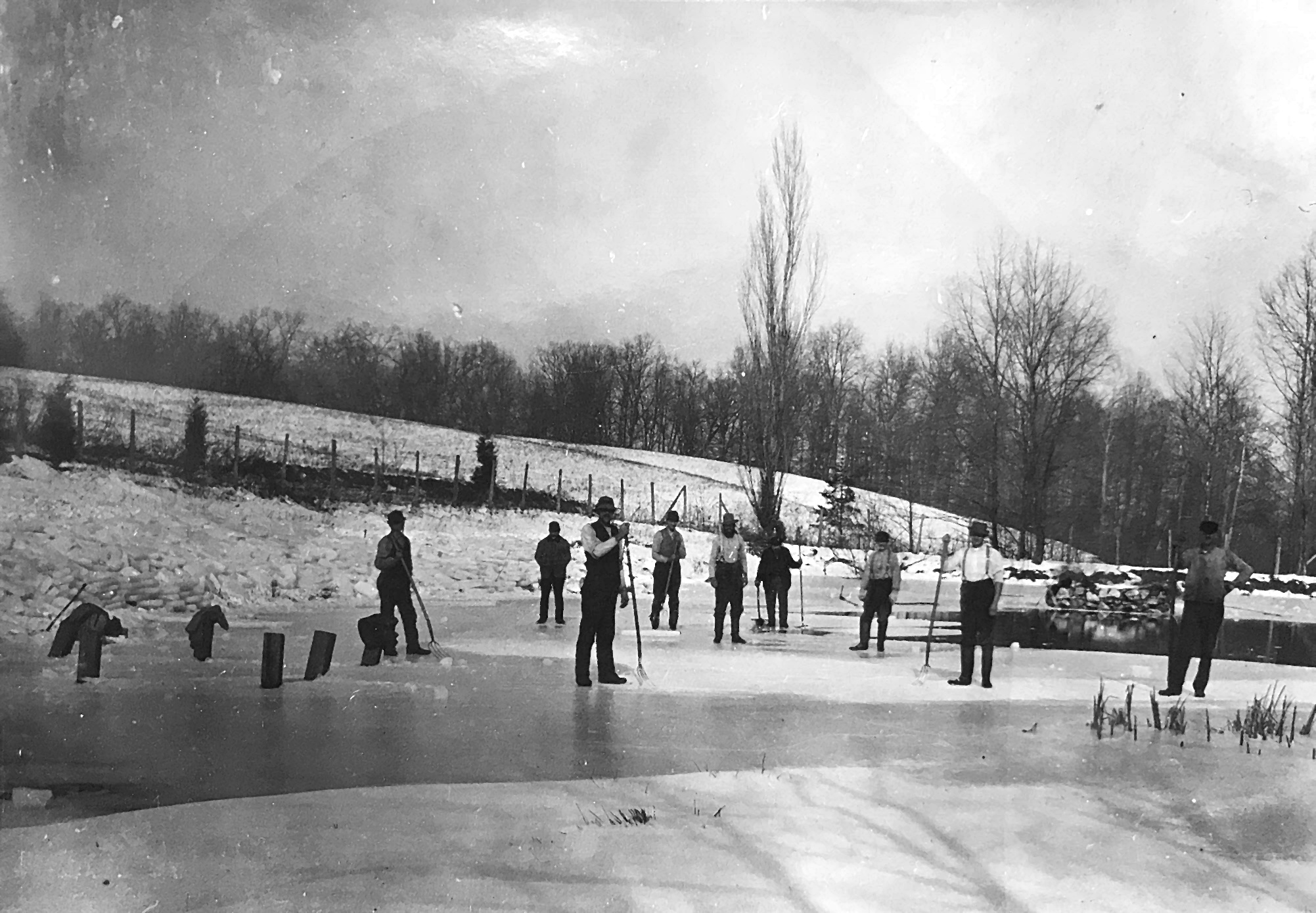
Men harvesting ice with pitchforks and hand saws in Darnestown, Maryland. Photo taken by Lewis Reed in 1910. Note the blocks of ice stacked up along the shoreline. The exact location of the pond is unknown.
Most people wouldn’t consider the months of January and February a season of harvest in Montgomery County. But in our not so distant past, this was harvest time for—ICE. Rivers, lakes and ponds were generally frozen and ice was harvested like a winter crop to keep food cold all summer long.
Before the first successful ice-making machines were built, ice for refrigeration was obtained through a process called “ice harvesting.” Ice cutters used to risk their lives by going out onto frozen ponds with saws, tongs, and pitchforks and methodically cut and dragged blocks of ice which would be stored in hay-packed ice houses. But people did not put ice in drinks as we do now. The possibility of debris having been in the water as it froze – even a bug now and then – discouraged the idea.
Ice houses were dug into the ground to keep the temperature low; double-thick walls were often filled with sawdust for further insulation, and the blocks themselves were packed in sawdust or straw. When you wanted some ice for drinks or to make ice cream, you wouldn’t pull out a whole block; ice picks, chisels, hatchets and shavers were used to get just what you needed.
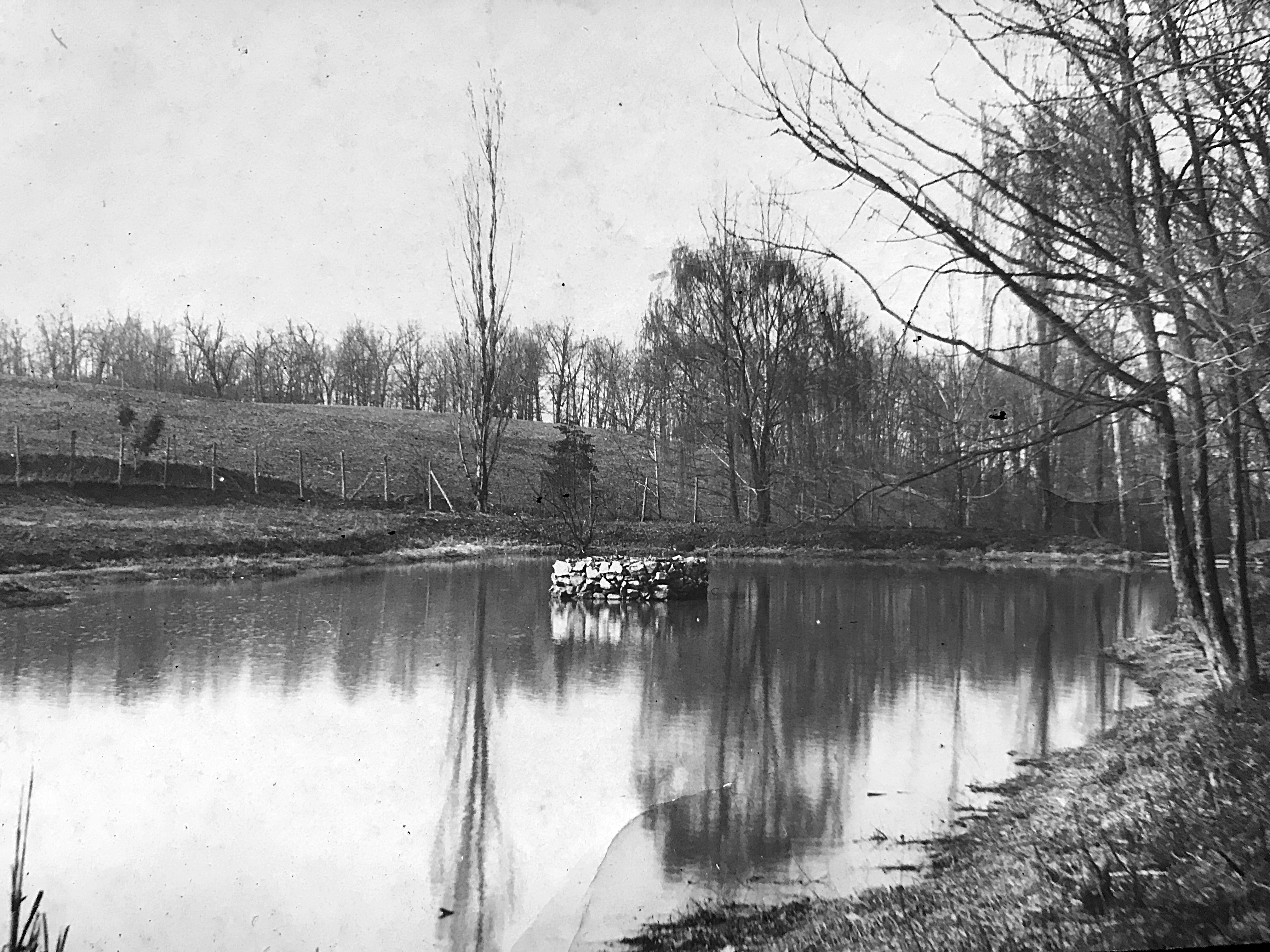
Same pond in summertime without ice. Photo by Lewis Reed, 1910.
I’m not exactly sure what the stone structure is in the middle of the pond, but “google” said it could be an outlet structure to keep the water surface in the pond at its optimum level, which usually coincides with the maximum water level designed for the pond. It is connected to a pipe allows water to exit the water body. This pond must have been on a creek or stream and is very likely no longer in existence.
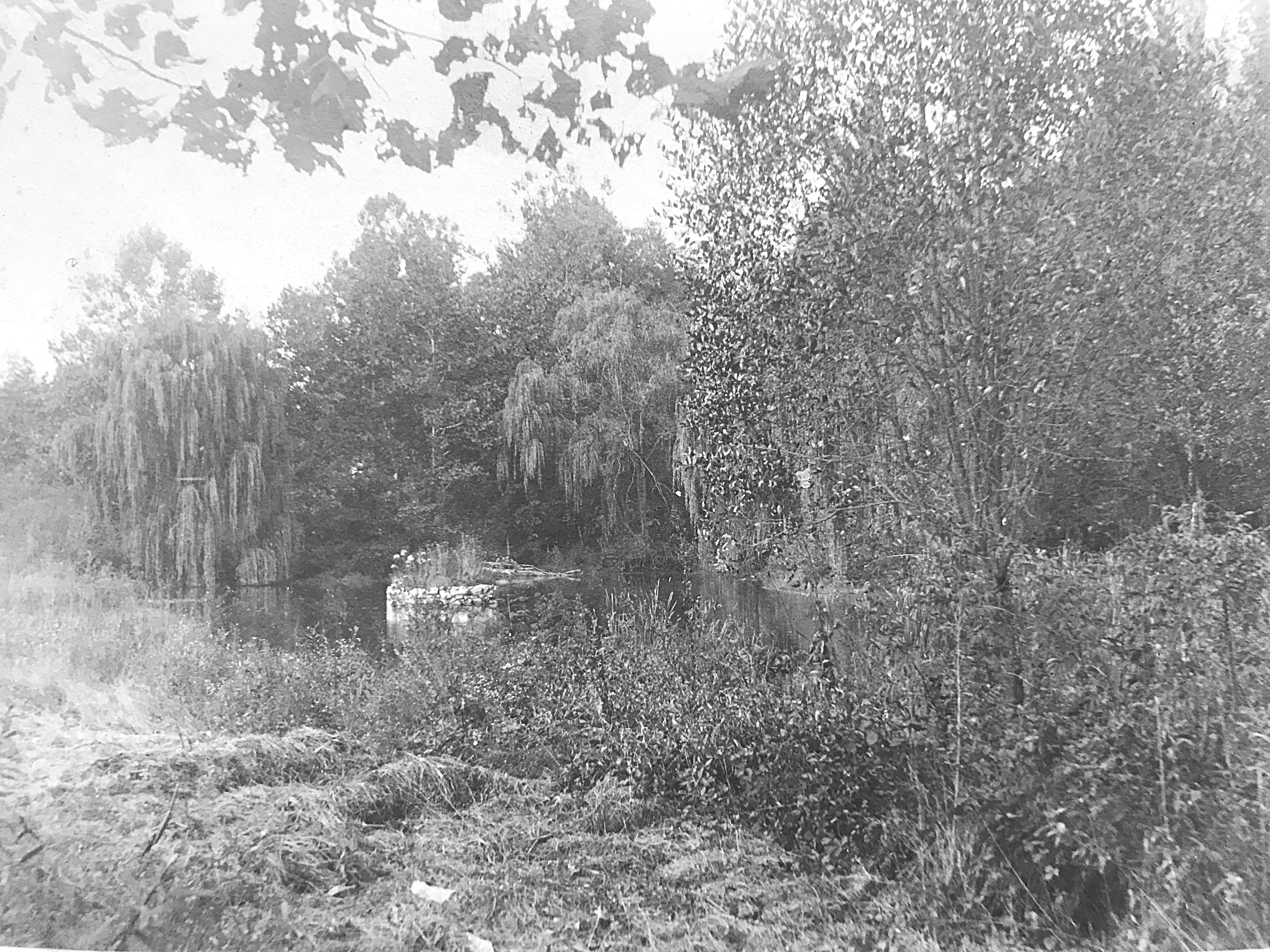
Same pond in summertime from a different perspective. Photo by Lewis Reed, 1910.
From The Evening Star, Washington, D.C. December 22, 1904
ROCKVILLE AND VICINITY GENERAL NEWS
The cold weather of the past ten days has frozen the ponds and creeks throughout this county to a thickness of six or seven inches, and the ice harvesting is now the order of the day. The quality of the ice is not regarded as first-class, however, and for this reason many persons will defer filling their houses until later in the winter.
Next time you drop a few ice cubes into a glass or take out a frozen piece of meat from the freezer, perhaps give a momentary thought to how much we take for granted the ability to have ice cold drinks, preserved foods that can be stored for months, ice cream, cold frothy beer, and so many perishable food products. Refrigeration is a modern convenience that we just can’t live without and certainly one that I took for granted until I wrote this!
Books

Related Resources


Copyright Notice

Reed Brothers Dodge History (1915-2012) by Jeanne Gartner is licensed under a Creative Commons Attribution-NonCommercial 3.0 Unported License.
 Reed Brothers Dodge History 1915 – 2012
Recent Comments