
Senate Resolution No. 10: A Historic Tribute to Lewis Reed and Reed Brothers Dodge
On February 8, 1967, the Senate of Maryland adopted Senate Resolution No. 10 to honor the life and legacy of Lewis Reed, founder of Reed Brothers Dodge, following his passing at the age of 79. This single-page resolution, recorded in the official proceedings of the Senate, recognized not only his long career in the automobile business, but also his broader contributions to the civic and economic life of Montgomery County.
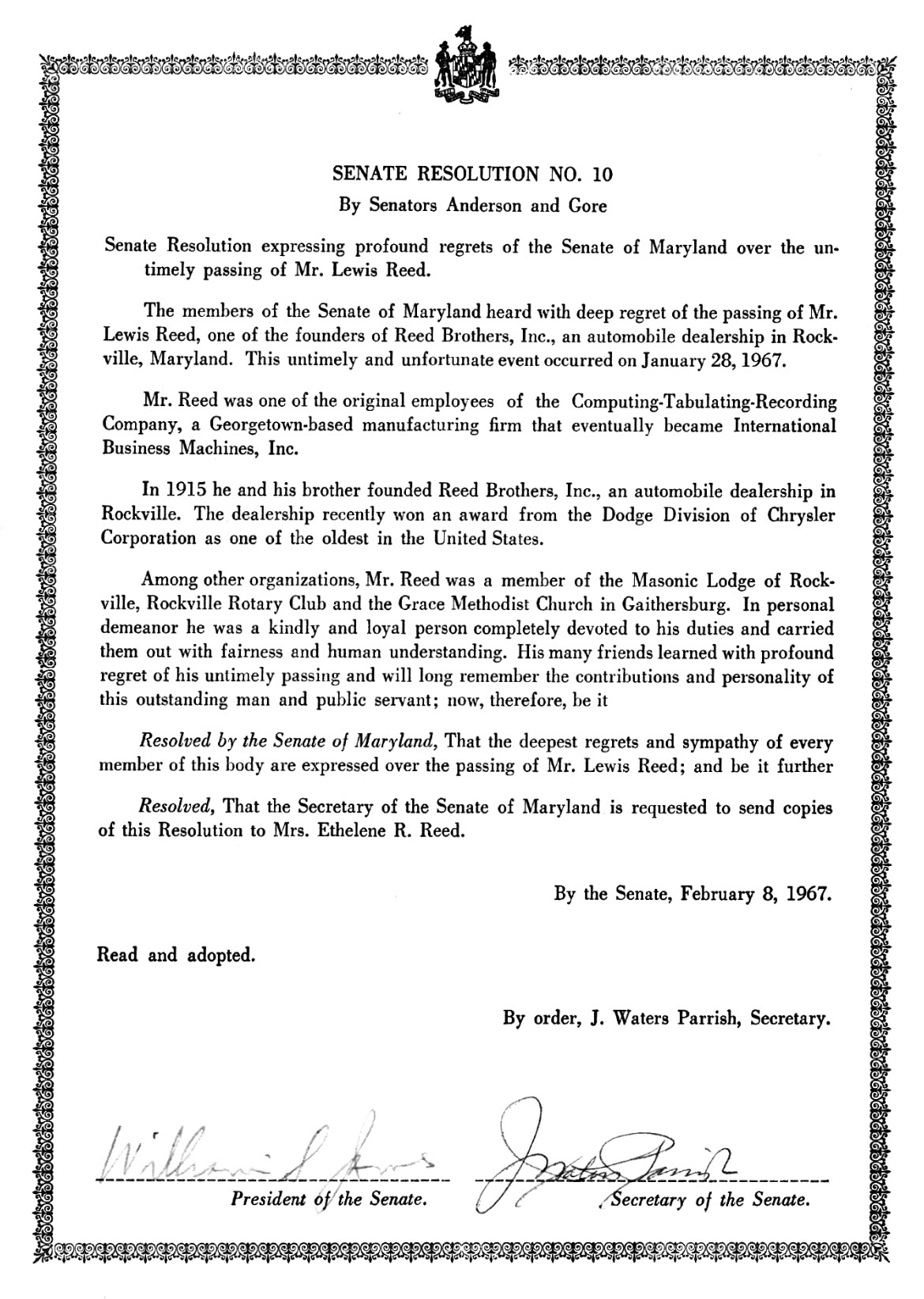
Senate Resolution No. 10, adopted by the Senate of Maryland on February 8, 1967, honoring the life and achievements of Lewis Reed, founder of Reed Brothers Dodge.
Lewis Reed’s story begins in October 1915, when he opened a new automobile agency in Rockville and chose to represent the then-young Dodge Brothers Motor Car Company. At that moment, Dodge had been producing automobiles for less than a year, yet Reed saw its potential and became the first Dodge dealer in Montgomery County and the earliest in the state of Maryland. This pioneering decision anchored a business that would endure for generations, evolving from the era of dirt roads and hand-cranked engines into the age of modern highways and high-compression engines.
Over the next five decades, Reed Brothers Dodge weathered profound change: two world wars, the Great Depression, postwar expansion, and the transformation of Rockville from a small town into a busy suburban center. Through these shifts, the dealership gained a reputation for fair dealing, continuity of family ownership, and steadfast adherence to the Dodge ideal of “𝘋𝘦𝘱𝘦𝘯𝘥𝘢𝘣𝘪𝘭𝘪𝘵𝘺.” Customers often returned across decades and generations, treating Reed Brothers as a trusted local institution rather than just a place to buy and service automobiles.
Yet Lewis Reed’s influence extended beyond the showroom floor. He was also one of Montgomery County’s earliest and most devoted photographers, documenting streetscapes, parades, farms, people, and everyday scenes that might otherwise have vanished without a trace. His images, many taken in and around Rockville, now serve as a visual time capsule, preserving a detailed record of the county’s transformation across the first half of the 20th century. In recognizing Lewis Reed, the Senate was, in effect, honoring both a businessman and an unofficial historian of the community.
Senate Resolution No. 10 is significant because it places Lewis Reed and Reed Brothers Dodge within the formal historical record of the State of Maryland. It acknowledges that a local automobile dealer, by virtue of long service, integrity, and civic commitment, could shape the character and memory of a place just as surely as a public official or institution. For those interested in local history, early motoring, or the story of Rockville’s growth, the resolution provides a brief but powerful summation of why Lewis Reed’s name still matters. He remains the only automobile dealer in Maryland to receive such recognition by a Senate resolution.
Then & Now: Reed Brothers Dodge and the Changing Face of Rockville
The story of Reed Brothers Dodge is also the story of how Rockville and Montgomery County grew up around the automobile. Through the lens of founder Lewis Reed, we can watch that transformation unfold one frame at a time.
THEN: A Corner Garage on a Dirt Road
In the early 1900s, Rockville was still very much a rural crossroads. When Lewis Reed opened his original Rockville Garage in 1915 at the intersection of Veirs Mill Road and Rockville Pike, the scene looked nothing like the busy corridor we know today.
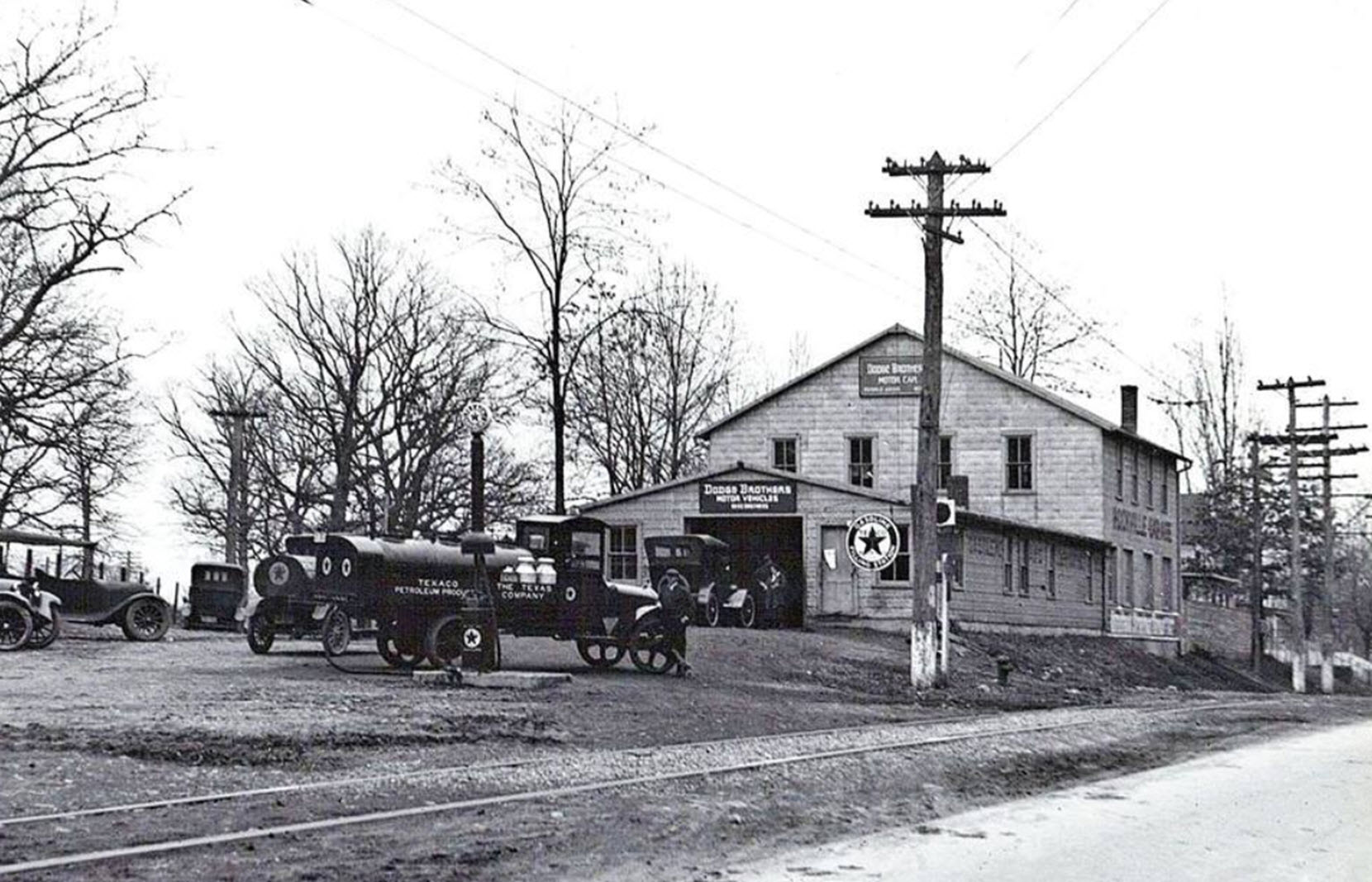
THEN: 1917 Rockville Garage, later expanded with a two-story addition. A Texaco Filling Station sign is visible alongside a Texaco petroleum fuel truck servicing the single pump out front.
In the historic photograph, you can see:
- An unpaved Rockville Pike, more dirt than road, stretching into the distance.
- Trolley tracks running past the garage, part of the transit line that connected Rockville to Washington, D.C. from 1900 to 1935.
- A simple building front with “Dodge Brothers Motor Vehicles” signage, more workshop than showroom.
It was a modest operation by modern standards, but it represented something new: a dedicated place in town for motorists to buy, fuel, and service their automobiles. At a time when horse‑drawn wagons still shared the road, Reed Brothers Dodge stood at the frontier of a new way of moving through the world.
NOW: From Quiet Crossroads to “Mixing Bowl”
Stand in the same spot today and it is almost hard to believe it is the same place. The once‑quiet junction has evolved into what locals now refer to as “the mixing bowl,” a complex web of roads, traffic signals, and near‑constant traffic.
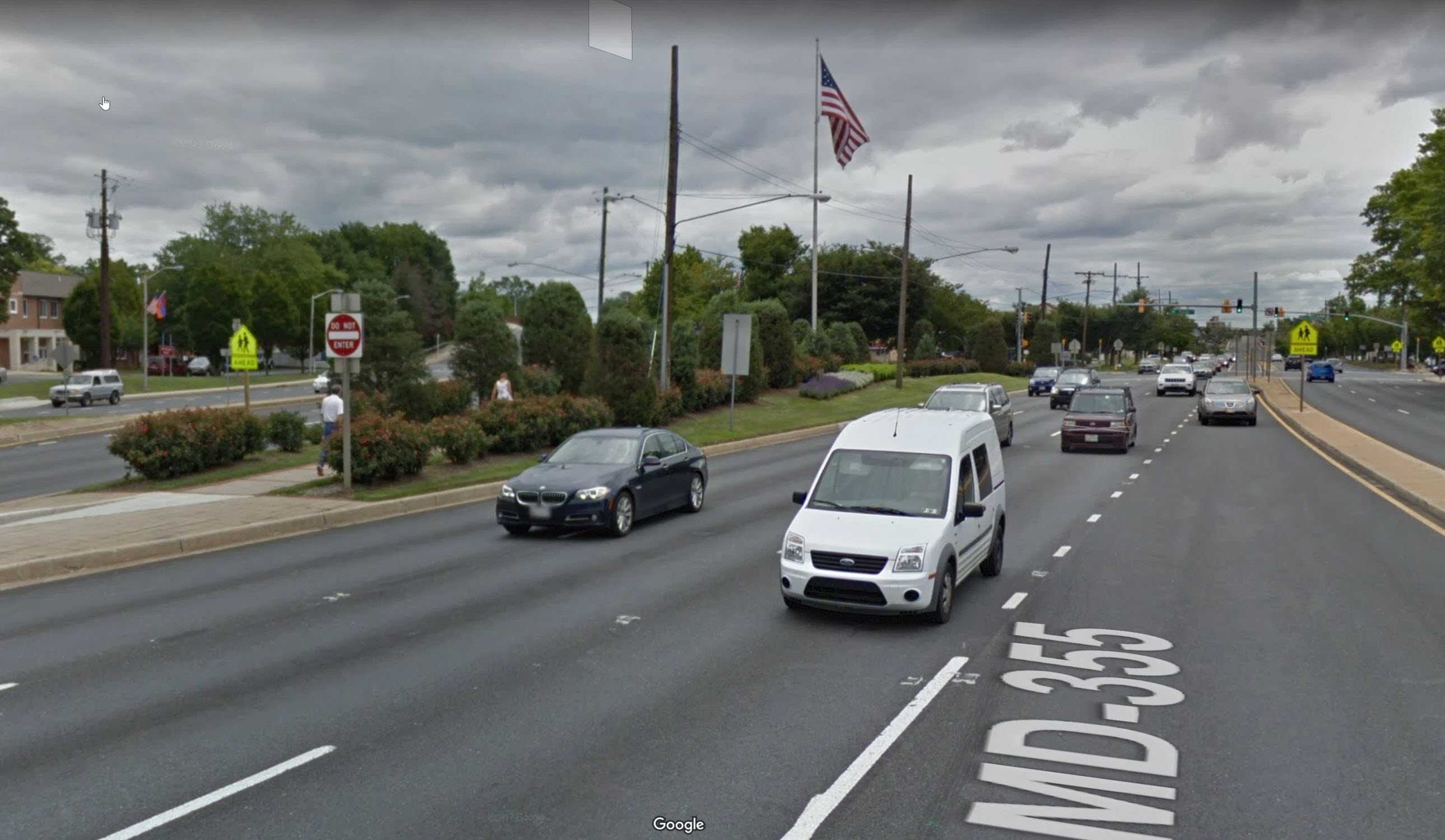
NOW: Veterans Park occupies the former Reed Brothers Dodge corner at Rockville’s “mixing bowl,” a small green refuge with flags and pathways set against the backdrop of constant traffic and busy highways.
Where the original Reed Brothers building once stood, the landscape has cycled through multiple lives:
- In the decades that followed, the busy crossroads gave way to highway progress, as road‑widening projects in the 1960s and 1970s carved away much of the original Reed Brothers property.
- The once‑bustling dealership site was gradually transformed into what is now Veterans Park.
- With the demolition of the dealership building in 1970, nearly half a century of automotive history at that corner came to a close, leaving only photographs and memories to mark its presence.
Today, the same view is dominated by multi‑lane roads, turning lanes, and signage, where there were once dirt streets, trolleys, and the old Rockville Fairgrounds just across the Pike.
A Dealership That Grew with Its Community
Reed Brothers Dodge did not stand still while the roads changed. Founded in 1915, the family business survived World War I, the Great Depression, World War II, recessions, and Chrysler’s financial crises of the 1970s and 1980s.
Key milestones include:
- Expansion from a small corner garage into a full Dodge dealership as automobile ownership grew.
- Construction of a new showroom and service building at East Montgomery Avenue and what would later be named Dodge Street in the 1940s.
- A major relocation in 1970 to a modern facility at 15955 Frederick Road in front of the Shady Grove Metro, complete with contemporary showroom and full service complex.
By the time the dealership closed in 2012, Reed Brothers Dodge had operated in Rockville for more than 97 years, making it the longest‑running Dodge dealership in Montgomery County history.
This single pair of images is just one chapter in a much larger visual record. Lewis Reed’s photographs capture everyday life across Maryland and beyond from 1898 through 1960. Many of these scenes can still be recognized today if you know where to look, even as roads have widened, buildings have vanished, and new neighborhoods have emerged. You can explore the entire “Then & Now” series with Lewis Reed’s photographs here: https://reedbrothersdodgehistory.com/category/then-now/.
Off-Season at the Montgomery County Fairgrounds, 1910
These winter photographs, taken around 1910 by Lewis Reed, offer a rare glimpse of the Montgomery County Fairgrounds during its off-season; long before crowds, exhibitions, and midway sounds returned each year. Covered in snow and largely still, the fairgrounds appear almost contemplative, preserving a moment in time that contrasts sharply with the bustle normally associated with the annual fair.
The Montgomery County Fair was held in Rockville from 1846 until 1932, serving as one of the county’s most important agricultural and social gatherings. Farmers, merchants, families, and visitors from across the region—including Washington, D.C.—came together to celebrate livestock, crops, craftsmanship, and community. Yet photographs of the fairgrounds outside the fair season are uncommon, making these images particularly significant.
Lewis Reed’s photographs show the grounds at rest. Snow blankets the open spaces, softening the outlines of fences and walkways. Buildings stand closed for the winter, including the Poultry House, which would have been a hive of activity during fair time. In these images, the structures themselves take center stage, revealing their form and placement without the distraction of crowds.
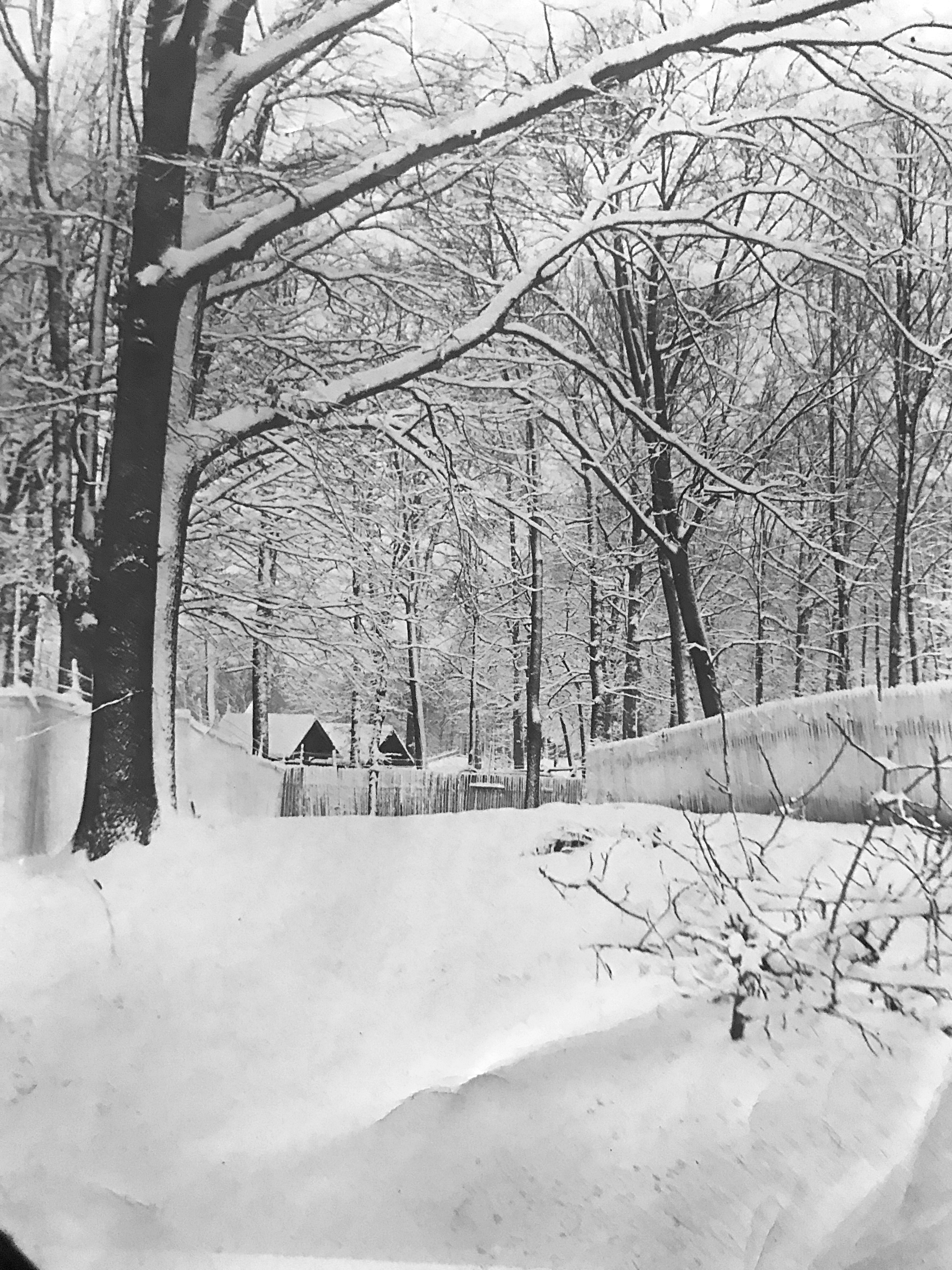
Snow blankets the fairgrounds in this early 20th-century photograph by Lewis Reed. Images such as this offer a rare view of the fairgrounds outside the fair season, documenting the site as it appeared in everyday use.
Reed’s work is notable not only for its subject matter, but for its documentary value. At a time when photography was still a deliberate and technical process, his images captured everyday scenes that might otherwise have gone unrecorded. Today, they provide visual evidence of how the fairgrounds looked and functioned in the early twentieth century, as well as a reminder of the role photography played in preserving local history.
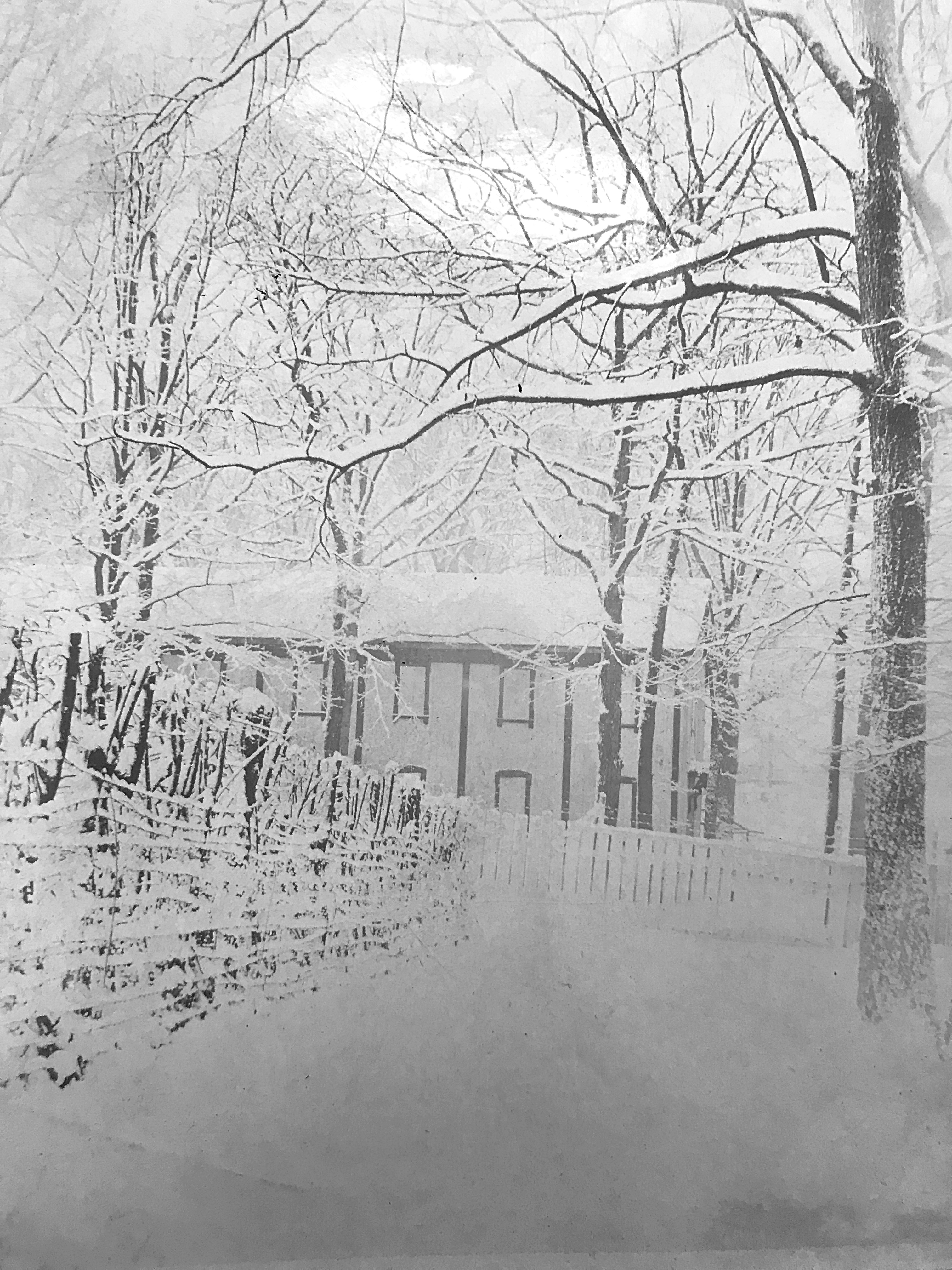
The Poultry House at the Montgomery County Fairgrounds, photographed by Lewis Reed during the winter of 1910. Closed for the season, the building would later host livestock exhibits during the annual Montgomery County Fair.
Viewed more than a century later, these snowy scenes connect us to a slower pace of life and to a Montgomery County that was still largely rural. Thanks to Lewis Reed’s careful eye and willingness to document the ordinary as well as the celebrated, these winter moments at the old fairgrounds endure.
Books

Related Resources


Copyright Notice

Reed Brothers Dodge History (1915-2012) by Jeanne Gartner is licensed under a Creative Commons Attribution-NonCommercial 3.0 Unported License.


Recent Comments