
Before Trick-or-Treating: Lewis Reed’s Photographs Capture Halloween in Early Montgomery County
Homemade masks, autumn parties, practical jokes and an eerie clown on horseback reveal how Marylanders celebrated Halloween more than a century ago.
Long before Montgomery County neighborhoods filled with porch lights, plastic pumpkins and children carrying bags of candy, Halloween had a very different look.
There were no inflatable ghosts covering front lawns. Costumes were more likely to be assembled at home than purchased in a store. And the familiar ritual of children traveling door to door calling “trick or treat” had not yet become the centerpiece of the holiday.
Fortunately, we can still catch glimpses of that earlier Halloween.
Among the many photographs taken by Lewis Reed of Montgomery County, Maryland, are several remarkable images associated with Halloween celebrations of the early 20th century. Reed is better known locally as the founder of Reed Brothers Dodge in Rockville, but long before and throughout his years in business, he was also an enthusiastic photographer who recorded the people, places and everyday life around him.
His Halloween photographs open a small window onto a holiday that was still evolving into the celebration we recognize today.
A Mask Was Sometimes All You Needed
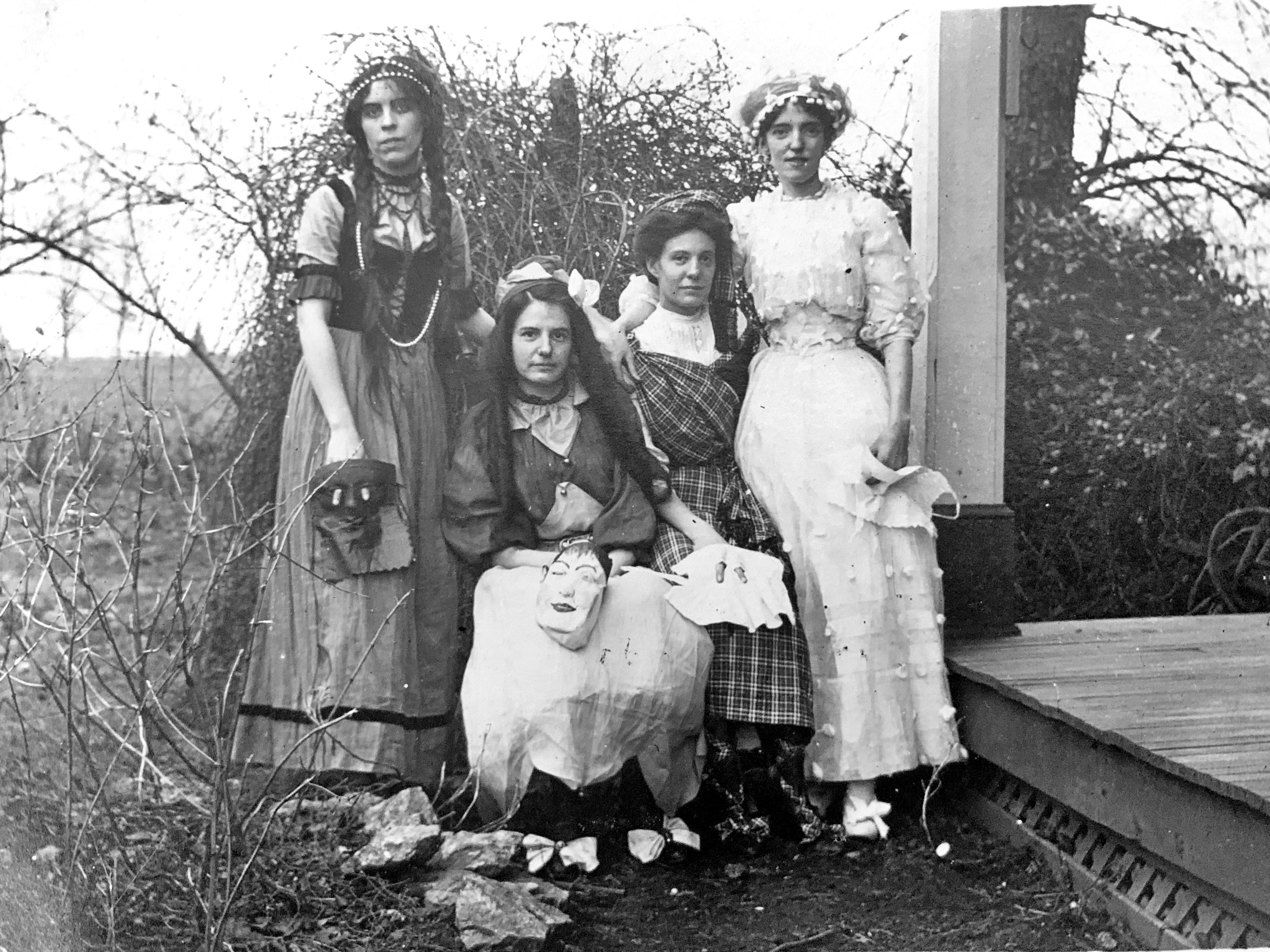
Halloween preparations, circa 1914. These women pose with homemade masks for an upcoming celebration. Photograph by Lewis Reed.
One of Reed’s photographs, dating to about 1914, shows women holding simple masks in preparation for Halloween. To modern eyes, the scene may hardly look like “costumes” at all. That is precisely what makes the photograph so interesting.
Early 20th-century Halloween celebrations retained much of the atmosphere of the masquerade. Revelers might wear ordinary clothing accompanied by a mask, hat or other homemade disguise rather than dress from head to toe as a recognizable character. Manufactured Halloween costumes became increasingly available during the following decades.
The photograph captures that transition almost perfectly: familiar people made mysterious for an evening by little more than a mask.
It also reminds us how much of Halloween once depended upon imagination rather than merchandise.
Halloween Was a Social Occasion
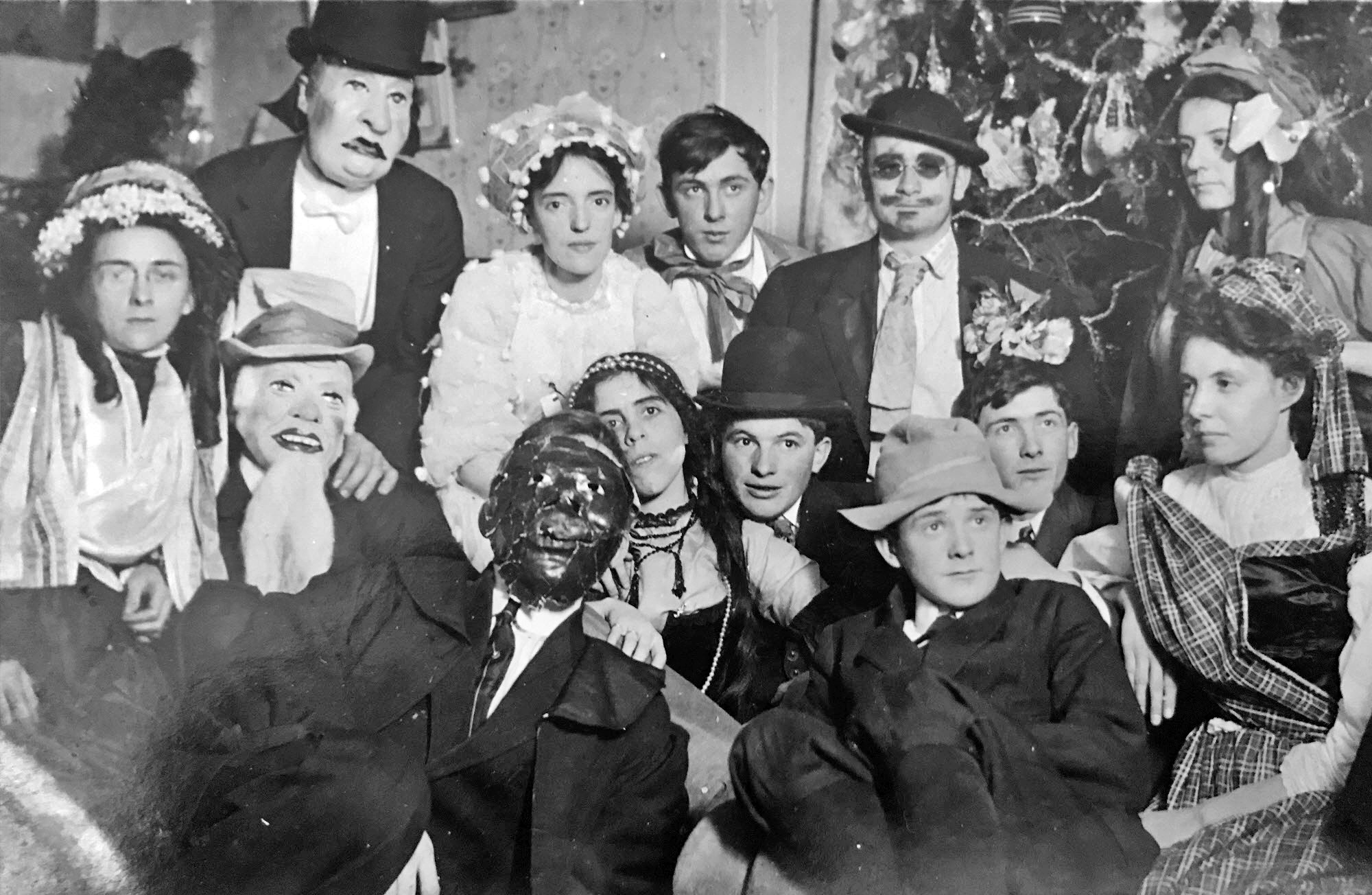
Family and friends gathered for a Halloween celebration more than a century ago. The homemade masks and disguises give the photograph an unmistakably eerie quality. Photograph by Lewis Reed.
Another Reed photograph preserves a Halloween gathering from roughly the same period.
The faces, masks and unusual assortment of hats can look surprisingly unsettling today. But Halloween parties were popular social occasions, particularly among teenagers and adults.
Period newspaper accounts describe homes decorated with autumn leaves, flowers, lanterns and orange-and-black decorations. Games might be followed by music and dancing, often with plenty of refreshments before the evening ended. Contemporary Halloween menus included familiar seasonal favorites such as pumpkin pie and molasses cookies, alongside dishes that would seem decidedly less familiar today.
The emphasis was on gathering together.
Halloween was not yet overwhelmingly a children’s holiday. Historical accounts of the period note that modern door-to-door trick-or-treating had not become the dominant American custom it would later become.
Newspapers Help Fill in What the Camera Could Not
Lewis Reed’s photographs freeze individual moments, but newspapers from the same years help bring the scenes to life.
Stores advertised masks, costumes and masquerade supplies as Halloween approached. Society columns reported parties and sometimes even identified the guests who attended them. Recipes appeared for Halloween refreshments.
And then there were the warnings.
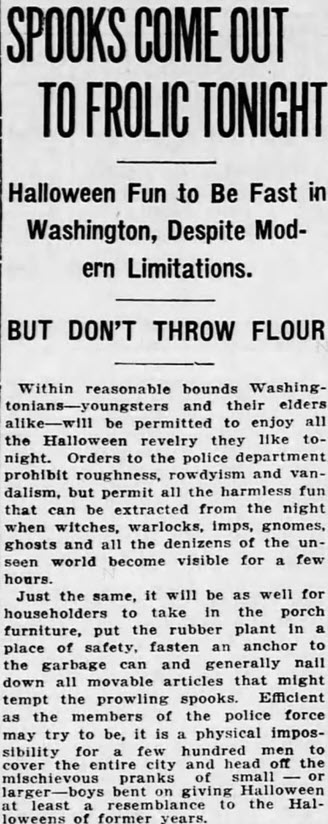
The Evening Star, October 31, 1916
Because Halloween had another longstanding tradition: mischief.
Young revelers were expected to engage in a certain amount of harmless trouble, but communities did not always agree about what qualified as harmless.
An October 31, 1916 edition of The Evening Star, for example, carried warnings concerning Halloween pranks. Among the activities attracting unwanted attention was the practice of throwing flour.
Imagine answering your front door on Halloween evening and receiving a handful of flour instead of handing out a miniature candy bar.
The past can seem very distant until a newspaper reports exactly what people were worried about on an ordinary Tuesday night.
From Mischief to Community Celebration
As the new century progressed, communities increasingly tried to channel Halloween mischief into organized entertainment.
Parties, civic events and parades offered a way to turn Halloween into a community occasion rather than an evening of overturned objects, practical jokes and property damage. By the 1920s, Halloween was gradually assuming more of the organized, public character that would help shape later celebrations.
And somewhere along the way, Lewis Reed pointed his camera at one of the strangest Halloween figures in his collection.
The Clown on Horseback
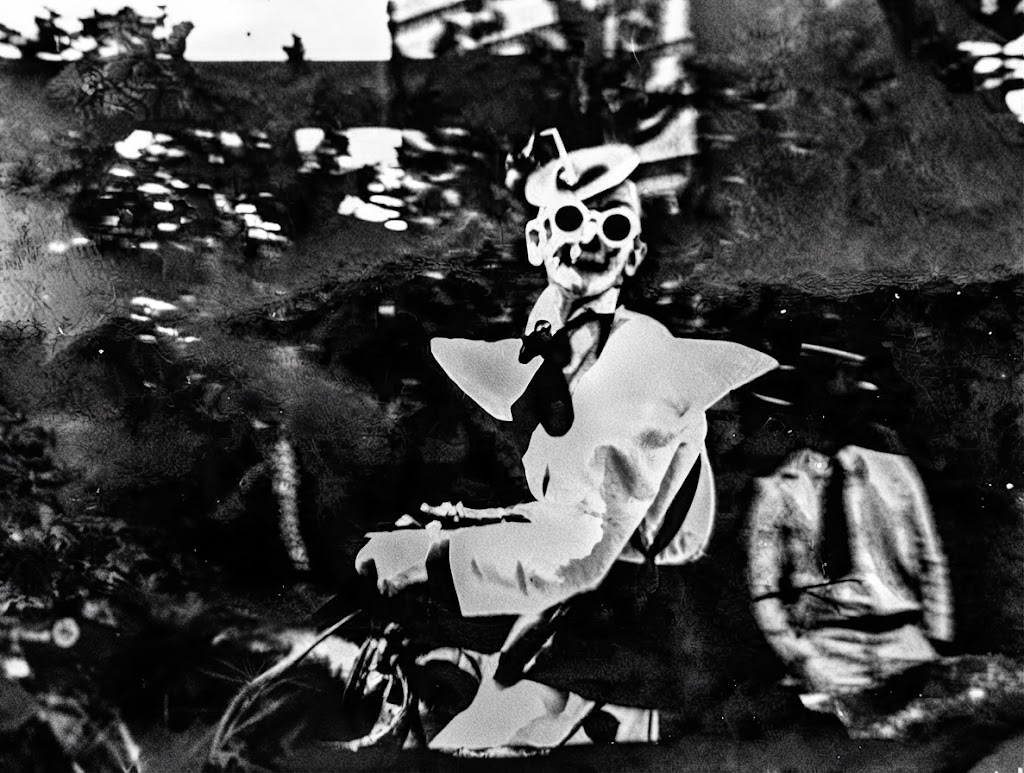
A masked clown wearing dark glasses rides horseback during an early Halloween parade or celebration. The location is unknown. Photograph by Lewis Reed.
Few historic photographs require as little explanation as this one.
A clown sits astride a horse.
He wears an elaborate costume, an oversized collar, a pointed hat and round dark glasses.
More than a century after the shutter clicked, the photograph somehow manages to be humorous, theatrical and just a little unnerving at the same time.
Unfortunately, the location has not been identified. But that uncertainty is part of the fascination of working with a historic photograph collection. Not every image arrives with a caption. Sometimes the photograph survives while the names, date and circumstances slowly disappear.
What remains is the moment itself.
And in this case, it is a wonderfully peculiar piece of Halloween history.
Lewis Reed’s Camera Preserved Everyday History
Lewis Reed did not photograph only important ceremonies or prominent citizens. His camera also recorded farms, roads, automobiles, businesses, family gatherings, community events and seemingly ordinary moments throughout Montgomery County.
That breadth is what makes his photographs so valuable today.
A picture of several people preparing masks for a party probably did not seem historically significant when the photograph was made. Neither did a group posing at a Halloween gathering.
But more than a century later, such photographs allow us to study things that official histories rarely preserve: what people wore, how they entertained themselves, what their homes looked like and how traditions changed from one generation to the next.
Montgomery History today uses Lewis Reed photographs in interpreting the county’s early 20th-century past, including images documenting major community events and institutions.
Even Reed’s seasonal photographs extend beyond Halloween. One surviving image shows men gathering pumpkins in Thomas Kelley’s field near Pleasant Hills in the Darnestown area during the early 1900s, preserving another small piece of Montgomery County’s autumn past.
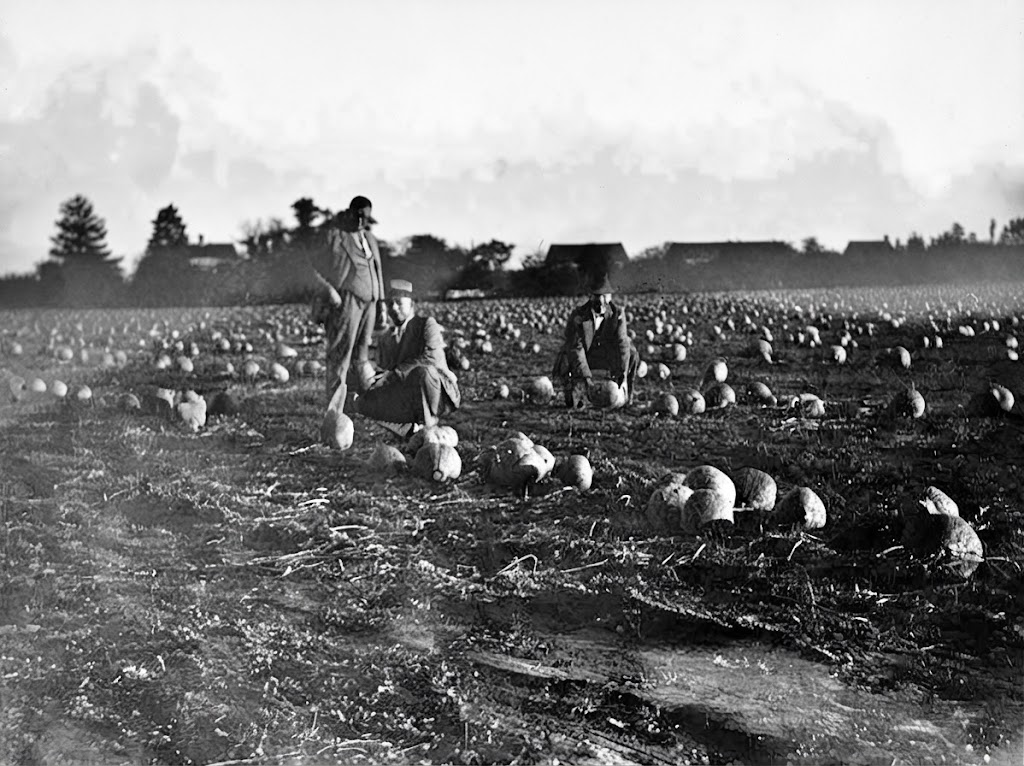
Men gathering pumpkins in Thomas Kelley’s field near Pleasant Hills in the Darnestown area, early 1900s. Lewis Reed’s photographs preserved not only community celebrations, but also the seasonal traditions of everyday life in Montgomery County. Photograph by Lewis Reed.
Halloween Changes. Photographs Remain.
Halloween has changed enormously since Lewis Reed raised his camera more than a century ago.
Masks became full costumes. Homemade disguises gave way to mass-produced characters. Mischief nights gradually yielded to organized community celebrations. Trick-or-treating became an American childhood tradition, and Halloween grew into one of the country’s most recognizable holidays.
But look closely at Reed’s photographs and something remains familiar.
People were dressing up.
Friends were gathering.
Someone was undoubtedly preparing food.
And somebody, apparently, thought riding through a Halloween parade dressed as a clown in sunglasses was a perfectly good idea.
More than one hundred years later, Lewis Reed’s camera lets us join the party.
Books

Related Resources


Copyright Notice

Reed Brothers Dodge History (1915-2012) by Jeanne Gartner is licensed under a Creative Commons Attribution-NonCommercial 3.0 Unported License.


Recent Comments