
Then & Now: Computing Tabulating Recording Company (aka IBM)
It might feel like things are always changing in Washington DC. There are always new buildings being built, businesses closing and with every few years. But you might not realize how much Washington DC has changed until you look back at what it looked like in the past. In this “Then & Now” feature, I have combined one of Lewis Reed’s original photograph’s for “then” and matched it with a google street view image for “now”. Taken approximately 108 years apart, these photos show Hollerith’s Plant then and now.
THEN: Before becoming interested in automobiles, Lewis Reed was one of the original employees of the Computing Tabulating Recording Company, a Georgetown-based manufacturing firm that eventually became International Business Machines, Inc. The Tabulating Machine Company was formed by Hermann Hollerith in 1896 and merged to form the Computing-Tabulating-Recording Company in 1911. Seen in the photo below, the two-story building housed Hollerith’s card manufacturing plant, assembly plant, repair shop and development laboratory. Hollerith later incorporated his business as the Tabulating Machine Company. It was consolidated into the Computing-Tabulating-Recording Co. in 1911, and was renamed International Business Machines (IBM) in 1924.

Hollerith’s Plant 1911. Photo by Lewis Reed
NOW: Today the U.S. technology sector is inextricably linked with the West Coast, but the history of data processing actually traces back to an unassuming brick factory in Washington, D.C. This was the Georgetown headquarters of the Tabulating Machine Company, an early analog computer manufacturer that you may know by the contemporary moniker IBM. IBM placed a historical plaque on the corner of the building by 31st Street and the Canal. Hollerith is also buried nearby in the Oak Hill Cemetery.

Front of the old Tabulating Machine Company on 31st Street today
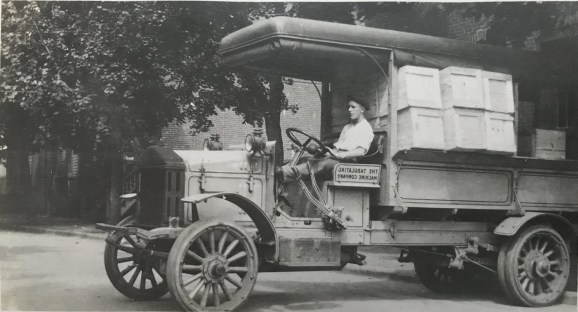
Tabulating Machine Company Delivery Truck. Note that the writing on the side of the truck is in reverse… I have no idea why. Photo by Lewis Reed
The following photographs are interior images.
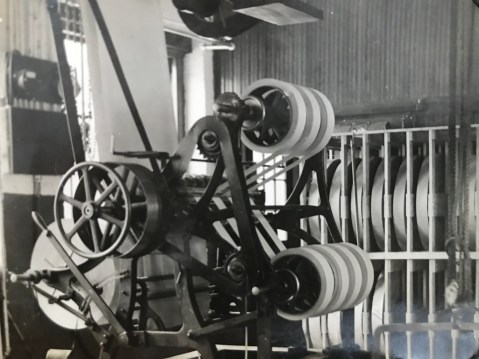
Photo by Lewis Reed

Photo by Lewis Reed

Photo by Lewis Reed
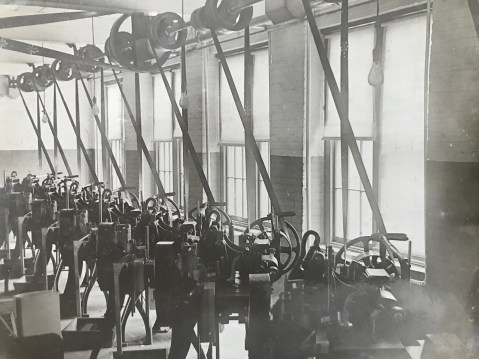
Photo by Lewis Reed

Photo by Lewis Reed
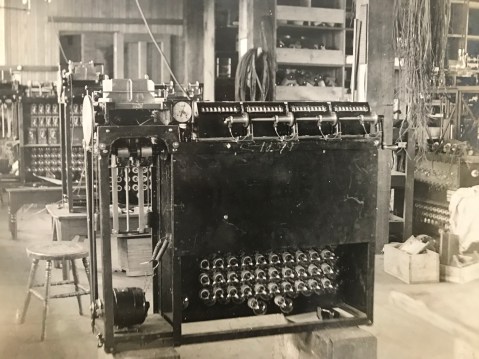
Photo by Lewis Reed
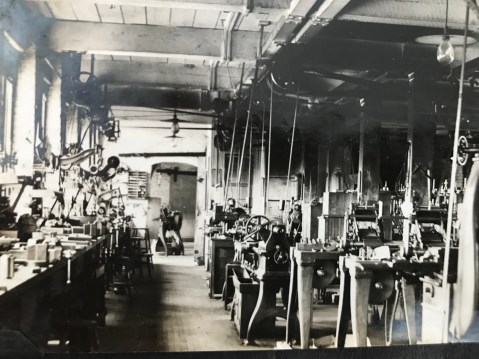
Photo by Lewis Reed

Photo by Lewis Reed
Source: IBM Archives
Lewis Reed Photo on Discovery’s Science Channel
 In case you missed it, I got word that Lewis Reed’s 1923 race car photographs were taken out of the U.S. version of Episode 4 ‘London Array’ Series of Impossible Engineering that was scheduled to be broadcast on Thursday, January 24th on Discovery’s Science Channel. The race car photographs were a part of the “London Array Wind Farm” episode that featured a segment on the development of the race car.
According to TwoFour Broadcasting, this has been happening with this series as Discovery requires a shorter episode length than the rest of their broadcasters. However, one of Lewis Reed’s photos made it in the UK version, and the rest of the world. TwoFour was kind enough to send me a DVD copy of the UK version of the London Array episode that shows the archive featured in the show. Below are screen shots taken directly from the DVD.

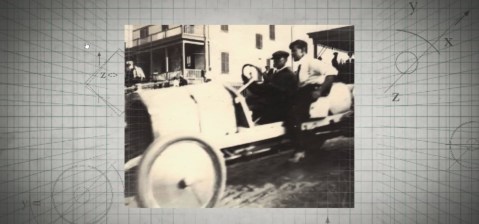
Lewis Reed’s photo from the 1923 Rockville Fair Auto Races extracted from the Science Channel Impossible Engineering DVD.

Screen shot of credits from Discovery Science Channel Impossible Engineering
Impossible Engineering celebrates engineering wonders detailing how they were built and how they work. The show unveils the past, present and future builds that have and will continue to change our world.
“Impossible Engineering” is produced for Science Channel by Twofour Broadcast.
Then & Now: Liberty Milling Company, Germantown
The coming of the Industrial Age meant the end of the Romantic Era and the beginning of machine’s rule over nature. In Germantown, this was represented by the big steam-powered mill. For this post, I have used two of Lewis Reed’s original photographs for “then” and a stock image from today for “now”.
Liberty Milling Company (THEN): “Feed the Liberty Way” was the slogan of Liberty Milling Company, mainstay of the little farming community of Germantown, Maryland for many years. The original mill was steam-powered and began operation in 1888. It was founded by the Bowman brothers – Charles, Eldridge and Upton – of Cedar Grove. Lumber to build the mill was sawed at the Black Rock Mill, one of the oldest water-powered mills in Germantown. The Bowman Brothers did a brisk business milling wheat and corn and selling it in the area as well as shipping it to the Washington, D.C. markets by way of the railroad. In about 1914 fire engulfed the old wood structure and the entire mill was lost. The Bowman brothers rebuilt almost at once. The new mill was sold by the Bowman brothers to the Liberty Milling Company.

Liberty Milling Company, Main Street Germantown, ca. 1910. Photo by Lewis Reed
In 1935 the company purchased an adjacent lot to the south and built a warehouse and store to sell its many products, which, according to a 1963 Damascus Courier article included Gold Leaf Flour, Silver Leaf Flour, Liberty Cake Flour, Liberty self-rising Corn Meal, Liberty Straight-Line Winter Wheat Flour, Liberty Pancake Flour, Liberty Self-rising Buckwheat Flour, Dairy Feeds, Horse Feeds, and Chicken Feeds. These products were sold all across the nation.
By the 1950s, it was the second largest mill in Maryland with eight 50-foot silos and a capacity of 24,00 pounds of flour a day and 9,000 pounds of cornmeal a week, bringing in a profit of more than $1 million a year. During World War II, it produced flour for the armed forces.

Liberty Mill Germantown, ca. 1910. Photo by Lewis Reed
Liberty Milling Company (NOW): The Liberty Milling Company was finally put out of business by the larger commercial mills, its income dwindling in the 1960s. The mill burned in June 1972, and the still-standing cement silos were removed by the county in 1986 to make way for a train commuter parking lot. A historic marker erected by the Germantown Citizens Association stands at the edge of the parking lot.

Liberty Mill Historic Marker
Source: Germantown Patch
Look Out! Early 20th Century Reckless Driving
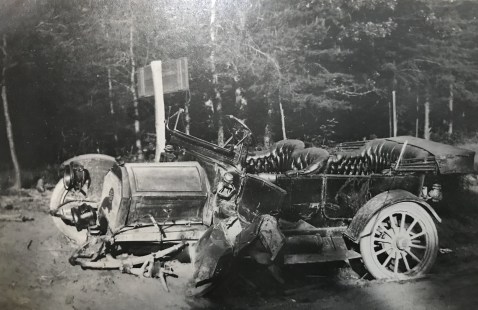
Car Wreck. Photo by Lewis Reed, ca. 1920
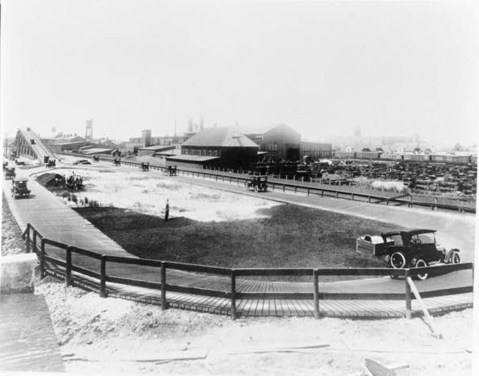
Dodge Test Track 1915
The clipping is from the Bismarck Daily Tribune, April 21, 1915 newspaper.
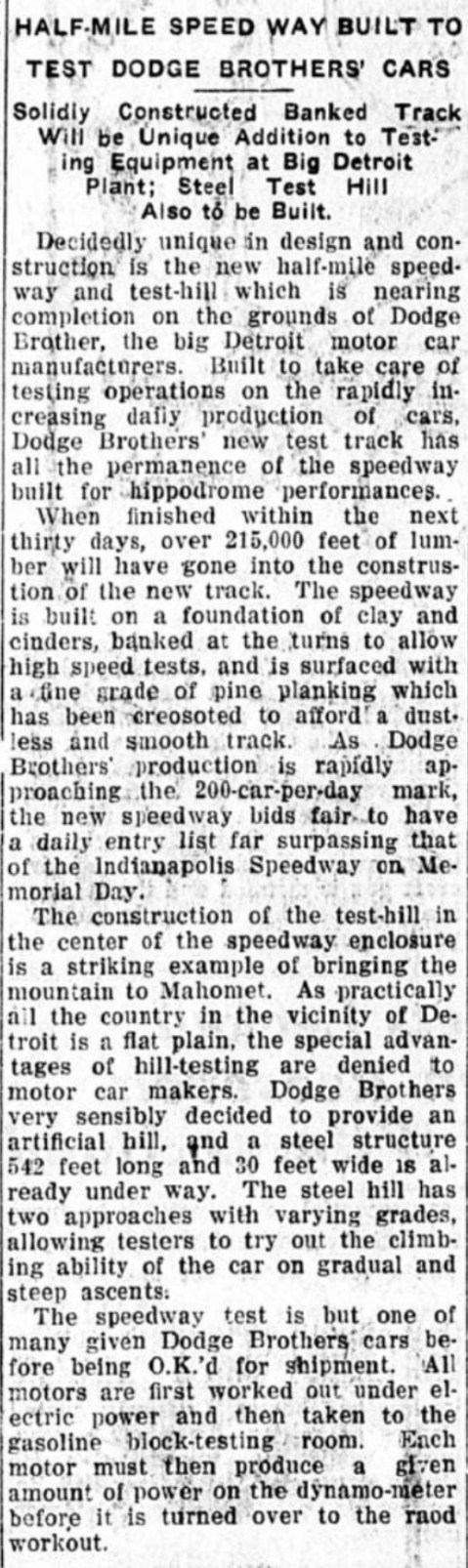
Bismarck Daily Tribune April 21, 1915
Then & Now: Wilson Bridge Hagerstown 105 Years Apart
Looking at old photographs is like peering through an open window back into history. Not only do they give you a sense of wonder from traveling back in time, but also a staggering feeling of awe from seeing just how much things have changed. For this post, I have used one of Lewis Reed’s original photographs for “then” and a Google stock image for “now”.
Wilson Bridge (THEN): Built in 1819, this five arch structure named for nearby village was the first stone bridge built by Washington County. Erected by Silas Harry at cost of $12,000, it was a major improvement to the road system between Baltimore and Cumberland, providing continuous smooth surface from eastern seaboard to western wilderness. Wilson Bridge carried traffic until seriously damaged by storm flood in 1972. It was placed in the National Register of Historic Places in 1982.
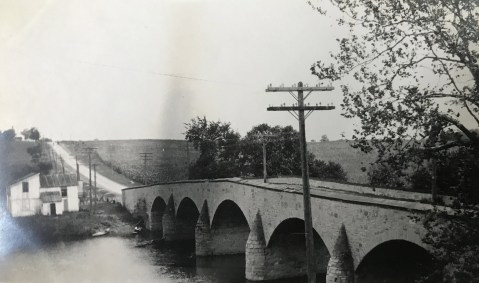
Wilson Bridge Hagerstown, Maryland. Photo by Lewis Reed, 1914
Wilson Bridge (NOW): The bridge was beautifully restored in 1984 by LeRoy E. Myers. The bridge is one of numerous still standing stone bridges in central and western Maryland.
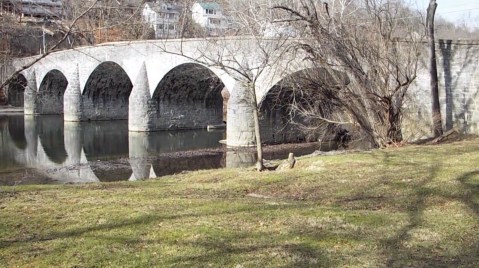
Restored Wilson Bridge today
Books

Related Resources


Copyright Notice

Reed Brothers Dodge History (1915-2012) by Jeanne Gartner is licensed under a Creative Commons Attribution-NonCommercial 3.0 Unported License.
 Reed Brothers Dodge History 1915 – 2012
Recent Comments