
Lewis & Edgar Reed’s One-Room Schoolhouse

Circa 1898 class photo taken at Lewis and Edgar Reed’s one-room schoolhouse (Darnestown School). There were six grades in the school with one teacher. Minnie McAtee, teacher (right rear).
One of the most amazing photographs in my grandfather’s collection is of the one-room schoolhouse where he and his brother, Edgar, went to school. The photo was labeled “Darnestown School”. I cannot say with any certainty where this school was located, but my mother (Lewis Reed’s daughter) thought it was located on Thomas Kelley’s Farm on Route 28 in Darnestown.
In most rural (country) and small town schools, all of the students met in a single room. There, a single teacher taught academic basics to several grade levels of elementary-age boys and girls. The classroom of a one-room schoolhouse probably looked much like your own. The teacher’s desk may have been on a raised platform at the front of the room, however, and there would have been a wood-burning stove since there was no other source of heat. The bathroom would have been outside in an outhouse. It seems a far cry from the modern school world of today, but it was the reality of the rural education system.
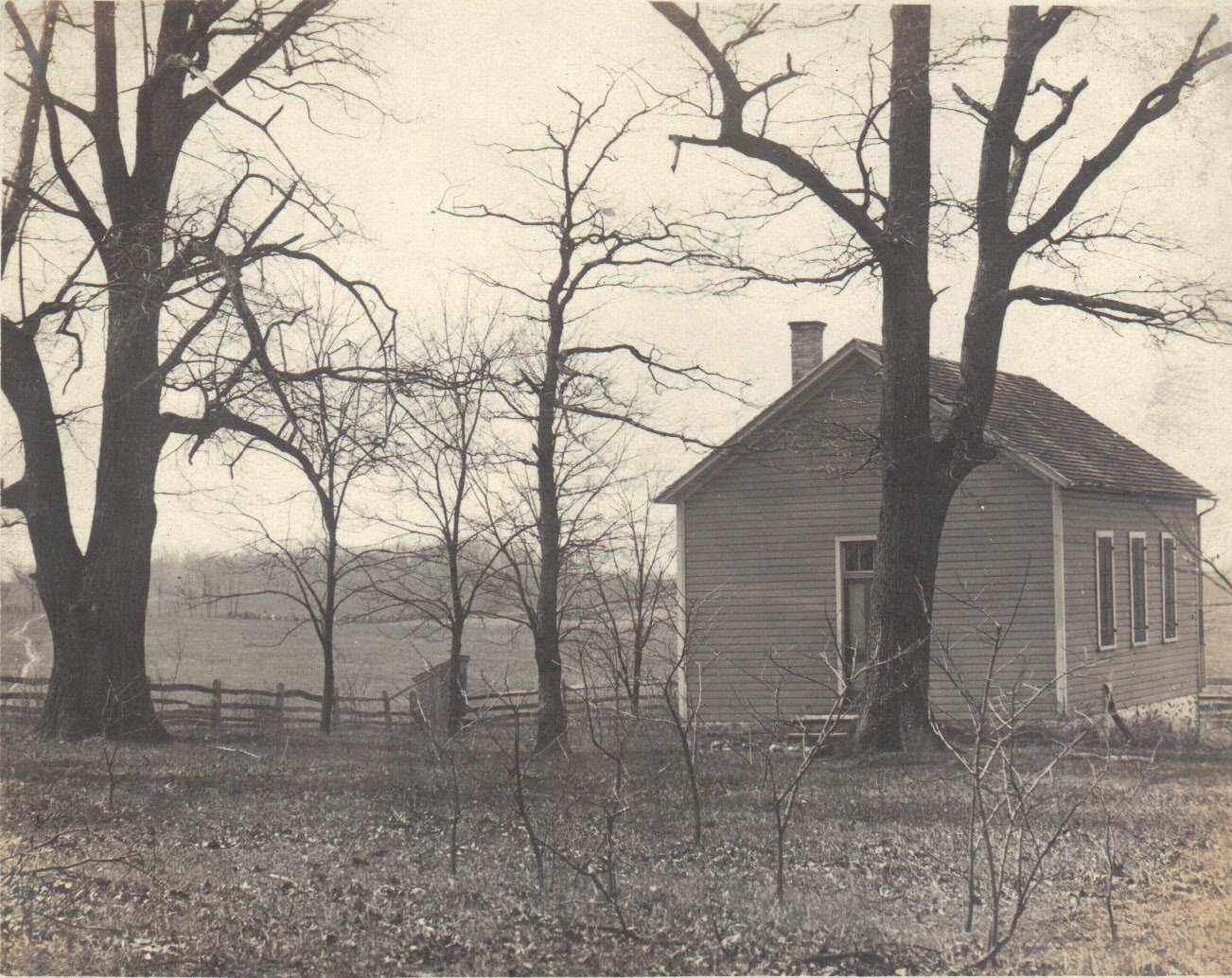
Darnestown School. Note the outhouse on left. Photo by Lewis Reed
Source: Germantown MD Wikipedia
New Blog Feature: Rockville’s Past Through the Lens of Lewis Reed
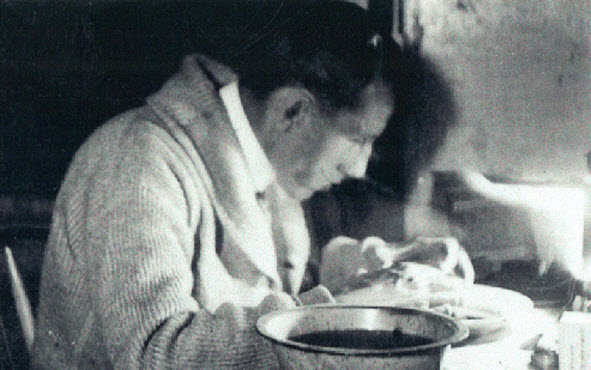
Lewis Reed (founder of Reed Brothers Dodge) was a well-known photographer in Montgomery County. Many of his photographs are now part of the Montgomery County (Maryland) Historical Society photo archives. He even developed his own photographs.
Looking back at photography from the past is a fascinating experience for me. Since I started this blog, I have had the opportunity to look through my grandfather’s extensive collection of photographs from historical locations in Maryland, Washington, DC and Virginia. Some of the photos are more than 100 years old! Lewis Reed was a well-known photographer in the county and many of his early photographs are now part of the Montgomery County Historical Society photo archives. The Jane C. Sween Library was recently given a collection of 280 glass plate negatives, showing Montgomery County in the early 20th century.
Every now and then the light bulb goes off and a new idea is born. It occurred to me that with the vast number of photographs in his albums, that this blog would be a great place to highlight some of them. With that in mind, I will be spotlighting photographs from his albums occasionally that may not pertain to Reed Brothers Dodge.
I have no formal history training, just a general interest in local history where I grew up. I will not try to be an historian; I will post a photo and supply a few sentences of context. All of them will in some way will offer a visual history of a part of Rockville’s past. I look forward to sharing them with you.
Dodge Brothers March
Sing a song of old Detroit, for she’s the flashing, dashing pioneer of motor glory …

Dedicated by Victor Herbert to the Late Mr. Horace E. Dodge in Respectful Appreciation of His Generous Efforts Towards the Advancement of American Music; Published Especially for Dodge Brothers.
I love this march and the history behind it — it is such a typical success story of the early part of the 20th century. The Detroit Symphony Orchestra (DSO) owes much of its prestige to half of the auto-building Dodge Brothers, John and Horace. It was Horace, the more mechanically-inclined of the two — and a decent enough amateur musician, by all accounts — that helped pay for a permanent conductor hired in 1918 to give the symphony world-class status. More importantly, he contributed $150,000 toward the cost of a new concert hall and led the successful fund-raising campaign for the building. Detroit’s Orchestra Hall, which opened in October 1919.
The Symphony was what finally smoothed the way into Detroit high society for Horace. Prior to that, the brothers were repeatedly blackballed — they were hard-drinking brawlers who didn’t much care what other people thought of them. (Their first major success was in manufacturing parts for Henry Ford’s assembly line. John Dodge was asked why the brothers abandoned that lucrative work to make their own cars. “Think of all those Ford owners who will someday want an automobile,” he snarked.) By the time the brothers suddenly died in 1920 — both from complications of the influenza then raging world-wide, although Horace’s condition was precipitously undermined by John’s death—such was their renown that none other than Victor Herbert paid tribute with “The Dodge Brothers March.”
The Dodge Brothers company distributed both the sheet music and, according to one source, 100,000 recordings of the piece.
Below are the lyrics and sound recording (without voice) of the march:
DODGE BROTHERS MARCH LYRICS
From the hills of San Jose San Jose
To the lights of gay Broadway gay Broadway
Sing a song of old Detroit
For she’s the flashing dashing pioneer of motor glory
Born of thunder steel and flame
All the world now hails her name hails her name
Here’s to Dodge and old Detroit
We pledge the glory of their fame
From the hills of San Jose San Jose
To the lights of gay Broadway gay Broadway
Sing a song of old Detroit
For she’s the flashing dashing pioneer of motor glory
Born of thunder steel and flame
All the world now hails her name hails her name
Here’s to Dodge and old Detroit
We pledge the glory of their fame
What better way to tap into the soul of an era than through music?
References:
The Dodge Brothers: The Men, The Motor Cars, And The Legacy
Johns Hopkins University, Levy Sheet Music Collection, Box 075, Item 028
The city of Detroit, Michigan, 1701-1922
Creed of A Dodge Brothers Salesman
The man responsible for much of the early Dodge Brothers advertising was George Harrison Phelps. Among other things, George Phelps wrote “The Creed of A Dodge Brothers Salesman” which embodied the Dodge Brothers philosophy in manufacturing and selling cars:
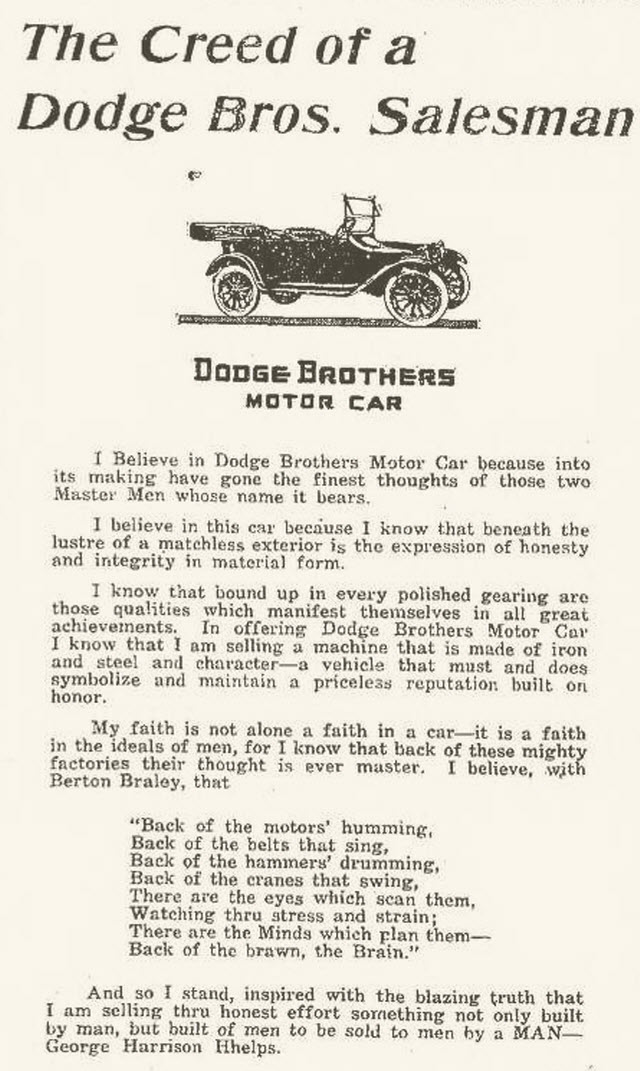
from Newspaperarchive.com – Spirit Lake Beacon Thursday, May 13, 1915
Dodge Brothers advertising was renowned for its simplicity. Sales brochures in 1914-15 and 1916 used the slogan, “It Speaks for Itself.”

Advertisements in 1916 emphasized the growing acceptance of Dodge Brothers care by the public. The campaign began with “A Year’s Growth of Good Will”, published on January 1, 1916.

Source: “The Dodge Brothers”, The Men, The Motor Cars, and The Legacy
Meet Our Founder: Lewis Reed

Lewis Reed
Lewis Reed was born in Darnestown, Maryland on November 25, 1887 and attended school in Montgomery County. He went to work for the fore-runner of the IBM Corporation at about the time it was founded in 1913. In 1915, he founded Reed Brothers Dodge. In 1920, he married the former Ethlene Thomas of Frederick County and moved to Gaithersburg. He had one daughter, Mary Jane, who later married Ernest Lee Gartner in 1944.
Before becoming interested in automobiles, Lewis Reed was one of the original employees of the Computing-Tabulating-Recording Company, a Georgetown-based manufacturing firm that eventually became International Business Machines, Inc. He received his training at the Pierce Arrow factory at Buffalo, New York, the Dodge and Hudson factories at Detroit and the Washington Auto College. Pierce-Arrow was once one of the most recognized and respected names in the automobile industry. For 38 years, the Pierce-Arrow Motor Car Company in Buffalo, New York, produced some of the finest automobiles made.

Lewis Reed was just a young man when he started selling cars built by brothers Horace and John Dodge in Detroit
When World War I broke out, Lewis Reed along with many other patriotic men joined the war effort. He did his bit in World War I by working at the Navy Yard in Washington DC as a torpedo tester.
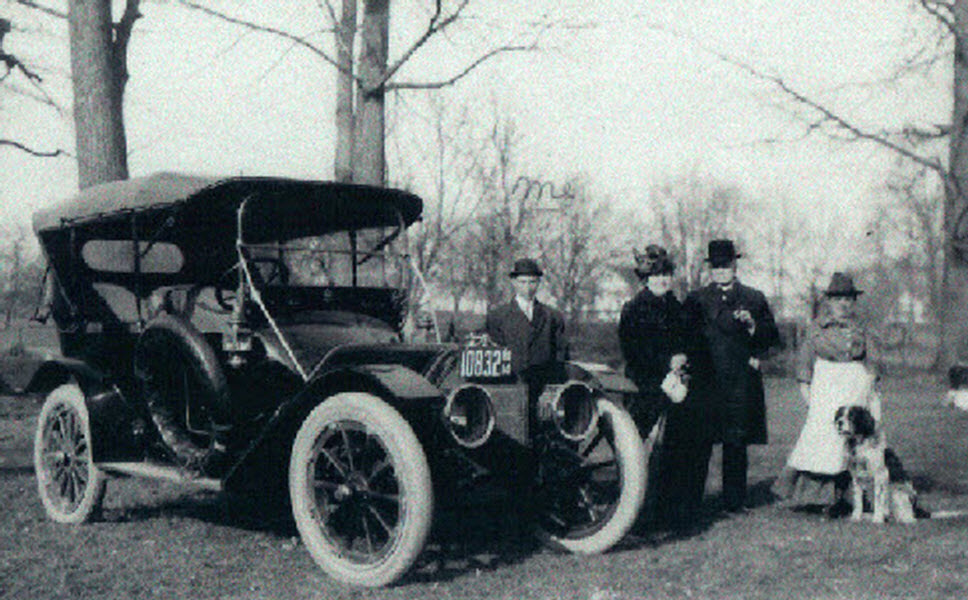
Lewis Reed (left) as Chauffeur with unidentified family circa 1914
Prior to World War I, Lewis Reed’s love of automobiles led him to becoming a chauffeur. Chauffeurs were trained to be proficient with their driving skills, but they also had to keep the luxury automobiles in tip top shape which is where his mechanic training would have come into play.
Lewis Reed was a member of the Gaithersburg Grace Methodist Church where he served as a member and Chairman of the Board of Stewards, a lay leader and President of the Men’s Bible Class.
He was also a charter member and Past President (Feb.1933 – Feb. 1937) of the Gaithersburg – Washington Grove Volunteer Fire Department and a member of the advisory board of the Rockville branch of the First National Bank of Maryland.
Lewis Reed belonged to the Masonic Lodge of Rockville, the Pentalph Chapter of the Eastern Star and the Rockville Rotary Club. He was a Rotarian for 34 years and also had served as President of that group.

Lewis Reed Printing Pictures
With photography for a hobby, one that began even before automobiles were around Montgomery County, he had amassed a large library of photographs of buildings, farm carts drawn by oxen, and other historic spots in Montgomery County. Lewis Reed expanded his hobby to include movies, and made them not only of his family, but on his trips to various parts of the world. Many of his photographs are now part of the Montgomery County (Maryland) Historical Society photo archives.

Lewis Reed was not only passionate about automobiles and photography, he also enjoyed riding motorcycles. This is Lewis Reed on his Harley Davidson overlooking the countryside somewhere outside Frederick Maryland circa 1915.

Lewis Reed was a Charter Member and Past President of the Gaithersburg-Washington Grove Volunteer Fire Department. This is a photo of Past Officers of the Gaithersburg-Washington Grove Fire Department. (Lewis Reed far right)
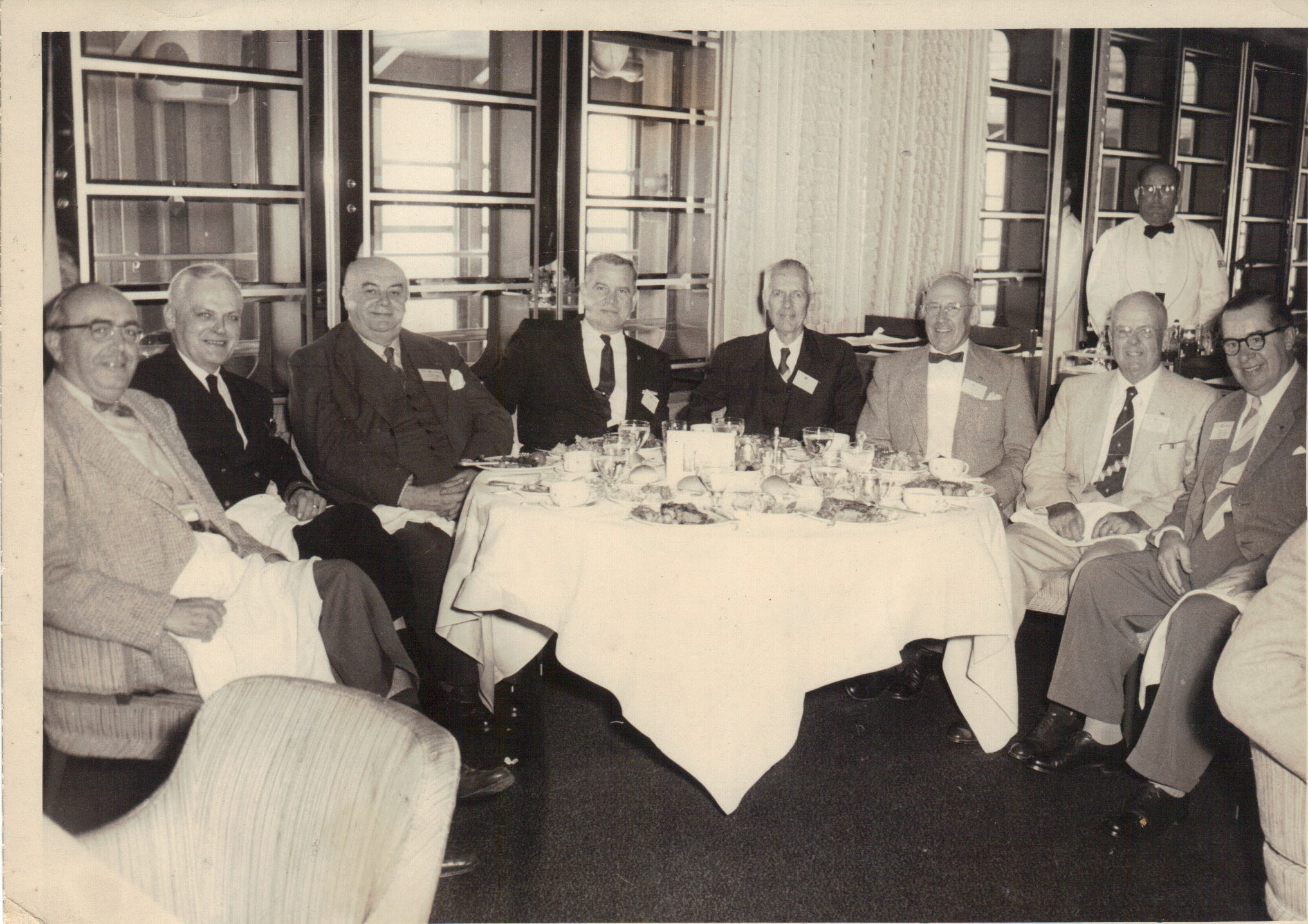
Lewis Reed was a Rotarian for 34 years and had served as President of the Rockville Rotary Club. This is a Rotary get-together held on June 14, 1955. (Lewis Reed, 3rd from right)

The story of how Lewis Reed was chosen for a Dodge Brothers Motor Car franchise is lost, but his legacy continued until 2009 as the oldest Dodge dealership under the same family ownership in Maryland, and one of the oldest in the entire nation.
Books

Related Resources


Copyright Notice

Reed Brothers Dodge History (1915-2012) by Jeanne Gartner is licensed under a Creative Commons Attribution-NonCommercial 3.0 Unported License.
 Reed Brothers Dodge History 1915 – 2012
Recent Comments