
A Ride Through Time: The History of School Buses in Montgomery County
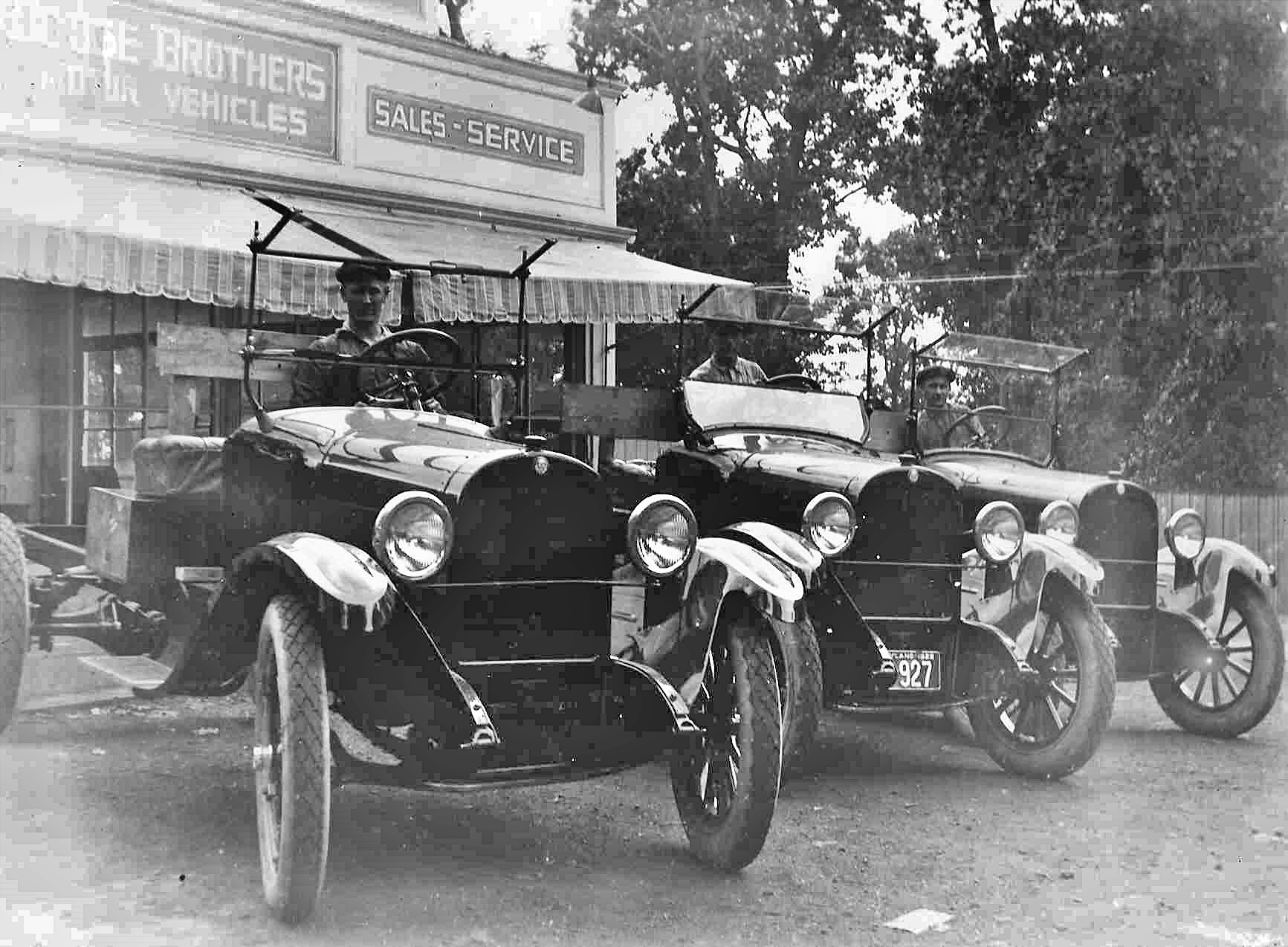
Shown are the chassis of the first school busses for Montgomery County purchased from Reed Brothers Dodge in 1922.
Before the yellow school buses we know today, getting to school was a very different experience—especially for rural children. In the late 1800s, student transportation began with horse-drawn wagons affectionately called “kid hacks.” These basic, uncovered wagons were far from comfortable, but they served the essential purpose of getting children to and from school, no matter how rough the ride.
A step toward improvement came in 1892 when Wayne Works introduced the first “school car,” a horse-drawn wagon outfitted with wooden bench seating and a protective roof. Still, these early models lacked any of the safety features or durability we now associate with school buses.
As automobiles gained popularity in the early 20th century, the transition to motorized school transportation began. The 1920s marked a pivotal moment when manufacturers started building school buses specifically for that purpose, mounting them on automobile chassis for greater reliability and performance.
In Montgomery County, Maryland, one local business helped usher in this new era: Reed Brothers Dodge. Established in 1915 in Rockville, Reed Brothers Dodge played a key role in modernizing student transportation by providing some of the county’s first motorized school buses. By 1922, they were delivering school buses built on Dodge car chassis—vehicles that represented a significant leap forward in safety, comfort, and efficiency for schoolchildren.
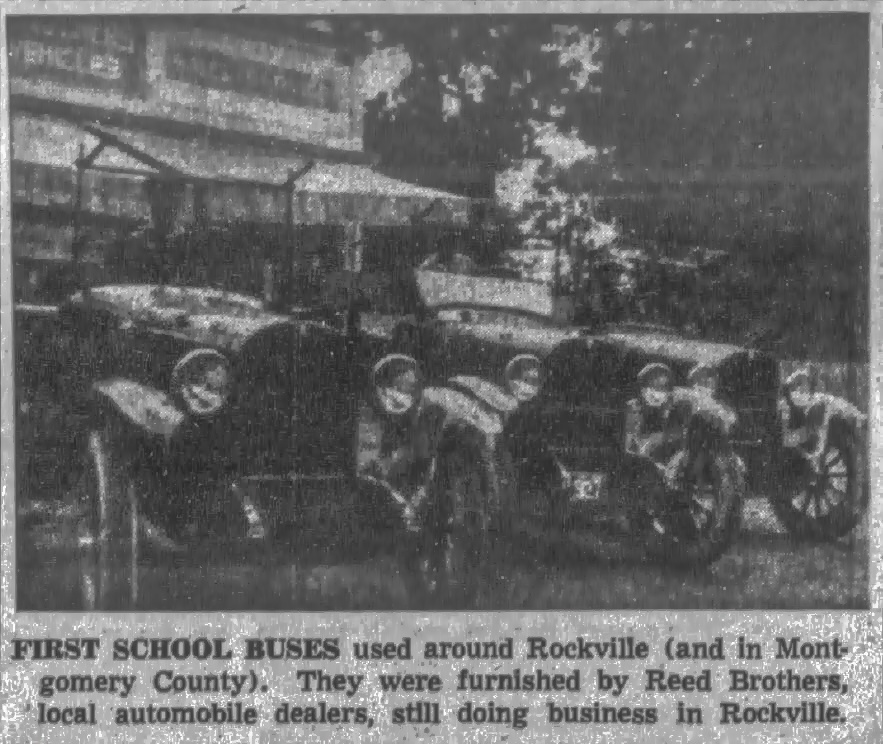
From The Montgomery County Sentinel, May 21, 1959
Today, school buses across Montgomery County are sophisticated, safety-focused vehicles equipped with cutting-edge technology and designed with sustainability in mind. Yet, their legacy can be traced back to the early innovations—both mechanical and community-driven—that made student transportation more reliable. Companies like Reed Brothers Dodge were instrumental in that progress, helping pave the road for the safe and efficient school bus systems we depend on today.
The First Women of Reed Brothers Dodge
Reed Brothers Dodge has a long and proud history of welcoming women into its workforce, going back to the company’s earliest years. At a time when female employees were uncommon in the automotive industry, the dealership recognized the skills, dedication, and reliability women brought to the business.
In the 1920s, Reed Brothers Dodge hired women for important administrative and clerical roles. Among the earliest were:
- Evelyn (Beane) Norris, who worked as an Administrative Secretary. Her service to the company was part of a family tradition—her daughter, Evelyn B. Norris, would later join Reed Brothers as a Clerk in 1944.
- Mary Anna (Slater) Beall, a Rockville native and graduate of Richard Montgomery High School, worked as the Bookkeeper for Reed Brothers Dodge. She later married “Bud” Leonard Beall, an employee in the dealership’s paint shop, creating one of many family ties that helped define the company culture.
As the country transitioned out of wartime in the mid-1940s, women continued to hold essential positions at Reed Brothers.
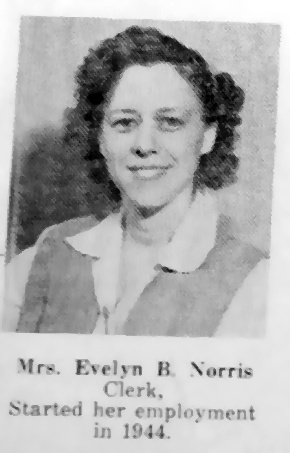
- Evelyn B. Norris, daughter of Evelyn Beane Norris and wife of fellow employee John W. Norris, worked as a Clerk, continuing both her family’s and her husband’s connection to the business.
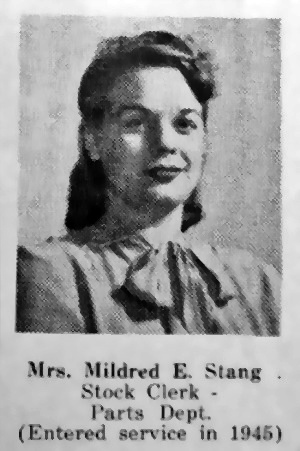
- Mildred E. (Fraley) Stang began working at the dealership in 1945 as a Stock Clerk in the Parts Department. She was the daughter of Alfred Lloyd Fraley, one of the first auto mechanics at the original Rockville Garage.
Rose (Gloyd) Finneyfrock: A Name to Remember

Rose (Gloyd) Finneyfrock
Few employees made as lasting an impression as Rose (Gloyd) Finneyfrock, who served as an Administrative Secretary and later as an Officer of the company. Her career at Reed Brothers Dodge spanned more than 30 years—placing her among a select group of employees who worked at both the original location at the triangle of Veirs Mill Road and Rockville Pike, and the later site at 15955 Frederick Road.
According to the Montgomery County Sentinel on August 26, 1954, Rose Marie Gloyd married Dudley Wilson Finneyfrock, the son of I. J. Finneyfrock of Olney, further cementing her place in the company’s extended family history.
A Lasting Legacy
These women were not just employees—they were part of the foundation of Reed Brothers Dodge. Their hard work, loyalty, and professionalism helped shape the character of the business across decades. From bookkeeping and clerical work to parts management and leadership roles, their impact is still remembered today.
Reed Brothers Dodge was always more than a dealership—it was a place where people, including generations of dedicated women, helped build something that stood the test of time.
The MCPD Motor Unit: 103 Years of Law Enforcement on Two Wheels

This is the first known photograph of the entire Montgomery County Police Force Motor Unit. Pictured left to right: Earl Burdine, Lawrence Clagett, Guy Jones, Chief Charles Cooley, Leroy Rodgers, and Oscar Gaither. Photo taken by Lewis Reed on July 4, 1922.
July 4th marks the 103rd anniversary of the beginning of the Montgomery County Police Department. Cattle rustling, bootlegging and stealing poultry were among the most common crimes when Montgomery County hired its first police chief and five officers in July 1922. So widespread was the theft of chickens and turkeys that some residents employed a homespun form of crime prevention by cutting off a specific claw on their birds to identify them. “Officers knew who all the chicken thieves were,” said one historical account of the era put together by the police department, “and upon getting a report of missing Rhode Island Reds, or some other breed, would head straight for the thieves’ hideaway to try to catch them ‘red handed’ before the birds got to the frying pan.”
Posing in front of Reed Brothers Dodge on July 4, 1922 Chief Charles Cooley, center, and his men of the first mounted unit of the Montgomery County Police Force, were on their first day of duty. For several years, since there was no police station, the officers would meet for “roll call” on the steps of the Red Brick Courthouse in Rockville at 2:00 p.m. every day to let each other know they were alive and well. Chief Cooley was given the privilege of a Model T Ford. The chief was paid $1,800 a year while the officers got $1,500. Each of the officers was issued a Harley-Davidson motorcycle, a .38 Smith & Wesson handgun, a black jack, law book and was allotted $300.00 a year for the upkeep of their motorcycle. Jones patrolled Silver Spring, Rodgers the Bethesda-Chevy Chase area and Burdine, Clagett and Gaither the Upper County areas.
The county’s population in the early 1920s was just 35,000 (it’s now estimated at more than 1M). Much of the county was farmland, which accounted for the thefts of livestock. It also was the Prohibition era, when bootlegging and moonshine still factored routinely on an officer’s shift.
The officers worked 14 hours at night, 10 hours in the day, with two days off every two weeks. But they were on call at all times. Since there was no mobile radio contact (the first one-way radio system was installed in cars in the early 1930s), the officers tended to hang around the courthouse or a local firehouse that had a phone.
One of the officers came up with the idea of placing a flashing red beacon light on a pole atop the Rockville courthouse. When flashing, it would alert police that they had a call or were wanted at the office. In 1927, similar lights were used at district stations in Silver Spring and Bethesda.
Today, more than 1,300 sworn officers assisted by 600 support personnel provide full service to a large suburban county with over one million people.
Congratulations MCPD and thank you for your many years of service!
Then & Now: The Original 1917 Rockville Garage
Reed Brothers Dodge and the surrounding area sure has changed a lot in its almost century-long history. You might not realize how much things have changed until you look back and see what it looked like in the past. For this post, I have used one of Lewis Reed’s original photographs for “then” and a Google Maps street view image from today for “now”.

1917 view of the original Rockville Garage two-story addition. Until 1920, Dodge sported a set of six hexagonal windows in the back of each passenger cabin on their Touring and Roaster models. These were called cathedral lights and became the first trademark feature to make Dodge vehicles stand out from the rest. Parked in front is an early Dodge car with the exclusive Dodge Brothers cathedral-style rear curtain windows.
NOW: The color photograph below, is the dealership’s location today, now known as Veterans Park. In the 1970s the site was known as the Francis Scott Key Memorial Park, and later in 1988, it was permanently rededicated as Veterans Park. In the late 1960s, the state of Maryland acquired the land to widen 355 and donated the remaining sliver to the City. The connector street behind the dealership’s original location was named “Dodge Street” by the State of Maryland following the dealership’s 1941 expansion. Dodge Street today is one of the shortest roads in the State of Maryland, running between the Rockville Pike (at Richard Montgomery High School) and Veirs Mill Road, a distance of only 250 feet.

Rockville Garage (Reed Brothers Dodge) original location at the triangle today. Google Image Capture, 2021
Lewis Reed Photo Featured in Gettysburg Educational Program: Enduring Pathways
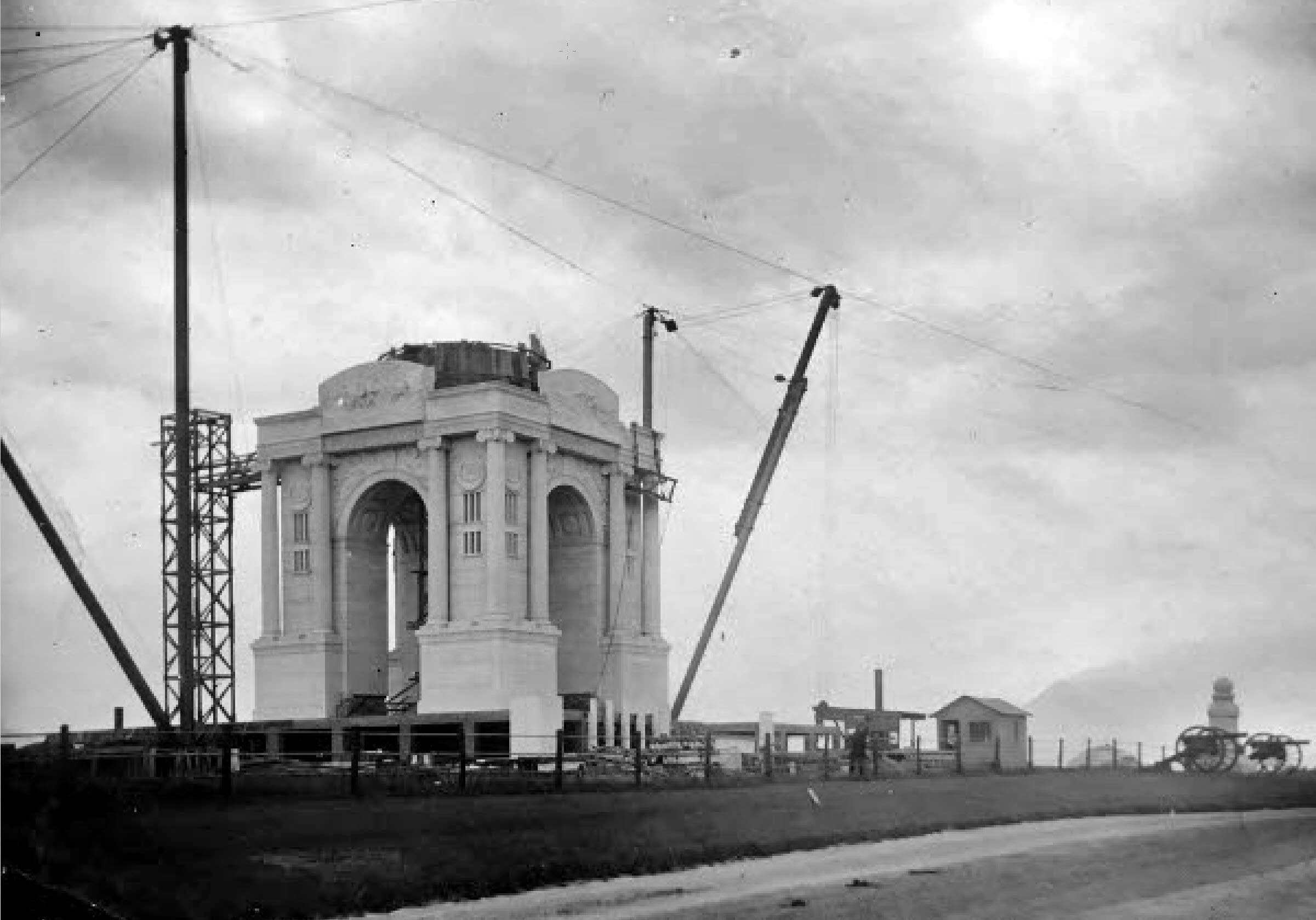
State of Pennsylvania Monument Under Construction, ca. 1910. This rare photograph was taken by Lewis Reed of the State of Pennsylvania Monument while still under construction. Dedicated on September 27, 1910, the Pennsylvania Monument towers above the historic fields of Gettysburg, honoring the sacrifice of Pennsylvania’s soldiers. As the largest monument on the battlefield, it remains one of the most iconic and visited landmarks in the park.
Beginning on Memorial Day and running through Labor Day, the Lincoln Fellowship of Pennsylvania sponsors “100 Nights of Taps”, Gettysburg in partnership with Gettysburg National Military Park, Taps for Veterans, Gettysburg’s Licensed Battlefield Guides, and Eisenhower National Historic Site. A major feature of 100 Nights of Taps program is their “Enduring Pathway” – a historic/educational two minute presentation about Lincoln, the Gettysburg Address, and the history of Taps.
The Enduring Pathway previously presented the history of the Soldier’s National Monument, accompanied by a photo of its construction. Being now located at the Pennsylvania Monument, a member of the Board of Directors of the Lincoln Fellowship of Pennsylvania contacted me requesting permission to use Lewis Reed’s photograph of the Pennsylvania Monument while under construction in their Enduring Pathway educational segment on the monument. To have Lewis Reed’s photograph included in this endeavor is a privilege, and I was delighted to grant the permission. It is a small contribution, perhaps, but one that carries a great deal of personal significance. It’s a reminder that the work we do, the stories we tell, and the images we create can have a lasting impact, connecting us to the past and shaping our understanding of the present.

State of Pennsylvania Monument after completion, ca. 1914. Photo by Lewis Reed
The monument was dedicated in 1910, however, it was unfinished at the time of the dedication, lacking the eight bronze statues which were installed in April 1913. The memorial, including the granite dome, was fully completed in 1914 with the installation of a bronze tablet listing additional veterans’ names. The monument also includes statues of President Abraham Lincoln, Governor Andrew Curtin, and six Pennsylvania generals. The monument is located on Hancock Avenue at Pleasonton Avenue.
Source: Wikipedia, Pennsylvania State Memorial, Gettysburg
Books

Related Resources


Copyright Notice

Reed Brothers Dodge History (1915-2012) by Jeanne Gartner is licensed under a Creative Commons Attribution-NonCommercial 3.0 Unported License.
 Reed Brothers Dodge History 1915 – 2012
Recent Comments