
A Fun Photograph of Early Rockville: Then & Now
It’s always amazing to look back at the past and see how everything we know today once was. This is exactly why photography is one of the most brilliant inventions ever created – it has documented so many epic moments over the years, and provides the perfect portal to step back in time for just a few moments. In this special “Then & Now” feature, I have combined one of Lewis Reed’s original photograph’s for “then” and paired it with a Google composite image for “now”.
St Mary’s Catholic Church (THEN): This fun and interesting photograph taken by Lewis Reed is one of my favorites. The photo shows William Beall in his 1915 Pullman in front of old St Mary’s Church and his younger brother Vernon on horseback “towing” him to Reed Brothers. The photo was taken from in front of Lewis Reed’s Rockville Garage which was directly across from St Mary’s Church. Several of the Beall family were original employees at Reed Brothers, including: Leonard Beall (paint/auto body shop), Otis Beall, Walter (Bud) Beall, and Mary Anna (Slater) Beall (Bookkeeper). Bud and Otis Beall were two of Reed Brothers’ original Gulf Gasoline Station attendants.
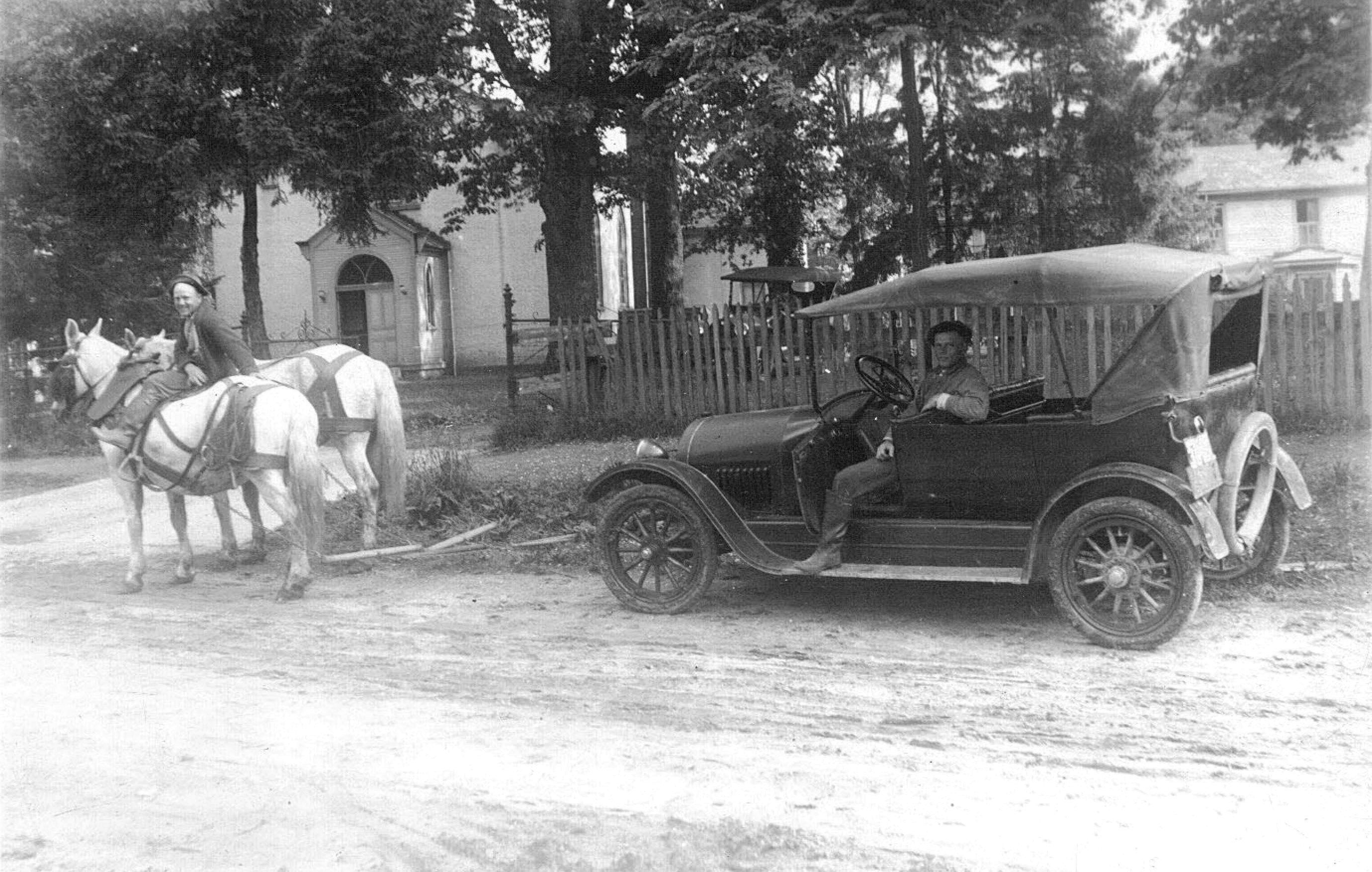
Early transportation powered by true “horsepower”. Photo taken by Lewis Reed, 1915
St Mary’s Catholic Church (NOW): Today, the church overlooks the same intersection of roads now called Veirs Mill Road and Rockville Pike. With the 1950s addition of Hungerford Drive as a bypass to Rockville’s commercial street, this is a busy intersection. It is arguably the symbolic cross-road for the county, and locals refer to it as “the mixing bowl” for its unconventional configuration and heavy volume of traffic. The church’s prominent location and its connection to author F. Scott Fitzgerald, who is buried in its cemetery, contribute to St. Mary’s status as a landmark in Rockville.
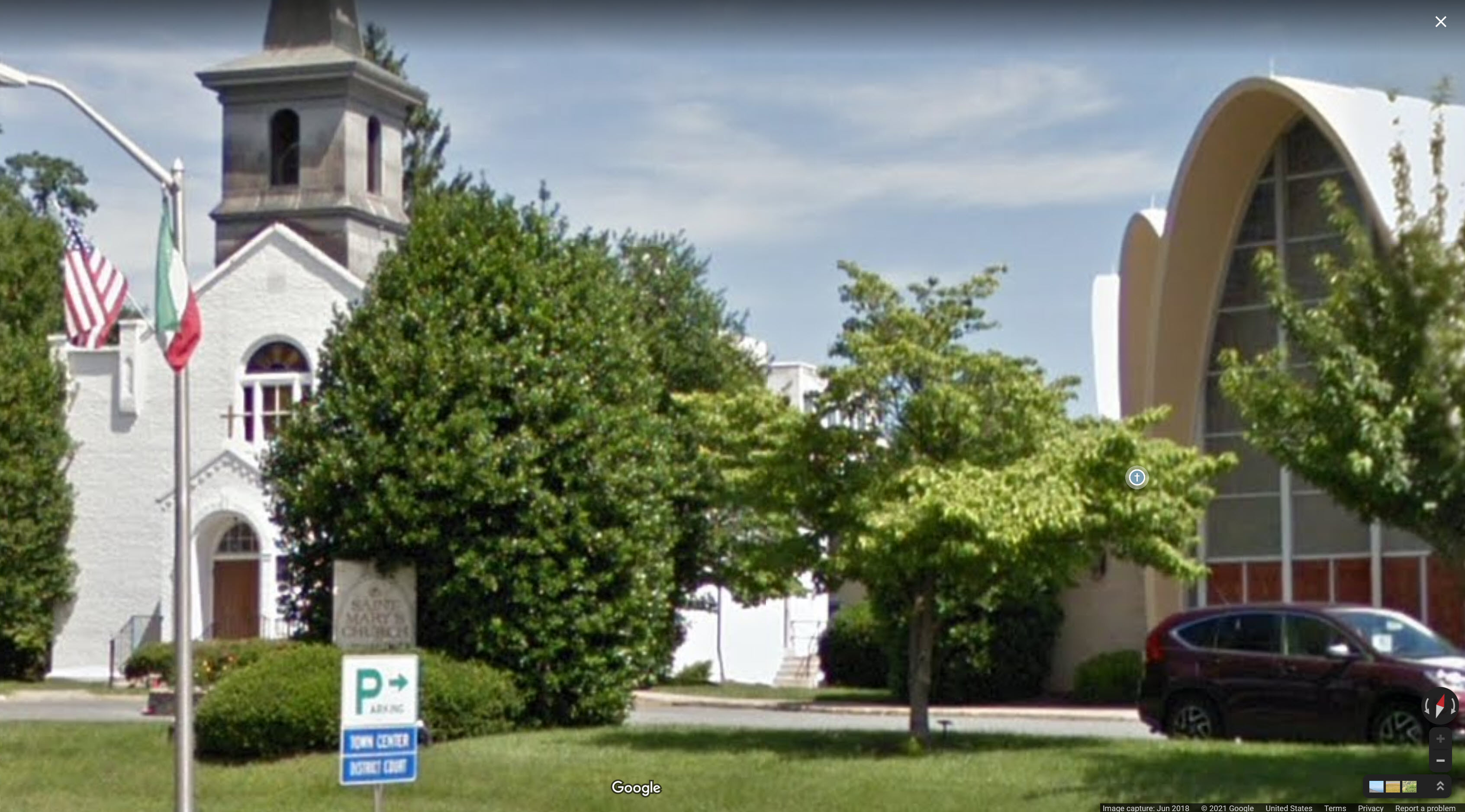
St Mary’s Catholic Church, Google Image, 2021
Then & Now: Historic Mathias Point Lighthouse
“Then and Now” photos are an excellent way to explore the passage of time. In this special post, I have combined one of Lewis Reed’s original photograph’s for “then” and matched it with a corresponding contemporary shot for “now”. Taken approximately 50 years apart, these photos show Mathias Point Lighthouse, then and now.
Mathias Point Lighthouse (THEN):
Mathias Point Lighthouse was placed at the edge of a shoal jutting out from a major bend in the Potomac River. This point was considered one of the most dangerous navigation problems on the river. In the summer of 1873, the United States naval steamer Frolic went ashore and remained grounded for over two weeks. It was eventually floated out at a cost of nearly $6,000. After much debate in Congress, $40,000 was finally appropriated in 1874. Originally, a day beacon was approved for Mathias Point and light for Port Tobacco Flats. After a delay of almost two years, the two sites were switched.
Plans were drawn up for Mathias Point and the design was like no other screwpile on the Bay. The design included 3 levels, unlike the other 2-level cottages on the Bay. It had a large second floor and smaller third floor which resulted in a “wedding cake” profile. It also had an unusual amount of ornate detailed woodwork. The pilings were angled inward to the base of the lighthouse, which was also different from other screwpile designs. The house was white with a brown roof and green shutters. Construction started in September 1876 and commissioned December 20, 1876.
The light was automated in 1951 and was monitored by the keeper of Maryland Point Light. In 1961 the light was decommissioned the beautiful lighthouse at Mathias Point was dismantled.

Mathias Point Light, Potomac River, near the Port Tobacco River, Maryland. Photo by Lewis Reed, 1915.
Mathias Point Lighthouse (NOW): The current light is a steel tower on the original screwpile supports and displays a 44-foot high, 6 second flashing green light. The current light can be viewed from the Mt. Bethel Recreation Center at Mathias Point in Virginia. As of 2020, it is still an active aid to navigation.
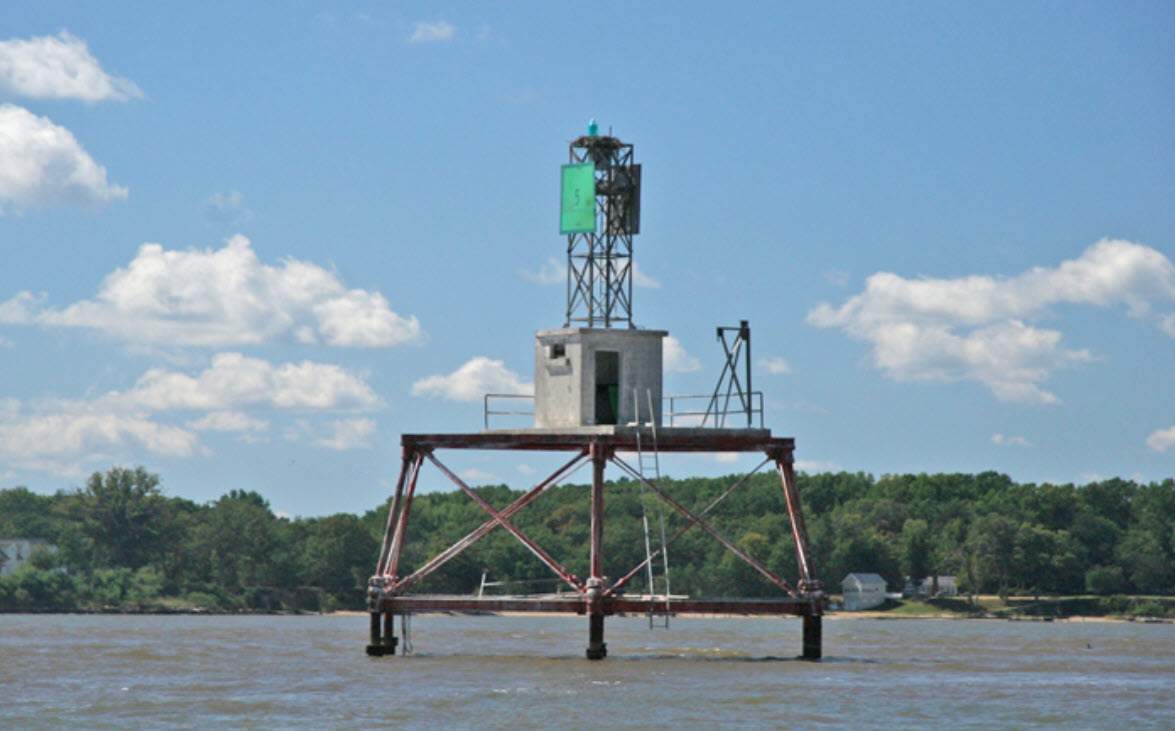
Mathias Point Light in the Potomac River in Maryland is no longer standing, now a beacon.
The Legendary Lake House Hotel of Horror, Then & Now
With Halloween just around the corner, I thought it would be fun to feature a photograph that Lewis Reed took of the Saylorsburg Lake House Hotel, now the site of Hotel of Horror. The aging Lake House Hotel in Saylorsburg, Pennsylvania, once a vibrant Poconos retreat, was a popular hotel for the region’s tourists who were looking for fun on nearby Saylors Lake. During the hotel’s heyday, its staff was booking rooms a year in advance. Today, the former hotel’s fame is generated from its annual Halloween haunted-house attraction.
Lake House Hotel (THEN): The legend of the Lake House Hotel spans more than two-hundred years. According to local folklore, during World War II, many of the employees at the Lake House were called to assist in the Pennsylvania National Guard, leaving the local asylum with one lone security guard to watch over the entire building. The inmates escaped, made their way to the hotel and took it over. The insane patients performed experiments on the guests. What was once a renowned resort for the rich and famous, became a torture chamber.
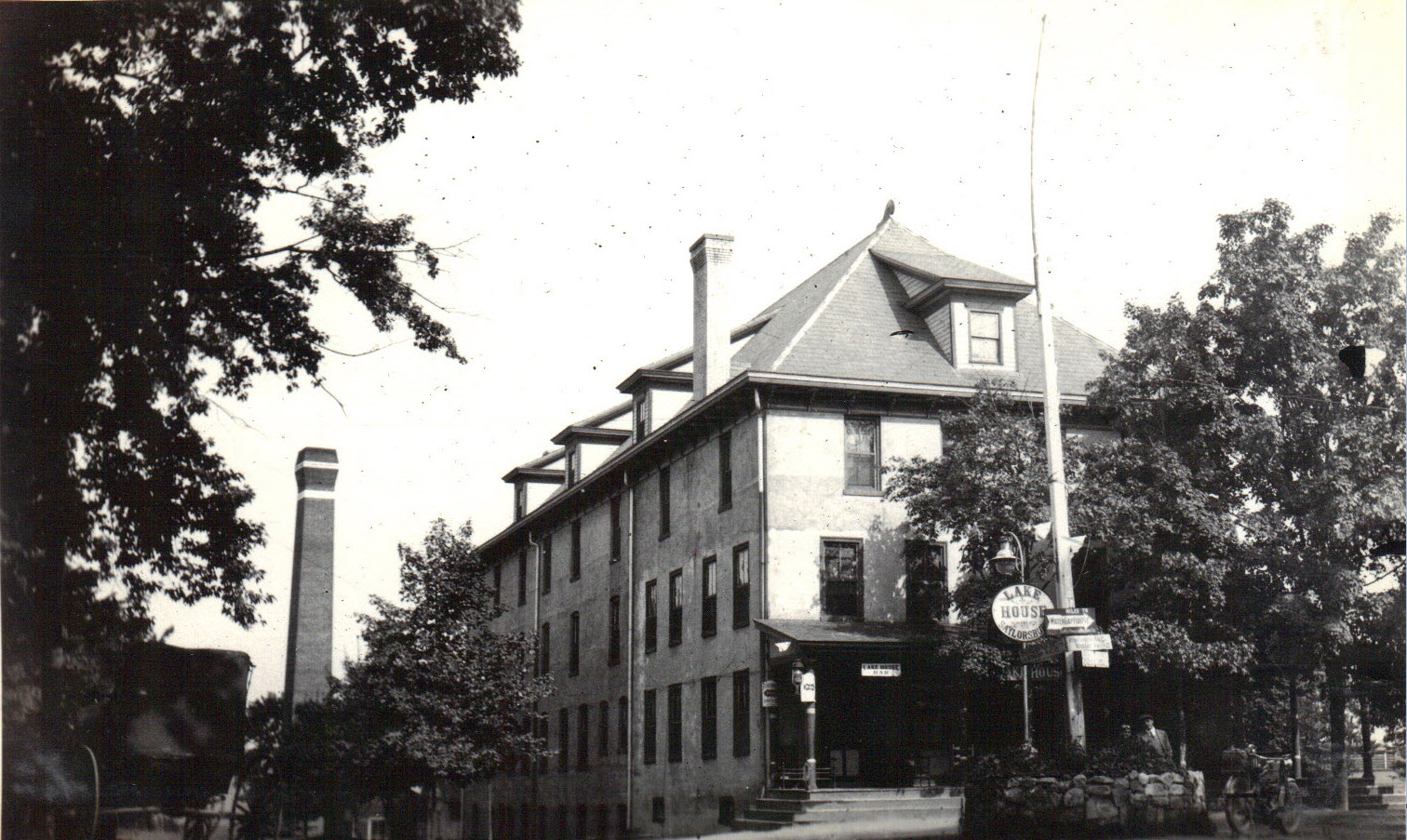
Saylorsburg Lake House Hotel. Photo taken by Lewis Reed, 1915.
Hotel of Horror (NOW): The hotel was purchased in 1990 and turned into an Antique Co-Op, and then in 1992 saw its first haunted house attraction. This 2020 season will celebrate the 28th year that the Hotel of Horror has been fascinating and horrifying legions of fans from the far reaches of the United States and even internationally. To all the readers of this blog: Have a spooky, enjoyable and very safe Halloween!

Welcome to The Hotel of Horror, The Pocono Mountains Premier Haunted House Attraction

Then & Now: The Tomb of Washington
In this “Then & Now” feature, I have combined one of Lewis Reed’s original photograph’s for “then” and paired it with a Google composite image to show how The Tomb of Washington has transformed over the years.
THEN: George Washington died in his bedchamber at Mount Vernon on December 14, 1799. His last will outlined his desire to be buried at home at Mount Vernon. Washington additionally made provisions for a new brick tomb to be constructed after his death, which would replace the original yet quickly deteriorating family burial vault. In 1831, Washington’s body was transferred to the new tomb, along with the remains of Martha Washington and other family members.
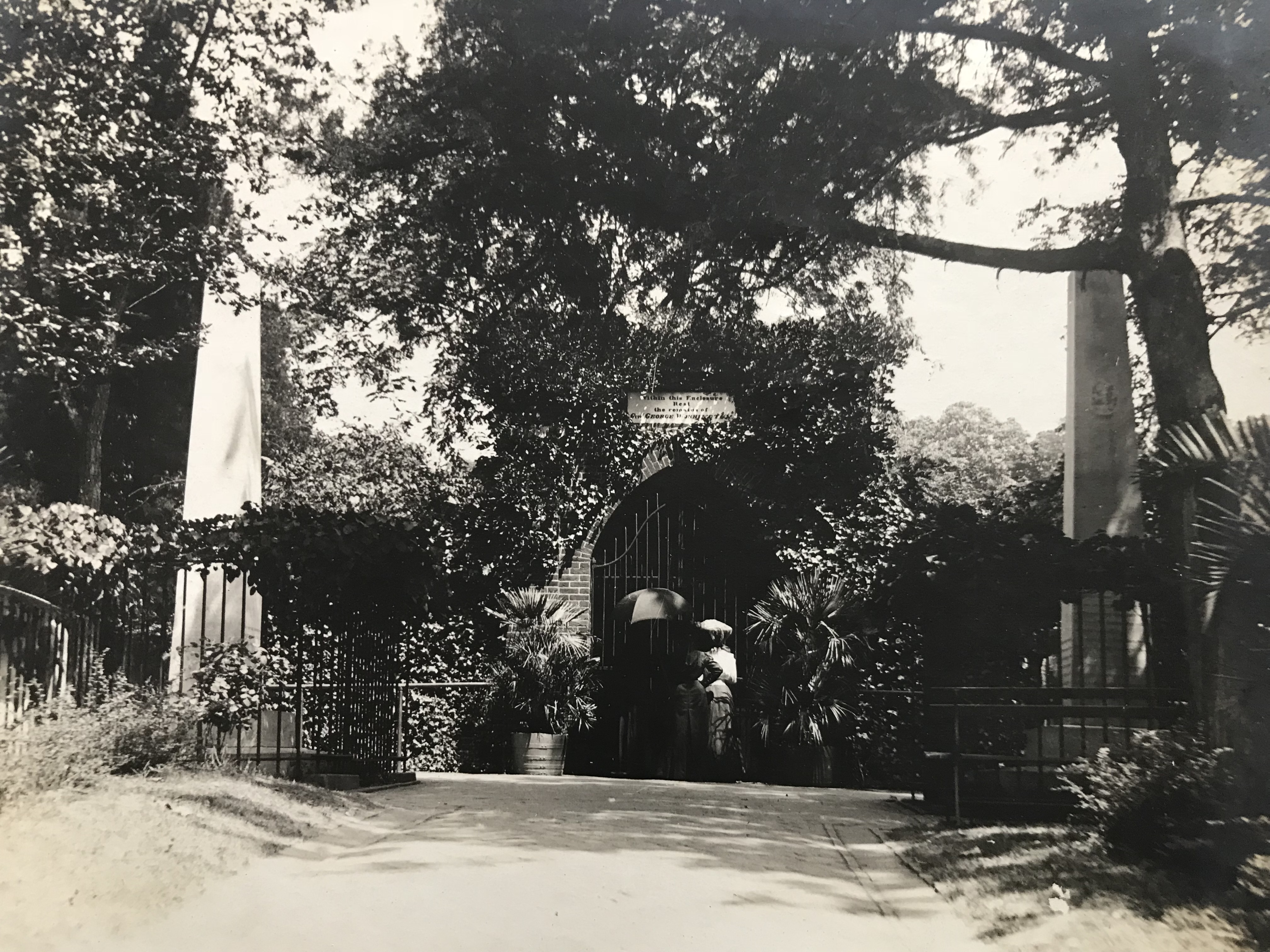
George Washington’s at Tomb Mount Vernon, Virginia. Photo by Lewis Reed
NOW: Today, the gently wooded enclosure that surrounds the Washingtons’ final resting place is a lovely, fitting space to pay homage to the Father of Our Country and the first First Lady.
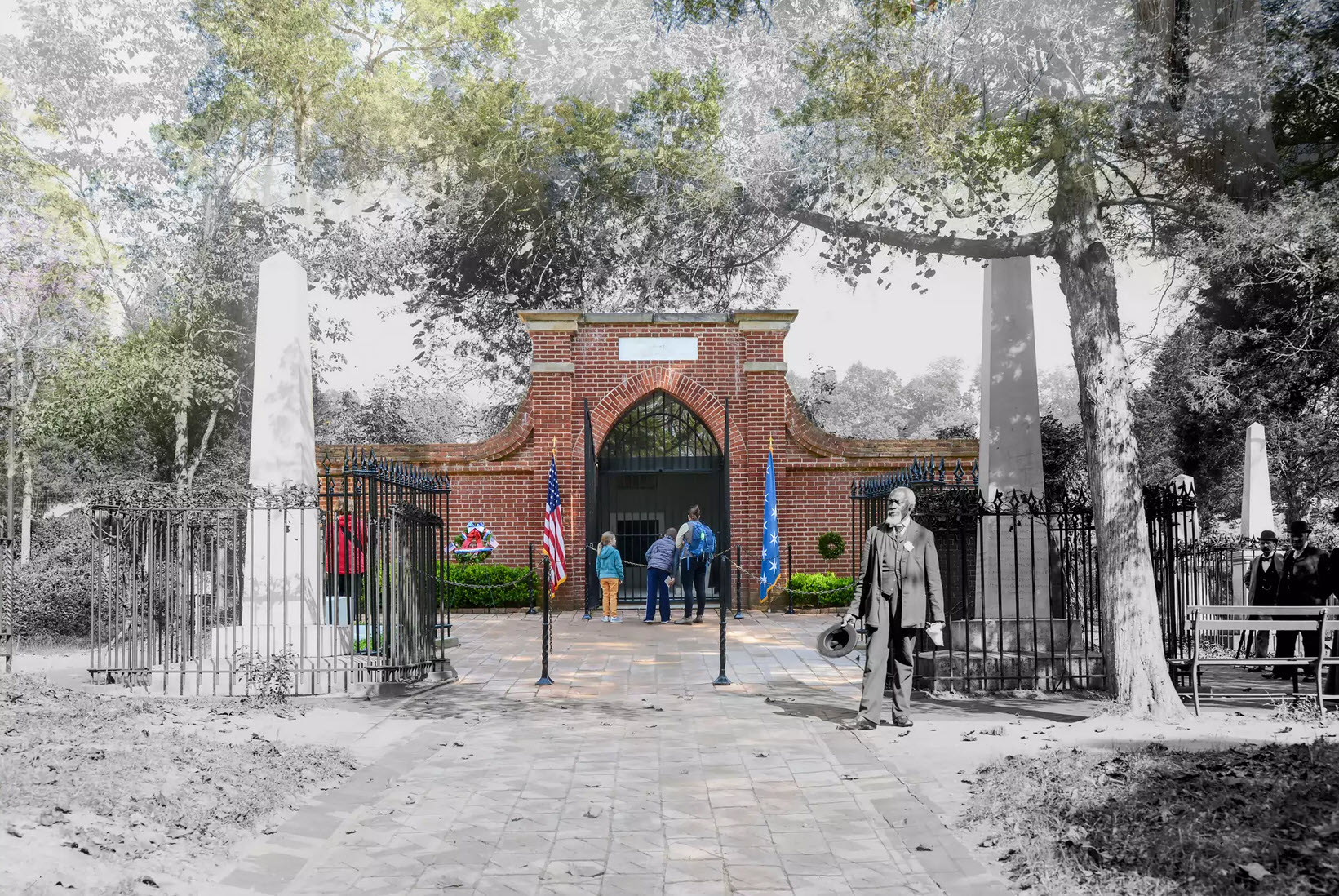
A composite image of the tomb today.
Then & Now: Montgomery County Police Department Motorcycle Unit
This blog entry is posted today to commemorate the anniversary of the Montgomery County Police Department. It was 98 years ago on July 4, 1922 that the MCPD was first established, consisting of five officers and a Chief. Each of the officers was issued a police motorcycle for routine patrol duties and was allotted $300.00 a year for the upkeep of their motor. Thus, the Montgomery County Police Department was formed upon the foundation of the motorcycle.
Montgomery County Police Department Motorcycle Unit (THEN): Posing in front of Reed Brothers Dodge on July 4, 1922 Chief Charles Cooley, center, and his men of the first mounted unit of the Montgomery County Police Force, were on their first day of duty. For several years, since there was no police station, the officers would meet for “roll call” on the steps of the Red Brick Courthouse in Rockville at 2:00 p.m. every day to let each other know they were alive and well. Chief Cooley was given the privilege of a Model T Ford. The chief was paid $1,800 a year (the chief now gets $112,564) while the officers got $1,500. Each of the officers was issued a Harley-Davidson motorcycle, a .38 Smith & Wesson handgun, a black jack, law book and was allotted $300.00 a year for the upkeep of their motorcycle. Jones patrolled Silver Spring, Rodgers the Bethesda-Chevy Chase area and Burdine, Clagett and Gaither the Upper County areas.
The county’s population in the early 1920s was just 35,000 (it’s now more than 800,000). Much of the county was farmland, which accounted for the thefts of livestock. It also was the Prohibition era, when bootlegging and moonshine still factored routinely on an officer’s shift.
The officers worked 14 hours at night, 10 hours in the day, with two days off every two weeks. But they were on call at all times. Since there was no mobile radio contact (the first one-way radio system was installed in cars in the early 1930s), the officers tended to hang around the courthouse or a local firehouse that had a phone.
One of the officers came up with the idea of placing a flashing red beacon light on a pole atop the Rockville courthouse. When flashing, it would alert police that they had a call or were wanted at the office. In 1927, similar lights were used at district stations in Silver Spring and Bethesda.
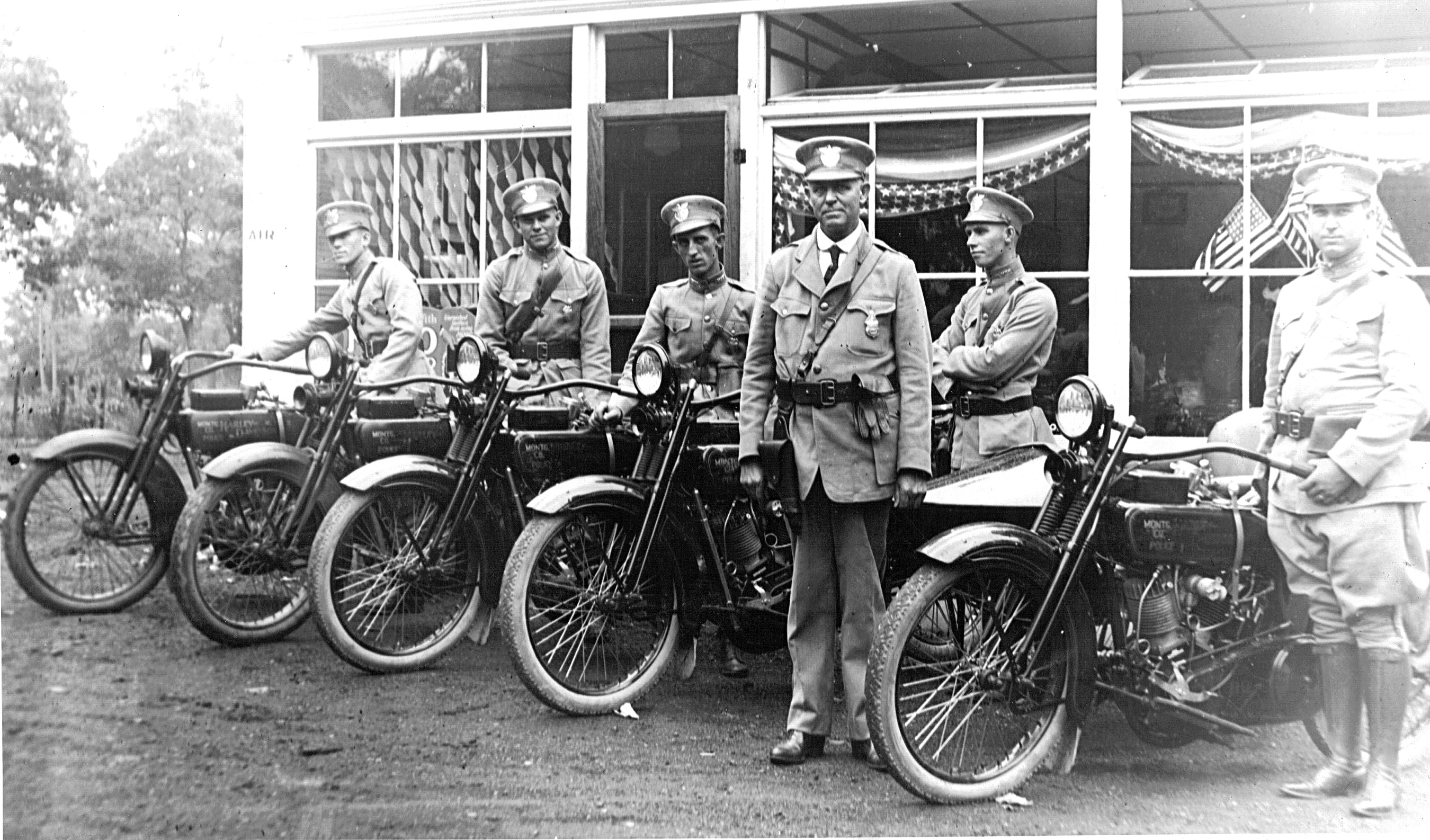
This is the first known photograph of the entire MCPD. Pictured left to right: Earl Burdine, Lawrence Clagett, Guy Jones, Chief Charles Cooley, Leroy Rodgers, and Oscar Gaither. Photo taken by Lewis Reed on July 4, 1922.
Montgomery County Police Department Motorcycle Unit (NOW): Currently, the Motor Unit consists of forty-two full-time motor officers who make up six decentralized motor squads. The squads are assigned to each of the six district police stations and are under the command of a sergeant. The primary missions of the squads are traffic enforcement, collision reduction, pedestrian safety and maintaining the orderly flow of traffic in the county. The squads are also involved in special details to include, dignitary and Presidential escorts, funeral escorts, the Montgomery County Fair, the Tiger Woods Golf Tournament and numerous foot races and parades.
The Motor Unit currently fields twenty-eight 2007 and 2008 Harley-Davidson Police motorcycles of which four to five are assigned to each of the district stations. The squads at each station are divided into a day work and evening shift and those officers share motorcycles as necessary. The current work period for the squads is eight hour shifts, Monday through Friday. The current work period for the squads is eight hour shifts, Monday through Friday.
The Unit also fields a Competition Team which participates in events that include both the United States and Canada. The team has received numerous awards in both the individual and team categories at these events. The Unit will also be hosting the Mid- Atlantic Police Motorcycle Safety Competition in Gaithersburg, Maryland in September of 2010.
The Montgomery County Department of Police Motor Unit continues its traffic safety mission today as well as the furtherance of police motorcycle safety and awareness throughout Montgomery County and the State of Maryland.

MCP Motorcycle Unit Competes in Annual Motorcycle Rodeo 95 years later.
Thank you to the entire Montgomery County Police Department for all you do in keeping our community safe. Salutes!
Sources: “Montgomery County, Two Centuries of Change” by Jane C. Sween
Montgomery County Police Department
Books

Related Resources


Copyright Notice

Reed Brothers Dodge History (1915-2012) by Jeanne Gartner is licensed under a Creative Commons Attribution-NonCommercial 3.0 Unported License.
 Reed Brothers Dodge History 1915 – 2012
Recent Comments