
Darnestown Presbyterian Church Dedicated On This Day in 1858
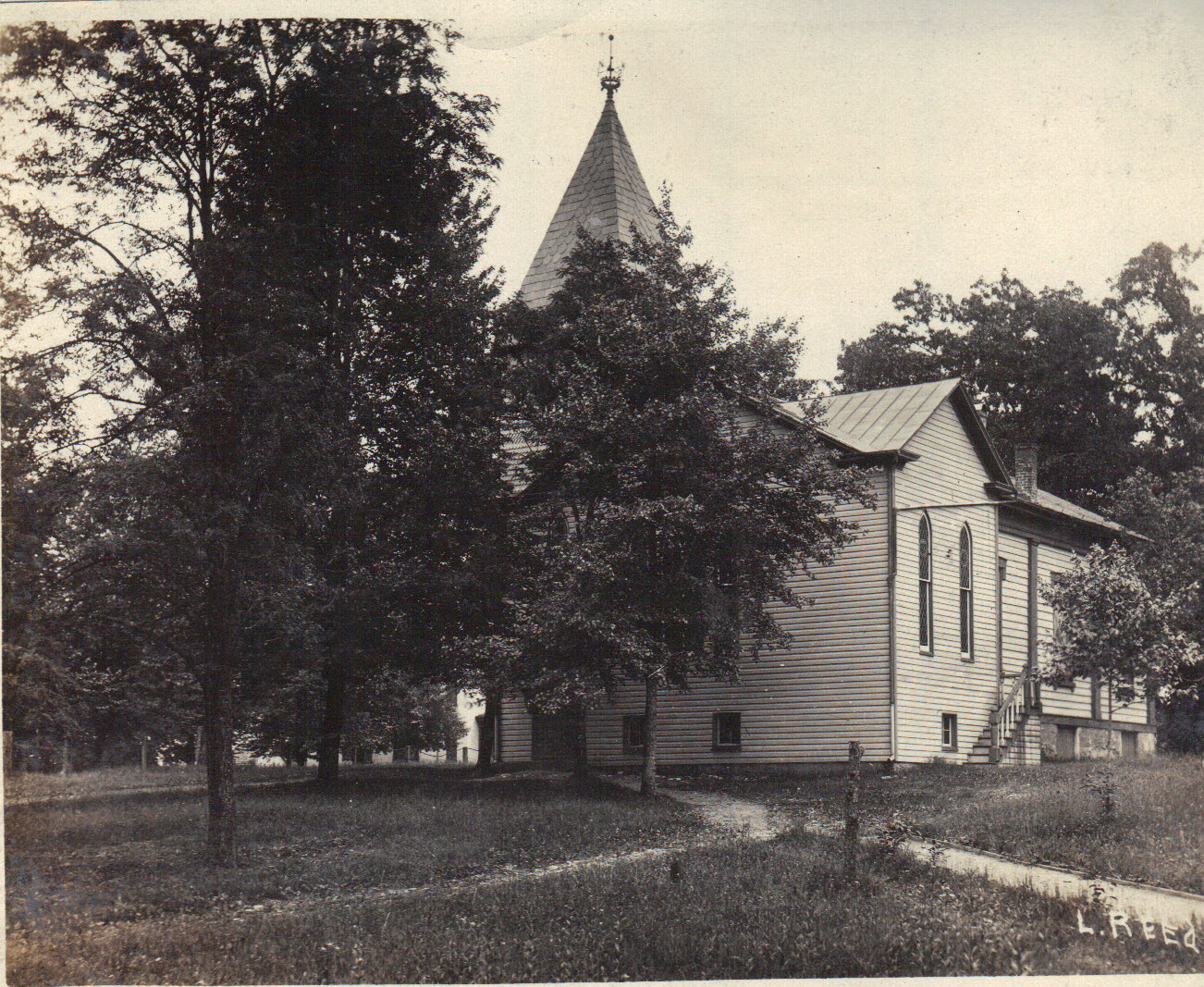
Darnestown Presbyterian Church Circa early 1900s. Photo by Lewis Reed
This special post doesn’t have anything to do with Reed Brothers Dodge, but it does have a lot to do with it’s founder, Lewis Reed.
In 1855, the Darnestown Presbyterian Church, which is located at the corner of Turkey Foot and Darnestown Roads, was founded by the generous donation of three acres of land by John Dufief. The church was constructed of stone which was hauled from the local quarry by the men of the congregation. The completed church was dedicated on this day, May 22, 1858. The iron fence along the cemetery at the back of the church was taken from the Rockville Courthouse.
Then, in the late 1860s, Andrew Small, a friend of the Church, granted sums of money to be used to building the parsonage (1868) and to establish and build a private academy (1867). The church was renovated in 1897 and then again in 1953.
Lewis Reed was a well-known photographer in the county and many of his early photographs are now part of the Montgomery County Historical Society photo archives.
Lewis Reed Photo to Appear in PBS Documentary
Rare peak of the inside of an early 1920’s trolley car taken by Lewis Reed, a well-known photographer in Montgomery County, as well as owner and founder of Reed Brothers Dodge of Rockville, Maryland.
The photo will be featured on PBS “American Experience” documentary, “The Great War” a three-night event exploring how World War I transformed America starting Monday, April 10 on PBS. The trolley image is in Episode 3, Wednesday night, between 38-40 minutes into the show. From 1900-1935, the trolley cars – or street cars, as they were also known – went past Reed Brothers Dodge as they traveled up Rockville Pike. Major stops along the line included Georgetown, Alta Vista, Bethesda, Montrose, Halpine, the Fairgrounds, Courthouse Square, and Chestnut Lodge. Panels for advertising line the edge of the ceiling on both sides of the trolley. Instead of AC, the interiors were cooled with wooden ceiling fans. (click on image to enlarge)
The print was originally made from a glass negative, an early photographic technique which was in common use between the 1880s and the late 1920s. The early 1900s were considered by many to be the golden era of early photography, because of its new availability to the public and somewhat simplified production methods. Many of Lewis Reed’s early photographs are now part of the Montgomery County Historical Society photo archives.
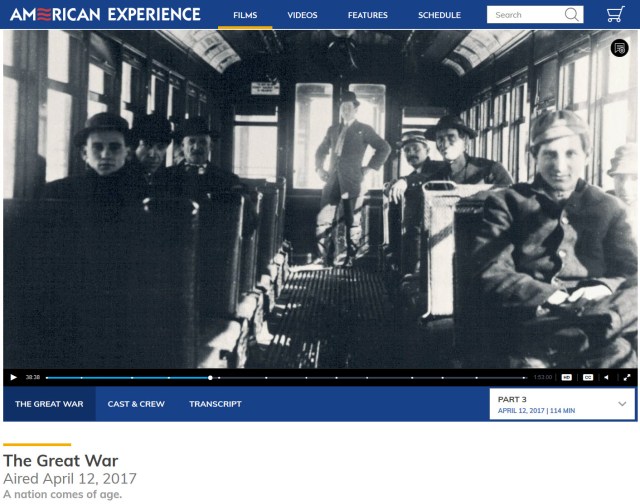
Rare peak of the inside of a 1920’s trolley car and passengers featured in PBS documentary “The Great War”. Photo taken by Lewis Reed

Screen shot of credits from The American Experience series, “The Great War” on PBS
Vintage Car Stuffing?
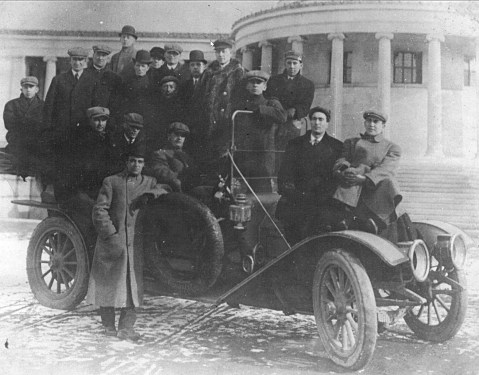
Photo by Lewis Reed
Ever want to see how sausage is made? Well, okay – maybe not… but this interesting photo taken by Lewis Reed some 100 plus years ago allows you to see how 18 men managed to cram themselves into a 1910-1911 Pierce Arrow Model 48 7-Passenger Touring. Pierce-Arrow Motor Car Company in Buffalo, New York, produced some of the finest automobiles made and was one of the most popular high-quality cars of the time.
Unfortunately, no other details about the photograph or the location is known, though the architecture looks like textbook Washington, D.C. neoclassical. If anyone can identify the building in the background, please leave me a comment.
Circa 1920s: Rockville Fairground Ferris Wheel

Ferris Wheel at Rockville Fairground, circa 1920s. Photo by Lewis Reed
Forget Valentine’s, Happy Ferris Wheel Day!
Did you know that February 14th is not only Valentine’s Day, but also Ferris Wheel Day? This unofficial national holiday is held on this day to honor the birth of the inventor of the Ferris Wheel, George Washington Gale Ferris, Jr. What better way to celebrate Ferris Wheel Day than enjoying this old photograph of the Ferris Wheel taken at the Rockville Fairgrounds, courtesy of Lewis Reed. The fairgrounds were just outside Rockville, about where Richard Montgomery High School is today. The Fair lasted four days, from August 21st to the 24th, and drew visitors from local counties, Washington, and Baltimore.
For the singles and the “enough already with the Valentines”, here is your perfect alternative excuse. Go wish all your friends and family a Happy Ferris Wheel Day!
Rockville 1912: Vinson’s Drug Store
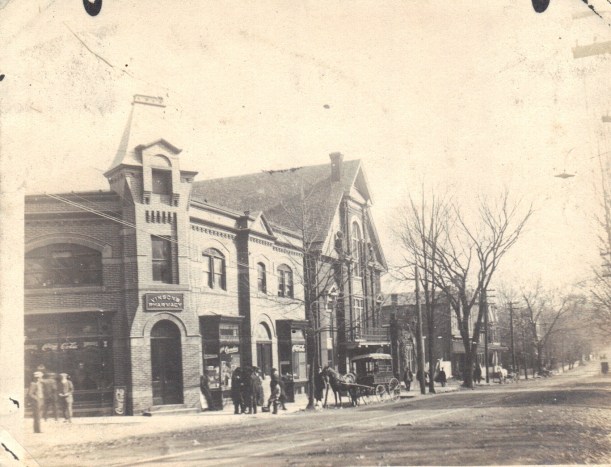
1912 – Vinson’s Drug Store, Rockville, Maryland. Photo by Lewis Reed
This 1912 photograph taken by Lewis Reed depicts Vinson’s Drug Store in downtown Rockville. This post is a part of the blog feature called, “Rockville’s Past Through the Lens of Lewis Reed”. Lewis Reed was a well-known photographer in the county and many of his early photographs are now part of the Montgomery County Historical Society photo archives. I wanted to share this photograph, because it offers a visual history of a part of Rockville’s past taken more than 100 years ago.
Previous to Edgar Reed’s enlistment in World War I, he had been employed as a clerk by R.W. Vinson Drug Store for eight years. In 1919, Edgar became a partner with his brother, Lewis Reed, in the firm Reed Brothers Dodge.
The drugstore was built in the 1880s and was run by Robert William “Doc” Vinson from 1900 until his death in 1958. A document on the Rockville website says the drugstore was also a popular gathering place for city politicians, and that President Woodrow Wilson once personally traveled there to buy Wolfhound tablets. The building was torn down in 1962, and replaced with an office building during Rockville’s “urban renewal”.
Source: County Seat to Satellite City of the Nations’ Capital: 1931
Books

Related Resources


Copyright Notice

Reed Brothers Dodge History (1915-2012) by Jeanne Gartner is licensed under a Creative Commons Attribution-NonCommercial 3.0 Unported License.
 Reed Brothers Dodge History 1915 – 2012
Recent Comments