
Montgomery County Maryland Almshouse aka Poor Farm

The Montgomery County Maryland Almshouse aka Poor Farm was established in 1789 and torn down in 1959. A modern jail is on its site on Seven Locks Road near Falls Road. Photo taken by Lewis Reed.
A Poor Farm in Montgomery County? Yep. Although a lot of people have never heard of “poor farms,” they were once common across the nation. Various terms have been used to describe the “house for the poor,” and often the titles were unique to the part of the country where the house was located.
This is the Almshouse (aka Poor Farm). The 50-acre tract which includes the pauper’s graveyard was once part of the Montgomery County Poor Farm, established in 1789 as a place where the poor and homeless went to live, work, and, if they died, to be buried.
At the time, the farm was located well beyond the bounds of what was then the town of Rockville. But growth eventually caught up with the property. The farm house was razed in 1959 to make way for a county jail, and another chunk of property was dedicated for I-270. At least 75 graves were identified during a 1983 survey of the property by state archeologists, but according to George R. Snowden, funeral director, there may be as many as 500 people buried in the potter’s field.
Although the county’s poor farm existed for almost 170 years, virtually nothing has been documented about it, said Jane Sween, a librarian with the Montgomery County Historical Society. The property was deeded to the county in 1789 and expanded in 1825. After the Civil War, the farm’s almshouse was rebuilt, and until it was razed a century later it was home to an average of 40 indigent people, she said. The state paid for burial but did not pay for grave markers or upkeep on the property.
The Montgomery County Poor Farm Cemetery is no longer in existence. The National Park Service conducted an archaeological dig in 1987, which resulted in the removal of 38 bodies to Parklawn Cemetery in Rockville, Maryland. Montgomery County sold the land to a private developer.
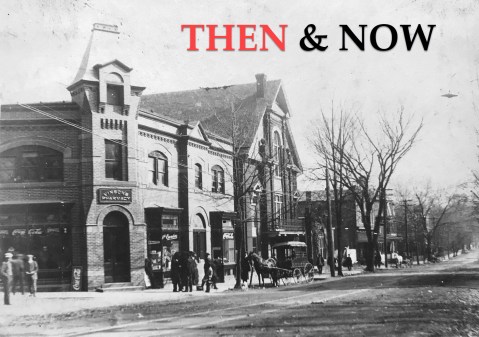
Then & Now: Howard House Hotel, Ellicott City
This post is a continuation of a series of “Then & Now” images that will show photographs of buildings, street scenes, and other historical locales from Lewis Reed’s Photo Collection alongside photographs of how they appear today.
Howard House Hotel (THEN): The Howard House Hotel, built in 1840, contained a bar and dining room in addition to 14 bedrooms. The hotel featured fine German cooking and was the first place in town to offer ice cream — which was made on Wednesdays only and was a real draw. The hotel and restaurant was a popular stop for mid-19th-century travelers headed west on the National Road, and a day-trip destination for urban dwellers. In the 1940s, the decorative wrought iron on its second-floor porch was sold for scrap metal for the war effort.
The trolley tracks on main street were originally part of the Catonsville and Ellicott City Electric Railway Company trolley line that shuttled passengers between Ellicott City and Baltimore from the late 1890s to the mid-1950s.

Howard House Hotel Ellicott City, Maryland, circa 1914. Note the signs over the entrance read, “ICE CREAM” below it “OYSTERS” Photo by Lewis Reed
Howard House Hotel (NOW): The same view 105 years later, restored to its original grandeur as 10 “luxury” rental apartments which includes panel doors, moldings and much of the original woodwork.

Howard House Apartments today
108 Years Ago at Rockville High School

1911 Originally known as Montgomery County High School, later as Rockville High School. Photo by Lewis Reed
In honor of this year’s commencement, here is a look back at some 1910 class photos from Montgomery County High School that were taken by Lewis Reed. This is a collection of group photos of school children, some with the teacher, taken in 1910 from Montgomery County High School (Old Rockville High School). I wanted to share these photographs, because they offer a visual history of a part of Rockville’s past taken more than 100 years ago.
Most of the photos are labeled with only the year, so if you have corrections to the names or can identify other individuals, please contact me or leave a comment below. Several students have been identified by the Montgomery County Historical Society, which I have included.
In this era, students from grades one through eleven attended the public school at Montgomery Avenue and Monroe Street. Named Montgomery County High School with the addition of upper grades in 1892, as the school board opened other facilities it became Rockville High School and then, in 1935, Richard Montgomery High School. Students came to the school by train, trolley, and later by school bus from all corners of the county.
Step back in time into a much simpler past and get a look at class photos of Rockville High School students from over 108 years ago. As always, click the photos to get a better look. Some of the expressions on these students faces are priceless!
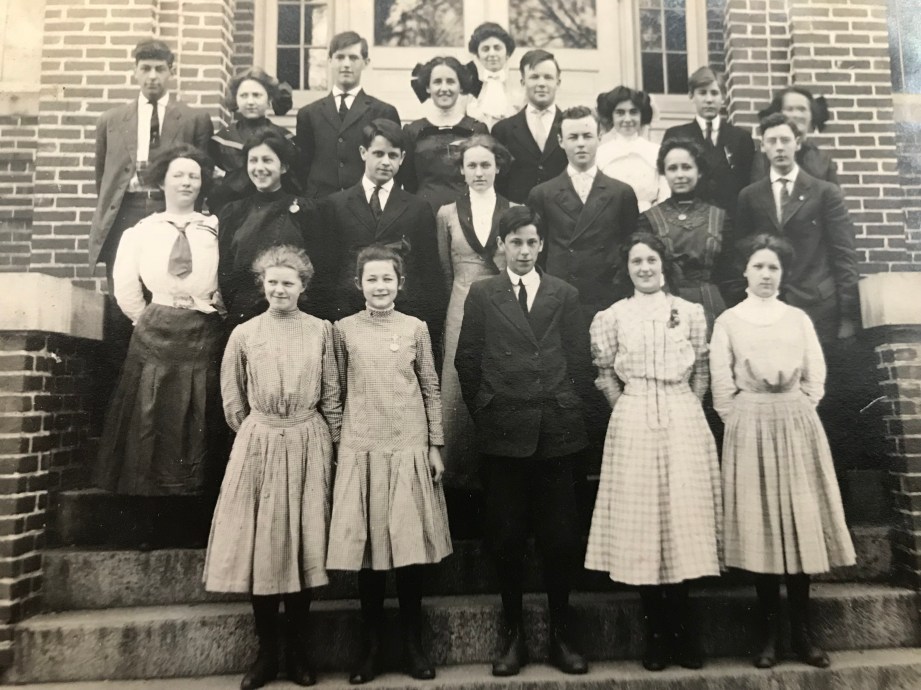
Old Rockville High School class c. 1910. Photo by Lewis Reed
Back row: Edward Story, Lena Ricketts, Tom Young, Louise Larcombe, Miss Ford, Fred Hays, Lucius Lamar, name unknown, name unknown.
Middle Row: name unknown, name unknown, Jesse Wathen, Jesse Higgins, name unknown, name unknown, Mary Hyatt, name unknown, name unknown.
Front Row: Maude England, Rebecca Lamar, (first name unknown) Garrett, Helen Pumphrey, (first name unknown) Lehman.
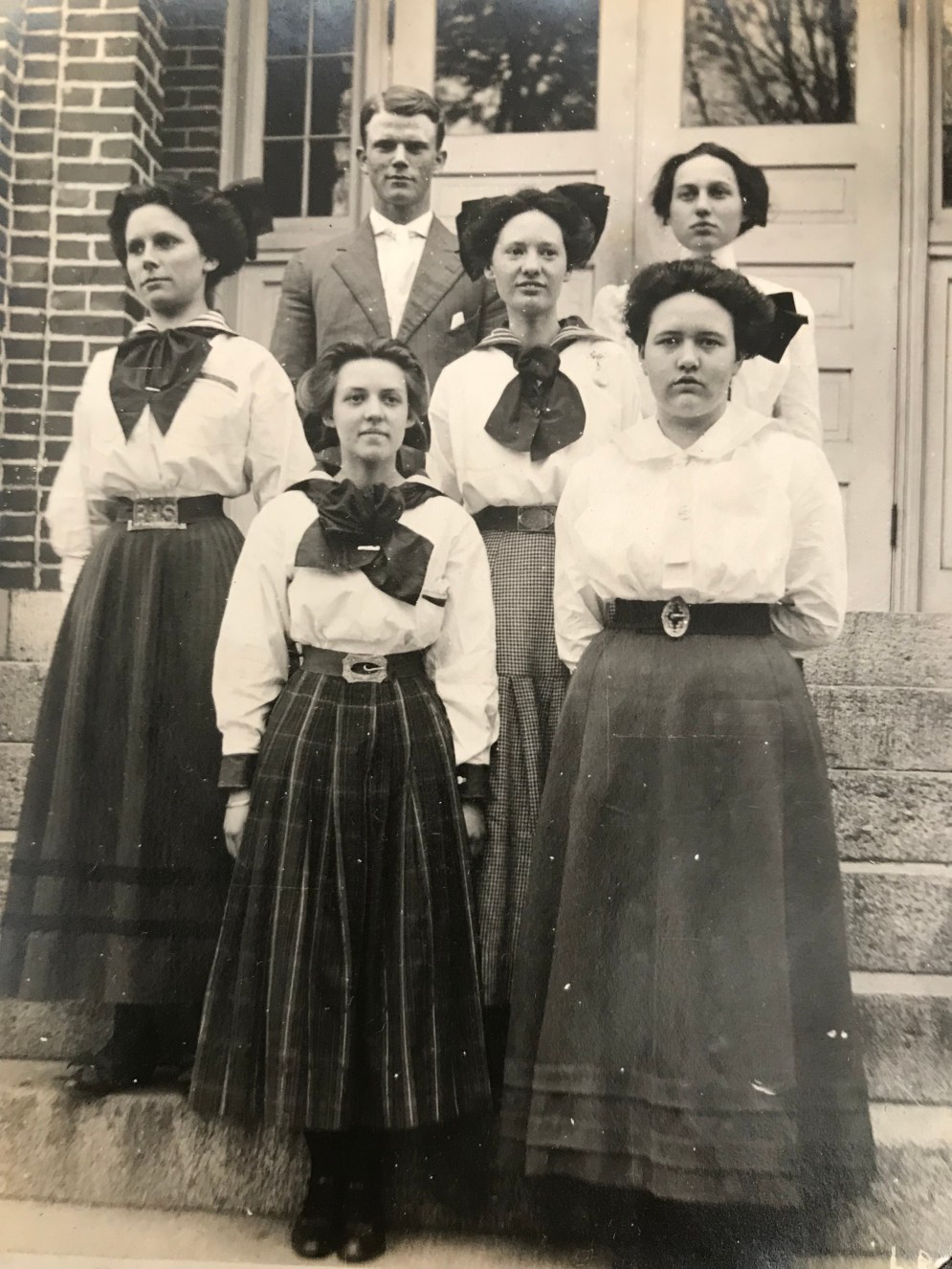
Old Rockville High School graduates 1910. Photo by Lewis Reed
Back: Harry Beall, Katherine Hughes.
Middle: names unknown
Front: Edith Prettyman, (first name unknown) Darby

Old Rockville High School First Baseball Team 1910. Photo by Lewis Reed
Front: Billy Beck, Tom Young, Ed Storey, Harry Beall, Roy Warfield.
Back: (first name unknown) Hicks, Lucius Lamar, name unknown, name unknown, Jesse Higgins, name unknown, name unknown, Fred Hays, Roger Whiteford.
Holding pennant: Griffith Warfield
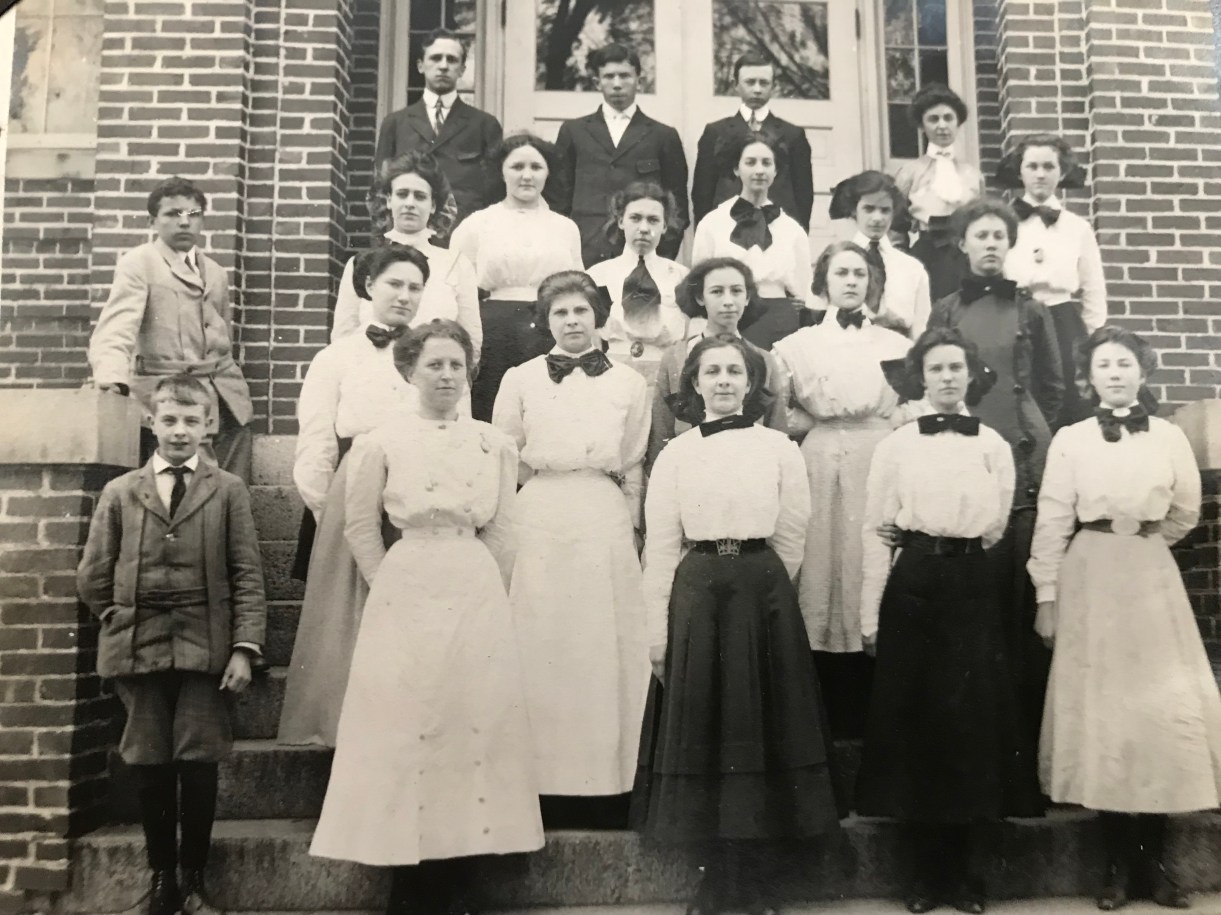
Montgomery County High School 1910

Montgomery County High School 1910

Montgomery County High School 1910
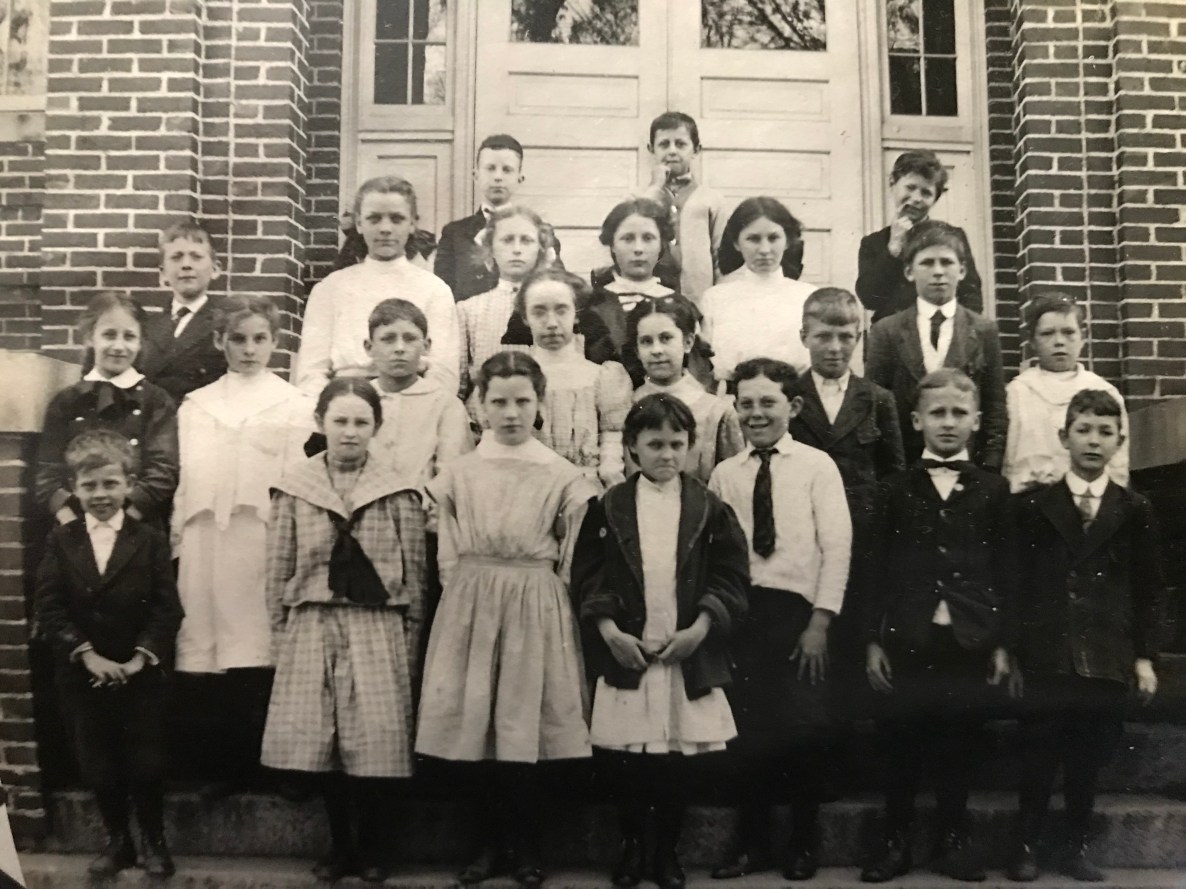
Montgomery County High School 1910
New Blog Feature: Then & Now
Looking back at photography from the past is a fascinating experience for me, and with a newfound interest in history, it occurred to me that with the vast number of historical photographs in Lewis Reed’s Collection, that this blog would be a great place to feature a series of Then & Now photography. I started doing this about a year ago as a research tool, now I mostly do it because of my passion for history and fascination with the subject. With that in mind, I will occasionally be spotlighting some “Then & Now” images from his collection that will show photographs of buildings, street scenes, and other historical locales alongside photographs of how they appear today.
Some of the historic locations in this series includes the Smithsonian, Capitol, Union Station, Old Post Office, Library of Congress, Raleigh Hotel, Key Bridge and other important sites in and around the Maryland, Virginia, and Washington, D.C. area. There are also photographs of many non-Maryland locations including the historic landmark “Lucy the Elephant”, Gettysburg Battlefield, Mount Vernon, Pennsylvania Monument and United States Regulars Monuments under construction, and Quebec Bridge (the 8th Wonder of the World).
I have no formal history training, just a general interest in local history where I grew up. I will post one of Lewis Reed’s photographs matched with a corresponding contemporary shot of the same area, and supply a few sentences of context. All of them will in some way will offer a visual history of how things have changed over the years. I look forward to sharing them with you.
Then & Now: Washington Union Station 106 Years Apart
In this special post, I have combined one of Lewis Reed’s original photograph’s for “then” and matched it with a corresponding contemporary shot for “now” to see how the location has changed or remained nearly the same through the years. I started doing this as a research tool, now I mostly do it because of my passion for history and fascination with the subject. In the following photographs, you can see the difference 106 years can make.
Washington Union Station (THEN): Seen in the black & white photograph taken by Lewis Reed in 1912, is Union Station in Washington, DC. Union Station is one of the country’s first great union railroad terminals. Designed by renowned architect, Daniel Burnham, the station opened on October 27, 1907 and was completed in April 1908. At the height of its traffic, during World War II, as many as 200,000 passengers passed through the station in a single day. Today, Union Station is one of the busiest rail facilities and shopping destinations in the United States, and is visited by over 40 million people a year.
Visible in both photos is the Columbus Fountain also known as the Columbus Memorial which serves as a tribute to the explorer Christopher Columbus. The fountain sits in the center of the Columbus traffic circle in front of Union Station.
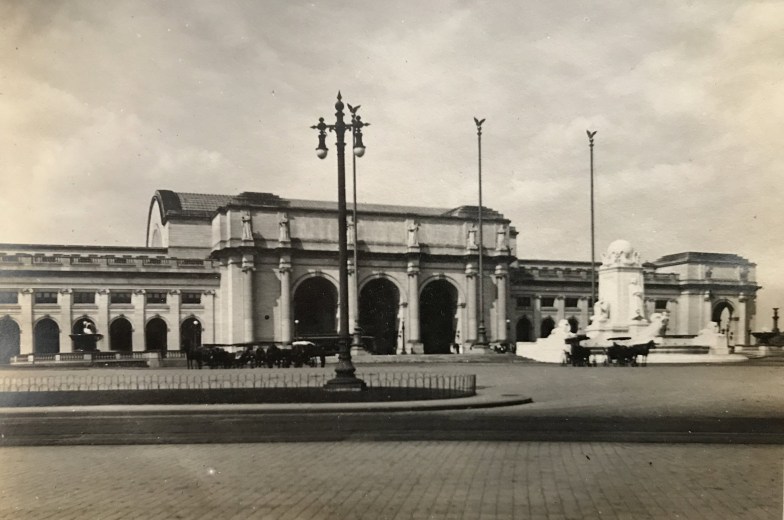
Washington Union Station, 1912. Photo by Lewis Reed
Washington Union Station (NOW): The same view over a century later. The difference? Color.
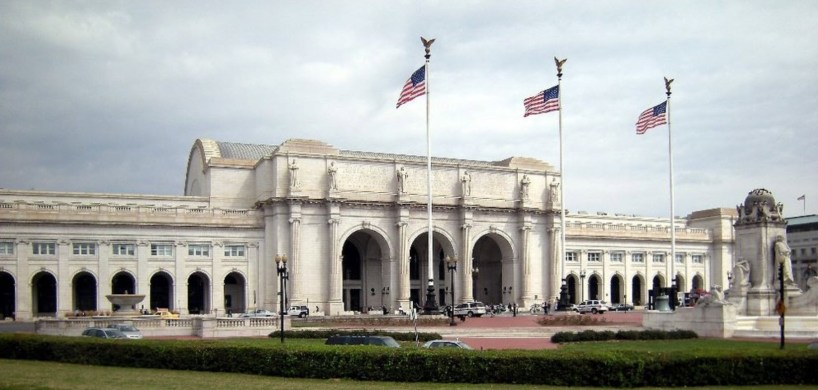
Washington Union Station today
Books

Related Resources


Copyright Notice

Reed Brothers Dodge History (1915-2012) by Jeanne Gartner is licensed under a Creative Commons Attribution-NonCommercial 3.0 Unported License.
 Reed Brothers Dodge History 1915 – 2012
Recent Comments