
October 1915: The Beginning of a Legacy
Woodrow Wilson was President of the United States; the Green Bay Packers did not yet exist; the United States was two years away from joining World War I; the cost of a stamp was two cents, and Reed Brothers Dodge in Rockville, Maryland was founded.
This is when it all began. It was 101 years ago in October 1915 that Rockville automobile pioneer Lewis Reed, founder of Reed Brothers Dodge, signed a franchise agreement with Horace and John Dodge in Detroit; less than one year after the first Dodge automobile rolled off the assembly line. Since then, the business grew and transformed from a small-scale garage and dealership into one of the largest and most recognized commercial enterprises on Rockville Pike.
This photograph of the original 1915 Rockville Garage shows a 1916 model 44 Oldsmobile with V8 and sedan body parked in front. The original owners of Rockville Garage are standing in front. From left: Roy Warfield – Lewis Reed – Griffith Warfield. (click on photo to enlarge)
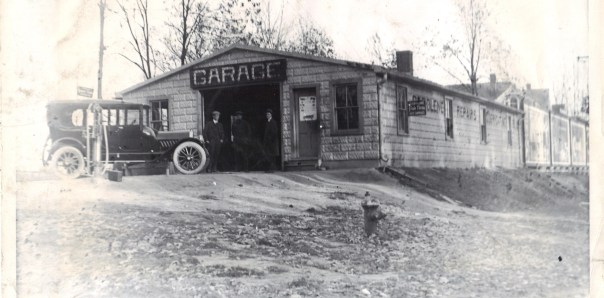
In 1914, Lewis Reed became a partner in Rockville Garage, a business he purchased in 1918. His brother Edgar joined the business in 1919 upon his return from World War I, and the name became Reed Brothers Dodge. Initially, Reed Brothers sold Oldsmobile and Hudson along with Dodge. The first Plymouth was built in 1928 and Plymouths were sold at Reed Brothers from 1930 until 1969, when the Plymouth car was given to the Chrysler dealers. In 1928, when Walter P. Chrysler took over after Horace and John Dodge died, Lewis Reed became an original member of the Chrysler family. By 1929, when the stock market crashed and Great Depression began, nobody could afford to buy cars. Like most other businesses, the Great Depression hit hard and Reed Brothers had to rely on its Service Department to make ends meet.
Reed Brothers faced another setback during World War II. All U.S. car manufacturers stopped production in order to concentrate on military equipment. Reed Brothers had no new cars to sell for three plus years. Many car dealers went bankrupt at this time. Lewis Reed converted his car showroom into a display room and sold GE washing machines and other large appliances. The brothers operated their own full service Gulf gasoline and service station. In fact, the company was the first Gulf gas dealer in the Washington, D.C. area, selling gas at its original location in Old Rockville at the triangle at Veirs Mill Road and Rockville Pike.
The dealership survived two World Wars, the Great Depression, the first Chrysler Bailout, the sale of Chrysler to Daimler and the later sale to the private equity firm Cerberus. Reed Brothers has, in fact, survived everything but Chrysler itself. Regrettably, loyalty was not enough to keep the dealership open when Chrysler cut dealership ranks during their 2009 bankruptcy process. After almost 95 years selling Dodges, Reed Brothers was notified by Chrysler that their franchise agreement would not be renewed. Reed Brothers Dodge occupied two locations, the original at the Veirs Mill Road and Rockville Pike intersection and the second on 355 near Shady Grove Metro.
Today, Bainbridge Shady Grove Metro Apartments pays homage to this history by celebrating the golden era of the automobile with commemorative art on the former site of the iconic Reed Brothers dealership.

Bainbridge Shady Grove Metro Apartments now stands on the former site of the Reed Brothers Dodge dealership at 15955 Frederick Road. But a sculpture now installed on the property pays tribute to the oldest Dodge dealership in Maryland history. More than 20 feet high, and over 6 feet wide, the public art is inspired by 1939 Dodge headlamps, and the fender of a 1957 Dodge pickup truck.
Derailed Trolley: Montrose Rd & Rt 355
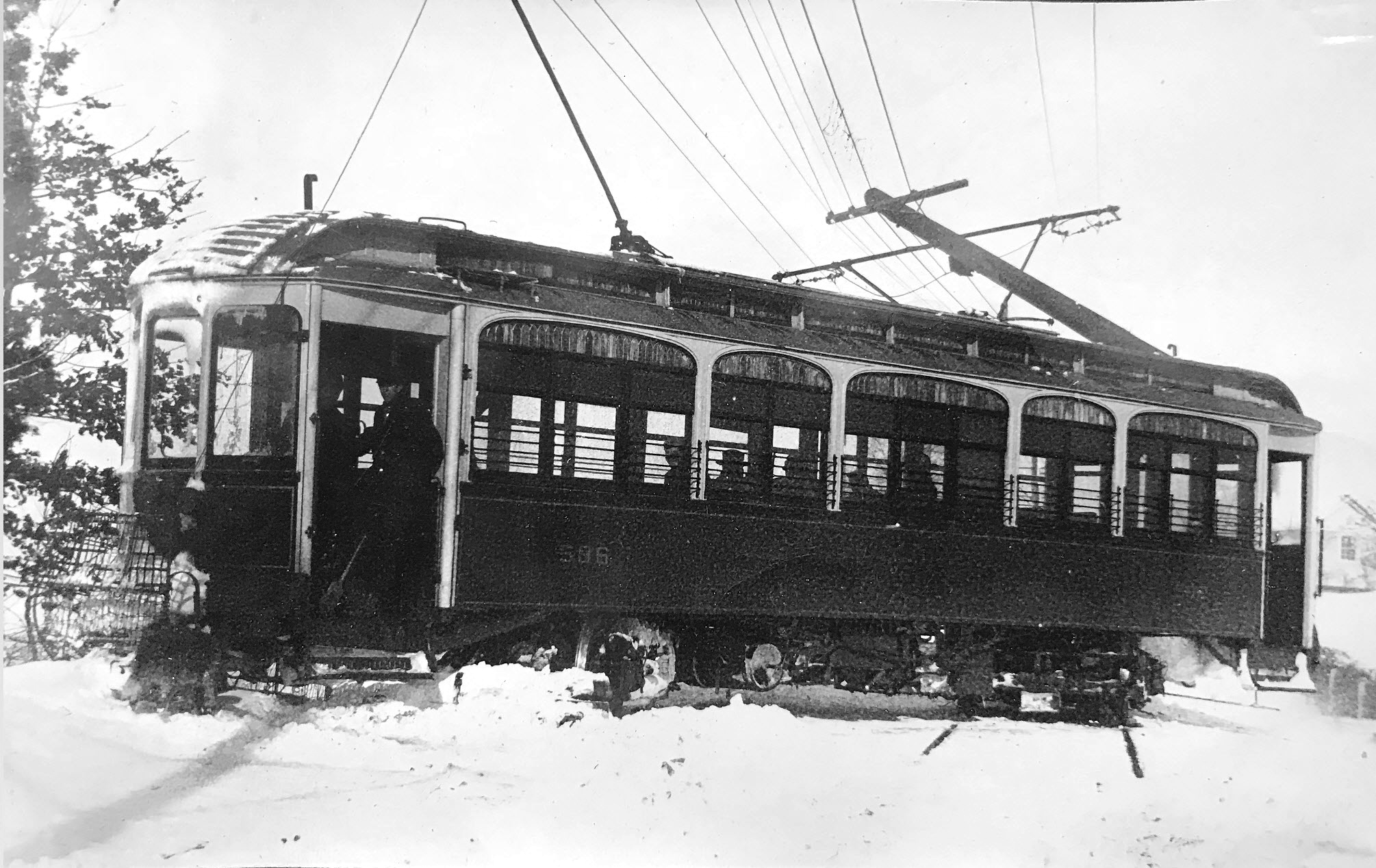
Derailed trolley at Montrose Road and Rockville Pike. Photo by Lewis Reed
In the early years of the 20th century, when electric trolleys were a lifeline for Montgomery County, a derailment near Montrose Road (today’s Rt 355) brought travel to a sudden halt.
In populated urban areas, trolley cars kept speeds to 12 mph (6 mph at intersections), but in open country they could get up to 40 mph. Traveling in snow was additionally hazardous, as evidenced by the trolley pictured in these photos, which derailed and plowed into a telephone pole at Montrose Road and Rockville Pike.
Lewis Reed was there to capture the accident from two different perspectives using a five-by-four box camera which produced images on a glass plate.
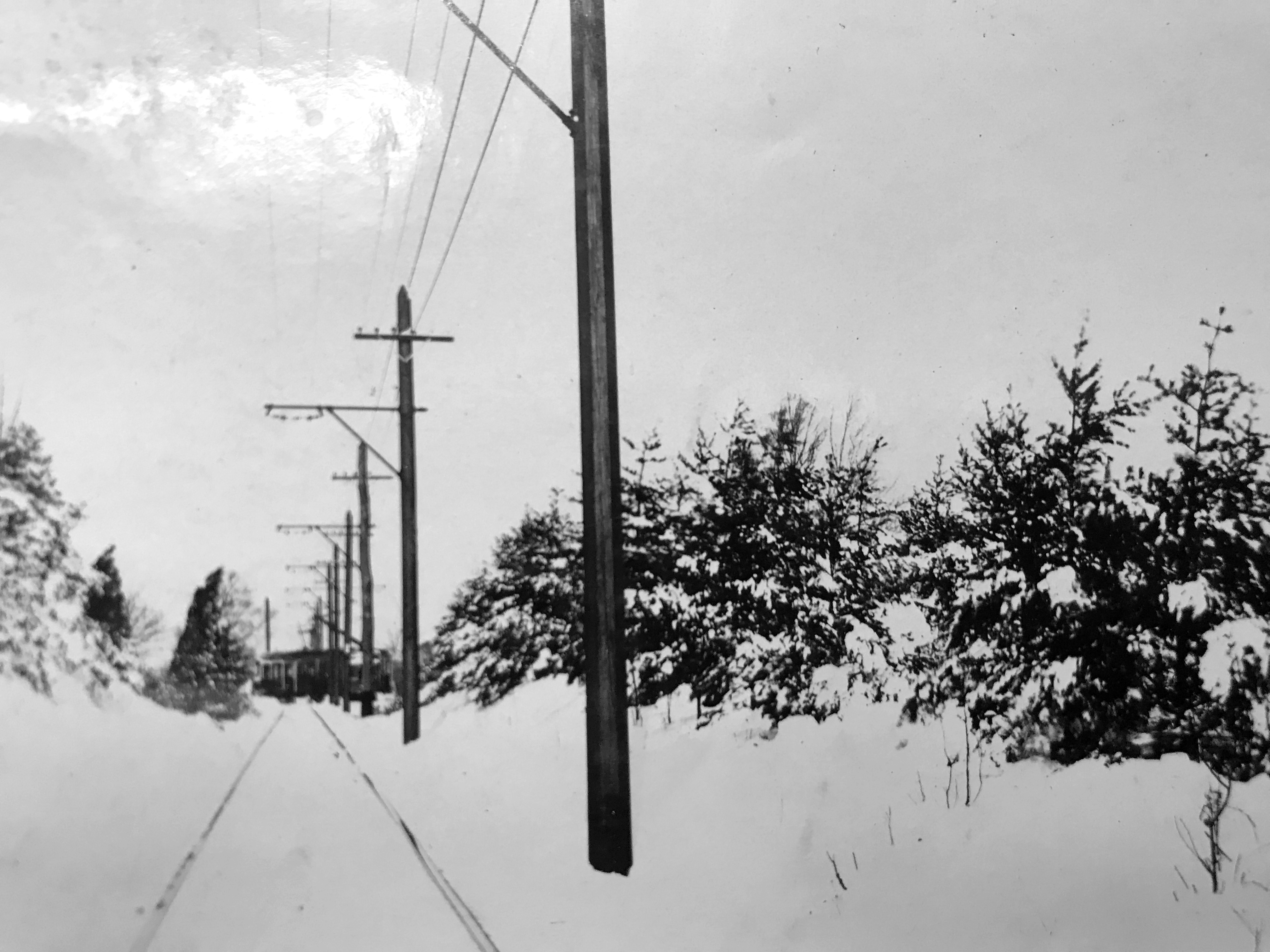
Viewed from a distance, the derailed trolley lies off the tracks as Lewis Reed records the scene.
Early 1900s Frederick Fair Parking Lot

Frederick Fair Parking Lot, circa 1914. Photo by Lewis Reed
This fascinating scene of hundreds of vintage cars parked in the Frederick Fair parking lot was taken by Lewis Reed. What is fascinating to me is, with all of these early cars painted in black, how on earth would you find your car in the parking lot?
The Frederick County Fair is one of the oldest agricultural fairs in the state of Maryland dating back to 1822 when it was known as the Cattle Show and Fair. Over the years the fair has changed names several times. Today, the Frederick County Fair is officially named the Great Frederick Fair. The GREAT Frederick Fair is celebrating 154 years in 2016 (Sept. 16-24).
Dodge Car “Cathedral Lights”

1917 Rockville Garage
Until 1920, Dodge sported a set of six hexagonal windows in the back of each passenger cabin on both their Touring and Roaster models. These were called “cathedral lights” and became the first trademark feature to make Dodge vehicles stand out from the rest. This 1917 photo of Lewis Reed’s Rockville Garage shows an early Dodge Motor Car parked in front with the exclusive Dodge Brothers cathedral-style rear curtain windows.
1960s Full Service Gulf Station

Reed Brothers Dodge Gulf Gas Station
This is a circa 1968 photo of the Reed Brothers Dodge Gulf Gasoline station. The famous Gulf “ice box” design dates back to late 1930’s and there were probably more of these built than any single one of the later Gulf designs. A Coca Cola machine is visible in front of the white Dodge Dart parked in front of the service bay. The sign in the grass to the right of the blue ’58 Plymouth (Belvedere?) reads, “We’re Making Deals on Gulf Tires”.
The office/sales area occupied the right corner, facing the adjacent road Rockville Pike. Attached to the office are two quick service bays with roll-down doors. Each bay of the bays served a specific purpose. One bay contained a hydraulic lift to raise cars for the servicing of tires, lubrication, and underside parts. A central in-floor drain to catch water runoff during car washes was utilized in the second bay. The station also contained a men’s and women’s restroom. A concrete ramp on the left led up to the second floor Auto Glass and Body Repair Shop.
The below 1940 architectural plan and rendering of a Gulf service station epitomize the defining design characteristics of this service station type.

1940 architectural plan and rendering of a
Gulf service station
Reed Brothers Dodge was the first Gulf gasoline dealer in the Washington, D.C. area. In 1915, they began selling gas at their original location in Old Rockville at the triangle at Veirs Mill Road and Rockville Pike. Their first gas station consisted of a single pump. Later, in addition to gas, they carried a full line of Gulf lubricants, Goodyear tires, Willard batteries, complimentary road maps, free air and water, and many other well known brands of merchandise to meet their patrons needs.
Books

Related Resources


Copyright Notice

Reed Brothers Dodge History (1915-2012) by Jeanne Gartner is licensed under a Creative Commons Attribution-NonCommercial 3.0 Unported License.
 Reed Brothers Dodge History 1915 – 2012
Recent Comments