
A Special Veterans Day Tribute to Edgar Reed
Veterans Day is a time to recognize the veterans in our lives — to honor their service for our country and show them that we appreciate their sacrifices made in our behalf. World War I began on July 28, 1914 and later ended on November 11, 1918. In commemoration of Veterans Day, this very special post is in honor of the contributions Sergeant Edgar Reed made for our country during World War I.

Edgar Reed, partner with brother Lewis, in Reed Brothers Dodge. Photo taken ca. 1918 by Lewis Reed.
Edgar was a partner with his brother Lewis Reed, in Reed Brothers Dodge. I never got to know my great uncle Edgar like the rest of the Reed family, because he passed away the year after I was born. My mother told me she took me to the hospital right after I was born to meet Edgar, but of course, I have no recollection of that. I do, however, feel like I know him through all of the family stories and photographs I have spent archiving over the last 10+ years.

Edgar, center. Photo taken ca. 1918 by Lewis Reed.

Edgar at Hotel Cape May, New Jersey. Photo by Lewis Reed, 1918
On September 28, 1917 a draft for World War I began and the first 40 men reported for duty at the Montgomery County Court House in Rockville, Maryland. In the photograph below, cars are parked around the court house during the speech-making in the court room to drafted men. Montgomery County’s first recruits left Rockville by train for Camp Meade, Maryland on this same day. They each received a package of smoking tobacco and a rousing send-off from two thousand people after speeches at the courthouse, dinner at the Montgomery House Hotel, and a parade to the depot. About 160 Rockville men served in the eighteen-month war. One of those men was Rockville resident, Edgar Reed.

Montgomery County Court House. Note two tags on the cars; it was necessary to have DC as well as Maryland tags if the car was to be driven in DC. Photo by Lewis Reed, 1917.
Edgar Reed (1890–1951) was born in Darnestown, Maryland on October 17, 1890. On February 26, 1918 at the age of 27 years old, Edgar was enlisted into the U.S. Army as a Private. At this time, he lived on Montgomery Avenue in Rockville. He had been employed by R.W. Vinson, Rockville druggist for eight years.
On April 27, 1918, Edgar was promoted to the rank of Private First Class, and on February 14, 1919, he was promoted to Sergeant. According to “Maryland Military Men, 1917-1918”, Edgar served as a Sergeant in the U.S. Army Medical Corps from February 1918 to August 1919. He had been posted to GENERAL HOSPITAL NO. 16, NEW HAVEN, CONNECTICUT and GENERAL HOSPITAL NO. 11, CAPE MAY, NEW JERSEY.
The spirit of patriotic service which swept the country prompted many persons to offer their properties to the War Department for hospital purposes. These offers included buildings of every conceivable kind, such as department stores, private establishments, hospitals, and properties in large cities. It was found that many of these could be obtained and converted into hospitals much more expeditiously than barrack hospitals could be constructed, and at less cost.
The Surgeon General recommended that the War Department authorize the leasing of the Hotel Cape May in New Jersey for use as a general hospital on December 18, 1917. The Hotel Cape May was located on the Ocean Drive, at the eastern end of the city, and within 100 feet of the beach of the Atlantic Ocean. Opened first as GENERAL HOSPITAL NO. 16, the designation was changed to GENERAL HOSPITAL NO. 11, March 14, 1918. The enlisted personnel were quartered in tents which were located to the rear of the building.
At eleven o’clock on the eleventh day of the eleventh month in 1918, World War I fighting came to an end when an armistice between Germany and the Allied nations went into effect. On August 4, 1919, Edgar was transferred to the Demobilization Center at Camp Lee, Virginia and was honorably discharged on August 6, 1919.
Pictured below is Edgar Reed’s World War I draft card, signed and dated June 5, 1917.


Below is Edgar Reed and friends returning home on the train after the war ended wearing the World War I “Victory Medal” on their lapels.

Edgar Reed, right. Photo by Lewis Reed.
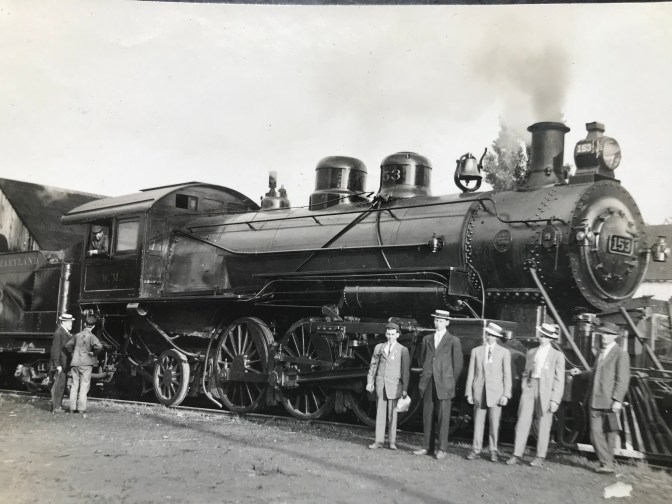
This photo captures the moment Edgar Reed (left) and friends arrived home from World War I. Photo by Lewis Reed.
Edgar was fortunate enough to survive World War I and to settle back in Rockville and enjoy a successful life and career in the automobile business. After returning from the war in 1919, Edgar joined his brother in the business and the name changed to Reed Brothers Dodge. Edgar was in the automobile business with his brother, Lewis, for 35 years until his death in 1951.
So while we honor all who served this Veterans Day, on this day, I salute you Edgar Reed, and thank you for your service to our country.
Sources:
U.S. Army Office of Medical History
Ancestry.com
Maryland Military Men, 1917-1918
What Halloween Looked Like 100 Years Ago
With Halloween just around the corner, I thought it would be fun to feature a special post how families celebrated Halloween 100 years ago. Thanks to the these photographs from Lewis Reed’s collection, we can travel all the way back to 1914.
At the turn of the century, women often wore their regular clothes topped with homemade masks. The first Halloween costumes were usually worn by women and reflected the idea of masquerades that was extremely popular in the early 1900s. People only began to buy manufactured costumes in the second and third decades of the 20th century.

Halloween, ca. 1914. These women are holding homemade Halloween masks for their upcoming celebration. Photo by Lewis Reed
Oh the good ol’ days, when wearing a mask was enough to be dressed up for celebrations! Do you know how your ancestors’ celebrated Halloween? Newspapers are a great source to get a better understanding of life in the past. This special post is a look back through newspaper articles and Lewis Reed’s photographs at how Halloween was celebrated 100 years ago.
Stocked Stores: Stores were stocked with all the Halloween supplies needed for a fun celebration. Below is an ad for costumes and masquerade suits for those participating in Halloween parties and other seasonal affairs.

The Washington Post, 30 October 1916
Dancing and Parties: Halloween parties and dancing were enjoyed by many. Some announcements even included a list of guests in attendance!

The Baltimore Sun, Nov 3, 1912
Here is the description of a Halloween party from the Society Section of the November, 1916 issue of The Evening Star (Washington, District of Columbia):
A Halloween party was given last evening… and a merry evening spent by those present. The reception hall, living and dining rooms were artistically decorated with autumn leaves, lanterns, chrysanthemums and orange and black streamers. The evening was spent in old-fashioned games, concluding with the entire assemblage gathering about an open fireplace in the dark, while the guests were led by a ghost through various parts of the darkened home. The evening’s entertainment concluded with music, dancing and the serving of refreshments.
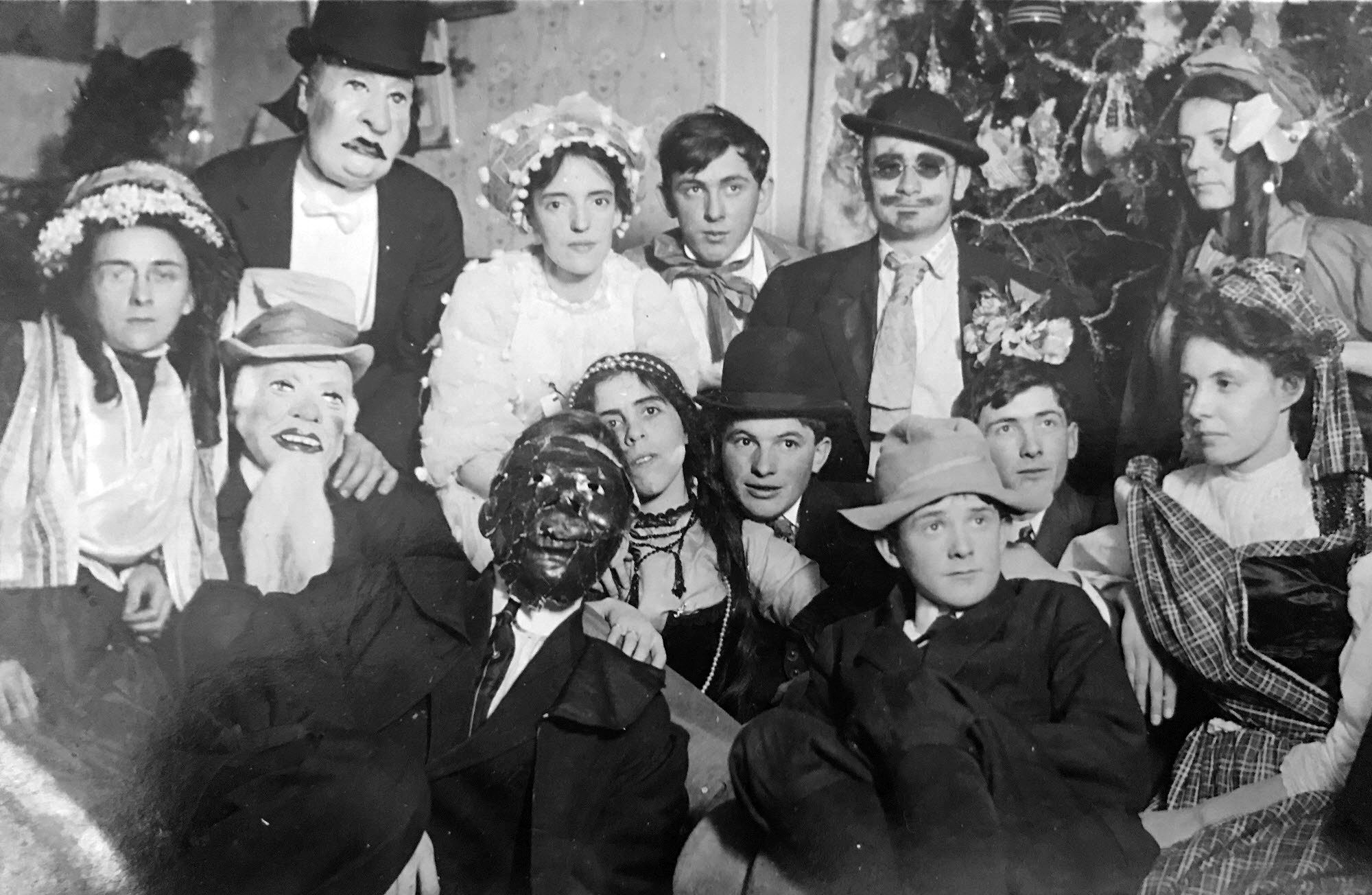
This photo captures a moment from a Halloween party over 100 years ago and is equal parts amusing and creepy. Photo by Lewis Reed
Any sort of Halloween festivities demanded some sort of refreshment. In addition to traditional pumpkin pies and molasses cookies, a suggested dish to serve at Halloween parties was a Halloween salad.

The Evening Star, October 24, 1915
Halloween Pranks: Witches and goblins, ghosts and mischief-making youngsters were permitted to enjoy all the Halloween revelry they liked … BUT DON’T THROW FLOUR. Yes, apparently in the early 1900s, there wasn’t much to do for entertainment, so kids would knock on doors on Halloween night and throw flour at whoever answered. To the modern observer, some of the traditions of Halloween 100 years ago are downright bizarre.
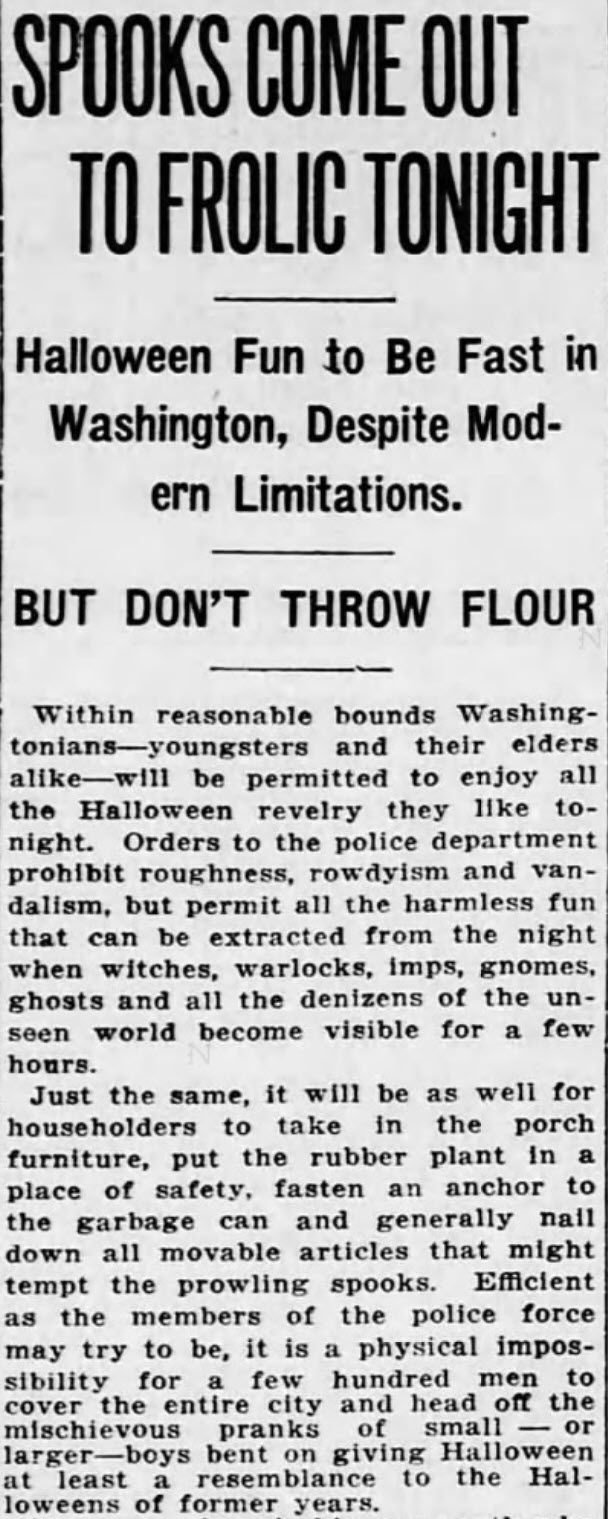
The Evening Star, October 31, 1916
Halloween Parades: Halloween parades actually began because pranks and mischief had gotten out of control. By 1920, there was a push to turn Halloween into a holiday centered around community gatherings and festive Halloween parades, rather than mischief.
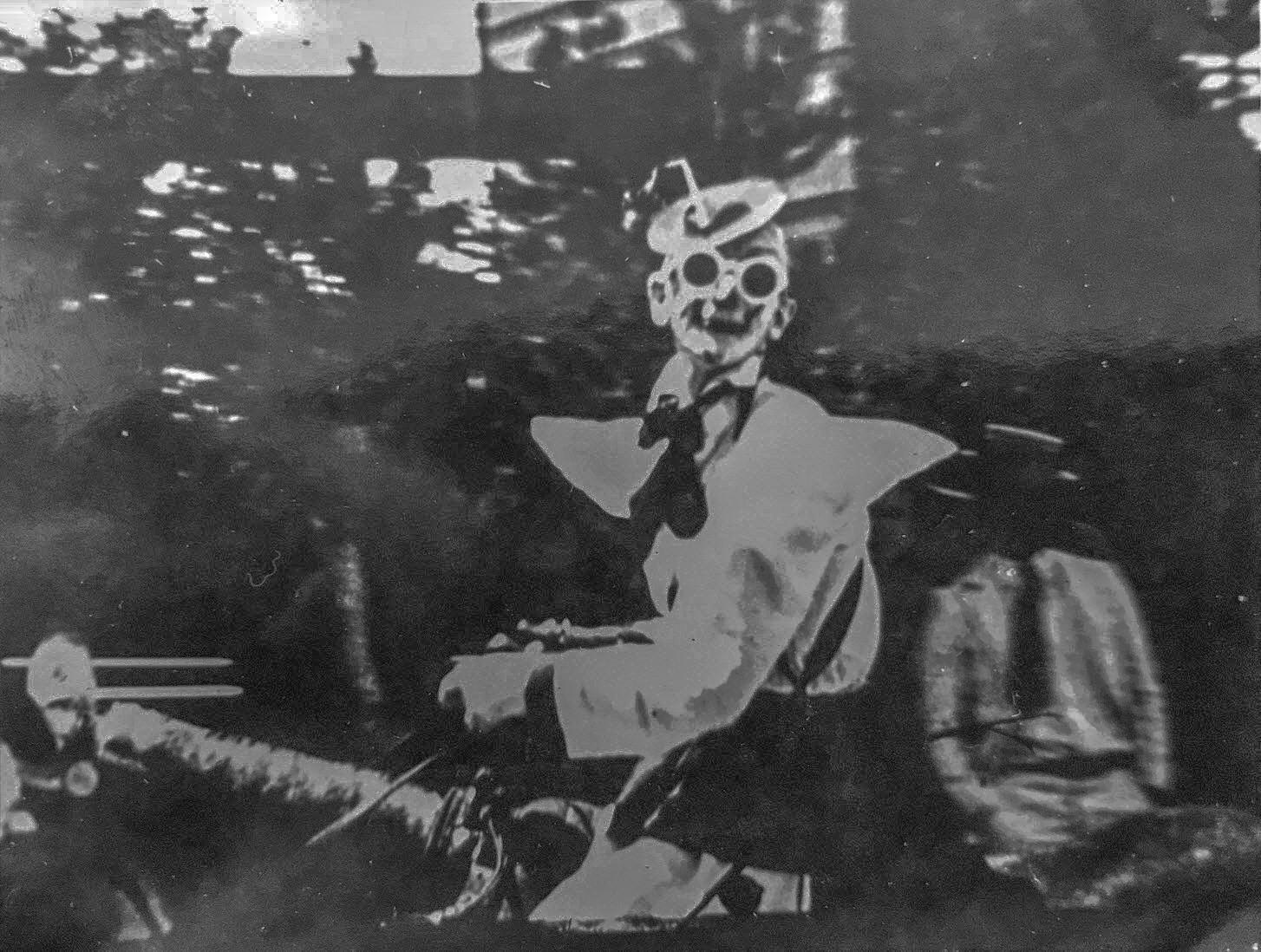
There is something undeniably creepy about this clown in sunglasses riding on a horse in a Halloween Parade. Location is unknown. Photo by Lewis Reed
Wishing all my friends, followers, and visitors of this blog a very safe and happy Halloween!
Front-of-the-House Photography of the Early 20th Century
Get the kids, the horses, the cats and dogs, buggies and tractors. Lewis Reed is here, and it’s time to gather in front of the house for a family picture!
Front-of-the-house family photographs were popular from the 1880s through the first decade of the 20th century. Until the early 1900s, people went to the photographer’s studio in town to get a picture, a “likeness” as they sometimes called it. But soon after, the reverse was possible: the photographer sometimes came to the family house to take a picture (and yes, a single picture!).
In the early 1900s, families rarely took their own photographs. Most people would never even consider owning a camera, which then was an expensive and complicated piece of equipment. If they wanted a picture of their family or their home, they called on a photographer like Lewis Reed to take it for them.
Below are some houses on which Lewis Reed trained his lens in the first decade of the 1900s–some identified, some not–but all a fascinating glimpse into the everyday world as it was back then. As always, click on the photos to get a better look.
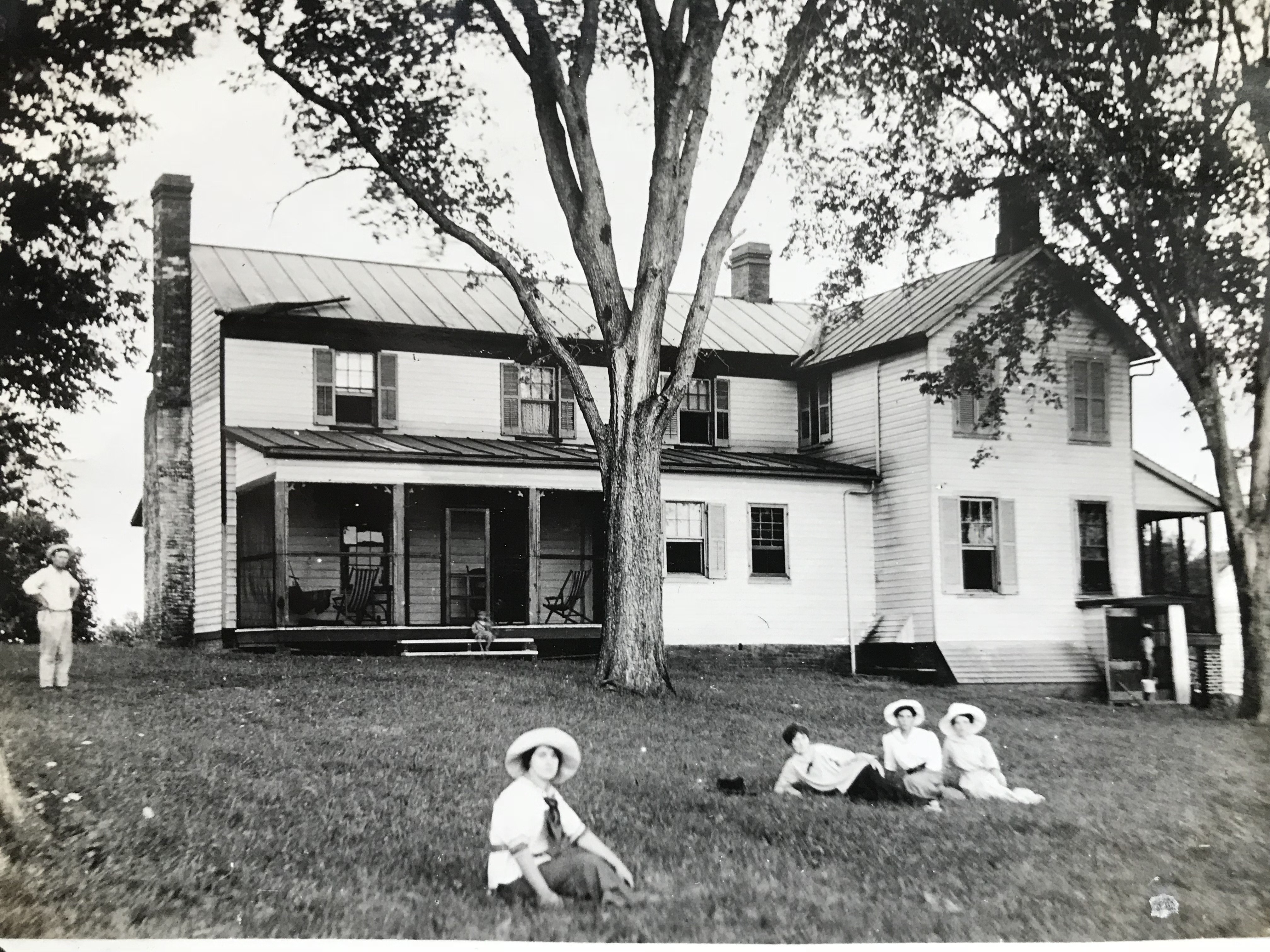
An unusual view of the backyard of a house, with its screened-in porch and children relaxing in big floppy hats.

This photo and the one below it, are very interesting in that they depict a small child posing with likely her nursemaid or a house servant who is African American, and still a child herself. Above, a view of the front porch…

…and the same house as above with the girls now playing in the side yard. The smaller child is in a buggy styled to look like a sleigh.

Here, the women of the family pose for the camera (while a young man photo-bombs from behind a bush).
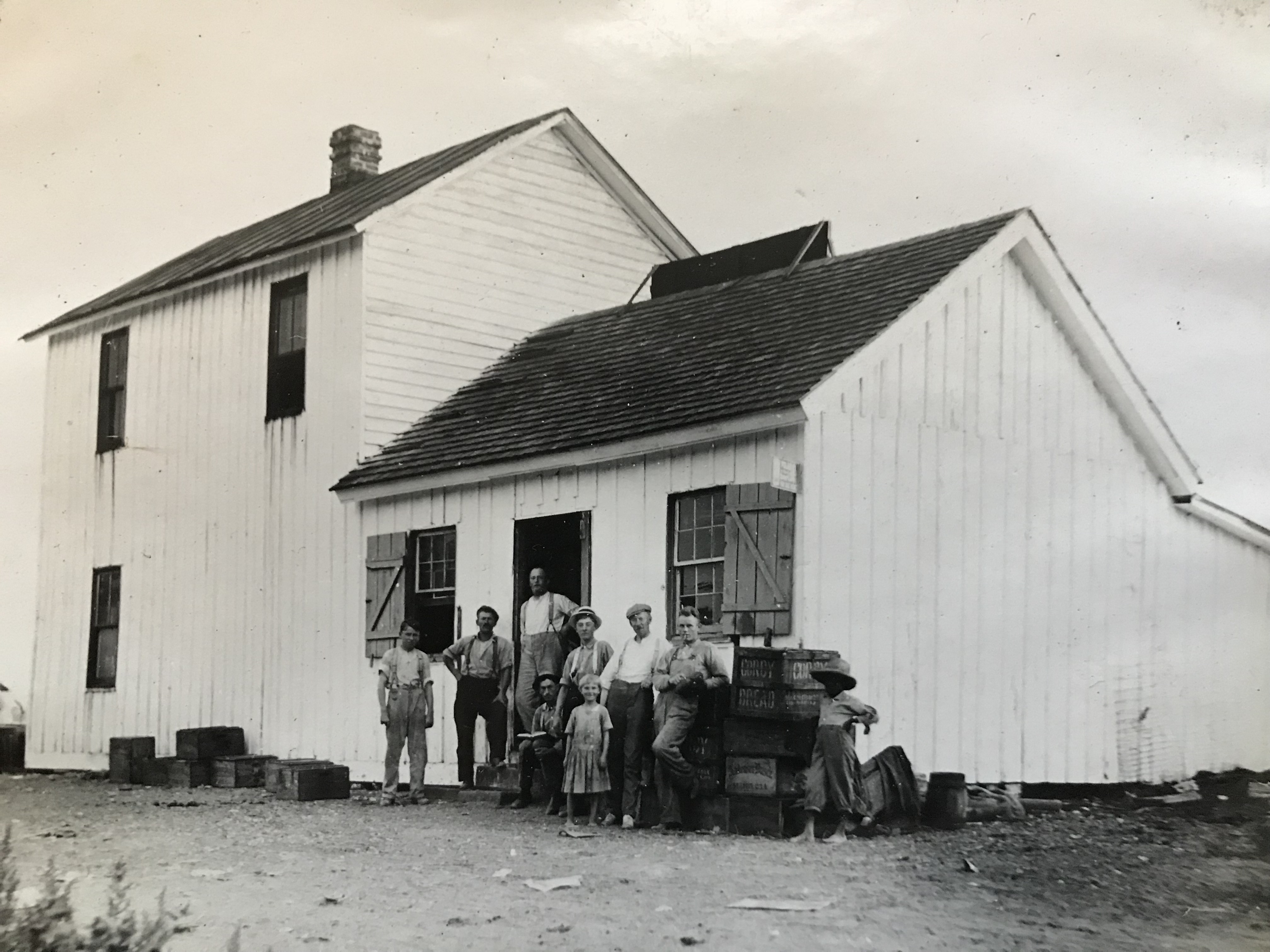
This unusual group of people posing at the back door of an unidentified building may be running a store. The crates and debris on the ground, and the back side of a possible sign on the roof indicate a mercantile rather than a home.

This family is clearly dressed in their Sunday best on a winter day. The sidewalk in front of their house is made of wooden planking.

Several women can be seen on this house’s front porch, with its flowering vines strung from trellis to rail.
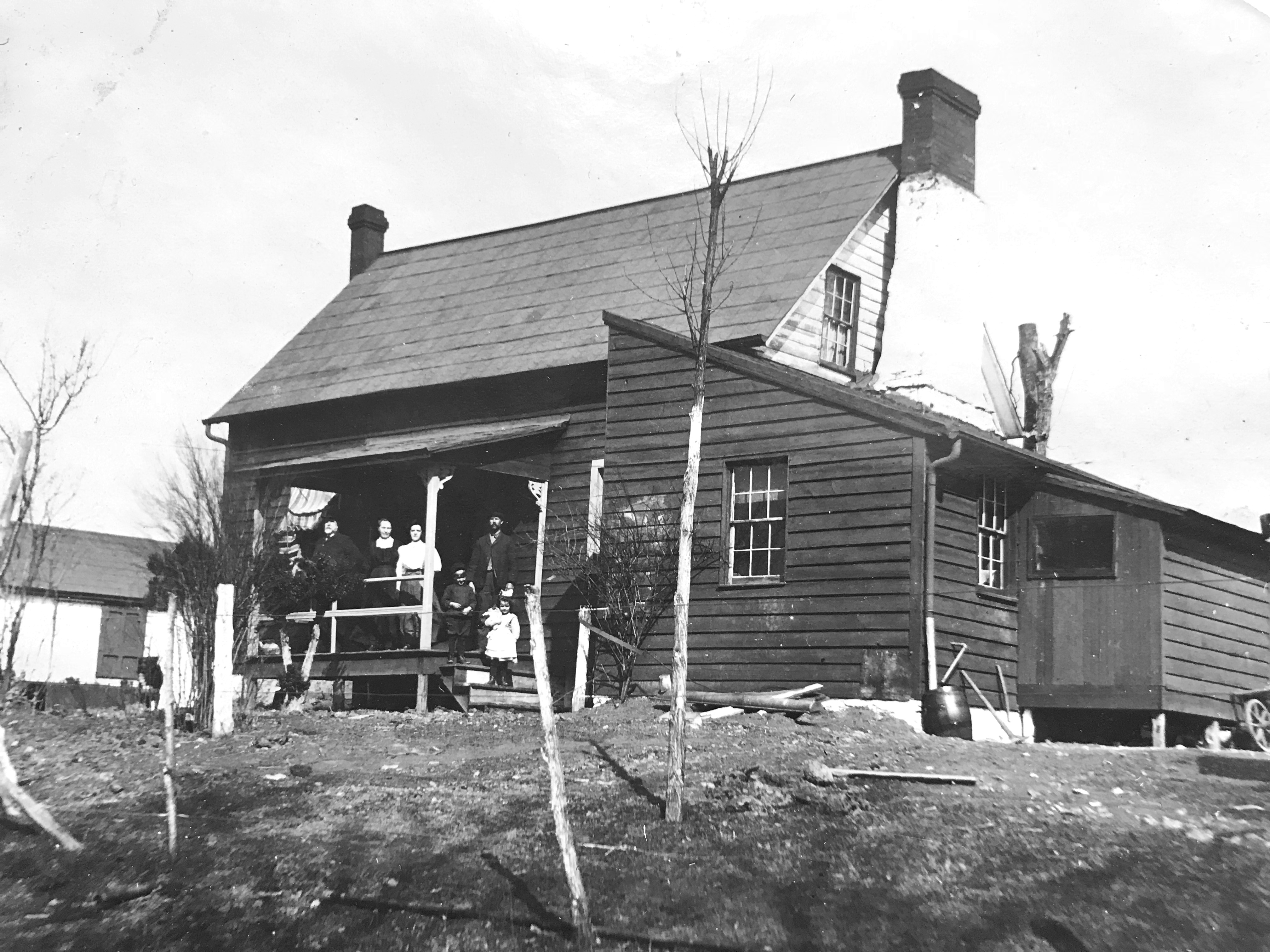
This modest house has had an addition put on–it looks rather new and perhaps Father wished to show it off. Here, a portion of the family poses on the front porch (possibly with a set of in-laws)…
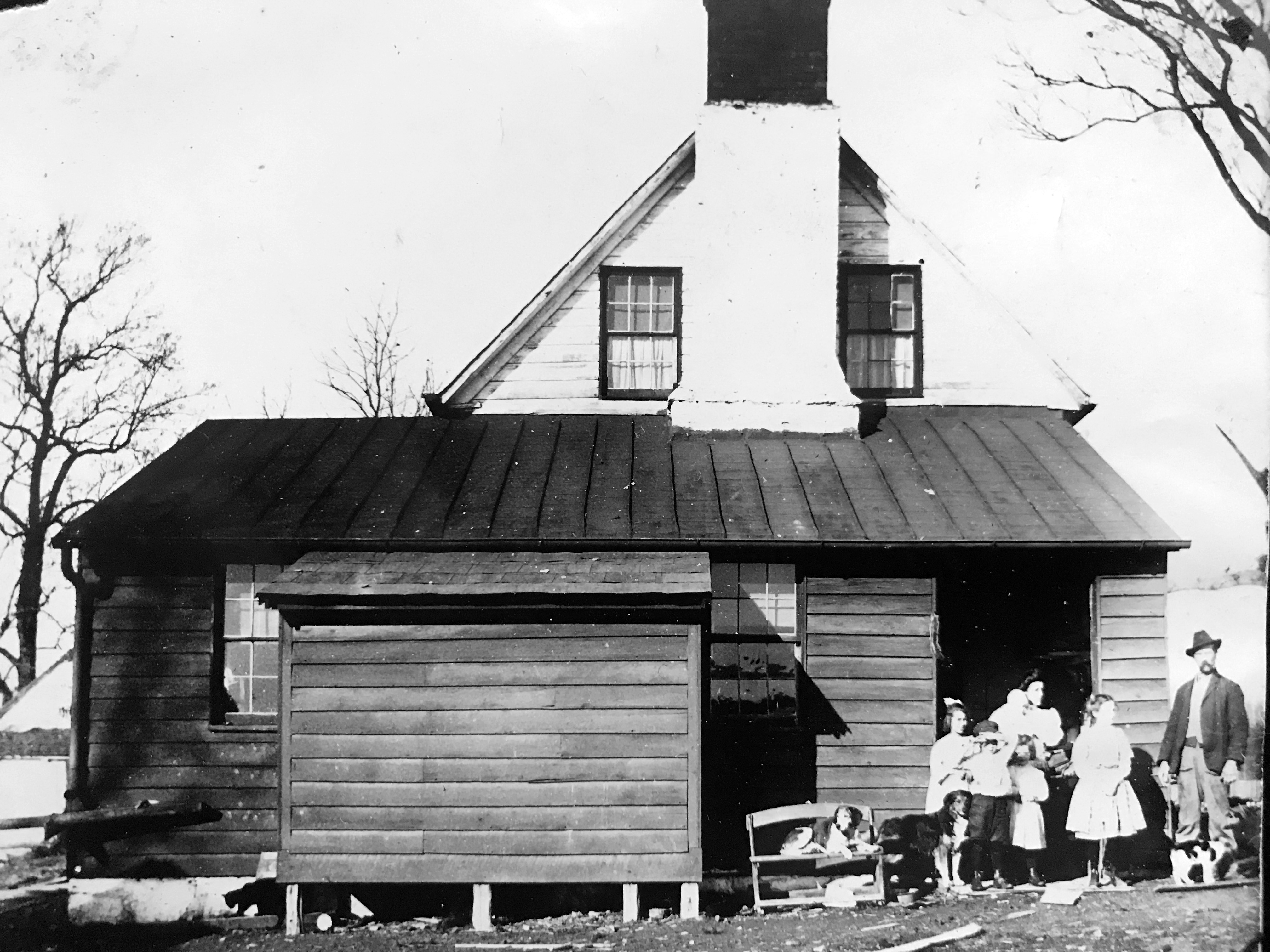
…and here a different grouping are at the side door. In this less formal shot, there are far more children, as well as two dogs and a cat in the picture.

One downside to photographing an entire house is you lose the detail of each family member. The families in this photo and the one below, clearly cared more about seeing their faces than their houses. Notice the youngest girl above couldn’t keep still long enough, so her face is blurred.
Modern observers of these photographs are often drawn to the poverty, or at least the relative poverty of the people in the images. In reality, however, the front-of-home family photograph was a sign of wealth. It’s function was to record a moment in which a family was prosperous enough to have their own homes, their own horses or tractor.

There is a chicken near the steps in the photo.
Around the turn of the century, middle class Americans could start to afford their own personal cameras.
Early Days of Automobile Repair
The first car was created and it was good. A few days later, it broke down. That was bad. This led, of course, to the creation of the auto mechanic.
With a surge in automobile purchases in the early 1900’s, and an equal amount of car accidents and breakdowns, Rockville Garage/Reed Brothers Dodge began offering auto repair services as early as 1914. By the early 1900s, there were a great deal of cars on the roads, which meant that manufacturers and dealerships needed to provide drivers with the means of repairing their vehicles in the event of a collision or breakdown. To meet this demand, manufacturers started making standardized parts that could easily replace damaged components of a vehicle. Dealerships were now able to employ mechanics that were able to easily repair vehicles using the prefabricated parts provided by the manufacturers.
The First Auto Mechanics of Rockville Garage
First auto mechanics of the Rockville Garage: Lewis Reed, (first name unknown) Long and Phillip Reed.
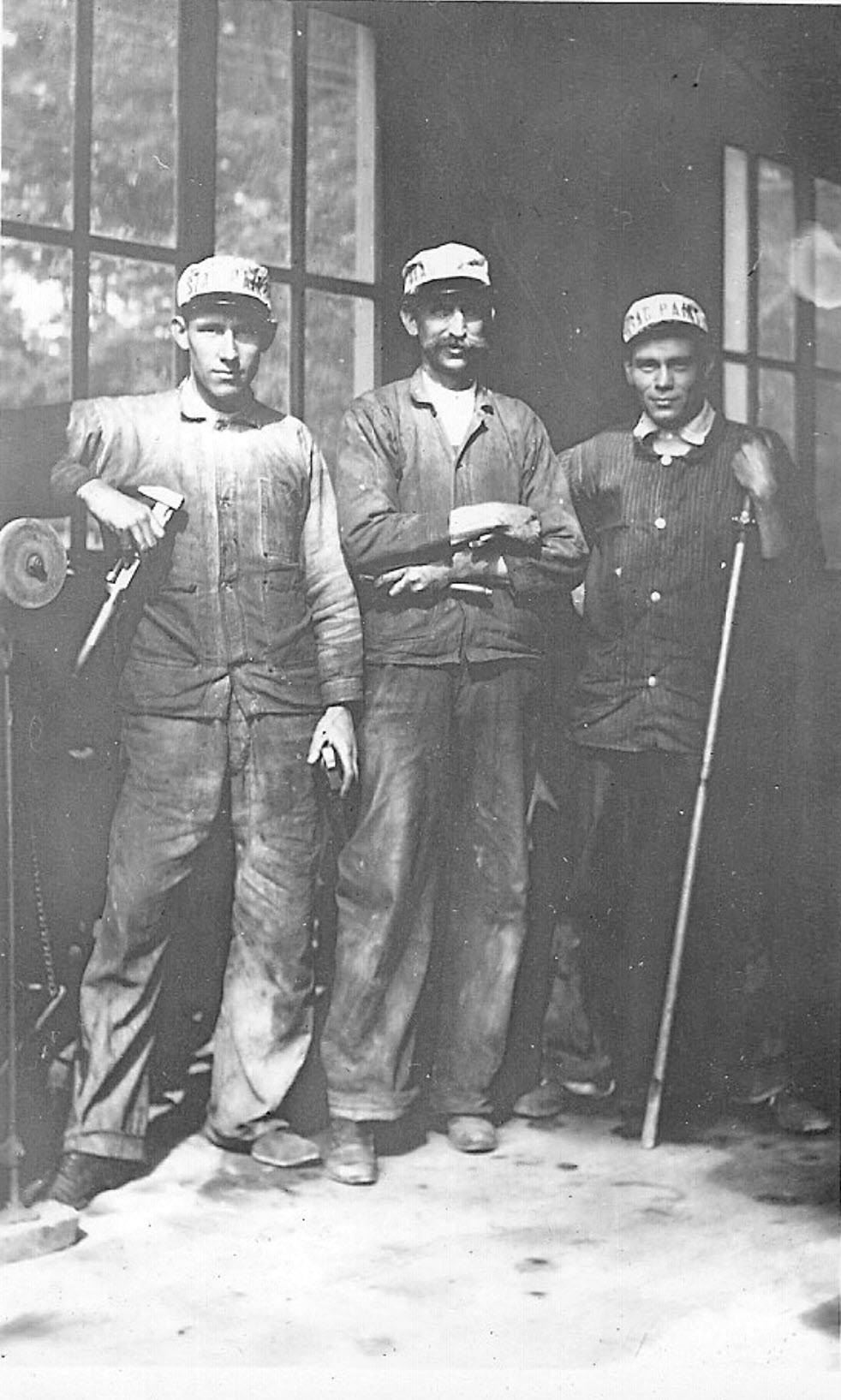
A mechanical aptitude was necessary to be a dealer in the early 1900’s. When cars were shipped to the dealer from the manufacturer, they arrived partially assembled in railroad boxcars. It was the dealer’s responsibility to unpack and assemble the cars at the rail yard and drive them back to the dealership. Mechanics were often needed to repair the new cars if they broke down along the way. Lewis Reed was an expert auto mechanic. He received his automotive training at the Pierce-Arrow factory in Buffalo, New York, the Dodge Hamtramck and Hudson Motor Car factories in Detroit, Michigan and The Automobile College of Washington.
The Automobile College of Washington
The Automobile College of Washington was organized in 1909 for the purpose of training young men to become chauffeurs and repair cars. The school was the pioneer institution of its kind in Washington, DC. The school had a repair department, machine shop, and a chassis construction classroom for the very latest automobiles. Some of the cars used in the school: the Washington A-1 Touring Car, Pope Tribune, Ricketts Model G 6-cylinder, Peerless 35hp; and the Mitchell 25hp.

The Automobile College of Washington from the August 11, 1909 issue of The Horseless Age magazine (Google Books)
During the early days when automobiles had left the factory, routine maintenance and repair was largely left up to the owner as the auto repair industry was still in its formative stages. For the early generations of cars and car drivers, how long an automobile remained in good operating condition was left up to the owner and their routine service visits.

Lewis Reed hand cranking an old car. The hammer in Lewis Reed’s right hand is for straightening the hand crank. Apparently they can bend when starting big engines. The license plate is MD 10307 dated 1913.
Many early auto dealers started out of existing garages. Business owners of the early dealership soon discovered they could create a market not just for sales but for repair as well. Between 1900 and 1930 the American automobile business was built by tinkerers and visionaries and the repair and maintenance industry was no different. In 1932, automobile manufacturing reached its lowest point since 1918 and the advent of the used car rose to great prominence in the automotive community.
Lewis Reed, Chauffeur-Mechanic
The year is 1910 and you’ve just purchased a brand new automobile. To show it off for the first time, you’ve hired a knowledgeable chauffeur. You sit on a padded seat while the chauffeur tends to the engine. Though it takes a while to start up, your new ride can reach around 37 mph. The ride is a bumpy one, and you could probably walk faster than the car travels. Ooops!!! One of the wheels has popped off as you go around a bend. Chauffeurs were not only trained to be proficient with their driving skills, but they also had to keep the luxury automobiles in tip-top shape, which is where Lewis Reed’s mechanic training – a vital skill in the early days of motoring – would have come into play.
Prior to World War I, Lewis Reed’s love of automobiles led him to becoming a chauffeur. At the dawn of the early 20th century, society was transitioning from horse-drawn carriages to automobiles. Having grown up in a blacksmith family, he was well positioned to move to the new technology.

Chauffeur Lewis Reed is tending to the motor. Photo taken circa 1910.
Chauffeur-mechanics of the early 1900s were the first group to earn a living working on automobiles. Wealthy people employed private chauffeur-mechanics to not only drive, but also maintain and repair their large, expensive automobiles — rather than learn to do it themselves. The vehicles of the time came with mobile toolboxes often resembling a small hardware store tucked away in the trunk. The early 1900s Pierce-Arrow toolkit included extra intake and exhaust valves, not exactly your typical roadside service. During the height of travel season, Spring through Fall, oil changes were required almost weekly. As you can easily surmise, there had to be someone to keep track of all of the maintenance and upkeep of the vehicle as well as the daily driving. The 1910 census indicated that 23-year-old Lewis Reed was working as a machinist. Lewis worked as a chauffeur from roughly 1910-1914, before he became involved in the business of selling and repairing automobiles.

Grafton Reed, Mechanic & Garage Manager, Rockville Garage, ca. 1921
Grafton Reed was a brother of Lewis Reed and a part of the dealership’s first shop force. Grafton started working as a mechanic at the dealership in ca. 1918. According to his U.S. World War I Draft Registration Card, 1917-1918, his occupation at the time was listed as Garage Manager, Rockville Garage. Phillip Reed, another brother of Lewis Reed, was also a part of the dealership’s first work force. Phillip came to work for the dealership in 1916 and worked as a mechanic until 1944.
During the Great Depression, many consumers held onto their vehicles for longer periods of time and the lubrication of the vehicle became a matter of great importance to extend its running life. Author and Automotive Historian Robert Genat wrote, “The Depression of the early 1930s proved devastating for the marginally financed automakers. Dealerships for the top-selling cars survived the drought by virtue of their parts and service departments for maintenance and repair of consumer automobiles.” Like most other businesses, the Great Depression hit hard and Reed Brothers had to rely on its Service Department to make ends meet. But, the dealership survived through those hard times.
100 Years Ago Today: First Ever Auto Races Held at Rockville Fair
Interestingly, horses made the first automobile speed races possible. Harness racing was one of the main attractions at the Rockville Fair race track before the introduction of the automobile and the subsequent popularity of racing cars. The race track was a half-mile dirt racing oval with wide, sweeping curves and a grandstand for spectators, and was easily adapted for bicycles, harness racing, and the sport of car racing.
The use of horse tracks for racing brought another change – the switch from amateur drivers to professionals. Cars were getting bigger and faster, and racing was becoming too dangerous for “gentlemen.” What had begun as entertainment for wealthy car owners had become a professional sport.
From The Evening Star (Washington, DC) 24 August 1923
ROCKVILLE AUTO RACES LISTED FOR TOMORROW
Speed records will be placed in jeopardy at Rockville Fair tomorrow afternoon when a half score of professional drivers will compete in a seven-event program.
Featuring the program is the record trials in which Frank Ripple, Canadian speed star and dirt track champion will drive his 140 horsepower aeroplane motor in an effort to hang up some new marks. Every driver on the track will be eligible to enter the time events, but speed fans look to Ripple.
Two foreign machine and six American-built cars are listed to start.
Early action shots like the ones below are rare, however, Lewis Reed was there to capture six epic moments of race history through the lens of his camera that day.
THE FIRST RACE
From The Baltimore Sun, August 27, 1923:
This is the first year that a Rockville Fair has continued through Saturday. The extra day was added this time as an experiment, the management believing that by substituting new features the additional day could be made a success. Automobile races, the first ever held at Rockville, were the day’s principal attraction and they attracted a good-sized crowd.
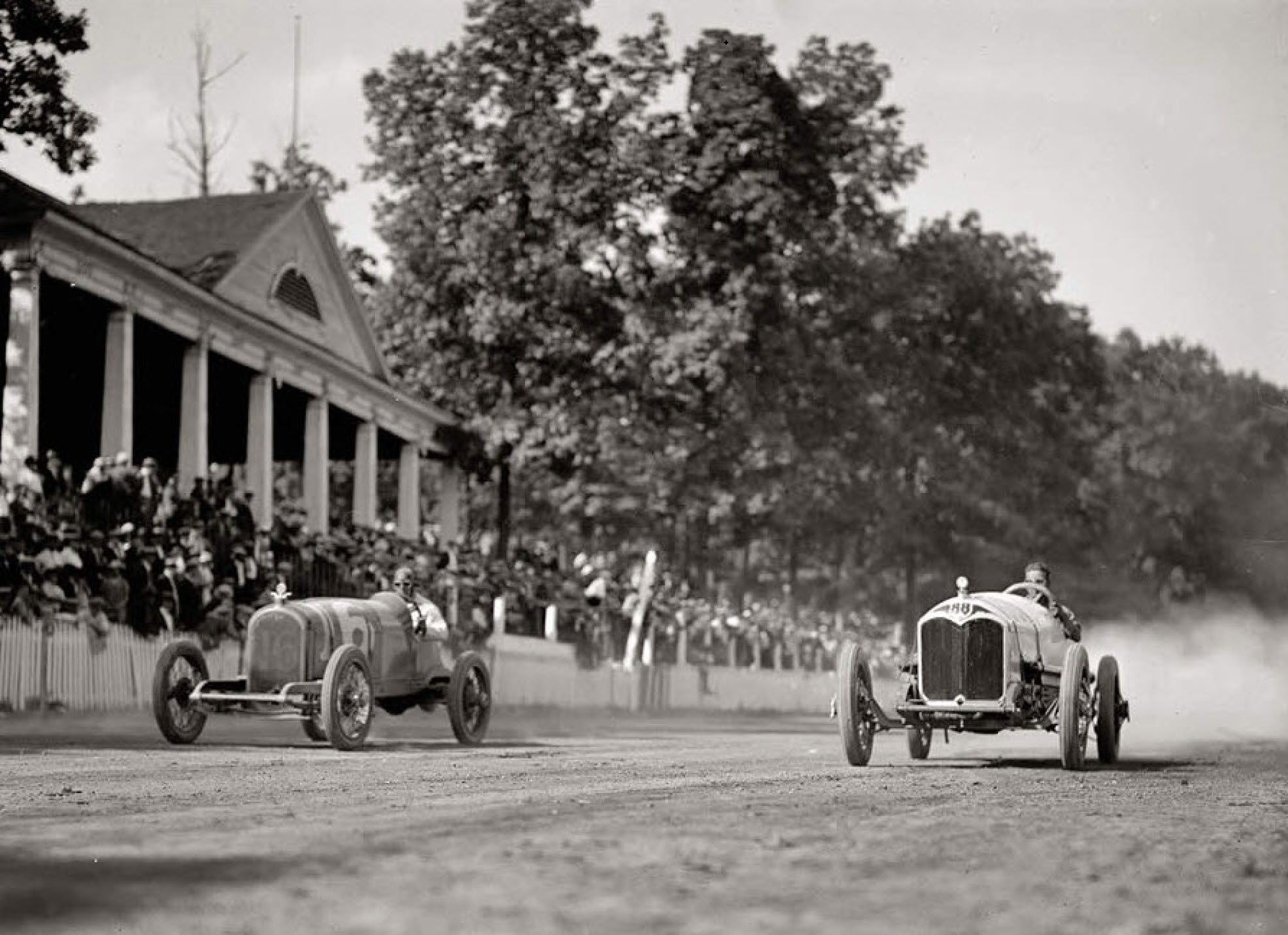
Rockville drew huge crowds for auto races. Rockville Fair, August 25, 1923. Photo by Lewis Reed

Dusty Action – 1923 photo of the exciting auto races at Rockville Fair. Five racers are just coming around the bend on this dirt track with their tires spinning up dust in their wake. Photo by Lewis Reed

Race car drivers deep in dust round a turn at the Rockville Fair auto races. Print made from a Lewis Reed glass negative.
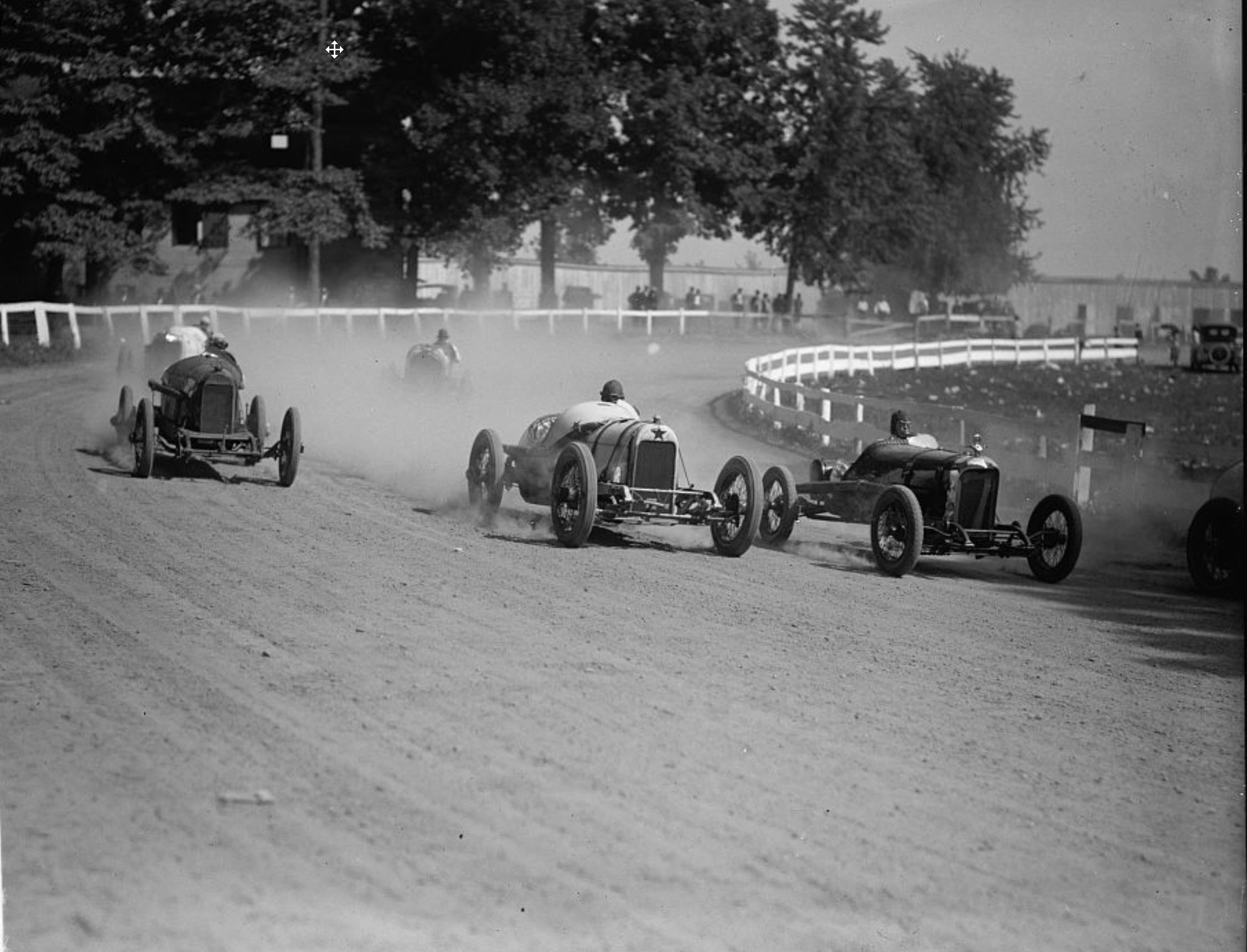
High-powered race cars rounding a wide, sweeping curve at the Rockville Fair auto races, August 25, 1923. Print made from a Lewis Reed glass negative

Two-man race car. Some early race cars included both a driver and a ‘riding mechanic’. One of the key jobs of the second man in a race car was to look backward and alert the driver to what was going on behind him. Photo by Lewis Reed
Early race car drivers were required to have a riding mechanic, otherwise it was voluntary. Riding mechanics, who in addition to being lookouts, kept an eye on tire wear and would even hop out of the car and run back through the infield to get fuel.
This photograph was featured as a part of the ‘London Array’ Series of Impossible Engineering that was broadcast on January 24, 2019 on Discovery’s Science Channel. The photograph was used on the program that featured a segment on the development of the race car.

More dirt track action. Skinny tires make for slippery turns. Photo by Lewis Reed.
ALONG WITH AUTO RACES, AUTO POLO DEBUTED AT THE ROCKVILLE FAIR

From The Washington Post, August 25, 1923
Note in the program above, that in addition to racing, there were two auto polo events.
WHAT ON EARTH IS AUTO POLO?

Given that early automobiles were marketed as replacement horses, it was inevitable that the game of auto-polo would be invented. The idea of playing polo with cars had been tossed around starting in about 1900. It took 10 years, and the Ford Model T, to make it practical.
In 1912, some people thought it would be a good idea to strip the bodies off Model Ts, and put together some two-car teams to whack a ball around with mallets. On July 12, they did just that, playing with oversized croquet mallets and a two-pound, basketball-sized ball. Two cars took the field, and two more tended their respective goals.
From The Daily News, Frederick, Maryland, August 24, 1923:
Thousands of people attended the Fair on Thursday, which was the biggest day of the week, at least from the attendance standpoint. By two-o’clock the grandstand was so crowded that even standing room was at a premium. The racing events of the afternoon were unusually good. As special grandstand features there were auto polo and stunt riding.
Any form of safety was completely absent, unless you count the occasional presence of a hat. The cars were protected with roll bars in back and around the radiator, but the drivers, not so much. The game consisted of five 10-minute periods. It was hard on drivers, cars, and the field. There was no limit on car substitutions, and as many as a half-a-dozen per team might be demolished during the game, along with the stands, goalposts, referees (on foot on the field) and anything else that got in their way.

1922 auto polo match in Los Angeles. The referees job is very dangerous as the cars careen about the field and smash into each other. Google stock image.
All we hope is that this lunatic game will not spread.Automobile Topics, Nov. 16, 1912
AUTO RACES MARK END OF 5-DAY ROCKVILLE FAIR
From The Sunday Star, Washington, DC, August 26, 1923:
Thrilling automobile races brought the annual Rockville Fair to a close this afternoon. The sport was as innovation so far as Rockville was concerned.
Seven high-powered cars, operated by some of the crack drivers of the country, participated. The events ranged from one to ten miles in distance, and some fast time was made. Excepting that of Thursday, the largest crowd of the five days was on hand.
Auto Polo Credit: May 2010 issue of Hemmings Motor News
Books

Related Resources


Copyright Notice

Reed Brothers Dodge History (1915-2012) by Jeanne Gartner is licensed under a Creative Commons Attribution-NonCommercial 3.0 Unported License.
 Reed Brothers Dodge History 1915 – 2012
Recent Comments