
Who Gets This? Good as New 1931 Harley Davidson Only $100!
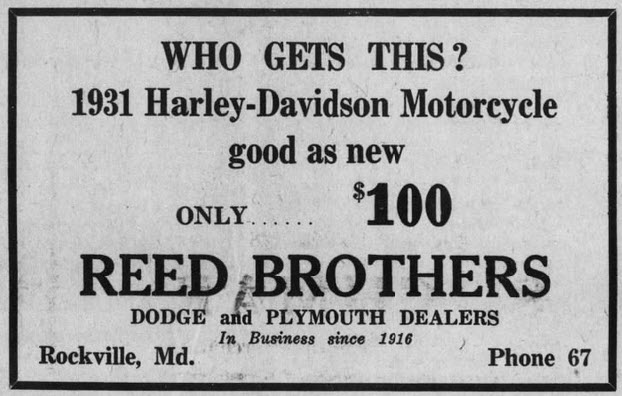
Montgomery County Sentinel, Feb 2, 1933
Lewis Reed, an avid motorcycle enthusiast, also acquired and sold Harley-Davidson Motorcycles at his dealership. Between 1915 and 1950, Reed Brothers Dodge sold more than just cars. In addition to automobiles, the dealership also sold a wide variety of vehicles such as farm tractors, delivery trucks, firetrucks, school buses, and apparently, motorcycles.
Rockville’s Park Avenue Motorcycle Club, 1912
At the turn of the century, before cars were even around, Lewis and Edgar Reed, along with brother-in-law Bernard Hanshew, began their riding adventures with a group of friends from the Park Avenue community in Rockville in the early 1900s.
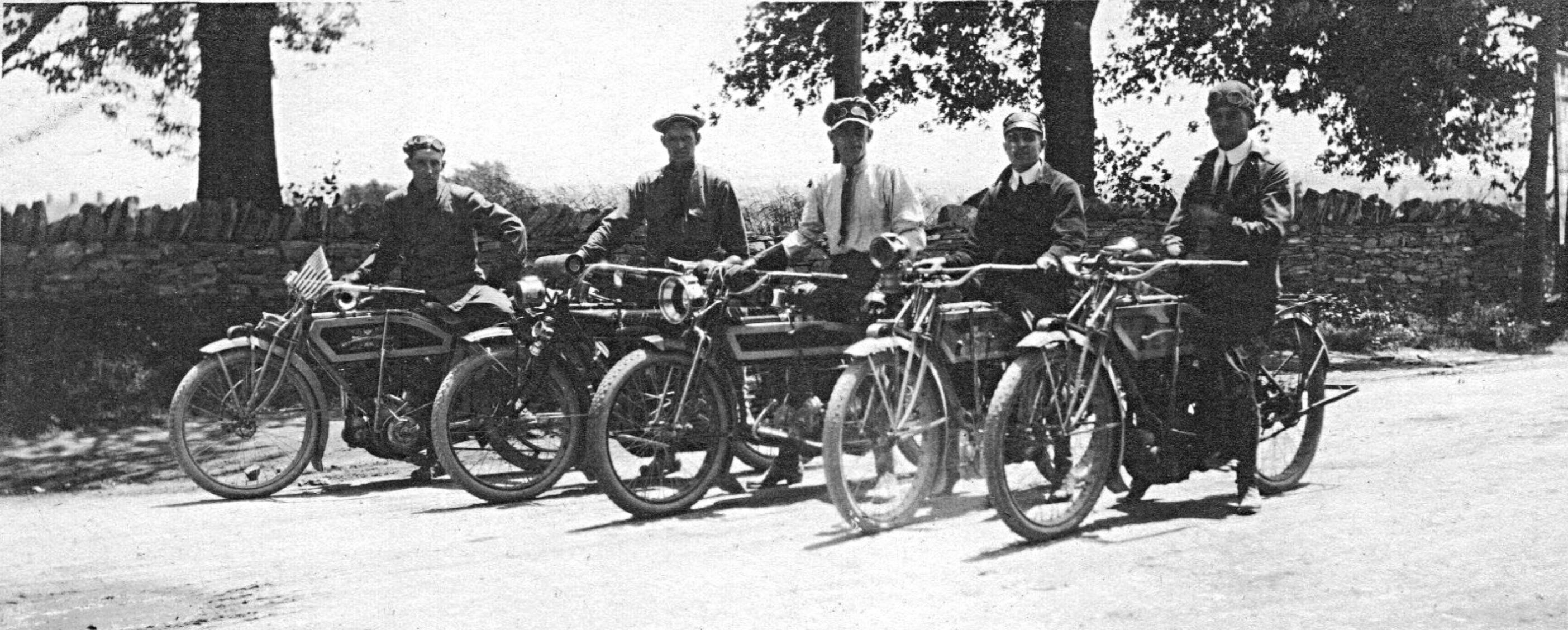
First motorcycle club in Rockville, Maryland. One Harley Davidson, one Indian, and Three Excelsior motorcycles on Park Avenue, 1912. Lewis Reed, far left.
Early motorcyclists were often pictured in riding groups. From its beginnings, motorcycling developed very much as a social activity. Gentlemen of the day often used it to spice up their sunny weekends and impress ladies.

On Park Avenue, ca. 1912. L-R: “Happy” Hicks, Lewis and Edgar Reed, Frank Higgins, and Alvin Luctor.
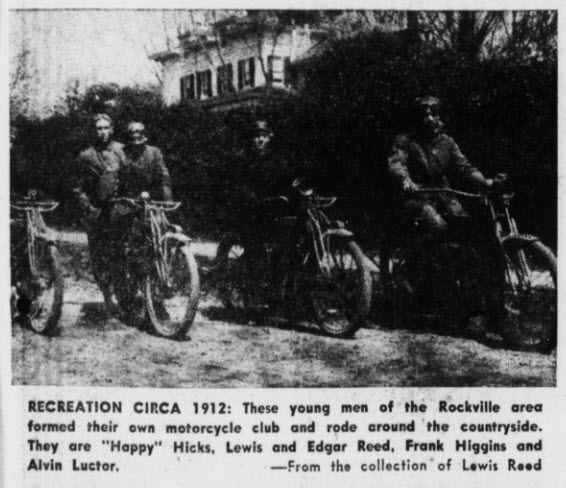
Montgomery County Sentinel. September 29, 1955, Centennial Edition

Lewis Reed on his Harley Davidson circa 1915 somewhere outside Frederick, Maryland.
Adventurers, enthusiasts, friends, and family…these are the pioneers of Montgomery County who made riding a social pastime, which has carried on in motorcycle travel today.
Montgomery County’s Trolley Era 1900-1935
Trolleys existed in American cities before the Civil War, but a line did not connect Washington, DC to Rockville, Maryland, until 1900. Lewis Reed had the foresight to aim his camera at early trolley cars, providing rare glimpses of these unique vehicles, as well as views of Montgomery County’s rapidly changing landscapes in the early 20th century.
From the “Washington Star,” regarding the Rockville cars:
The cars do not differ materially from those found on other lines – except no place to hitch horses …. The interior of the car is fitted up with mahogany …seats with springs are upholstered in slate-colored plush.
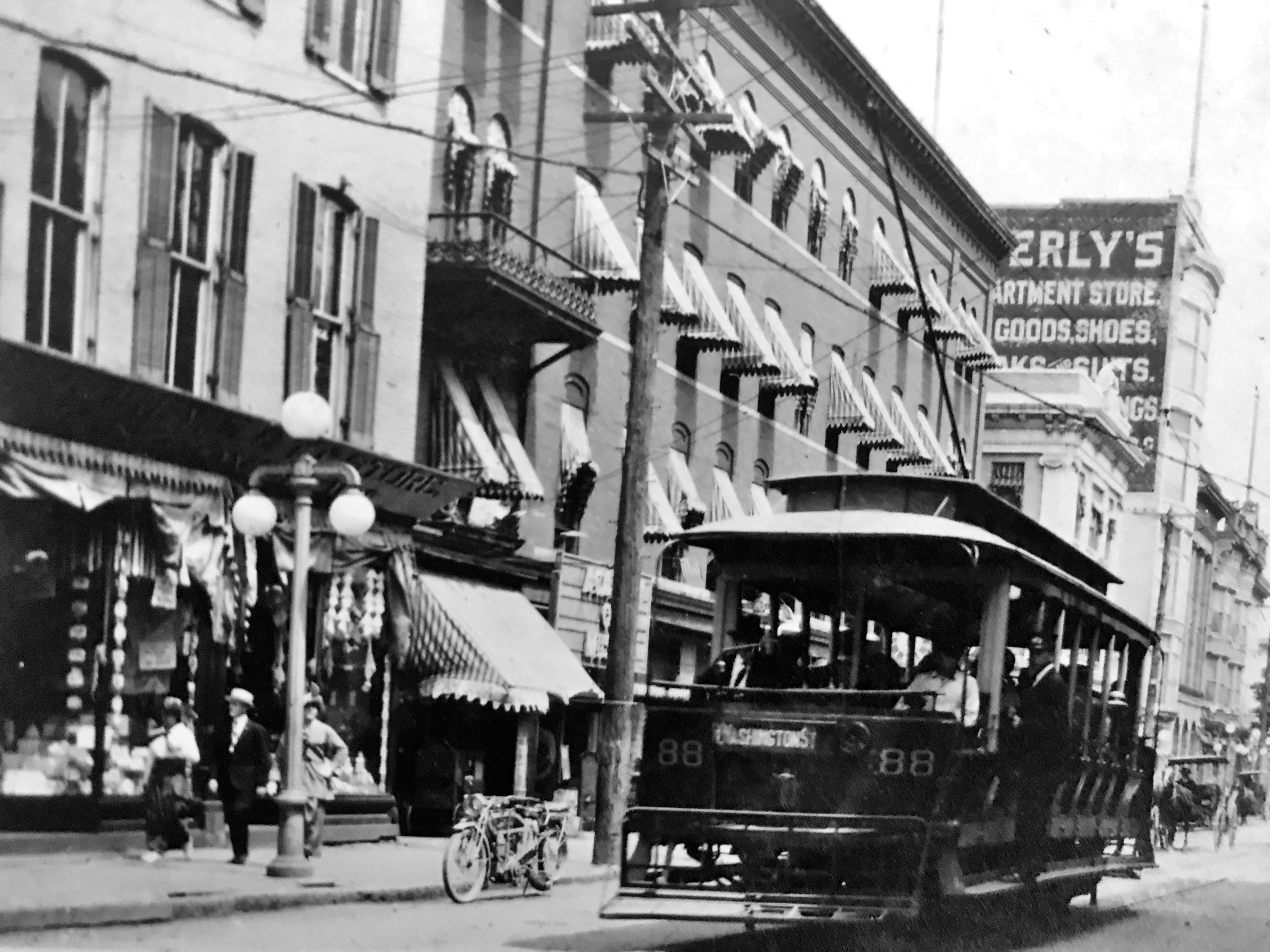
Trolleys were at home both in the open countryside and in city streets, mingled with pedestrians, cyclists, and horse-drawn vehicles. This scene, taken by Lewis Reed in Baltimore in 1913, shows the trolley in its more typical urban habitat.
Trolley cars played a big part in early county travel. From 1900 to 1935, street cars plied the track from the Washington terminus at Wisconsin and M Streets, NW, up Wisconsin and then Old Georgetown Road, over a steel trestle just before the cars approached Georgetown Prep, through dense woods at Montrose and onto the Rockville Pike, through Rockville on Montgomery Avenue, to Laird Street, and back again. The cars could be driven from either end. In 1929, W&R ran 24 trips a day between 6:30 a.m. and 12:30 a.m. to connect Rockville and Washington. Major stops along the line included Georgetown, Alta Vista, Bethesda, Montrose, Halpine, the Fairgrounds, Courthouse Square, and Chestnut Lodge. Six switching stations and side tracks enabled street cars to pass as they went in different directions. As automobiles and buses rose in popularity and availability, trolleys began their descent into the history books and by 1935, they were pretty much gone from Montgomery County.
Below is a collection of photographs taken by Lewis Reed that shows what the old trolley cars looked like, highlighting what riding the trolley car was like in the early 1900s. From wood-paneled exteriors with ceiling fans to advertisements, here’s a nostalgic look back at Montgomery County’s Trolley era through the lens of Lewis Reed. (click on photos to enlarge)
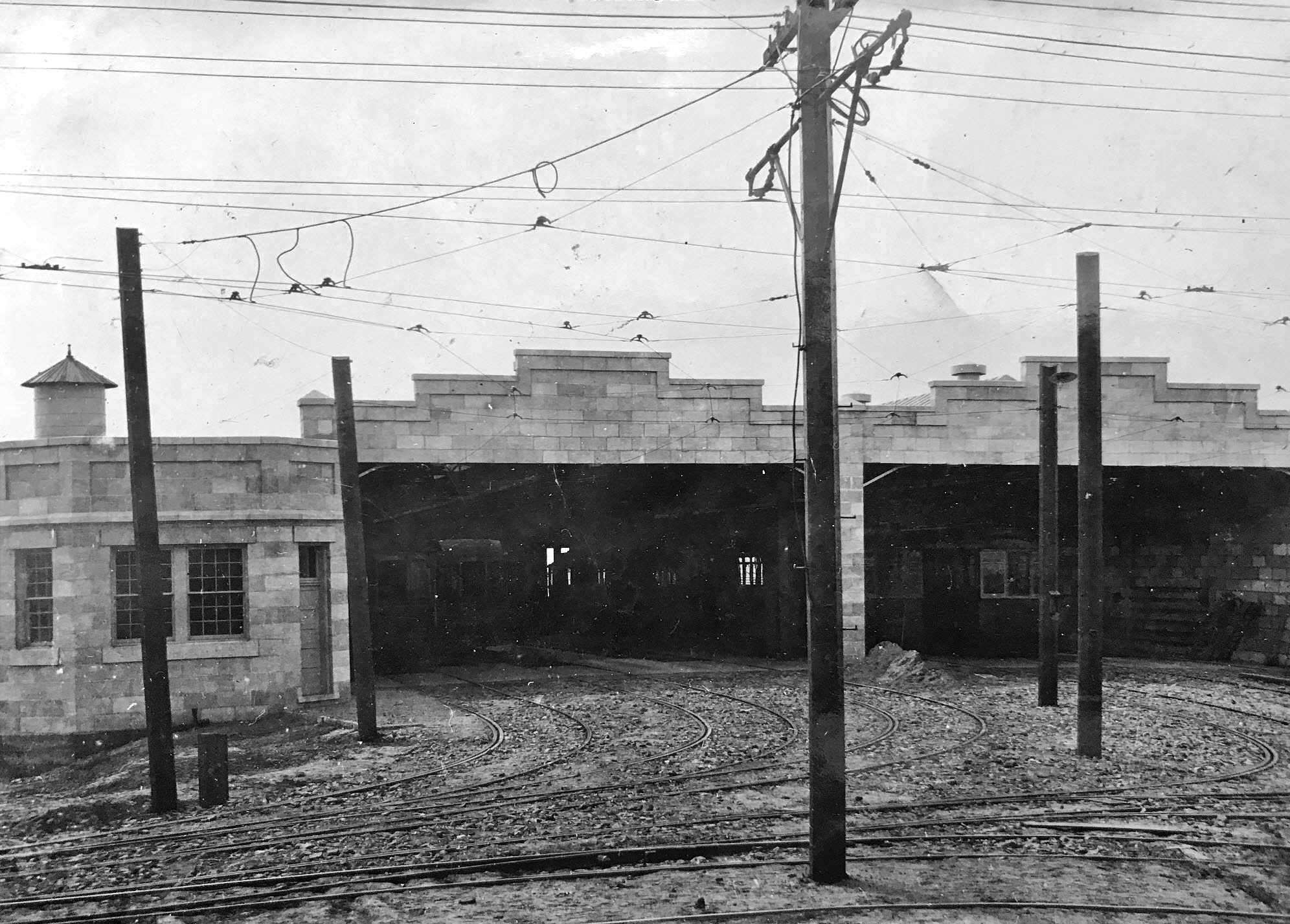
Western Avenue car barn for the streetcars that served the Georgetown-Tenelytown-Bethesda-Rockville line. Photo by Lewis Reed
A car barn is the streetcar equivalent of a garage for buses. It’s a covered facility in which streetcars were stored overnight, cleaned and given light repairs before the next day’s run. The car barn for the trolleys at the time was the second Western Avenue car barn for the streetcars that served the Georgetown-Tenelytown-Bethesda-Rockville line. It was located at on west side of Wisconsin at between Harrison and Jennifer. It was demolished and later replaced by a purpose-built bus garage which is still in use by WMATA. The National Capital Trolley Museum was instrumental in helping to identify the car barn in the photo above.
Leroy King described the street car below as one of Washington Railway’s majestic “Rockville” cars, at 4 switch in 1908. Note multiple unit jumper box under center front window.
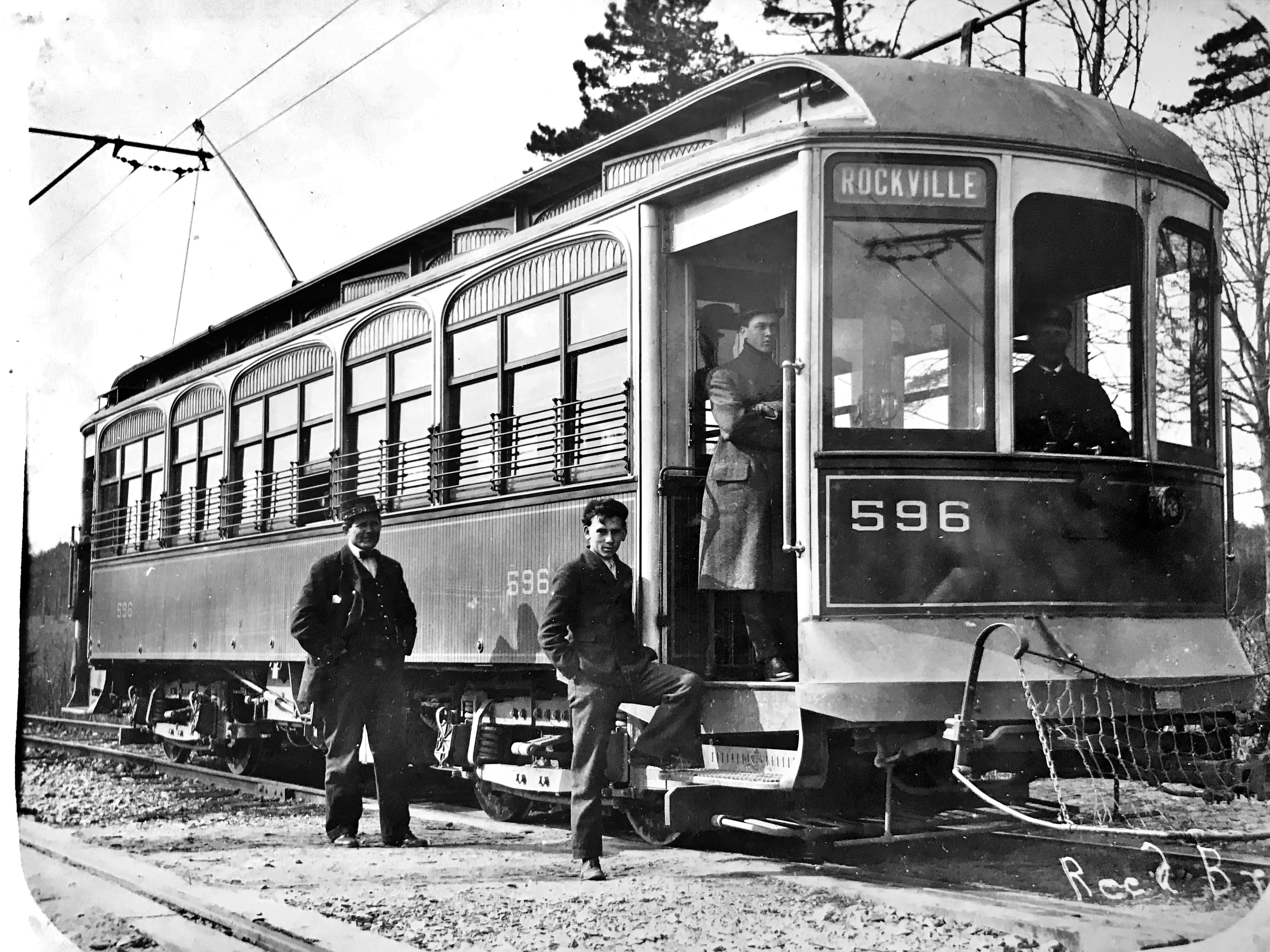
Passengers board car #596 heading to Rockville in 1908. These distinctively styled cars, popularly known as ‘Rockville’ cars, were also used on Washington Railway’s Maryland line. Photo by Lewis Reed, 1908
Traveling in snow was sometimes hazardous to trolley cars, as evidenced by the trolley pictured below which derailed the train tracks and plowed into a telephone pole at Montrose Road and Rockville Pike. Lewis Reed was there to capture the accident from two different perspectives using a five-by-four box camera which produced images on a glass plate.
In populated areas, street cars kept speeds to 12 mph (6 mph at intersections), but in open country they could get up to 40 mph.
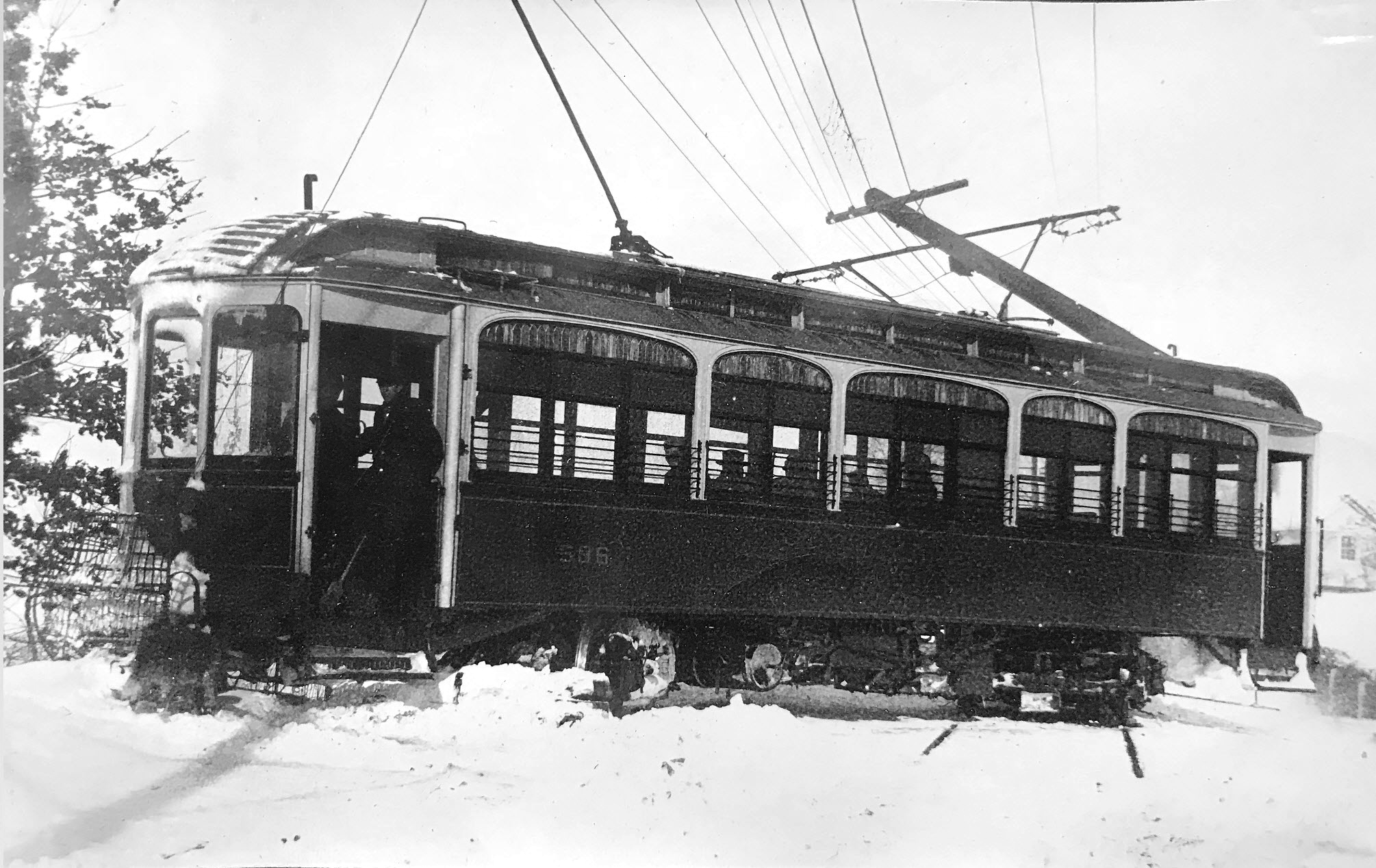
Derailed trolley at Montrose Road and Rockville Pike. Photo by Lewis Reed
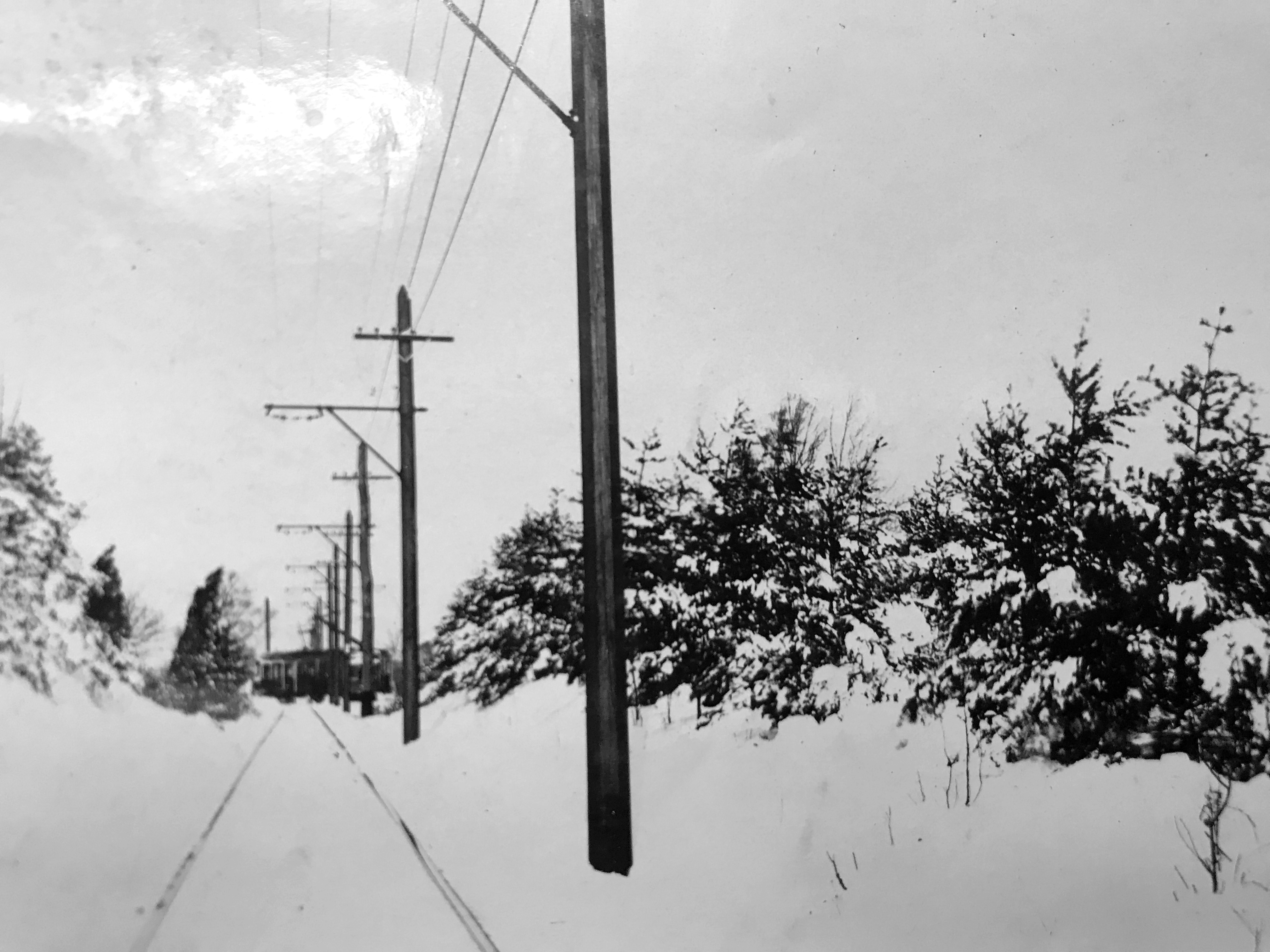
Derailed trolley through dense woods at Montrose Road and Rockville Pike. Photo by Lewis Reed
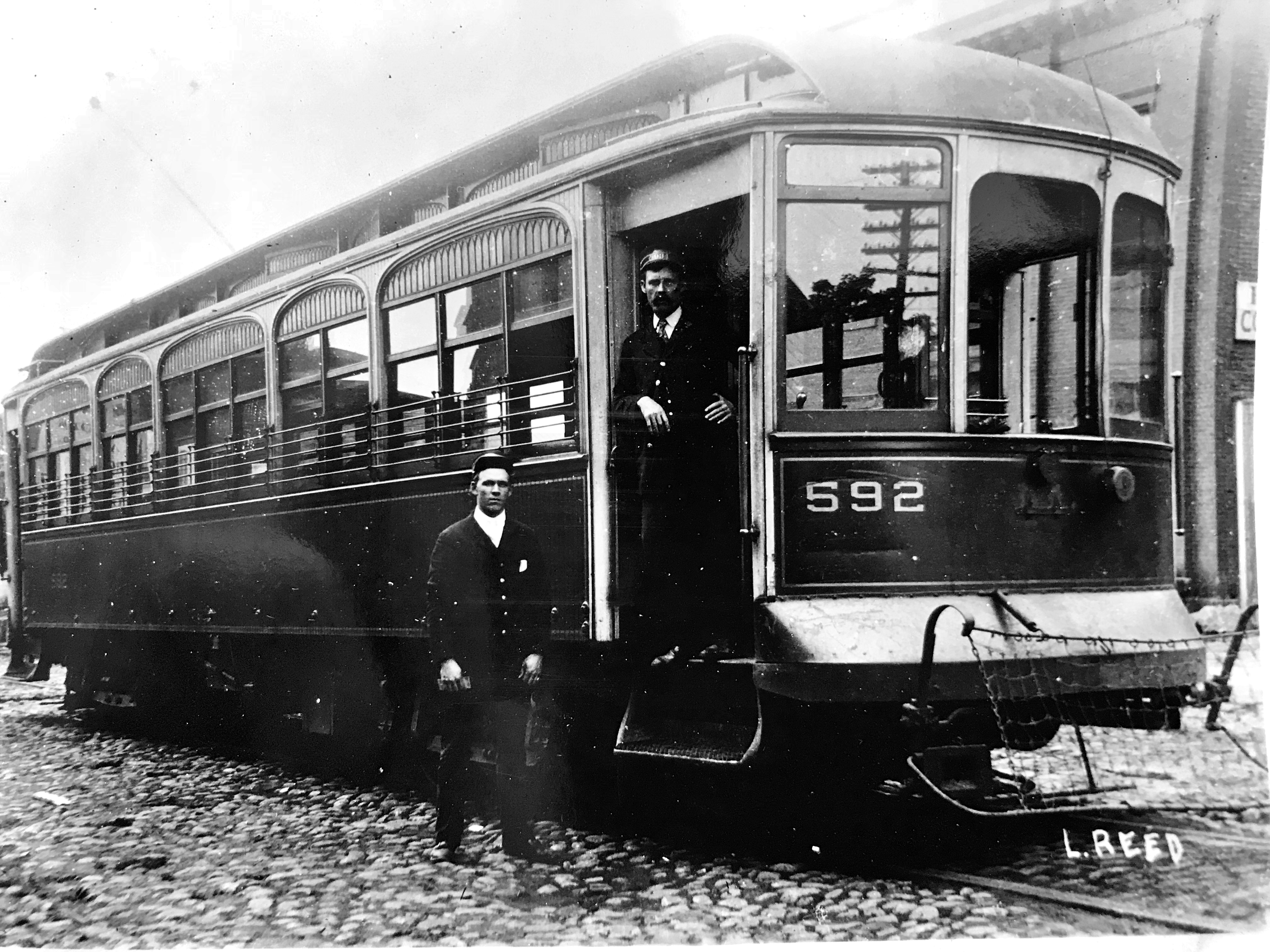
Rockville Trolley Car #592. Photo by Lewis Reed
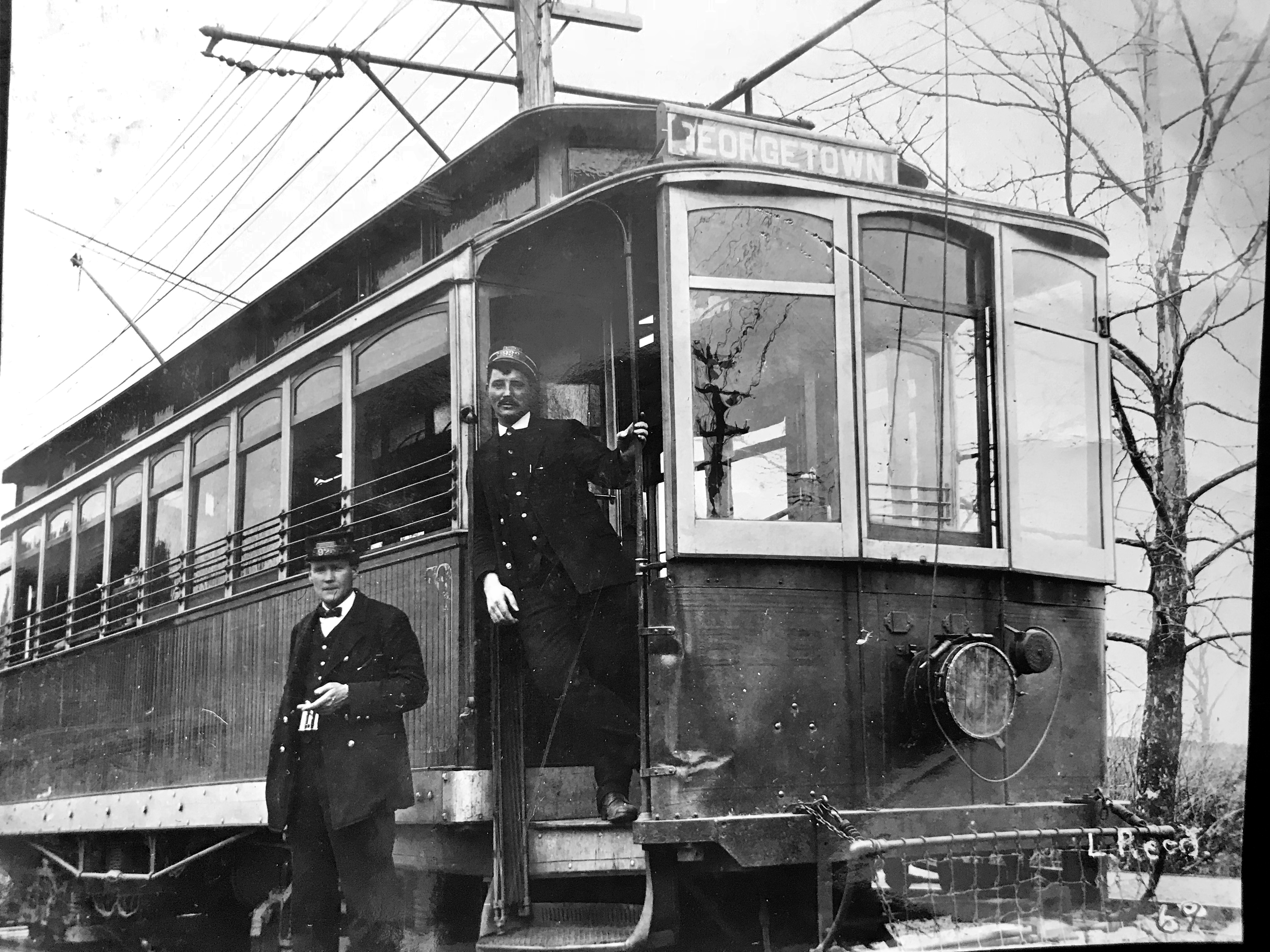
A motorman and conductor on a Georgetown trolley car. Photo by Lewis Reed, ca. 1908
Note the “cow catcher” in the front, and the multiple unit jumper box under the center front window. Each car had a two-man crew (a conductor and a motorman) one to operate the car and the other to collect fares.
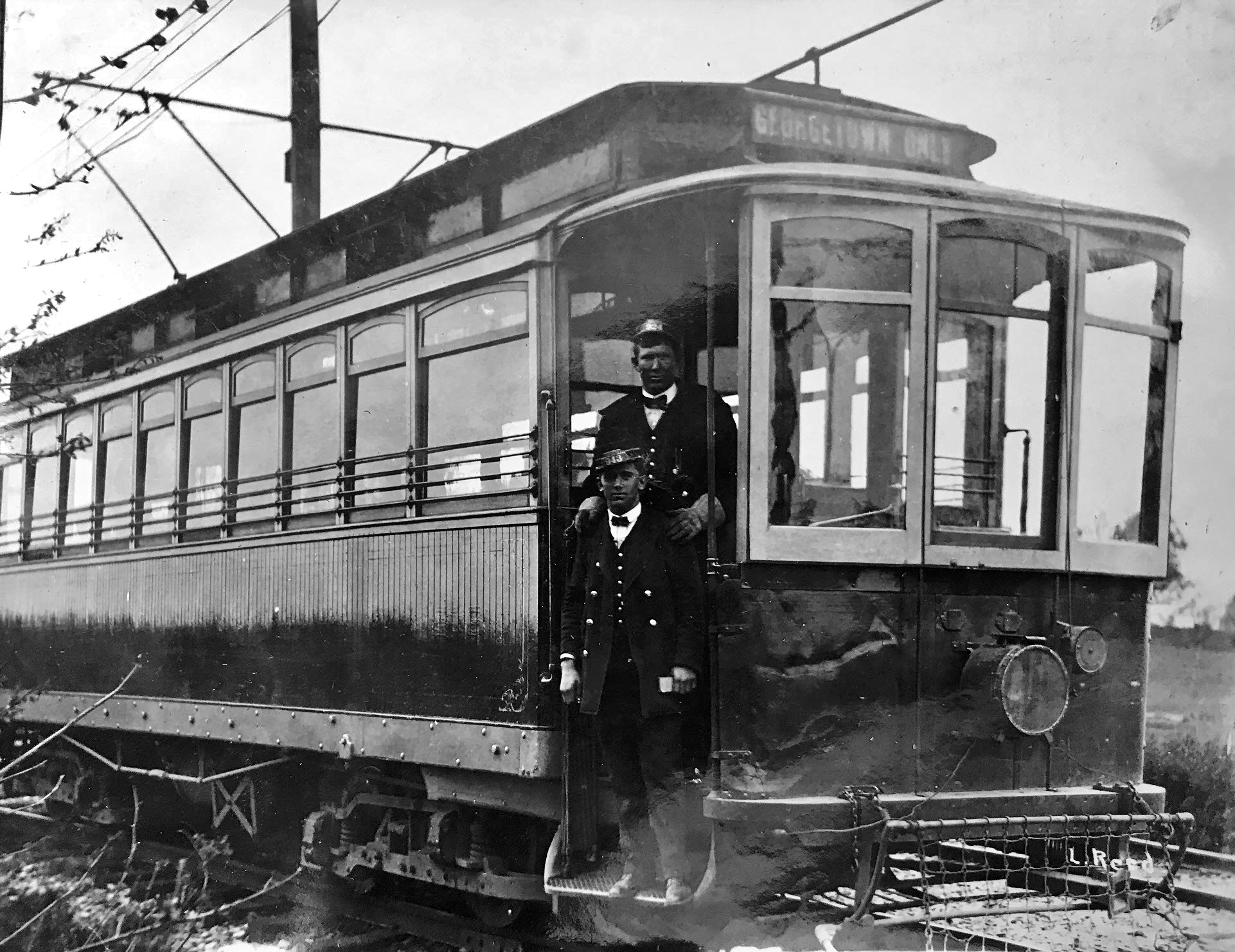
Two carmen aboard the “Georgetown Only” trolley car. Photo by Lewis Reed
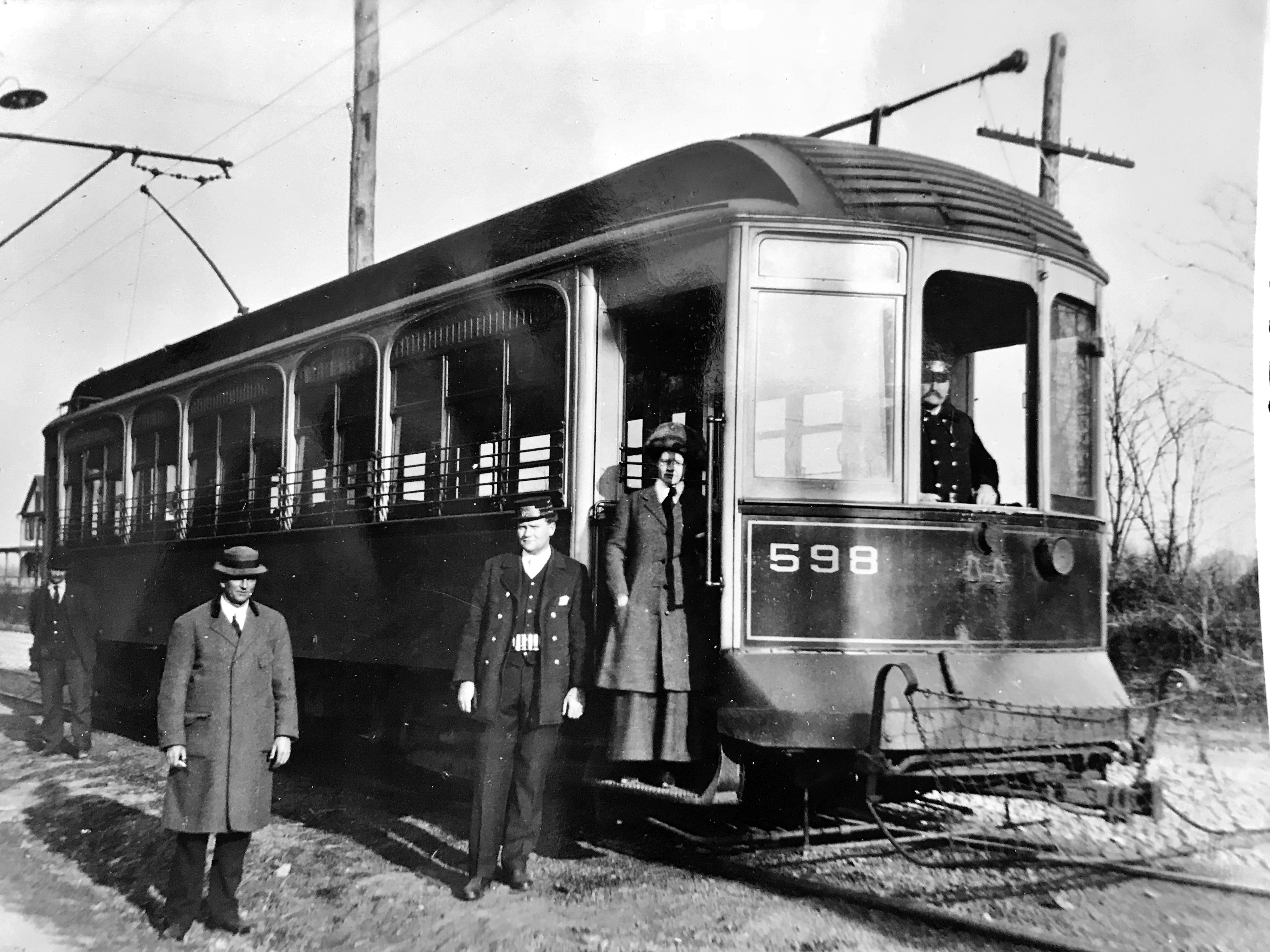
Crew and passengers pose near a Rockville car. Photo by Lewis Reed
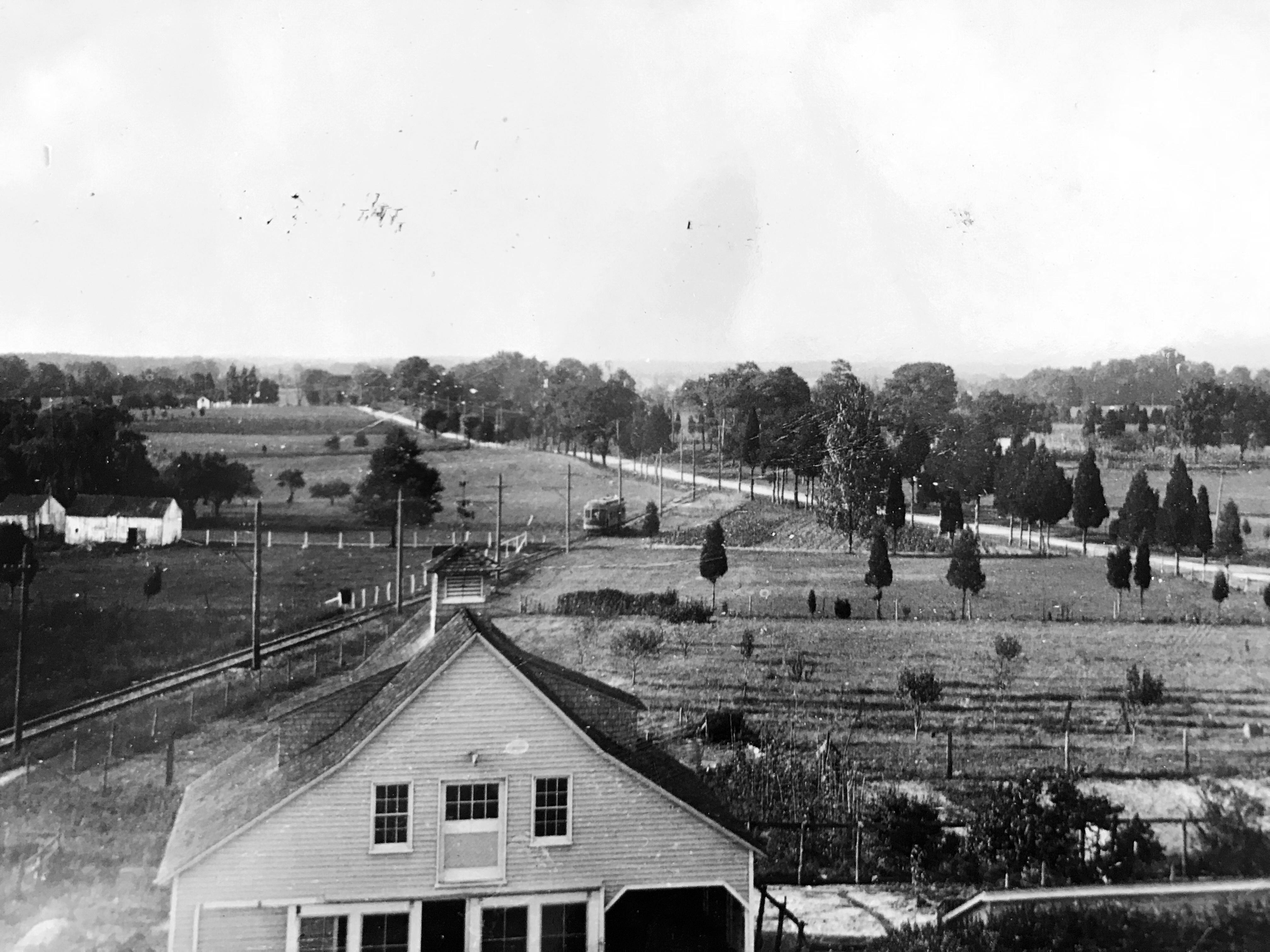
Trolley heading south after diverging from Rockville Pike. Photo by Lewis Reed, 1910
In the photo above c. 1910, a trolley (at center) heads south from Rockville toward Tenallytown (as it was spelled then) through open farmland. The view appears to be looking north and shows the area south of where Montrose Road intersects with Rockville Pike. The Pike is the white strip running diagonally behind the trolley car. To the left of the Pike is the William Scherrer farm. The Curtain farm is near the white buildings to the left of the Trolley line. The building in the foreground is the garage for the Villa Roma hotel and restaurant. The elevated vantage point, possibly from an adjacent rooftop or the roof of a barn, affords an excellent view of the rural countryside.
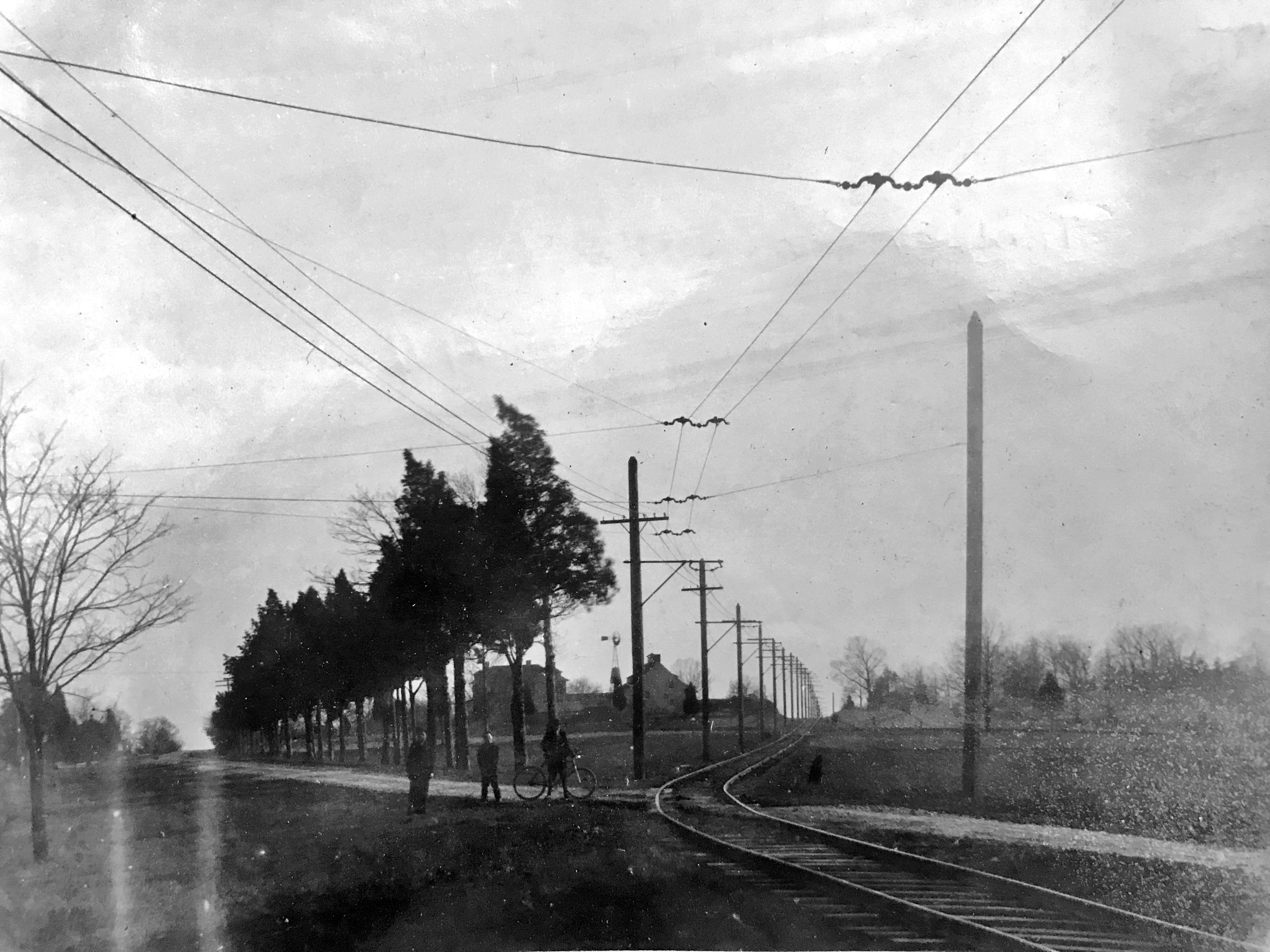
This photo, c. 1911, captures the trolley tracks on Rockville Pike south of Sherrer Farm. Note that one of the young men is holding a bicycle. Photo by Lewis Reed
The photograph below was featured on PBS’s “The American Experience” documentary, “The Great War” that premiered on April 10, 2017 in conjunction with the 100th anniversary of America’s entry into World War I.
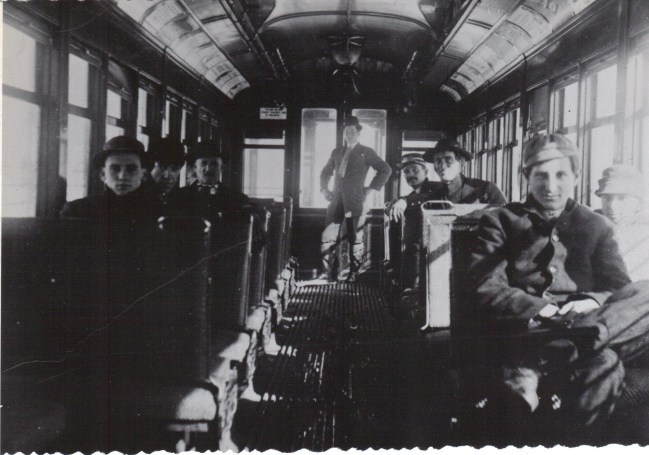
Interior of 1920’s Rockville trolley car. Photo taken by Lewis Reed
Panels for advertising line the edge of the ceiling on both sides of the trolley. Instead of AC, the interiors were cooled with wooden ceiling fans.
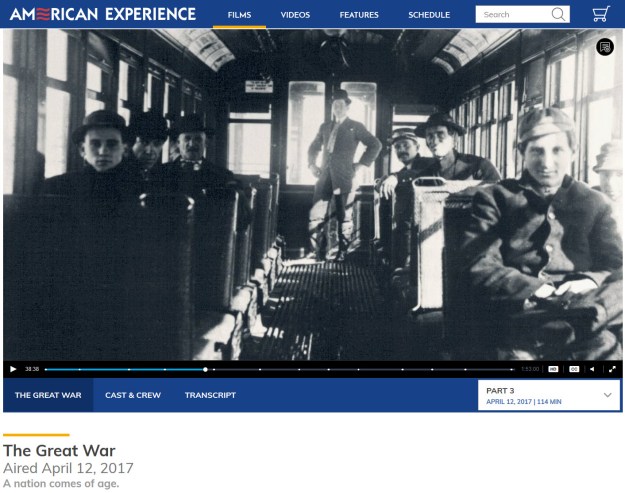
Rare peak of the inside of a 1920’s trolley car and passengers featured in PBS documentary “The Great War”. Photo taken by Lewis Reed
The rise and decline of trolleys and street railways is another example of the inevitability of change. Now there are no street car lines in Montgomery County and all the car barns and charming little waiting stations have been razed.
In March 1965, ground was broken for construction of the Trolley Museum in Wheaton, Maryland. Built with donated funds, materials and labor, it is run by volunteers under the aegis of the Maryland-National Capital Park and Planning Commission.
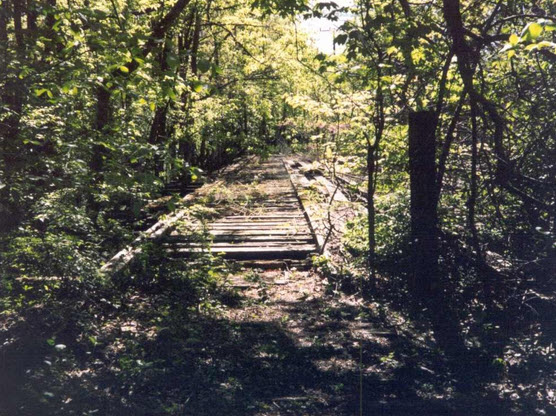
Abandoned trolley tracks off MacArthur Boulevard, 100 years after Lewis Reed’s time. [Photo by Sue Houser]
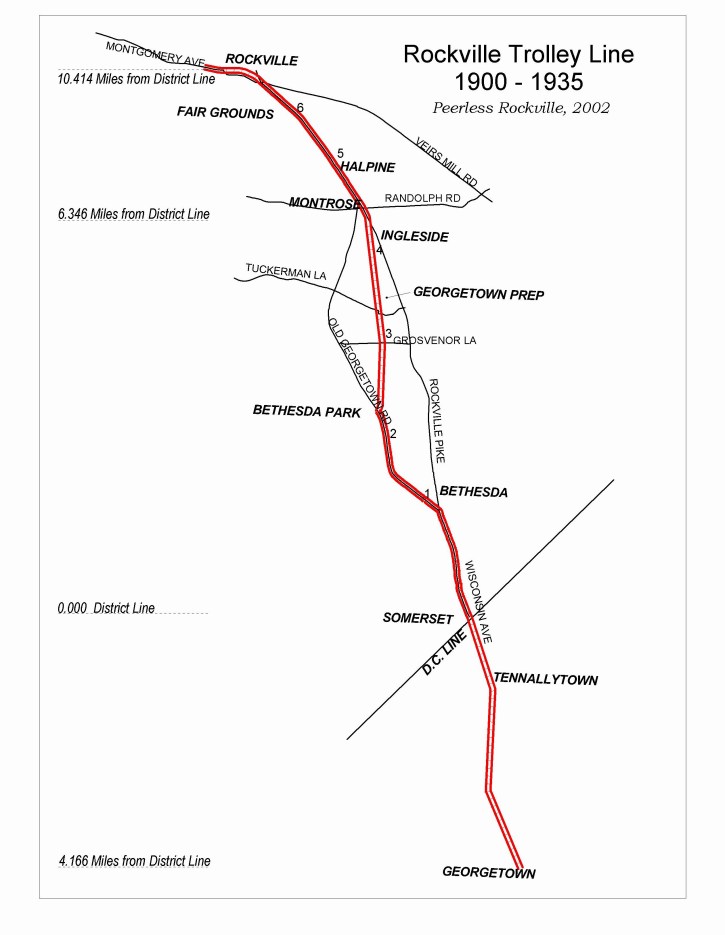
Rockville Trolley Line 1900-1935 – Peerless Rockville 2002
Sources: Rockville Pike History – City of Rockville
History of the Street Car Lines of Montgomery County
Peerless Rockville
Darnestown One Room Schoolhouse (1898)
Have you ever wondered what it would be like to attend a one-room school, to be in the same classroom as your older brother or younger sister, where all the kids, no matter how old, are in the same class? One-room schoolhouses are all but a memory now. But at the turn of the 20th century, they were where most rural students received their educations. One room schoolhouses were the pioneers of the early education period. At the period’s peak, just under 100 one- and two-room schools existed in Montgomery County.
One of the most amazing photographs in Lewis Reed’s collection is of the one-room schoolhouse where he and his brother, Edgar, attended school. This photograph is the only one known to exist of this school. The schoolhouse, now long gone, was located on Thomas Kelley’s Farm at Pleasant Hill (which today, would be located in the center of the Spring Meadows community). Lewis Reed grew up on a farm in rural Darnestown and for much of his young life had no running water or electricity. His father was an early settler and worked as a Cabinetmaker and Blacksmith. The Reed family farmhouse and blacksmith shop was located on 12 acres of land west of Seneca Road on Route 28.
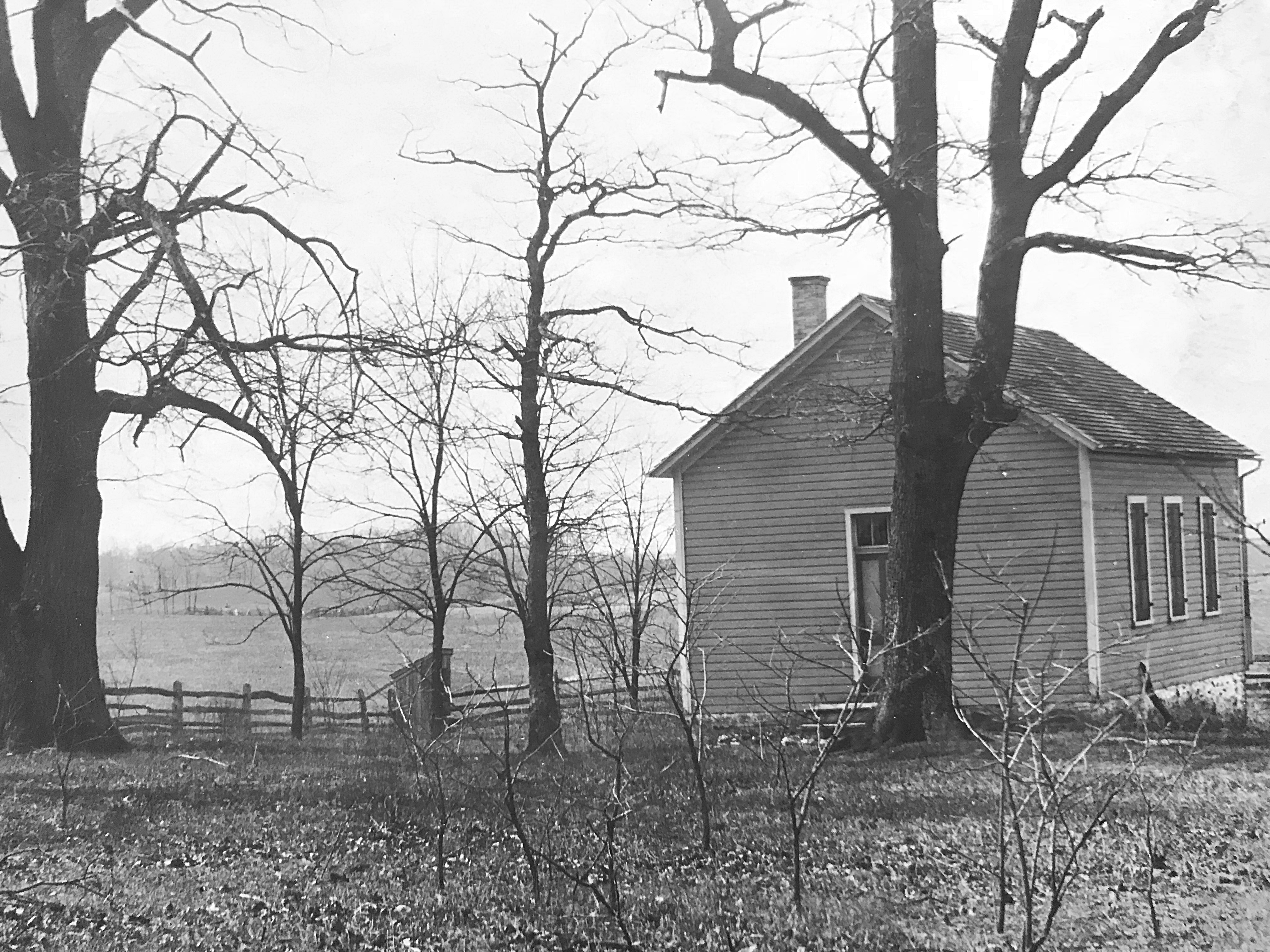
Darnestown One-Room Schoolhouse. The chimney was probably to a wood-burning stove that was used to heat the building. Note the outhouse on the left. Photo from the Lewis Reed Collection
The details of the Darnestown one-room schoolhouse is not widely known.
One-room schoolhouses were common in rural America during the late 1800s and early 1900s. They typically housed students from various grades—often from first through sixth grade—under the instruction of a single teacher. In Darnestown, this particular schoolhouse was attended by Lewis Reed and his brother Edgar, among approximately thirty other students. The age range of students could vary significantly, from as young as six years old to sixteen years old.
This small, one-room schoolhouse was within walking distance of the Reed family farmhouse. In those days, walking distance generally meant within a few miles. Lewis Reed attended this school with his brother, Edgar. First through sixth grades were under the instruction of a single teacher (Minnie McAtee) to about thirty or more students. Few students went beyond sixth or seventh grade; in fact, Lewis Reed’s education stopped after the sixth grade. He would later be home-schooled by his wife, Ethelene Thomas, who was a teacher in the Maryland public school system.
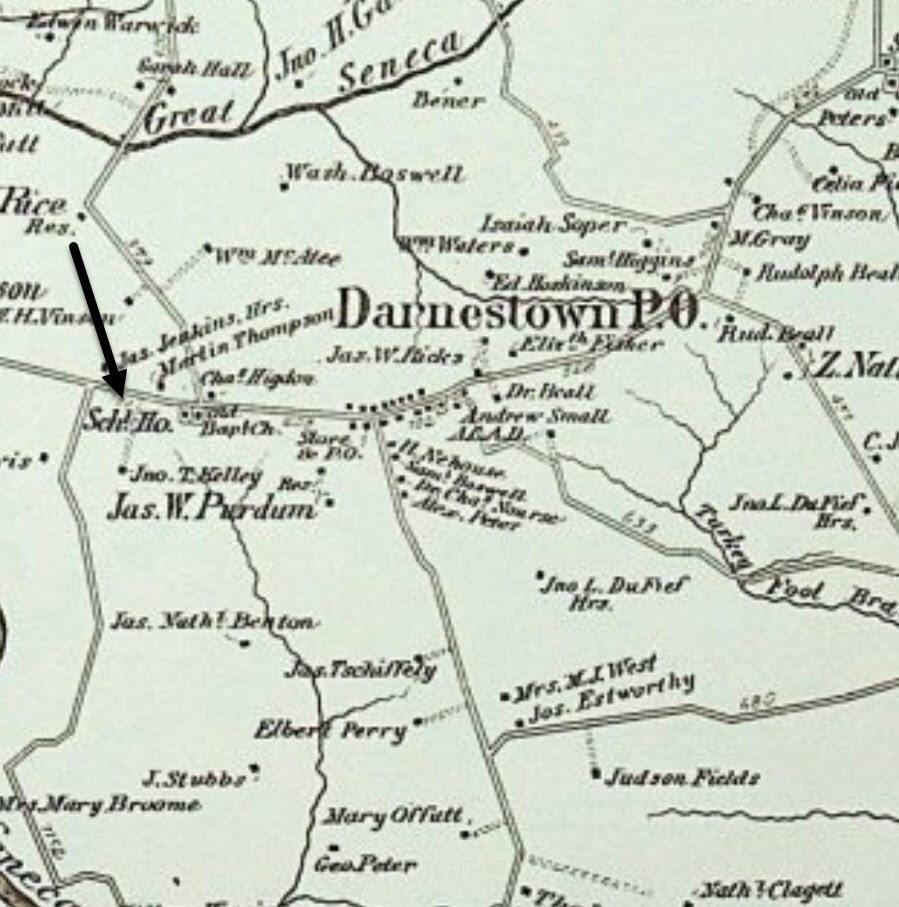
Darnestown Map detail, with school house location indicated
Due to limited resources, many of these schools lacked electricity and indoor plumbing; they relied on wood-burning stoves for heating and oil lamps for lighting. The students were separated roughly by level of study in each particular subject, rather than by age as they are now: a child might have studied 3rd grade math while also doing 6th grade reading or history. This flexible structure allowed for personalized learning experiences, but also required considerable skill from the teacher to manage diverse educational needs. Gender separation was maintained by seating girls and boys on opposite sides of the room. The larger boys were expected to help bring in the wood and carry out the ashes. Misbehavior begot corporal punishment.
The simplicity of these structures reflected both the educational philosophy of the time and the practical realities of rural life. School usually took place between the hours of 8 a.m. and 4 p.m. The youngest children sat in the front, while the oldest students sat in the back. The teacher usually taught reading, writing, arithmetic, history, and geography. Students memorized and recited their lessons. The teacher’s desk may have been on a raised platform at the front of the room, however, and there would have been a wood-burning stove since there was no other source of heat. The bathroom would have been outside in an outhouse.

Circa 1898 class photo taken at Lewis and Edgar Reed’s one-room schoolhouse (Darnestown School). There were six grades in the school with one teacher. Minnie McAtee, teacher (right rear). Photo from the Lewis Reed Collection.
Lewis Reed’s love of photography began at a very young age, at a time when most families did not own a camera. One of the oldest photos in his collection (class photo, pictured above) is dated 1898, which would have made him around 11-12 years old when he started using a camera. Lewis likely took this photo himself, setting the camera up on a tripod, and then running quickly into the shot before the shutter went off.
As for Minnie McAtee (1873-1962), according to The Baltimore Sun (Baltimore, Maryland) June 5, 1901, Miss McAtee resigned from the Montgomery County school system in 1901. In 1901 she moved to Washington, D.C., where she was employed by the government’s Bureau of Printing and Engraving. For 42 years she worked for the Bureau in a variety of positions, steadily working her way up. She retired in 1943.
Born in Darnestown, Miss McAtee attended the Andrew Small Academy in Darnestown, after which she completed correspondence courses to further her education. For eight years, she taught in the one-room schoolhouse at Pleasant Hill, Darnestown.
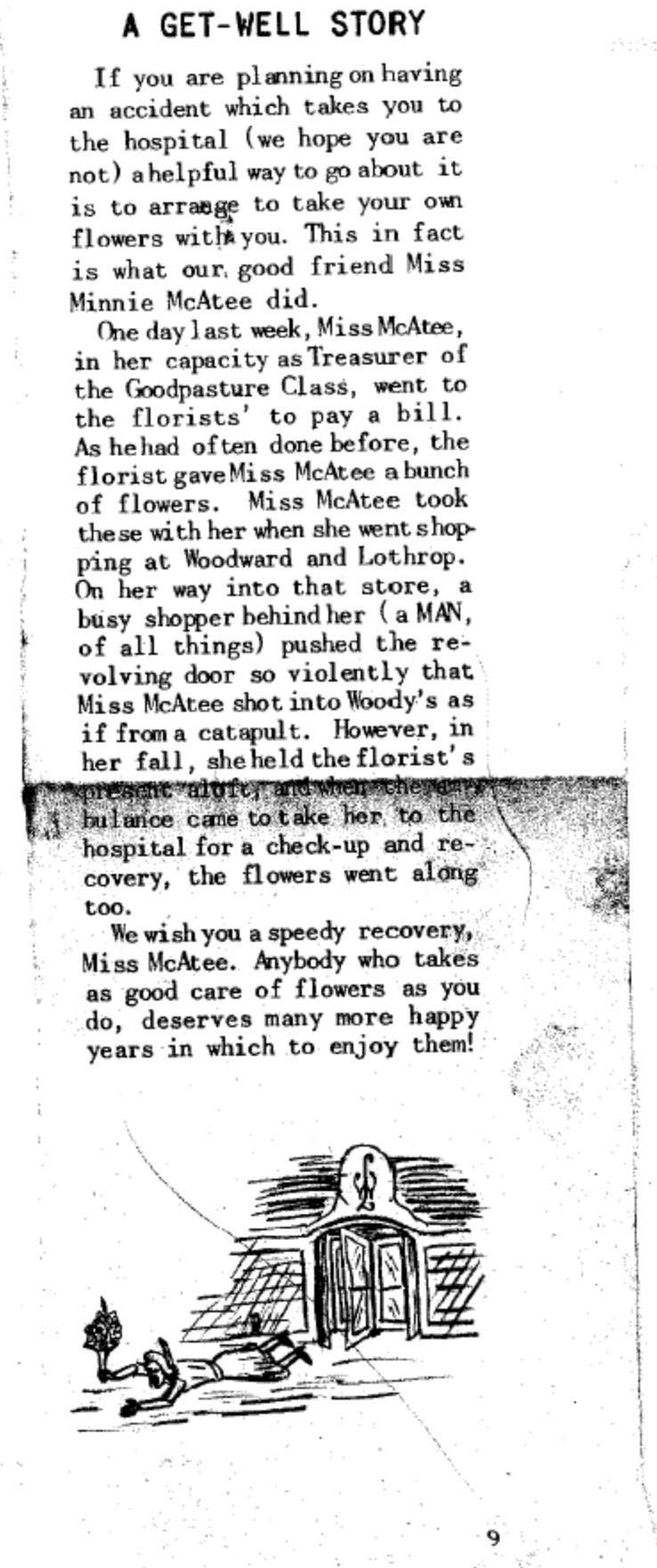
The undated “Get Well Story” below was posted on the Find A Grave website in her memory. Anybody who took such good care of flowers as she did, most certainly must have been a great school teacher.
Legacy
At least 34 schoolhouses of this bygone era still stand today in Montgomery County, an astounding total considering how developed Montgomery County is today. The five schoolhouses in Montgomery County restored as museums — Boyds, Brookeville (one-room school), Kingsley, Seneca, and Smithville — are open to the public at various times during the year. Most are open during Heritage Days; check www.heritagemontgomery.org for the schedule.
Sources of Information:
Find A Grave
Chronicling America digitized newspapers
Newspapers.com historical newspapers
The Baltimore Sun newspaper
Ricketts Garage “Auto Hire” Billhead, May 7, 1914
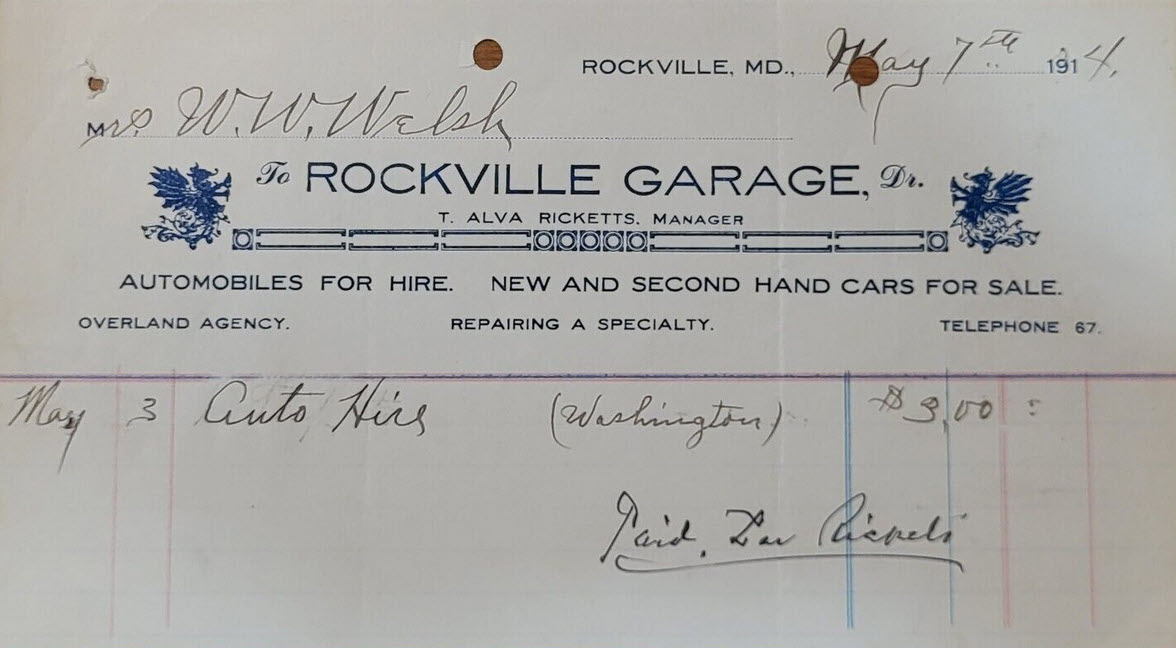
Ricketts’ Garage “Auto Hire” Billhead, May 7, 1914
Many early car dealerships grew out of existing garages. Reed Brothers Dodge evolved out of the Rockville Garage. Shown above is Ricketts’ Rockville Garage “Automobiles for Hire” and “New & Second Hand Cars for Sale” billhead receipt recently found on eBay. The receipt, dated May 7, 1914 is made out to W.W. Welsh (William Wallace Welsh) and is signed for by Lee Ricketts. Leonidas “Lee” Ricketts and sons, Raymond, Emory, and Thomas Alva (who went by “Alva”) ran the local Overland Agency at the Veirs Mill Road/Rockville Pike location from 1914-1915.
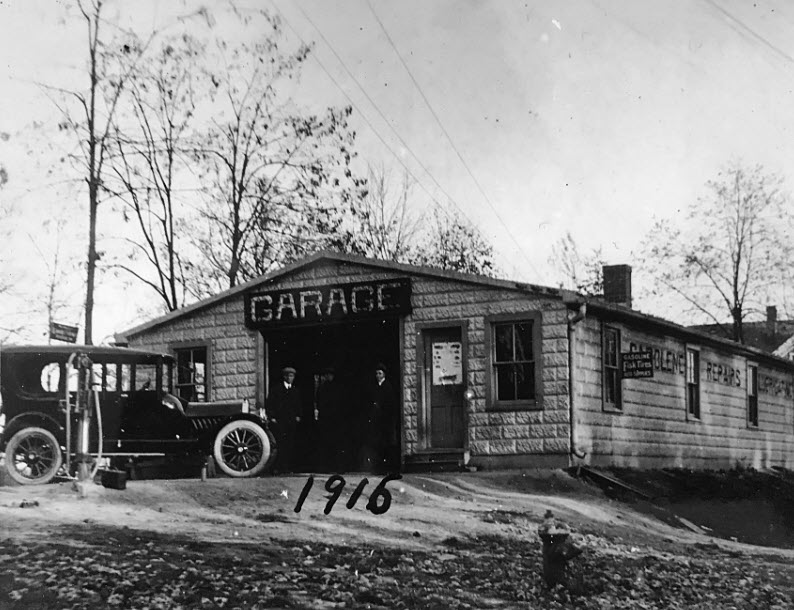
Original Rockville Garage building at the intersection of Veirs Mill Rd and Rockville Pike, 1916.
Origins of the Rockville Garage from The Montgomery County Sentinel. May 20, 1914:
Mr. Alva Ricketts has purchased the vacant lot opposite the fair grounds, in this town, from Mr. Benjamin Haney and will in the course of a few days erect upon it a garage, in which will be kept his autos for the accommodation of the traveling public.
The Overland Agency was short-lived: by July of 1915, Lewis Reed and brothers Robert L. and Griffith Warfield established Rockville Garage after acquiring the building from the Ricketts family. An employee of Rockville Garage in 1915, Lewis Reed purchased a one-third interest from the Warfield brothers in January 1916. Three years later, the Warfield’s conveyed the balance of the property and Lewis became sole owner. In August of 1919, Lewis Reed’s brother Edgar joined the business, and the name of the company was changed to Reed Brothers Dodge.
February 14th – National Ferris Wheel Day & Valentine’s Day

Ferris Wheel at the Rockville Fair, circa 1920s. Photo by Lewis Reed
Did you know that February 14th is not only Valentine’s Day, but also National Ferris Wheel Day? This unofficial national holiday is held on this day to honor the birth of the inventor of the Ferris Wheel, George Washington Gale Ferris, Jr. What better way to celebrate Ferris Wheel Day than enjoying this ca.1920s photograph of the Ferris Wheel taken at the Rockville Fairgrounds, courtesy of Lewis Reed.
Books

Related Resources


Copyright Notice

Reed Brothers Dodge History (1915-2012) by Jeanne Gartner is licensed under a Creative Commons Attribution-NonCommercial 3.0 Unported License.


Recent Comments