
Then & Now: The Leesburg, VA Passenger Station
The story of the Leesburg Passenger Station becomes even more vivid when viewed through the lens of Lewis Reed, the prolific early 20th-century photographer from Montgomery County, Maryland, whose work documented key moments and locations throughout the region. Reed’s images are renowned for their ability to capture everyday details of local life, including transportation scenes and important sites in Virginia and the greater Washington area.
Leesburg Passenger Station (THEN): When the Alexandria, Loudoun, & Hampshire Railroad (later W&OD) arrived on May 17, 1860, Leesburg realized a dream. A local newspaper praised the railroad, which “throws us within an hour or two’s ride of the cities of the seaboard, and opens up a new avenue of commerce and trade.” At first a single depot, located 0.2 mile east of here, served passengers and freight. In 1887 the railroad opened a separate passenger station here at King Street. It remained in use until passenger service ended in 1951.
Even as the passenger station itself vanished, Reed’s visual archives ensure its memory stays alive. His photographs remain a valuable bridge for comparing “then & now,” letting viewers step back in time and appreciate the evolution of Leesburg, one carefully developed print at a time. The continuing presence of Reed’s work in books and exhibits means the Leesburg Passenger Station is still seen and experienced today, long after trains have passed and the site has become part of the Washington & Old Dominion Trail.
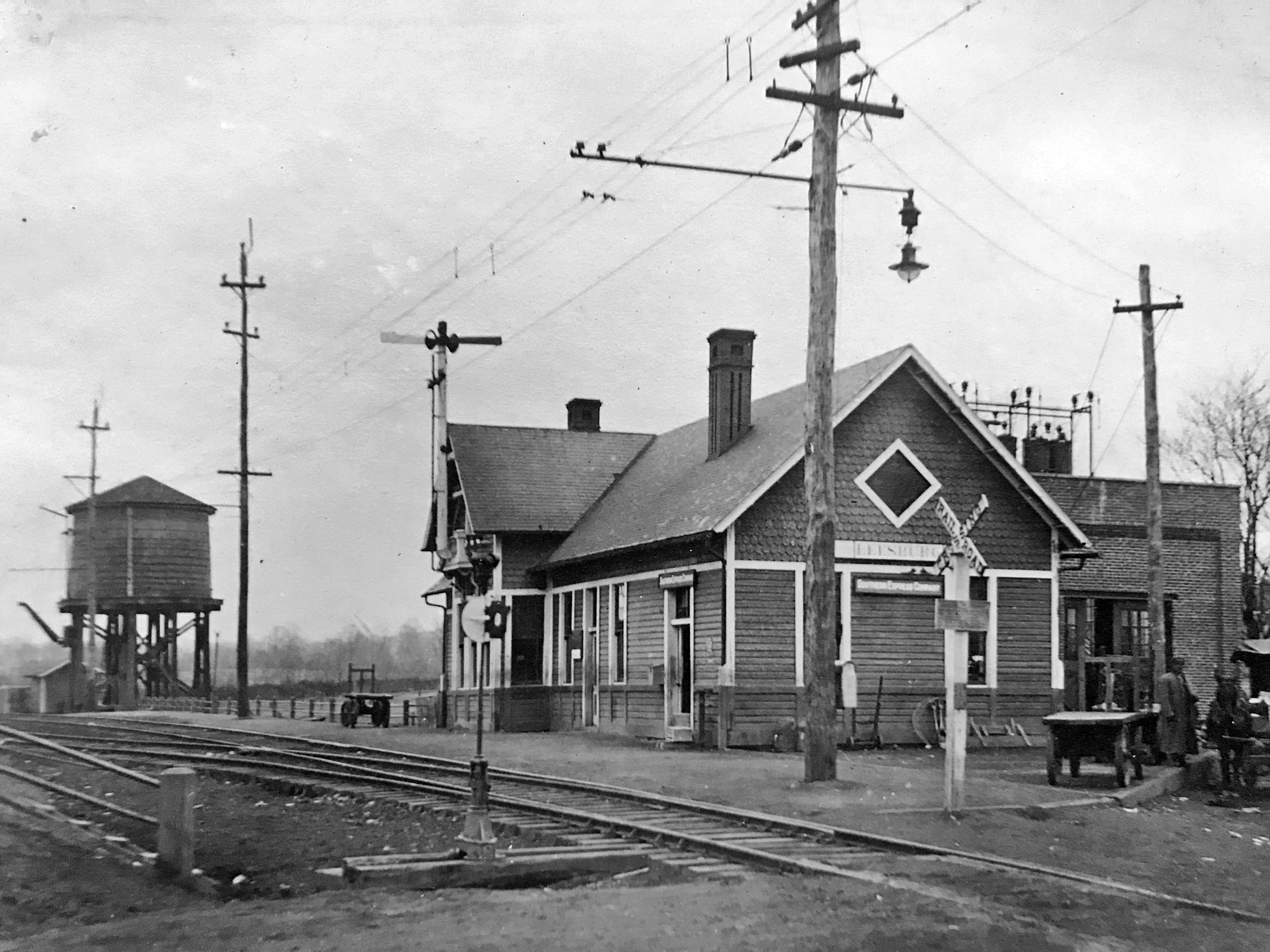
A historic photograph of the Leesburg Passenger Station captured by Lewis Reed showing the depot in its early 20th-century setting.
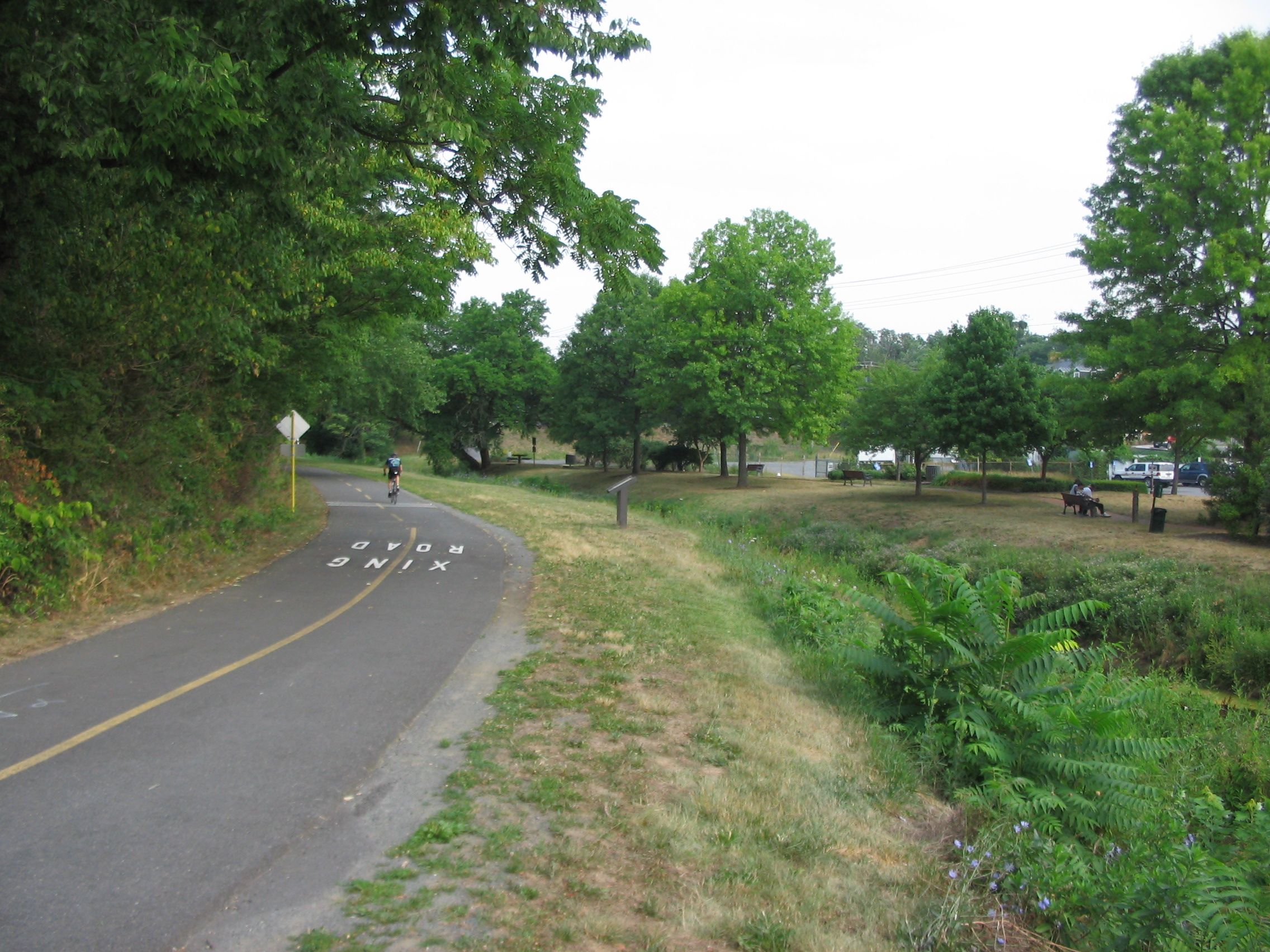
Leesburg Passenger Station Marker seen from King Street today.
The Leesburg Passenger Station remains a rare survivor of Loudoun’s rail era, an enduring symbol of how a small wooden depot could once shape the rhythm of a town. Its transformation from active rail stop to preserved trail-side icon connects past and present, reminding us that even as technology changes, the places that ground a community can still hold meaning.
Introducing the Second Edition of The Lewis Reed Photograph Collection (1898-1960)
Some photographs simply capture a moment. Others capture an entire world.

New Cover – Second Edition. An expanded 384-page volume featuring more than 2,500 historic photographs preserved by Lewis Reed, many published for the first time. A remarkable visual record of the early 20th century.
I am pleased to announce the release of the Second Edition of the Lewis Reed Photograph Collection (1898–1960), an expanded and refined visual archive documenting over six decades of life, landscape, and community in Montgomery County, Maryland and the surrounding Mid-Atlantic region.
More than a century ago, Lewis Reed began photographing the towns, farms, roads, and people around him with a camera and a deep curiosity about a world in rapid transition. What began as the hobby of a young motorcycle enthusiast traveling the back roads of Maryland soon grew into one of the most remarkable visual records of the region’s history.
Many of the photographs in this collection were created from glass-plate negatives and early prints; preserving rural crossroads, bustling town centers, early automobiles sharing roads with horse-drawn wagons, and landscapes that look entirely different today. These are images that might otherwise have been lost to time.
What’s New in the Second Edition
This expanded edition presents Lewis Reed’s photographs in thematic sections that highlight the full breadth of his work; from Maryland towns and landscapes to family portraits, travel scenes, and the early history of Reed Brothers Dodge, which Lewis founded in Rockville in 1915. The collection draws from more than 2,500 digitized photographs, each carefully researched to identify the places and people they depict.
Many images were identified through long conversations with Lewis Reed’s daughter, Mary Jane Reed Gartner, whose recollections helped bring these photographs back to life and restore the stories behind them.
Lewis Reed is remembered locally as the founder of Reed Brothers Dodge, but photography was a lifelong passion alongside his business career. His images document everything from the C&O Canal in operation to small-town parades, churches, farms, and early roadways. Taken together, they form one of the most extensive visual archives of Montgomery County during the period when rural communities were giving way to the modern suburban landscape we know today.
A Note on Pricing
This is a photo-intensive volume, approaching four hundred pages, and is printed on demand through Blurb.com, meaning each copy is produced individually rather than in large commercial print runs. The pricing reflects the actual cost of producing such a large photographic archive. This project was created primarily to preserve and share Lewis Reed’s historic photographs, not as a commercial publication.
Get Your Copy
The Lewis Reed Photograph Collection (1898–1960), Second Edition is available now through Blurb.com’s print-on-demand bookstore.
Or visit the collection page for more information: reedbrothersdodgehistory.com
To stay up to date with new posts and historical discoveries, subscribe to the Reed Brothers Dodge History blog and follow along as the story of Lewis Reed and Montgomery County’s past continues to unfold.
A Field, a Gun, and a Trap
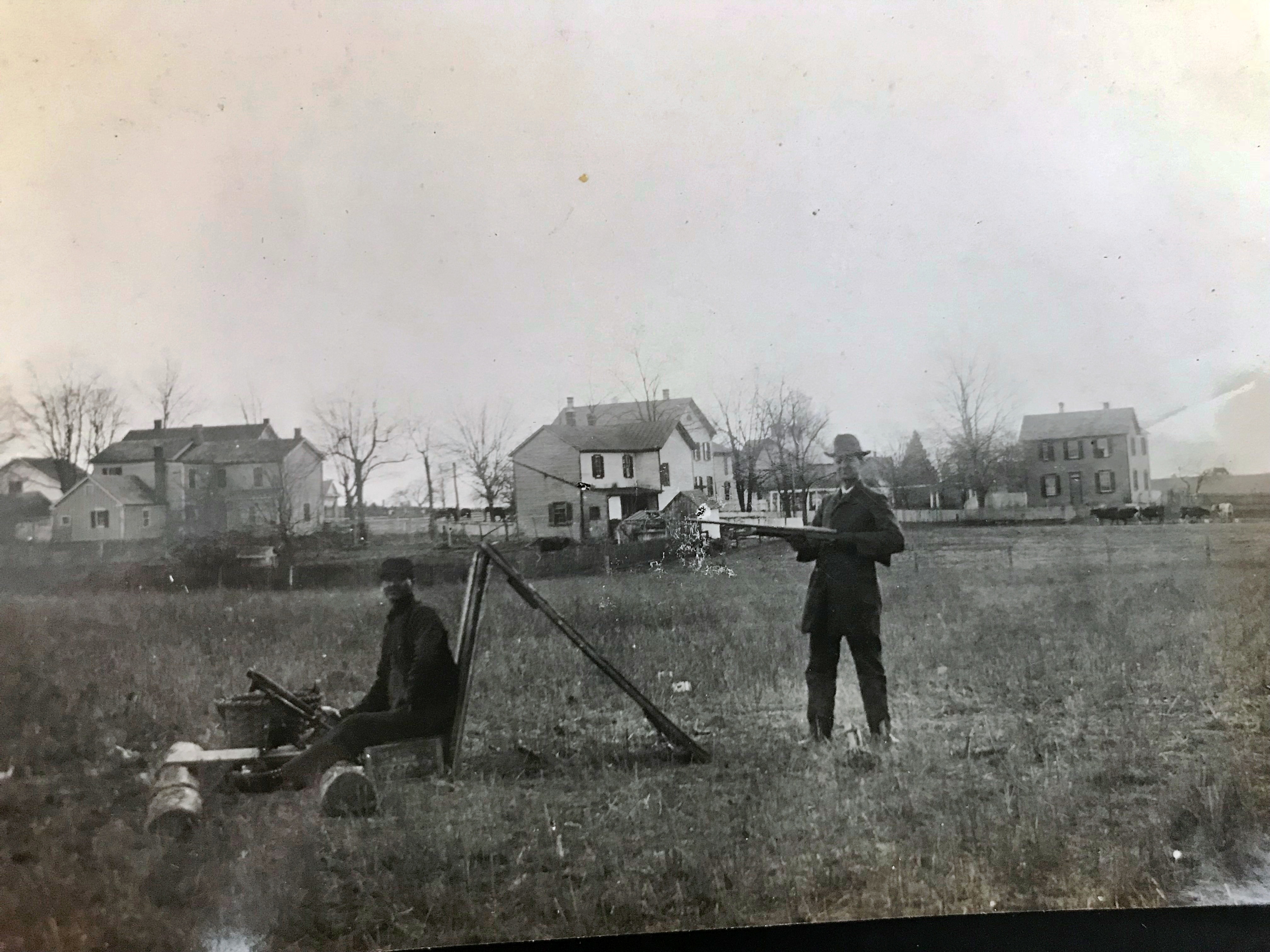
Early 1900s field trap shoot in Darnestown, Maryland, captured by Lewis Reed, showing one man poised with a shotgun while another readies the simple wooden trap amid farmhouses and open pasture.
In this photograph, two men stand in an open field bordered by modest frame houses and fenced pastures, a scene typical of small crossroads communities like Darnestown in the early 1900s. One man holds what appears to be a long gun, while the other sits beside a simple wooden rig that resembles the framework used to cock and release early manually operated target throwers or live‑bird traps
The proximity to grazing livestock suggest that this is not a formal gun club range but an improvised shooting ground on private farmland, which was common before purpose‑built trap clubs spread widely. Rural shooters often practiced in meadows or behind farmhouses, using homemade equipment and relying on a friend to work the trap while the shooter took position in front.
Darnestown in Reed’s era was a small but important crossroads in western Montgomery County with farms, mills, and the Andrew Small Academy serving the surrounding countryside. Later roadside historical markers that use Lewis Reed’s images emphasize how thoroughly he documented the community’s buildings and daily activities, making it likely that he also recorded local recreations such as shooting, fishing, or horse‑related events.
Clay target shooting gained popularity in the United States after the introduction of standardized targets and simple spring‑powered traps in the late 19th century, and Maryland farm communities were no exception. Scenes like this one, with neighbors gathering in an open field to test their marksmanship, reflect how shooting sports blended workday skills with weekend socializing in a largely agricultural landscape.
This image captures a rare glimpse of informal trap shooting at the moment when traditional rural life was beginning to intersect with modern leisure and sport. The combination of farmhouses, fence lines, cattle, and improvised equipment tells a layered story: of a county still rooted in agriculture, of residents embracing new pastimes, and of a photographer committed to preserving unscripted moments as carefully as grand events.
For historians, collectors, and local families, the photograph is more than a quaint scene; it is a visual document that anchors memories of people, place, and pastime in a specific landscape. As additional Reed negatives are identified and researched, images like this may help flesh out the early history of shooting sports in Montgomery County and deepen understanding of how communities like Darnestown spent their rare hours of leisure.
Then & Now: Reed Brothers Dodge and the Changing Face of Rockville
The story of Reed Brothers Dodge is also the story of how Rockville and Montgomery County grew up around the automobile. Through the lens of founder Lewis Reed, we can watch that transformation unfold one frame at a time.
THEN: A Corner Garage on a Dirt Road
In the early 1900s, Rockville was still very much a rural crossroads. When Lewis Reed opened his original Rockville Garage in 1915 at the intersection of Veirs Mill Road and Rockville Pike, the scene looked nothing like the busy corridor we know today.
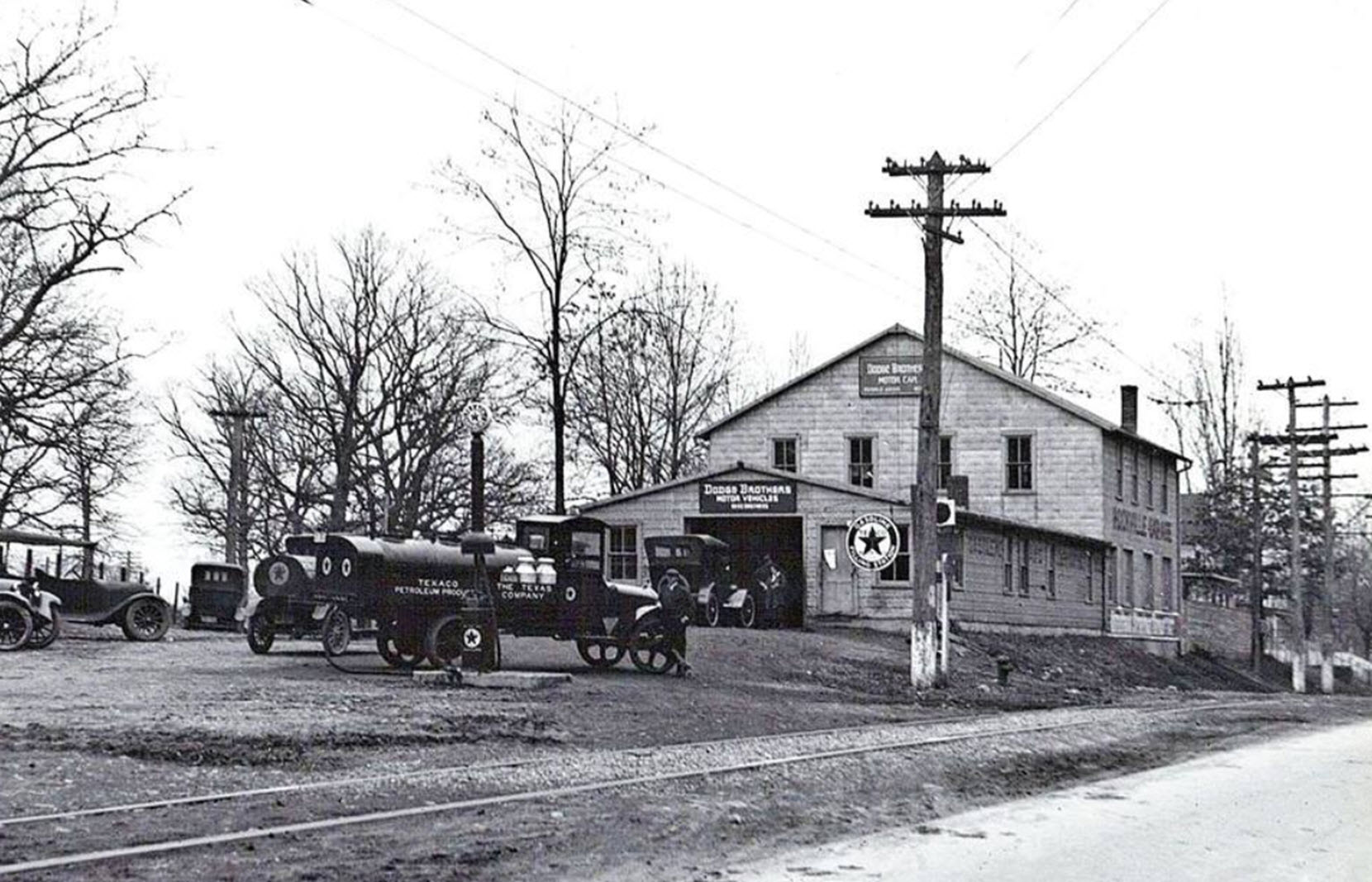
THEN: 1917 Rockville Garage, later expanded with a two-story addition. A Texaco Filling Station sign is visible alongside a Texaco petroleum fuel truck servicing the single pump out front.
In the historic photograph, you can see:
- An unpaved Rockville Pike, more dirt than road, stretching into the distance.
- Trolley tracks running past the garage, part of the transit line that connected Rockville to Washington, D.C. from 1900 to 1935.
- A simple building front with “Dodge Brothers Motor Vehicles” signage, more workshop than showroom.
It was a modest operation by modern standards, but it represented something new: a dedicated place in town for motorists to buy, fuel, and service their automobiles. At a time when horse‑drawn wagons still shared the road, Reed Brothers Dodge stood at the frontier of a new way of moving through the world.
NOW: From Quiet Crossroads to “Mixing Bowl”
Stand in the same spot today and it is almost hard to believe it is the same place. The once‑quiet junction has evolved into what locals now refer to as “the mixing bowl,” a complex web of roads, traffic signals, and near‑constant traffic.
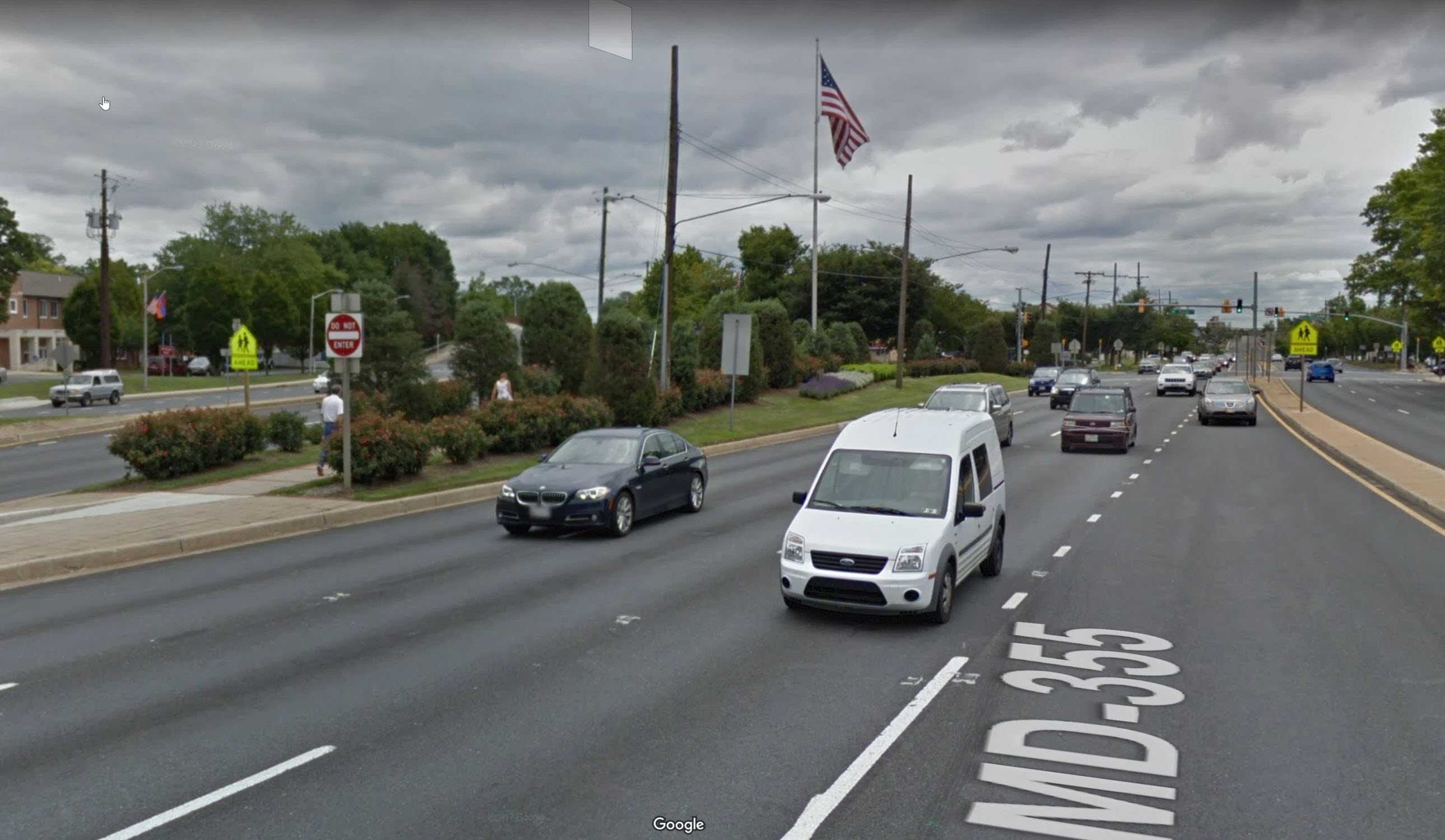
NOW: Veterans Park occupies the former Reed Brothers Dodge corner at Rockville’s “mixing bowl,” a small green refuge with flags and pathways set against the backdrop of constant traffic and busy highways.
Where the original Reed Brothers building once stood, the landscape has cycled through multiple lives:
- In the decades that followed, the busy crossroads gave way to highway progress, as road‑widening projects in the 1960s and 1970s carved away much of the original Reed Brothers property.
- The once‑bustling dealership site was gradually transformed into what is now Veterans Park.
- With the demolition of the dealership building in 1970, nearly half a century of automotive history at that corner came to a close, leaving only photographs and memories to mark its presence.
Today, the same view is dominated by multi‑lane roads, turning lanes, and signage, where there were once dirt streets, trolleys, and the old Rockville Fairgrounds just across the Pike.
A Dealership That Grew with Its Community
Reed Brothers Dodge did not stand still while the roads changed. Founded in 1915, the family business survived World War I, the Great Depression, World War II, recessions, and Chrysler’s financial crises of the 1970s and 1980s.
Key milestones include:
- Expansion from a small corner garage into a full Dodge dealership as automobile ownership grew.
- Construction of a new showroom and service building at East Montgomery Avenue and what would later be named Dodge Street in the 1940s.
- A major relocation in 1970 to a modern facility at 15955 Frederick Road in front of the Shady Grove Metro, complete with contemporary showroom and full service complex.
By the time the dealership closed in 2012, Reed Brothers Dodge had operated in Rockville for more than 97 years, making it the longest‑running Dodge dealership in Montgomery County history.
This single pair of images is just one chapter in a much larger visual record. Lewis Reed’s photographs capture everyday life across Maryland and beyond from 1898 through 1960. Many of these scenes can still be recognized today if you know where to look, even as roads have widened, buildings have vanished, and new neighborhoods have emerged. You can explore the entire “Then & Now” series with Lewis Reed’s photographs here: https://reedbrothersdodgehistory.com/category/then-now/.
Ethelene Rachel Thomas Reed: The Woman Behind the Reed Legacy
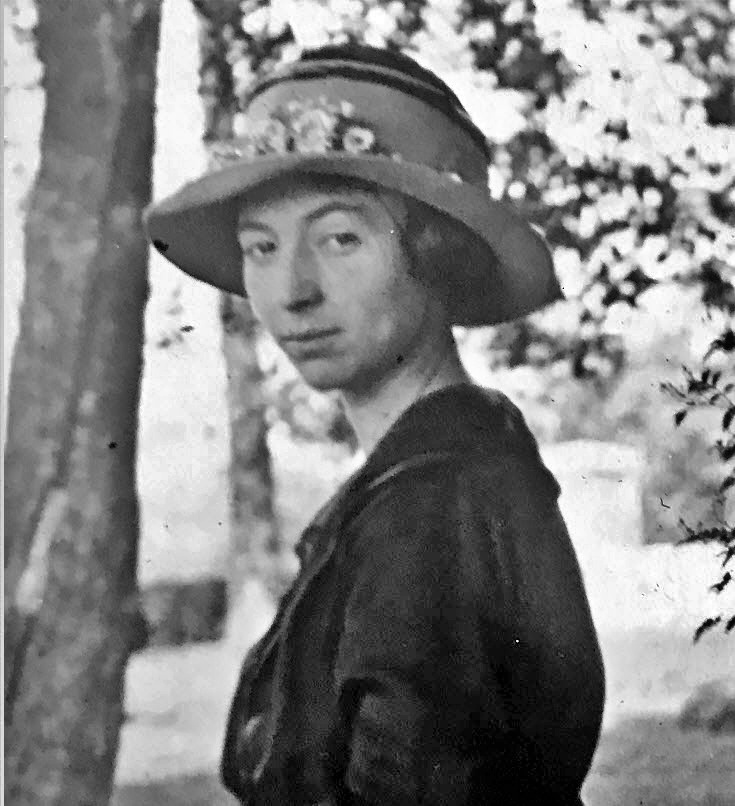
Ethelene Rachel Thomas Reed (Sept 16, 1894-Mar 15, 1977)
Before the name Reed became associated with automobiles, innovation, and customer service in Rockville, Maryland, there was a young farm girl growing up in rural Frederick County. Ethelene Rachel Thomas, born September 16, 1894, spent her childhood on her family’s farm on Butterfly Lane in Buckeystown, Maryland; a quiet countryside that helped shape the woman who would later stand beside Lewis Reed, founder of Reed Brothers Dodge.
Ethelene was the daughter of Clinton Clay Thomas (1856–1940) and Mary Elizabeth Thomas, lifelong farmers whose roots ran deep in Frederick County soil. Their farm, located along Butterfly Lane, was part of a long-established agricultural corridor of small family homesteads, fields, and barns that fed nearby towns for generations.
Growing Up on the Thomas Family Farm
Life on the Thomas farm followed the steady rhythms of the seasons. Long days were filled with planting, harvesting, tending animals, and preserving food for winter. Like many rural children at the turn of the 20th century, Ethelene learned responsibility early, helping with household work and farm chores while growing up in a close-knit, hardworking family.
Butterfly Lane, once little more than a farm road, connected families like the Thomases to Buckeystown and the larger Frederick County community. Though modest, the farm represented stability, perseverance, and a deep connection to the land; values that Ethelene carried with her throughout her life.
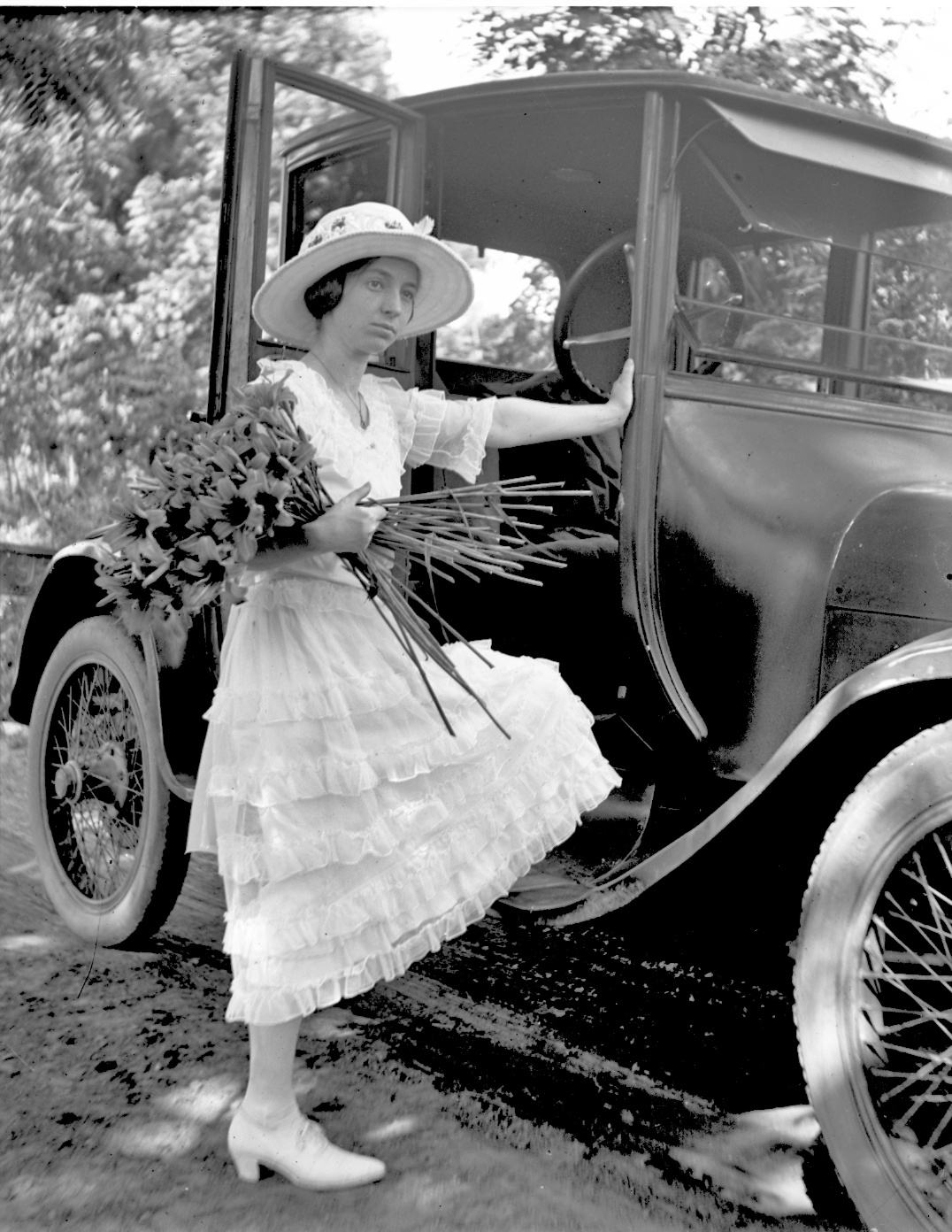
Ethelene Reed was the matriarch of a family that became synonymous with the automotive industry in Maryland. In this photo, her poise and fashionable attire reflect the burgeoning middle-class elegance of the early 1920s.
From Farm to Classroom
Before her marriage to Lewis Reed, Ethelene was a teacher in the Maryland public school system; a role that reflected her commitment to service, learning, and community. Teaching offered young women of her generation one of the few professional paths available, and Ethelene embraced it with the same dedication she had learned on the family farm.
A New Chapter in Rockville
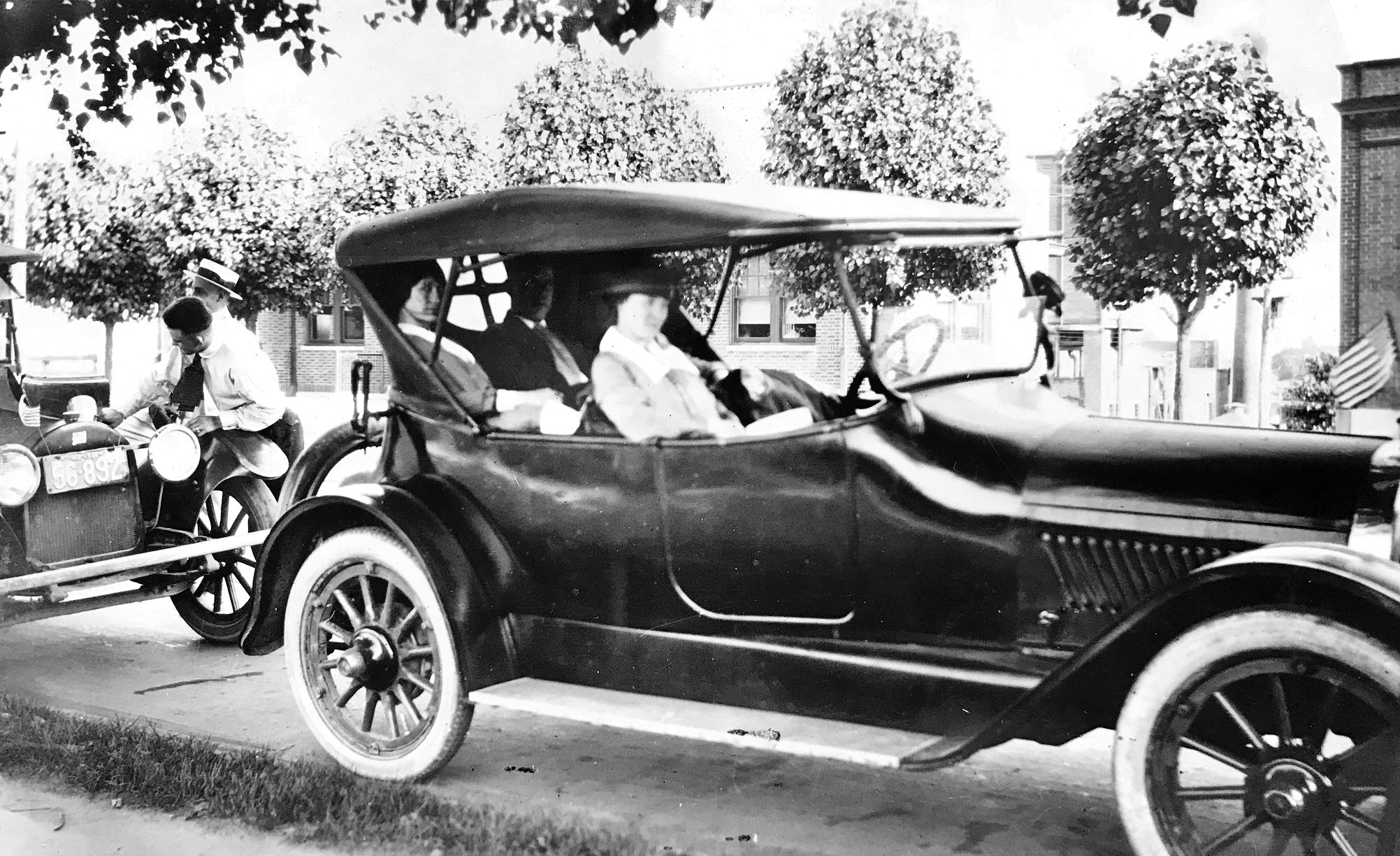
Ethelene Rachel Thomas seen in the passenger seat, joined by her sister, Celeste Thomas, with their father, Clinton Clay Thomas, in the back. Photographed by Lewis Reed, circa 1918.
As the country changed, so did Ethelene’s life. She eventually left the farmland of Frederick County and married Lewis Reed, a gifted photographer and entrepreneur who would go on to found Reed Brothers Dodge in Rockville. While Lewis built a business that helped introduce the automobile age to Montgomery County, Ethelene became an essential partner in that journey.
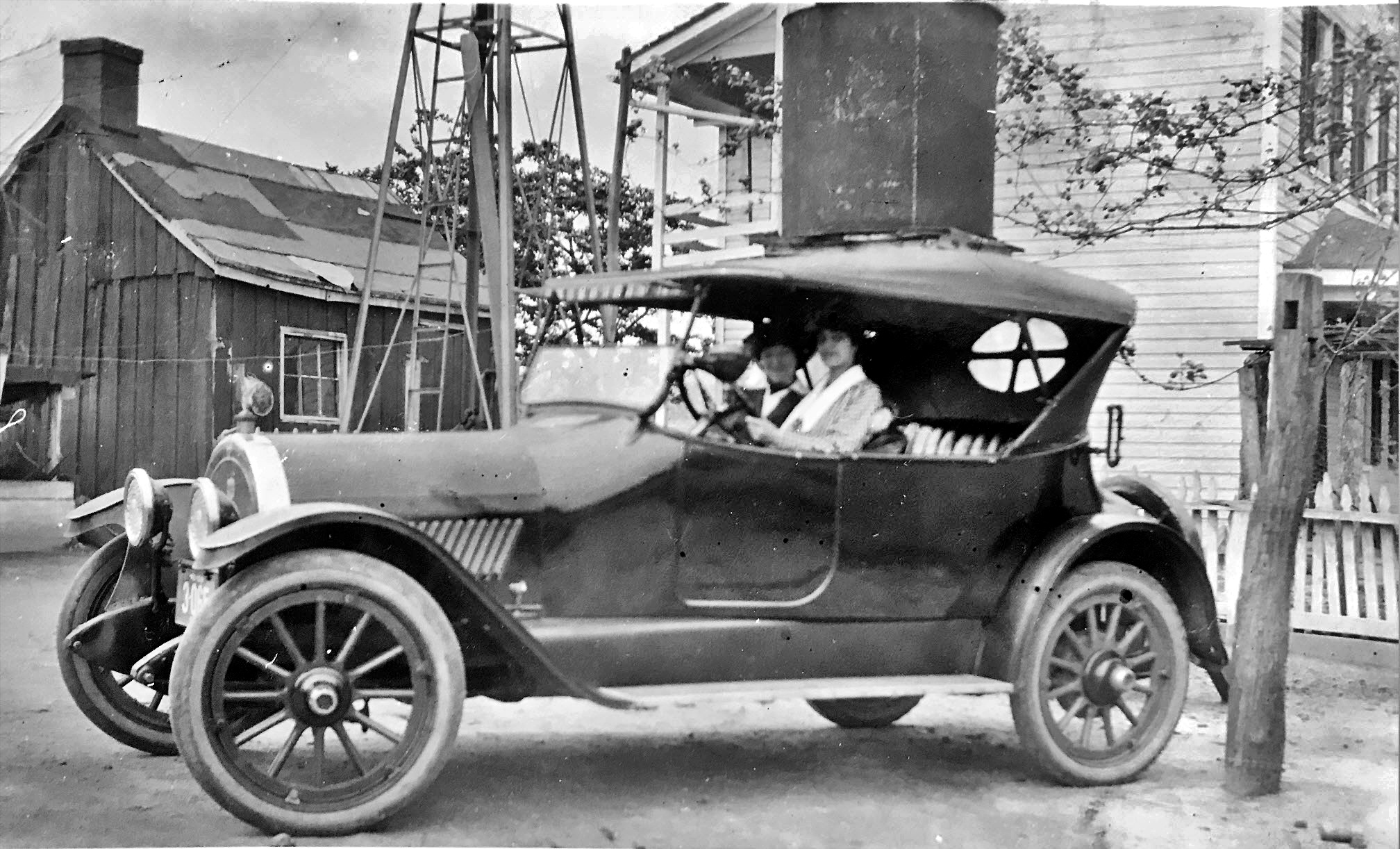
Ethelene Rachel Thomas and her sister, Celeste Thomas Brown, in a 1918 Oldsmobile Club Roadster. Photo taken by Lewis Reed at the Clinton Clay Thomas family farm, located on Butterfly Lane in Buckeystown, Maryland, circa 1918.
Not a great deal has been published about Lewis Reed’s wife, Ethelene Rachel Thomas, despite her central role in the family and in this story. This post is offered as a tribute to her life, her quiet strength, and the rural values she carried from Butterfly Lane into the heart of the Reed legacy.
Ethelene Rachel Thomas Reed was also my maternal grandmother, making this story deeply personal. Preserving and sharing her history is part of honoring not only her life, but the generations that followed and the legacy she helped create.
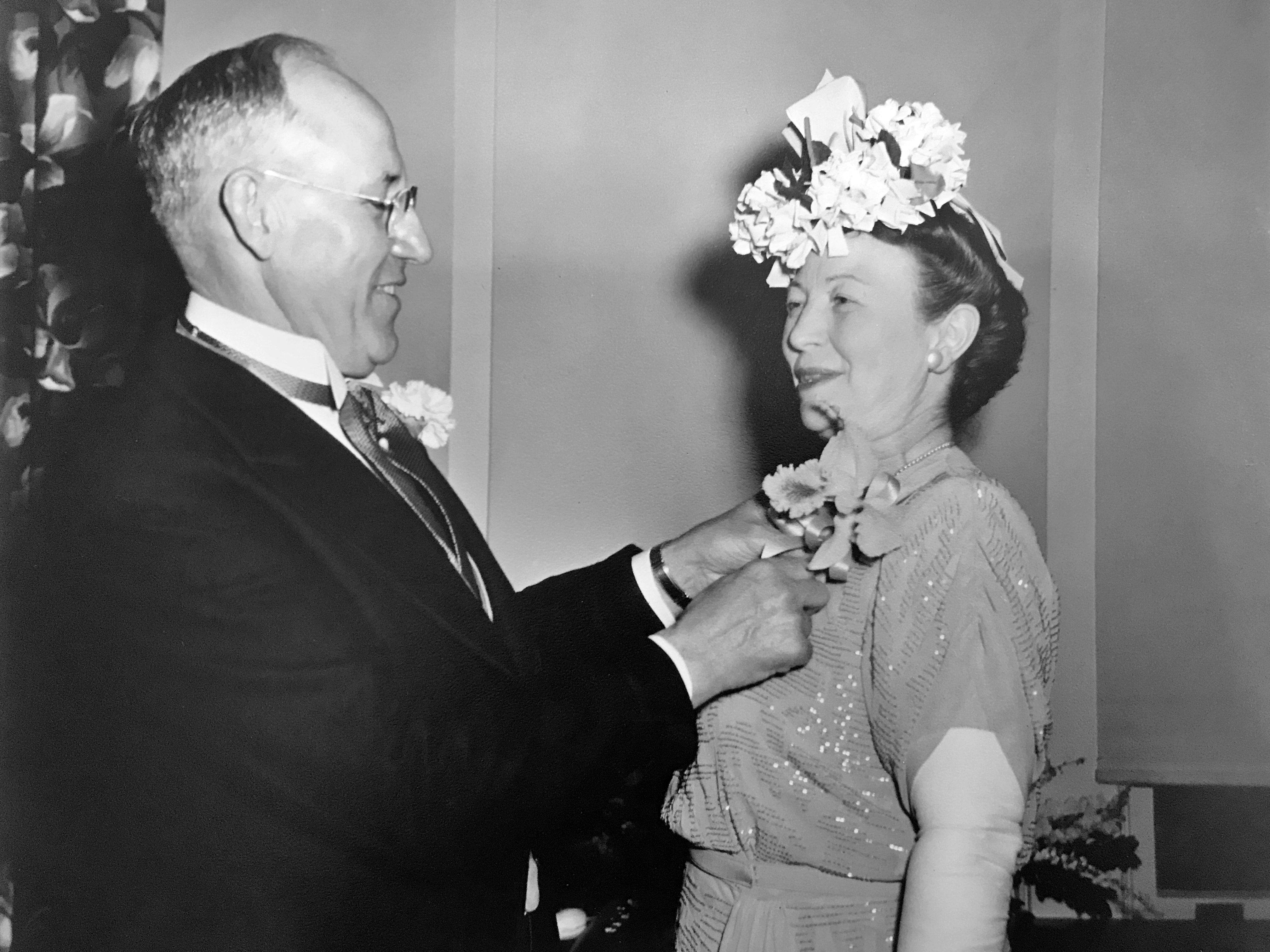
Lewis and Ethelene Reed at their daughter’s wedding reception–founders of a family legacy.
Ethelene Rachel Thomas Reed passed away on March 15, 1977, but her life remains an important link between the rural roots of Maryland and the modern legacy of Reed Brothers Dodge. From the fields of Butterfly Lane to the streets of Rockville, her story reminds us that our dealership’s history is not only about cars; it’s about people, family, and the values passed from one generation to the next.
Books

Related Resources


Copyright Notice

Reed Brothers Dodge History (1915-2012) by Jeanne Gartner is licensed under a Creative Commons Attribution-NonCommercial 3.0 Unported License.
 Reed Brothers Dodge History 1915 – 2012
Recent Comments