
Lewis Reed Photos: Black Rock Mill, 1905
Looking back at photography from the past is a fascinating experience for me. I have no formal history training, just a general interest in local history where I grew up. This special post is a part of a new blog feature called, “Rockville’s Past Through the Lens of Lewis Reed”. It doesn’t have anything to do with Reed Brothers Dodge, but it does have a lot to do with it’s founder, Lewis Reed. With photography for a hobby, one that began even before automobiles were around, Lewis Reed had amassed an extensive collection of photographs from historical locations in Maryland, Washington, DC and Virginia.
With that said, I will not try to be an historian; I will simply highlight some photos and supply a few sentences of context. I will begin with some images of Black Rock Mill … through the lens of Lewis Reed.

An unidentified lady poses in front of Black Rock Mill, circa 1905. Photo by Lewis Reed
Black Rock Mill was built by Thomas Hillary and has stood along the banks of Great Seneca Creek as a landmark since its construction in 1815-1816. The mill was in working operation for over a hundred years until a flood in 1920 destroyed a dam on Seneca Creek and damaged the mill. Today, it a unique survivor of the many mills in Montgomery County harnessing the water-power of the creeks to grind wheat and corn into flour. It is one of only two mills standing in Montgomery County Maryland. (click on images to enlarge)
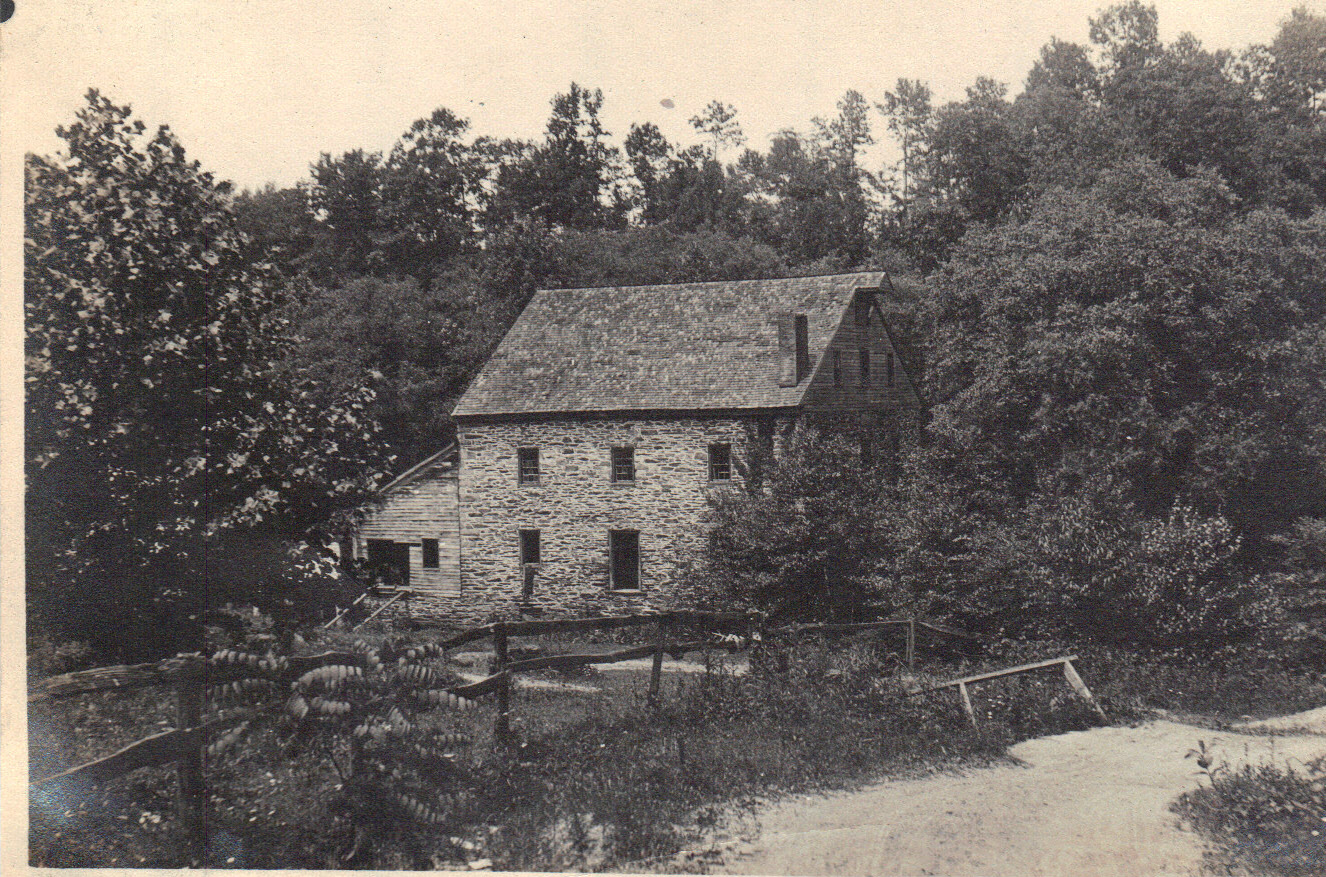
Black Rock Mill. Photo by Lewis Reed
As far as can be determined, Lewis Reed’s collection of Black Rock Mill photographs are probably some of the earliest known.
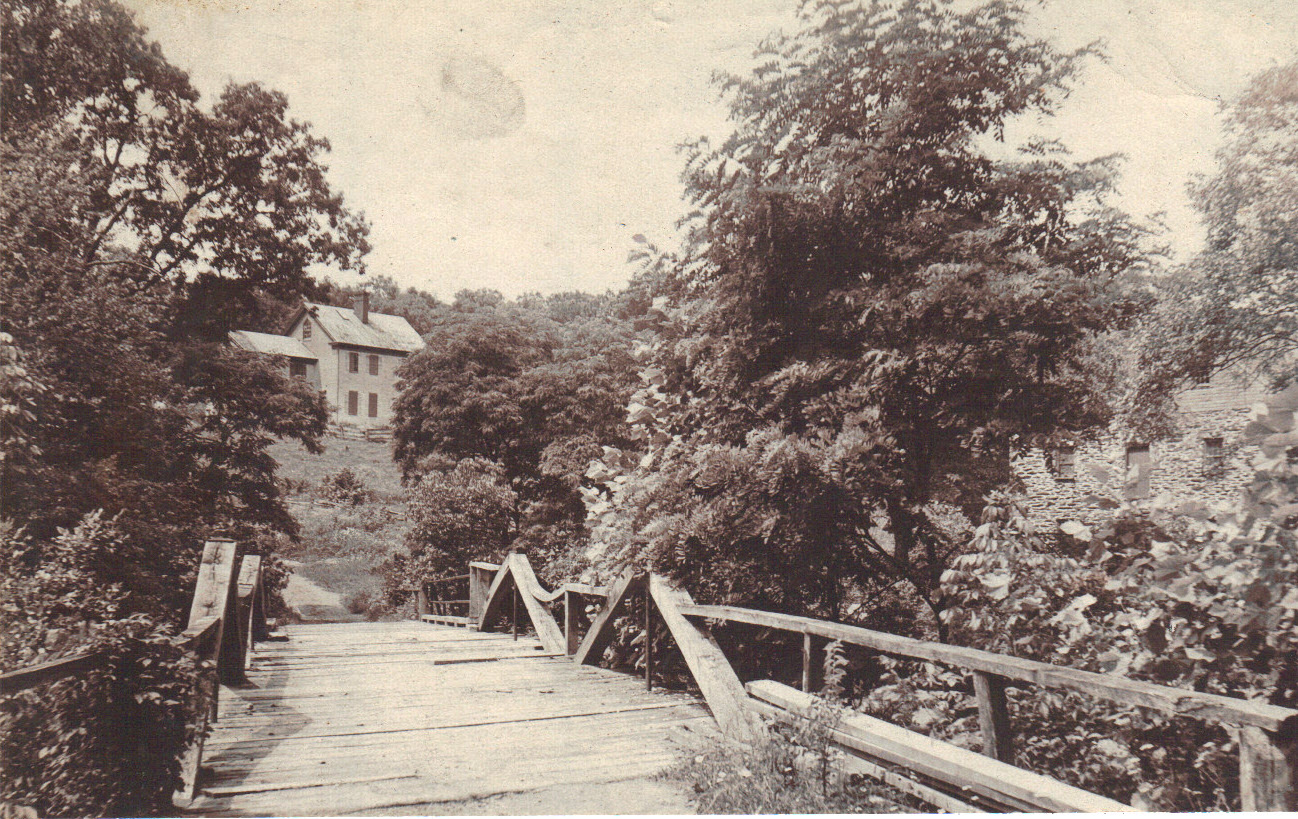
Bridge over Seneca Creek. Photo by Lewis Reed
Lewis Reed was a well-known photographer in the county and many of his early photographs are now part of the Montgomery County Historical Society photo archives. The Jane C. Sween Library was recently given a collection of 280 glass plate negatives, showing Montgomery County in the early 20th century.
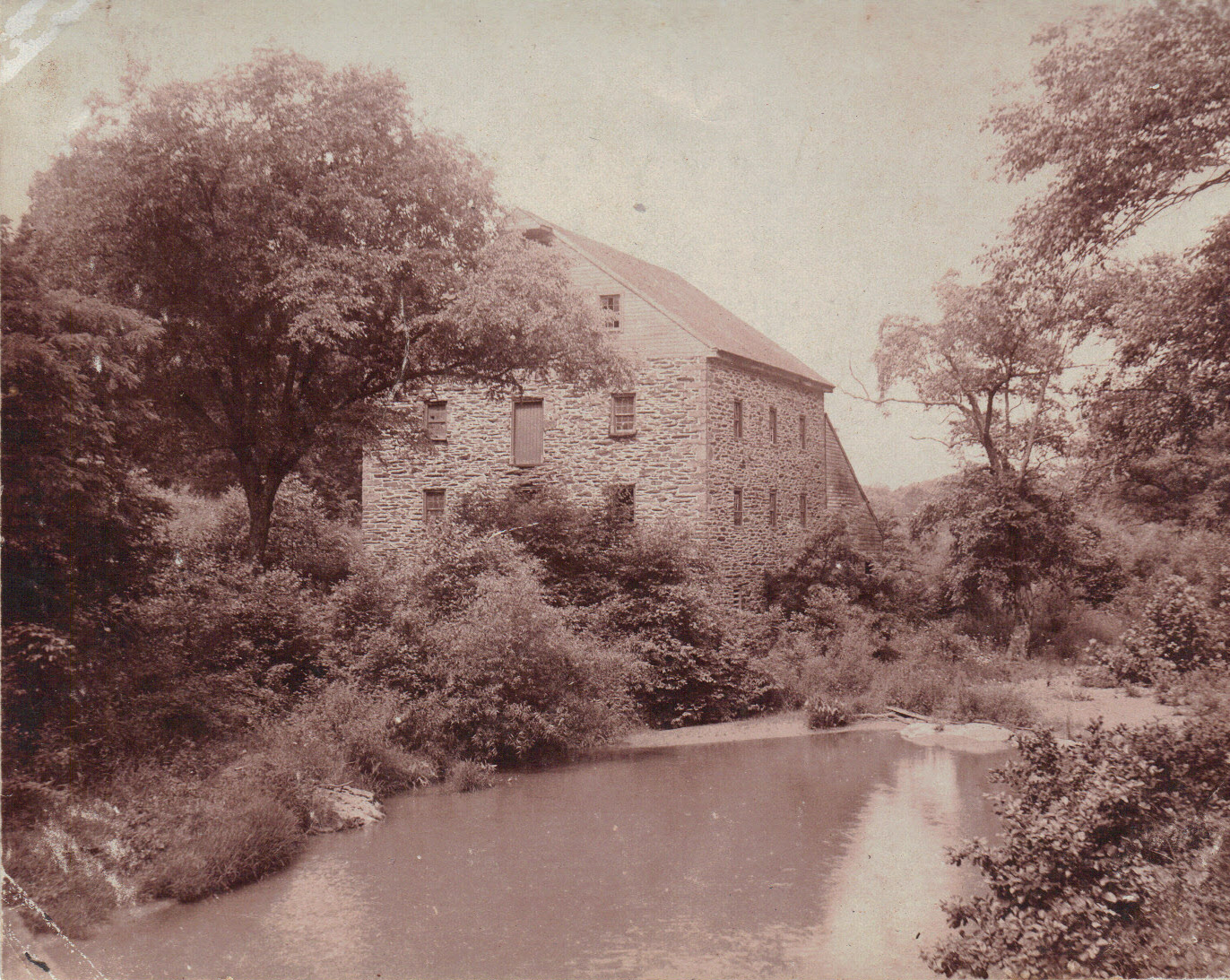
The two-story stone mill is set into the side of a hill beside Great Seneca Creek. Photo by Lewis Reed
A photo taken by Lewis Reed appeared below in an undated Montgomery County Courier newspaper.
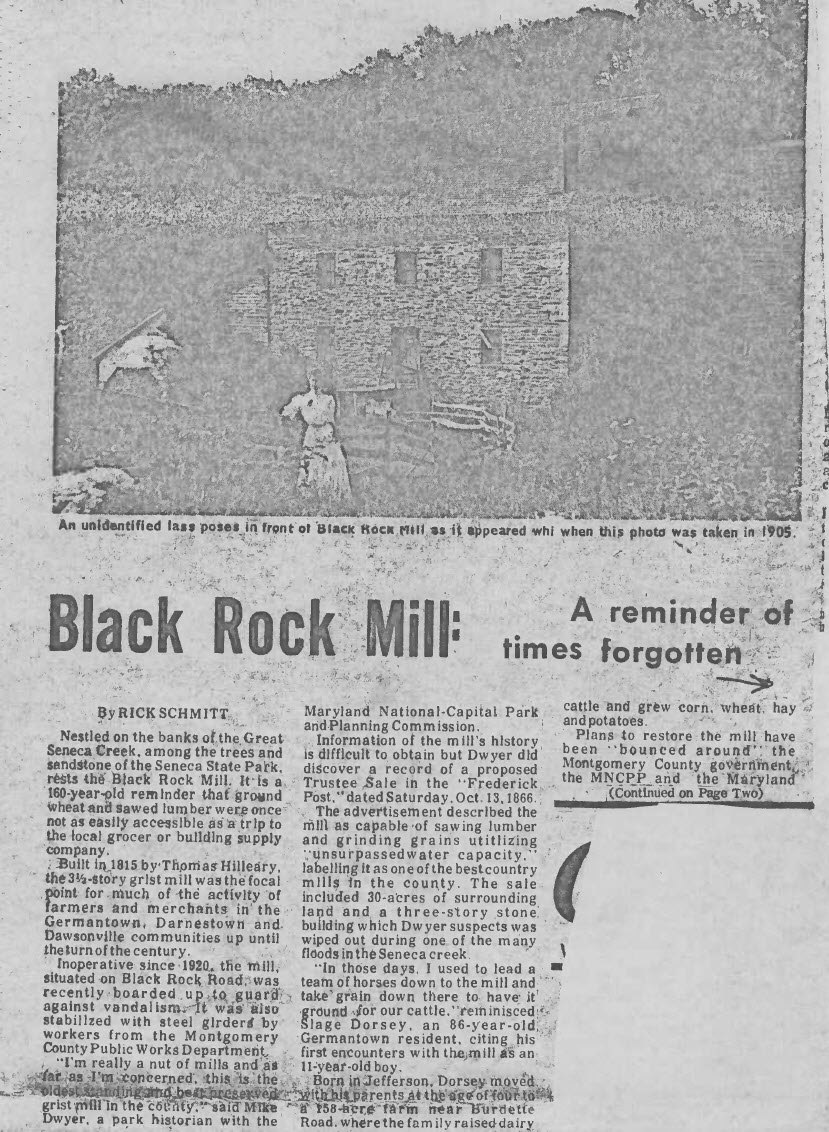
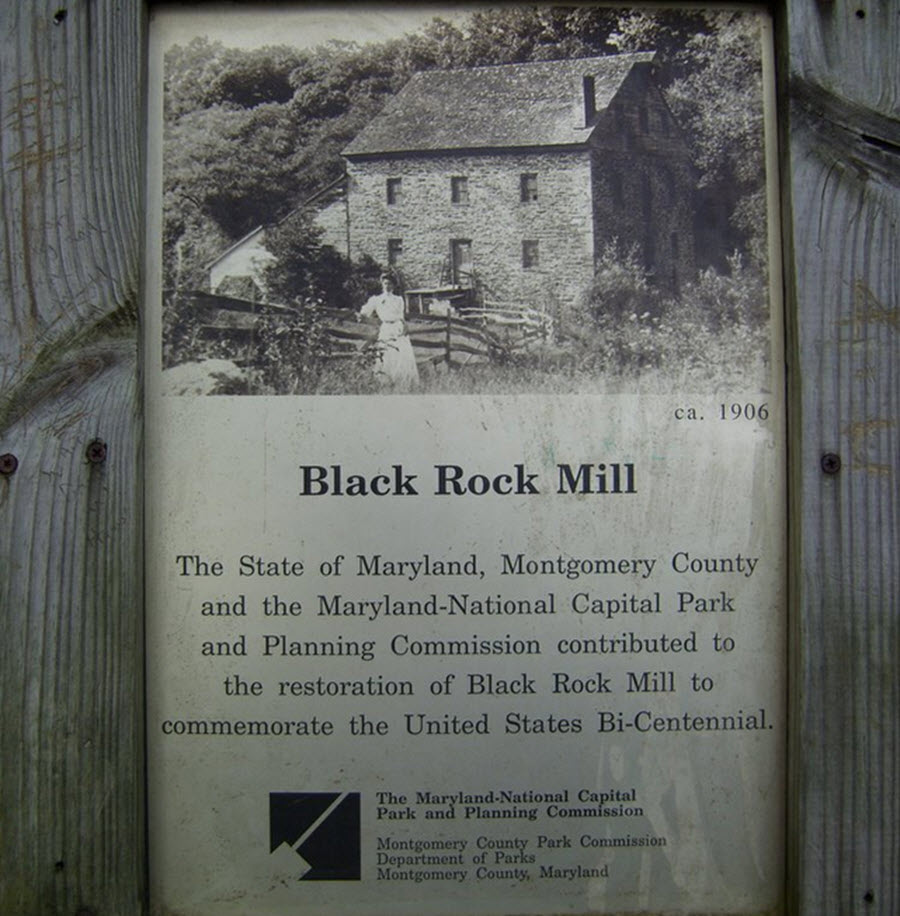
For now, the mill sits idle but majestic on the Seneca Creek, a reminder of a long time ago. Black Rock Mill is owned by MCPS and is open to the public during daylight hours. There are also hiking trails all around it since it sits within the parks system. This is a very large structure and is one of the best preserved old mills in Montgomery County. It also sits directly alongside a creek and the interior of the building has flood markers on the walls. At least one flood took over 2/3 of the building.
Directions: From Germantown, go south on Germantown Road/Md 118 for 2.5 miles, turn right onto Black Rock Road and go about 3 miles to the mill on the right at Great Seneca Creek. The mill is located in Seneca Creek State Park.
References:
M: 24-6: Black Rock Mill – Maryland State Archives
Montgomery County Historical Society
July 4, 1922: First MCPD Posing in Front of Reed Brothers Dodge
This blog entry is posted today to commemorate the anniversary of the Montgomery County Police Department. It was 93 years ago on July 4, 1922 that the MCPD was first established. In those days, Montgomery County was farm country, sparsely populated, automobiles sharing dirt roads with horse-drawn wagons. But it was changing into a proper suburb, and there needed to be a police department.
Posing in front of Reed Brothers Dodge on July 4, 1922 Chief Charles Cooley, center, and his men of the first mounted unit of the Montgomery County Police Force, were on their first day of duty. (click image to enlarge)
The MCPD consisted of five officers and a Chief. Each of the officers was issued a Harley-Davidson motorcycle, a .38 Smith & Wesson handgun, a black jack, law book and was allotted $300.00 a year for the upkeep of their motorcycle.

Pictured left to right: Earl Burdine, Lawrence Clagett, Guy Jones, Chief Charles Cooley, Leroy Rodgers, and Oscar Gaither. Photo by Lewis Reed
Source: Montgomery County, Two Centuries of Change by Jane Sween
Photoshop 1900s Style

A double exposure image of Lewis Reed’s brother, Edgar, seated on both sides of a table. Think about doing this without Photoshop. Photo by Lewis Reed
If you take a look at the state of photography today, such as the advances of digital cameras and the artful image manipulation by Photoshop, it is easy to forget that back in the 1900s photographers couldn’t just go into a computer program and change their images any way they wanted. They did what they could with the tools they had. Double image exposure was one tool Lewis Reed had in his photography tool belt. He was doing crazy things to images like this one over 100 years ago.
With double exposure technique, you could create certain effects like placing the same person on both sides of a picture simultaneously. Very hard to believe this image was not created using Photoshop, it is just too cool. No digital manipulation here.
Featured Photo: Hand-Cranked Car
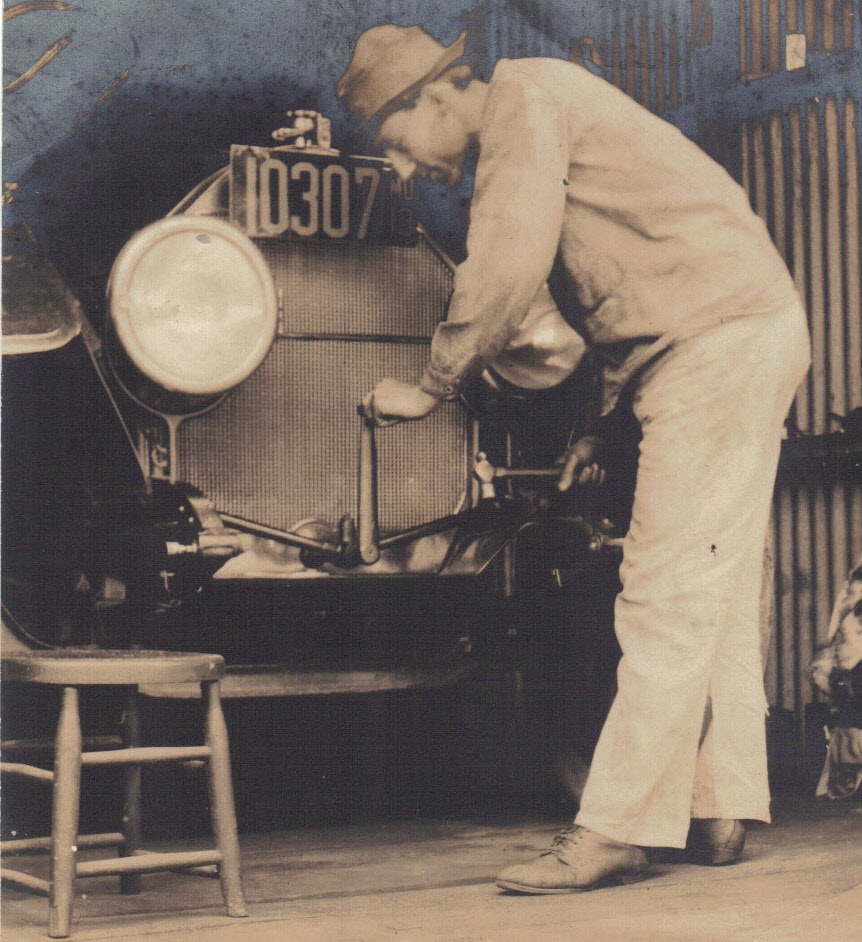
Lewis Reed hand cranking an old car. The license plate is MD 10307 dated 1913.
Today, we take the starting of automobiles for granted. Simply place the key in the ignition, turn, and VROOM, the engine starts.
However, this was not always the case. Cars in the early parts of the century had to be started by hand. This was accomplished by turning a crank, usually located in the front of the automobile. When the crank was turned, it moved the pistons in the automobile’s engine until enough momentum was built up to keep the engine going on its own. Hand cranking was also physically demanding making it very difficult for anyone with a small stature to start the engine.
By 1920, nearly all manufacturers were producing cars equipped with starters making it easy for anyone, regardless of physical abilities, to start a car by pressing a button mounted on the dash or floor. An ignition on and starter engage switch operated by a key was introduced by Chrysler in 1949.
1920s Double Image Photos by Lewis Reed
If you take a look at the state of photography today, such as the advances of digital cameras and the artful image manipulation by Photoshop, it is easy to forget that back in the 1920s photographers couldn’t just go into a computer program and change their images any way they wanted. They did what they could with the tools they had. Double image exposure was one tool Lewis Reed had in his photography tool belt.
With double exposure technique, you could create certain effects like placing the same person on both sides of a picture simultaneously. Very hard to believe these images were not created using Photoshop, they are just too cool. No digital manipulation here.
Below are some vintage (circa 1920s) double image photographs from Lewis Reed’s collection (click on photos to enlarge):

Lewis Reed standing on both sides of a steamroller

Another double exposure wonderment. Wanna Fight?
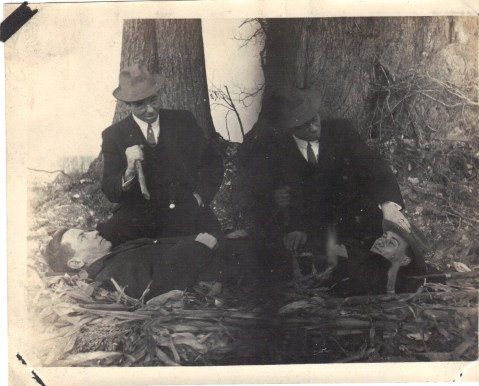
Oh No! What on earth are they doing? I don’t know, but this one is epic.

Don’t Shoot! Lewis Reed is standing both front left and front right in this photo
Books

Related Resources


Copyright Notice

Reed Brothers Dodge History (1915-2012) by Jeanne Gartner is licensed under a Creative Commons Attribution-NonCommercial 3.0 Unported License.
 Reed Brothers Dodge History 1915 – 2012
Recent Comments