
A Look Back at the Forgotten Art of Hand-Tinted Photography
The hand-tinted photos of Lewis Reed and his daughter, Mary Jane, are examples of the photographic process that most of the people reading this will have never experienced: hand-tinting.
The golden age of hand-colored photography occurred between 1900 and 1940. Before the days of true color photography, these views were immensely popular. While hand coloring doesn’t help you identify or date an image, it does enhance a photograph’s appearance and add to its history.
Before the advent of color photography, photographers painstakingly applied color to black and white photos in order to show a truer visual depiction of a photo image. All of the photographs featured here were taken by Lewis Reed in the early 1900s and were hand-tinted by his daughter, Mary Jane, likely in the late 1930s to 1940. She colored the photos with special photographic watercolor and a paintbrush. Rather than coloring the entire image—a time-consuming task—she carefully selected details that would make the image lively and attractive. The fact that these photos, all of which are over 100 years old, are still in relatively good condition is a strong testament to the lasting power of hand-tinted photographs.
Do you recognize the road pictured below? Few modern residents of Montgomery County would guess, but this is a shot down Veirs Mill Road in the early 1900s. Mary Jane Reed added some depth to the image with subtle earth tones, in the colorized version.

Veirs Mill Road looking east before it was paved. Original photograph by Lewis Reed, 1911.
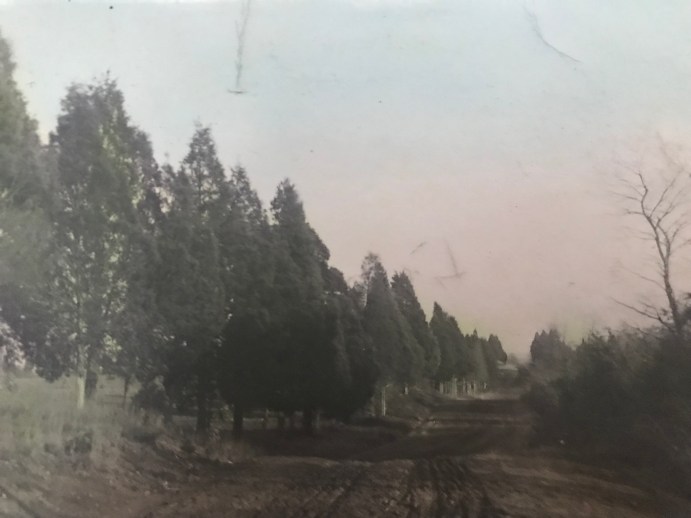
Colorized version of the photograph above by Lewis Reed. The photo was hand-tinted by Mary Jane (Reed) Gartner, making it look like a color photo.
Below, Lewis Reed’s c. 1909 photograph of his little cousin, Amanda Reed, sitting amongst the hydrangeas — the original before, and the colorized version after.

Amanda Reed before hand-tinting. Original photograph by Lewis Reed.

Amanda Reed after hand-tinting by Mary Jane (Reed) Gartner. Pastel was apparently a good choice for coloration.
To a visual artist like a dedicated photographer, the inability of the black-and-white camera to capture the richness of colorful blooms or the vibrancy of a summer scene must have been endlessly frustrating.
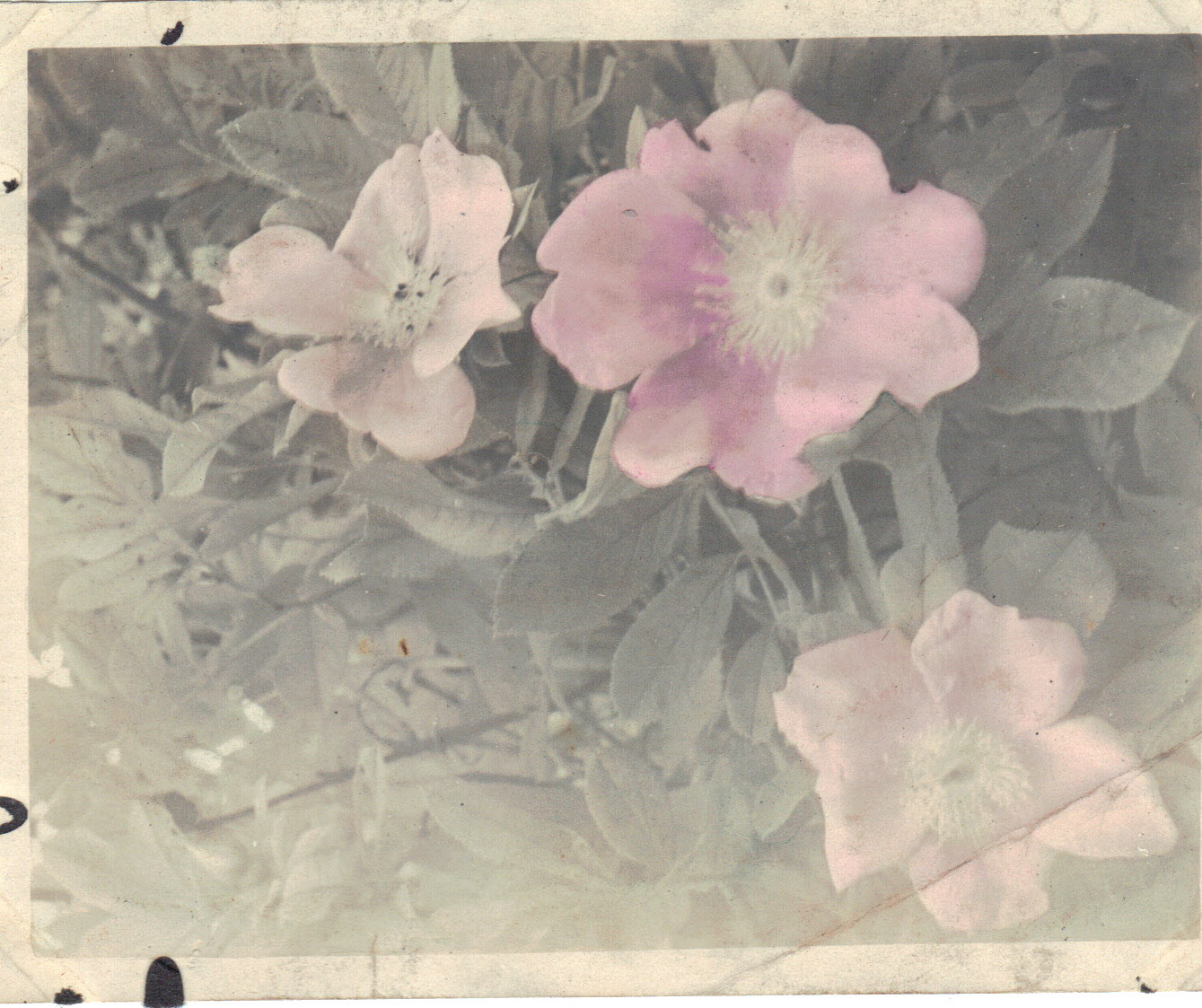
Lewis Reed’s daughter Mary Jane seemed particularly fond of hand-tinting photographs of flowers — it must have given her a lot of pleasure to “restore” color to her father’s beautifully composed shots. View some more of her work below.

Roses before hand-coloring. Original photograph by Lewis Reed.

Roses after hand-coloring
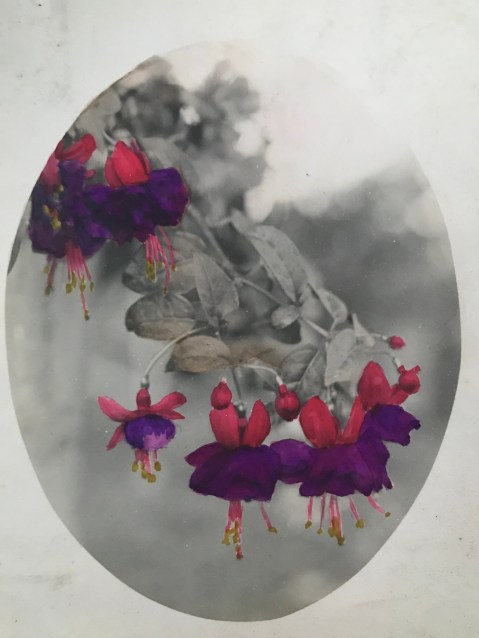
Hand-colored flowers
Below are two different versions of tinting a similar image. In Version 2, some of the flowers at the top were removed from the vase (by Lewis Reed, before taking a second shot) for a different aesthetic effect. The color artist used bolder colors to enhance that effect.

Original arrangement before hand-tinting. Original photograph by Lewis Reed.

Version 1: Arrangement after hand-tinting by Mary Jane (Reed) Gartner
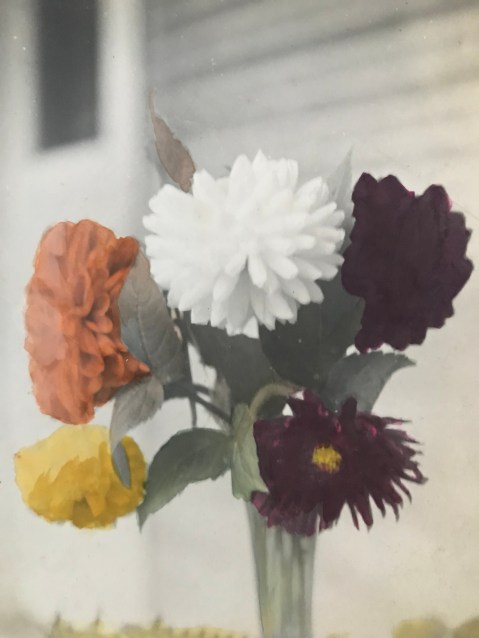
Version 2: Arrangement after hand-tinting by Mary Jane (Reed) Gartner

This is a hand-tinted version of Rock Creek taken by Lewis Reed in the early 1920s.
Other examples of hand-tinting are included in the following collection of Lewis Reed’s Black Rock Mill photographs. Black Rock Mill was built by Thomas Hillary and has stood along the banks of Great Seneca Creek as a landmark since its construction in 1815-1816. The mill was in working operation for over a hundred years until a flood in 1920 destroyed a dam on Seneca Creek and damaged the mill. Today, it a unique survivor of the many mills in Montgomery County harnessing the water-power of the creeks to grind wheat and corn into flour. It is one of only two mills standing in Montgomery County Maryland.

Black Rock Mill bridge hand-tinted by Lewis Reed’s daughter, Mary Jane.
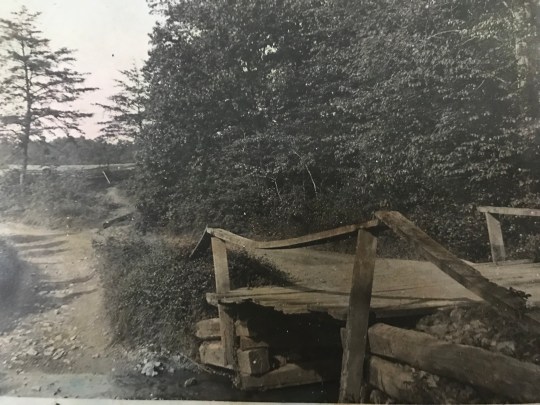
Bridge over Seneca Creek. Photo by Lewis Reed and hand-tinted by his daughter, Mary Jane

Strolling down a lane on a beautiful summer’s day. Black Rock Mill hand-tinted photo
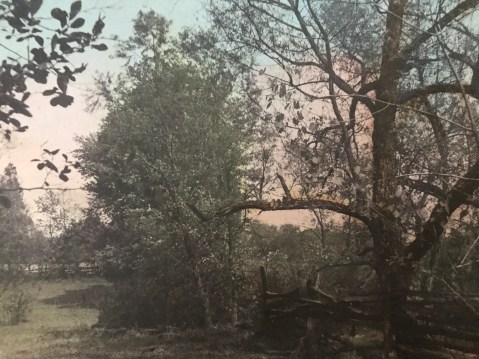
Black Rock Mill hand-tinted photo
The art of hand-tinted photos was introduced along side the daguerreotype in 1839. In the 19th century it was most common for the professional photographer to tint the photograph or tintype just after printing. Later photo artists introduced new techniques using oil, watercolor and other types of paint to achieve the desired result. With the Great Depression, the sale of professional hand-tinted photographs declined, but the home artist continued to have access to hand-tinting kits. Today, we can look back and appreciate the time and creativity it took to edit these photos without Photoshop.
Find photos like these and much more on Montgomery History’s online exhibit, “Montgomery County 1900-1930: Through the Lens of Lewis Reed“.
Lewis Reed’s Pet Photography
While I was going through Lewis Reed’s photograph collection trying to get them all sorted, I started noticing how many images of people posing with pets and animals he had. I thought, everybody loves their pets. Everyone can relate to these photos. Most of the photos involve cats, but there are some depicting dogs, a pony, a squirrel, a cow, a chicken, a rabbit, and even a spider!
If you thought filling your camera roll with pet pics was a modern phenomenon, these photos prove otherwise. These never before seen pet photographs feature glimpses into the lives of every day people and their relationships with their pets at the turn of the 20th century.
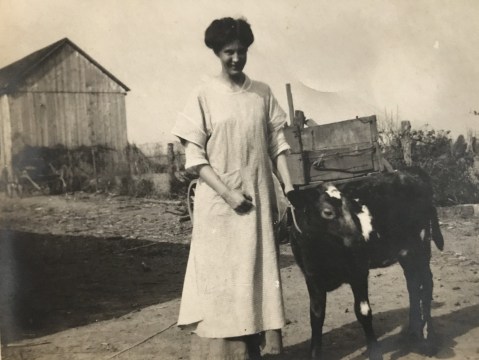
Lady and a calf pose for their portrait on a farm. Photo by Lewis Reed
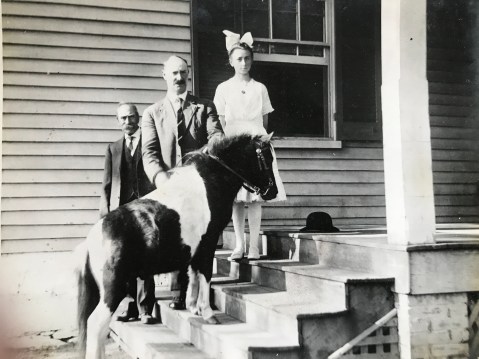
Family with a pony on the front porch. Photo by Lewis Reed

Girl with her pony. Photo by Lewis Reed

Girl riding in pony cart. Photo by Lewis Reed

Saddled up and ready to ride. Photo by Lewis Reed
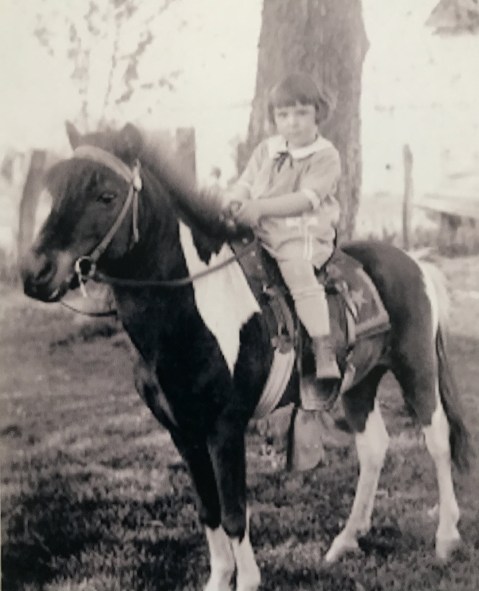
Lewis Reed’s 3 year old daughter, Mary Jane, sitting on a pony. Photo by Lewis Reed
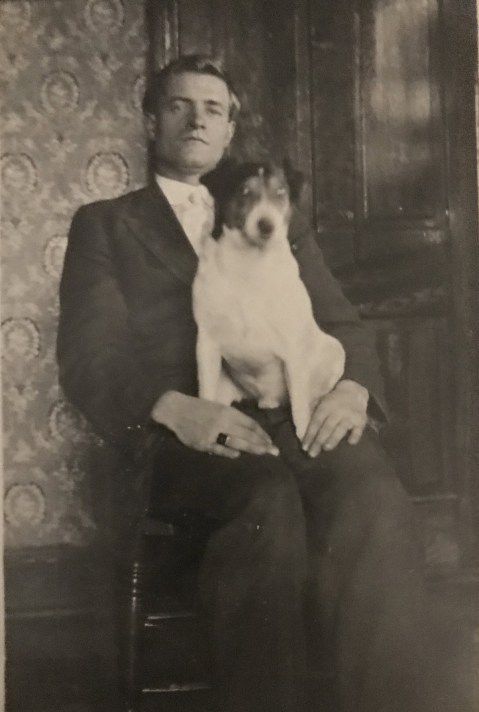
Man with his best friend. Photo by Lewis Reed
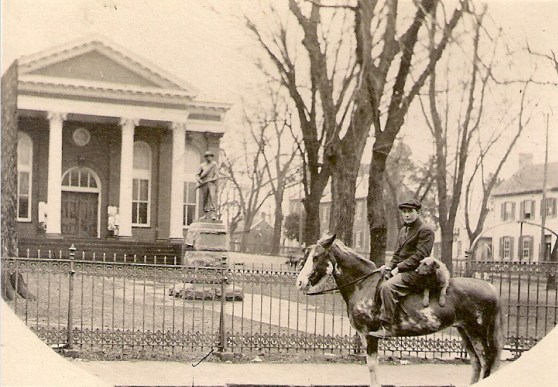
Man and his dog sitting on a horse in front of the Loudoun County Courthouse in Leesburg, Virginia. Photo by Lewis Reed
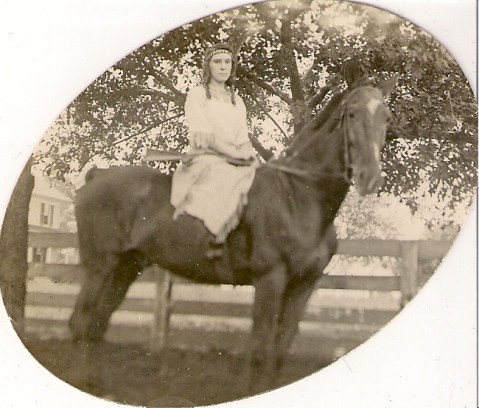
Woman holding a rifle on a horse. Photo by Lewis Reed

Man on a horse. Photo by Lewis Reed

Woman feeding chickens. Photo by Lewis Reed

Cat posing on chair. Photo by Lewis Reed

Cat in corn stalks and leaves. Photo by Lewis Reed

Cat relaxing in a chair. Photo by Lewis Reed

Cat portrait. Photo by Lewis Reed
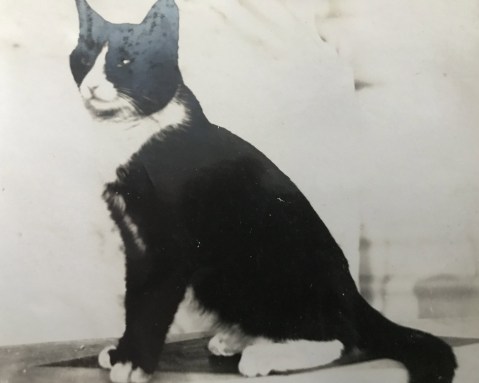
Cat portrait. Photo by Lewis Reed

Cat ready to pounce. Photo by Lewis Reed
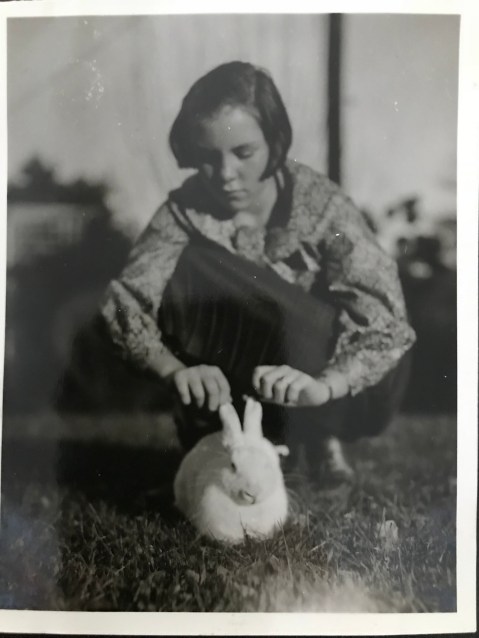
Lewis Reed’s daughter, Mary Jane, with her pet rabbit. Photo by Lewis Reed
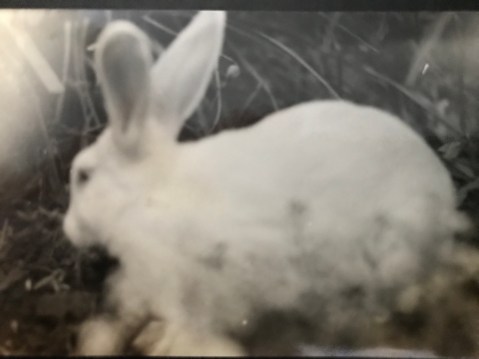
Pet rabbit. Photo by Lewis Reed
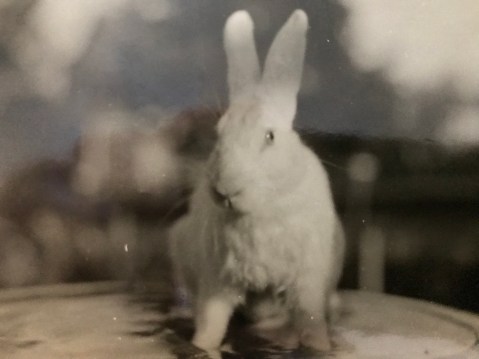
Pet rabbit. Photo by Lewis Reed
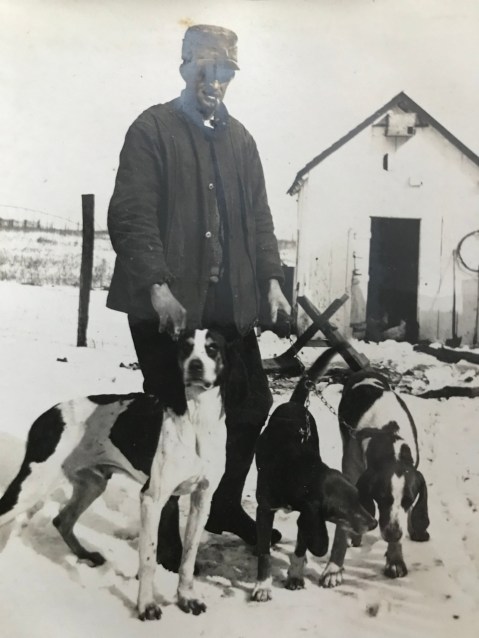
Hunter and his dogs. Photo by Lewis Reed

Boy and his horse. Photo by Lewis Reed
Cows are not the most athletic of creatures, they tend to just stand around a lot, so must be pretty easy to capture in a photo.

Farmer posing with a dairy cow. Photo by Lewis Reed
Getting up close and personal with a chicken can’t be easy. I imagine my grandfather sitting in the backyard for hours with his lens pointed at whichever chicken is closest to him in an effort to get the perfect shot. It’s pretty amazing the texture and detail he captured in this photo.
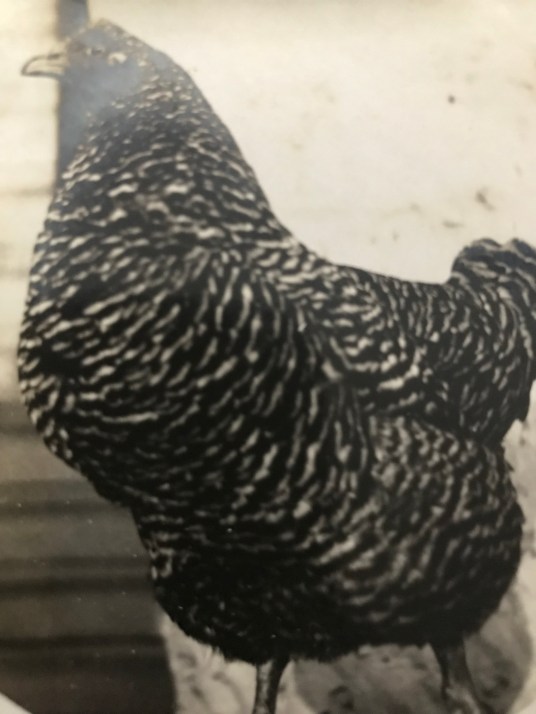
Backyard chicken. Photo by Lewis Reed

White Squirrel. Photo by Lewis Reed

Lewis Reed’s daughter, Mary Jane, with a St Bernard. Photo by Lewis Reed
In the early 1900s, Lewis Reed also trained his camera on a part of the world most of us try to ignore: spiders. This photograph is incredibly unique, both for its subject matter and use of magnification that shows the spider in such detail.
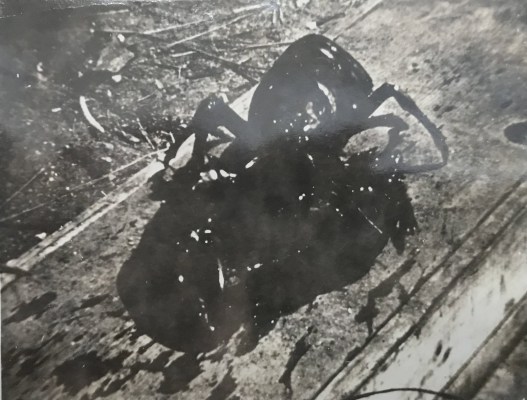
Spider! Photo by Lewis Reed
Photo Manipulation Without a Computer
If you take a look at the state of photography today, such as the advances of digital cameras and the artful image manipulation by Photoshop, it is easy to forget that back in the 1900s photographers couldn’t just go into a computer program and change their images any way they wanted. Instead of retouching an image on a computer, as it’s done now, it originally took place on the negative.
Photo manipulation was one tool Lewis Reed had in his photography tool belt. He was 100 years ahead of his time by creating special effects to images long before the convenience and efficiency of digital photography and Photoshop were ever imaginable.
I was hugely interested in how this was undertaken, and by the fact that the modification looked so seamless in the printed image. Spotting these manipulated photos in his extensive collection has been both easy and difficult. Some were simple double exposure images or hand colored images. The addition of these hand-drawn backgrounds was a little more difficult. It wasn’t until I viewed the high resolution scan that this modification jumped out at me.
Reading up on the subject I have become aware that retouching is in fact an art that evolved right alongside the birth of photography. The photographs below were retouched by hand (also known as “handwork”) on the glass negative using a hard graphite pencil and pieced together in the darkroom from separate photographs. The two photographs, one of the people standing on the edge of a cliff, and the other of the hand-drawn mountains, appear to be joined at the edge of the cliff where the mountains begin. All of this required a degree of artistic skill and access to a darkroom. Lewis Reed developed his own photographs in a darkroom in his house — in the kitchen, to be exact — and worked at night to develop the negatives.
The photographs below show two unknown people posing on a cliff in front of a hand-drawn background of mountains.

An original photograph retouched with hand-drawn mountains by Lewis Reed

Same photo as above, different angle, retouched by Lewis Reed.
Today, we can look back and appreciate the time and creativity it took to edit these photos without Photoshop.
Lewis Reed’s Hand-tinted Photos
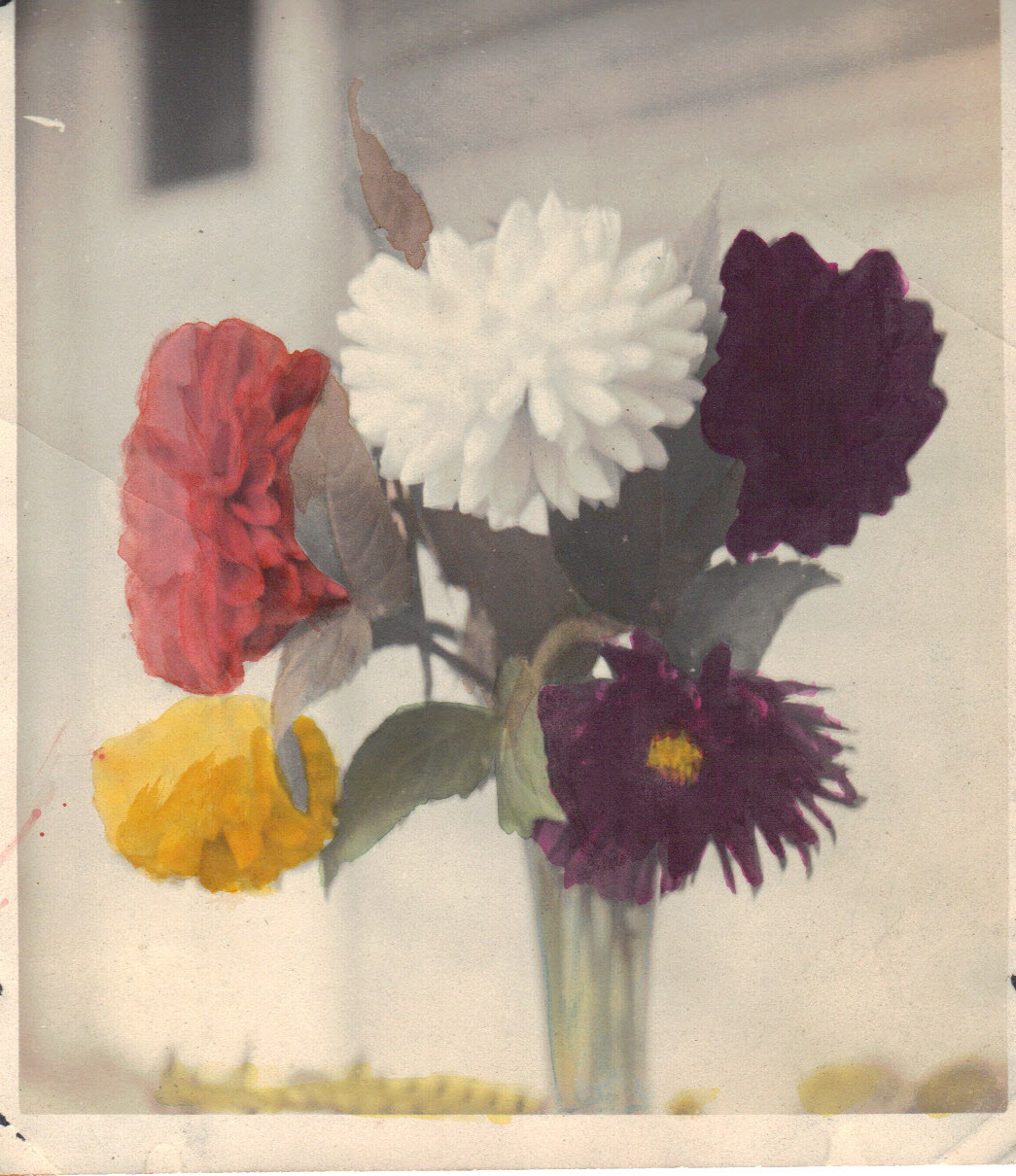
Before the advent of color photography, photographers painstakingly applied color to black and white photos in order to show a truer visual depiction of a photo image. The hand-tinted photos of Lewis Reed and his daughter, Mary Jane (Reed) Gartner are examples of this medium. The small collection of hand-tinted photographs were taken by Lewis Reed in the early 1900s. The photographs were hand-colored my my mother, Mary Jane (Reed) Gartner.
 Below are hand-tinted photos before and after. Pastel was a good choice for coloration.
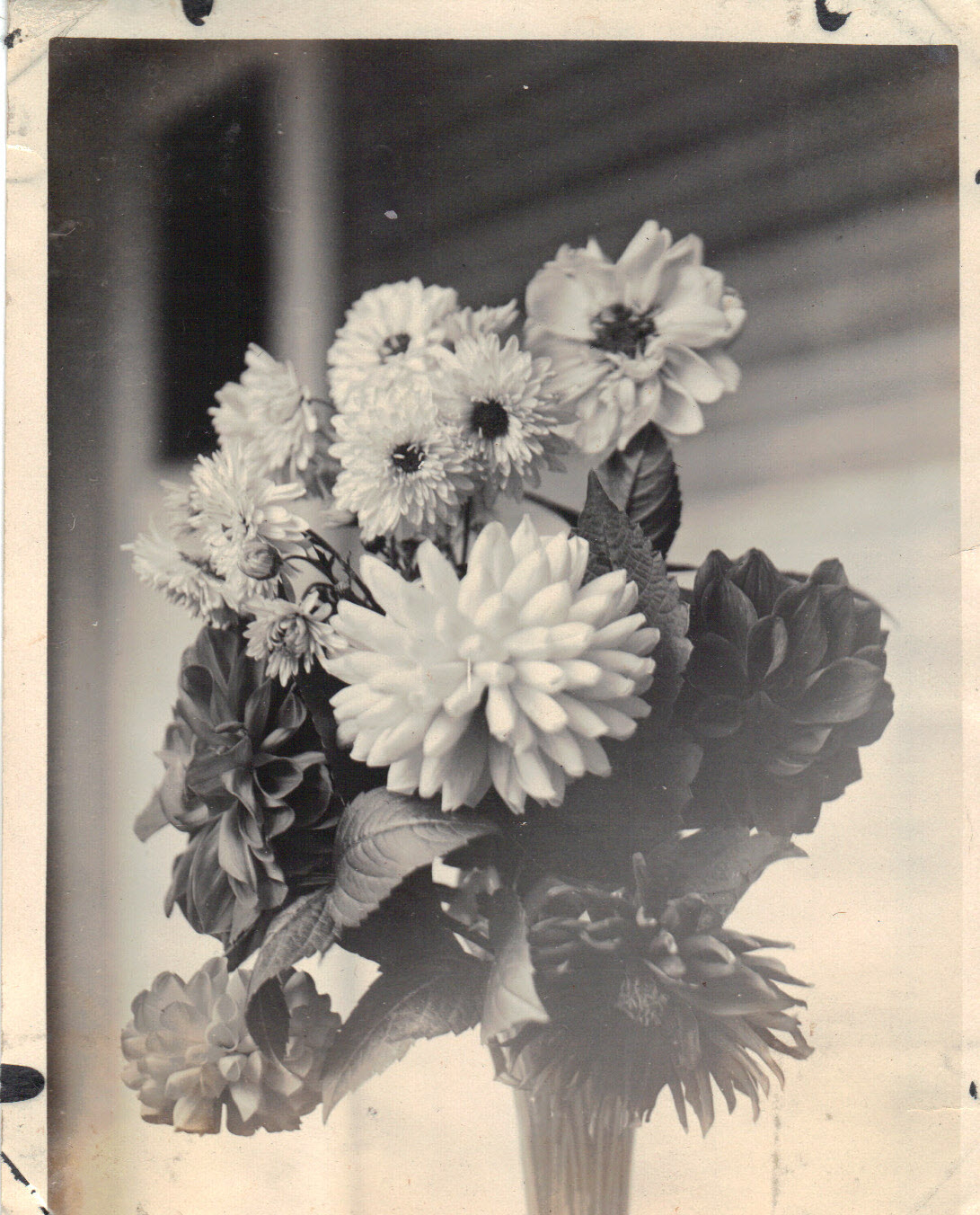
Original photograph by Lewis Reed.

Original photograph by Lewis Reed. The photograph was meticulously tinted by my mother, making it look like a color photo.
The art of hand tinted photos was introduced along side the daguerreotype in 1839. In the 19th century it was most common for the professional photographer to tint the photograph or tintype just after printing. Later photo artists introduced new techniques using oil, watercolor and other types of paint to achieve the desired result. With the Great Depression, the sale of professional hand tinted photographs declined, but the home artist continued to have access to hand tinting kits. There is a very informative wiki article here which provided me with the brief details I have shared with you.
 These days, most people rely on Photoshop to digitally make such enhancements. Progress, you know …
Photoshop 1900s Style

A double exposure image of Lewis Reed’s brother, Edgar, seated on both sides of a table. Think about doing this without Photoshop. Photo by Lewis Reed
If you take a look at the state of photography today, such as the advances of digital cameras and the artful image manipulation by Photoshop, it is easy to forget that back in the 1900s photographers couldn’t just go into a computer program and change their images any way they wanted. They did what they could with the tools they had. Double image exposure was one tool Lewis Reed had in his photography tool belt. He was doing crazy things to images like this one over 100 years ago.
With double exposure technique, you could create certain effects like placing the same person on both sides of a picture simultaneously. Very hard to believe this image was not created using Photoshop, it is just too cool. No digital manipulation here.
Books

Related Resources


Copyright Notice

Reed Brothers Dodge History (1915-2012) by Jeanne Gartner is licensed under a Creative Commons Attribution-NonCommercial 3.0 Unported License.
 Reed Brothers Dodge History 1915 – 2012
Recent Comments