
Lewis Reed Photo Featured in Gettysburg Educational Program: Enduring Pathways
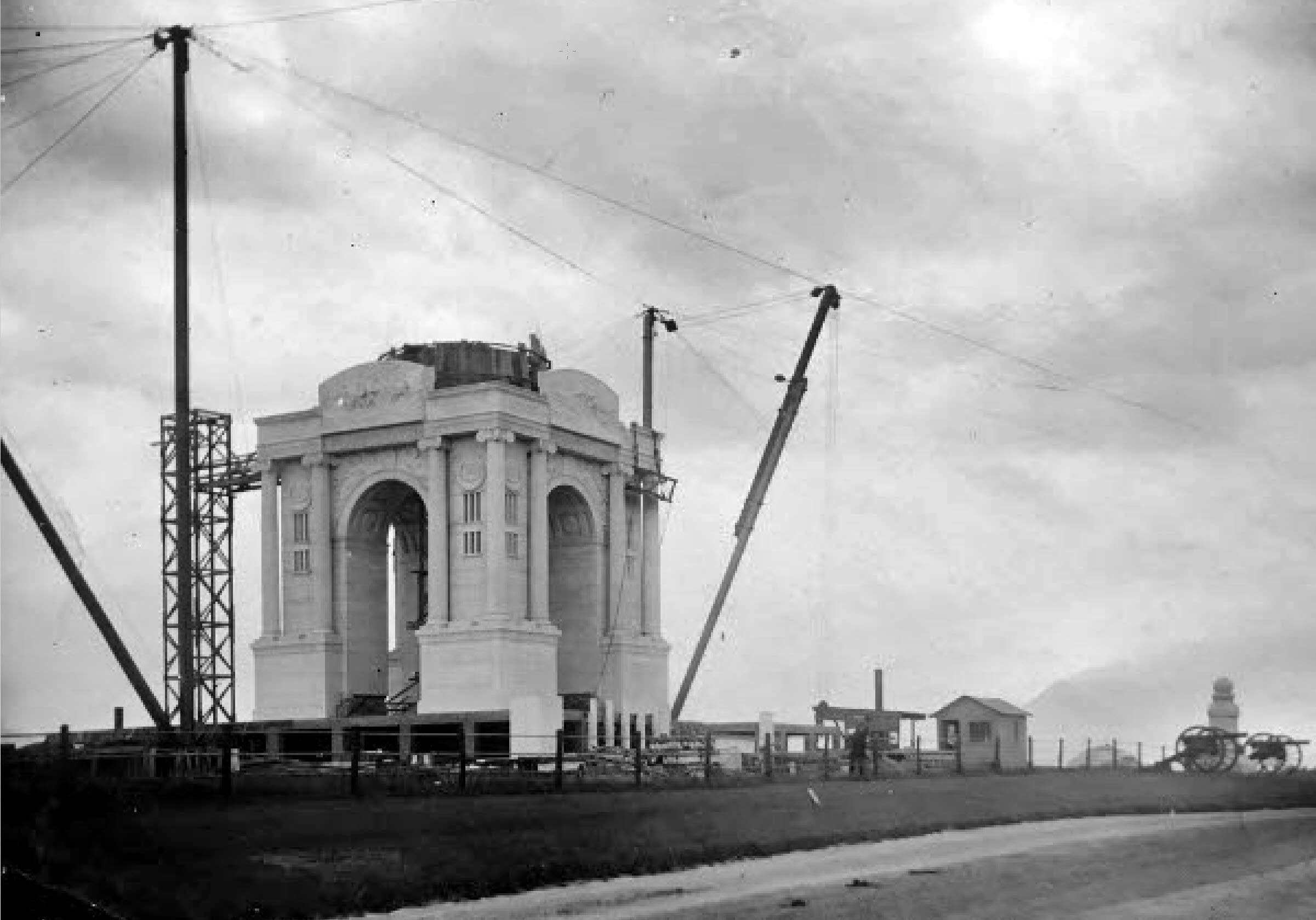
State of Pennsylvania Monument Under Construction, ca. 1910. This rare photograph was taken by Lewis Reed of the State of Pennsylvania Monument while still under construction. Dedicated on September 27, 1910, the Pennsylvania Monument towers above the historic fields of Gettysburg, honoring the sacrifice of Pennsylvania’s soldiers. As the largest monument on the battlefield, it remains one of the most iconic and visited landmarks in the park.
Beginning on Memorial Day and running through Labor Day, the Lincoln Fellowship of Pennsylvania sponsors “100 Nights of Taps”, Gettysburg in partnership with Gettysburg National Military Park, Taps for Veterans, Gettysburg’s Licensed Battlefield Guides, and Eisenhower National Historic Site. A major feature of 100 Nights of Taps program is their “Enduring Pathway” – a historic/educational two minute presentation about Lincoln, the Gettysburg Address, and the history of Taps.
The Enduring Pathway previously presented the history of the Soldier’s National Monument, accompanied by a photo of its construction. Being now located at the Pennsylvania Monument, a member of the Board of Directors of the Lincoln Fellowship of Pennsylvania contacted me requesting permission to use Lewis Reed’s photograph of the Pennsylvania Monument while under construction in their Enduring Pathway educational segment on the monument. To have Lewis Reed’s photograph included in this endeavor is a privilege, and I was delighted to grant the permission. It is a small contribution, perhaps, but one that carries a great deal of personal significance. It’s a reminder that the work we do, the stories we tell, and the images we create can have a lasting impact, connecting us to the past and shaping our understanding of the present.

State of Pennsylvania Monument after completion, ca. 1914. Photo by Lewis Reed
The monument was dedicated in 1910, however, it was unfinished at the time of the dedication, lacking the eight bronze statues which were installed in April 1913. The memorial, including the granite dome, was fully completed in 1914 with the installation of a bronze tablet listing additional veterans’ names. The monument also includes statues of President Abraham Lincoln, Governor Andrew Curtin, and six Pennsylvania generals. The monument is located on Hancock Avenue at Pleasonton Avenue.
Source: Wikipedia, Pennsylvania State Memorial, Gettysburg
Featured Photo: Memorial Day in Gettysburg, A Historic Tradition

Women and children reverently carry bouquets to lay upon the graves in the cemetery. Photo by Lewis Reed, ca. early 1900s.
Memorial Day in Gettysburg holds a significant place in American history, marked by a long-standing tradition of remembrance and commemoration. The Memorial Day parade and ceremony in Gettysburg is recognized as one of the oldest continuously held ceremonies in the United States. A poignant visual record of this tradition is captured in the photograph taken by Lewis Reed. This image depicts local women and children walking en route to the Soldiers National Cemetery to lay flowers. This act of laying flowers is a symbolic gesture of remembrance, a practice that continues to this day.
Gettysburg National Cemetery is the final resting place for 3,512 Union soldiers. This cemetery is not only a burial ground, but also a site of historical significance, as it is where President Abraham Lincoln delivered his iconic Gettysburg Address in 1863.
A Brief History of Mopar
 When Chrysler bought Dodge in 1928, the need for a dedicated parts manufacturer, supplier and distribution system to support the growing enterprise led to the formation of the Chrysler Motor Parts Corporation (CMPC) in 1929.
Originally used in the 1920s, Mopar (a simple contraction of the words MOtor and PARts) was trademarked for a line of antifreeze products in 1937. The Mopar brand made its mark in the 1960s – the muscle car era. The Chrysler Corporation built race-ready Dodge and Plymouth “package cars” equipped with special high-performance parts. Mopar also carried a line of “Special Parts” for super stock drag racers and developed its racing parts division called Mopar Performance Parts to enhance speed and handling for both road and racing use.

From 1933 to 1937 Chrysler Motor Parts featured a logo with the letters D, C, P and D, for Dodge, Chrysler, Plymouth, and Desoto. The P was clearly larger than the others, representing Plymouth’s size and importance.
The term Mopar is also closely associated with the muscle cars produced by Chrysler, Dodge, and Plymouth during the 60’s and into the early 70’s. Over the years the word has gained wide usage among car enthusiasts as a reference to anything produced by the Chrysler company. Including the brands Dodge, Chrysler, Plymouth, Imperial or DeSoto and the later adopted brands of AMC and Jeep.
For example, a car club open for any owner of a Chrysler Corporation vehicle might describe itself as a club for “Mopar Enthusiasts.” In our case in 1990, Reed Brothers Dodge celebrated its 75th Anniversary. As part of that celebration, Reed Brothers Dodge and Mopar Muscle Club International hosted “MOPARS PAST & PRESENT” car show at the dealership. Walking through the lot revealed the variety of muscle cars and engine combinations produced by Chrysler. The ultimate Mopar muscle cars are powered by the notorious Hemi engine, and at this event there were many fine examples on display. Cars were parked with hoods up with their engines showcased for all to explore and enjoy.
From the ’60s into the early 70s, Chrysler built their performance image by offering some of the hottest muscle cars ever produced. And today, many of those legendary cars are still around—thanks to the many dedicated Mopar enthusiasts.
Mopar Muscle Club at Reed Brothers Dodge, 1990


1969 Plymouth Road Runner
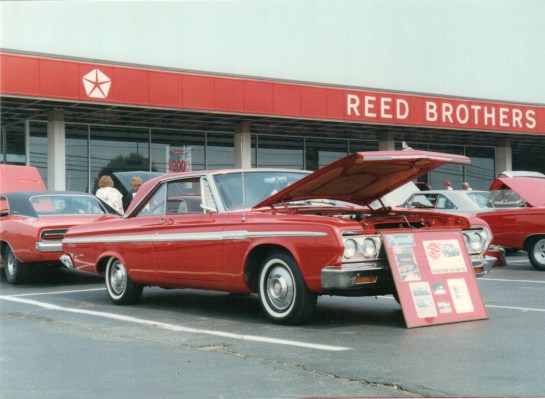
1964 Plymouth Sport Fury
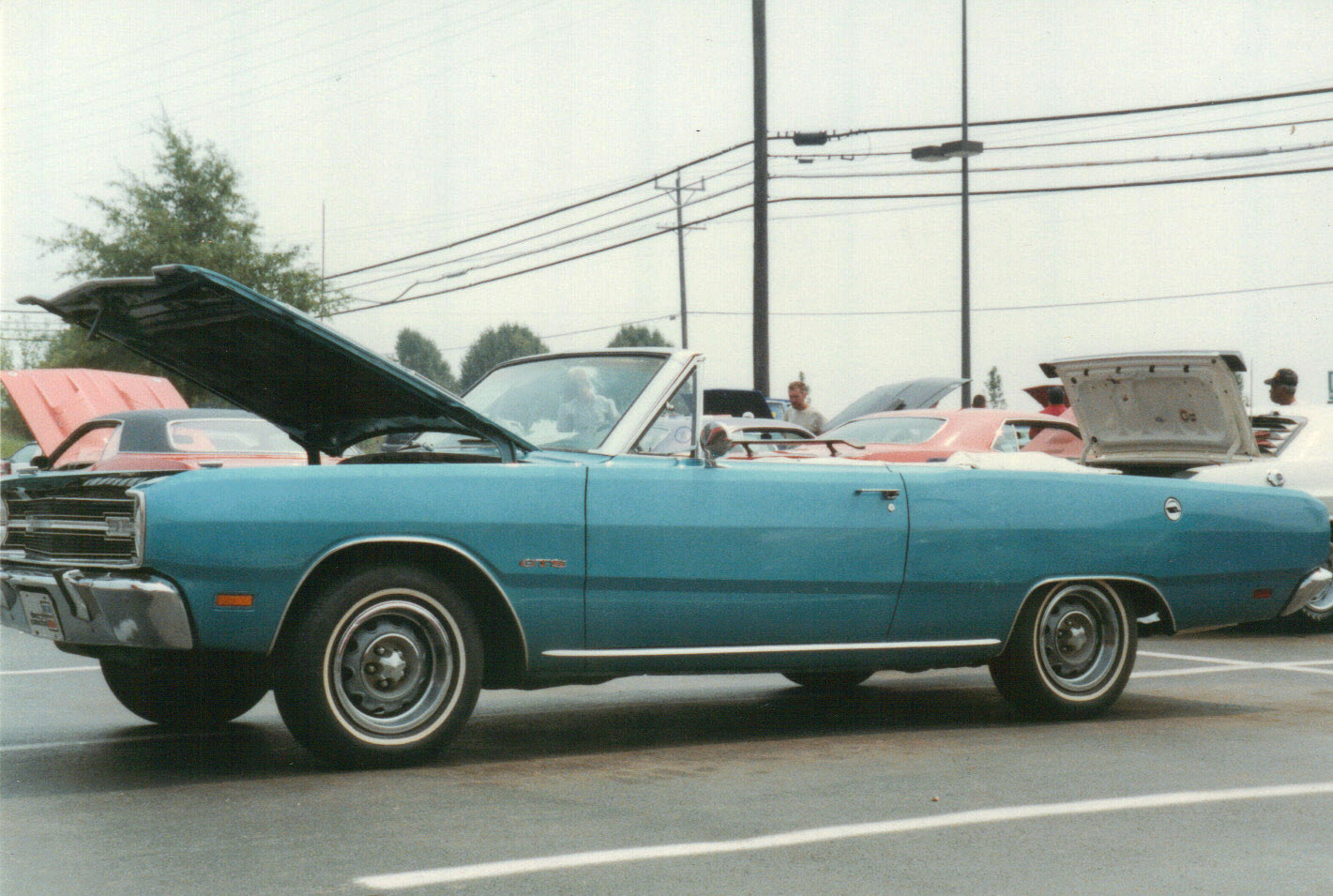
1969 Dodge Dart GTS Convertible
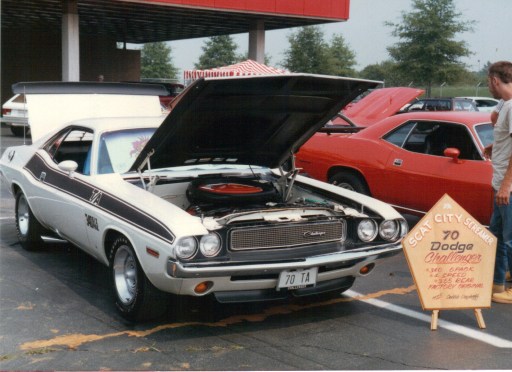
1970 Dodge Challenger TA

1967 Plymouth GTX
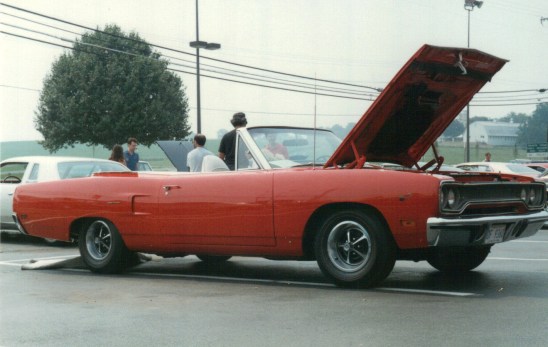
1970 Plymouth Road Runner Convertible
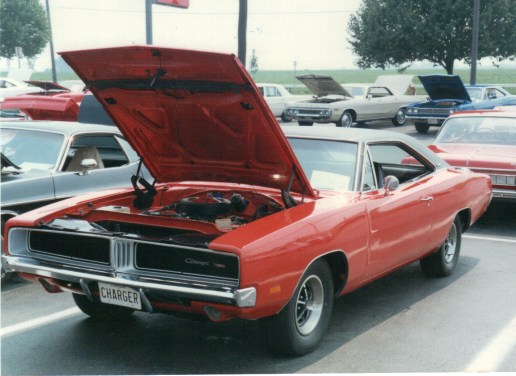
1969 Dodge Charger
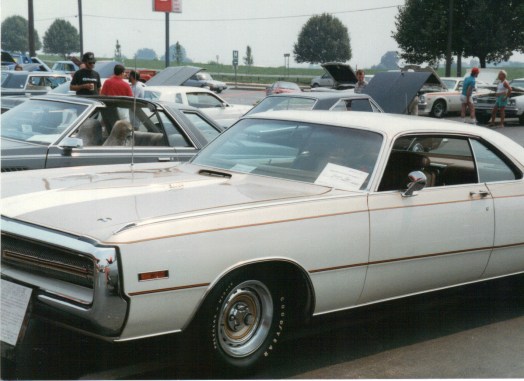
1970 Chrysler 300H

1978 Lil’ Red Express Truck

1966 Dodge D100 Sweptline Pickup
These formative years of Chrysler’s designs not only built the brand, but still influence Dodge to this day.
13 Years, 488 Posts & Thank You
 This month marks the 13-year anniversary of this blog. It’s been an honor to share the history of Reed Brothers Dodge – whether you’ve read our blog, followed us on “X” (Twitter), or “liked” us on Facebook. I would like to thank all of you who have visited, followed, shared, or commented on this blog, and many others, for their kind words and the visibility they have provided.
Here’s a look back at the last year.
What People are Saying Around Facebook:
“Amazing blog and postings. I spent sometime reviewing your site and found it both fascinating and interesting.”
“I am thankful for the documentation this site provides with images of a beloved hometown that can no longer be seen.”
“Love seeing the old photos.”
“This is soooo cool! Someone needs to do one of those historical books of Historical Rockville photos!”
“These photos are absolutely awesome!!!”
“Thank you so much for sharing! This is classic Montgomery County info.”
“That was so cool reading all your memory posts. Best thing I’ve read on FB in a while.”
“I love seeing these old photos and reading the history. Thank you.”
“Thank you for this history. There is so much we take for granted.”
“Great historical photos from Reed Bros.”
Past Lectures:
History Conversations: The History of Reed Brothers Dodge
with Jeanne Gartner September 24, 2024 at 3:00 p.m. | Virtual Event |
The presentation features a unique collection of rare photographs taken by the dealership’s founder, Lewis Reed, and highlights how Reed Brothers Dodge came into being, and how the company overcame the inevitable changes and challenges throughout almost a century of being in business.
 The email below was forwarded to me from Montgomery History who sponsored my virtual presentation on The History of Reed Brothers Dodge.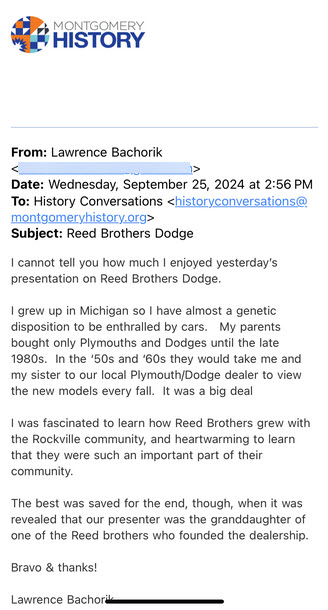
First Baptist Church of Rockville Senior Group Talk
Thursday, October 10, 2024 at 12:00 p.m. | On Location |
Presentation on the history of Reed Brothers Dodge as part of Montgomery History’s Speakers Bureau at the First Baptist Church of Rockville. A personal history for me, as well as community history for Montgomery County and the city of Rockville. Thanks to Ministry Assistant, Melanie Blankenship who invited me to speak.

New Online Exhibit: Reed Brothers Dodge: Montgomery County’s Oldest Dodge Dealership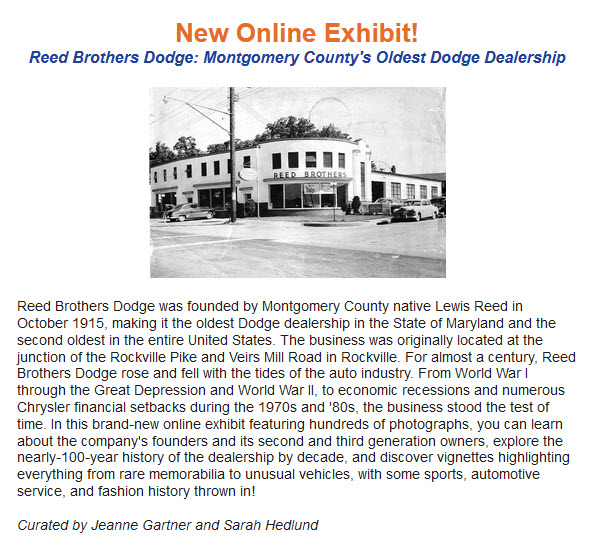 I appreciate all of you for your continued support and making Reed Brothers Dodge History one of the places you visit during the course of your day.

Who Gets This? Good as New 1931 Harley Davidson Only $100!
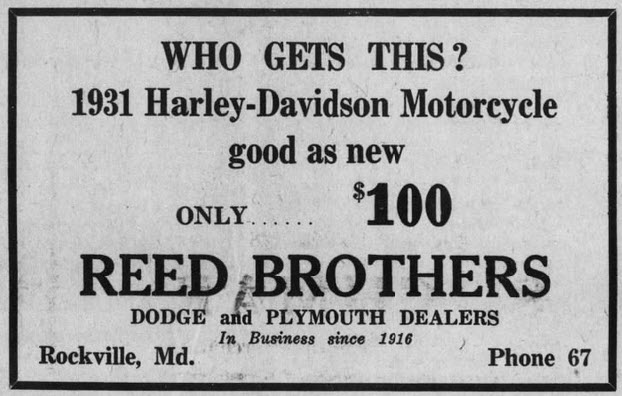
Montgomery County Sentinel, Feb 2, 1933
Lewis Reed, an avid motorcycle enthusiast, also acquired and sold Harley-Davidson Motorcycles at his dealership. Between 1915 and 1950, Reed Brothers Dodge sold more than just cars. In addition to automobiles, the dealership also sold a wide variety of vehicles such as farm tractors, delivery trucks, firetrucks, school buses, and apparently, motorcycles.
Rockville’s Park Avenue Motorcycle Club, 1912
At the turn of the century, before cars were even around, Lewis and Edgar Reed, along with brother-in-law Bernard Hanshew, began their riding adventures with a group of friends from the Park Avenue community in Rockville in the early 1900s.
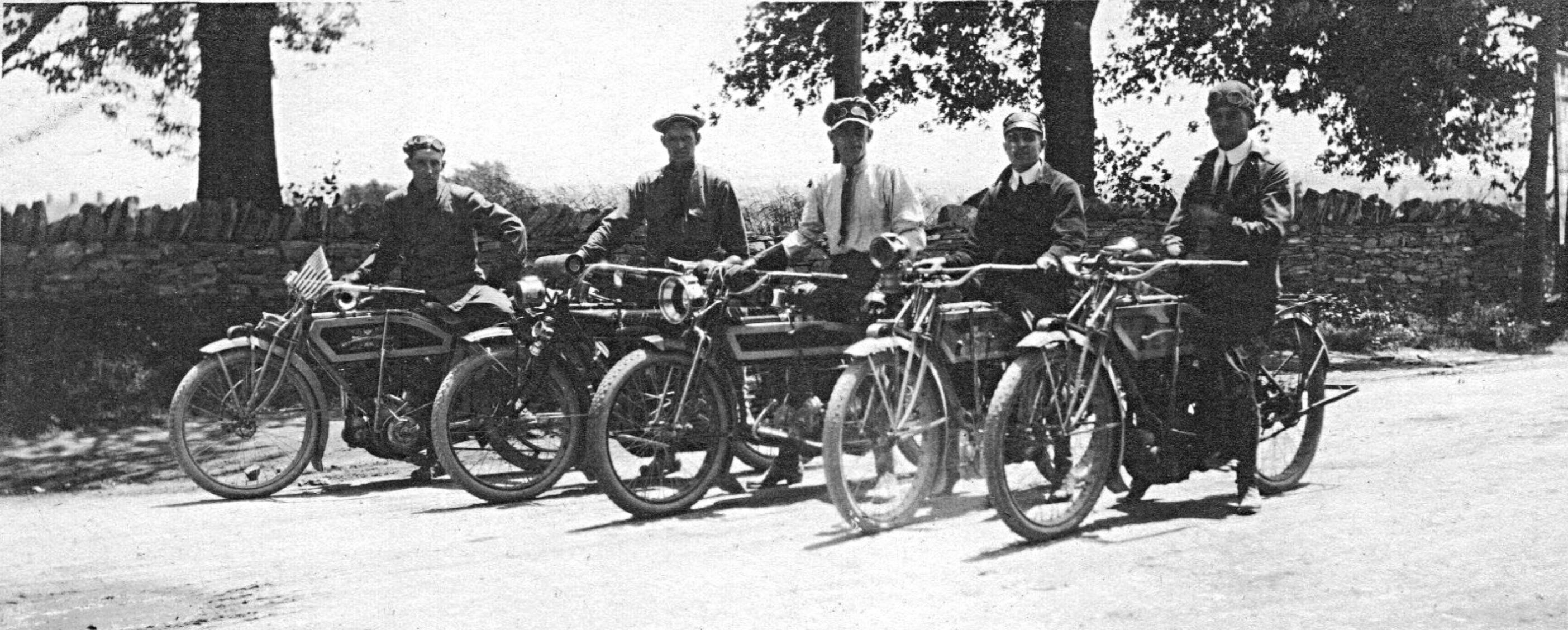
First motorcycle club in Rockville, Maryland. One Harley Davidson, one Indian, and Three Excelsior motorcycles on Park Avenue, 1912. Lewis Reed, far left.
Early motorcyclists were often pictured in riding groups. From its beginnings, motorcycling developed very much as a social activity. Gentlemen of the day often used it to spice up their sunny weekends and impress ladies.

On Park Avenue, ca. 1912. L-R: “Happy” Hicks, Lewis and Edgar Reed, Frank Higgins, and Alvin Luctor.
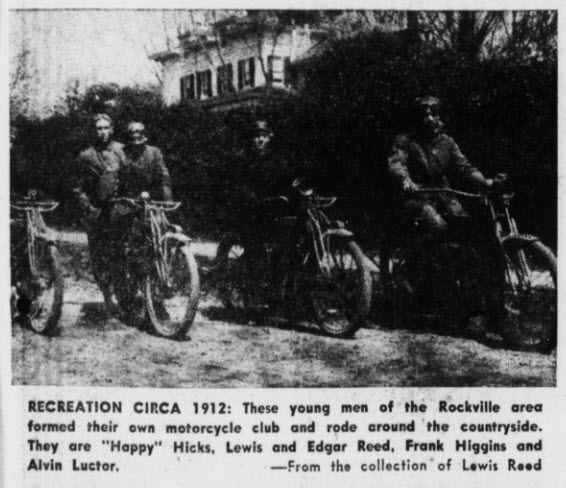
Montgomery County Sentinel. September 29, 1955, Centennial Edition

Lewis Reed on his Harley Davidson circa 1915 somewhere outside Frederick, Maryland.
Adventurers, enthusiasts, friends, and family…these are the pioneers of Montgomery County who made riding a social pastime, which has carried on in motorcycle travel today.
Books

Related Resources


Copyright Notice

Reed Brothers Dodge History (1915-2012) by Jeanne Gartner is licensed under a Creative Commons Attribution-NonCommercial 3.0 Unported License.
 Reed Brothers Dodge History 1915 – 2012
Recent Comments