
Darnestown One Room Schoolhouse (1898)
Have you ever wondered what it would be like to attend a one-room school, to be in the same classroom as your older brother or younger sister, where all the kids, no matter how old, are in the same class? One-room schoolhouses are all but a memory now. But at the turn of the 20th century, they were where most rural students received their educations. One room schoolhouses were the pioneers of the early education period. At the period’s peak, just under 100 one- and two-room schools existed in Montgomery County.
One of the most amazing photographs in Lewis Reed’s collection is of the one-room schoolhouse where he and his brother, Edgar, attended school. This photograph is the only one known to exist of this school. The schoolhouse, now long gone, was located on Thomas Kelley’s Farm at Pleasant Hill (which today, would be located in the center of the Spring Meadows community). Lewis Reed grew up on a farm in rural Darnestown and for much of his young life had no running water or electricity. His father was an early settler and worked as a Cabinetmaker and Blacksmith. The Reed family farmhouse and blacksmith shop was located on 12 acres of land west of Seneca Road on Route 28.
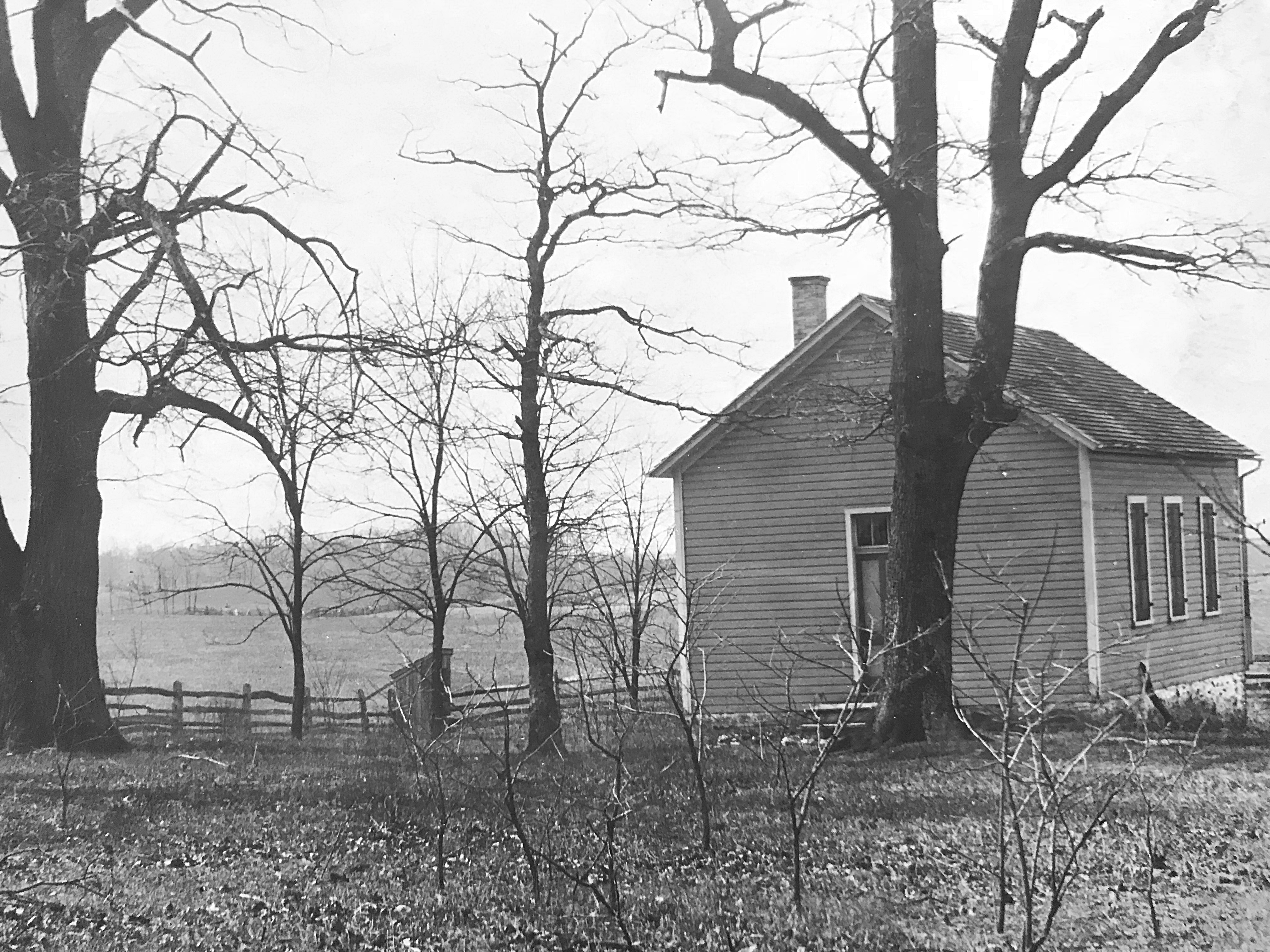
Darnestown One-Room Schoolhouse. The chimney was probably to a wood-burning stove that was used to heat the building. Note the outhouse on the left. Photo from the Lewis Reed Collection
The details of the Darnestown one-room schoolhouse is not widely known.
One-room schoolhouses were common in rural America during the late 1800s and early 1900s. They typically housed students from various grades—often from first through sixth grade—under the instruction of a single teacher. In Darnestown, this particular schoolhouse was attended by Lewis Reed and his brother Edgar, among approximately thirty other students. The age range of students could vary significantly, from as young as six years old to sixteen years old.
This small, one-room schoolhouse was within walking distance of the Reed family farmhouse. In those days, walking distance generally meant within a few miles. Lewis Reed attended this school with his brother, Edgar. First through sixth grades were under the instruction of a single teacher (Minnie McAtee) to about thirty or more students. Few students went beyond sixth or seventh grade; in fact, Lewis Reed’s education stopped after the sixth grade. He would later be home-schooled by his wife, Ethelene Thomas, who was a teacher in the Maryland public school system.
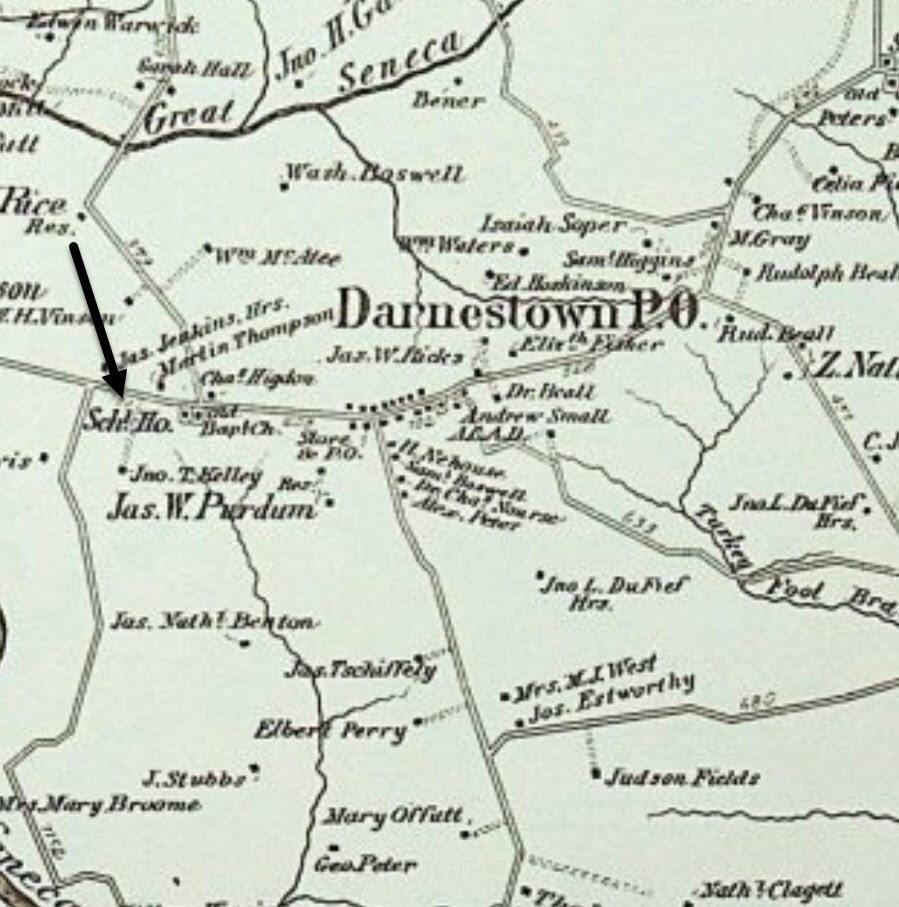
Darnestown Map detail, with school house location indicated
Due to limited resources, many of these schools lacked electricity and indoor plumbing; they relied on wood-burning stoves for heating and oil lamps for lighting. The students were separated roughly by level of study in each particular subject, rather than by age as they are now: a child might have studied 3rd grade math while also doing 6th grade reading or history. This flexible structure allowed for personalized learning experiences, but also required considerable skill from the teacher to manage diverse educational needs. Gender separation was maintained by seating girls and boys on opposite sides of the room. The larger boys were expected to help bring in the wood and carry out the ashes. Misbehavior begot corporal punishment.
The simplicity of these structures reflected both the educational philosophy of the time and the practical realities of rural life. School usually took place between the hours of 8 a.m. and 4 p.m. The youngest children sat in the front, while the oldest students sat in the back. The teacher usually taught reading, writing, arithmetic, history, and geography. Students memorized and recited their lessons. The teacher’s desk may have been on a raised platform at the front of the room, however, and there would have been a wood-burning stove since there was no other source of heat. The bathroom would have been outside in an outhouse.

Circa 1898 class photo taken at Lewis and Edgar Reed’s one-room schoolhouse (Darnestown School). There were six grades in the school with one teacher. Minnie McAtee, teacher (right rear). Photo from the Lewis Reed Collection.
Lewis Reed’s love of photography began at a very young age, at a time when most families did not own a camera. One of the oldest photos in his collection (class photo, pictured above) is dated 1898, which would have made him around 11-12 years old when he started using a camera. Lewis likely took this photo himself, setting the camera up on a tripod, and then running quickly into the shot before the shutter went off.
As for Minnie McAtee (1873-1962), according to The Baltimore Sun (Baltimore, Maryland) June 5, 1901, Miss McAtee resigned from the Montgomery County school system in 1901. In 1901 she moved to Washington, D.C., where she was employed by the government’s Bureau of Printing and Engraving. For 42 years she worked for the Bureau in a variety of positions, steadily working her way up. She retired in 1943.
Born in Darnestown, Miss McAtee attended the Andrew Small Academy in Darnestown, after which she completed correspondence courses to further her education. For eight years, she taught in the one-room schoolhouse at Pleasant Hill, Darnestown.
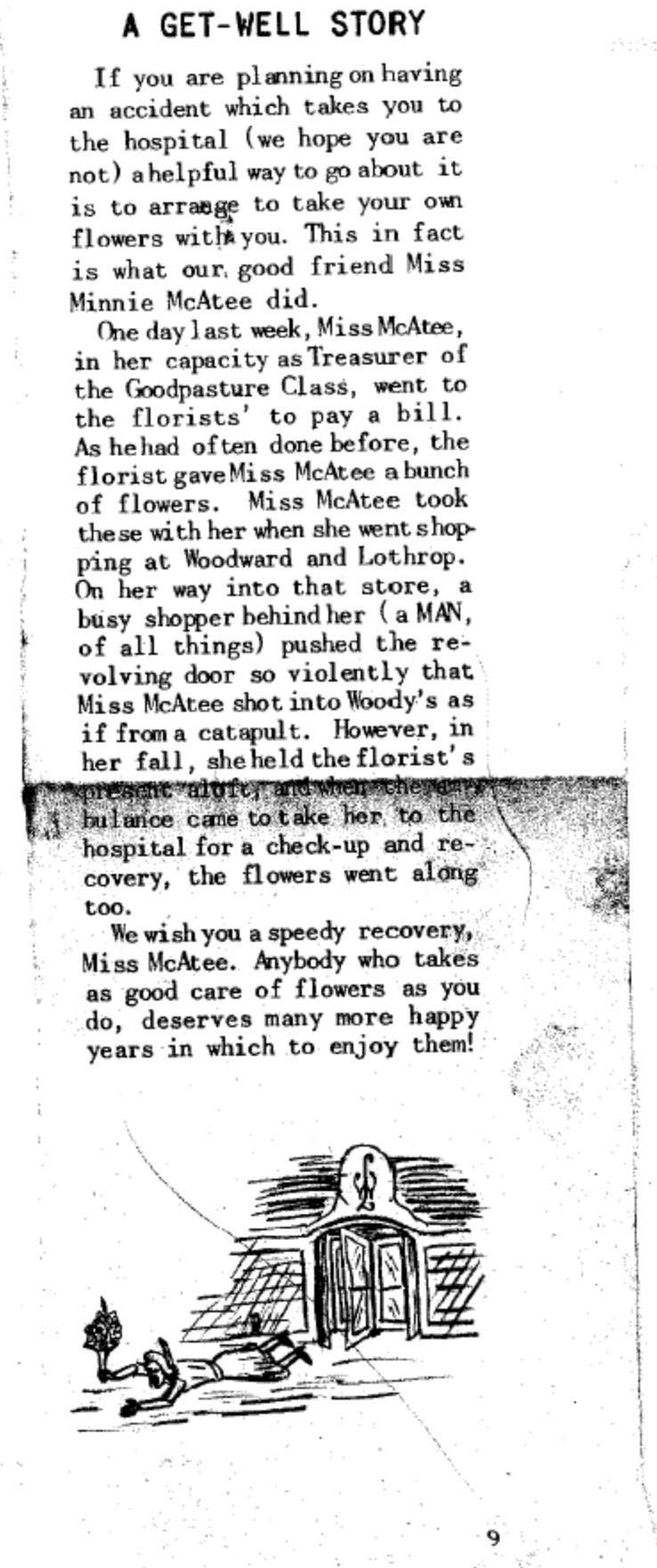
The undated “Get Well Story” below was posted on the Find A Grave website in her memory. Anybody who took such good care of flowers as she did, most certainly must have been a great school teacher.
Legacy
At least 34 schoolhouses of this bygone era still stand today in Montgomery County, an astounding total considering how developed Montgomery County is today. The five schoolhouses in Montgomery County restored as museums — Boyds, Brookeville (one-room school), Kingsley, Seneca, and Smithville — are open to the public at various times during the year. Most are open during Heritage Days; check www.heritagemontgomery.org for the schedule.
Sources of Information:
Find A Grave
Chronicling America digitized newspapers
Newspapers.com historical newspapers
The Baltimore Sun newspaper
Darnestown One-Room Schoolhouse (1898)
Have you ever wondered what it would be like to attend a one-room school, to be in the same classroom as your older brother or younger sister, where all the kids, no matter how old, are in the same class? One-room schoolhouses are all but a memory now. But at the turn of the 20th century, they were where most rural students received their educations. One room schoolhouses were the pioneers of the early education period. At the period’s peak, just under 100 one- and two-room schools existed in Montgomery County.
One of the most amazing photographs in Lewis Reed’s collection is of the one-room schoolhouse where he and his brother, Edgar, went to school. This photograph is the only one known to exist of this school. The schoolhouse, now long gone, was located on Thomas Kelley’s Farm at Pleasant Hill (which today, would be located in the center of the Spring Meadows community). Lewis Reed grew up on a farm in rural Darnestown and for much of his young life had no running water or electricity. His father was an early settler and worked as a Cabinetmaker and Blacksmith. The Reed family farmhouse and blacksmith shop was located in off Route 118 in Darnestown.

Darnestown One-Room Schoolhouse. The chimney was probably to a wood-burning stove that was used to heat the building. Note the outhouse on the left. Photo from the Lewis Reed Collection
This small, one-room schoolhouse was within walking distance of my grandfather’s farmhouse. In those days, walking distance generally meant within a few miles. Lewis Reed attended this school with his brother, Edgar. First through sixth grades were taught by one teacher (Minnie McAtee) to about thirty or more students. Few students went beyond sixth or seventh grade; in fact, Lewis Reed’s education stopped after the sixth grade. He would later be home-schooled by his wife, Ethelene Thomas, who was a teacher in the Maryland public school system.
The age range for students was 6 to 16. The students were separated roughly by level of study in each particular subject, rather than by age as they are now: a child might have studied 3rd grade math while also doing 6th grade reading or history. Gender separation was maintained by seating girls and boys on opposite sides of the room. The larger boys were expected to help bring in the wood or coal and carry out the ashes. Misbehavior begot corporal punishment.
School usually took place between the hours of 8 a.m. and 4 p.m. The youngest children sat in the front, while the oldest students sat in the back. The teacher usually taught reading, writing, arithmetic, history, and geography. Students memorized and recited their lessons. The teacher’s desk may have been on a raised platform at the front of the room, however, and there would have been a wood-burning stove since there was no other source of heat. The bathroom would have been outside in an outhouse.

Circa 1898 class photo taken at Lewis and Edgar Reed’s one-room schoolhouse (Darnestown School). There were six grades in the school with one teacher. Minnie McAtee, teacher (right rear). Photo from the Lewis Reed Collection.
As for Minnie McAtee, according to The Baltimore Sun (Baltimore, Maryland) 05 June 1901, Miss McAtee resigned from the Montgomery County school system in 1901.
Born in Darnestown, Miss McAtee attended the Andrew Small Academy in Darnestown, after which she completed correspondence courses to further her education. For eight years, she taught in the one-room schoolhouse at Pleasant Hill, Darnestown.
The undated “Get Well Story” below was posted on the Find A Grave website in her memory. Anybody who took such good care of flowers as she did, most certainly must have been a great school teacher.
 At least 34 schoolhouses of this bygone era still stand today in Montgomery County, an astounding total considering how developed Montgomery County is today. The five schoolhouses in Montgomery County restored as museums — Boyds, Brookeville (one-room school), Kingsley, Seneca, and Smithville — are open to the public at various times during the year. Most are open during Heritage Days; check www.heritagemontgomery.org for the schedule.
Lewis & Edgar Reed’s One-Room Schoolhouse

Circa 1898 class photo taken at Lewis and Edgar Reed’s one-room schoolhouse (Darnestown School). There were six grades in the school with one teacher. Minnie McAtee, teacher (right rear).
One of the most amazing photographs in my grandfather’s collection is of the one-room schoolhouse where he and his brother, Edgar, went to school. The photo was labeled “Darnestown School”. I cannot say with any certainty where this school was located, but my mother (Lewis Reed’s daughter) thought it was located on Thomas Kelley’s Farm on Route 28 in Darnestown.
In most rural (country) and small town schools, all of the students met in a single room. There, a single teacher taught academic basics to several grade levels of elementary-age boys and girls. The classroom of a one-room schoolhouse probably looked much like your own. The teacher’s desk may have been on a raised platform at the front of the room, however, and there would have been a wood-burning stove since there was no other source of heat. The bathroom would have been outside in an outhouse. It seems a far cry from the modern school world of today, but it was the reality of the rural education system.
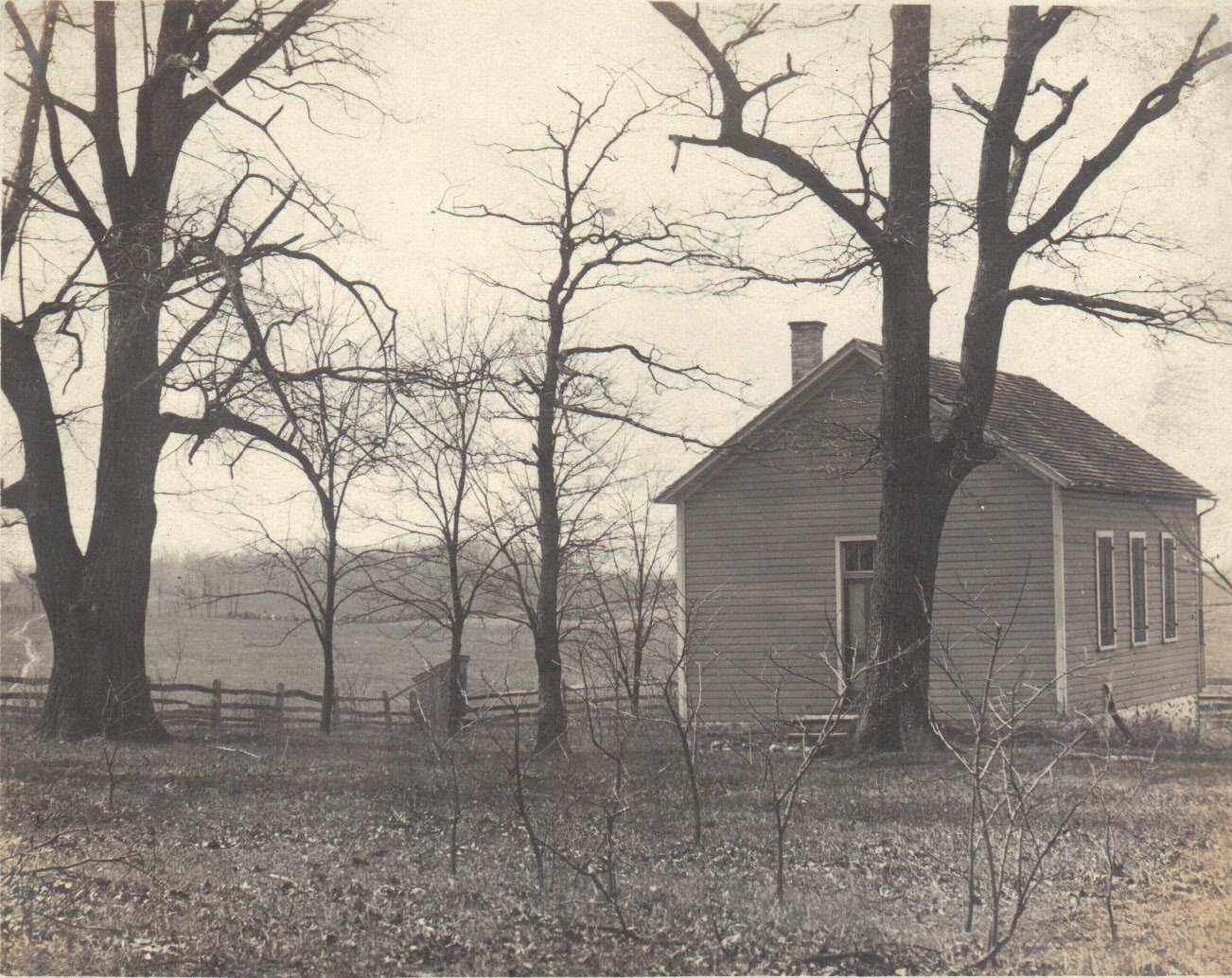
Darnestown School. Note the outhouse on left. Photo by Lewis Reed
Source: Germantown MD Wikipedia
Books

Related Resources


Copyright Notice

Reed Brothers Dodge History (1915-2012) by Jeanne Gartner is licensed under a Creative Commons Attribution-NonCommercial 3.0 Unported License.
 Reed Brothers Dodge History 1915 – 2012
Recent Comments