
From Chauffeur to Dodge Dealer
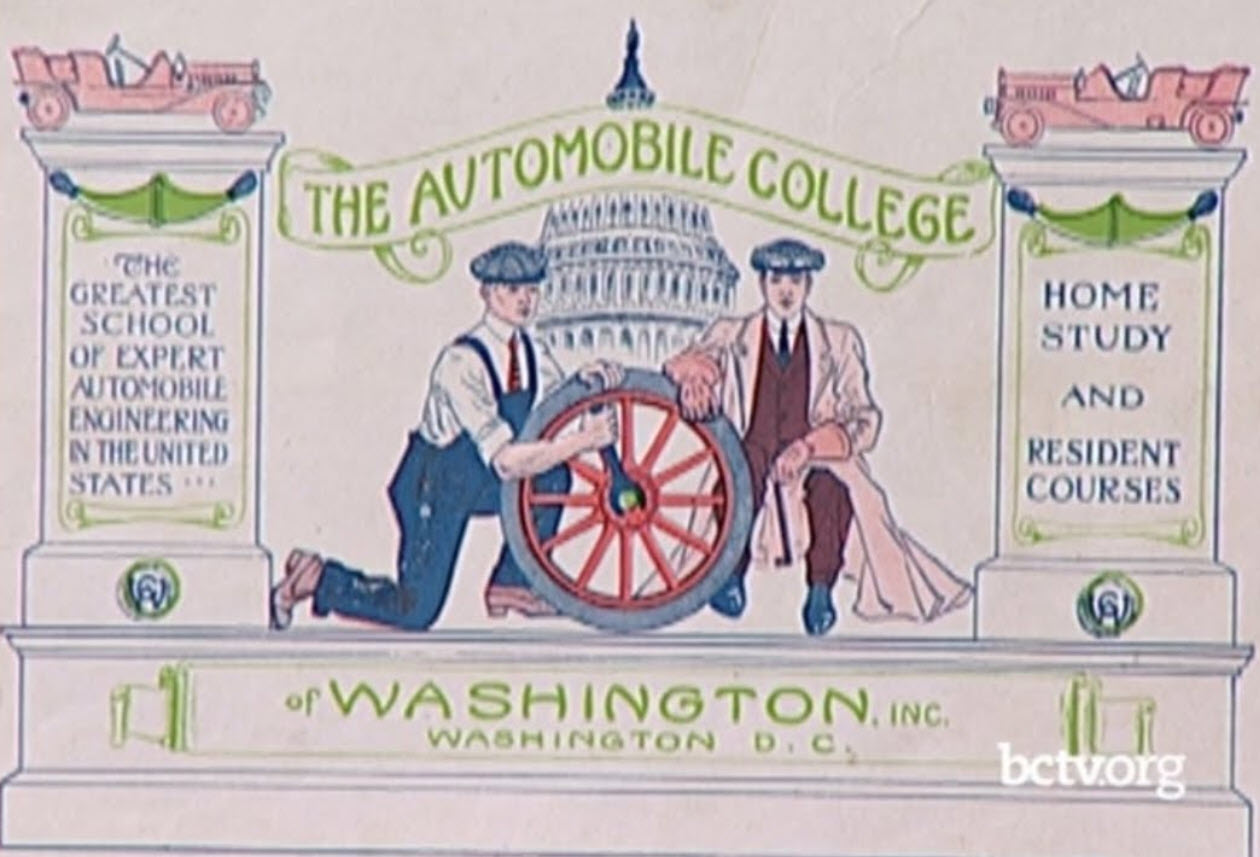 In the early 1900s, owning an automobile was a luxury few could afford, and operating one was no simple task. Early cars were finicky machines that required constant attention and mechanical knowledge. This gave rise to a unique profession: the chauffeur-mechanic. To meet the growing demand for this specialized role, schools began offering technical training in automobile operation and repair. One such institution was The Automobile College of Washington, founded in 1909 in Washington, D.C. Given the timing and location, it is likely that Lewis Reed received his early chauffeur and mechanical training at this institution, a step that helped pave the way for his later work with prominent manufacturers. In addition to the Automobile College of Washington, Lewis Reed received automotive training at the Pierce-Arrow factory in Buffalo, New York and the Dodge Hamtramck and Hudson Motor Car factories in Detroit, Michigan.
The school featured a fully equipped repair department and machine shop, complete with modern engines for hands-on learning. Students were trained on a variety of vehicles, including the Washington A-1 Touring Car, Pope Tribune, Peerless 35hp, Ricketts Model G 6-cylinder, and Mitchell 25hp, giving them practical experience with some of the era’s most advanced technology.
According to the 1910 census, 23-year-old Lewis Reed was employed as a machinist. Coming from a blacksmithing family background, he was already familiar with tools and machinery. As the automobile industry gained momentum, his mechanical aptitude made the transition to working with cars a natural one.

Two ladies with parasols are sitting in the landaulet section of an early Pierce-Arrow limousine, while chauffeur Lewis Reed tends to the motor. The rear portion of the limousine is partitioned from the driver with a glass shield, and covered by a convertible top, which you can see is currently in the lowered position behind the ladies. Photo taken circa 1910.
Early cars were temperamental, mechanically complex, and prone to breakdowns. As a result, the job of a chauffeur demanded not only driving ability but also technical knowledge. Their duties went beyond transportation; they were responsible for keeping the car running smoothly, diagnosing problems on the road, and performing regular upkeep. The role was seen as a respectable and skilled profession that required formal training.
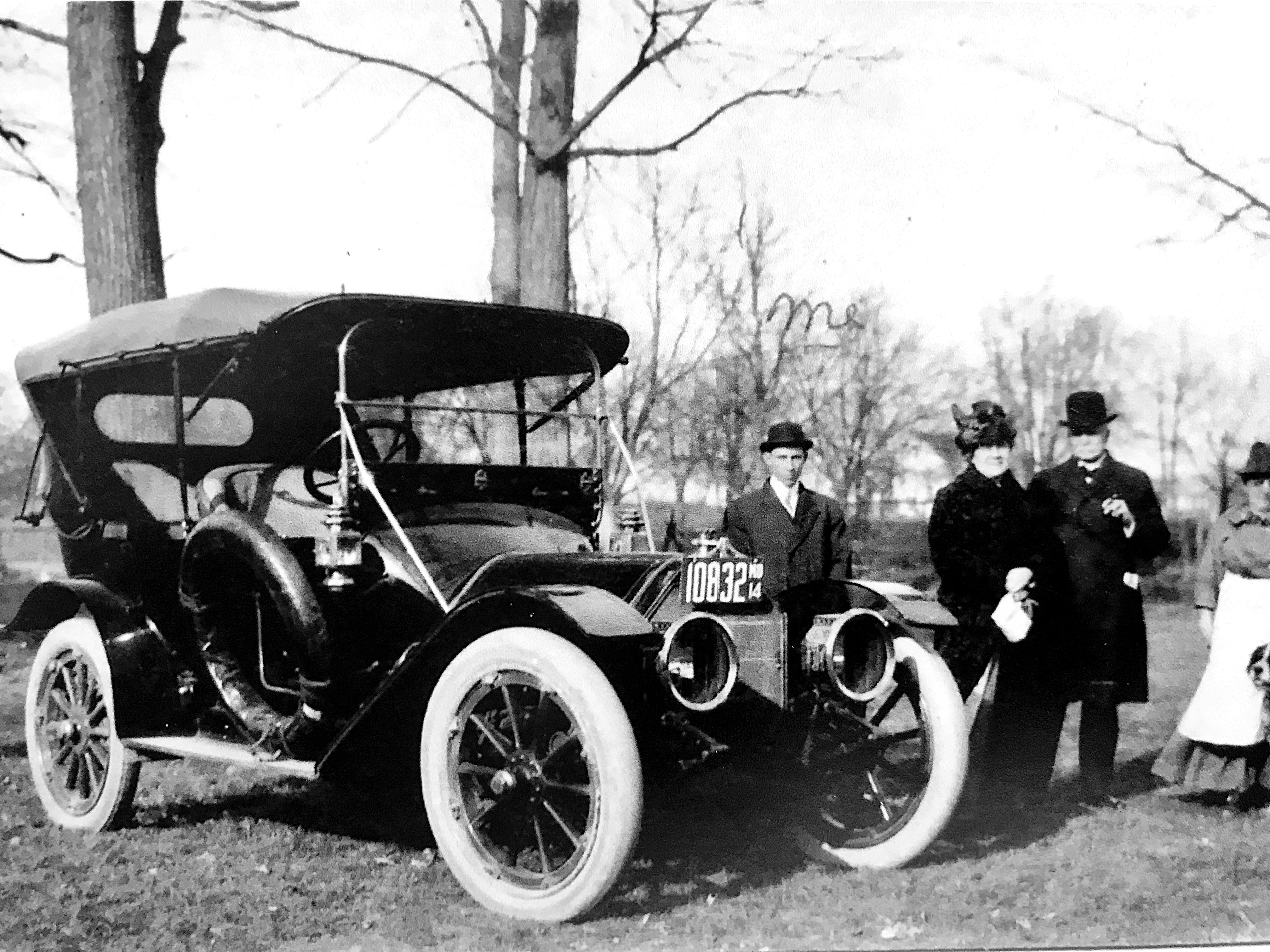
Chauffeur Lewis Reed (left) with unidentified family, 1914
Lewis Reed’s experience behind the wheel, and under the hood, lasted until about 1914, when he transitioned into the business of selling and repairing cars. The above image captures Lewis at a pivotal moment in his life, just before he transitioned from being a chauffeur-mechanic to becoming an automobile dealer. His time in this role not only reflects the expectations of early chauffeurs but also laid the groundwork for what would become a lifelong career in the auto industry.
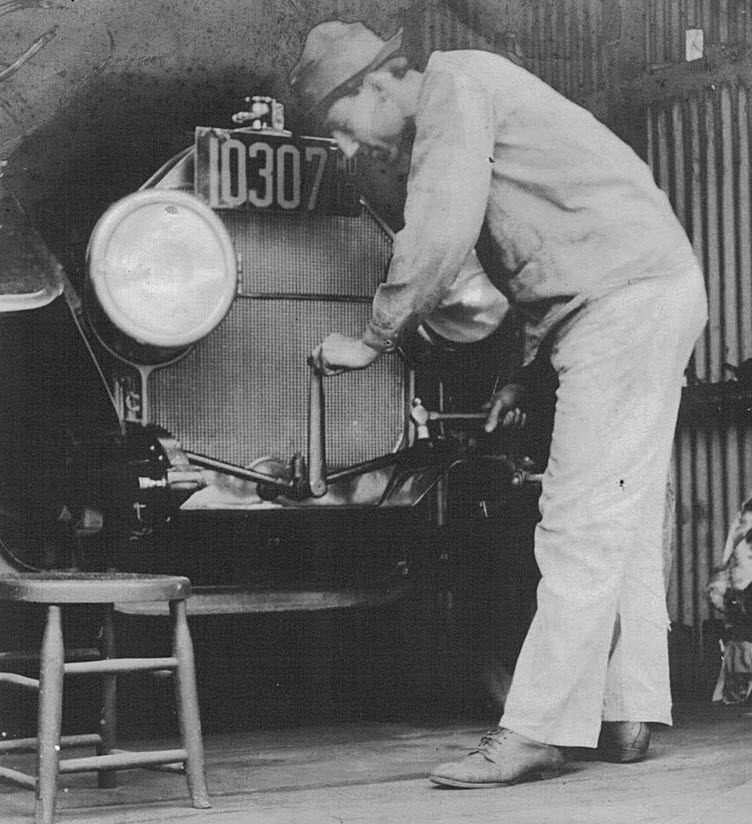
Lewis Reed hand cranking an old car. The hammer in Lewis Reed’s right hand is for straightening the hand crank. Apparently they can bend when starting big engines. The license plate is MD 10307 dated 1913.
The chauffeur-mechanic profession eventually faded as cars became more reliable and easier to operate. Lewis Reed’s experience as a chauffeur-mechanic in the early 1900s was more than just a job; it was the foundation of a lifelong career in the automobile industry. At a time when cars were still a novelty and required hands-on expertise, Reed’s skills and mechanical knowledge set him apart. His early years behind the wheel and under the hood gave him a unique understanding of the vehicles he would one day sell and service as a dealer.
Celebrating a Visionary: Lewis Reed’s Enduring Legacy on His 138th Birthday
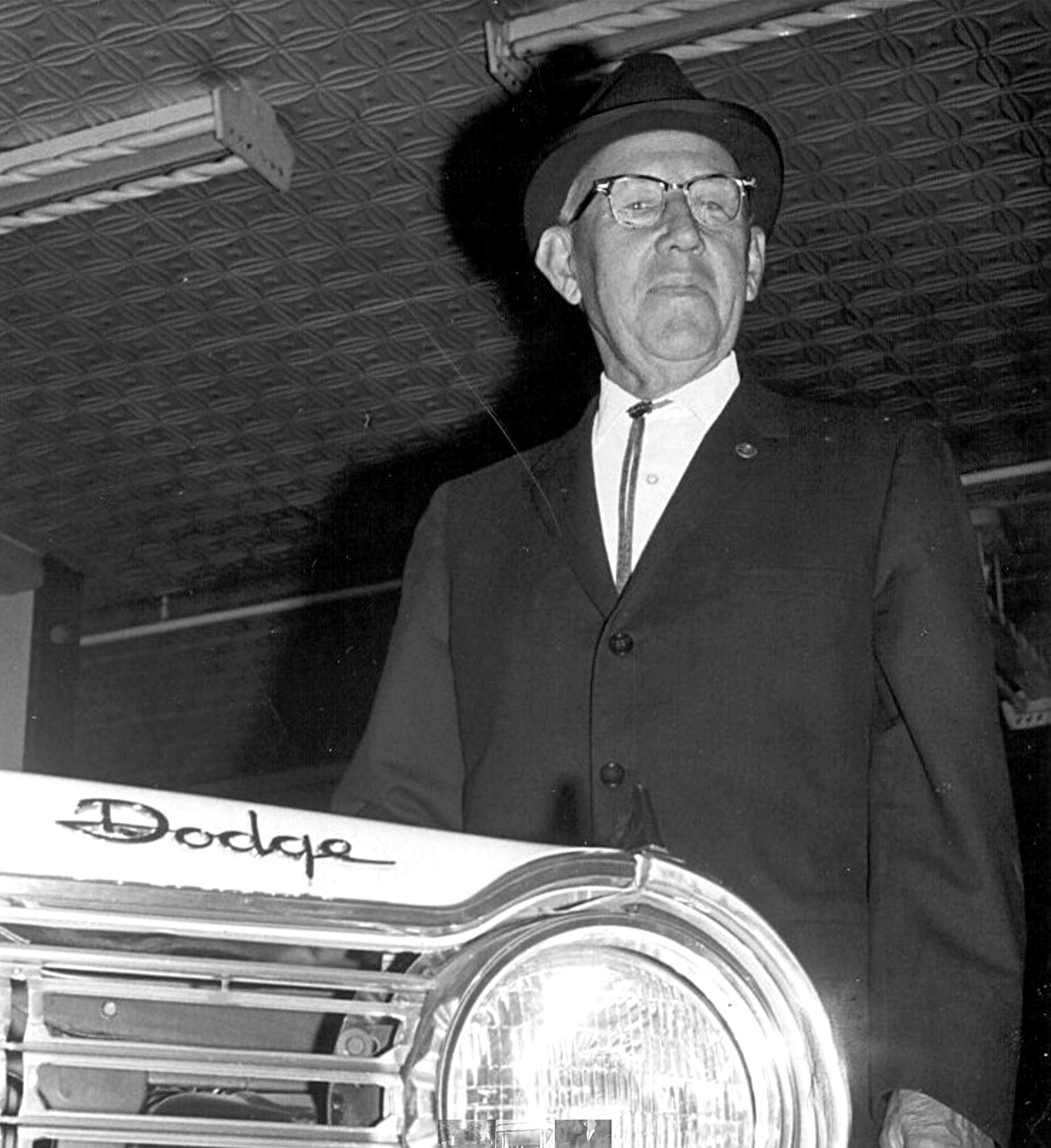
Lewis Reed in the showroom of Reed Brothers Dodge, 1965 – a rare glimpse of the founder near the close of his long career in the automobile business.
Rockville’s story is deeply intertwined with the life and dedication of Lewis Reed, whose vision and community spirit transformed local life. Born on November 25, 1887, Reed left an indelible mark not just as a pioneering businessman but as a devoted citizen whose legacy endures in Rockville’s culture and landscape today.
Lewis Reed laid the foundation for Reed Brothers Dodge, one of the nation’s oldest Dodge dealerships. After acquiring his initial interest in the Rockville Garage in January 1916, Reed gradually expanded his ownership until 1919, when he became the sole proprietor. He soon welcomed his brother Edgar, giving rise to a new chapter as Reed Brothers Dodge. What started as a simple garage quickly became a center for innovation, where early Rockville motorists found not just fuel and repairs but a gathering place at the dawn of the automobile.
The legacy of Reed Brothers Dodge in Rockville is reflected in enduring landmarks and recent changes throughout the community. “Dodge Street” remains a tribute to the dealership’s historic impact, named for its association with Reed Brothers Dodge and its essential role in Rockville’s automotive and civic landscape. The site at 15955 Frederick Road, once branded as “Bainbridge Shady Grove Metro Apartments,” has recently undergone significant rebranding in both name and appearance. The apartment complex that opened over a decade ago is now called “The Reed,” a choice that honors the dealership’s longstanding history in the area. This rebranding reflects an appreciation of local heritage, ensuring that the Reed name continues to be woven into the fabric of Rockville life.
Lewis Reed’s impact extended into local heritage and visual history. He was also a passionate amateur photographer, leaving behind a vivid pictorial history of both Rockville and Montgomery County’s transformation. Lewis Reed’s photographs are preserved and showcased through three significant historical online exhibits on Montgomery History’s website. These exhibits feature hundreds of images capturing iconic structures, streetscapes, homes, and towns across Montgomery County, including Rockville, Gaithersburg, and Germantown. They pair Reed’s early 20th-century photographs with modern recreations by his grandson, Barry Gartner, providing historical context and illustrating both timeless constancy and dramatic changes in the region. The exhibits include “Reed Brothers Dodge,” highlighting the dealership’s long history; “Montgomery County, Then and Now,” focusing on paired historic and current images; and “Montgomery County, 1900-1930: Through the Lens of Lewis Reed,” emphasizing his extensive photographic documentation of rural life and local landmarks.
As we celebrate the birthday of Lewis Reed, we honor not only the founder of Reed Brothers Dodge, but also a visionary whose dedication and spirit greatly shaped Rockville and Montgomery County. His legacy lives on through the enduring Reed name, cherished historical photographs, and the lasting impact of his entrepreneurial and community contributions. Today, Lewis Reed remains an inspiring example of how one individual’s passion and commitment can leave a profound mark on a community’s history and future. On this special day, we remember and celebrate his remarkable life and the heritage he created for generations to come.
Then & Now: Andrew Small Academy Darnestown, 1908
“Then and Now” photos are an excellent way to explore the passage of time. In this special post, I have combined one of Lewis Reed’s original photograph’s for “then” and matched it with a corresponding contemporary shot for “now”. Taken over a century apart, these photos show the Andrew Small Academy in Darnestown, then and now.
Andrew Small Academy (THEN): In 1869, longtime member of the community and Scottish immigrant Andrew Small left a bequest for the establishment of a school for Darnestown. Named for its benefactor, the Andrew Small Academy was the largest school building in Montgomery County at that time. The building was used as a private educational institution until 1907, then used as a public high school for almost the next 50 years. The building was demolished in 1955 to make way for a new elementary school.
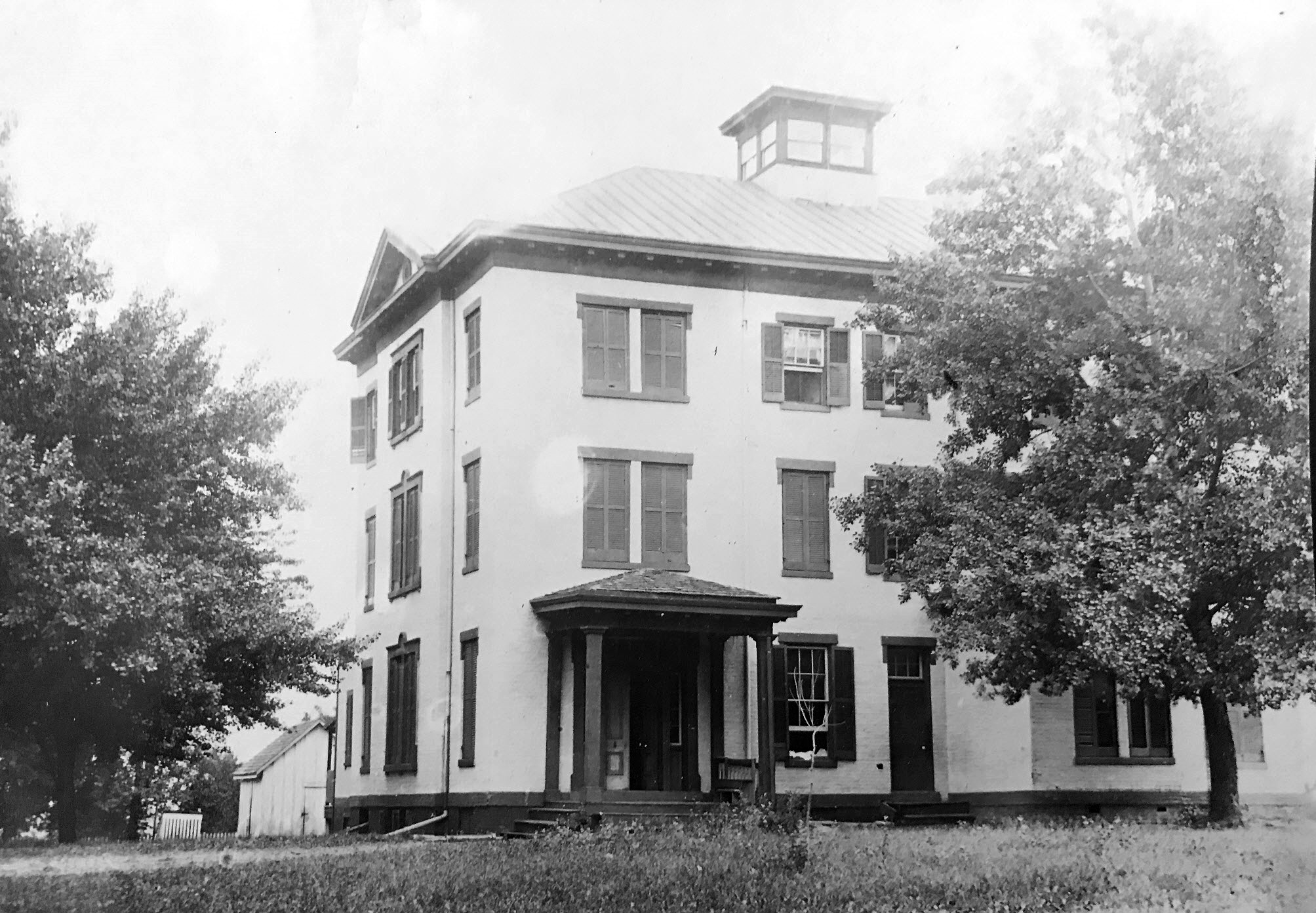
Andrew Small Academy building in 1908, shortly after it was closed. Photo by Lewis Reed
Andrew Small Academy (NOW): No longer standing. Site was located at 15030 Turkey Foot Road directly behind Darnestown Elementary School where a blacktop play area is now located. The tree shown in front of the Academy in Lewis Reed’s photo still stands north of the blacktop. The drive to the Academy came off Darnestown Road (Rt 28) sharing the same entrance to the northwest of the site still in use by Darnestown Presbyterian Church. The Academy was demolished in 1955 and replaced by the existing Darnestown Elementary School, which stands only a few hundred feet from where the academy was once located.

Darnestown Elementary School, which replaced the academy building in 1955.
Historical Marker https://www.hmdb.org/m.asp?m=69716
The Academy was named for its benefactor, Andrew Small (a native of Scotland), who became attached to the neighborhood while working on the C & O Canal. The Andrew Small Academy is no longer standing. The school was located directly behind the Darnestown Elementary School, on Turkey Foot Road. The Andrew Small Academy was an important early private educational institution that was constructed in 1869 and used as a private school until 1907, when it was converted into a public high school.
This was the largest and finest academy in Montgomery County. It had boarding as well as local students, and went up through three years of high school. Up until 1892 the minister of the church was also principal of the academy and received a salary of $600. The school became the cultural center of the community with concerts, plays, recitals, and a literary society. In 1892 the academy got its first full time principal. Then in 1907 it was taken over by the Montgomery County school system, and in 1927 it was changed into an elementary school. This ended its service as a cultural center. A new elementary school (now Darnestown Elementary) was built to replace it in 1955.
Source: Maryland Historical Trust
Happy Birthday to Lewis Reed Founder of Reed Brothers Dodge

This ca. 1965 photo of Lewis Reed was taken in the new car showroom at Reed Brothers Dodge original location at the triangle at Veirs Mill Road and Rockville Pike.
Happy 136th birthday Lewis Reed! The founder of Reed Brothers Dodge was born on this day in 1887 in Darnestown, Maryland. In 1915, he founded what would become the oldest Dodge dealership under the same family ownership in the state of Maryland, and one of the oldest in the entire nation.
Lewis Reed was just 27 years old when he started selling cars built by brothers Horace and John Dodge in Detroit. Few people jumped onto the Dodge Brothers bandwagon earlier than Lewis Reed, and not many have lasted longer. Reed Brothers was franchised as a Dodge dealership and service facility less than one year after the first Dodge automobile rolled off the assembly line. Lewis Reed was the first to sell Dodge cars in Montgomery County, Maryland and his company was the first Gulf gas dealer in the Washington, D.C. area. During the early years, Reed Brothers represented several franchise nameplates along with Dodge, including Oldsmobile, Hudson and Essex. The Hudson and Oldsmobile were sold at Reed Brothers from roughly 1917 through 1923.
Lewis Reed was a member of the Gaithersburg Grace Methodist Church where he served as a member and Chairman of the Board of Stewards, a Lay Leader, and President of the Men’s Bible Class. He was one of nine original incorporators of the Gaithersburg-Washington Grove Volunteer Fire Department when it was created by charter in 1928. He was a Charter Member and Past President of the Gaithersburg-Washington Grove Fire Department and a member of the advisory board of the Rockville Branch of the First National Bank of Maryland. He belonged to the Masonic Lodge of Rockville, the Pentalpha Chapter of the Eastern Star and the Rockville Rotary Club. Before opening his Dodge dealership in 1915, Lewis Reed was one of the earliest and most prolific photographers in Montgomery County. Many of his photographs are now part of Montgomery History’s photo archives. Unsurprisingly, his love of both cars and cameras resulted in his taking numerous pictures of car culture all over the State of Maryland as it developed from infancy to supremacy.
Prior to World War I, Lewis Reed’s love of automobiles led him to becoming a chauffeur. Chauffeurs were not only trained to be proficient with their driving skills, but they also had to keep the luxury automobiles in tip top shape which is where his mechanic training would have come into play. He received his training as an automobile mechanic at the Pierce Arrow factory at Buffalo, New York, the Dodge and Hudson factories at Detroit and the Washington Auto College.
Active in the dealership daily until the day of his death, Lewis Reed passed on January 28, 1967 at the age of 79. Shortly after his death, the Senate of Maryland passed Senate Resolution No. 10, expressing “the deepest regret and sympathy of every member of this body,” describing Reed as “a kindly and loyal person completely devoted to his duties” which he carried out “with fairness and human understanding.” The resolution was sponsored by Senator Thomas M. Anderson, Jr. and Senator Louise Gore.
When you look back and consider what has taken place in the world in the past 100 years or so, you gain a perspective of what Lewis Reed faced. He overcame a lot of obstacles throughout his life. He steered his dealership through World War I, The Great Depression and World War II. When Reed Brothers had no new cars to sell for three and a half years and many dealers went bankrupt, he converted his car showroom into a display room and sold GE Washing Machines, Westinghouse Radios, and other large appliances. Reed Brothers Dodge occupied two locations, the original at the Veirs Mill Road and Rockville Pike intersection and the second at 15955 Frederick Road in front of the Shady Grove Metro.
Lewis Reed set an outstanding example through his success, but more importantly through his sacrifices and commitment to the community he served. Today, Bainbridge Shady Grove Metro Apartments pays tribute to the oldest Dodge dealership in Maryland with commemorative art on the former site of the iconic Reed Brothers dealership.

Bainbridge Shady Grove Metro Apartments now stands on the former site of the Reed Brothers Dodge dealership at 15955 Frederick Road. A sculpture now installed on the property pays tribute to the oldest Dodge dealership in Maryland history. More than 20 feet high, and over 6 feet wide, the public art is inspired by 1939 Dodge headlamps, and the fender of a 1957 Dodge pickup truck.
A Look Back at the Forgotten Art of Hand-Tinted Photography
The hand-tinted photos of Lewis Reed and his daughter, Mary Jane, are examples of the photographic process that most of the people reading this will have never experienced: hand-tinting.
The golden age of hand-colored photography occurred between 1900 and 1940. Before the days of true color photography, these views were immensely popular. While hand coloring doesn’t help you identify or date an image, it does enhance a photograph’s appearance and add to its history.
Before the advent of color photography, photographers painstakingly applied color to black and white photos in order to show a truer visual depiction of a photo image. All of the photographs featured here were taken by Lewis Reed in the early 1900s and were hand-tinted by his daughter, Mary Jane, likely in the late 1930s to 1940. She colored the photos with special photographic watercolor and a paintbrush. Rather than coloring the entire image—a time-consuming task—she carefully selected details that would make the image lively and attractive. The fact that these photos, all of which are over 100 years old, are still in relatively good condition is a strong testament to the lasting power of hand-tinted photographs.
Do you recognize the road pictured below? Few modern residents of Montgomery County would guess, but this is a shot down Veirs Mill Road in the early 1900s. Mary Jane Reed added some depth to the image with subtle earth tones, in the colorized version.

Veirs Mill Road looking east before it was paved. Original photograph by Lewis Reed, 1911.
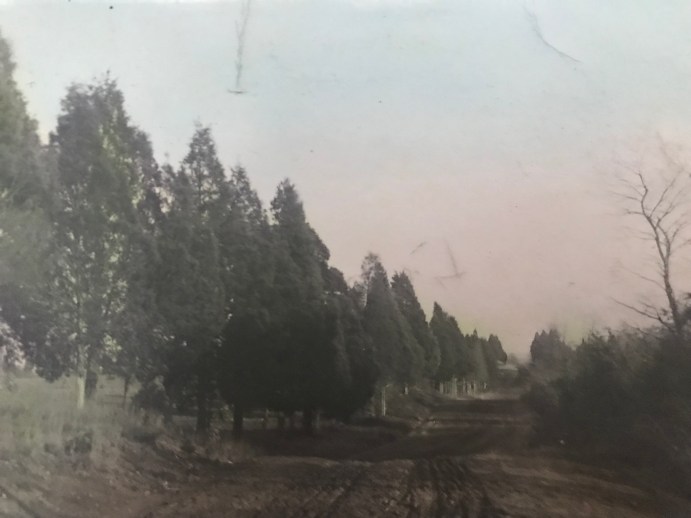
Colorized version of the photograph above by Lewis Reed. The photo was hand-tinted by Mary Jane (Reed) Gartner, making it look like a color photo.
Below, Lewis Reed’s c. 1909 photograph of his little cousin, Amanda Reed, sitting amongst the hydrangeas — the original before, and the colorized version after.

Amanda Reed before hand-tinting. Original photograph by Lewis Reed.

Amanda Reed after hand-tinting by Mary Jane (Reed) Gartner. Pastel was apparently a good choice for coloration.
To a visual artist like a dedicated photographer, the inability of the black-and-white camera to capture the richness of colorful blooms or the vibrancy of a summer scene must have been endlessly frustrating.
Lewis Reed’s daughter Mary Jane seemed particularly fond of hand-tinting photographs of flowers — it must have given her a lot of pleasure to “restore” color to her father’s beautifully composed shots. View some more of her work below.

Roses before hand-coloring. Original photograph by Lewis Reed.

Roses after hand-coloring
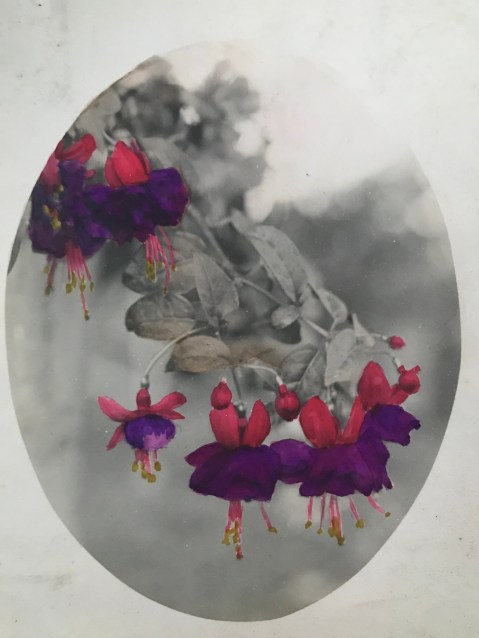
Hand-colored flowers
Below are two different versions of tinting a similar image. In Version 2, some of the flowers at the top were removed from the vase (by Lewis Reed, before taking a second shot) for a different aesthetic effect. The color artist used bolder colors to enhance that effect.

Original arrangement before hand-tinting. Original photograph by Lewis Reed.

Version 1: Arrangement after hand-tinting by Mary Jane (Reed) Gartner
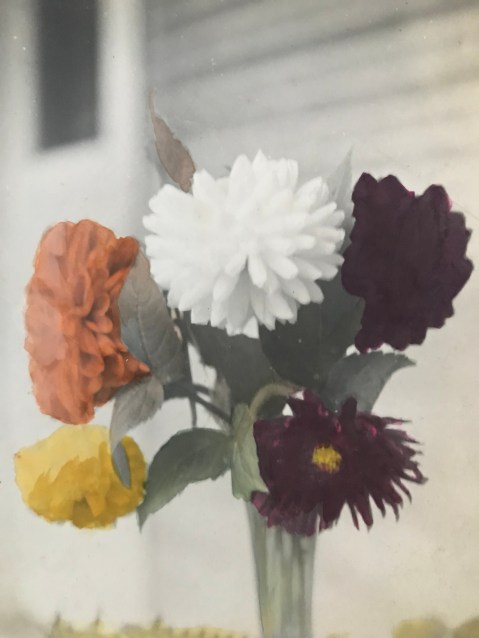
Version 2: Arrangement after hand-tinting by Mary Jane (Reed) Gartner

This is a hand-tinted version of Rock Creek taken by Lewis Reed in the early 1920s.
Other examples of hand-tinting are included in the following collection of Lewis Reed’s Black Rock Mill photographs. Black Rock Mill was built by Thomas Hillary and has stood along the banks of Great Seneca Creek as a landmark since its construction in 1815-1816. The mill was in working operation for over a hundred years until a flood in 1920 destroyed a dam on Seneca Creek and damaged the mill. Today, it a unique survivor of the many mills in Montgomery County harnessing the water-power of the creeks to grind wheat and corn into flour. It is one of only two mills standing in Montgomery County Maryland.

Black Rock Mill bridge hand-tinted by Lewis Reed’s daughter, Mary Jane.
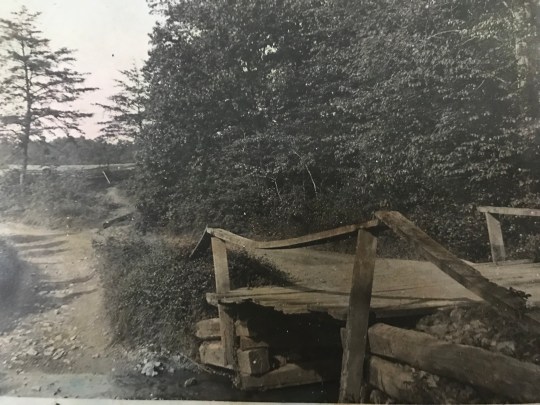
Bridge over Seneca Creek. Photo by Lewis Reed and hand-tinted by his daughter, Mary Jane

Strolling down a lane on a beautiful summer’s day. Black Rock Mill hand-tinted photo
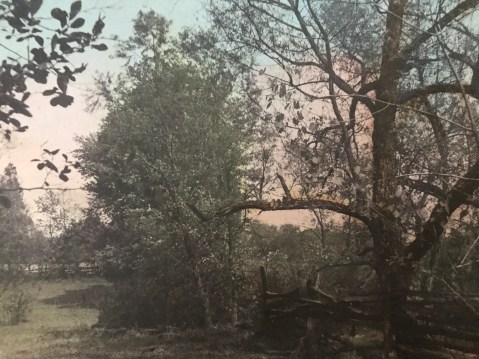
Black Rock Mill hand-tinted photo
The art of hand-tinted photos was introduced along side the daguerreotype in 1839. In the 19th century it was most common for the professional photographer to tint the photograph or tintype just after printing. Later photo artists introduced new techniques using oil, watercolor and other types of paint to achieve the desired result. With the Great Depression, the sale of professional hand-tinted photographs declined, but the home artist continued to have access to hand-tinting kits. Today, we can look back and appreciate the time and creativity it took to edit these photos without Photoshop.
Find photos like these and much more on Montgomery History’s online exhibit, “Montgomery County 1900-1930: Through the Lens of Lewis Reed“.
Books

Related Resources


Copyright Notice

Reed Brothers Dodge History (1915-2012) by Jeanne Gartner is licensed under a Creative Commons Attribution-NonCommercial 3.0 Unported License.
 Reed Brothers Dodge History 1915 – 2012
Recent Comments