
Then and Now: Lewis Reed’s 1915 Photograph of the Lake House Hotel in Saylorsburg
In 1915, Lewis Reed pointed his camera toward the Lake House Hotel in Saylorsburg, Pennsylvania, capturing a quiet roadside scene that would take on an entirely different meaning more than a century later.
Today, the historic building is associated with the Hotel of Horror and the legends that have grown around it. But Reed’s photograph preserves another chapter of its history, when the Lake House was a well-established Pocono destination welcoming travelers long before anyone came there looking for ghosts.
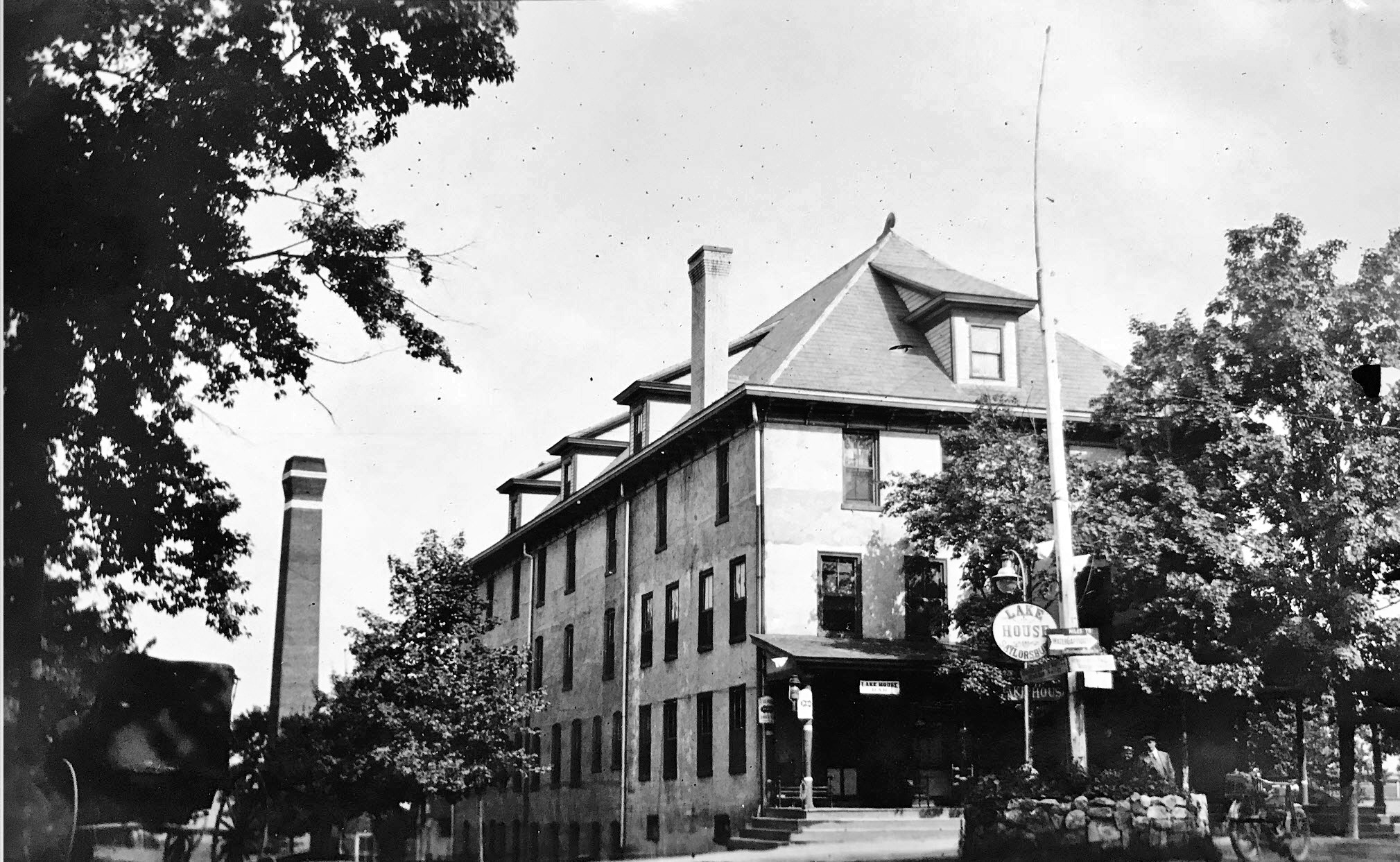
Saylorsburg Lake House Hotel, Saylorsburg, Pennsylvania, 1915. Photographed by Lewis Reed. Long before the historic building became home to the Hotel of Horror, it welcomed travelers to Pennsylvania’s Pocono Mountains.
Lewis Reed and His Camera
Lewis Reed was photographing people and places throughout the early decades of the twentieth century, leaving behind an extraordinary visual record of a rapidly changing America. His photographs include family gatherings, farms, automobiles, roads, businesses, buildings, and scenes encountered during his travels.
The Lake House photograph is particularly interesting because it takes Reed beyond his familiar Montgomery County, Maryland surroundings and into Pennsylvania’s Pocono Mountains.
Rather than concentrating on individual people, Reed positioned himself across the roadway and photographed nearly the entire hotel. The result is a remarkably clear record of the building as it appeared in 1915.
The tall Victorian structure dominates the scene. Dormer windows rise from the roof, a large chimney towers above the building, and mature trees frame the property. Near the road stands a circular sign identifying the Lake House Hotel. Several people can also be seen around the building, small figures preserved almost incidentally in Reed’s view.
More than a century later, details that probably seemed ordinary when Reed pressed the shutter have become part of the photograph’s historical value.
A Hotel From an Earlier Age of Travel
The property had already been serving travelers for generations before Lewis Reed arrived with his camera.
According to the history published by the present-day Hotel of Horror, an earlier inn known as the Saylorsburg Hotel was built by Charles Saylor in 1847 on a site associated with stagecoach travel dating even farther back. The property was substantially enlarged during the late nineteenth century, and a major expansion completed around 1895 produced much of the imposing hotel Lewis Reed photographed twenty years later.
By 1915, the Lake House was part of an established Pocono tradition of hotels, boarding houses, lakeside recreation, and summer retreats.
Historic postcards from the early twentieth century show the Lake House being promoted to visitors during the years immediately before Reed photographed it. Travelers came to the Poconos for cooler summer weather, scenery, recreation, and a temporary escape from increasingly crowded cities.
Reed captured the hotel at a particularly interesting moment in American transportation history.
The automobile was beginning to give ordinary travelers greater freedom to explore destinations away from railroad lines and fixed schedules. Roads were improving, automobile ownership was growing, and Americans were discovering an entirely new way to travel.
For Lewis Reed, 1915 was significant for another reason. It was the same year in which he became involved in the Rockville Garage in Maryland, the business that would eventually become Reed Brothers Dodge.
His Saylorsburg photograph therefore comes from the very period when the automobile was beginning to shape not only his own future but the way Americans traveled.
The Hotel Reinvents Itself
The Lake House survived while the world around it changed dramatically. Its traditional hotel years eventually came to an end. The property was purchased in 1990 and converted into an antique co-op, according to the building’s published history. Then came the transformation that would give the old hotel an entirely new identity.
In October 1992, a haunted attraction opened inside the historic structure. More than three decades later, the Hotel of Horror and Altered Nightmares continue to operate there during the Halloween season.
What makes the attraction unusual is that the old hotel is not simply a theme created for entertainment. The historic building itself remains part of the experience, with its original rooms, corridors, staircases, upper floors and lower-level spaces forming the setting.
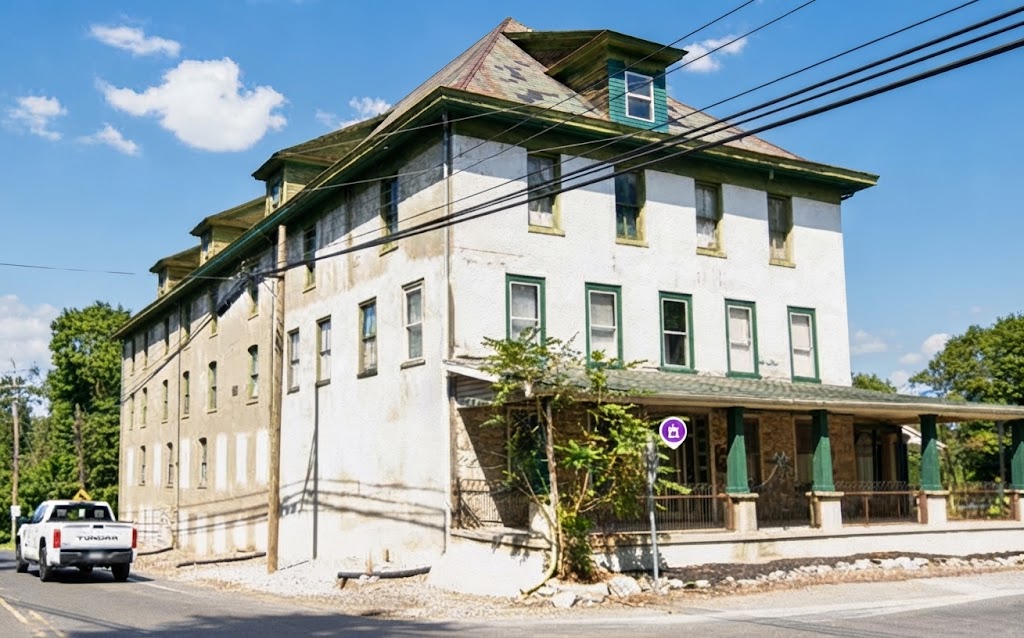
The former Lake House Hotel in Saylorsburg, Pennsylvania, as it appeared in 2025. More than a century after Lewis Reed photographed the building in 1915, the historic structure still stands, preserving a visible link to the Pocono region’s early era of hotels, roadside travel, and tourism. Google image, 2025.
History, Folklore and a Haunted Reputation
As the building aged, stories and legends naturally accumulated around it. Some accounts associated with the property have included tales of unexplained deaths, wartime events and other disturbing episodes. Such stories have contributed greatly to the building’s modern reputation, but folklore should not be confused with documented history.
That distinction makes Lewis Reed’s photograph especially valuable. His camera gives us something legends cannot: a direct visual record.
There are no ghosts, theatrical effects or Halloween decorations in Reed’s 1915 photograph. Instead, we see the Lake House as travelers of his generation would have known it, a substantial roadside hotel serving visitors during the early years of automobile travel.
A Moment Preserved in 1915
Lewis Reed could not have known what the Lake House would become when he photographed it more than a century ago. He simply recorded a place that caught his attention.
That is one of the remarkable qualities of his surviving photographic collection. Many of the buildings, roads, farms and communities he photographed were not necessarily considered historic when he stood before them. They were part of everyday life.
Time changed that.
Buildings disappeared. Roads were widened. Landscapes were transformed. Businesses closed and communities expanded. Places once considered ordinary became pieces of history.
The Lake House Hotel followed a somewhat different course. Remarkably, the building survived.
Today, visitors travel to Saylorsburg for reasons Lewis Reed could never have imagined. Yet beneath the haunted-house reputation remains the same historic hotel that stood beside the road when he raised his camera in 1915.
His photograph allows us to see beyond the legends and return, if only for a moment, to an earlier era in the Pocono Mountains.
More than 110 years later, that single photograph has become a historical record of its own: one photographer, one roadside hotel and one moment in 1915 preserved long after the world around them changed.
Saylorsburg Lake House Hotel: From Lakeside Retreat to Haunted Legend
Discover the haunting history of the Lake House Hotel in Saylorsburg, Pennsylvania. Once captured in a 1915 photograph by Lewis Reed, this former lakeside resort is now home to the Hotel of Horror, one of the Pocono Mountains’ most legendary haunted attractions.
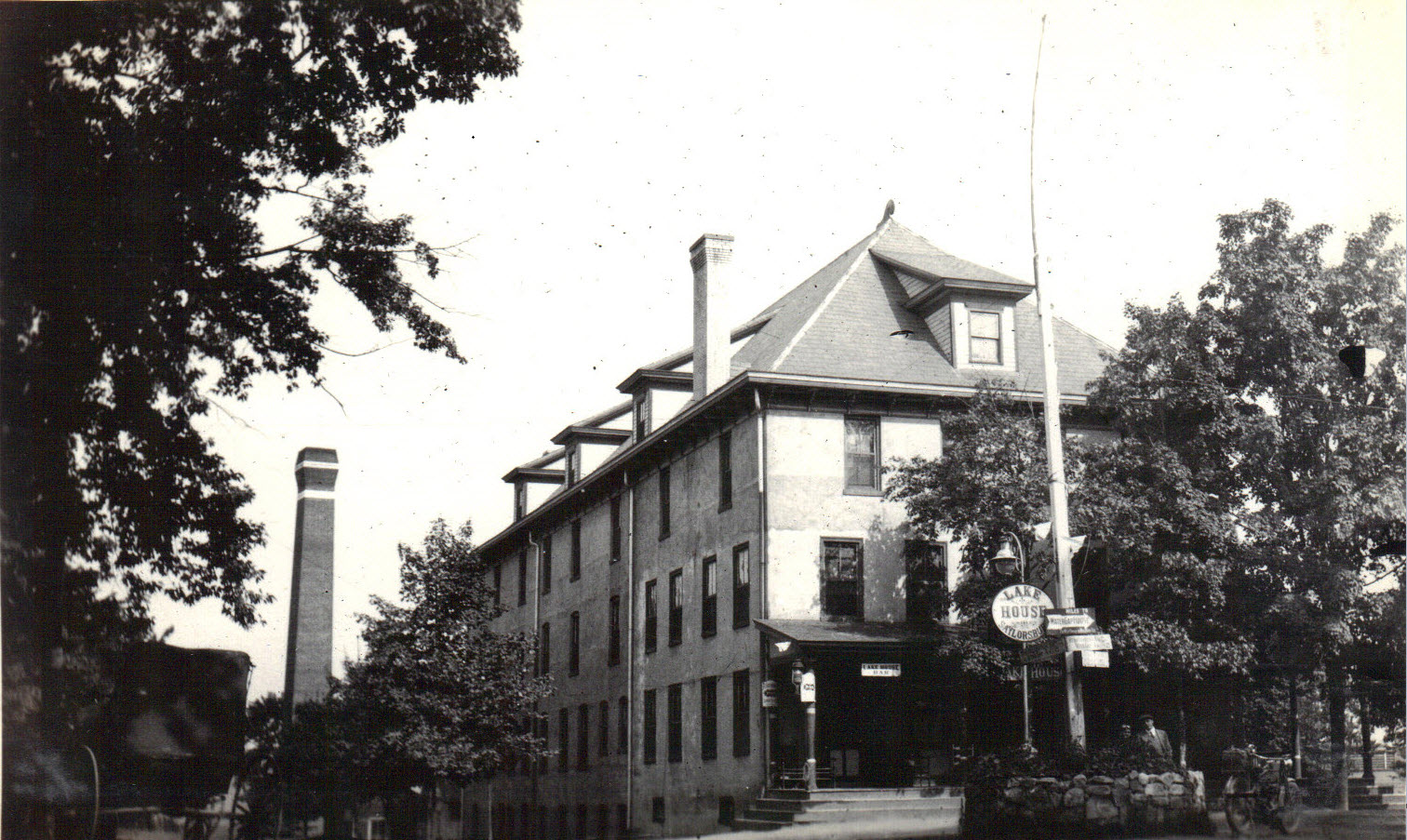
Saylorsburg Lake House Hotel. Photo taken by Lewis Reed, 1915.
More than a century ago, a quiet corner of Saylorsburg, Pennsylvania, drew vacationers seeking relaxation beside the sparkling waters of Saylors Lake. Long before it became known as the Hotel of Horror, the Lake House Hotel was one of the region’s most recognizable landmarks; a grand, three-story resort that welcomed travelers for generations.
One of the earliest known photographs of the Lake House was taken in 1915 by Lewis Reed, founder of Reed Brothers Dodge in Rockville, Maryland. Reed, an accomplished photographer with an eye for architectural detail, captured the hotel at a time when it stood as a proud symbol of the Pocono Mountains’ growing popularity as a leisure destination. His image shows a sturdy, stately building surrounded by calm and charm; a far cry from the ghostly atmosphere the site is known for today.
Built in the early 1800s, the Lake House Hotel served as a central gathering place for both locals and vacationers. It offered not only comfortable lodging but also fine dining, boating, and dancing by the lake. The hotel’s reputation grew through the 19th and early 20th centuries, and by the time Lewis Reed visited, it had already become a well-established destination for city dwellers looking to escape the summer heat.

The Lake House Hotel in Saylorsburg, site of Hotel of Horror. Google image, 2025
From Lakeside Retreat to Haunted Legend
The Lake House’s story took a darker turn as decades passed. Local legend claims that during World War II, most of the hotel’s staff enlisted in the Pennsylvania National Guard, leaving behind only a caretaker. The tale goes that nearby asylum inmates escaped and sought refuge in the hotel, leading to a series of mysterious and tragic events. Whether rooted in truth or simply folklore, the story added a haunting aura to the building’s legacy.
By the late 20th century, the once-elegant hotel had fallen into disrepair. In 1990, it reopened briefly as an antique co-op before being transformed into a haunted attraction. Since 1992, the Hotel of Horror and Altered Nightmares have operated within its historic walls, breathing new life into the old building each Halloween season. Visitors now walk through the same corridors that Lewis Reed once photographed, only today, they’re filled with eerie sounds, flickering lights, and the echoes of imagined ghosts.
More than just a haunted house, the Lake House Hotel remains a remarkable link to Pennsylvania’s past. Through Lewis Reed’s 1915 photograph, we catch a glimpse of its former grandeur; a moment frozen in time before history, legend, and imagination intertwined to make it one of the Poconos’ most enduring stories.
To all the readers of this blog: Have a spooky, enjoyable and very safe Halloween!

Books

Related Resources


Copyright Notice

Reed Brothers Dodge History (1915-2012) by Jeanne Gartner is licensed under a Creative Commons Attribution-NonCommercial 3.0 Unported License.


Recent Comments