
1961 New Car Introduction
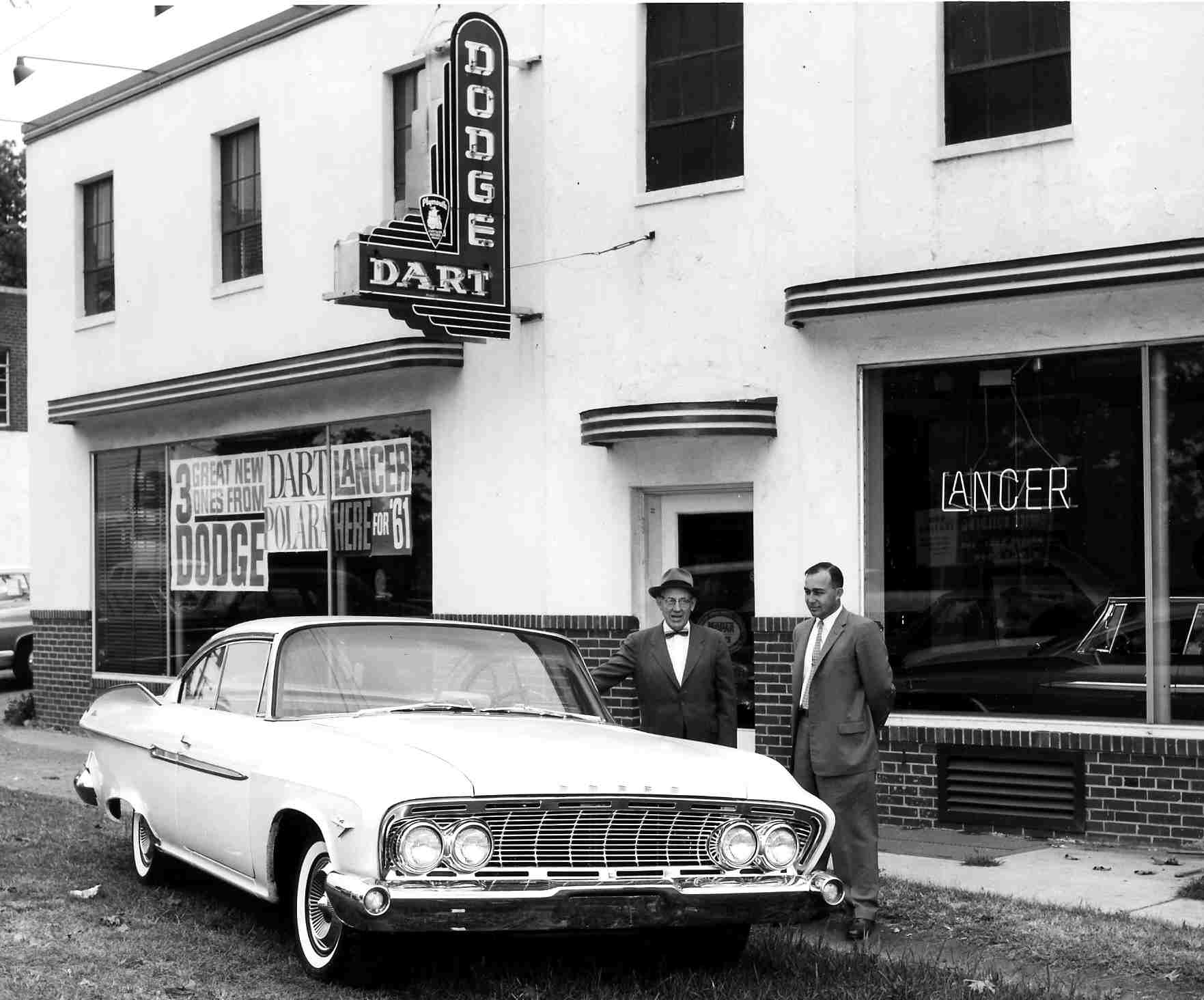
1961 – Lewis Reed (left) and James Gartner, Salesman, stand in front of the new car showroom
New car introduction was always one of the most exciting times at Reed Brothers Dodge. It was a once-a-year celebration that everyone looked forward to attending. For the salesman, it meant additional car sales. To the dealership, it was another method to reach out to hundreds of current and potential customers, not only for new car sales, but also to advertise the dealership’s other services. Many sales were made during new car introduction by those customers who had to be the first on their block to own one of the new models.
The car on display is a 1961 Dodge Polara 4-door sedan, Dodge’s top-of-the-line full-size car. The new look featured a wide, concave grille with low-mounted quad headlights and the curious reverse-slant fins. The name Polara is a reference to the Polaris star, in a marketing attempt to appeal to the excitement surrounding the Space Race during the early 1960s. In its various forms, the Polara name was used by Dodge until 1973, when its position in Dodge’s line-up was replaced by the Dodge Monaco.
To attract drive-by motorists, large signs were placed in the showroom windows hyping the new year models: Dart, Lancer and Polara. Back in the day, there was tremendous brand loyalty. Customers who bought Dodges, usually bought them for life. In fact, many former customers traded every year and would buy a car on the spot. In the 1960s, new car introduction was a much more important part of the American automotive buying habit. Today, it’s a thing of the past.
The photo was taken from the corner of Rockville Pike and what is now known as “Dodge Street”. The state of Maryland named the connector street behind the dealership’s original location, Dodge Street because Reed Brothers was located there for 56 years (1914-1970).
“Oilfield Dodge” – 1920s Off-Roading
This 1920′s promotional film shows a Dodge Brothers sedan doing some serious off-roading to get to an oil well. It’s amazing to see what the car can do.
A 1920′s vintage Dodge Brothers sedan with “Oil Field Dodge” painted on it’s side shows us how the old timers four wheeled it through muddy fields and roads. This Dodge is on a mission to get to the gushing oil well in this film which was apparently some sort of promotional video for the car. It certainly looks like the Dodge was a well built car that was rugged enough to survive some terrible off road driving conditions. The car drives carefree over rocky and mountainous terrain and when it flips over on its side, it takes nothing more than a few people to roll it back over and, ‘vroom’, off it goes.
The video ends when the car reaches an oilfield where a group of drillers have struck an oil deposit, sending black gold shooting through the air next to the parked Oilfield Dodge.
You will watch this more than once I am sure.
Featured Photos: 1917 Texaco Tanker Trucks
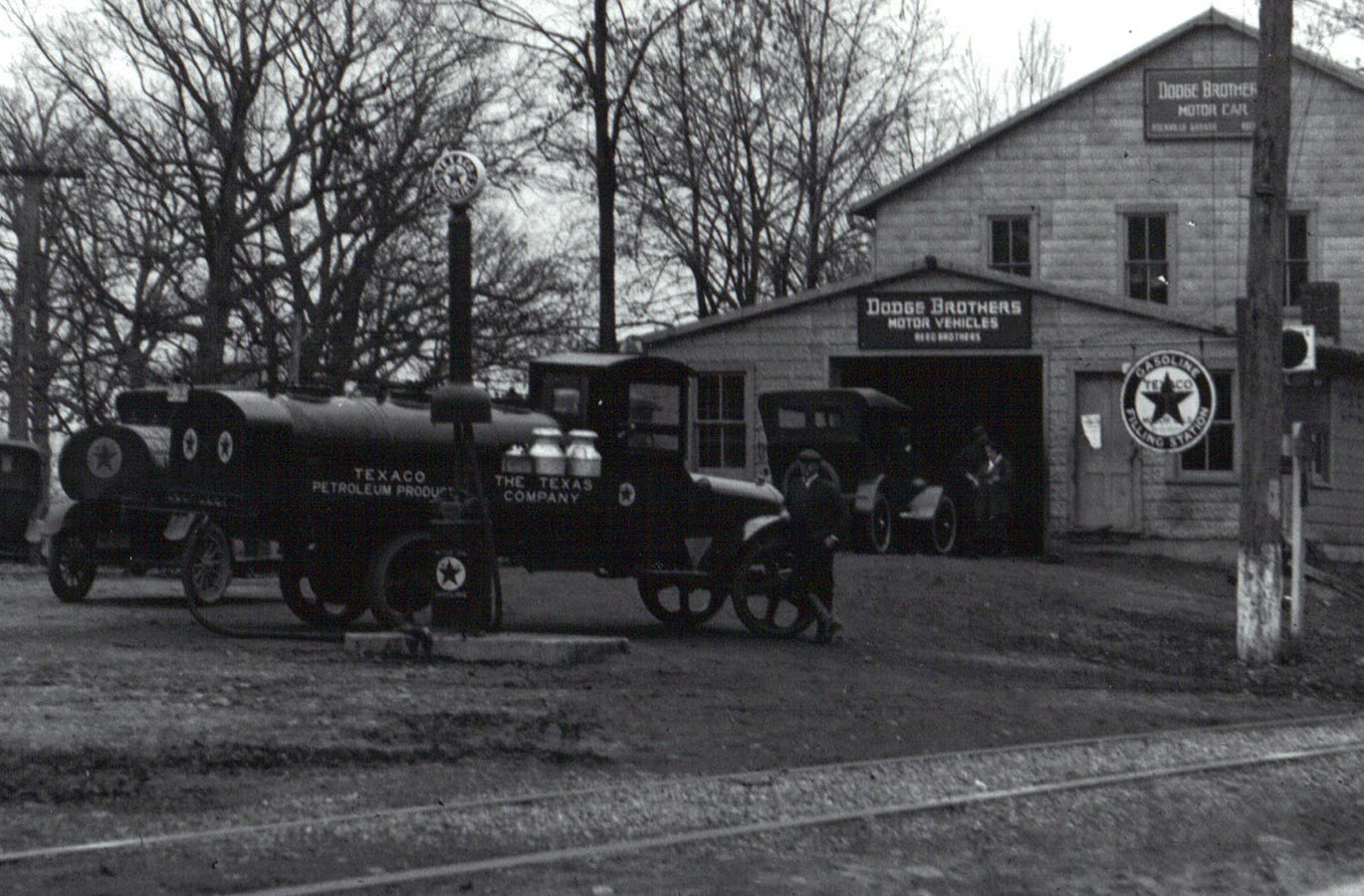
A Texaco Petroleum tanker is delivering its load of fuel to Reed Brothers Dodge in this circa 1917 photo. The delivery driver seems to be wearing his best suit on this job, something that you don’t see these days at all.
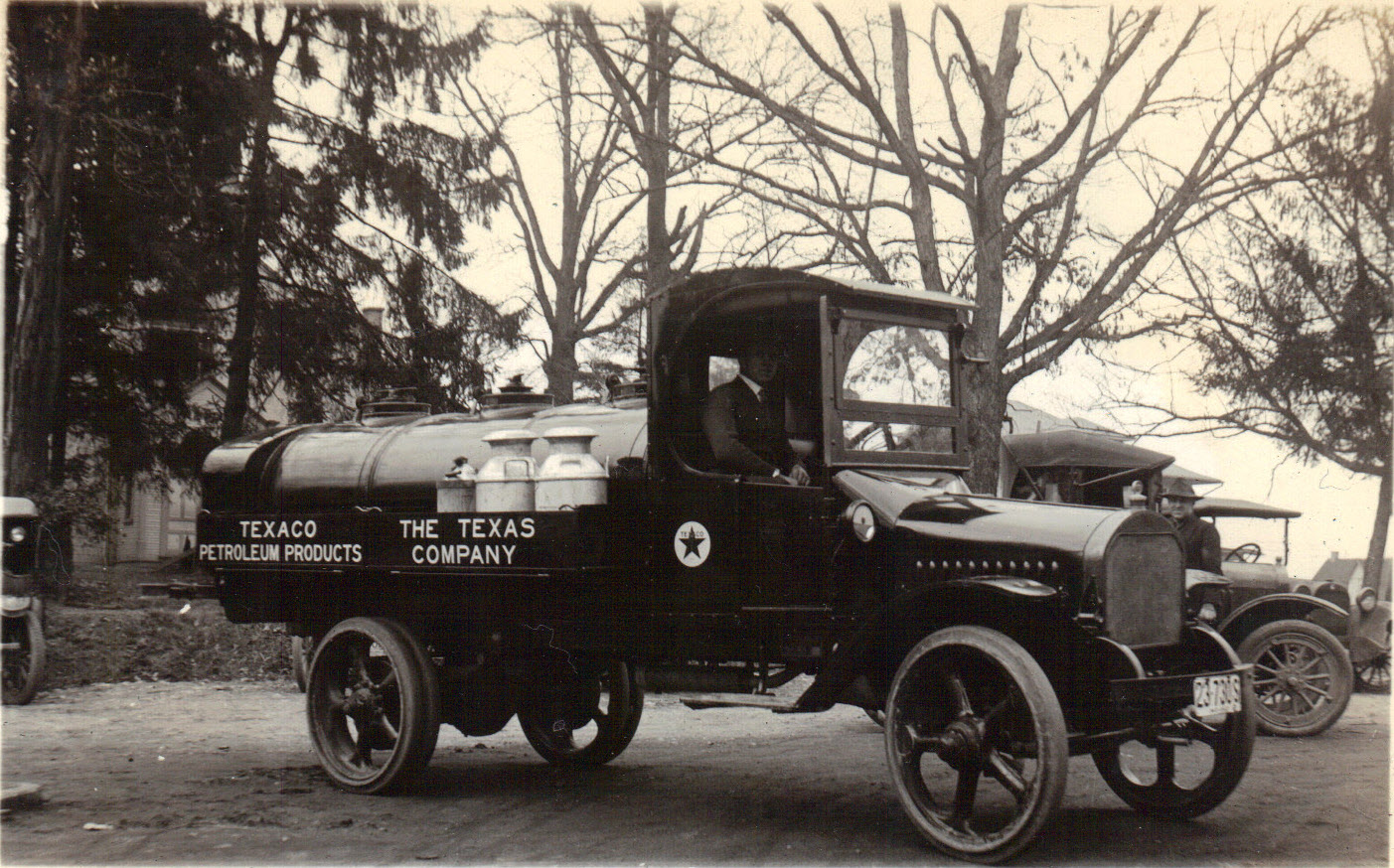
A circa 1917 Texaco Petroleum Truck sits in front of Reed Brothers Dodge after delivering its load of fuel.
The most essential vehicle of the early 20th century (and today) had to have been the tanker truck. In the pioneering period of tanker trucks, 1910 to 1920, The Texas Company was among many that were fitted with tanks to carry refined products such as gasoline, kerosene and fuel oil.
All that remains of some models are vintage photographs in an archive somewhere. A few restored tank trucks are in transportation museums.
1946 Dodge Deluxe Fluid Drive
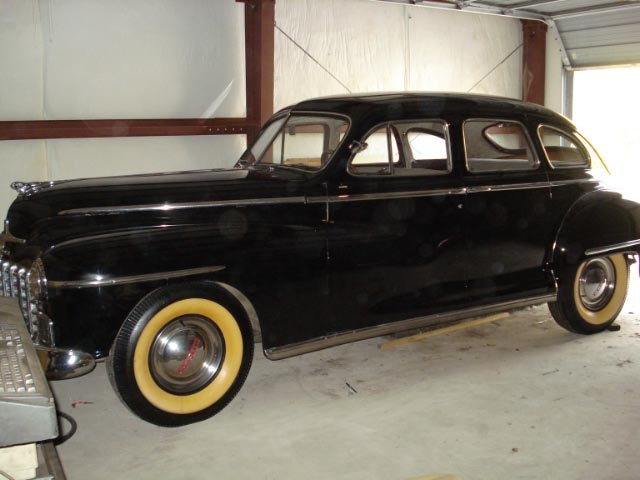
This 1946 Dodge Deluxe 4-Door Sedan Fluid Drive was a vehicle from Reed Brothers private collection of automobiles and was one of the first cars my father (Lee Gartner) sold as a salesman at Reed Brothers. When the original owner (Lewis Bell) could no longer drive, my dad purchased it back from him. As the story goes, Mr Bell nicknamed the old car “Charity” because it was the only car he ever drove and it always got him where he wanted to go.
Being married to Lewis Reed’s daughter and next President of the dealership had its perks. My dad could have had his pick of any new car on the lot to drive as his personal company car, but what did he choose to drive around most of the time? You guessed it … “Charity”.
Depending on your age, there are any number of ways for a parent to embarrass their children, and one of the easiest ways was via the kind of vehicle they drove. When I was a kid, nothing screamed “uncool” louder than this old car. I remember when I was a teenager, my dad drove me to school one day in “Charity”. The good thing was that this car was so big that I had plenty of room to duck down below eye level and not be seen by the outside world.
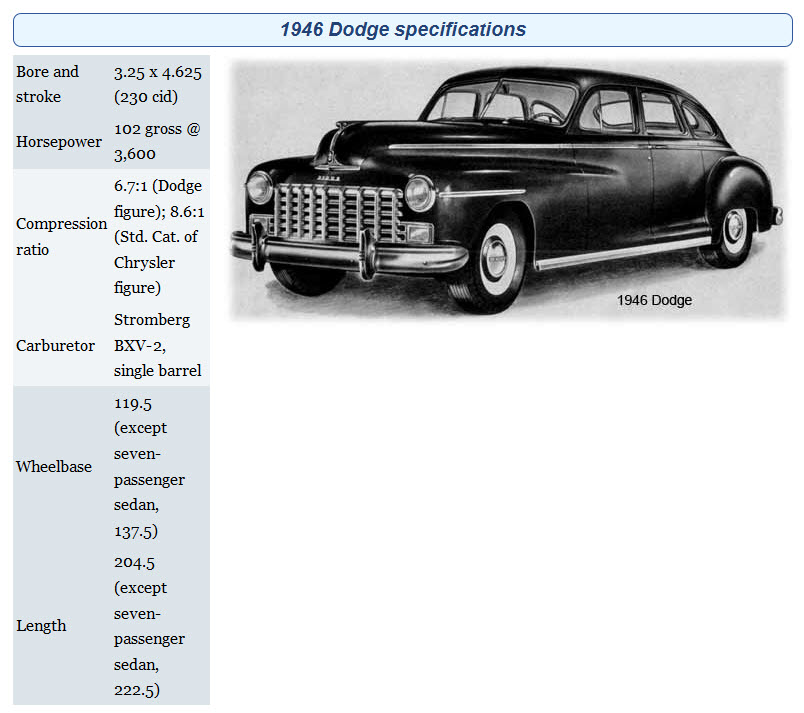
The first car after World War II was the 1946 Dodge, which sold for about $800, but with many options (Fluid Drive, radio, heater, clock, cigar lighter, antenna, sun visor, turn signals and seat covers), it probably sold for a couple hundred dollars more.
The 1946 Dodge featured numerous improvements over pre-war cars; the big news, though, was the new “All Fluid Drive”. The fluid drive transmission could be driven like an automatic, but it was simpler, less expensive, more efficient and more reliable than the full automatics available in the late 1940s. The Dodge engine was a 3.8 liter flathead 6 with a manual transmission or optional fluid drive. A new starter was operated by a button on the dash.
Photo captions are some notes from the brochures.
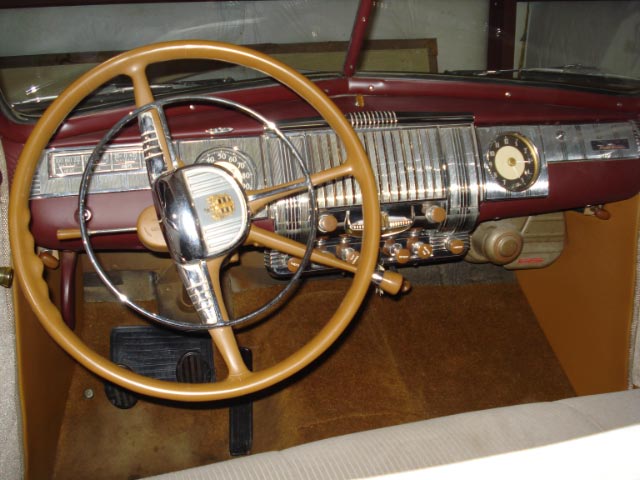
The steering wheel got a new horn-blowing ring and center ornament and new plastic control buttons were centrally grouped. The optional turn signals were put in their current position to the left of the steering column. Other options included a clock, radio, heater, and backup lights.
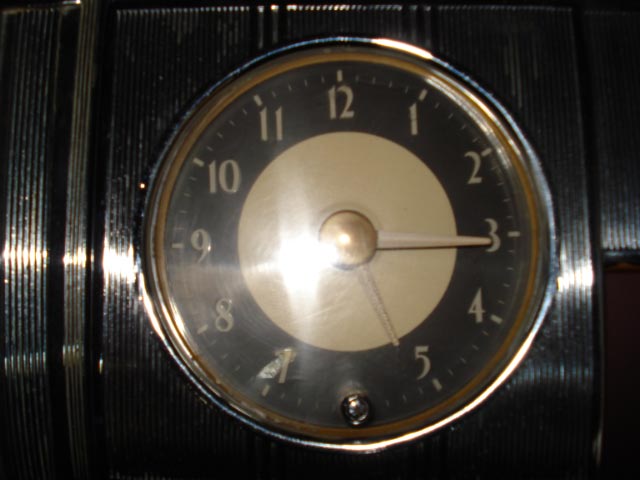
A new optional electric clock put the setting button onto the clock instead of in the glove compartment.
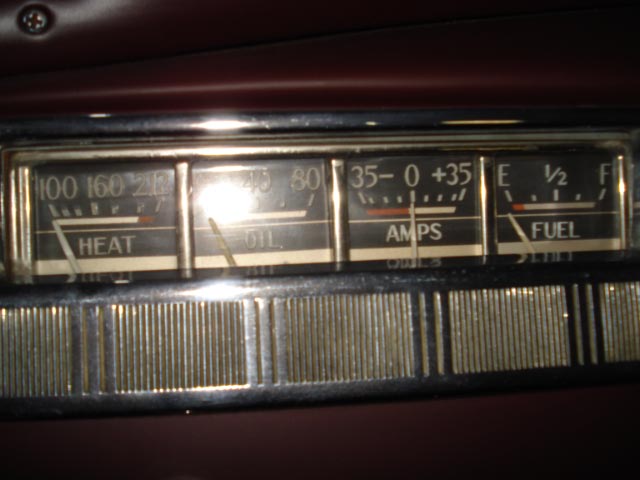
New instrument panel with brighter, safer non-glare edge lighting, with sharpened contrast that makes dials easier to read.
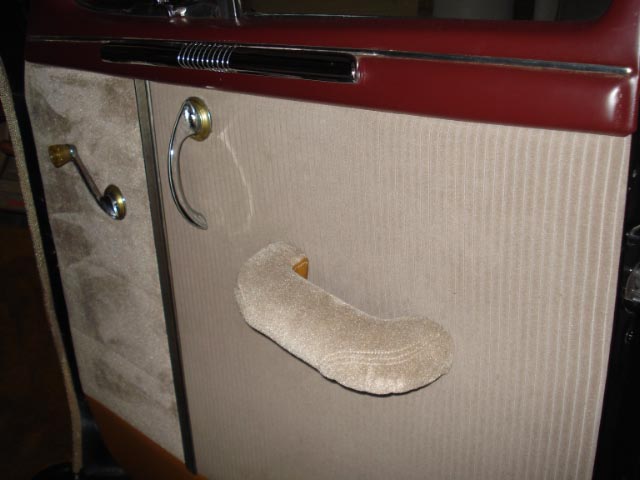
Inside, plastic was used for door knobs and controls on the instrument panel. Rotary door latches allowed for closing doors lightly; spring tension kept the doors closed. Rotary door latches have a continuous “take up” to keep doors snug … door handles are safety-curved to prevent catching of clothing and prevent injury. Window and door moldings have a rich woodgrain finish.
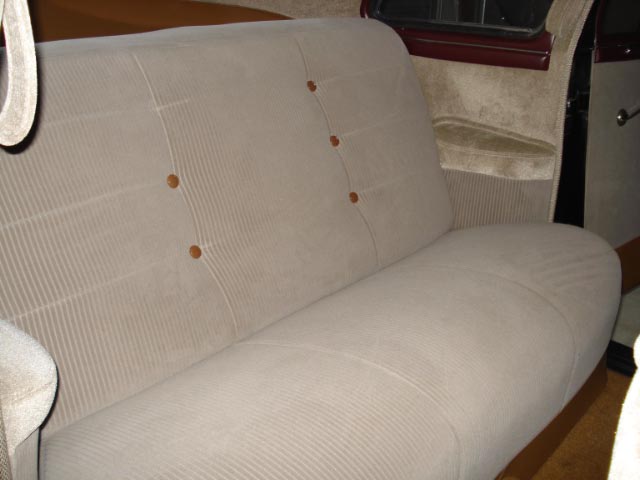
Room Galore! Just look at that wide expanse of cushion … much like your Davenport at home. You’ll appreciate the additional comfort of these rear seats which are almost 8 inches wider. Front seats, too, are a full 6 inches wider. Dodge is in reality a “three-couple” car in which SIX BIG PEOPLE can ride in comfort.
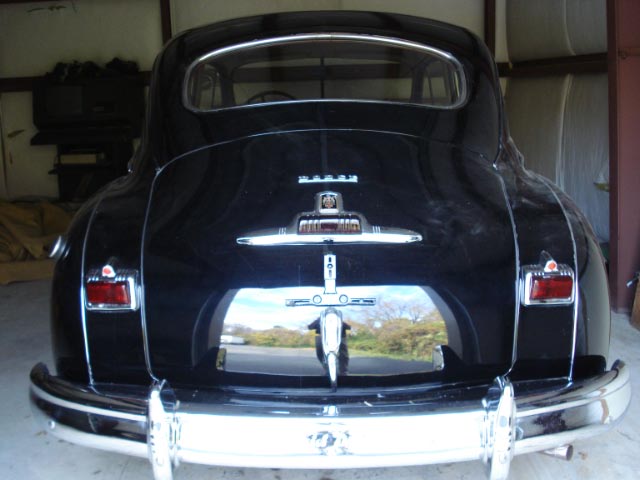
While taking pictures I caught part of my reflection in the chrome. I’m not all that great of a photographer and even trying to hide behind the trunk latch didn’t quite work out.
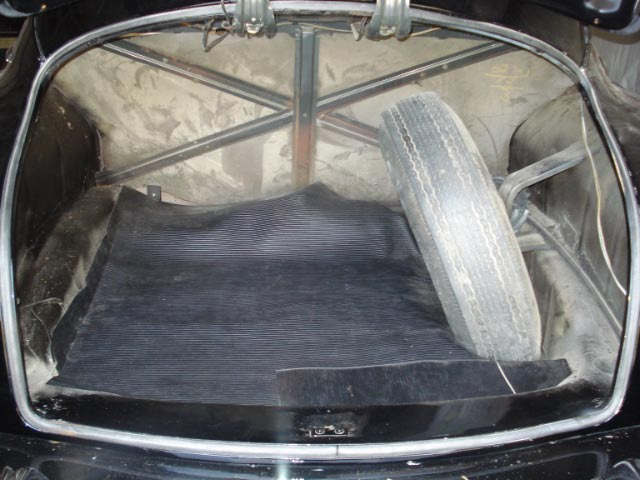
Super size trunk! Designed to add more usable space. Floor is level with opening – luggage slides right in.
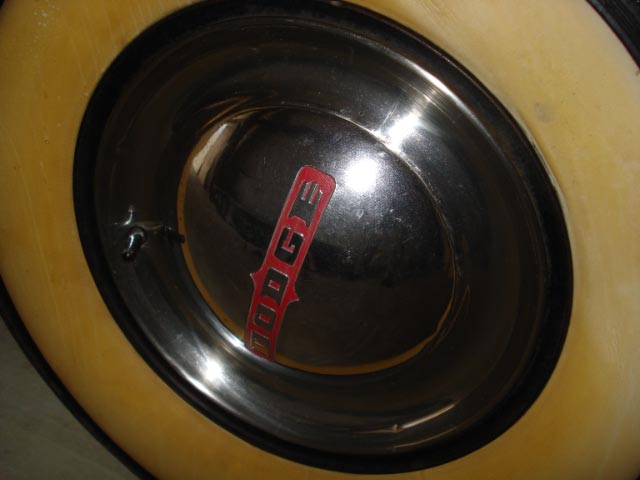
Dodge branded hubcaps “set off” the appearance of the car.
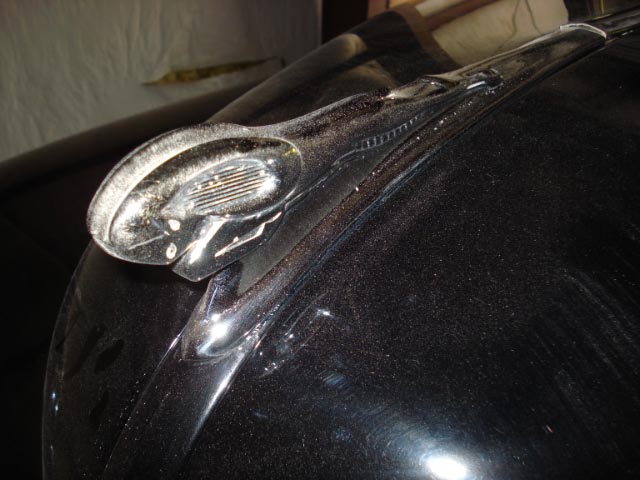
Dodge ram hood ornament and crest. This one had separate horns, and was a popular aftermarket accessory for Dodge trucks well into the late 1960s.
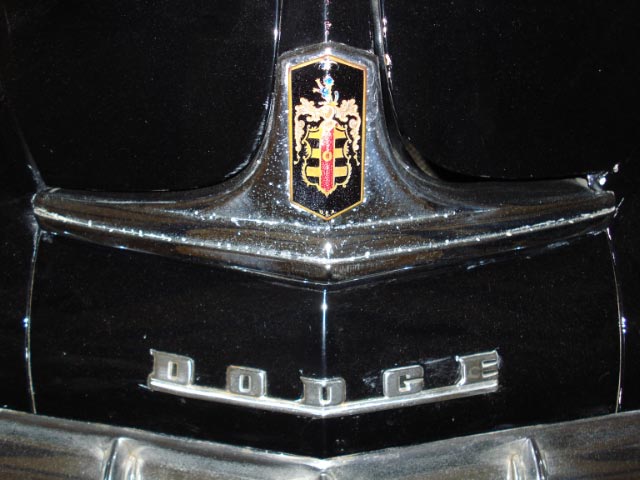
Hood is stamped with the Dodge coat of arms and “DODGE”. Dodge used a crest (the Dodge family coat of arms), starting in 1941; the Dodge coat of arms referred to changed shape in 1955, 1956 and 1957 before fading away at some time after 1960.
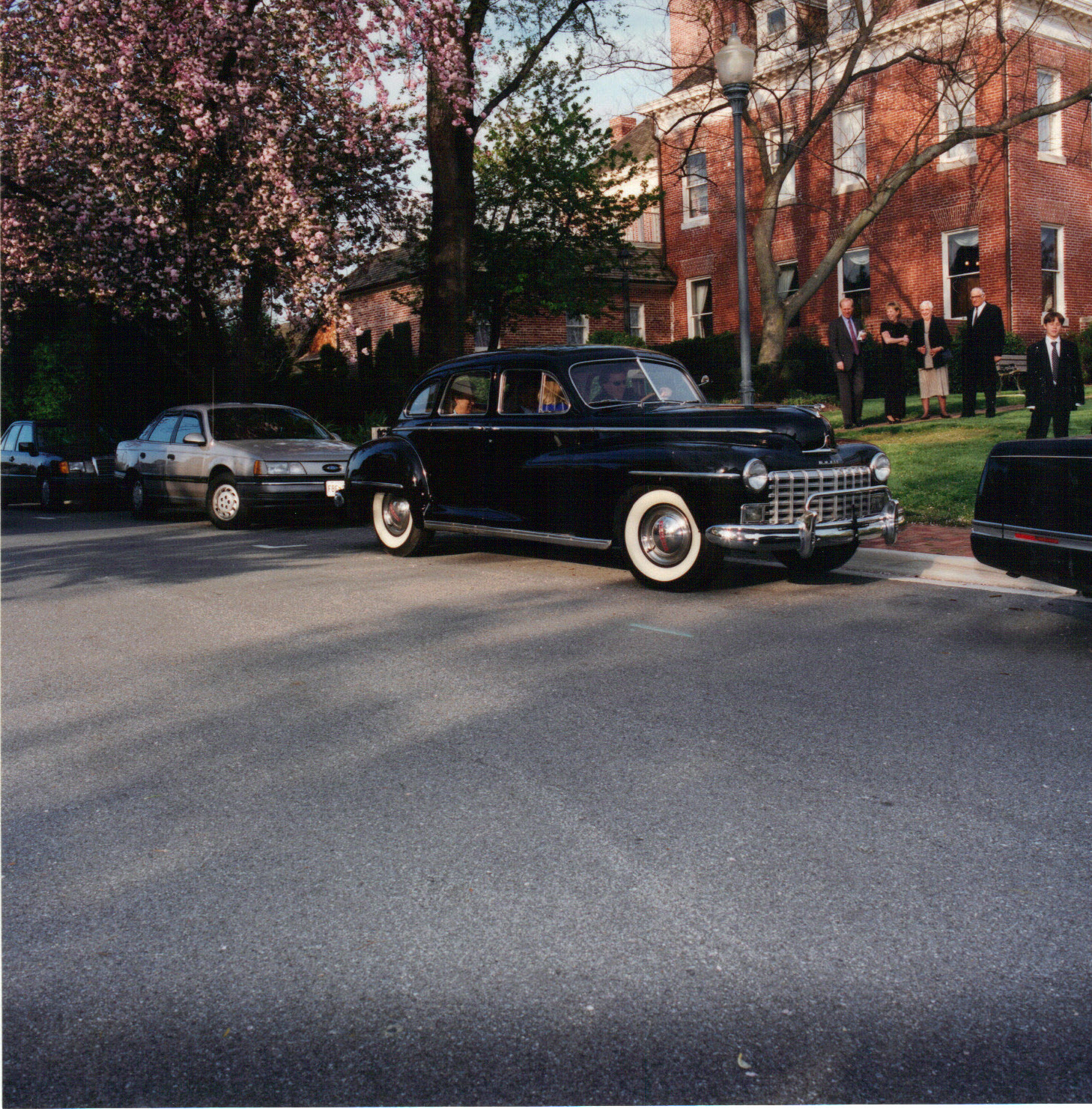
Here is the1946 Dodge Deluxe parked on the street at the Kentland’s Mansion
To commemorate Mary Jane and Lee Gartner’s 50th wedding anniversary on April 10, 1998, the dealership spruced up the vintage ’46 Dodge. Richard, the eldest son of Lee and Mary Jane, chauffeured his parents to and from the Kentland’s Mansion in this car for their Golden Wedding Anniversary celebration.
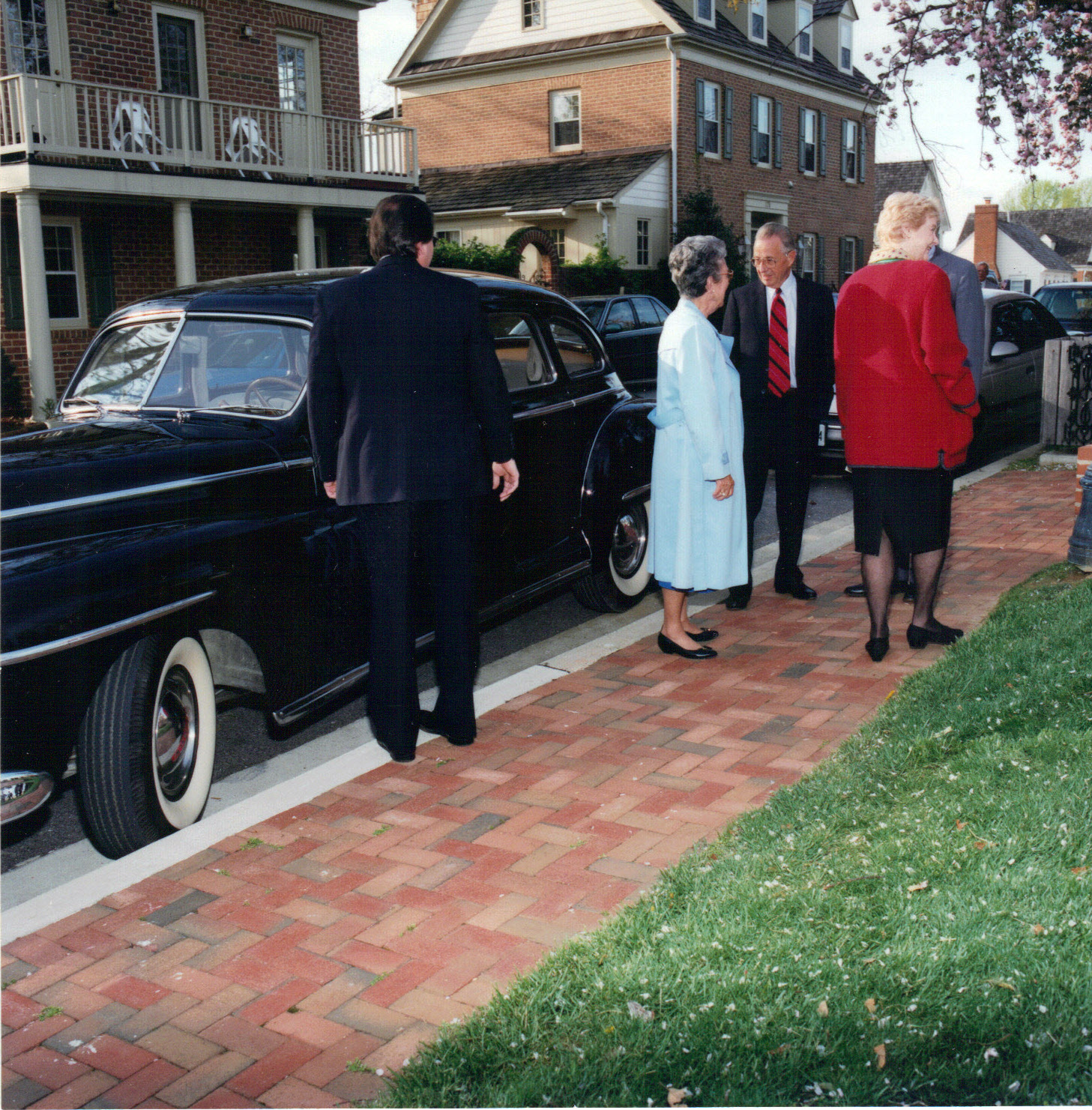
Mary Jane (blue coat) & Lee Gartner (red tie)
Books

Related Resources


Copyright Notice

Reed Brothers Dodge History (1915-2012) by Jeanne Gartner is licensed under a Creative Commons Attribution-NonCommercial 3.0 Unported License.
 Reed Brothers Dodge History 1915 – 2012
Recent Comments