
A Look Back at the Forgotten Art of Hand-Tinted Photography
The hand-tinted photos of Lewis Reed and his daughter, Mary Jane, are examples of the photographic process that most of the people reading this will have never experienced: hand-tinting.
The golden age of hand-colored photography occurred between 1900 and 1940. Before the days of true color photography, these views were immensely popular. While hand coloring doesn’t help you identify or date an image, it does enhance a photograph’s appearance and add to its history.
Before the advent of color photography, photographers painstakingly applied color to black and white photos in order to show a truer visual depiction of a photo image. All of the photographs featured here were taken by Lewis Reed in the early 1900s and were hand-tinted by his daughter, Mary Jane, likely in the late 1930s to 1940. She colored the photos with special photographic watercolor and a paintbrush. Rather than coloring the entire image—a time-consuming task—she carefully selected details that would make the image lively and attractive. The fact that these photos, all of which are over 100 years old, are still in relatively good condition is a strong testament to the lasting power of hand-tinted photographs.
Do you recognize the road pictured below? Few modern residents of Montgomery County would guess, but this is a shot down Veirs Mill Road in the early 1900s. Mary Jane Reed added some depth to the image with subtle earth tones, in the colorized version.

Veirs Mill Road looking east before it was paved. Original photograph by Lewis Reed, 1911.
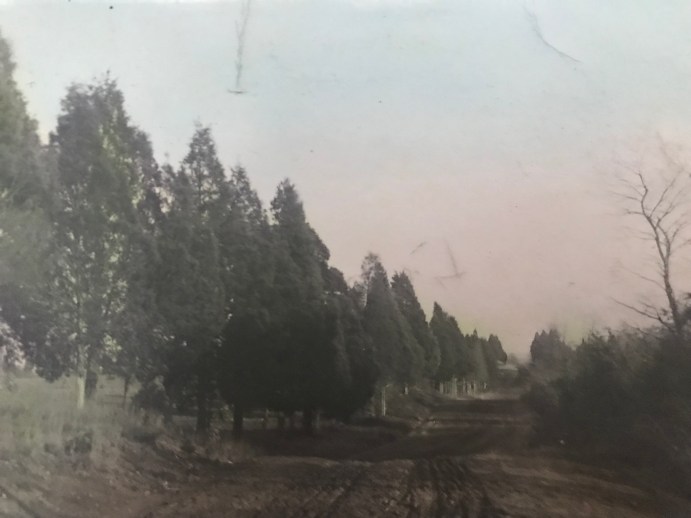
Colorized version of the photograph above by Lewis Reed. The photo was hand-tinted by Mary Jane (Reed) Gartner, making it look like a color photo.
Below, Lewis Reed’s c. 1909 photograph of his little cousin, Amanda Reed, sitting amongst the hydrangeas — the original before, and the colorized version after.

Amanda Reed before hand-tinting. Original photograph by Lewis Reed.

Amanda Reed after hand-tinting by Mary Jane (Reed) Gartner. Pastel was apparently a good choice for coloration.
To a visual artist like a dedicated photographer, the inability of the black-and-white camera to capture the richness of colorful blooms or the vibrancy of a summer scene must have been endlessly frustrating.
Lewis Reed’s daughter Mary Jane seemed particularly fond of hand-tinting photographs of flowers — it must have given her a lot of pleasure to “restore” color to her father’s beautifully composed shots. View some more of her work below.

Roses before hand-coloring. Original photograph by Lewis Reed.

Roses after hand-coloring
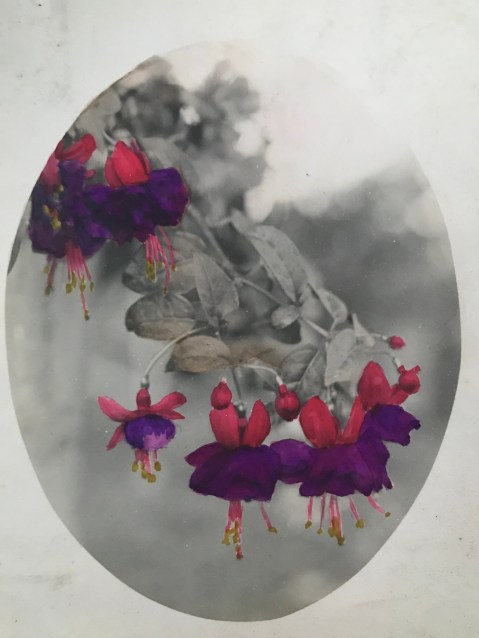
Hand-colored flowers
Below are two different versions of tinting a similar image. In Version 2, some of the flowers at the top were removed from the vase (by Lewis Reed, before taking a second shot) for a different aesthetic effect. The color artist used bolder colors to enhance that effect.

Original arrangement before hand-tinting. Original photograph by Lewis Reed.

Version 1: Arrangement after hand-tinting by Mary Jane (Reed) Gartner
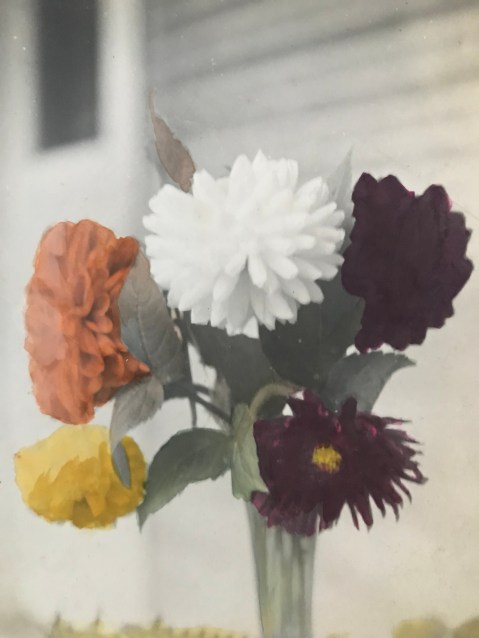
Version 2: Arrangement after hand-tinting by Mary Jane (Reed) Gartner

This is a hand-tinted version of Rock Creek taken by Lewis Reed in the early 1920s.
Other examples of hand-tinting are included in the following collection of Lewis Reed’s Black Rock Mill photographs. Black Rock Mill was built by Thomas Hillary and has stood along the banks of Great Seneca Creek as a landmark since its construction in 1815-1816. The mill was in working operation for over a hundred years until a flood in 1920 destroyed a dam on Seneca Creek and damaged the mill. Today, it a unique survivor of the many mills in Montgomery County harnessing the water-power of the creeks to grind wheat and corn into flour. It is one of only two mills standing in Montgomery County Maryland.

Black Rock Mill bridge hand-tinted by Lewis Reed’s daughter, Mary Jane.
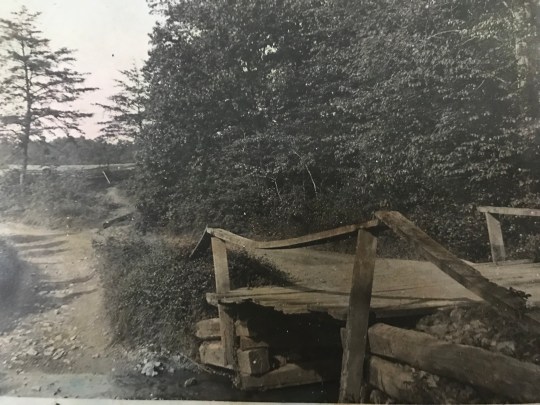
Bridge over Seneca Creek. Photo by Lewis Reed and hand-tinted by his daughter, Mary Jane

Strolling down a lane on a beautiful summer’s day. Black Rock Mill hand-tinted photo
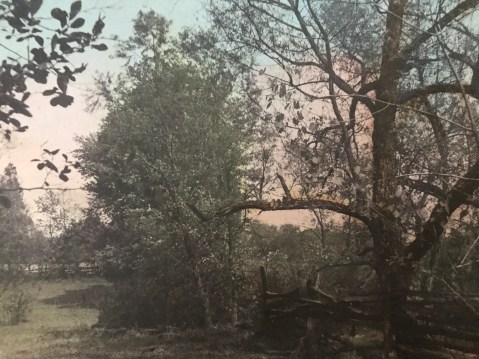
Black Rock Mill hand-tinted photo
The art of hand-tinted photos was introduced along side the daguerreotype in 1839. In the 19th century it was most common for the professional photographer to tint the photograph or tintype just after printing. Later photo artists introduced new techniques using oil, watercolor and other types of paint to achieve the desired result. With the Great Depression, the sale of professional hand-tinted photographs declined, but the home artist continued to have access to hand-tinting kits. Today, we can look back and appreciate the time and creativity it took to edit these photos without Photoshop.
Find photos like these and much more on Montgomery History’s online exhibit, “Montgomery County 1900-1930: Through the Lens of Lewis Reed“.
Reed Family “Real Photo Postcard” (1910)
Nostalgic photo postcards, known as “real photo postcards”, were popular in the early 1900’s. Kodak even produced a special camera (the model #3A) and added a special postcard developing and printing service that made it easy for anyone to make their own photo postcard. Mailing a postcard was only a penny and the photo postcard itself cost between one and two cents. The postcard below is a “real photo postcard” mailed by Geneva (Eva) Reed, sister of Lewis Reed in 1910. It was mailed to her half-brother Rufus who lived in Point of Rocks, Maryland.
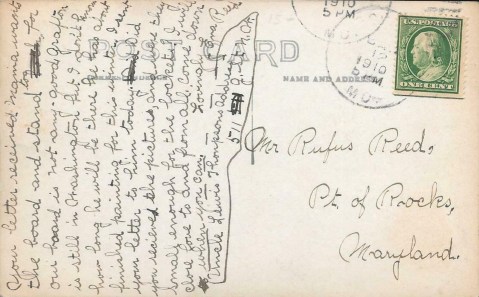
Postcard addressed to Rufus Reed from Eva Reed. Note the cost of the postage stamp is just one penny.
The photo of Woodlawn Hotel on the front of the postcard was taken by Phillip Reed (Lewis Reed’s brother). Lewis Reed’s photograph collection contains several hundred of these photo postcards dating from approximately 1907-1915. Many of these postcards are rare, one of a kind items and historical documents.
A bit of history about the Woodlawn Hotel: Opened as a luxury hotel in 1889 for Washingtonians seeking to escape the city’s summer heat, the Woodlawn Hotel thrived until the economy and more accessible transportation made Rockville a suburb of Washington rather than a summer vacation destination. The hotel was then purchased by Dr. Ernest L. Bullard who reopened the building, naming it Chestnut Lodge, as “a sanitarium for the care of nervous and mental diseases”. The Bullard family operated nationally famous Chestnut Lodge for 75 years. The building was conveyed to a developer in 2003 with the intention to convert it to condominiums as part of the development of the Chestnut Lodge property. The facade and the chestnut grove from which it got its name were to be preserved. The downturn in the real estate market derailed those plans.
Sadly, a fire on June 7, 2009 destroyed the landmark building that began as Woodlawn Hotel and came to symbolize the psychiatric institution of Chestnut Lodge. Today, the Chestnut Lodge campus is preserved for the community and consists of Little Lodge, Frieda’s Cottage, a Stable and an Ice House, and eight acres of forested lawn.
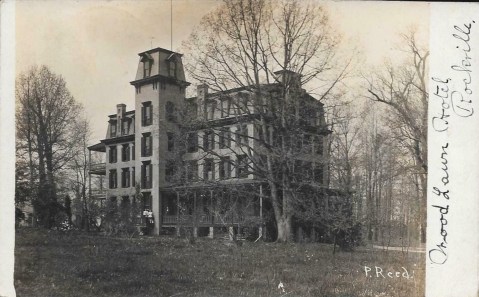
Postcard image was taken by Phillip Reed (Lewis Reed’s brother) of Woodlawn Hotel before it became Chestnut Lodge in 1910.
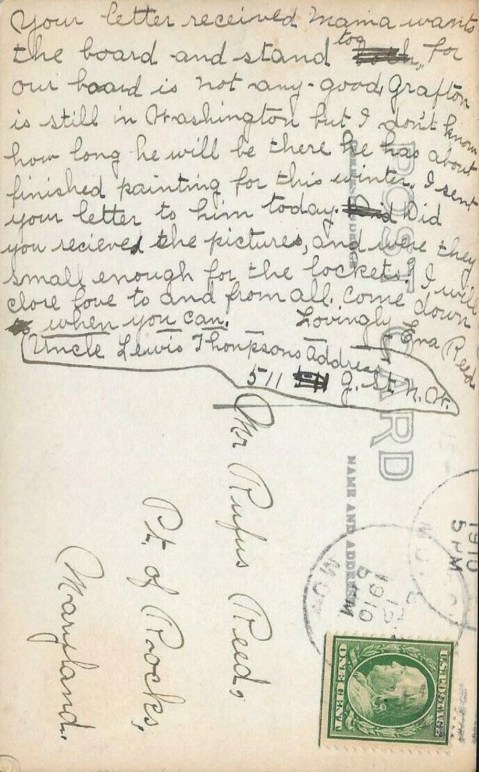
The postcard below reads:
Your letter received. Mama wants the board and stand too, for our board is not any good. Grafton is still in Washington but I don’t know how long he will be there he has about finished painting for this winter. I sent your letter to him today. Did you receive the pictures, and were they small enough for the lockets? I will close love to and from all. Come down when you can. Lovingly, Eva Reed
Uncle Lewis Thompson’s address is 511 G St N.W.
Halloween in Montgomery County 100 Years Ago
Ever wondered how Montgomery County families celebrated Halloween 100 years ago? Thanks to the these photographs from Lewis Reed’s collection, we can travel all the way back to 1914.
At the turn of the century, women often wore their regular clothes topped with homemade masks. The first Halloween costumes were usually worn by women and reflected the idea of masquerades that was extremely popular in the early 1900s. People only began to buy manufactured costumes in the second and third decades of the 20th century.

Halloween, ca. 1914. These women are holding homemade Halloween masks for their upcoming celebration. Photo by Lewis Reed
Oh the good ol’ days, when wearing a mask was enough to be dressed up for celebrations! Do you know how your ancestors’ celebrated Halloween? Newspapers are a great source to get a better understanding of life in the past. This special post is a look back through newspaper articles and Lewis Reed’s photographs at how Halloween was celebrated 100 years ago.
Stocked Stores: Stores were stocked with all the Halloween supplies needed for a fun celebration. Below is an ad for costumes and masquerade suits for those participating in Halloween parties and other seasonal affairs.

The Washington Post, October 30, 1916
Dancing and Parties: Halloween parties and dancing were enjoyed by many. Some announcements even included a list of guests in attendance!

The Baltimore Sun, November 3, 1912
Here is the description of a Halloween party from the Society Section of the November, 1916 issue of The Evening Star (Washington, District of Columbia):
A Halloween party was given last evening… and a merry evening spent by those present. The reception hall, living and dining rooms were artistically decorated with autumn leaves, lanterns, chrysanthemums and orange and black streamers. The evening was spent in old-fashioned games, concluding with the entire assemblage gathering about an open fireplace in the dark, while the guests were led by a ghost through various parts of the darkened home. The evening’s entertainment concluded with music, dancing and the serving of refreshments.
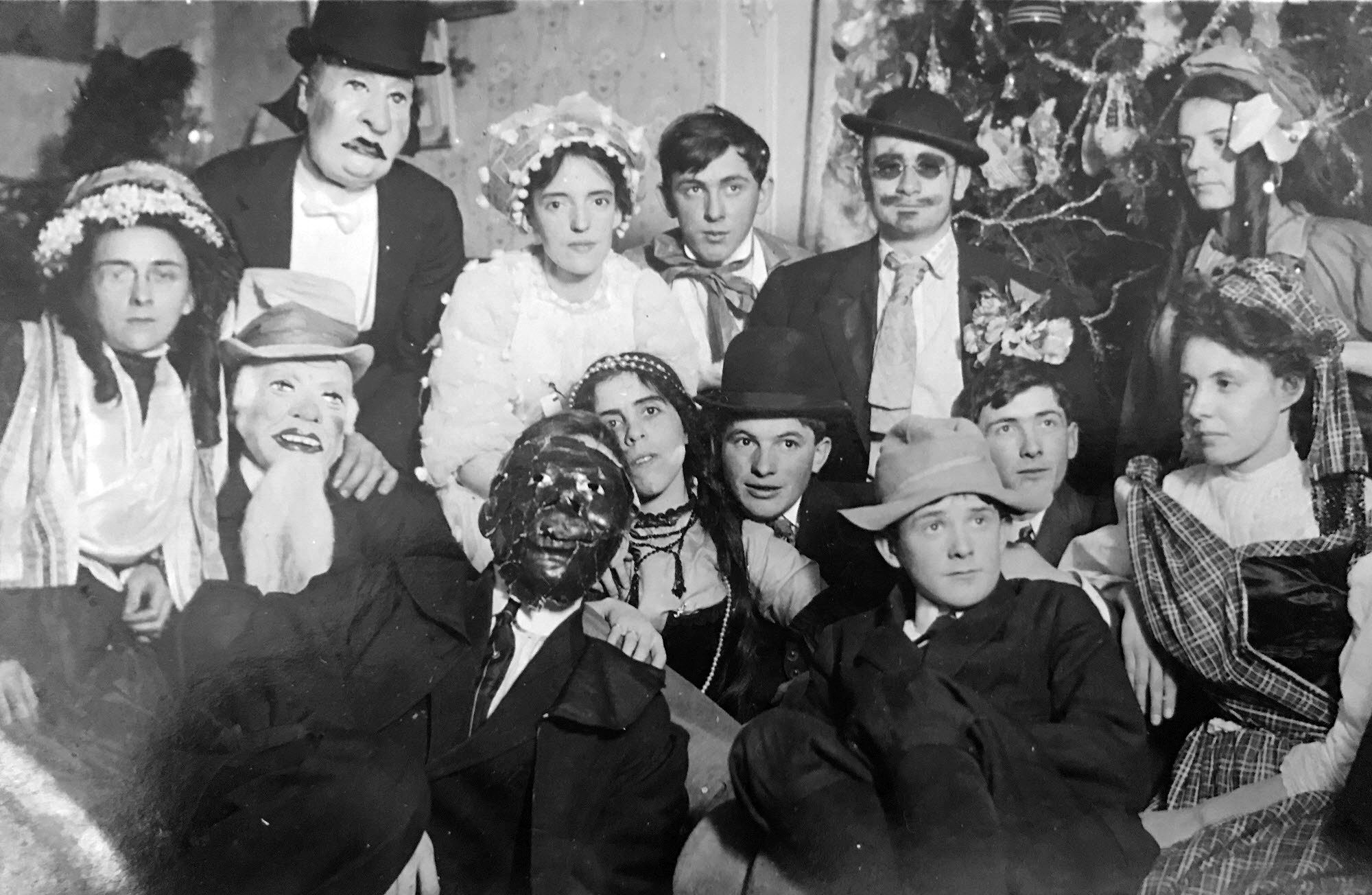
This photo captures a moment from a Halloween gathering over 100 years ago. Photo by Lewis Reed
Any sort of Halloween festivities demanded some sort of refreshment. In addition to traditional pumpkin pies and molasses cookies, a suggested dish to serve at Halloween parties was a Halloween salad.

Halloween Pranks: Witches and goblins, ghosts and mischief-making youngsters were permitted to enjoy all the Halloween revelry they liked … BUT DON’T THROW FLOUR. Yes, apparently in the early 1900s, there wasn’t much to do for entertainment, so kids would knock on doors on Halloween night and throw flour at whoever answered. To the modern observer, some of the traditions of Halloween 100 years ago are downright bizarre.
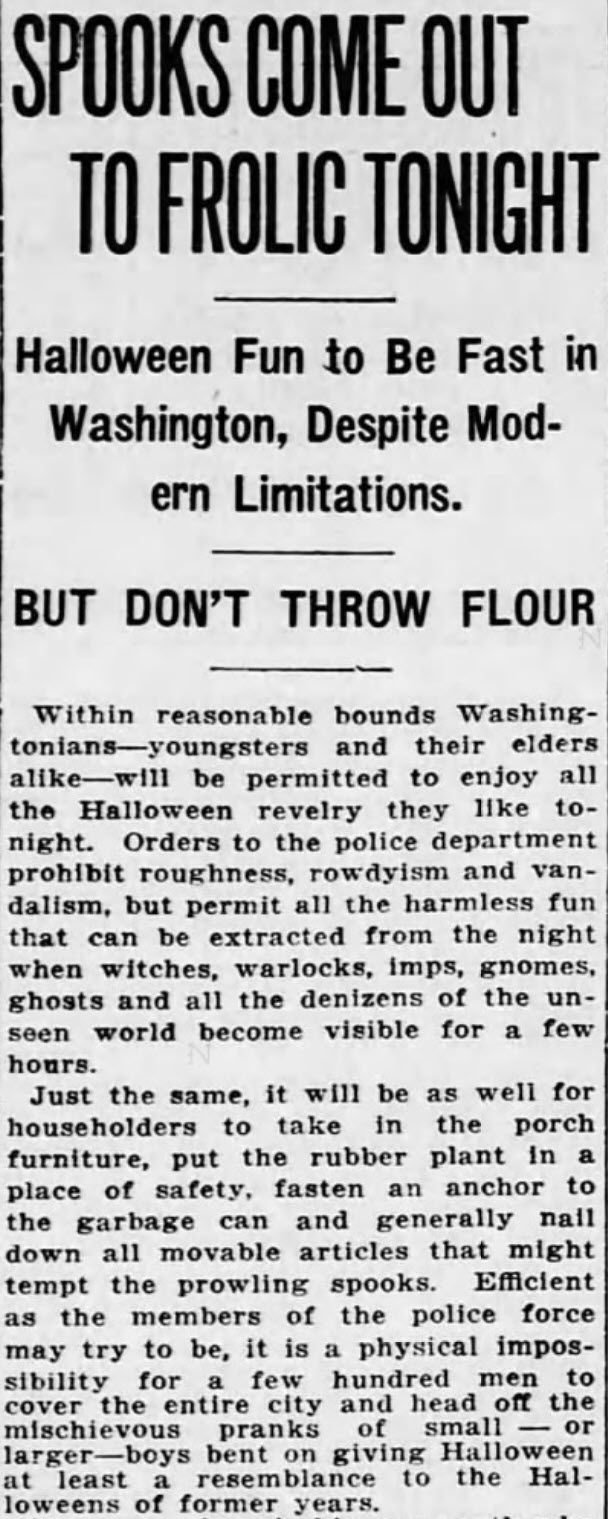
The Evening Star, October 31, 1916
Halloween Parades: Halloween parades actually began because pranks and mischief had gotten out of control. By 1920, there was a push to turn Halloween into a holiday centered around community gatherings and festive Halloween parades, rather than mischief.
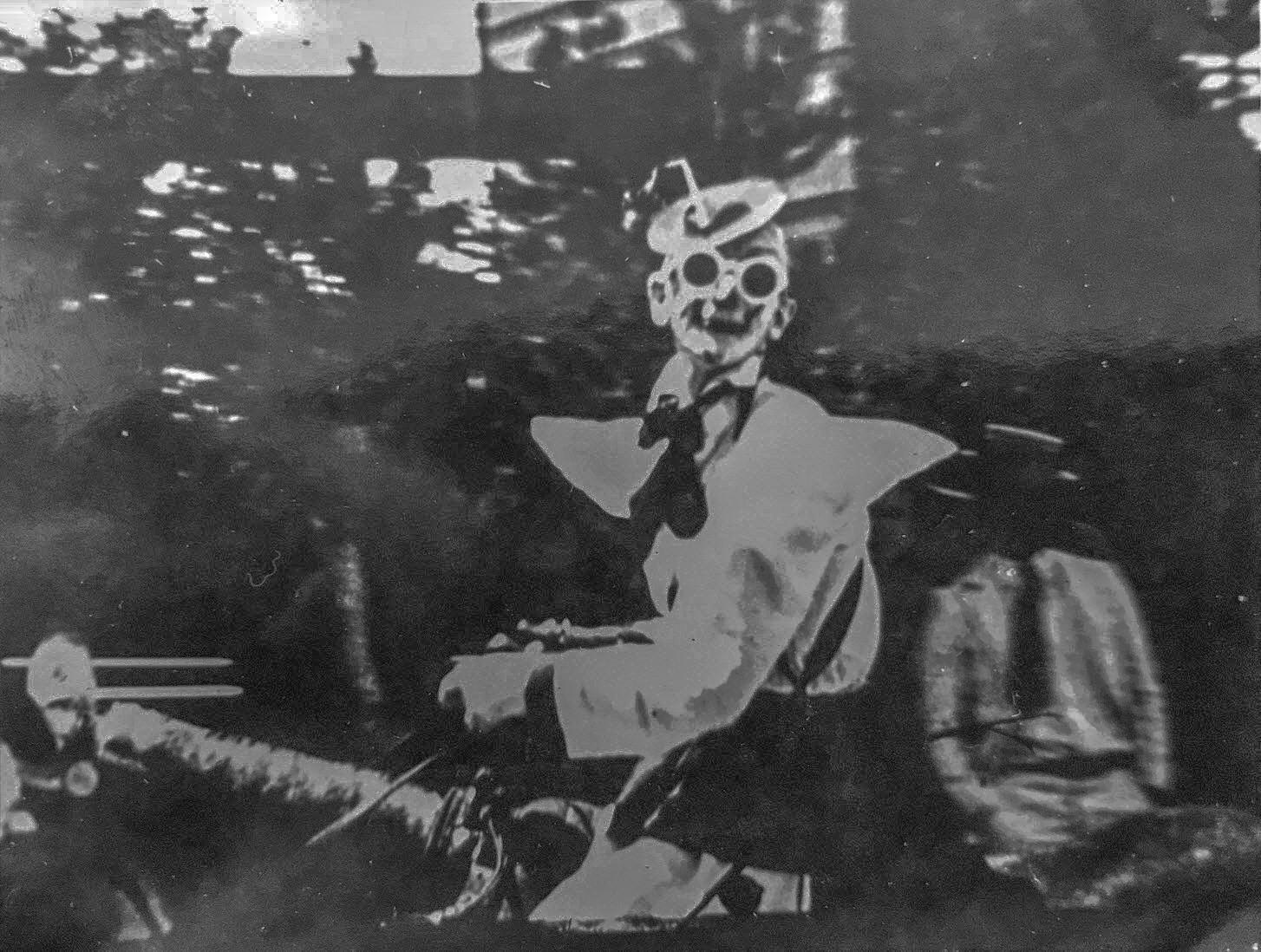
There is something undeniably creepy about this clown in sunglasses riding on a horse in a Halloween Parade. Location is unknown. Photo by Lewis Reed
Wishing all my friends, followers, and visitors of this blog a very safe and happy Halloween!
The Legendary Lake House Hotel of Horror, Then & Now
With Halloween just around the corner, I thought it would be fun to feature a photograph that Lewis Reed took of the Saylorsburg Lake House Hotel, now the site of Hotel of Horror. The aging Lake House Hotel in Saylorsburg, Pennsylvania, once a vibrant Poconos retreat, was a popular hotel for the region’s tourists who were looking for fun on nearby Saylors Lake. During the hotel’s heyday, its staff was booking rooms a year in advance. Today, the former hotel’s fame is generated from its annual Halloween haunted-house attraction.
Lake House Hotel (THEN): The legend of the Lake House Hotel spans more than two-hundred years. According to local folklore, during World War II, many of the employees at the Lake House were called to assist in the Pennsylvania National Guard, leaving the local asylum with one lone security guard to watch over the entire building. The inmates escaped, made their way to the hotel and took it over. The insane patients performed experiments on the guests. What was once a renowned resort for the rich and famous, became a torture chamber.
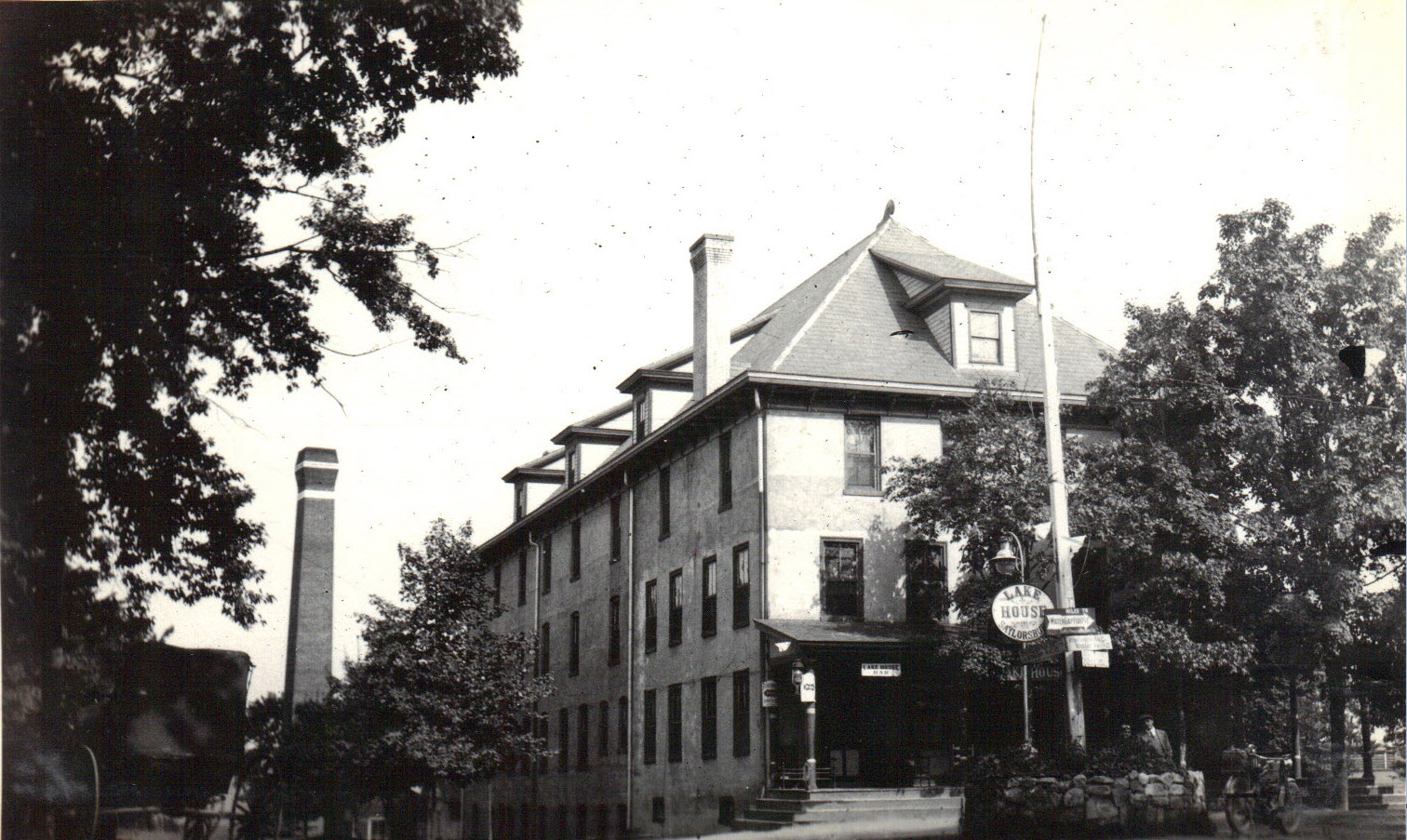
Saylorsburg Lake House Hotel. Photo taken by Lewis Reed, 1915.
Hotel of Horror (NOW): The hotel was purchased in 1990 and turned into an Antique Co-Op, and then in 1992 saw its first haunted house attraction. This 2021 season will celebrate the 29th year that the Hotel of Horror has been fascinating and horrifying legions of fans from the far reaches of the United States and even internationally. To all the readers of this blog: Have a spooky, enjoyable and very safe Halloween!

Welcome to The Hotel of Horror, The Pocono Mountains Premier Haunted House Attraction

A Fun Photograph of Early Rockville: Then & Now
It’s always amazing to look back at the past and see how everything we know today once was. This is exactly why photography is one of the most brilliant inventions ever created – it has documented so many epic moments over the years, and provides the perfect portal to step back in time for just a few moments. In this special “Then & Now” feature, I have combined one of Lewis Reed’s original photograph’s for “then” and paired it with a Google composite image for “now”.
St Mary’s Catholic Church (THEN): This fun and interesting photograph taken by Lewis Reed is one of my favorites. The photo shows William Beall in his 1915 Pullman in front of old St Mary’s Church and his younger brother Vernon on horseback “towing” him to Reed Brothers. The photo was taken from in front of Lewis Reed’s Rockville Garage which was directly across from St Mary’s Church. Several of the Beall family were original employees at Reed Brothers, including: Leonard Beall (paint/auto body shop), Otis Beall, Walter (Bud) Beall, and Mary Anna (Slater) Beall (Bookkeeper). Bud and Otis Beall were two of Reed Brothers’ original Gulf Gasoline Station attendants.
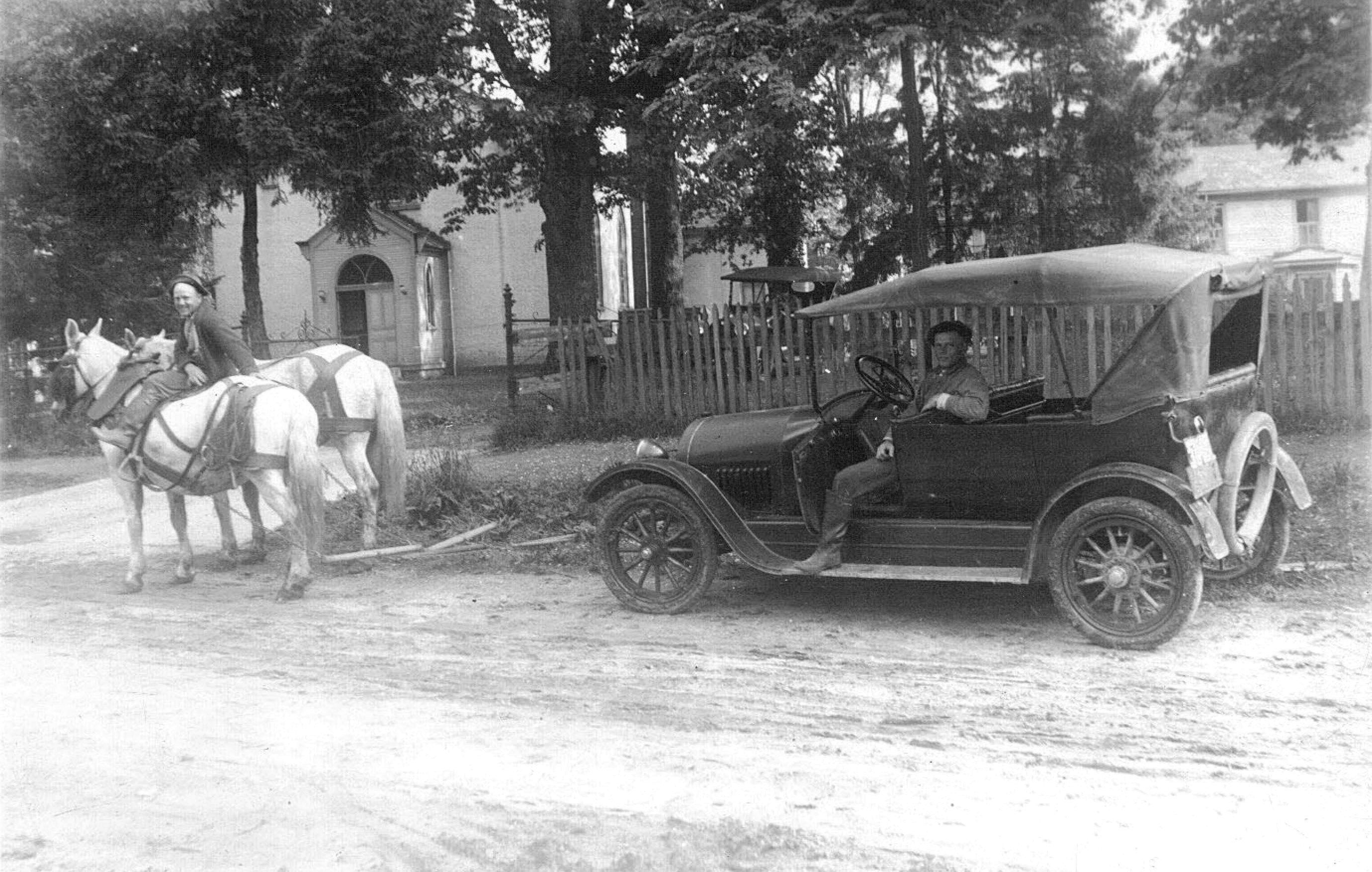
Early transportation powered by true “horsepower”. Photo taken by Lewis Reed, 1915
St Mary’s Catholic Church (NOW): Today, the church overlooks the same intersection of roads now called Veirs Mill Road and Rockville Pike. With the 1950s addition of Hungerford Drive as a bypass to Rockville’s commercial street, this is a busy intersection. It is arguably the symbolic cross-road for the county, and locals refer to it as “the mixing bowl” for its unconventional configuration and heavy volume of traffic. The church’s prominent location and its connection to author F. Scott Fitzgerald, who is buried in its cemetery, contribute to St. Mary’s status as a landmark in Rockville.
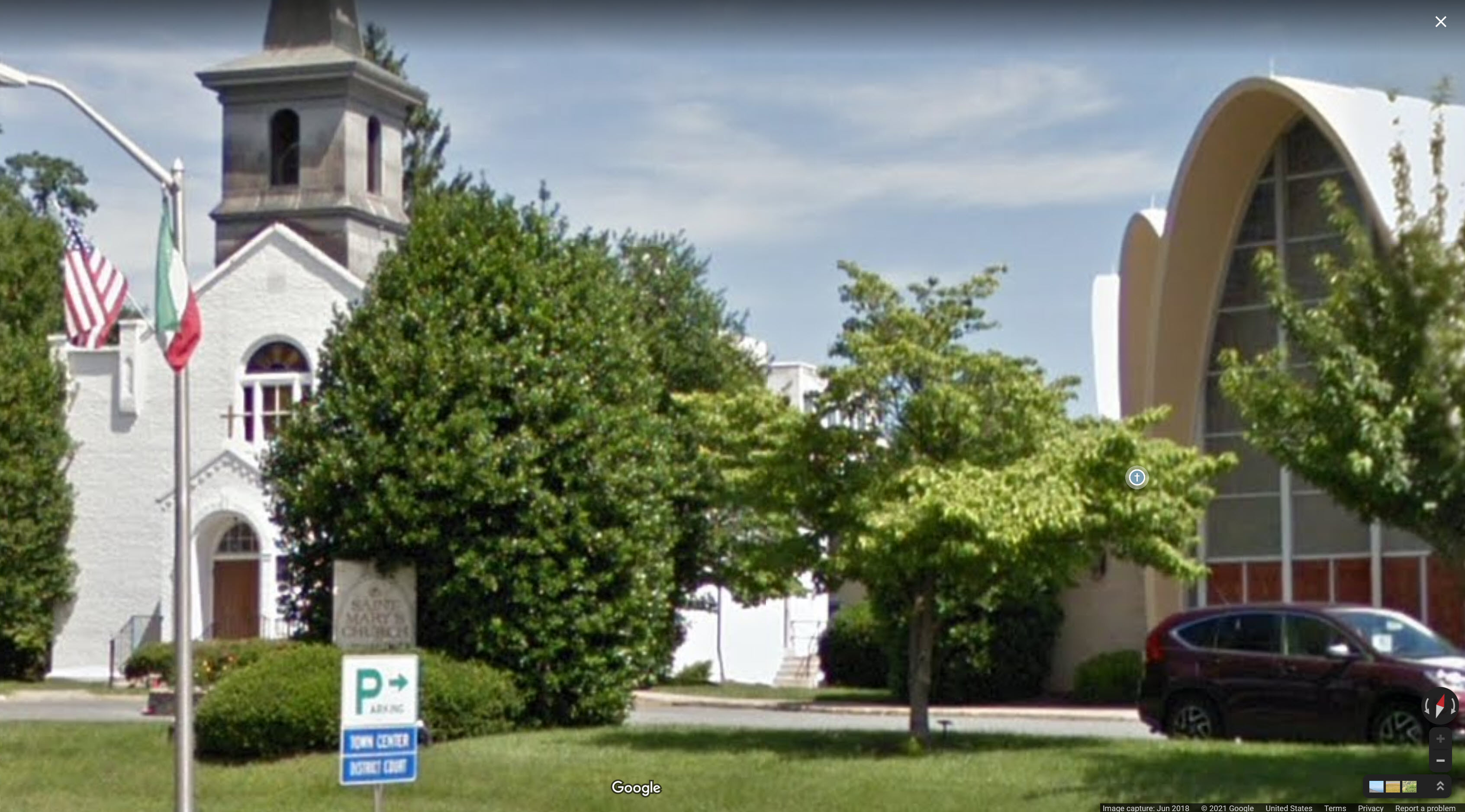
St Mary’s Catholic Church, Google Image, 2021
Books

Related Resources


Copyright Notice

Reed Brothers Dodge History (1915-2012) by Jeanne Gartner is licensed under a Creative Commons Attribution-NonCommercial 3.0 Unported License.
 Reed Brothers Dodge History 1915 – 2012
Recent Comments