
The First Plymouth was Introduced by Chrysler on This Date in 1928
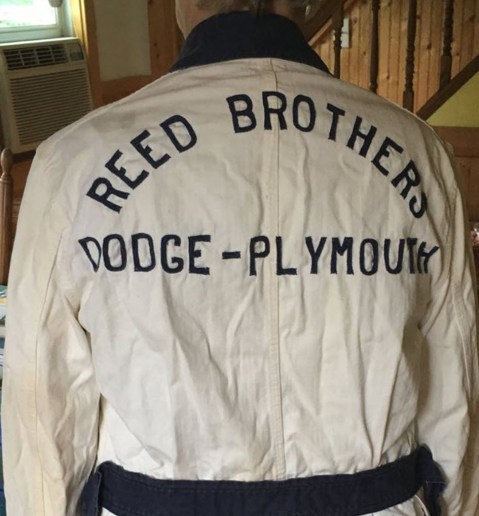
Plymouths were sold at Reed Brothers from 1930-1969.
The first Plymouth automobile was introduced on July 7, 1928. Plymouth was Chrysler Corporation’s first entry in the low-priced field, which at the time was already dominated by Chevrolet and Ford. Plymouths were actually priced slightly higher than their competition, but offered all standard features such as internal expanding hydraulic brakes that the competition did not provide. While the original purpose of the Plymouth was to serve a lower-end marketing niche, during the Great Depression of the 1930s, the marque helped significantly in ensuring the survival of the Chrysler Corporation in a decade when many other car companies failed. Beginning in 1930, Plymouths were sold by all three Chrysler divisions (Chrysler, DeSoto, and Dodge).
Plymouth sales were a bright spot during this dismal automotive period, and by 1931 Plymouth rose to the number three spot among all cars. Plymouth almost surpassed Ford in 1940 and 1941 as the second most popular make of automobiles in the U.S.
In 1957, Virgil Exner’s new Forward Look design theme, produced cars with much more advanced styling than Chevrolet or Ford. 1957 total production soared to 726,009, about 200,000 more than 1956, and the largest output yet for Plymouth. However, the 1957–1958 Forward Look models suffered from poor materials, spotty build quality and inadequate corrosion protection; they were rust-prone and greatly damaged Chrysler’s reputation.
Most Plymouth models offered from the late 1970s onward, such as the Volaré, Acclaim, Laser, Neon, and Breeze, were badge-engineered versions of Chrysler, Dodge, or Mitsubishi models. By the 1990s, Plymouth had lost much of its identity, as its models continued to overlap in features and prices with Dodges. Plymouth’s product offerings and buyer appeal, and sales continued to fall.
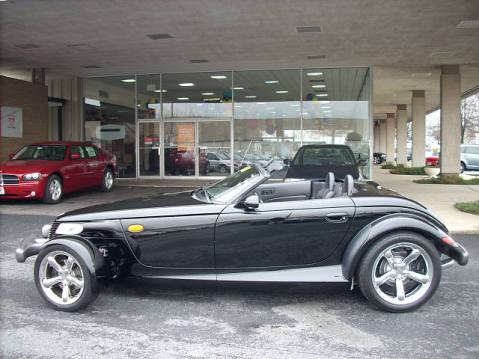
1999 Plymouth Prowler
By the late 1990s, only four vehicles were sold under the Plymouth name: the Voyager/Grand Voyager minivans, the Breeze mid-size sedan, the Neon compact car, and the Prowler sports car, which was to be the last model unique to Plymouth. The Prowler came about as part of Chrysler’s efforts (the last as it turned out) to differentiate Plymouth from the rest of its lineup in hopes of keeping the brand alive. It was hoped that it would be received well enough to garner some attention, some of which might spill over into some of their other models.
Plymouth rarely exceeded 200,000 cars per year after 1990. Consequently, DaimlerChrysler decided to drop the make after a limited run of 2001 models. This was announced on November 3, 1999.
Look Out! Early 20th Century Reckless Driving
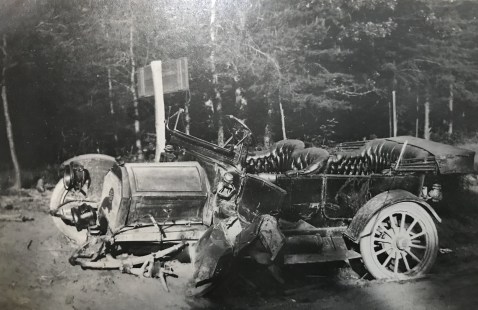
Car Wreck. Photo by Lewis Reed, ca. 1920
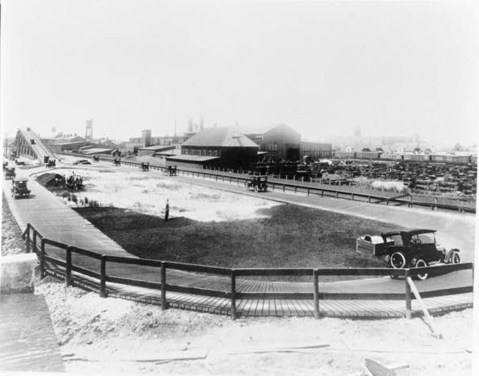
Dodge Test Track 1915
The clipping is from the Bismarck Daily Tribune, April 21, 1915 newspaper.
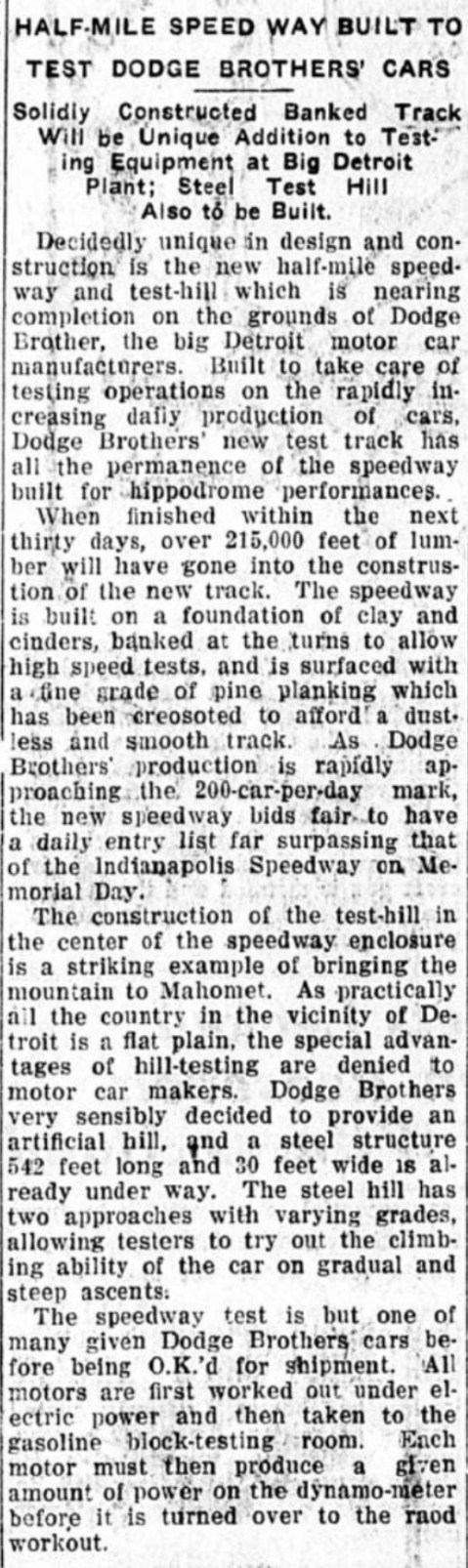
Bismarck Daily Tribune April 21, 1915
November 14, 1914: First Dodge Automobile Built

Horace Dodge (left, rear) and John Dodge (right, rear) take delivery of the first Dodge automobile on Nov. 14, 1914.
One hundred and four years ago on this date –November 14, 1914 — the very first Dodge car, “Old Betsy”, rolled off the assembly line. On that day, the Dodge Brothers (Horace and John) were photographed riding in the rear seat of the first car to bear their last name. It cost $785, had a 110-inch wheelbase, and was powered by an L-head 4-cylinder engine that proved so reliable it was continued until 1920 with very little modification. Total production for 1914 was a mere 249 touring cars. The following year. Dodge offered a two-passenger roadster which also sold for $785 and the plant went into full production.
According to “The Dodge Brothers: The Men, the Motor Cars, and the Legacy” by Charles K. Hyde, here’s the full story:
The widely accepted history of the initial production of early Dodge Brothers automobiles in November 1914 is at odds with much of the evidence about the earliest Dodge Brothers cars. Automotive historians have thought that the first production car, later named “Old Betsy,” came off the assembly line at the Hamtramck factory on 14 November 1914. Guy Ameel, superintendent of final assembly for Dodge Brothers since the start of automobile production, served as John and Horace’s chauffeur that day. With the brothers in the back seat, Ameel stopped the first Dodge Brothers car in front of John Dodge’s mansion on Boston Boulevard in Detroit and a photographer recorded this important moment.
“Old Betsy” was more likely an experimental prototype car assembled several months before 14 November 1914 and not a production car at all…

The Dodge Brothers
The Dodge Brothers began an aggressive advertising campaign to promote their new automobiles and to attract potential dealers to sell their cars. Few people jumped onto the Dodge Brothers bandwagon earlier than Lewis Reed, and not many have lasted longer.
Lewis Reed received his franchise to sell Dodge Brothers Motor Cars from John and Horace Dodge; less than one year after “Old Betsy” rolled off the assembly line. He was just 27 years old. Since then, the business grew and transformed into the oldest Dodge dealership in Maryland history and one of the oldest in the entire nation.
35 Years Ago Today, Chrysler Invented the Minivan, And Changed History
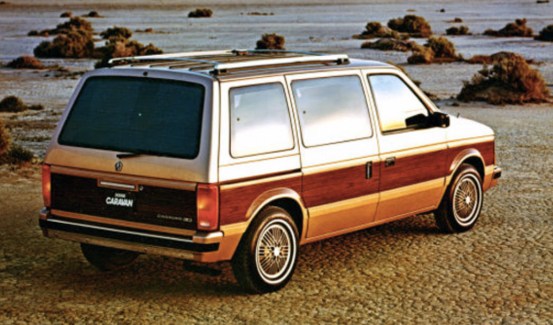
1984 Dodge Caravan
On November 2nd, 1983, the world’s first minivan rolled off of Chrysler’s assembly line. It was the vehicle that saved Chrysler from financial doom. When Ronald Reagan was president — the economy was far from robust and Chrysler was on death’s doorstep. Chrysler needed a home run, and Lee Iacocca, who was running the company at the time, gambled that the first wave of baby boomers who were starting families would likely want something roomier and far more practical than the traditional family hauler, the station wagon. Iacocca practically bet the company on the fact that a new automotive segment dubbed “the minivan” would catch on with the boomers. It was a $660-million gamble, only made possible by money acquired earlier from Washington’s $1.5-billion bailout of Chrysler.
Sales improved dramatically with the debut of the well-received K-car platform and the introduction of the Dodge Caravan and Plymouth Voyager. Chrysler paid off government loans seven years early. Reed Brothers successfully navigated through numerous Chrysler setbacks during the 1970’s and 80’s, including the first Chrysler Bailout and resurgence under Lee Iacocca.
The 1984 Dodge Caravan was designed specifically with families in mind. The early design looked like station wagons at the time, featuring a wood panel along the sides. The Caravan was essentially a big, roomy box on wheels, utilizing maximum form efficiency — small on the outside, huge on the inside.
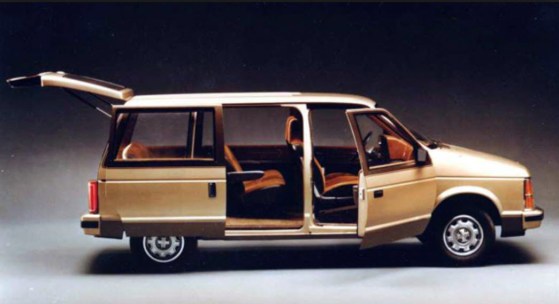
1984 Dodge Caravan
The other distinguishing features of the new minivan were its car-like features – notably including power windows, comfortable interiors, a nice dashboard, and front-wheel drive. These also explain the appeal of the vehicle. Not only did it fit in a garage like a car, but it actually drove like a car, while also providing plenty of room for the kids and luggage and giving mom a nice, high view of the road. The sliding door made it easy to for people to quickly enter or exit the vehicle and, with its lack of hinges, the sliding door was seen as a safer option for children.
After The 1984 Dodge Caravan was released, it became an immediate success. The minivan helped bring the company back from the brink of bankruptcy, and it reinvigorated the automotive market. Many buyers had to wait weeks to have their orders filled because there was so much demand. Dodge created an entirely new market with the minivan, and other models soon followed suit.
Lee Iacocca, the mastermind of the minivan era, presented this 12,000-mile Voyager at the assembly line in Windsor, Canada on November 2, 1983. A truly game-changing vehicle…
Rockville Garage Hudson Motor Car Ads (1919-1920)
The advertisements in this post do more than just simply pitch a product, they capture a moment in history. A moment in history when Lewis Reed’s Rockville Garage represented several franchise nameplates along with Dodge, including Oldsmobile, Hudson, and Essex. The Hudson and Oldsmobile were sold at Reed Brothers from roughly 1917 through 1923.
Hudson introduced the Essex brand in 1919. The Essex was intended to compete with Ford and Chevrolet for budget-minded buyers. The Essex offered one of the first affordable sedans and by 1925 the combined Hudson and Essex sales made Hudson the third largest automobile manufacturer in the United States.
Prior to the advent of television and radio advertising, print media was the most popular form of advertising and most car ads were black and white. The following ads distributed by the Lambert Automobile Company in The Baltimore Sun newspaper advertises the Hudson and Essex automobiles.
In addition to franchise car dealers, there were also factory stores. In the early days, the factory stores did the national advertising. A factory store, also known as a branch store or branch dealer, was a dealership owned and run by the manufacturer. A list of area Dealers was placed in fine print at the bottom of the ads. Rockville Garage, Rockville, Md, is highlighted in yellow on each of these ads.

The Baltimore Sun 2 March 1919
By the 1920s, Hudson and Essex Motor Car advertisements featured elegant architectural borders with static drawings of their cars; some ads never pictured people during this period.

The Baltimore Sun 30 May 1920

The Baltimore Sun 29 Aug 1920
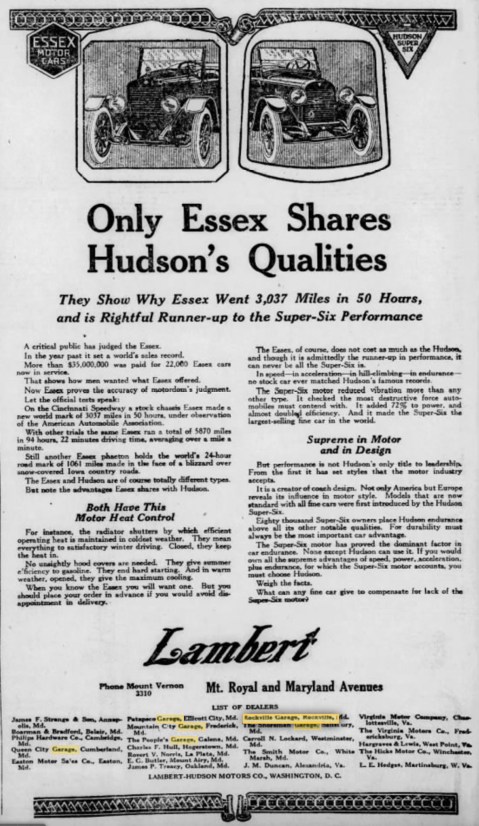
The Baltimore Sun 25 Jan 1920
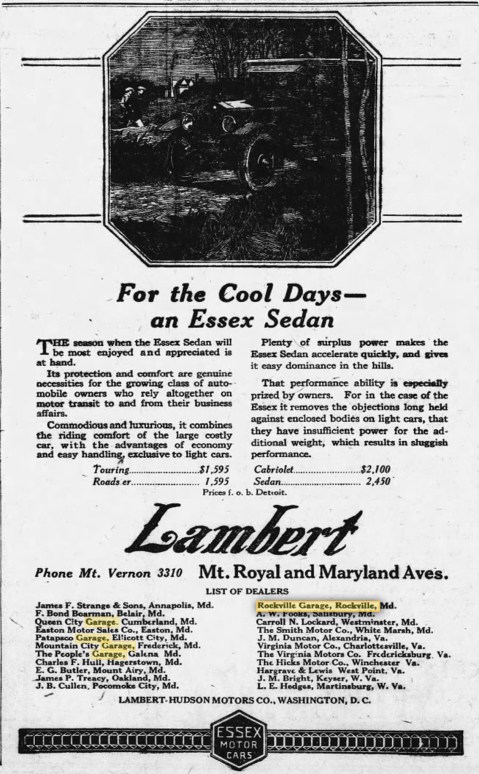
The Baltimore Sun 24 Oct 1920

The Baltimore Sun 21 Nov 1920

The Baltimore Sun 17 Oct 1920

The Baltimore Sun 13 Jun 1920

The Baltimore Sun 10 Oct 1920

The Baltimore Sun 1 Feb 1920

The Baltimore Sun 3 Oct 1920
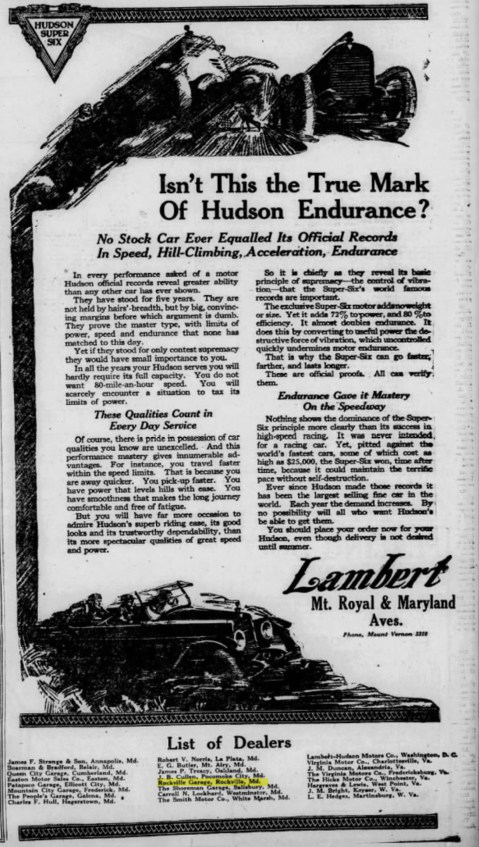
The Baltimore Sun 28 Mar 1920
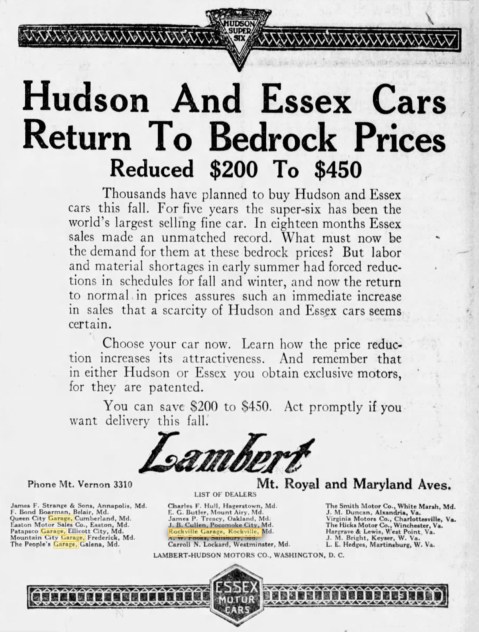
The Baltimore Sun 30 Sep 1920

The Baltimore Sun 5 Mar 1922
A lot of old newspapers have found their way online and with digital archival, it’s easier to take a trip back through old newspapers than ever before. These ads were found on NewspaperARCHIVE.com, the largest historical newspaper database online.
Books

Related Resources


Copyright Notice

Reed Brothers Dodge History (1915-2012) by Jeanne Gartner is licensed under a Creative Commons Attribution-NonCommercial 3.0 Unported License.
 Reed Brothers Dodge History 1915 – 2012
Recent Comments