
Thomas Kelley’s Pumpkin Patch
When the leaves begin to change and the air takes on a chill that means it’s time for one thing – pumpkin picking! This is a rare photograph of three well-dressed men pumpkin picking in Thomas Kelley’s field of pumpkins in Pleasant Hills, circa early 1900s. Tom Kelley farmed much of the land around the Pleasant Hills homestead and was famous for his “Kelley Corn” farm wagon of fresh dairy produce during the summer months, as well as the corn that fed visitors to the Montgomery County Fair each August and, of course, his pumpkin patch in the fall.

Pumpkin picking in Thomas Kelley’s Pumpkin Patch, Darnestown, Maryland circa. early 1900s. Photo by Lewis Reed
Then & Now: Monrovia Post Office
This post is a continuation of a series of “Then & Now” images from Lewis Reed’s Photo Collection alongside photographs of how they appear today. Lewis Reed worked hard to preserve a visual history of Montgomery County, Maryland and surrounding areas long before automobiles were even around. As early as 1905, he toured on his motorcycle across the states of Maryland, Virginia, and Washington, D.C. and took photographs of many historic locations. Taken approximately 114 years apart, you can see how the Post Office of Monrovia Maryland looks almost the same from over a century ago.
Monrovia Post Office (THEN): On November 15, 1901, the Monrovia Post Office was one of the first places in the U.S. to participate in the Rural Free Delivery (RFD) experiment established by the U.S. Post Office. RFD was established on an experimental basis in 1896. In 1902, it became an official part of the Post Office Department’s services.
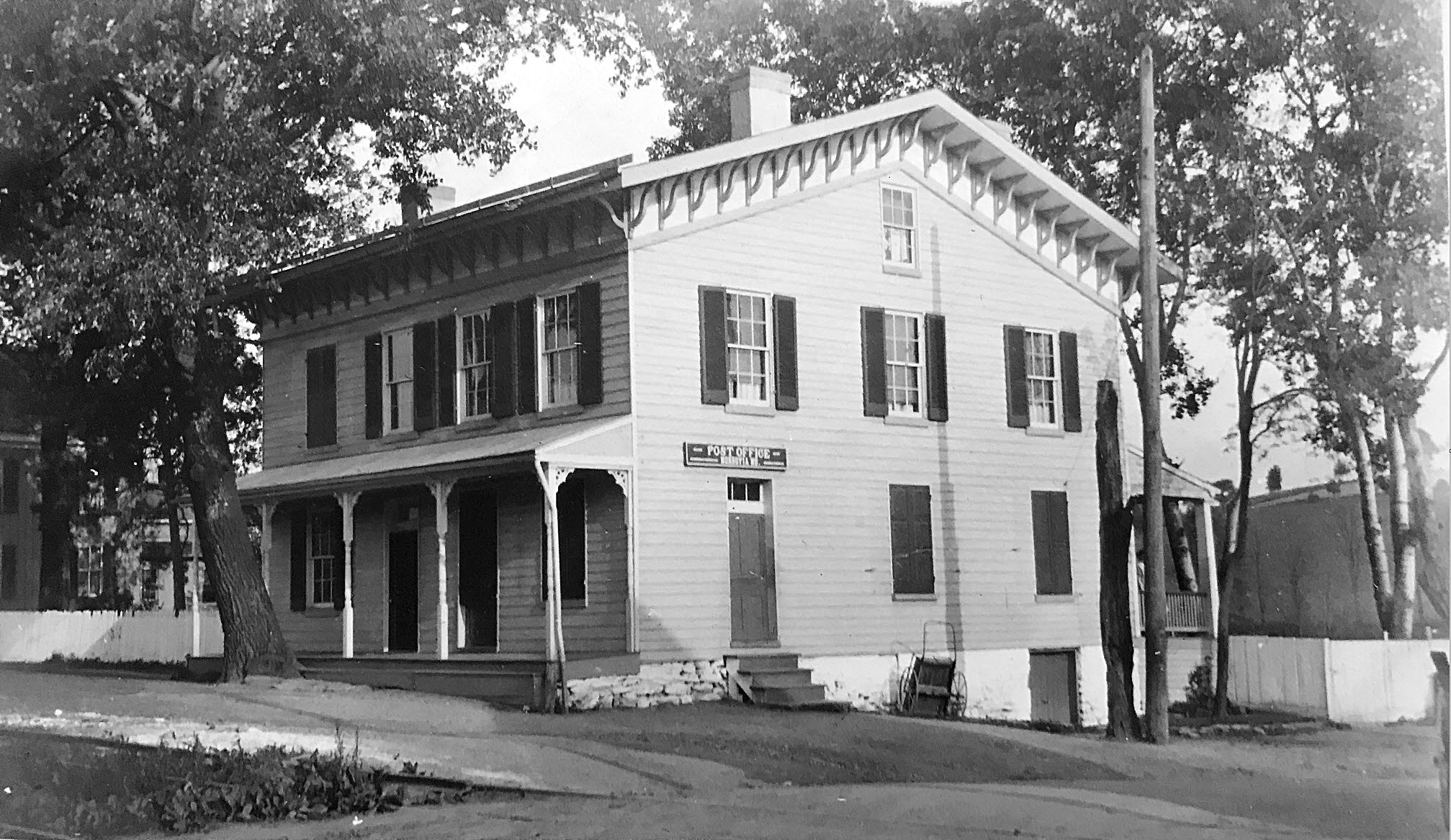
Monrovia Post Office, 1910. Photo by Lewis Reed
Monrovia Post Office (NOW): The little village of Monrovia is today not much more than an underpass, a post office, and a few abandoned buildings. The old post office building is now an Office Park area in Monrovia.
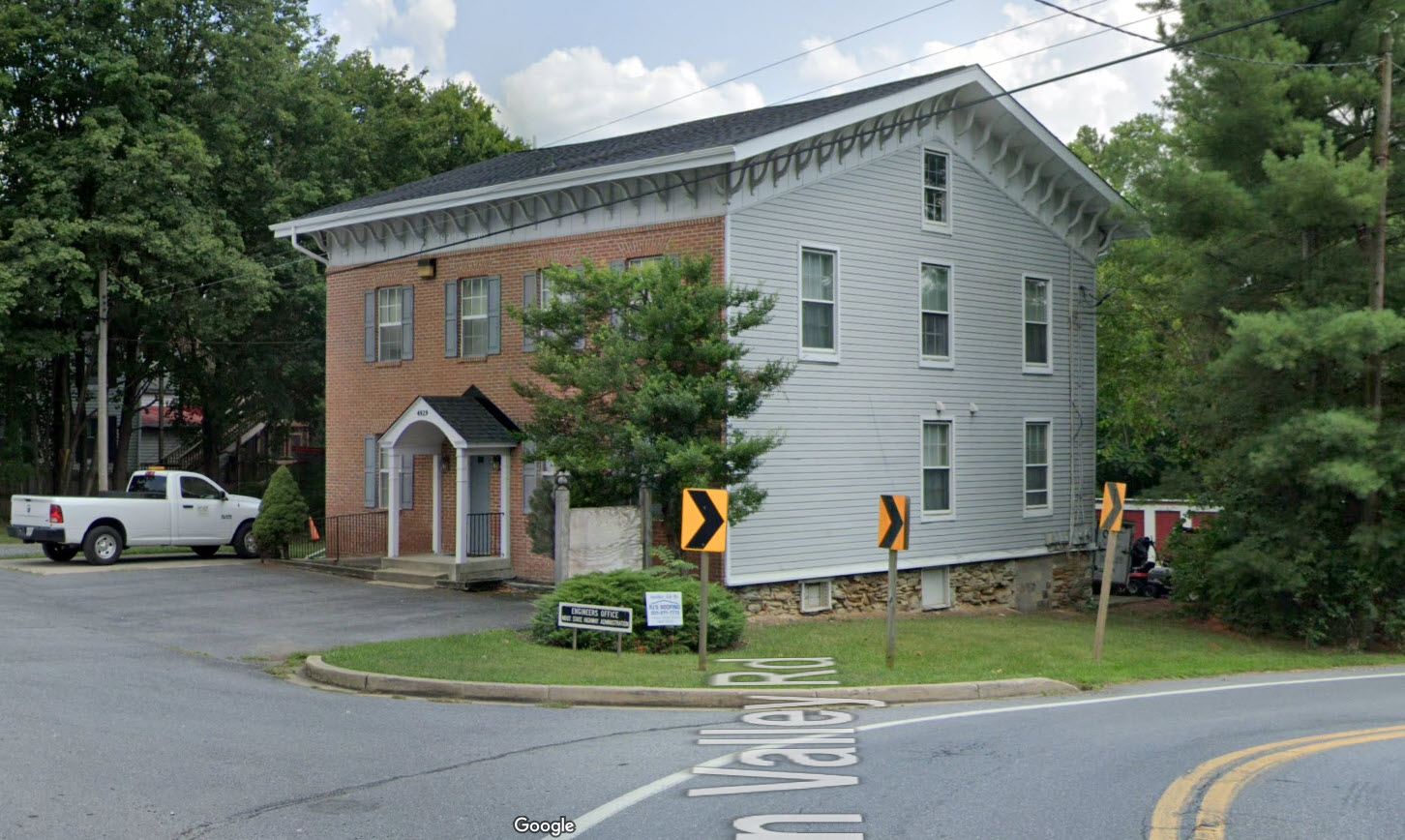
This google image of Monrovia Post Office today is still very recognizable.
Source: Wikipedia
First RDF Maryland
Montgomery History Online Exhibit: Reed Brothers Dodge

Opened September 24, 2024
Curated by Jeanne Gartner and Sarah Hedlund
Montgomery History has unveiled a new online exhibition titled “Reed Brothers Dodge – Montgomery County’s Oldest Dodge Dealership.” Officially launched on September 24, 2024, the exhibition was co-curated by Jeanne Gartner, author of the Reed Brothers Dodge History blog and co-owner of the former dealership, in collaboration with Sarah Hedlund, Montgomery History’s Librarian and Archivist.
This digital exhibition presents a comprehensive narrative of Reed Brothers Dodge, tracing its evolution from its founding in the early twentieth century through its decades of service to the Montgomery County community. Organized into distinct historical periods, the exhibition highlights rare artifacts, photographs, and memorabilia; offering insights into not only the dealership’s operations but also broader cultural contexts such as automotive service, local sports, and mid-century fashion. The full exhibition is available online at https://sites.google.com/view/reedbrothersdodge/home
Jeanne Gartner, granddaughter of Lewis Reed, founder of Reed Brothers Dodge, serves as the curator and historian behind the Reed Brothers Dodge History blog. Honored with the 2016 Arthur M. Wagman Award for Historic Preservation Communication from Peerless Rockville, the blog functions as a living digital archive that preserves the dealership’s enduring legacy and its integral role in Montgomery County’s development. Since its debut in April 2012, the site has garnered more than half a million views, documenting over a century of the family business’s history, community engagement, and contributions to the American automobile industry. Drawing from Lewis Reed’s extensive photographic collection and business records, Gartner’s work offers a richly detailed portrait of local enterprise, early transportation, and the entrepreneurial spirit that helped shape both the region and the broader American story.
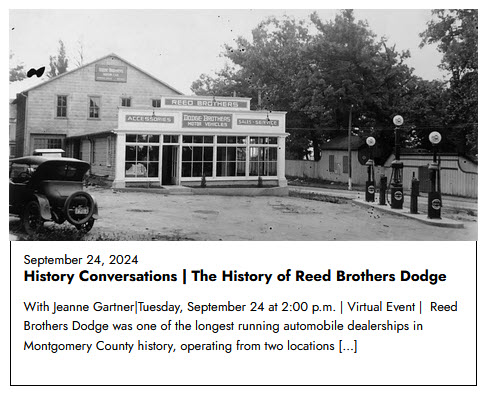
History Conversations – The History of Reed Brothers Dodge
History Conversations | The History of Reed Brothers Dodge
with Jeanne Gartner, Blog author
Tuesday, September 24 at 2:00-3:00 p.m. | Virtual Event |
Super honored to be a featured speaker for this Montgomery History event taking place on Zoom next Tuesday, September 24 at 2:00 pm. The History of Reed Brothers Dodge is a personal history for me, as well as community history for Montgomery County, Maryland and the city of Rockville. Click the link for free registration https://montgomeryhistory.org/event/history-conversations-the-history-of-reed-brothers-dodge/
My PowerPoint presentation is approx 45 minutes in length and follows the dealership’s 97-year historic timeline. The presentation features a unique collection of rare photographs taken by the dealership’s founder, Lewis Reed, and highlights how Reed Brothers Dodge came into being, and how the company overcame the inevitable changes and challenges throughout almost a century of being in business. Hope you can join me!
Can’t Find Your Car? Frederick Fair Parking Lot, 1914
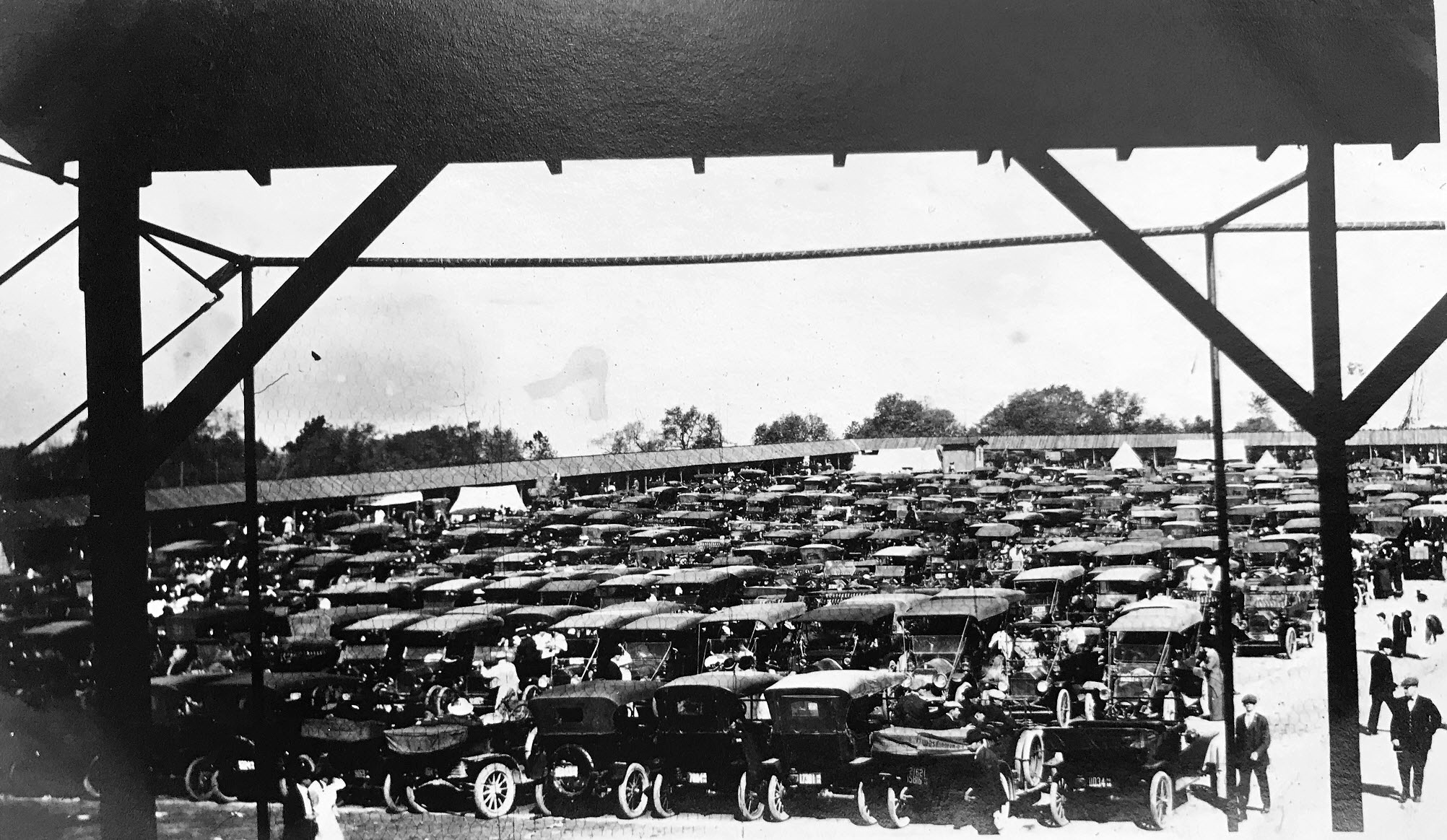
This fascinating scene of hundreds of cars parked in the Frederick Fair parking lot was taken by Lewis Reed in 1914. What is fascinating to me is, with all of these early cars painted in black, how on earth would you find your car?
Can’t find your car? Apparently not a new phenomenon as seen in this 1914 photo of the Great Frederick Fair parking lot, especially since the majority of cars were of only one paint color, your basic black.
This week (September 13-21) marks the 162nd edition of the Great Frederick Fair, the largest and greatest county fair in the State of Maryland. There have been many changes since the first fair was held in 1822 when it was known as the Cattle Show and Fair: that was a two-day event, now it’s nine days. The location has changed and so has the name. Today, the Frederick County Fair is officially named the Great Frederick Fair. It’s been held in May, October and November, but now (and for many years) takes place in September — rain or shine.
Fair entertainment has certainly evolved over the years. In 1888, May Lillie, an “expert girl shot with a rifle” from the back of a running mustang, performed. In the early 1900s, acrobatic bears and monkeys, high-wire acts and vaudeville performers took the stage. In 1950, the highlight of the “Irish Horan and the lucky Hell Drivers” show was a “stock convertible catapulted from a giant cannon.” In 1965, it was Jack Kochman’s Hell Drivers performing stunts with cars.
The Thursday of the 1911 fair was noted as a record day with 15,000 people in attendance, 100 autos and 1,000 carriages, according to “The Great Frederick Fair” book. Today, fair attendance can range from 210,000 to 250,000 people during the nine-day fair.

Newspaper ad advertising The Great Frederick Fair. THE DEMOCRATIC ADVOCATE OCTOBER, 1914
Source: Frederick News-Post
Books

Related Resources


Copyright Notice

Reed Brothers Dodge History (1915-2012) by Jeanne Gartner is licensed under a Creative Commons Attribution-NonCommercial 3.0 Unported License.
 Reed Brothers Dodge History 1915 – 2012
Recent Comments