
Derailed Trolley: Montrose Rd & Rt 355
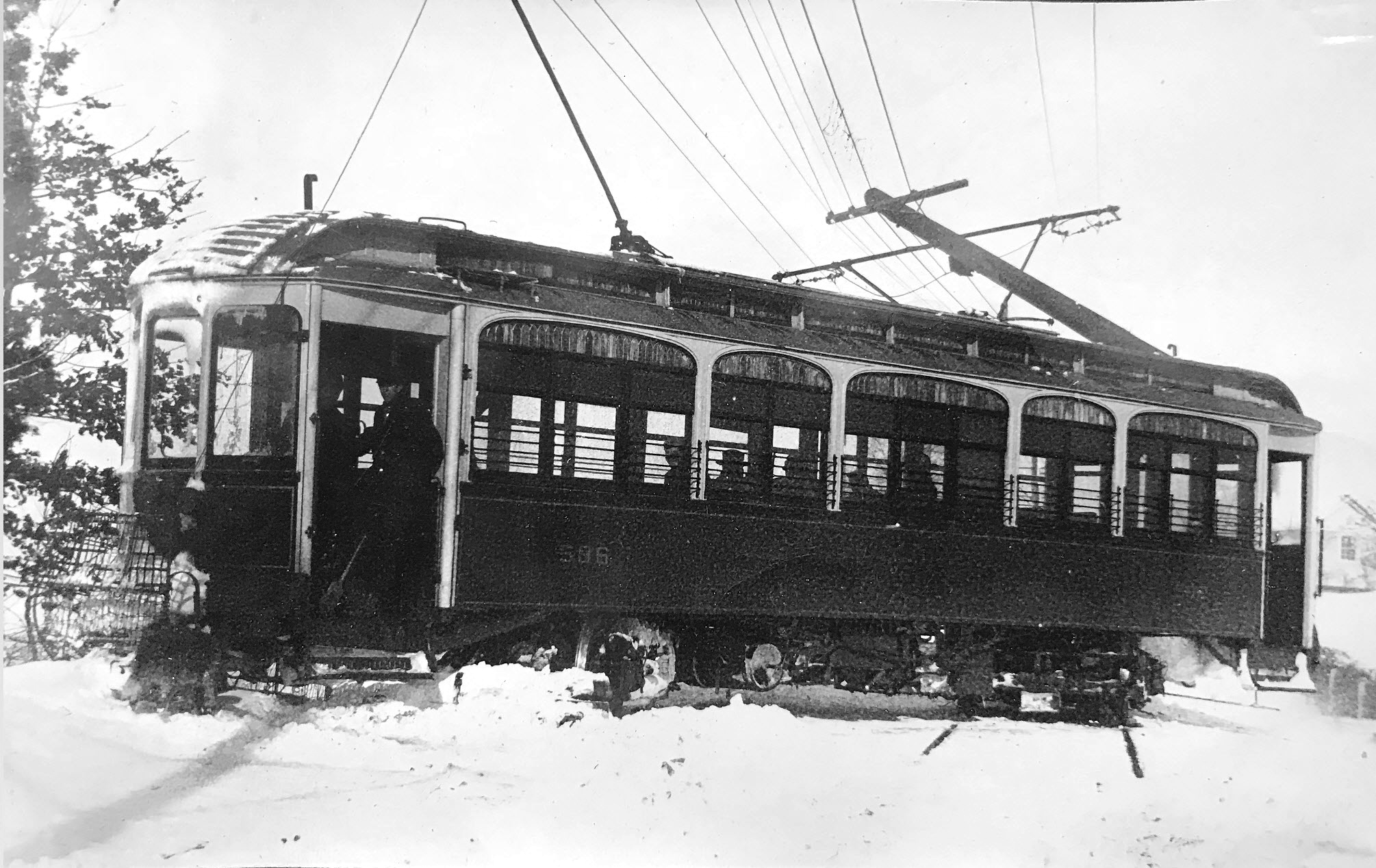
Derailed trolley at Montrose Road and Rockville Pike. Photo by Lewis Reed
In the early years of the 20th century, when electric trolleys were a lifeline for Montgomery County, a derailment near Montrose Road (today’s Rt 355) brought travel to a sudden halt.
In populated urban areas, trolley cars kept speeds to 12 mph (6 mph at intersections), but in open country they could get up to 40 mph. Traveling in snow was additionally hazardous, as evidenced by the trolley pictured in these photos, which derailed and plowed into a telephone pole at Montrose Road and Rockville Pike.
Lewis Reed was there to capture the accident from two different perspectives using a five-by-four box camera which produced images on a glass plate.
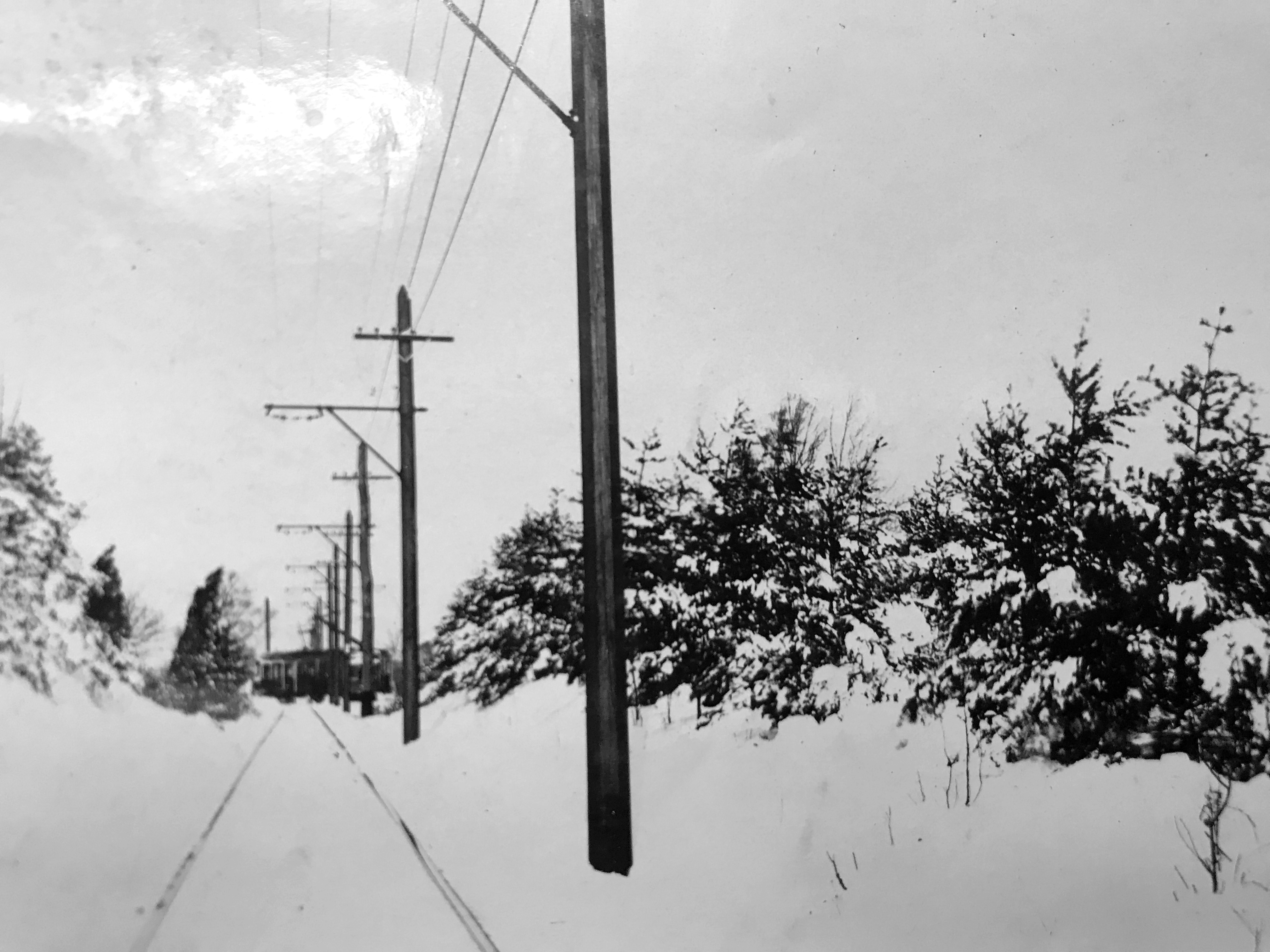
Viewed from a distance, the derailed trolley lies off the tracks as Lewis Reed records the scene.
Lewis Reed Photos: Rockville’s First Water Tower

1906 historic view of Rockville Maryland’s first pipestem water tower. (1897-1946)
Photograph by Lewis Reed, founder of Reed Brothers Dodge
This 1906 photograph taken by Lewis Reed depicts Rockville Maryland’s very first water tower. I wanted to share this photograph, because it offers a visual history for its role in the development of public utilities in the City of Rockville. My grandfather picked up the hobby of photography even before automobiles were around. He was a well-known photographer in the county and many of his early photographs are now part of the Montgomery County Historical Society photo archives.

View of Rockville Water Tower and Baltimore Road B&O Railroad Crossing circa 1909. Photo by Lewis Reed
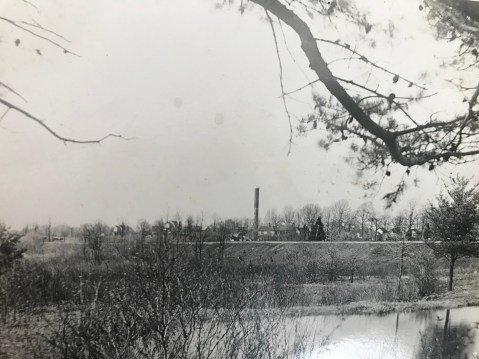
Another view of Rockville Water Tower. Photo by Lewis Reed
The pipestem tower was an element of the 1897 pumping station known as the “Rockville Electric Lights and Water Works,” located in Rockville Park and the future Croydon Park. In the 1890s, Rockville grew both as a resort and as a town. With substantial residential appeal, the need for services grew. In about 1899, Rockville got its first water tower at a cost of about $20,000. Its construction signaled the dawn of local municipal water service. Prior to the tower’s construction water in the city was primarily drawn from private wells. Concern for water quality in the 1880s led to the decision to develop a municipal system. The stand pipe was a typical shape for a water tower at the turn of the century. From this high point, water could be piped throughout the town. The chimney stack originally extended to a height of 50’, as documented in the Sanborn maps 1908, 1915.

Rockville Pump House, circa 1912. Photo by Lewis Reed
Built in 1879, the Pump House at Croydon Park is a historic building in Rockville and the site of the first municipal water supply. Once known as the “Rockville Electric Lights & Water Works.” the building was the City’s first public water system and supplier of electricity for street lights and private homes.
Sources:
National Register of Historic Places, Rockville Pumping Station
Peerless Rockville
Lewis Reed Photos: Rockville High School, 1911
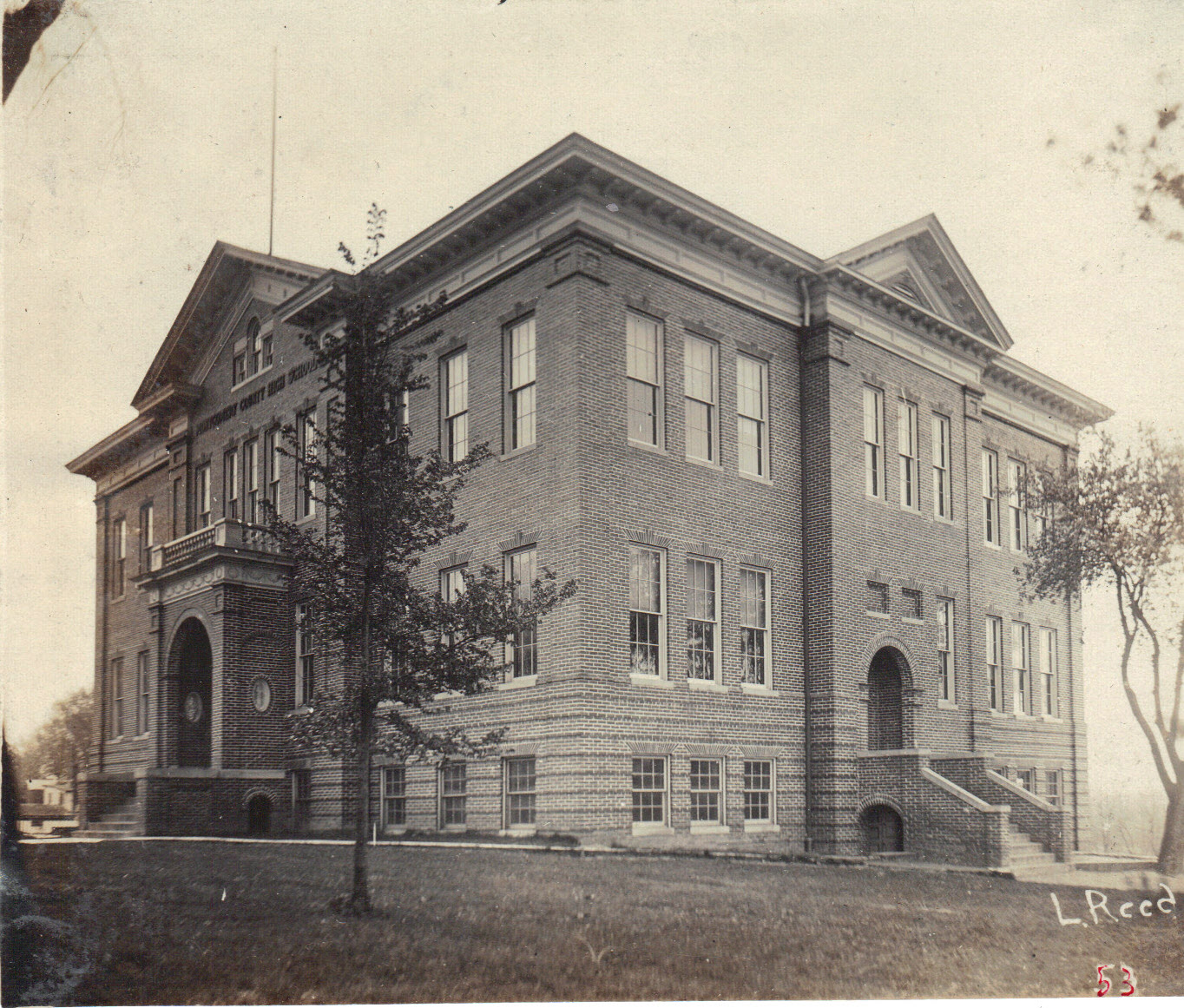
1911 Originally known as Montgomery County High School, later as Rockville High School. Located at corner of Monroe Street and E. Montgomery Avenue. Photo by Lewis Reed
Rockville High School was established in 1892, when the state Board of Education first allocated funds to local school to educate high school students. In the first State report of school statistics nine years later, the Rockville school was listed as enrolling 47 pupils. The first 12 graduates received their diplomas from “Rockville High School” in 1897.

Rockville High School, 1911. Photo by Lewis Reed
A new high school was constructed and opened for use in September 1905 on East Montgomery Avenue and Monroe Street. An addition was built in 1917, expanding the school to 19 classrooms. The school was renamed Richard Montgomery High School 1935.
Source: Richard Montgomery HS – MSA
Lewis Reed Photo: Rockville Courthouse 1914

Red Brick Courthouse 1914. Photo by Lewis Reed
This special post is a part of a new blog feature called, “Rockville’s Past Through the Lens of Lewis Reed”. It doesn’t have anything to do with Reed Brothers Dodge, but it does have a lot to do with it’s founder, Lewis Reed. With photography for a hobby, one that began even before automobiles were around, Lewis Reed had amassed an extensive collection of photographs from historical locations in Maryland, Washington, DC and Virginia.
This photograph was taken by Lewis Reed circa 1914. The Red Brick Courthouse was constructed in 1891 at a cost of $50,000.
Inscription. Montgomery County’s third courthouse. Built in 1891 the “Old Red Brick Courthouse” has become the symbol and architectural monument of old Rockville. Designated a historic building on July 19, 1965 by the Montgomery County Historical Society, Inc.
Lewis Reed Photos: Black Rock Mill, 1905
Looking back at photography from the past is a fascinating experience for me. I have no formal history training, just a general interest in local history where I grew up. This special post is a part of a new blog feature called, “Rockville’s Past Through the Lens of Lewis Reed”. It doesn’t have anything to do with Reed Brothers Dodge, but it does have a lot to do with it’s founder, Lewis Reed. With photography for a hobby, one that began even before automobiles were around, Lewis Reed had amassed an extensive collection of photographs from historical locations in Maryland, Washington, DC and Virginia.
With that said, I will not try to be an historian; I will simply highlight some photos and supply a few sentences of context. I will begin with some images of Black Rock Mill … through the lens of Lewis Reed.

An unidentified lady poses in front of Black Rock Mill, circa 1905. Photo by Lewis Reed
Black Rock Mill was built by Thomas Hillary and has stood along the banks of Great Seneca Creek as a landmark since its construction in 1815-1816. The mill was in working operation for over a hundred years until a flood in 1920 destroyed a dam on Seneca Creek and damaged the mill. Today, it a unique survivor of the many mills in Montgomery County harnessing the water-power of the creeks to grind wheat and corn into flour. It is one of only two mills standing in Montgomery County Maryland. (click on images to enlarge)
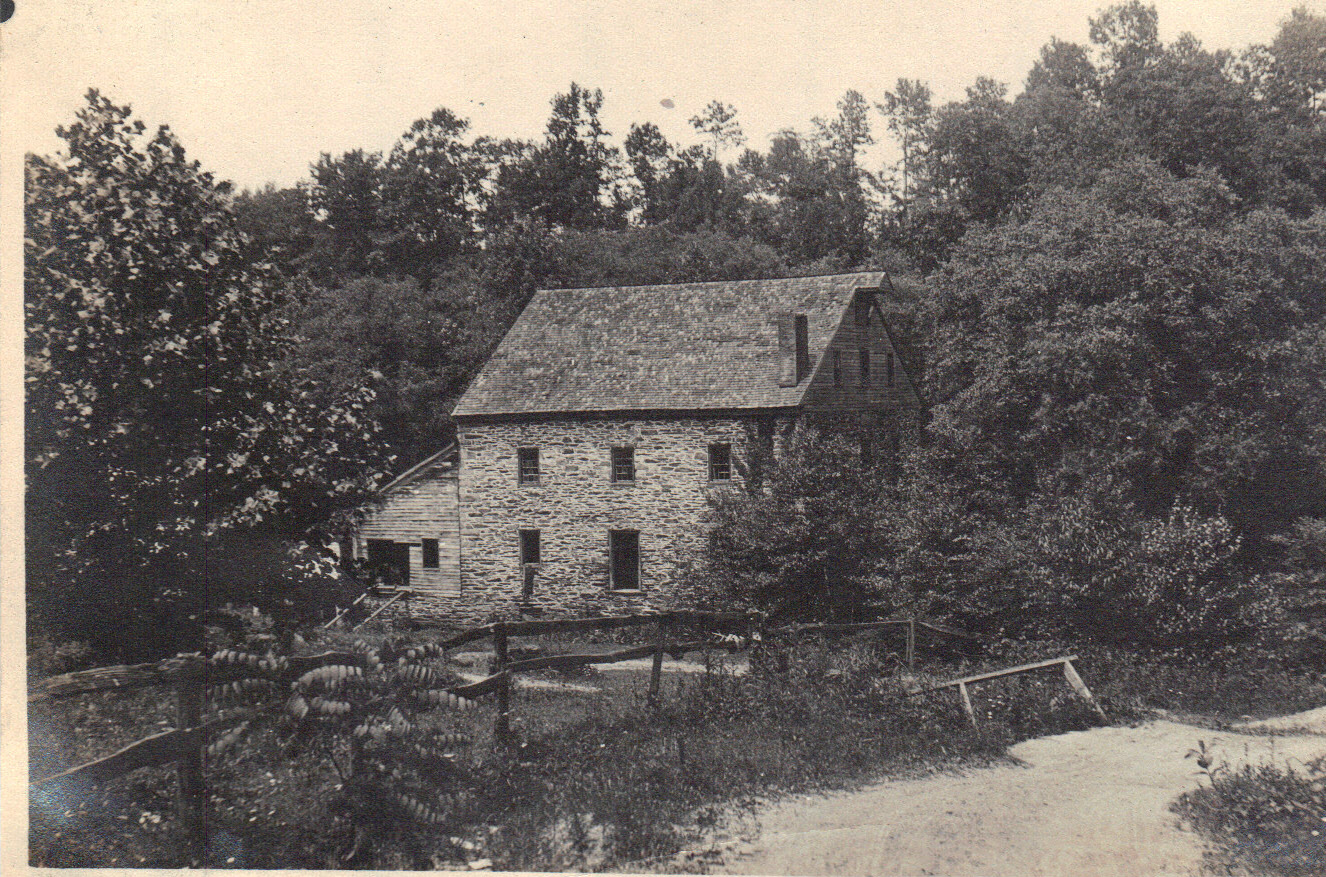
Black Rock Mill. Photo by Lewis Reed
As far as can be determined, Lewis Reed’s collection of Black Rock Mill photographs are probably some of the earliest known.
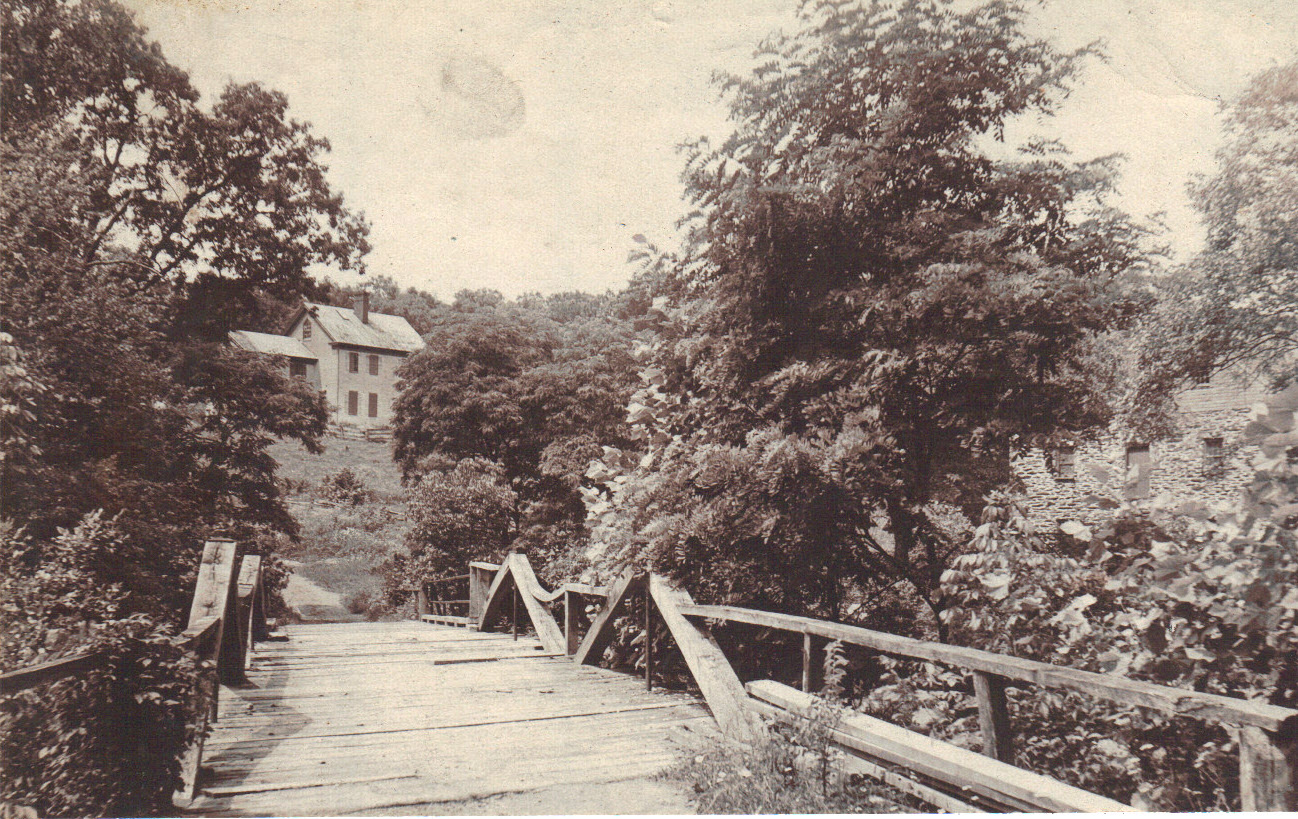
Bridge over Seneca Creek. Photo by Lewis Reed
Lewis Reed was a well-known photographer in the county and many of his early photographs are now part of the Montgomery County Historical Society photo archives. The Jane C. Sween Library was recently given a collection of 280 glass plate negatives, showing Montgomery County in the early 20th century.
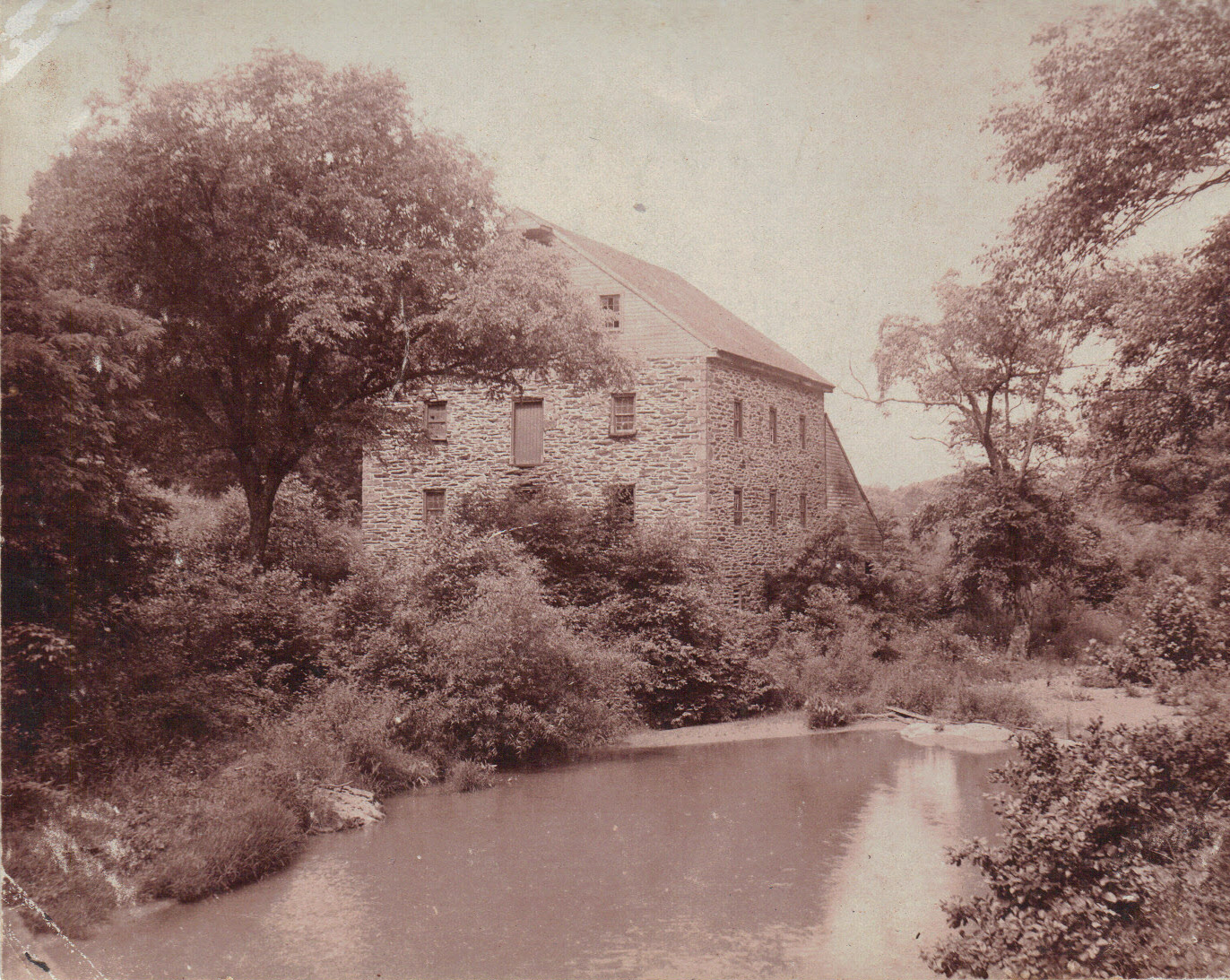
The two-story stone mill is set into the side of a hill beside Great Seneca Creek. Photo by Lewis Reed
A photo taken by Lewis Reed appeared below in an undated Montgomery County Courier newspaper.
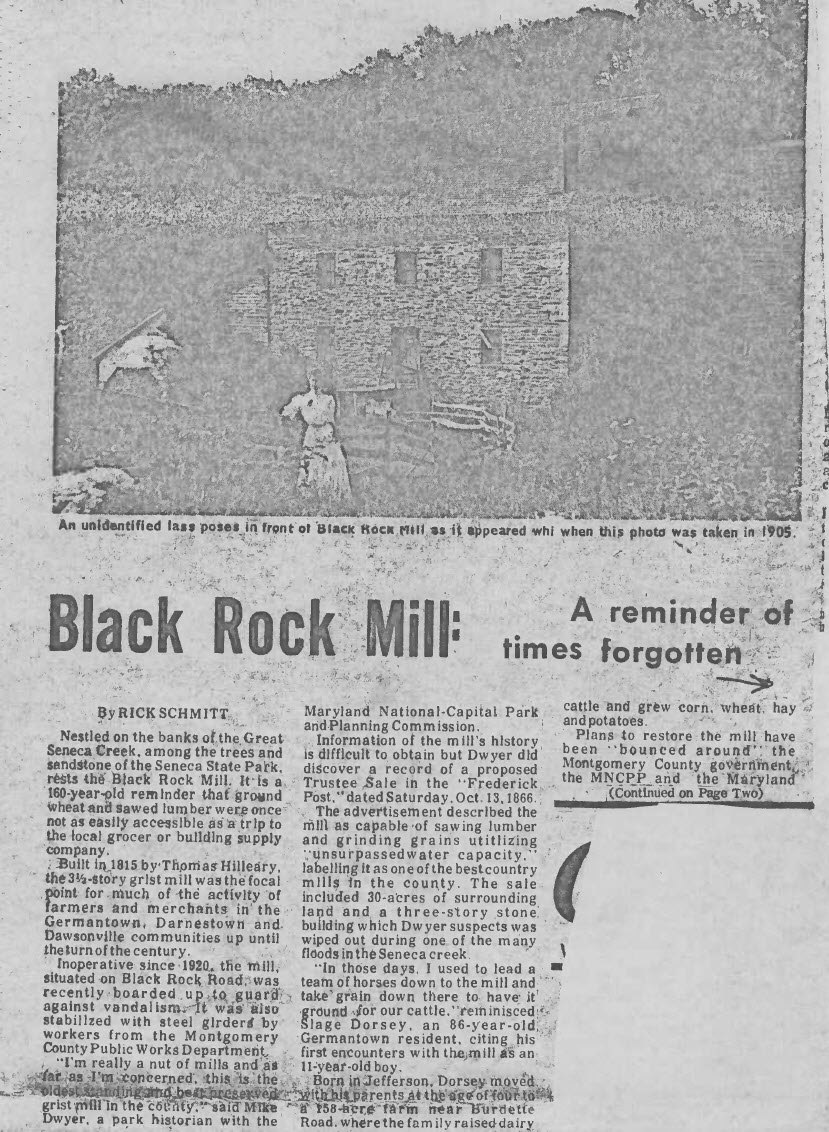
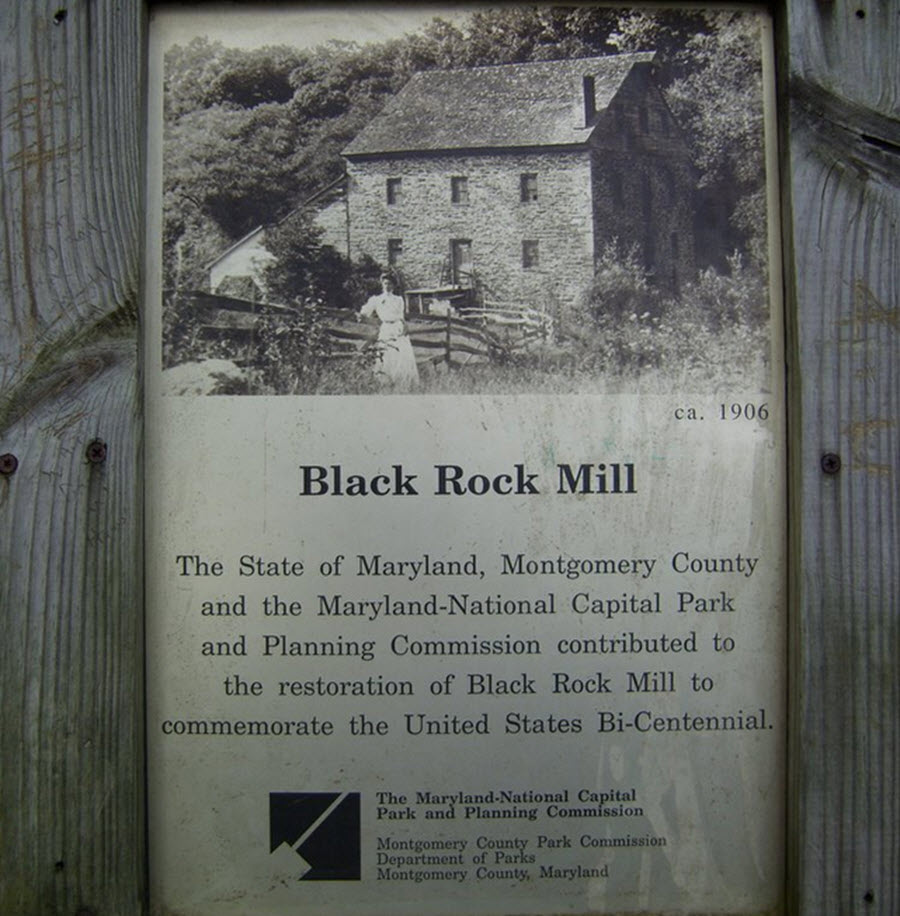
For now, the mill sits idle but majestic on the Seneca Creek, a reminder of a long time ago. Black Rock Mill is owned by MCPS and is open to the public during daylight hours. There are also hiking trails all around it since it sits within the parks system. This is a very large structure and is one of the best preserved old mills in Montgomery County. It also sits directly alongside a creek and the interior of the building has flood markers on the walls. At least one flood took over 2/3 of the building.
Directions: From Germantown, go south on Germantown Road/Md 118 for 2.5 miles, turn right onto Black Rock Road and go about 3 miles to the mill on the right at Great Seneca Creek. The mill is located in Seneca Creek State Park.
References:
M: 24-6: Black Rock Mill – Maryland State Archives
Montgomery County Historical Society
Books

Related Resources


Copyright Notice

Reed Brothers Dodge History (1915-2012) by Jeanne Gartner is licensed under a Creative Commons Attribution-NonCommercial 3.0 Unported License.
 Reed Brothers Dodge History 1915 – 2012
Recent Comments